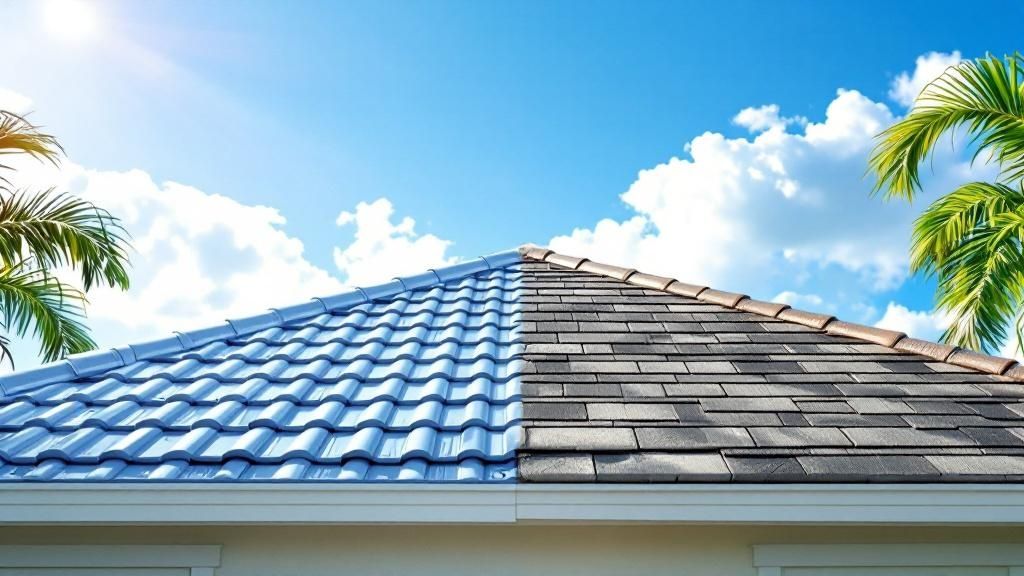
If you're asking, "how long do roofs last in Florida," the answer is almost always shorter than you'd expect. A roof's lifespan here in the Sunshine State is a completely different ballgame thanks to the intense sun, crushing humidity, and the ever-present threat of hurricane season. You can pretty much toss those manufacturer warranties out the window; they just don't reflect our reality.
On average, a standard asphalt shingle roof might give you 15-20 years if you're lucky. More rugged materials like metal or tile, however, can push that timeline out significantly.
Your Florida Roof Lifespan: What to Expect
Think of a roof in a mild, northern climate like a car that only gets driven on smooth suburban roads—it ages gracefully. A roof in Florida? That’s an off-road beast, constantly navigating brutal terrain. The daily assault from UV radiation, torrential downpours, and seasonal storms creates a unique battleground where only the toughest materials survive.
Getting your head around this is the first step toward making a smart investment in protecting your home.
The key is to stop thinking about the manufacturer's national average and start focusing on a realistic, Florida-specific timeline. A "30-year shingle" almost never sees its 30th birthday here. Not even close. The state’s relentless sun and swampy humidity cause materials to break down at a shockingly fast rate.
For example, those common asphalt shingles often marketed with a 25 to 30-year lifespan? Here in Florida, you're more likely looking at just 12 to 18 years. You can learn more about how local weather impacts roofing materials to get a better sense of why these differences are so stark.
A Quick Comparison of Florida Roof Lifespans
To really see how different materials stack up against our demanding conditions, it helps to look at them side-by-side. Every material comes with a trade-off between the upfront cost and long-term durability—a critical calculation for any Florida homeowner.
Here's a straightforward breakdown of what you can realistically expect from the most popular roofing options in the state.
Florida Roof Lifespan by Material Type
| Roofing Material | Typical Lifespan in Florida (Years) | Key Durability Factors |
|---|---|---|
| Asphalt Shingles | 12 – 18 | Highly vulnerable to UV degradation and granule loss. |
| Metal Roofing | 40 – 60 | Excellent wind and impact resistance; reflective coatings resist sun. |
| Clay/Concrete Tile | 45 – 75+ | Extremely durable against sun and salt air; heavy and requires strong support. |
| Wood Shake | 15 – 25 | Prone to rot, mold, and insect damage in high humidity. |
| Slate | 75 – 150+ | Virtually weatherproof but very heavy and costly. |
This at-a-glance comparison makes the long-term value crystal clear.
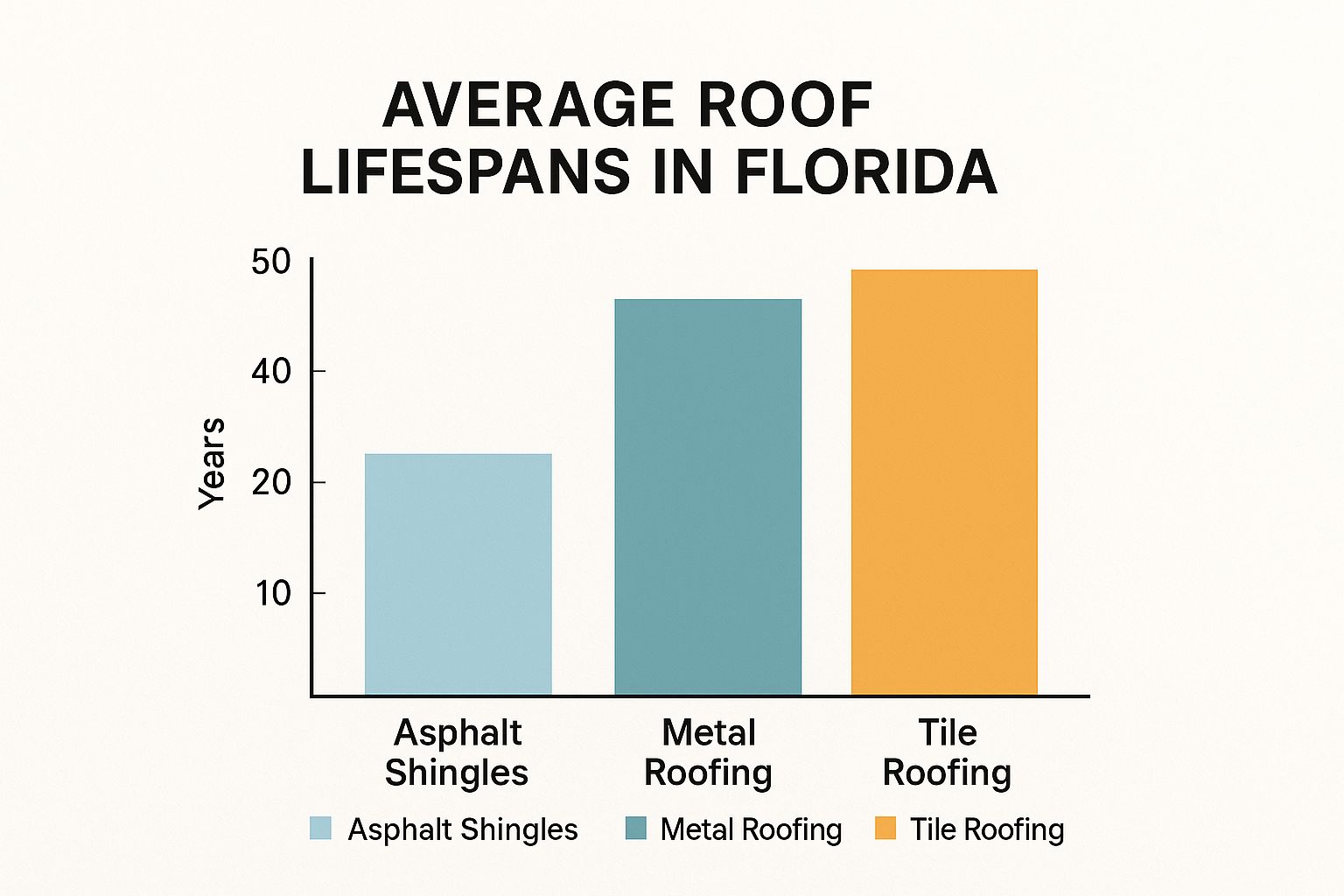
As you can see, materials like tile and metal can easily offer more than double the lifespan of traditional asphalt shingles. It really highlights the long-term wisdom of investing in a more robust system from the start.
While asphalt gives you an affordable entry point, its shorter service life means you’ll be facing the cost and hassle of replacement much more frequently over the lifetime of your home.
Why Florida Weather Is a Roof's Worst Enemy
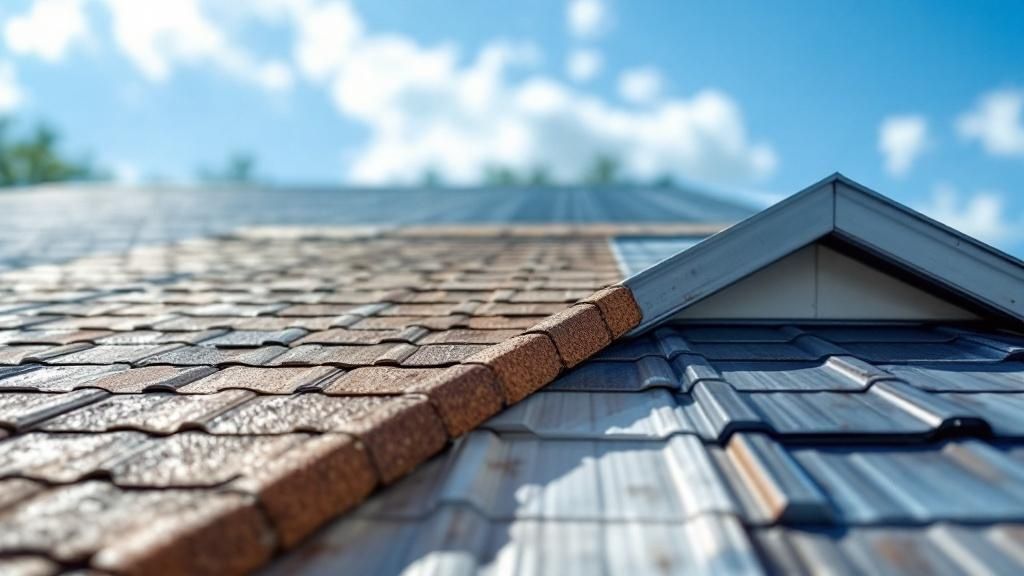
To really get a handle on how long a roof lasts in Florida, you first have to understand what it’s up against every single day. The Sunshine State’s weather isn’t just a minor inconvenience; it's a relentless force that actively works to break down your home's primary defense.
Think of it less as gentle sunshine and more as a slow-motion, never-ending storm. This constant assault comes from multiple directions, creating a uniquely hostile environment for any roofing material. From blistering heat to corrosive salt, the combination of factors significantly shortens a roof's expected service life compared to homes in milder climates.
The Unrelenting Solar Assault
Florida's famous sunshine is actually a major culprit in premature roof aging. The intense, year-round ultraviolet (UV) radiation is like putting your roof in an oven on a low bake setting, day in and day out. This constant thermal stress causes critical materials, especially in asphalt shingles, to dry out, become brittle, and eventually crack.
This process, known as photodegradation, breaks down the chemical bonds that hold the material together. Over time, this leads to:
- Granule Loss: The protective granules on asphalt shingles get dislodged, exposing the underlying mat to direct sunlight and speeding up its decay.
- Fading and Brittleness: Materials lose their color and flexibility, making them much more likely to crack under physical stress from wind or hail.
- Thermal Cycling: The roof expands in the intense heat of the day and contracts at night. This constant cycle weakens fasteners and seams over time.
Humidity and Biological Growth
While the sun bakes your roof from above, Florida's legendary humidity attacks it with moisture. This persistent dampness creates a perfect breeding ground for algae, moss, and mildew. And these aren't just cosmetic issues; they are destructive forces.
Algae, which you often see as dark streaks on shingles, actually feeds on the limestone filler in the asphalt. This biological growth traps moisture against the roof's surface, preventing it from drying properly and leading to rot and deterioration.
This trapped moisture slowly compromises the integrity of the shingles and the underlying decking, turning what looks like a simple nuisance into a real structural threat.
On top of that, coastal homeowners face an extra challenge: salt spray. Carried inland by the breeze, this salt-laden air is highly corrosive. It accelerates the rusting of metal components like flashing, fasteners, and even entire metal roof panels if they aren't properly coated and maintained. The combination of salt, sun, and moisture creates a powerful recipe for rapid decay, making durable materials a necessity for any home near the coast.
Choosing the Right Roofing Material for Florida
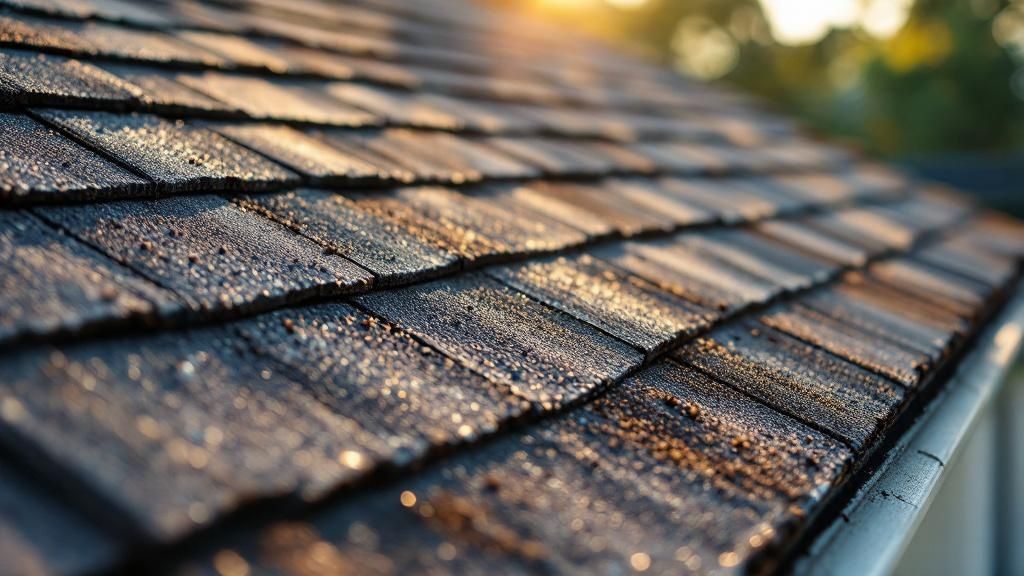
Knowing how harsh Florida's climate can be is one thing; picking a roof that can actually handle it is another. When you're selecting a new roof, you're doing more than just boosting curb appeal. It’s a strategic decision that pits upfront cost against long-term resilience. The real answer to "how long do roofs last in Florida?" depends entirely on the material you choose.
Think of your roof as an investment in your home's security. Some materials are cheaper to install but will need replacing much sooner. Others require a bigger check upfront but will give you decades of solid, reliable protection. Let's walk through the most common choices and see how they stack up against the Florida sun and storms.
Asphalt Shingles: The Popular but Vulnerable Choice
Walk through any Florida neighborhood, and you'll see a lot of asphalt shingle roofs. Why? They're affordable. For homeowners on a tight budget, they are often the default option. But that lower price tag comes with a serious trade-off here in the Sunshine State.
The very makeup of asphalt shingles makes them a target for intense UV radiation, which causes them to dry out, turn brittle, and shed their protective granules. The relentless heat speeds up this process, shrinking their typical lifespan in Florida to just 15 to 20 years. That’s a far cry from what you’d get in a milder climate.
- Vulnerability to Wind: Standard shingles are prime candidates for being lifted or torn right off by the high winds we see in tropical storms and hurricanes.
- Algae Growth: Our humid air is the perfect breeding ground for those ugly dark algae streaks, which don't just look bad—they actively degrade the shingles.
If you do go with asphalt, spend a little extra on higher-quality, algae-resistant shingles and make sure your attic is properly ventilated. It's the best way to squeeze every possible year out of their shortened lifespan.
Metal Roofs: The Durable Modern Contender
Over the last decade, metal roofing has absolutely exploded in popularity across Florida, and for good reason. It’s a powerhouse, combining incredible longevity with top-tier resistance to our state's worst weather. A well-installed metal roof can easily last 40 to 70 years, making it a phenomenal long-term value.
Unlike shingles that can peel away one by one, metal panels interlock and are fastened down tight, giving them superior strength against hurricane-force winds. Modern metal roofs also come with special coatings that reflect the sun's heat away from your home, which can make a real dent in your cooling bills—a huge plus here. As you weigh your options, it's also smart to look at broader Florida custom home design ideas focusing on hurricane safety, since these plans often influence the structural needs and material choices that directly impact how long a roof will last.
Tile Roofs: The Timeless Heavyweight Champion
When you picture classic Florida architecture, a tile roof is probably what comes to mind. Whether made from clay or concrete, these roofs are the definition of durability and style. They are incredibly resistant to heat, downpours, and the corrosive salt air that blankets our coastal communities.
The main thing to keep in mind with tile is its weight. Your home's underlying structure has to be strong enough to handle it, which can sometimes add to the installation cost. But if you’re looking for that ultimate blend of timeless beauty and unmatched longevity, tile is often the undisputed champion in the Florida roofing game.
The Hidden Factors That Shorten Your Roofs Life
Beyond the obvious culprits like sun and storms, a whole host of less visible issues can dramatically shorten how long a roof lasts in Florida. These hidden stressors work from the inside out and from the edges in, creating weak points that often go unnoticed until it’s far too late.
Understanding these factors is just as crucial as choosing the right material from the get-go.
One of the biggest, yet most overlooked, is attic ventilation. Think of your attic as your home's lungs; it needs to breathe. Without proper airflow, the intense Florida sun bakes your roof deck, trapping superheated air that can easily reach 150°F or higher.
This trapped heat essentially cooks your shingles from the bottom up, making them brittle and accelerating their decay. At the same time, all that humidity gets trapped, creating the perfect environment for moisture to condense on the underside of your roof decking, which leads to rot and structural weakness.
Poor Installation The Silent Roof Killer
Even the highest-quality, most expensive roofing material on the market will fail prematurely if it isn't installed correctly. In fact, shoddy workmanship is a leading cause of early roof failure, creating vulnerabilities that a hurricane will eagerly exploit. A single mistake can compromise the entire system.
Some of the most common installation errors we see on Florida roofs include:
- Improper Nailing: Nails driven too deep will tear right through the shingle. If they're too shallow, they won't secure it properly against high winds. It has to be just right.
- Faulty Flashing: The metal strips around chimneys, vents, and valleys are absolutely critical for waterproofing. If flashing is installed incorrectly, it’s like leaving a window open in a rainstorm.
- Inadequate Underlayment: This protective barrier beneath your shingles is your last line of defense. Using cheap materials or failing to seal it correctly leaves your home dangerously exposed.
Here's a sobering reality: Florida's roofing landscape is already under immense stress. Statistical data reveals that an alarming 21.6% of roofs in Florida are in severe condition, a stark contrast to the national average of just 1.4%. This really highlights how these hidden factors contribute to a massive statewide problem. You can discover more insights about Florida's unique roof risks on Verisk.com.
Subtle Environmental Stressors
Finally, there are the gradual environmental pressures that add up over time. Overhanging tree branches, for example, can scrape away the protective granules on your shingles with every gust of wind. They also provide a shaded, damp area that's ideal for algae and moss growth, which slowly wears down your roof's surface.
Beyond these common stressors, less obvious threats like pest infestations can also compromise your roof's integrity. Termites, for instance, can cause significant damage to the underlying wooden structures, quietly reducing your roof's expected lifespan from below. Learning about addressing termite infestations with natural remedies is a proactive step every homeowner should consider.
Proactive Maintenance to Maximize Your Roof’s Lifespan
Think of your roof like a car for a second. You wouldn't drive it for years on end without changing the oil or checking the tires, would you? Of course not. A roof is no different. Simply installing a quality roof and then forgetting about it is a surefire recipe for premature failure, especially here in Florida.
Proactive maintenance is the secret to adding precious years to its life and avoiding those catastrophic surprise repairs that always seem to happen at the worst times. This isn't about climbing up there every weekend. It's about a simple, consistent routine to catch small issues before they spiral into costly disasters.
Your Essential Florida Roof Maintenance Checklist
Getting a handle on roof maintenance is surprisingly straightforward. A few simple, regular checks can make all the difference in how long your roof holds up against the Florida sun and storms. By staying one step ahead of potential problems, you protect both your home and your wallet.
Here’s a simple plan you can follow:
-
Conduct Post-Storm Visual Inspections: After any significant tropical storm or hurricane, take a walk around your property. From the safety of the ground, look for any obviously missing, cracked, or lifted shingles or tiles. Make a note of any large debris that landed on the roof.
-
Keep Gutters and Drains Clear: Your gutters are the lifeblood of your roof's drainage system. When they get clogged with leaves, pine needles, and other gunk, water backs up and sits right against the roof edge. That’s a direct invitation for rot and water intrusion, so be sure to clean them at least twice a year.
-
Trim Overhanging Branches: We all love the shade trees provide, but branches scraping against your roof will slowly grind away the protective granules on shingles and can easily crack tiles. Keep them trimmed back a few feet from the roof surface to prevent this slow, grinding damage.
-
Address Algae and Moss Growth: See those dark streaks on your roof? That’s not just dirt—it’s actually algae feeding on the limestone in your shingles. If you let it go, this growth traps moisture against the roof surface. Use a gentle, manufacturer-approved cleaning solution to deal with it before it takes over.
An annual professional inspection is arguably the single best investment you can make in your roof’s health. A trained expert can spot subtle signs of trouble—like cracked flashing around a chimney or loose fasteners—that are completely invisible from the ground.
Understanding how to extend the life of any part of your home, including your roof, often comes down to proactive care. For more on this, you might explore these essential maintenance practices for home components. Taking these small steps consistently can easily add 5-10 years to your roof’s expected lifespan, saving you thousands in the long run.
Frequently Asked Questions About Florida Roofs
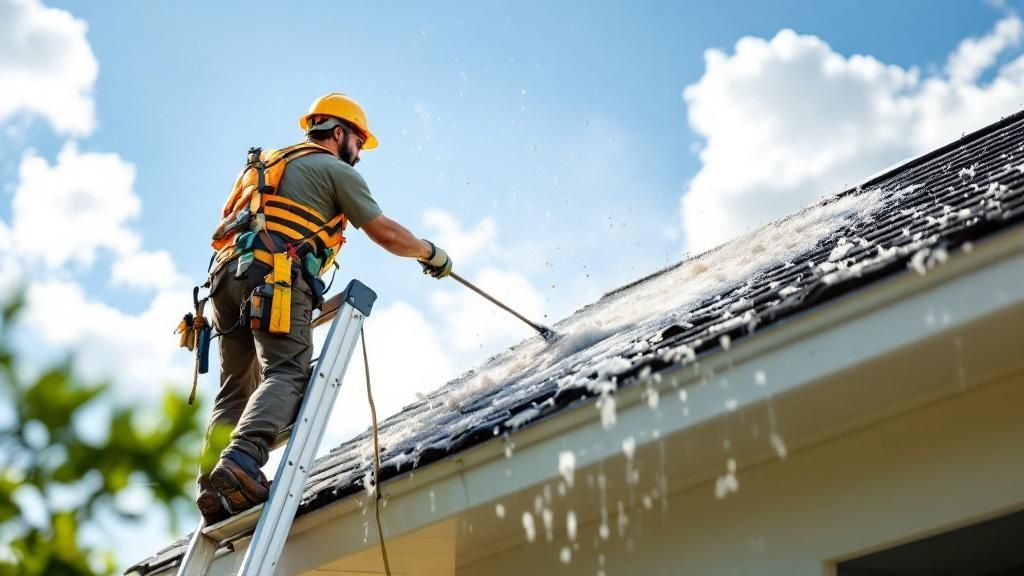
Even after diving into the details of materials and maintenance, most Florida homeowners still have a few lingering questions. Getting straight answers to these common concerns is the best way to feel confident about protecting your home.
This section is all about tackling the questions we hear every day on the job. We've compiled concise, practical answers to help you make smart decisions about your roof.
Does the Color of My Roof Affect Its Lifespan?
Yes, it absolutely does, especially here in the Sunshine State. Lighter-colored shingles, often called "cool roofs," are engineered to reflect more sunlight and absorb way less heat than darker ones.
Think of it like choosing between a white shirt and a black shirt on a hot summer day. That lighter color keeps the roof's surface temperature down, which means less stress from thermal cycling—that constant, damaging expansion and contraction your roof goes through as it bakes in the sun and cools down at night. This simple choice can add a few years to your roof's life and even trim your cooling bills.
What Is Florida's 25 Percent Roof Rule?
This is a critical piece of the Florida Building Code that every single homeowner needs to understand. The "25% Rule" is straightforward: if more than 25% of your roofing system is repaired, replaced, or covered over within any 12-month period, the entire roof must be brought up to the current building code.
What this means in the real world is that a large patch job after a storm often triggers a mandatory full roof replacement. The rule is designed to ensure the structural integrity and wind resistance of roofs across our hurricane-prone state, but it can be a major unexpected expense if you're not prepared for it.
The 25% Rule exists to systematically phase out older, weaker roofs and make sure homes across Florida are better equipped to handle severe weather. It’s about community-wide safety, not just individual patch repairs.
How Do I Know When My Florida Roof Needs Replacement?
Knowing the warning signs is the key to preventing a small problem from turning into a catastrophic failure. While age is a huge factor—especially for asphalt shingle roofs creeping up on the 15-year mark—there are several visual clues that scream your roof is on its last legs.
Keep an eye out for these telltale signs from the ground:
- Widespread Damage: You can spot numerous shingles that are cracked, curling up at the edges, or just plain missing across different areas of the roof.
- Significant Granule Loss: Check your gutters and downspouts. If you see a lot of sand-like granules piling up, that's a major red flag. Those granules are the shingle's UV protection, and without them, the shingle is defenseless.
- Interior Water Stains: Any new, mysterious stains or discoloration on your ceilings or in the attic is a sure sign that water is finding its way in.
- Sagging Roof Deck: If your roofline looks wavy or has noticeable dips, it could point to a serious structural issue that needs immediate professional attention.
After any big storm, it's always a good idea to get a professional inspection. The most dangerous damage is often the kind you can't see from your driveway, but it can lead to massive problems down the road.
If you've noticed any of these warning signs or just want the peace of mind that comes with a professional assessment, it’s time to call in the experts. The team at Paletz Roofing and Inspections has been protecting South Florida homes for over 30 years. Schedule your free, no-obligation inspection today to get an honest, clear report on your roof's condition. Visit us at https://paletzroofing.com to learn more.