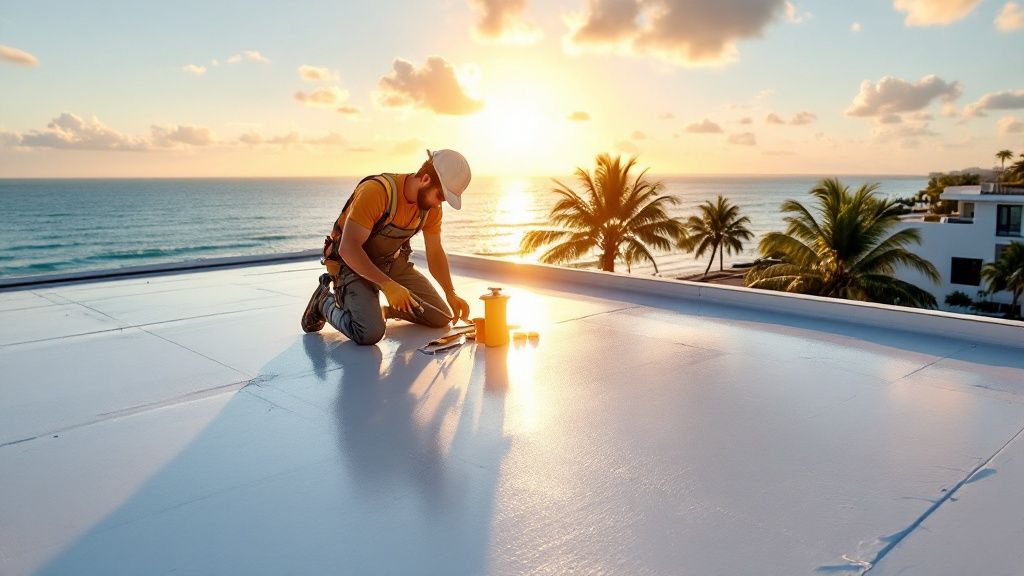
If you own a property with a flat roof in Bal Harbour, you already know it needs a special kind of attention. Our coastal environment brings a unique set of challenges that can really speed up wear and tear, making proactive care absolutely essential for protecting your investment. For expert flat roof repair in Bal Harbour, it's critical to work with pros who genuinely understand these local pressures.
Why Flat Roofs in Bal Harbour Face Unique Challenges
Think of your flat roof as the deck of a ship that's always at sea. It never really gets a break. Day in and day out, it’s hit with a relentless mix of intense sun, salty air, and the constant threat of severe weather. That isn't an exaggeration; it’s just the daily reality for buildings in our community. While a pitched roof can shed water and debris, a flat roof takes the full force of the elements, day after day.
This constant assault creates a seriously high-stress environment for your roof. The intense South Florida sun beats down, and its UV rays work to break down roofing materials, making them brittle and prone to cracking. Then you have the humid, salt-filled air blowing in from the Atlantic, which settles on the surface and encourages corrosion on any metal parts like flashing or vents. It's a powerful one-two punch that roofing materials in other climates just aren't built to handle.
The Impact of Bal Harbour's Climate
The local climate is, without a doubt, the number one reason behind most flat roof problems here. In Bal Harbour, Florida, flat roof repair is such a critical service precisely because of these tough environmental stressors. Your roof is constantly subjected to:
- Intense UV Radiation: This acts like a slow-burning acid, degrading the protective outer layer of your roofing membrane over time.
- High Humidity and Salt Spray: These two factors work together to promote moisture intrusion and can corrode the vital metal fittings that seal up vulnerable spots.
- Tropical Downpours: A heavy rainstorm can quickly lead to ponding water if your drainage isn't perfect, adding a tremendous amount of weight and stress to the roof's structure.
- Hurricane-Force Winds: Severe storms can create uplift, tearing at the seams and creating openings for catastrophic water damage to pour in.
These conditions make roofing materials break down much faster, leading to common headaches like membrane cracking, blistering, and flashing failures. For instance, that ponding water doesn't just weaken the structure; it also acts like a magnifying glass for the sun's damaging rays. You can find out more about how local climate affects roofing costs and repair needs on pitchroofing.com.
A flat roof in Bal Harbour isn't just a structure; it's a shield. Its performance depends entirely on how well it's designed and maintained to fight back against the specific threats of our coastal environment. Ignoring these local factors is like sending that ship to sea with an unprepared deck—it’s only a matter of time before problems arise.
How to Spot Common Flat Roof Problems
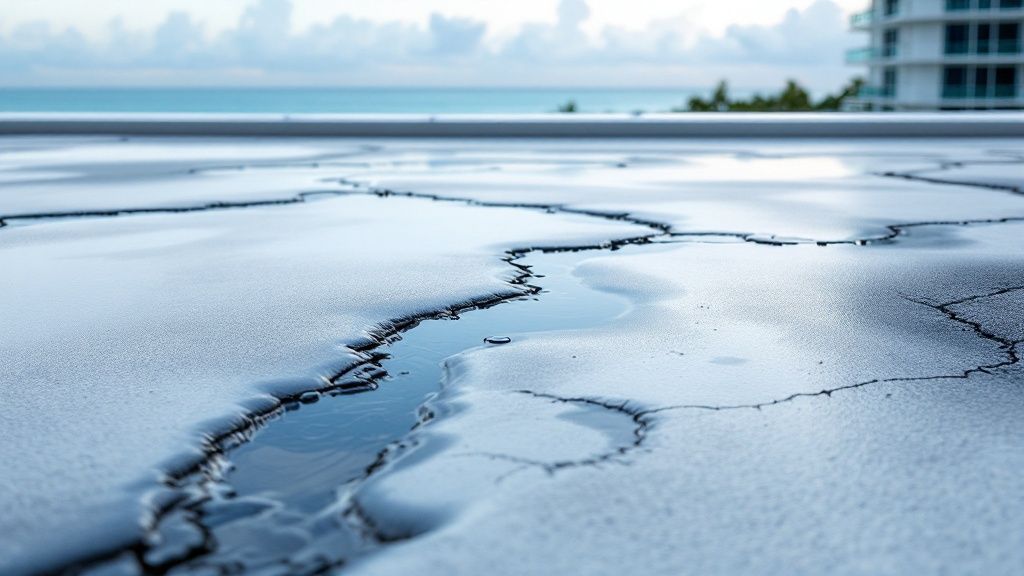
Think of yourself as a detective for your own property. You don't need a roofer's toolkit to spot the early warning signs of a flat roof in distress, especially in a demanding climate like Bal Harbour's. Catching these clues early is the absolute key to preventing a minor issue from snowballing into a major, costly disaster. Honestly, the most obvious signs are often visible right from your window or driveway.
One of the biggest culprits we see is ponding water. After a typical South Florida downpour, a healthy flat roof should drain off efficiently. If you see pools of water still hanging around 48 hours after the rain stops, that’s a huge red flag. It’s a clear signal your drainage system is failing or the roof has developed low spots. This standing water adds immense weight and, under the intense sun, acts like a magnifying glass, accelerating the breakdown of roofing materials.
Visual and Physical Clues on the Roof Surface
If you can safely get a look at your roof, the surface itself will tell you a story about its health. You’re looking for changes in its texture and integrity, as these are direct indicators that the protective membrane is compromised.
A common issue we find is blistering or bubbling. These raised areas look exactly like they sound—bubbles trapped just beneath the roof's surface. They form when moisture or air gets caught between the layers of roofing material. As the sun beats down, this trapped pocket expands, stretching the membrane and creating a weak spot that’s incredibly vulnerable to punctures and tears.
Another critical area to check is the flashing. This is the material that seals the joints around vents, skylights, chimneys, and anywhere the roof meets a wall. It’s a common failure point.
- Cracked or Peeling Flashing: Look for any signs of cracking, peeling, or gaps. Failed flashing is one of the most frequent entry points for water.
- Separation from Roof Surface: Make sure the flashing is sealed tight against the roof. Any separation creates a direct highway for rainwater to get underneath your roofing system.
While you're looking, keep an eye out for any visible cracks, tears, or punctures in the main roof membrane. Even a tiny opening is an open invitation for water, and we all know where that leads.
Signs You Can Find from Inside
You don’t always have to be on the roof to find evidence of a problem. Sometimes, the most compelling signs show up inside your property. When they do, it's an urgent signal that water has already breached your roof's defenses.
"By the time you see a water stain on your ceiling, the leak has likely been active for some time. The visible stain is just the endpoint of a longer journey of water traveling through your roof deck, insulation, and drywall."
Interior signs that demand immediate attention include water stains on ceilings or walls, peeling paint, and a persistent musty odor that could signal hidden mold growth. If you notice any of these, it’s time to call for a professional flat roof repair in Bal Harbour. The goal is to trace the leak to its source and assess the full scope of the damage before it gets any worse.
Flat Roof Damage Indicator Checklist
Not sure what to look for? This quick checklist can help you identify potential problems by connecting the symptom to its likely cause and telling you how quickly you need to act.
| Symptom | Potential Cause | Urgency Level |
|---|---|---|
| Water pools lasting >48 hrs | Clogged drains, improper slope, or roof sagging | High – Leads to material decay and structural stress. |
| Bubbles or blisters on surface | Trapped moisture or air under the membrane | Medium – Weakens the membrane; can lead to tears. |
| Cracks or tears in membrane | UV degradation, foot traffic, or physical damage | High – Direct entry point for water. |
| Peeling or cracked flashing | Age, weathering, or improper installation | High – Most common source of leaks. |
| Water stains on interior ceilings | Active leak that has penetrated the roof deck | Critical – Damage is already occurring internally. |
| Musty odor inside | Hidden mold growth from a slow, persistent leak | Critical – Indicates long-term moisture problems. |
Using this checklist for a quick walk around your property can give you a solid idea of your roof's condition. If you check off anything in the "High" or "Critical" columns, it’s definitely time to get a professional opinion.
Decoding the Cost of Flat Roof Repair in Bal Harbour
Trying to pin down the exact cost of a flat roof repair in Bal Harbour can feel like chasing a moving target. The final price isn't a simple, fixed number; it's more like a recipe where several key ingredients—the materials, the size of the problem, and even how hard your roof is to get to—all mix together to determine the final investment.
The two biggest drivers, without a doubt, are the type of roofing material you have and the sheer size of the damaged area. A small, quick patch on a standard TPO roof is going to be a world away from tackling widespread blistering across a more complex built-up roofing system. Every square foot that needs attention adds to both material and labor costs.
Key Factors Shaping Your Repair Bill
When you get a quote, several components directly influence that final number. Knowing what they are helps you understand exactly what you're paying for and why one project might cost more than another.
- Roofing Material: Different materials like TPO, EPDM, PVC, or modified bitumen all come with their own price points and demand very specific repair techniques.
- Extent of Damage: Are we talking about a minor seam separation or major water intrusion that's compromised a large section? The scope of the work is the number one cost driver.
- Labor Rates: The skill and experience needed for professional-grade work come at a cost. Local labor rates in the Bal Harbour area are a major part of any estimate.
- Accessibility: If your roof is tough to get to and requires special lifts or extra safety precautions, that can add to the labor time and overall expense.
Setting a Realistic Budget
So, what should you realistically expect to budget? It all comes down to the severity of the problem. Roof repair costs in Florida, including right here in Bal Harbour, follow some pretty clear patterns. Minor fixes, like small leaks or flashing repairs, typically run anywhere from $150 to $1,500.
On the other hand, major repairs—the kind you see after a big storm or when water has been getting in for a while—can easily range from $1,500 to $7,000 or more, depending on the complexity. You can get a closer look at these repair price ranges from Prime Roofing.
This picture shows a roofer performing a seam repair, one of the most common—and critical—tasks for keeping a flat roof watertight against the elements.
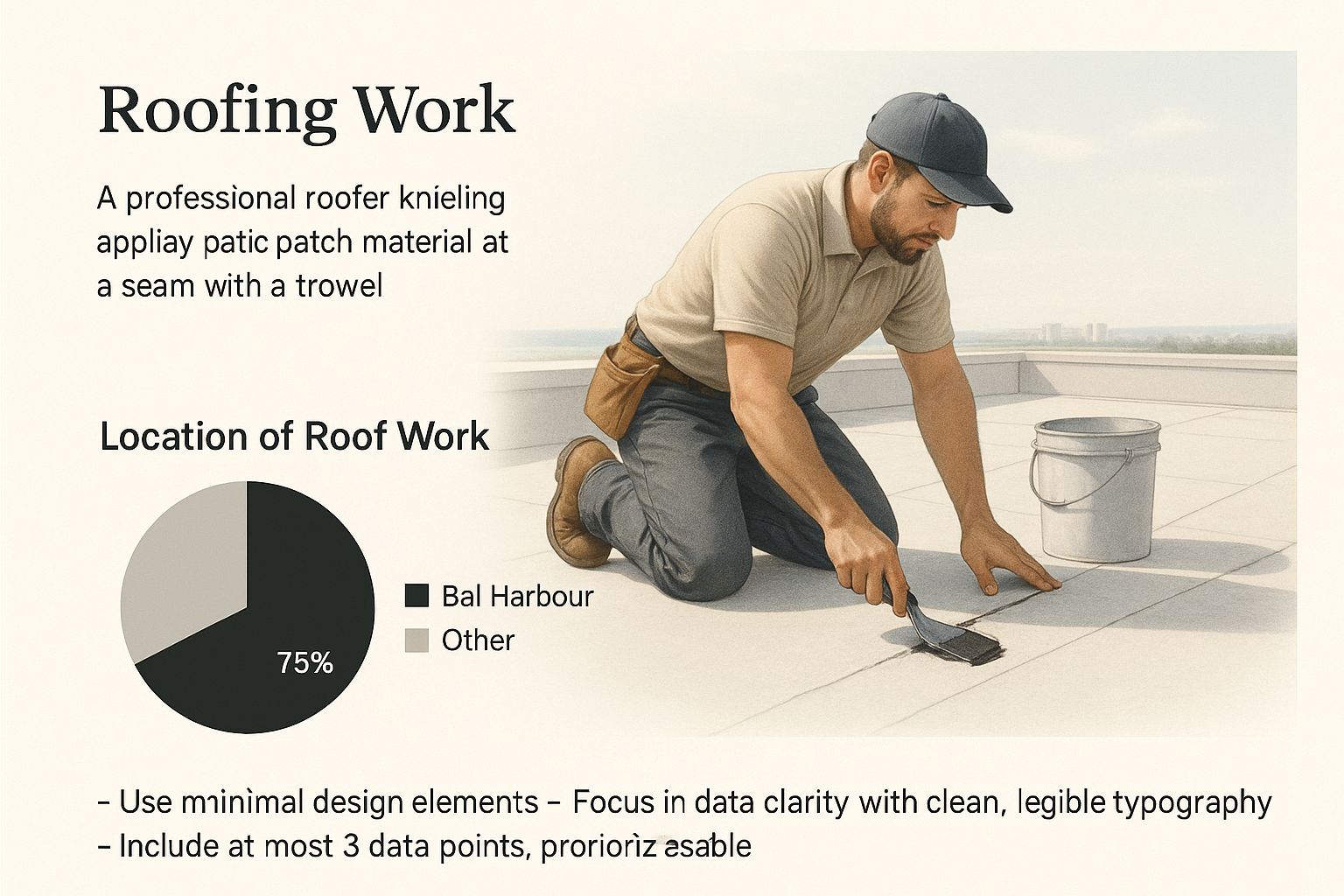
It’s a perfect example of how even a small-looking job requires real precision and the right materials to create a seal that will last.
It's essential to see a repair as an investment, not just a cost. The price of a professional, timely flat roof repair is tiny compared to the compounding expenses that come from neglect.
Ignoring a small leak today can spiral into thousands of dollars in structural rot, interior water damage, and even mold remediation down the road. A proactive repair doesn't just fix your roof; it protects the entire building, safeguarding your property's value and structural health for years. It's the smart financial move, every single time.
Choosing the Right Repair Strategy for Your Roof
Once we’ve pinpointed the problem, the next step is mapping out the most effective solution. Modern flat roof repair isn't about slapping on a generic patch and calling it a day. It’s about matching the right technique to the specific issue, ensuring a durable, long-lasting fix that can actually stand up to Bal Harbour’s demanding coastal climate. The real goal is to restore your roof's integrity, not just cover up a symptom.
Think of it like this: you wouldn't use a small bandage for a deep cut. In the same way, a minor membrane tear requires a completely different approach than widespread surface cracking or failed seams. A professional assessment is what determines the best course of action, making sure the repair is both effective and cost-efficient for your property.
Common Repair Techniques Explained
For isolated damage like a simple puncture or a small tear, a targeted patch is often more than enough to solve the problem. However, for more systemic issues, we turn to advanced methods that provide a much more robust and seamless defense against the elements. These modern strategies are designed to address the root cause of the failure, not just the leak you can see.
Two of the most effective solutions we rely on for flat roofs are liquid-applied membranes and reflective coatings.
- Liquid-Applied Membranes: This technique involves applying a specialized liquid that cures to form a seamless, rubber-like waterproof layer right across your roof. It's an excellent solution for roofs with complex shapes or numerous pipes and vents, as it completely eliminates seams—which are almost always the first place a flat roof fails.
- Reflective or "Cool Roof" Coatings: These are applied over the existing roof surface to bounce the sun's intense UV rays away. Here in South Florida, this can dramatically lower the roof's temperature, which not only shaves money off your cooling bills but also extends the life of the roofing material by minimizing the stress of constant expansion and contraction. Many of these coatings even add an extra layer of waterproofing.
Choosing the right strategy is about more than just stopping a leak. It’s about enhancing the roof's overall resilience. A proper repair should not only fix the current problem but also fortify the roof against future issues common to our coastal area.
Matching the Solution to the Problem
The key to a successful flat roof repair in Bal Harbour is selecting the technique that is perfectly suited for the specific type of damage. A professional contractor will diagnose the situation and recommend the most appropriate strategy.
For example, widespread "alligatoring"—that surface cracking that looks like alligator skin—is a dead giveaway of UV degradation. This is an ideal scenario for a reflective coating, which can seal these tiny cracks and provide a brand new, protective shield against the sun. On the other hand, if a seam has separated due to thermal stress, reinforcing it and then applying a liquid membrane over the area offers a superior, flexible seal that can move and breathe with the building.
Why Local Bal Harbour Roofing Expertise Is Non-Negotiable
When it's time for a flat roof repair in Bal Harbour, choosing the right contractor is about more than just finding someone with a truck and some tools. You're looking for a partner with deep, localized knowledge.
Think of it like this: you wouldn’t ask a desert guide to navigate you through a tropical jungle. By the same token, a roofer who isn't familiar with Bal Harbour's unique coastal pressures is starting at a serious disadvantage.
A true local expert understands the subtle but critical environmental factors at play here. They know which materials will actually stand up to the relentless salt spray and which ones are going to corrode in just a few years. This isn't guesswork; it's experience that leads to smarter material choices and repair strategies built for the long haul in our specific climate.
This is about more than just patching a leak. It’s about putting a lasting solution in place that reinforces your property’s resilience against everything our coastal weather throws at it.
Navigating Local Codes and Climate Realities
An out-of-town contractor might be completely unaware of Bal Harbour’s specific building codes, which are some of the most stringent in the country for a very good reason. Our regulations are designed to make sure every single structure can withstand hurricane-force winds and the other severe weather events common to South Florida.
A local pro deals with these codes every single day. They ensure every repair is fully compliant and won’t create headaches during a future inspection or, worse, fail when you need it most.
Their hands-on experience also gives them priceless insight into the common architectural weak points in our area. They’ve seen firsthand which types of flashing fail most often on local buildings and how specific roof designs hold up against wind-driven rain.
A local roofer’s expertise is your roof’s best defense. They are invested in the community's durability and bring a level of familiarity that simply cannot be matched by an outside company. Their reputation is built right here, one successful project at a time.
This local focus also means they're connected. Roofing services in Bal Harbour are part of a larger network of specialized providers across South Florida, a clear sign of the high demand for quality solutions tailored to our region's climate. This network is vital for supporting Bal Harbour's active real estate market, where a solid roof is essential for maintaining property values.
To make sure you're hiring a reputable professional for your flat roof repair, it's always smart to be aware of how to spot common home service scams. Hiring a true local expert who gets Bal Harbour isn’t just a preference—it’s a non-negotiable step in protecting your most valuable asset.
Frequently Asked Questions About Flat Roof Repair
When it comes to flat roof maintenance, it’s natural to have a lot of questions. We’ve been doing this for over 30 years, so we’ve heard just about all of them. To help you out, we’ve put together answers to some of the most common things property owners in Bal Harbour ask us. This should give you the clarity you need to make the right call for your property.
How Often Should I Have My Flat Roof Inspected in Bal Harbour?
Living in Bal Harbour means your roof is up against a uniquely tough coastal climate. Because of this, we always recommend getting a professional inspection at least twice a year. The best rhythm is once right before hurricane season starts (around May) and again after it’s over (around December).
Think of it this way: this schedule lets a pro catch small vulnerabilities before they turn into huge, expensive disasters. It’s all about making sure your roof is ready for storm season and then checking for any damage that might have snuck in afterward.
Twice-yearly inspections are like a routine check-up for your property's most important shield. This kind of preventative care is a fraction of the cost of emergency surgery after a major hurricane hits. A small investment now can literally save you thousands down the road.
Can I Apply a Cool Roof Coating to My Existing Flat Roof?
For the most part, yes you can! Adding a reflective "cool roof" coating is one of the smartest upgrades you can make for a flat roof in Florida. It’s a fantastic way to boost energy efficiency and give your roof a longer life under our intense sun.
There's one big catch, though: the roof you have now needs to be in good, solid shape for the coating to work properly. A professional has to come out, do a thorough inspection, clean the surface, and fix any minor issues first. This ensures the coating will stick correctly and give you all the protective and energy-saving benefits you’re paying for.
What Is the Difference Between a Roof Repair and a Replacement?
This really comes down to the big picture—the overall health and scope of the problem with your roofing system.
- A repair is like spot treatment. It focuses on a specific, contained issue. Maybe you have a single leak, a tear in the membrane, or some damaged flashing, but the rest of the roof is still in great shape.
- A replacement becomes necessary when the damage is widespread, the roof has simply reached the end of its useful life, or you find yourself calling for repairs so often that it's just not cost-effective anymore.
At the end of the day, the only way to know for sure which path is the right long-term solution is to get a thorough, professional inspection. It’s the best way to make sure you’re investing your money wisely.
If you still have questions or you’re ready to get an inspection on the books for your Bal Harbour property, the experts at Paletz Roofing and Inspections are here to help. With over 30 years of local experience, we provide solutions you can count on to protect your investment. Contact us today for a free, no-obligation quote!