Your roof is your home's first line of defense against Florida's relentless sun, torrential downpours, and the ever-present threat of hurricane-force winds. When you're searching for roofers near me in Highland Beach, you're doing more than just looking for a contractor—you're making a critical decision to protect your most valuable asset.
Finding the Right Highland Beach Roofer
Choosing a roofing contractor in Highland Beach goes way beyond fixing a simple leak. It's about finding a true partner who gets the unique challenges of our coastal environment. The constant bombardment of salt air, high humidity, and tropical storms means a generic, one-size-fits-all roofing job just won't cut it here.
A local expert brings a level of specific knowledge that an out-of-town company simply can't match. They know which materials stand up to the corrosive salt spray and have firsthand experience navigating the complex local building codes and permitting processes, which are notoriously strict in South Florida.
Why Local Expertise Matters
When you hire a roofer with deep roots in the Highland Beach community, you're getting more than just a crew. You gain key advantages that lead to a successful project and long-term peace of mind, because their reputation is built right here where you live.
Think about it this way:
- Climate-Specific Knowledge: They instinctively know that a high-quality synthetic underlayment isn't optional—it's essential for an extra layer of water protection. They also know which specific fasteners are required to resist the kind of wind uplift we see in our region.
- Supplier Relationships: Established local roofers have solid relationships with regional suppliers. This means they get the best materials designed for our climate, often without the frustrating delays that can plague other projects.
- Proven Track Record: You can usually see their work for yourself on homes in your own neighborhood. That’s tangible, real-world proof of their quality and craftsmanship.
A roofer’s familiarity with Highland Beach’s specific building regulations is non-negotiable. It ensures your project will pass inspection without costly setbacks, a common pitfall for homeowners who hire less experienced contractors.
This guide will give you a clear roadmap for finding the best local pros. We'll break down how South Florida's unique climate impacts your roofing choices and share practical, actionable advice for finding contractors with a proven history of success right here on our coast. It's time to move past the uncertainty and learn how to confidently choose a professional who will get the job done right.
How to Vet Local Roofing Companies
Typing "roofers near me in Highland Beach" into a search bar can feel a lot like standing in a downpour without an umbrella—it's overwhelming, chaotic, and you just want to find shelter. With a flood of options, how do you filter out the noise and find a roofer you can actually trust?
The secret isn’t just searching; it’s about having a smart, structured process to vet the companies you find. This is how you build a solid shortlist of qualified, trustworthy candidates.
Your best bet is to start by gathering credible recommendations. Sure, online reviews are a good jumping-off point, but nothing beats a referral from a neighbor whose new roof you’ve been admiring. Local community groups and HOA message boards can also be gold mines for honest, firsthand experiences with local contractors.
Verifying Credentials Is Non-Negotiable
Once you have a few promising names, it's time to do your homework. Never, ever take a contractor’s claims at face value. This part of the process—confirming their legitimacy and making sure they have the right protections in place—is absolutely critical. Any professional, reputable company will have this information ready and will be happy to provide it.
Here’s a practical checklist to run through during your initial screening:
- State License Verification: Is their license active and in good standing with the Florida Department of Business and Professional Regulation (DBPR)? This is your first line of defense against unqualified or shady operators.
- Insurance Confirmation: Ask for proof of two things: general liability insurance and workers' compensation. Liability protects your property from damage, and workers' comp ensures you won’t be held responsible if one of their crew gets hurt on your property.
- Local Experience: Don't be afraid to get specific. Ask them about other projects they've completed right here in Highland Beach or in similar coastal communities. A roofer who knows our local building codes and hurricane-rated requirements is an absolute must.
Thinking with a mindset of facility management best practices can also be helpful here. It encourages you to choose a contractor who prioritizes long-term quality and understands that your roof isn't just a one-off project but a vital part of your home's overall health and safety.
Reading Between the Lines of Online Reviews
Online reviews can offer some great insights, but you have to know how to read them critically. Look for patterns in the feedback rather than getting hung up on a single glowing (or scathing) review. Pay close attention to comments about the things that really shape the project experience.
The most revealing reviews often talk about communication, project management, and how they cleaned up the site afterward. A company that gets high marks in these areas isn't just good at roofing—they're professional and respectful of your property.
The U.S. roofing industry is massive, valued at around $56.7 billion in 2024 and still growing. Florida has one of the highest concentrations of roofing contractors in the country, largely because of the constant need for storm and hurricane repairs.
This packed market is exactly why being diligent in your vetting process is so important. It’s the only way to find a truly top-tier professional among the sea of options. You can find more details on the industry's growth and what it means for homeowners on Finturf.com.
Getting Clear and Comparable Estimates
You've done the legwork and narrowed down your list of potential roofers. Now comes the crucial next step: scheduling in-person consultations to turn those names into real, tangible proposals. How you manage this part of the process is everything when it comes to getting clear, comparable quotes that let you make a confident decision.
Let's be clear: an on-site inspection is absolutely non-negotiable. If a roofer tries to give you a quote over the phone or through email without ever setting foot on your property, that’s a massive red flag. They simply can’t see potential problems like hidden deck rot or poor ventilation without a hands-on look.
The In-Person Consultation
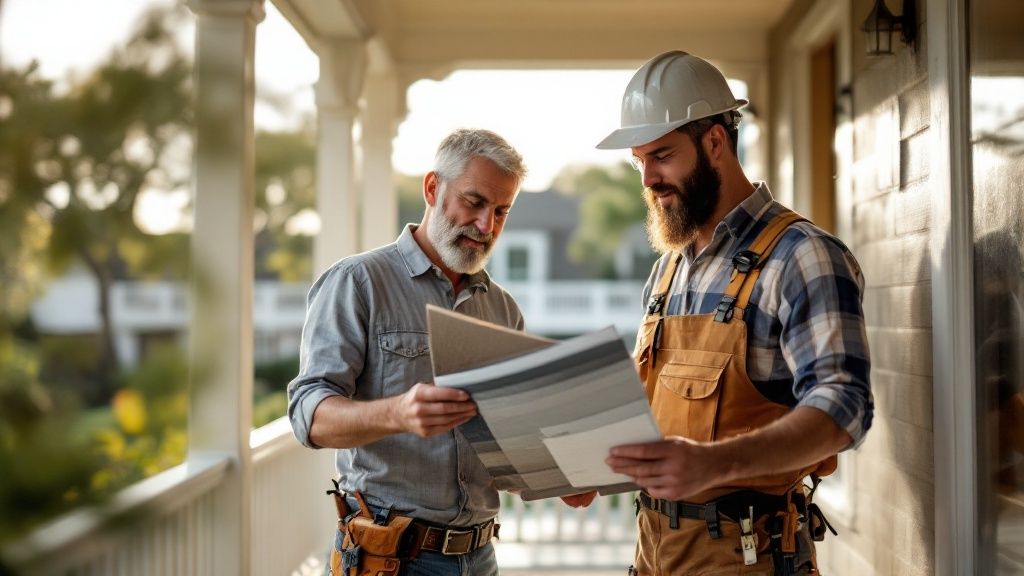
Think of this meeting as more than just getting a price—it's your chance to interview the contractor. You’re evaluating their professionalism, their expertise, and how they plan to tackle a project like yours here in Highland Beach. Come prepared with questions that dig deeper than just the bottom line.
A big part of getting an accurate estimate involves asking the right questions, and that's true whether you're hiring a roofer or another home service pro. The principles of transparency and detail always apply.
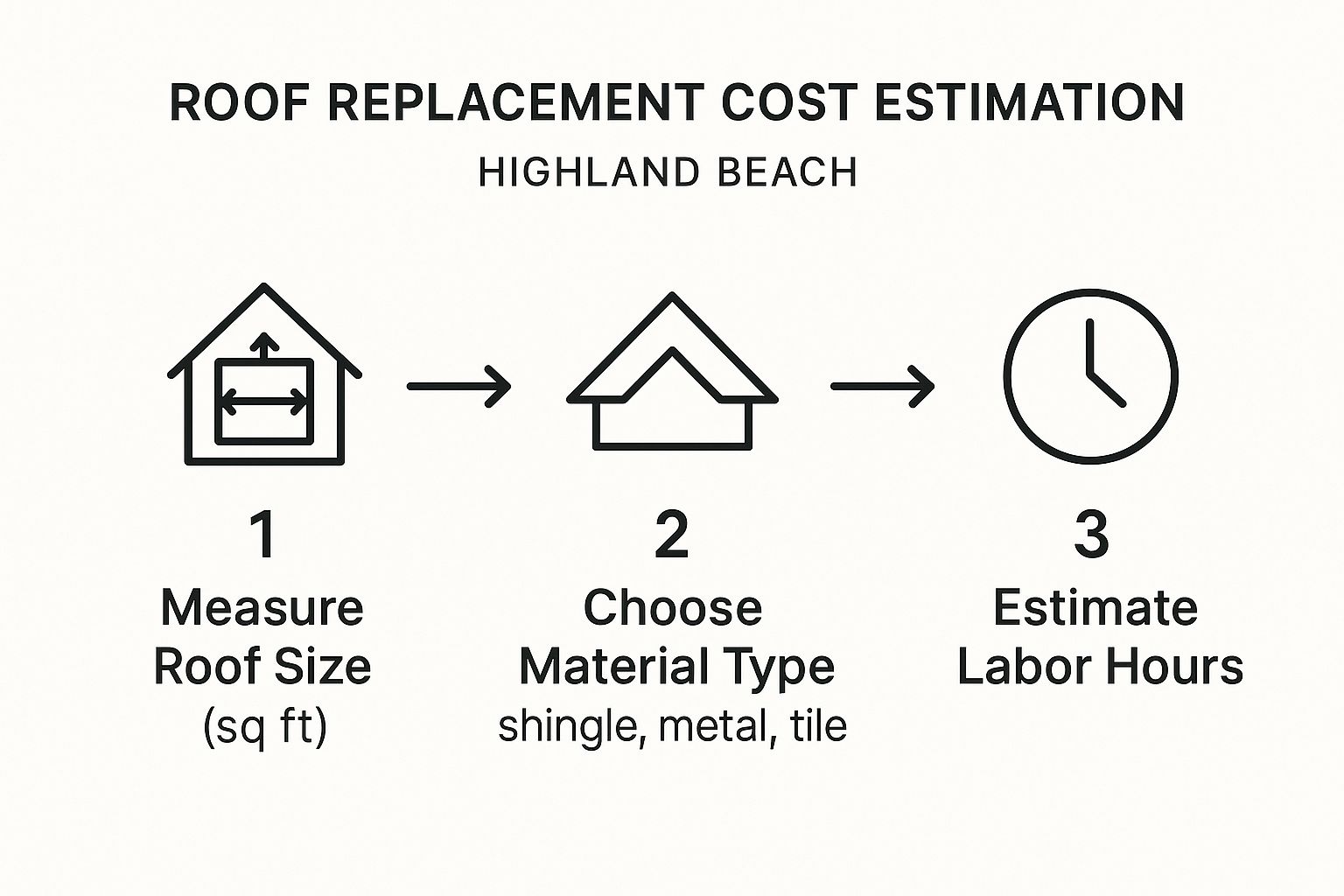
As you can see, a contractor follows a specific flow to build your estimate, and the materials you choose—shingle, tile, or metal—play a huge role in the final number.
To make sure you cover all your bases, I've put together a checklist of essential questions to ask every roofer you meet with.
Key Questions for Your Roofer Consultation
| Category | Question to Ask | Why It's Important |
|---|---|---|
| Local Experience | How many roofs have you installed in Highland Beach, and what materials work best in our coastal environment? | This confirms their familiarity with high-wind codes, salt air, and local permit requirements. |
| Project Management | Who will be my main point of contact, and how will you communicate project updates or unexpected issues? | Clear communication is vital. You need to know who to call and how you'll be kept in the loop. |
| Crew & Safety | Is your crew composed of employees or subcontractors? What safety protocols do you follow? | This speaks to the company's accountability, training standards, and commitment to a safe job site. |
| Logistics | What does your daily cleanup process look like? Where will materials and the dumpster be staged? | A professional crew respects your property by keeping it tidy and minimizing disruption to your daily life. |
| Timeline | What is the estimated start date, and how long do you expect the project to take, weather permitting? | This sets clear expectations and helps you plan for the project from start to finish. |
Having these answers helps you compare contractors on more than just price, giving you a much clearer picture of who you'll be working with.
Deconstructing the Written Estimate
After the consultations, each roofer should provide a detailed written estimate. A vague, one-page quote just won't cut it. A truly professional proposal is a multi-page document that breaks down every single part of the job, leaving zero room for surprises.
A detailed estimate protects both you and the contractor. It serves as a clear blueprint for the project, outlining all expectations and costs upfront to prevent surprises down the road.
When the quotes come in, your job is to compare them line by line to make sure you're looking at an apples-to-apples comparison. A solid estimate will always specify:
- Materials: It should list the exact brand, type, and color of shingles, tile, or metal. It also needs to detail the underlayment, flashing, and any ventilation products being used.
- Labor Costs: This should be a clear figure covering the tear-off of your old roof and the full installation of the new one.
- Permit Fees: The contractor should be handling all necessary permits with the Town of Highland Beach, and that cost should be included.
- Waste Disposal: Look for an itemized cost for the dumpster and the removal of all old roofing materials.
- Warranty Information: The estimate must clearly outline both the manufacturer's warranty on the materials and the contractor’s own workmanship warranty.
By making sure every quote has this level of detail, you can compare your options with confidence. You won't just see the price difference; you'll understand why it's different. That clarity is what empowers you to choose the right pro for one of your home's most important jobs.
Choosing The Right Materials For Florida's Climate
Here in Highland Beach, your roof is more than just a cover—it's your home's primary shield against blistering sun, corrosive salt air, and the ever-present threat of hurricane-force winds. Picking the right materials is every bit as critical as finding the best roofer. The choice you make directly impacts your home's safety, your monthly energy bills, and even its curb appeal.
Our unique coastal climate means some materials just hold up better than others. When you start talking to roofers near me in Highland Beach, you'll quickly find the conversation circles around three main contenders, each with its own set of pros for our environment.
Comparing Top Coastal Roofing Materials
Making a smart decision starts with understanding the real-world trade-offs between durability, cost, and looks. Let's break down the most popular choices for homes here in South Florida.
- Architectural Shingles: Forget the flimsy asphalt shingles of the past. These are thicker, heavier, and designed with a dimensional, high-end look. They strike a great balance between performance and value, and many modern versions come with impressive high-wind ratings.
- Standing-Seam Metal: A metal roof is a serious long-term investment in your home's protection. Famous for its incredible durability and wind resistance, a quality metal roof can easily last 50 years or more. It also reflects a tremendous amount of solar heat, which can make a noticeable difference in your cooling costs during our long, hot summers.
- Concrete or Clay Tile: Tile is the quintessential look for Florida architecture for a reason. It offers top-tier longevity and fantastic resistance to both fire and wind. While it's a heavier material and often comes with a higher price tag, its performance in a high-wind, salt-spray environment is simply unmatched.
Beyond the durability of the material itself, it’s a good idea to research how much hurricane insurance costs in Florida. Why? Because your roofing choices can directly influence your premiums. Insurers love to see roofs with superior wind mitigation features and often reward homeowners with discounts.
Advanced Roofing Technologies For Florida
The roofing industry is always moving forward, with new technologies aimed at boosting performance and longevity. The total U.S. roofing market was projected at a massive $59.2 billion in 2024, partly because homeowners like you are demanding more resilient and energy-efficient solutions. This trend means local contractors are offering better products than ever.
Your roof is a complete system. The materials you see are only part of the equation. The underlayment and ventilation working underneath are just as critical for protecting your home during a storm.
Make sure to ask your roofer about some of these modern advancements:
- Cool Roof Technologies: Many of today's materials, from shingles to metal panels, can come with special coatings that reflect more sunlight and absorb less heat. This can dramatically lower the temperature on your roof's surface, reducing the strain on your AC system and saving you money month after month.
- Superior Underlayment: This is the unsung hero of your roofing system. It's the protective layer between the roof deck and your shingles or tiles. A high-quality, self-adhering synthetic underlayment provides a crucial secondary water barrier. If a storm damages your primary roofing, this layer can be the difference between a small repair and a catastrophic interior leak.
Choosing the right combination of materials, underlayment, and proper ventilation creates a tough, integrated system that will stand up to Florida’s demanding climate for decades.
You've done the hard work—sifting through estimates, checking references, and vetting local roofers. After all that effort, you’ve finally picked the right crew for your Highland Beach home. It feels like the finish line, but there's one more critical lap to run: nailing down the contract and getting your property ready for the action.
This final stage is just as important as everything that came before. The roofing contract isn't a mere formality; it's the official game plan for the entire project. A vague, one-page agreement or, even worse, a simple handshake deal is a massive red flag. A true professional protects both you and their team with a detailed, transparent document.
What to Look for in a Rock-Solid Roofing Contract
Before you put pen to paper, it's time to put on your reading glasses and scrutinize every line. A legitimate contract from a reputable Highland Beach roofer won't be filled with confusing jargon. It will be crystal clear and comprehensive.
Make sure these key elements are spelled out:
- A Detailed Scope of Work: The contract needs to list everything. This includes the tear-off of the old roof, the exact brands and models of shingles or tiles, the type of underlayment, and even the specifics on flashing and ventilation.
- Total Cost and a Clear Payment Schedule: The document should show the final price and break down when payments are due. Be cautious of any contractor demanding a huge deposit upfront. A standard schedule might be one-third at signing, another third when materials arrive on-site, and the final payment only after you're satisfied with the completed job.
- The Project Timeline: Weather in Florida can be unpredictable, but the contract must provide an estimated start date and a target completion date. This sets a clear expectation and keeps the project on track.
- Proof of Insurance and Licensing: Your contractor’s license number should be right there in the contract, along with confirmation that they carry both general liability and workers' compensation insurance. Don't just take their word for it—it should be in writing.
- All the Warranty Details: The agreement needs to cover two types of warranties: the manufacturer’s warranty for the materials and the contractor's workmanship warranty. It should clearly state what’s covered and for how long.
A contract that feels fuzzy on details—like a missing completion date or using phrases like "materials as needed"—is a warning sign. Every single detail should be defined in writing. This is your best defense against misunderstandings or surprise costs down the road.
Getting Your Home Ready for the Roofing Crew
With the contract signed, you can shift your focus to prepping your property for the crew’s arrival. A few simple steps will protect your home and help the project flow smoothly from day one.
A little bit of prep work makes a world of difference for everyone involved.
- Clear the Deck (and the Driveway): Move your patio furniture, barbecue grill, potted plants, and any cars parked near the house. This creates a safe work zone and keeps your belongings clear of falling debris.
- Protect Your Landscaping: If you have prized flower beds or delicate shrubs right next to the foundation, consider covering them with tarps. Your roofer will likely do this as well, but an extra layer of protection never hurts.
- Give Your Neighbors a Heads-Up: Let's be honest—a roof replacement is noisy. A quick, friendly chat with your neighbors to let them know the project's timeline is a simple courtesy that can go a long way in keeping the peace.
Got Questions About Highland Beach Roofing? We’ve Got Answers.
When you're looking at a big project like a new roof, you're going to have questions. It's only natural. For anyone in Highland Beach searching for local roofers, a few key concerns always seem to pop up. Getting solid answers upfront helps you feel confident and make sure you understand the unique demands of roofing here on the coast.
We pulled together the most common questions we hear from homeowners. Think of this as your cheat sheet for getting up to speed quickly.
How Long Should a New Roof Last in Our Climate?
This is a big one, and the answer really comes down to the material you choose. A roof in Highland Beach is in a constant battle with intense sun and salty air, so what works inland might not hold up as well here.
- Architectural Shingles: If you go with a quality architectural shingle, you can reasonably expect it to last 15 to 25 years with a proper installation.
- Metal or Tile Roofs: These are the heavy hitters. A well-installed metal or tile roof can easily last 50 years or more, giving you incredible resistance to our tough coastal environment.
No matter which material you pick, consistent maintenance is the key to getting every last year out of it. Regular check-ups can spot small problems before they turn into huge, expensive headaches.
Do I Need a Permit for Roof Work in Highland Beach?
Yes, absolutely. This is not a corner you can cut. The Town of Highland Beach requires a building permit for pretty much any roof replacement and for most major repairs. It’s a crucial step that ensures the work meets Florida’s tough building codes, which are designed to keep your home safe during a hurricane.
Any roofer worth their salt will handle the entire permitting process for you. They’ll submit the plans, schedule the inspections, and make sure everything is done by the book. If a contractor suggests you can skip the permit, that's a massive red flag.
When Is the Best Time of Year for a Roof Replacement?
Timing your project can save a lot of hassle. In South Florida, the sweet spot for a roof replacement is during our drier season, which generally runs from late fall through early spring—think November to April.
Why then? You're avoiding the peak of hurricane season and the daily, unpredictable thunderstorms that pop up all summer. Fewer rain delays mean your project stays on track and your home is open to the elements for the shortest time possible.
How Should I Handle an Insurance Claim for Storm Damage?
If a storm hits your roof, the very first thing to do is document the damage safely from the ground. Take plenty of clear pictures before you call anyone else. Then, get in touch with your insurance company to get the claim started.
Many seasoned Highland Beach roofers have a ton of experience navigating the insurance maze. They know exactly what adjusters need to see—detailed assessments, professional photos, and itemized quotes. Having a roofer who knows this process can be a huge help in getting your claim approved without unnecessary stress.
When you need answers from a team that knows South Florida roofing inside and out, trust Paletz Roofing and Inspections. We're here to provide the expertise and quality service your Highland Beach home deserves. Contact us today for a free, no-obligation estimate!