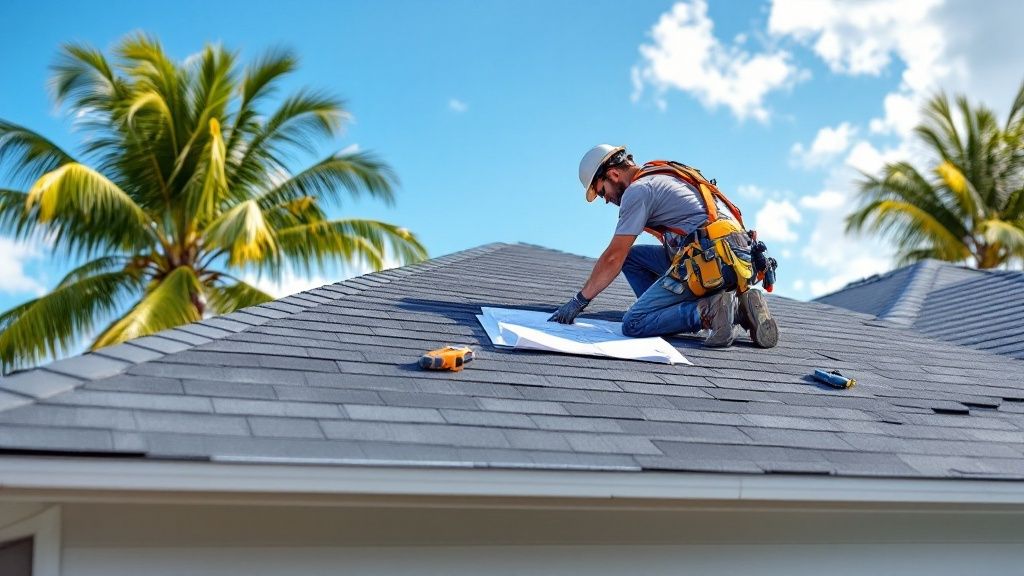
When you start looking at a new roof for your home in Jupiter, the price tags can feel all over the map. You might see quotes anywhere from $7,000 to over $30,000. It’s a huge range, and it’s driven by everything from the size of your roof and the materials you pick to the complexity of the job itself. Getting a handle on what goes into those numbers is the first step to making a smart investment.
Breaking Down Your Jupiter Roof Installation Costs
Let's get right to the big question: what’s this actually going to cost me? Seeing quotes that vary by tens of thousands of dollars is enough to make anyone’s head spin, but that final number is about much more than just square footage. It's a mix of materials, skilled labor, and specific local requirements that all add up.
A new roof is one of the biggest investments you’ll make in your home, period. This isn't just about looks; it's about protecting your property from Jupiter's relentless sun, heavy rains, and the constant threat of hurricanes. When you understand the cost breakdown, you can compare bids from different contractors without getting lost in the numbers and spot any hidden fees.
It’s also smart to think about how you'll fund the project. Exploring options like a home equity loan or understanding potential cash-out refinance costs can help you figure out the best financial path for this major upgrade.
What Really Drives The Final Price?
Several key things will determine the final invoice for your Jupiter roof. A simple, single-story ranch house is just going to cost less than a complex two-story home with multiple dormers, valleys, and steep pitches. Every one of those architectural details demands more intricate work, more material, and a lot more time from the crew.
Beyond the shape of your roof, the scope of the work is a huge factor. Are you doing a full tear-off, where every old shingle is removed down to the deck? Or is it an overlay, where new shingles go right on top of the old ones? A tear-off costs more upfront, but it's often the only way to properly inspect and repair the underlying wood—a critical step for a roof that’s built to last.
Estimated Cost for New Roof Installation in Jupiter FL
To give you a clearer picture, here’s a look at what you can expect to pay for different roofing materials commonly used here in Jupiter. This should help you line up your budget with your priorities.
| Roofing Material | Average Cost Range (per 100 sq. ft.) | Key Considerations |
|---|---|---|
| Asphalt Shingles | $350 – $550 | Most popular and budget-friendly. Architectural shingles offer better durability. |
| Metal Roofing | $800 – $1,800 | Excellent for storm resistance and energy efficiency. Higher upfront cost. |
| Clay/Concrete Tile | $900 – $2,000 | Classic Florida look, very durable, but heavy. May require structural reinforcement. |
| Flat Roofing (TPO/PVC) | $500 – $1,200 | Used for low-slope or flat sections. Cost depends on the specific membrane. |
Remember, these are just ballpark figures. The only way to get a firm price is to have a professional roofer inspect your specific property and provide a detailed quote.
A Look At The Numbers
This chart helps visualize where your money is actually going during a typical roof replacement project here in Jupiter.
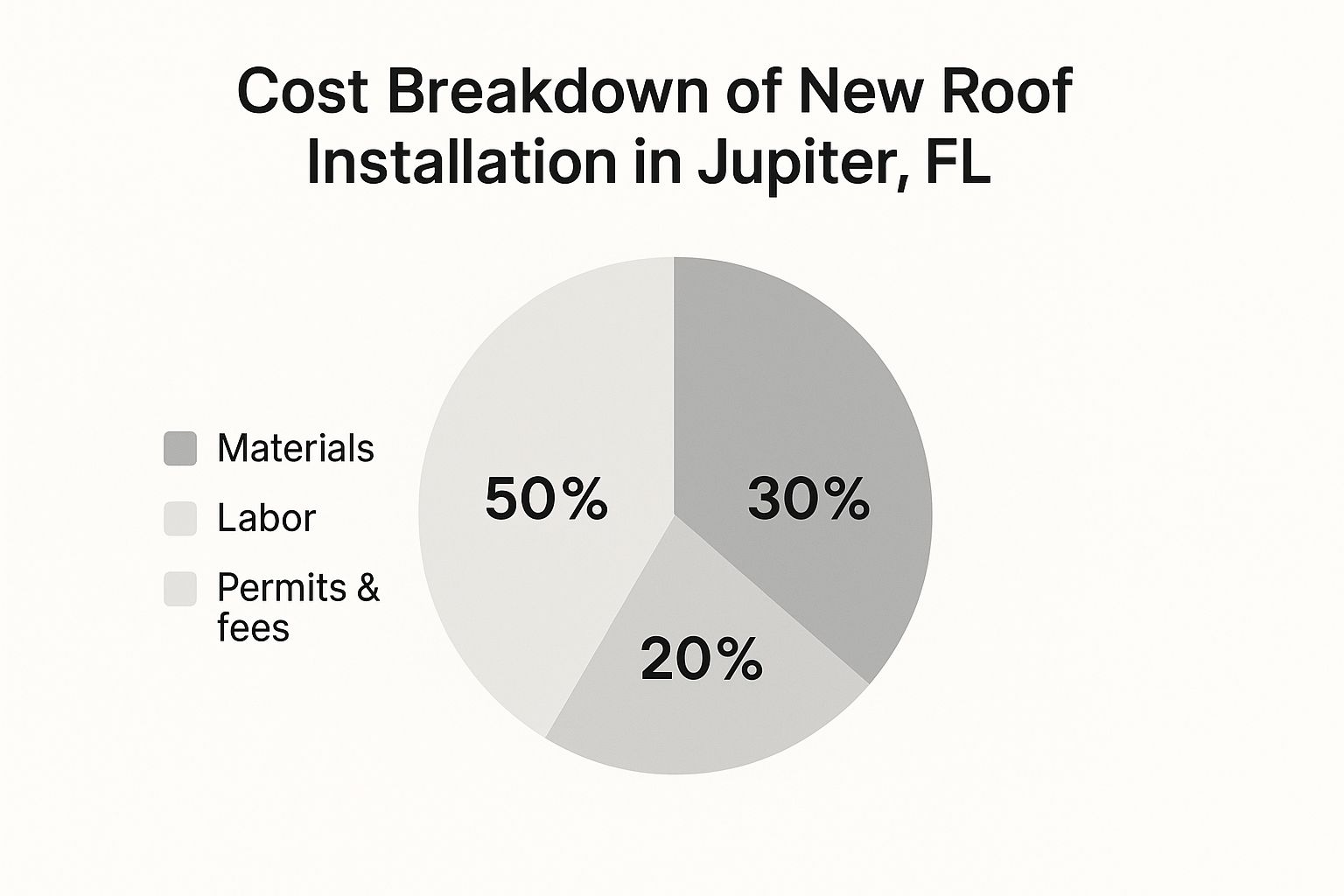
As you can see, materials make up a huge chunk of the project cost. This is why your choice of shingles, tile, or metal makes such a massive difference in the final price.
Local data really backs this up. Homeowners tackling a new roof or re-roofing project in Jupiter, FL, can expect to spend anywhere from $7,000 to $36,000, with the final cost hinging on all the factors we've discussed. Asphalt shingles remain a popular, cost-effective option, with most projects falling in the $6,300 to $8,000 range.
My Pro Tip: Don't just look at the bottom line on a quote. A good contractor will be happy to break down their bid so you can see the specific costs for materials, labor, tear-off, disposal, and permits. That kind of transparency is the sign of a true professional you can trust.
Choosing Hurricane Ready Roofing Materials
Picking the right materials for a new roof here in Jupiter, FL, is about so much more than just curb appeal. Your roof is the single most important barrier between your family and hurricane-force winds, blazing UV radiation, and the relentless humidity we all know so well. Making a smart choice isn't just a purchase; it's an investment in protection and peace of mind for years to come.

Jupiter's unique coastal environment demands materials specifically engineered to stand up to our extreme conditions. A standard shingle that might be perfectly fine in a northern state can fall apart under the South Florida sun or get ripped to shreds in a major storm. That's why we have to focus on what a material can do, not just how it looks.
Metal Roofing Built for The Coast
When it comes to pure, unadulterated durability and storm resistance, metal roofing is in a league of its own. Modern standing-seam metal roofs are engineered to handle wind speeds of 160 mph or more, making them an absolutely top-tier choice for homes inside high-velocity hurricane zones (HVHZ) like ours.
But their wind resistance is just the start. Metal roofs bring other huge advantages to our climate. Their reflective surfaces can significantly lower attic temperatures, which translates directly to lower cooling bills during our long, scorching summers. On top of that, they're highly resistant to fire, rot, and insects.
A lot of people worry that metal roofs are noisy when it rains. Truth is, when installed correctly over a solid roof deck with the right underlayment, a modern metal roof is often no louder than an asphalt shingle roof.
Yes, the initial investment is higher. But with a lifespan that often pushes 50 years or more, it becomes one of the most cost-effective decisions you can make for your home in the long run.
The Classic Appeal of Tile Roofs
There's no denying it—tile roofing, whether clay or concrete, is the quintessential look of Florida architecture. It delivers that timeless, upscale aesthetic while providing some serious protection against the elements. Tiles are incredibly durable, completely fire-resistant, and they simply won't rot in our humid air.
But with tile, weight is the big conversation starter.
- Structural Support: Your home's framing has to be strong enough to handle the sheer weight of a tile roof. An engineering assessment is almost always needed before you can even think about installation.
- Impact Resistance: While very strong, individual tiles can crack if hit hard enough by flying debris during a hurricane.
- Installation Expertise: This is not a job for amateurs. Getting the installation right is absolutely critical for ensuring a watertight seal and proper resistance to wind uplift.
Modern Asphalt Shingles
Asphalt shingles have improved dramatically over the years and are still a popular, more budget-friendly option. For homeowners in Jupiter, the trick is to choose high-quality architectural or dimensional shingles instead of the basic, flat 3-tab style. These thicker shingles offer much better wind resistance, often rated for up to 130 mph.
You'll also want to look for shingles that feature algae-resistant (AR) technology. These have tiny copper granules mixed in that prevent those ugly black streaks caused by algae—a constant battle in Florida's humidity. While their lifespan is shorter than metal or tile, a modern architectural shingle roof can provide very reliable protection at a much more accessible price point.
The cost difference between these options is pretty stark. For example, a basic asphalt shingle overlay might average around $236.17 per 100 square feet. A new tile installation, on the other hand, can easily cost upwards of $1,096.51 for that same area. You can explore more detailed Jupiter roofing cost data to help shape your budget.
How to Hire a Trusted Jupiter Roofing Contractor
Picking the right materials is a huge step, but let’s be honest—the real success of your new roof in Jupiter, FL, comes down to the crew you hire to install it. I’ve seen it a hundred times: a top-of-the-line metal roof, installed poorly, fails faster than budget shingles put on by a true expert. Finding that expert in a sea of options requires a smart, methodical approach.
This isn’t just about finding someone who can swing a hammer. It's about finding a partner who genuinely understands Palm Beach County's tough building codes, knows how to pull the right permits without a hitch, and has a rock-solid reputation for standing by their work. Your goal is to find a business that sees your roof as a long-term installation, not just another job to get done.
Verifying Licenses and Insurance
Before you even think about calling for an estimate, your first move is to check a contractor's credentials. This is the absolute, non-negotiable step that protects you from huge liabilities and confirms the company is operating legally in Florida.
You need to see proof of two critical documents:
- A Florida State Certified Roofing Contractor License: This is your proof they’ve passed the state's demanding tests and are actually qualified to work on your roof.
- Proof of Insurance: This must include general liability and, most importantly, workers' compensation. If a worker gets hurt on your property and the contractor doesn't have workers' comp, you could be on the hook for their medical bills.
Any legitimate, professional roofer will hand these documents over without a second thought. If they hesitate, make excuses, or get defensive, that’s a massive red flag. Walk away.
Key Takeaway: Never, ever accept a verbal "yes, we're insured." Ask for the actual certificates for their license and insurance. Take a few minutes to verify them with the issuing agencies. That small bit of due diligence can save you from a legal and financial nightmare.
What to Ask During the Consultation
Once you have a shortlist of licensed and insured roofers, the consultation is where you separate the pros from the rest. Think of it as an interview, not just a meeting to get a price. Show up prepared with a list of sharp, specific questions.
You need to go deeper than just, "How much will it cost?" Dig into their actual process.
- Who will be on-site every day? Will you have a dedicated project manager you can talk to, or will it be a revolving door of subcontractors?
- How do you handle surprises? What’s the plan if they tear off the old shingles and find rotten plywood decking? You need to know how those extra costs are quoted and approved.
- What does your cleanup process look like? A professional crew will have a clear plan for protecting your landscaping, driveway, and A/C unit. They’ll also run magnetic sweepers to pick up stray nails.
- Can you give me local references? Ask for addresses of recent projects right here in Jupiter or the surrounding towns. A great roofer is proud of their work and wants you to see it.
Pay close attention not just to what they say, but how they say it. Vague answers, high-pressure sales tactics, or an unwillingness to provide a detailed, itemized written quote are all warning signs. When looking into potential pros, checking out what various local roofing contractors have to say can give you a better feel for the market. A confident, transparent contractor will welcome your questions and give you clear, direct answers, making you feel informed and comfortable about your new roof installation.
Navigating Permits and Your Project Timeline
Getting a new roof in Jupiter, FL, can feel like a huge undertaking, but it doesn't have to be a source of anxiety. When you understand the entire process—from the initial paperwork to the final nail—you can plan your life around the project, not the other way around. It really just comes down to knowing what to expect from a major construction job.
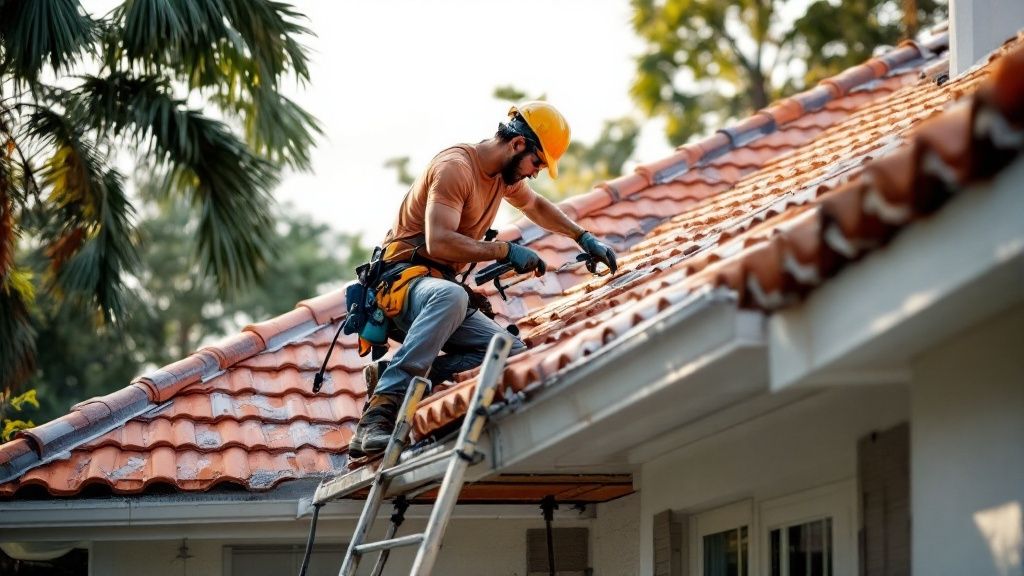
Before a single shingle is ordered, the first real step is securing the right permits from the Town of Jupiter or Palm Beach County. Your contractor should be handling all of this for you. They’ll submit the necessary plans and documents, a process that can take a few weeks depending on how busy they are.
This official approval is non-negotiable. It’s the only way to ensure your new roof meets Florida’s tough building codes, which are specifically designed to stand up to hurricanes. While your contractor manages the specifics, getting familiar with general renovation permit requirements can give you a better grasp of the overall process.
The Typical Installation Sequence
Once that permit is in hand, the real work can kick off. While bad weather can always throw a wrench in the schedule, a typical project follows a pretty clear sequence. For an average-sized home here in Jupiter, the entire on-site job usually wraps up in about three to five days.
Here's a breakdown of what that timeline usually looks like:
- Day 0 – Material Delivery: A day or two before the crew arrives, expect a large truck to deliver all the materials. Shingles, underlayment, and flashing will likely be placed directly on your roof with a boom lift or staged neatly in your driveway.
- Day 1 – Tear-Off: This is the noisiest and messiest day of the project. The crew will show up early to strip every single layer of your old roof right down to the wood decking. This is also when they'll inspect the decking for any rot or damage that needs to be fixed before they can move on.
- Day 2-3 – Installation: Now the new roof starts to take shape. This phase involves installing the new underlayment, drip edge, flashing, and finally, the roofing material itself. The skill of the installation crew is on full display here.
- Day 4-5 – Final Touches and Cleanup: The team finishes up the details, like ridge caps and vents, and does any final sealing. Their last step should be a meticulous cleanup of your entire property—including running magnetic rollers to snatch up any stray nails—before they schedule the final inspection.
Pro Tip: Have a conversation with your contractor about protecting your property before they start. Ask them how they plan to cover fragile landscaping, where to move patio furniture, and how they'll shield your A/C unit from falling debris. A professional crew will always have a clear plan for this.
The last hurdle is the official inspection from the local building department. An inspector will come out to verify that the installation meets every code requirement before "closing out" the permit. Once that’s done, the project is officially complete. You can finally relax and enjoy the peace of mind that comes with a brand-new roof over your head.
South Florida Roofing Trends You Should Know
When you’re planning a new roof installation in Jupiter, FL, it’s easy to focus just on your own home. But your project doesn't happen in a vacuum. It’s tied directly to some powerful market forces that can sway everything from the cost of materials to how long you’ll be on a contractor’s waiting list.
Getting a handle on these bigger-picture trends isn't just interesting—it helps you make a smarter investment and set realistic expectations from the get-go.
The roofing world is closely linked to the wider construction market, which is seeing some big shifts. For example, federal infrastructure investments were projected to pump up nonbuilding construction by 8.8%. That might seem unrelated, but it creates a massive ripple effect, tightening the labor market for all skilled trades, including the crew you need for your roof. You can dig deeper into these Florida roofing trends to see how economic currents affect local projects like yours.
What does this mean on the ground? It creates a super competitive environment. Roofing contractors in Jupiter are feeling the squeeze from rising wages as the supply of experienced, reliable roofers just can't keep up with demand.
The Challenge of Labor and Materials
Let’s be blunt: finding and keeping skilled roofing labor is one of the biggest headaches for companies across South Florida right now. The demand for qualified installers is consistently higher than the supply, which means labor costs have become a significant—and growing—part of any roofing quote you see.
This isn’t about contractors trying to pad their numbers. It’s a direct reflection of what it costs to get an expert on your roof.
At the same time, the cost of roofing materials has been a rollercoaster. Global supply chain hiccups can trigger sudden price spikes on everything. We're talking metal panels, asphalt shingles, and even the basic screws and underlayment needed to hold it all together. A quote you got six months ago? It might be completely out of date today simply because the cost of raw materials has jumped.
Key Insight: These two forces—intense demand for labor and unpredictable material costs—are the real drivers behind rising project prices. In this kind of market, getting a well-structured contract that locks in your pricing is more valuable than ever.
What This Means for Your Project
So, why should you care about all this? Because understanding these external pressures helps you see the true value in a well-managed roofing project.
It explains why the best professional contractors are booked out for weeks or months and why getting on their schedule should be a top priority. It also shines a light on how important it is to work with a contractor who has solid relationships with their suppliers. Those relationships can help cushion the blow from sudden price hikes.
Being aware of these industry trends gives you a much clearer picture of the investment you’re making. You're not just buying shingles and nails; you're navigating a complex market to secure expertise and materials for one of your home's most critical assets.
Common Questions About Jupiter Roof Installations
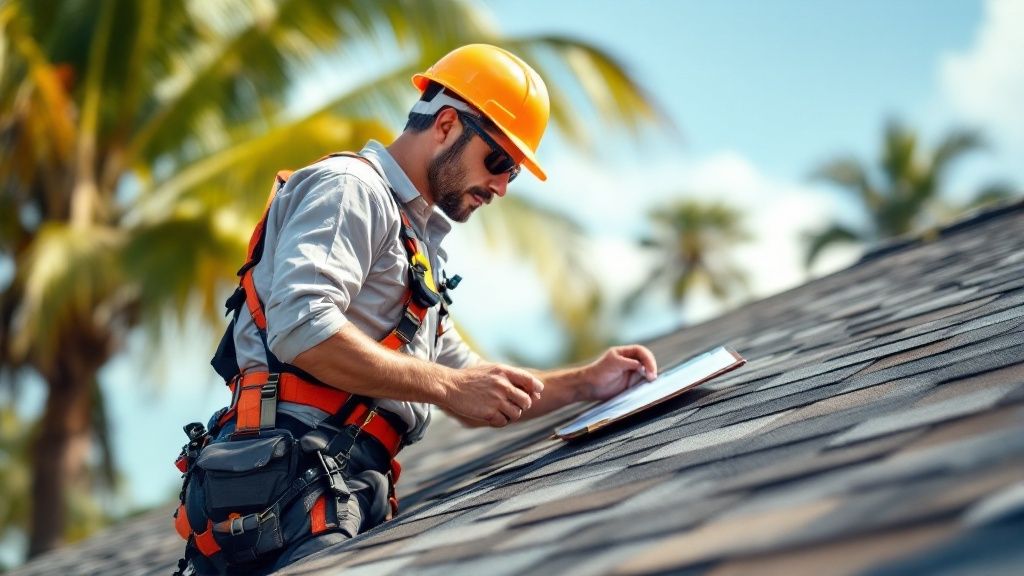
Starting a roof replacement in Jupiter, FL, can feel like a huge undertaking. It's totally normal to have a lot of questions. Most homeowners I talk to worry about the same things: how long it will take, how disruptive it will be, and what happens after the crew leaves.
Let's clear the air and tackle those questions head-on. A little bit of knowledge goes a long way in making this process feel manageable and keeping you in the driver's seat from start to finish.
How Long Does The Installation Take
For a standard single-family home here in Jupiter, a full roof replacement is usually wrapped up in two to five days. That timeline covers everything from tearing off the old roof and inspecting the wood decking underneath to installing the complete new system.
Of course, a few things can throw a wrench in that schedule. Florida's pop-up thunderstorms are the most common culprit for delays, especially during our rainy season. The other variable is what we find underneath the old shingles. If there's significant rot or structural damage, those repairs will naturally add some time to the project.
A professional roofing contractor should always provide you with a realistic, day-by-day schedule before work begins. This transparency helps you plan accordingly and sets clear expectations for the project's duration.
Can I Stay Home During The Project
Absolutely. In most cases, there's no need to pack up and find a hotel. You can definitely stay in your home while we work, but it's important to be prepared for what a major construction project feels like right over your head.
Here’s a realistic look at what to expect:
- It gets loud. The tear-off phase and the sound of nail guns can be very noisy. If you work from home or have small children, you might want to plan a few daytime outings.
- Protect your attic. It’s a good idea to cover anything stored in your attic with a tarp. A fine layer of dust and tiny debris can sometimes find its way through the decking boards.
- Safety is key. For everyone's safety, please keep children and pets indoors and away from the work area around your house. There will be equipment and falling debris, and we want to keep everyone out of harm's way.
What Kind of Warranty Should I Expect
Any new roof worth its salt comes with two separate warranties. Understanding both is critical, and if a contractor only offers one, that's a serious red flag.
First, you'll get a manufacturer's warranty. This covers the actual roofing materials—the shingles, tiles, or metal panels—against defects. Depending on the product you select, this warranty can last anywhere from 20 to 50 years, or even a lifetime.
The second, and equally important, is the contractor's workmanship warranty. This is the roofer's promise that they installed everything correctly. It covers any leaks or issues that stem from installation mistakes. A reputable Jupiter roofer who is confident in their crew's work will typically offer a workmanship warranty of five to ten years. It’s a direct reflection of their quality and skill.
When you're ready to protect your home with a professionally installed roof backed by strong warranties, the team at Paletz Roofing and Inspections is here to help. Contact us today for a free, no-obligation quote. https://paletzroofing.com