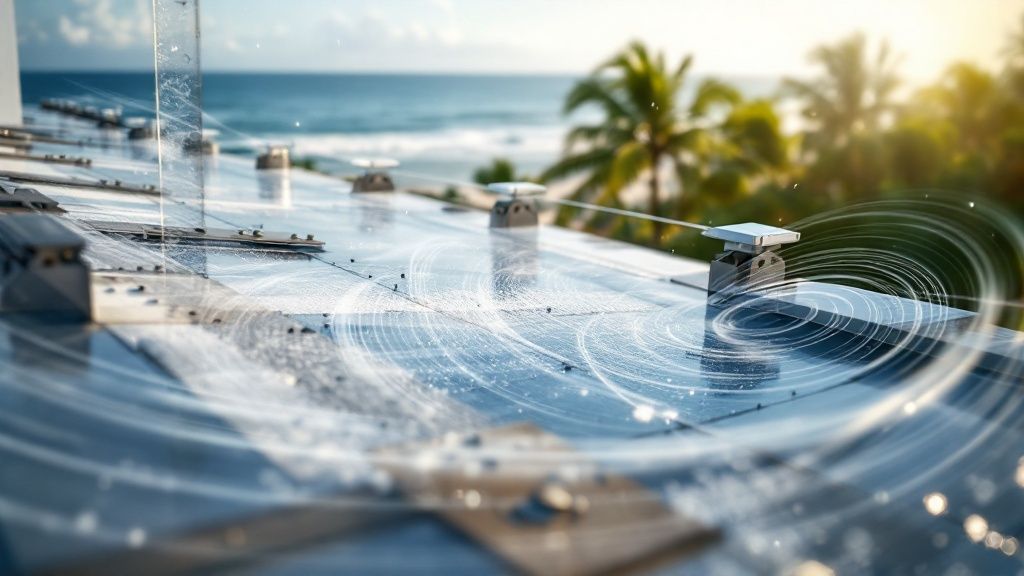
For homeowners in Golden Beach, hurricane roof protection isn't just a good idea—it's a non-negotiable shield against some of nature's most powerful forces. Living right on the coast means standard roofing simply won't cut it. A fortified system isn't a luxury; it's a critical necessity for your safety and financial security, built with specialized materials and structural reinforcements designed to stand up to extreme wind and rain.
Why Golden Beach Homes Face Unique Roofing Risks
Think of your roof as a giant umbrella. On a normal rainy day, any umbrella will do the job. But when a hurricane hits, that same umbrella is violently torn inside out. That’s precisely the kind of force your roof is up against in Golden Beach, a town uniquely positioned on a barrier island, taking the full brunt of the Atlantic's fury.
The main threat isn't just the sheer speed of the wind; it's a specific aerodynamic force known as wind uplift. As hurricane-force winds whip across your roof, they create a low-pressure zone above it, much like how an airplane wing generates lift. At the same time, the pressure inside your house is building up. This dangerous combination creates a powerful upward pull that can literally peel an improperly secured roof right off its frame.
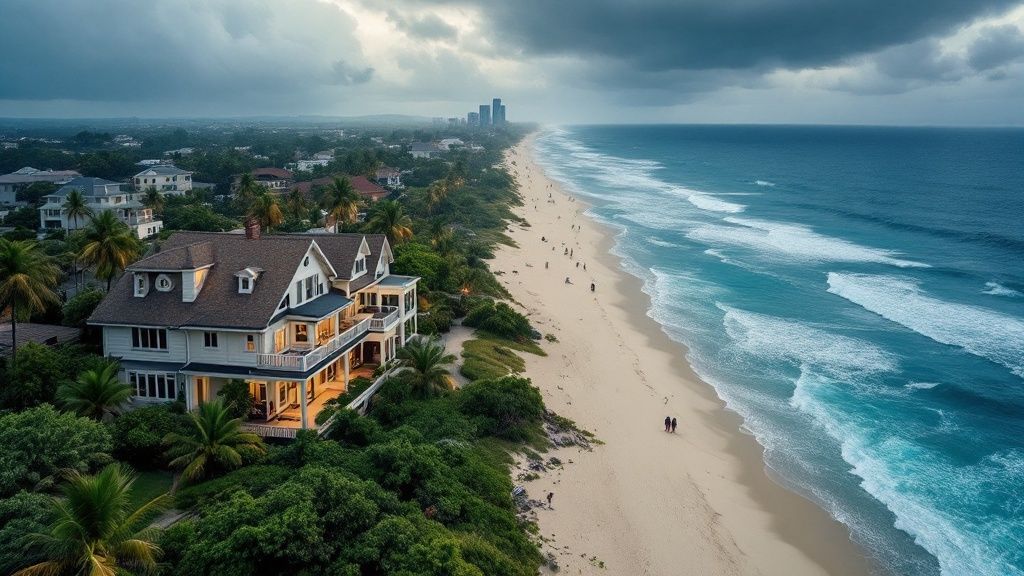
For coastal properties, the roof is the first and most critical line of defense. A single point of failure—like a loose shingle or compromised flashing—can lead to a cascade of catastrophic damage within minutes.
The Dangers Beyond High Winds
It’s not just the raw power of the wind. Golden Beach homes have to contend with several other major threats that make robust hurricane roof protection so essential:
- Wind-Driven Rain: During a hurricane, rain doesn't just fall—it's fired sideways at incredible speeds. This intense, pressurized water can force its way into tiny gaps that would be harmless in a normal storm, leading to devastating interior water damage and mold.
- Flying Debris: Hurricane winds transform everyday objects into high-velocity projectiles. Tree branches, patio furniture, and even pieces of your neighbor’s roof can become airborne missiles. A fortified roof has to be tough enough to resist these impacts and prevent punctures.
- Saltwater Corrosion: The salty, humid air in Golden Beach is constantly attacking roofing materials, especially metal parts like nails and flashing. Over time, this corrosion weakens the entire system, leaving it far more vulnerable when a storm rolls in. You can find more details in our guide on material longevity in coastal areas.
How Hurricanes Actually Attack Your Roof
To really protect your roof here in Golden Beach, you first have to understand how a storm tries to tear it apart. It’s not just one big blast of wind. Think of it as a coordinated, multi-pronged assault where the hurricane systematically targets your roof with three distinct forces, each designed to find and exploit the smallest weakness.
The main and most destructive force is wind uplift. This is the sneaky one. Picture your roof like an airplane wing. As powerful winds speed over the top, they create a low-pressure zone, just like on a wing. At the same time, the storm is forcing air into your home through tiny openings, pressurizing the inside and creating a high-pressure zone underneath the roof deck.
This pressure difference generates a massive lifting force that literally tries to suck the entire roof structure upward, peeling it right off the walls. That’s why even a single loose shingle is so dangerous—it gives the wind a starting point to get underneath and begin a catastrophic peeling process.
The One-Two Punch of Pressure and Debris
While uplift is the most insidious threat, direct wind pressure is like a relentless battering ram. This is that raw, horizontal force you feel pushing against you during a storm. For your roof, it’s a constant barrage that stresses every single nail, shingle, and joint, trying to knock materials loose and create an opening for uplift and rain to get in.
The final piece of this triple-threat attack is flying debris. In hurricane-force winds, everyday items become lethal projectiles.
- Tree limbs
- Patio furniture
- Shingles and tiles from a neighbor’s roof
- Yard signs and ornaments
These objects are hurled at your home with enough force to puncture roofing materials, shatter tiles, and create instant entry points for torrential rain. A roof has to be tough enough to take these direct hits without its structure being compromised.
Understanding these combined forces is critical. A roof doesn't just fail from one big gust of wind; it fails when uplift, direct pressure, and debris work together to dismantle it piece by piece.
This destructive potential isn't just a theory for us in Florida. We've lived it. Hurricanes like Matthew back in 2016 caused widespread devastation, with storm surges over six feet and winds that topped 130 mph. In some of the hardest-hit areas, up to 80% of sheet metal roofs were damaged or completely torn off—a stark reminder of these forces at work. You can explore more data on the effects of past storms and see exactly how they have shaped Florida's tough building codes.
Choosing the Best Hurricane-Resistant Roofing Materials
Think of picking the right roofing material in Golden Beach as choosing armor for your home. It’s not a one-size-fits-all decision. Our coastal environment throws a unique combination of threats at our homes, which is exactly why Florida established some of the world's most rigorous building codes—the High-Velocity Hurricane Zone (HVHZ) standards. Your final choice has to thread the needle between raw durability, the look you want, and your budget, all while clearing these non-negotiable legal hurdles.
The ultimate goal is to create a single, unbroken shield over your head. This means finding a material that laughs at wind uplift, can take a direct hit from flying debris, and won’t corrode in the salty air we live and breathe. Let’s walk through the top contenders that are up to the challenge.
This chart gives you a quick visual comparison of how the most popular hurricane-rated materials stack up in terms of wind resistance and cost.
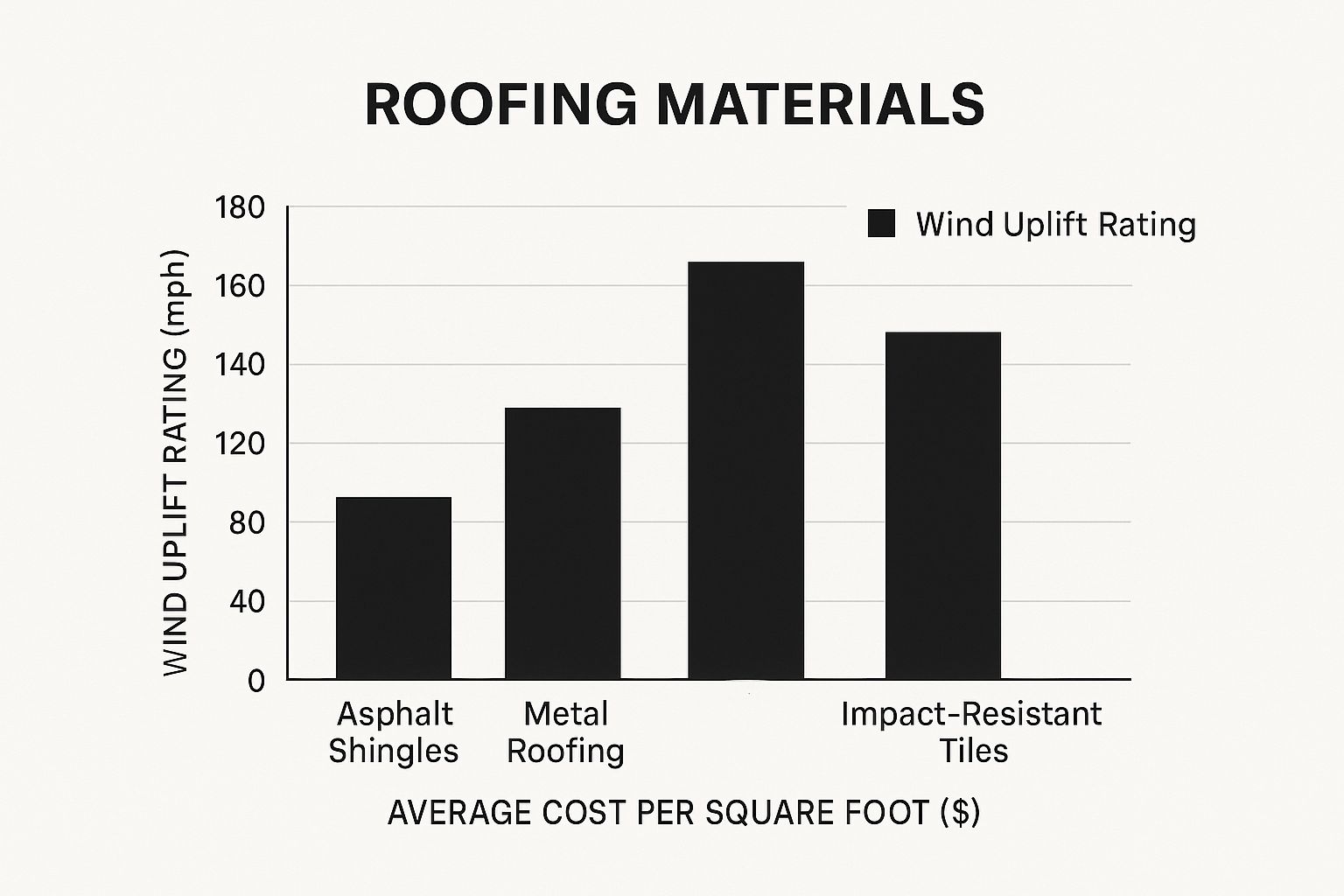
As you can see, metal roofing sits at the top for wind resistance, but it also comes with the highest price tag. On the other hand, modern impact-resistant shingles offer a fantastic balance of serious protection and more manageable costs.
Comparing Hurricane-Resistant Roofing Materials
To make an informed decision, it helps to see the key performance metrics side-by-side. This table breaks down the most important factors for our top roofing materials, giving you a clear picture of how they compare in the context of Golden Beach's demanding environment.
| Material | Wind Resistance (MPH) | Impact Resistance | Average Lifespan (Years) | Estimated Cost per Sq. Ft. |
|---|---|---|---|---|
| Standing Seam Metal | 160+ | Excellent | 50+ | $9 – $20+ |
| Impact-Resistant Shingles | 130 – 150 | Very Good (Class 4) | 20 – 30 | $5 – $9 |
| Concrete & Clay Tile | 130+ | Good | 50+ | $8 – $18 |
Each material brings something different to the table. Metal offers unmatched resilience for a premium, while tile provides incredible longevity and classic aesthetics. Impact-resistant shingles have become the go-to for homeowners wanting robust, code-compliant protection without the high-end cost.
H3: Standing Seam Metal Roofing
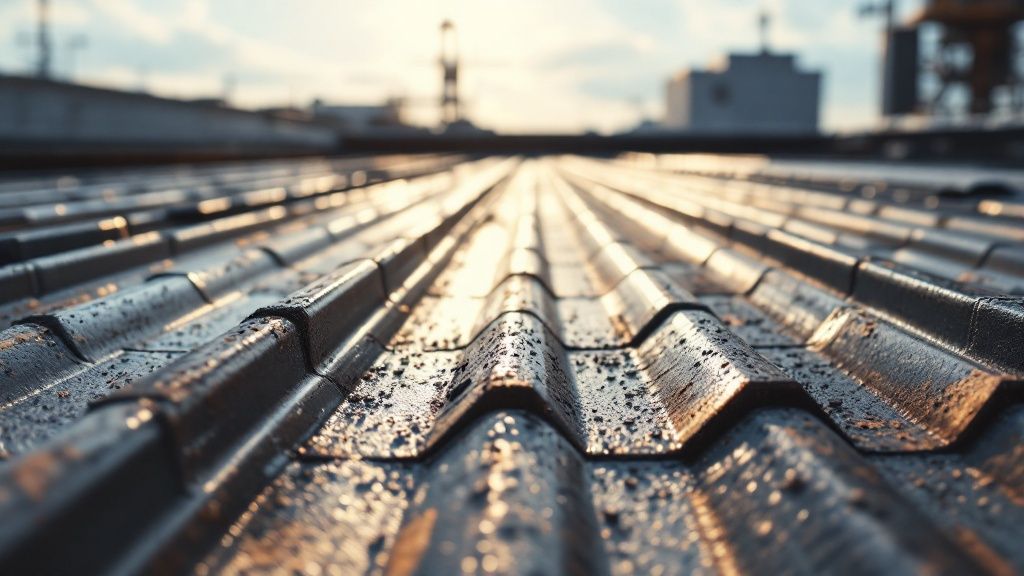
Often called the "gold standard" for hurricane readiness, standing seam metal roofing is, without a doubt, a premier choice for our area. The magic is in the design: its interlocking panels create a seamless surface with hidden fasteners, which practically eliminates the risk of wind getting underneath and tearing it off.
- Wind Resistance: When installed correctly, these systems can shrug off winds blowing at more than 160 mph. The panels are engineered so wind flows right over them, with no exposed edges to grab and peel back like you see with other materials.
- Impact Resistance: Metal is exceptionally tough. It stands up to flying tree branches and other debris, resisting punctures that would spell disaster for less durable roofing types.
- Lifespan: In a salty, coastal climate like ours, a quality metal roof can easily last 50 years or more. That long-term value often makes the higher upfront investment well worth it.
H3: Impact-Resistant Asphalt Shingles
Forget what you think you know about standard asphalt shingles. The modern, impact-resistant versions are a completely different beast, specifically engineered for the fury of a hurricane.
These shingles are built with a reinforcing polymer mesh on the back. This webbing holds the shingle together even if it cracks from a major impact. They also feature super-aggressive sealant strips that create an incredibly strong bond between shingles, fighting off wind uplift with impressive strength. Look for shingles with a Class 4 impact rating—it’s the highest available.
What does a Class 4 rating really mean? It certifies that the shingle has survived a test where a 2-inch steel ball was dropped from 20 feet without splitting. That test is designed to mimic the brutal force of large hail and storm-flung debris.
H3: Concrete and Clay Tile Systems
Tile roofing is a South Florida classic, prized for both its looks and its toughness. And when installed to today’s demanding HVHZ standards, both concrete and clay tiles provide fantastic hurricane protection.
The secret to their strength isn’t just the tile itself, but how it’s put on. Modern installation techniques go way beyond simple nails. Installers now use advanced adhesive foam systems in addition to mechanical fasteners. This bonds the tiles directly to the underlayment, creating a single, solid structure that is worlds away from older, less secure methods.
- Wind Resistance: A modern tile roof can handle winds roaring up to 130 mph or more when installed by the book.
- Impact Resistance: Tiles are naturally very strong, though a direct hit from heavy debris can cause a crack. However, their sheer weight and the unified installation method mean a puncture is unlikely to actually break through to the underlying roof deck.
- Lifespan: Longevity is where tile truly shines. It’s not uncommon for a well-maintained tile roof to last for 50+ years.
At the end of the day, the "best" material is the one that best fits your home, your budget, and your peace of mind. The smartest move is to talk through these options with a licensed, local contractor who understands Golden Beach's specific requirements. They can help you make a decision that will keep your home safe for decades.
Strengthening Your Roof's Hidden Defenses
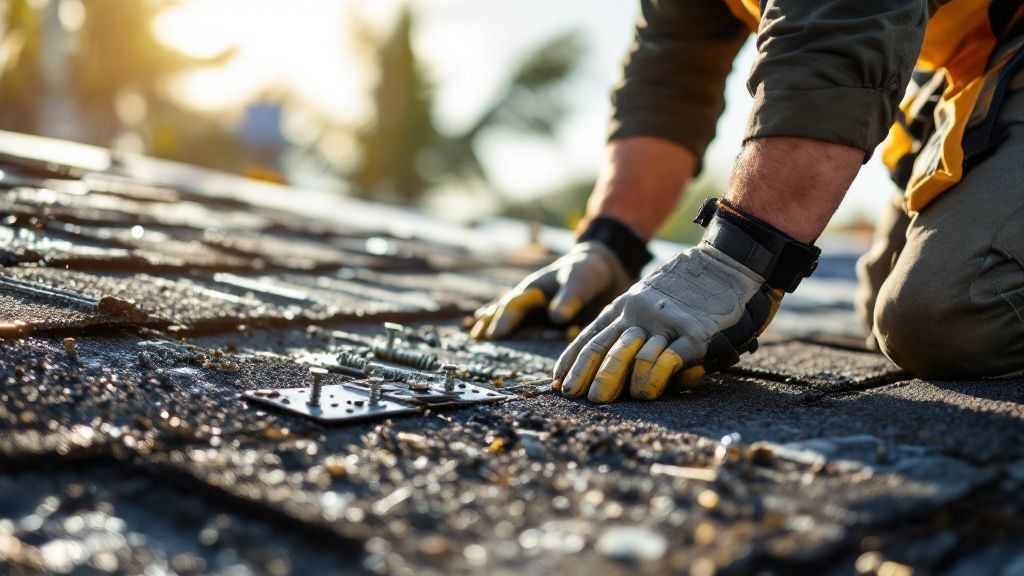
The beautiful tiles or sleek metal panels you see on your roof are only half the story. Real hurricane protection in Golden Beach comes from a network of hidden reinforcements working in concert. These unseen defenders are what truly anchor your roof to your home when a storm's ferocious uplift forces try to tear it all apart.
Think about trying to hold down a giant kite in a hurricane using only your hands. That’s essentially what your roof sheathing is doing without proper connections. The true strength lies in creating a continuous load path—a structural chain that transfers the immense wind forces from the roof, down through the walls, and safely into the foundation.
The Unsung Heroes: Hurricane Straps and Clips
The most important of these hidden defenses are hurricane straps and clips. These small but mighty pieces of galvanized steel are what physically bolt your roof trusses to the walls of your house. Without them, the roof is more or less just resting on top, making it terrifyingly easy for the wind to lift it off in one piece.
A roof without proper strapping is like a lid on a jar—it’s easily lifted off. Hurricane clips act like powerful clamps, locking the lid (your roof) firmly onto the jar (your house), ensuring it stays put during the storm’s most intense moments.
These connectors are absolutely non-negotiable under Golden Beach's strict building codes. In fact, they're one of the first things an inspector looks for during a wind mitigation inspection because they are proven to be one of the most effective safeguards against catastrophic roof failure. You can see more detailed examples of these crucial connectors in our guide to roof structural integrity.
Your Roof’s Last Line of Defense: The Secondary Water Barrier
Even the toughest roofing material can lose a few shingles or tiles when faced with flying debris. When that happens, your next line of defense kicks in: the secondary water barrier. This is a special, self-adhering membrane applied directly to the roof deck before the primary roofing material is installed.
Think of it as a waterproof, full-body wetsuit for your roof deck. If the outer layer gets breached, this sealed underlayment is what stops wind-driven rain from pouring into your attic and causing chaos inside your home. It’s an essential layer that can turn a potentially devastating failure into a much more manageable repair.
The importance of these systems is backed by hard data. Damage assessments after Hurricane Irma in 2017 showed structural damage to thousands of roofs, with about 1,585 homes reporting roof damage in Miami-Dade County alone. Further analysis has shown that investing in robust systems, including secondary water barriers, can slash post-storm repair costs by as much as 60%.
Mastering Golden Beach Building Codes and Permits
Trying to understand building codes can feel like learning a whole new language. But when it comes to protecting your roof from hurricanes in Golden Beach, it's the most important language you can speak. These rules aren't just bureaucratic hurdles; they're a battle-tested blueprint for survival, written from the hard lessons learned in past storms.
Think of them as the difference between a roof that looks good and one that will actually hold up when a Category 4 is knocking at your door.
Golden Beach falls under Miami-Dade County's High-Velocity Hurricane Zone (HVHZ) requirements, which are baked directly into the Florida Building Code. These are, without exaggeration, some of the toughest and most life-saving roofing standards on the planet. They cover everything, from the specific type of nails used to secure your roof deck to the precise wind-load calculations your new roof has to withstand.
Why You Cannot Skip the Permit Process
Thinking about a major roofing project without the right permits? That's a recipe for disaster. The permitting process isn't there to slow you down; it's your built-in quality control. Before starting any significant roof protection work, it's smart to review the ultimate building permit checklist to make sure you're fully compliant and avoid frustrating delays. This process ensures your project is on the books and subject to mandatory inspections.
Here's what that process generally looks like:
- Plan Submission: Your licensed contractor will submit detailed architectural and engineering plans to the local building department. This is the "how-to" manual for your new roof.
- Plan Review: Officials meticulously comb through the plans to make sure every single detail meets the stringent HVHZ requirements.
- Permit Issuance: Once everything checks out, the permit is issued. Now the real work can begin.
- Phased Inspections: A city inspector visits the job site at critical stages—like after the old roof is torn off and again after the new one is installed—to physically verify that the work perfectly matches the approved plans.
Think of a building permit as a contract with the city that guarantees your safety. It forces accountability and ensures that every shingle, strap, and seal is installed to a standard proven to withstand hurricane-force winds.
This system is precisely why you need a licensed, local contractor who works in Golden Beach every day. It's non-negotiable. They live and breathe the nuances of the HVHZ code, have working relationships with the building department, and can manage the entire permit and inspection process without a hitch. This doesn't just protect your investment; it gives you the ultimate peace of mind when the storm clouds start gathering.
Maintaining Your Roof for Year-Round Readiness
A hurricane-resistant roof isn't a "set it and forget it" kind of deal. Think of it more like a high-performance vehicle; it needs regular tune-ups to make sure it’s ready to go when the storm clouds roll in. Proactive maintenance is a small investment of your time that pays huge dividends in safety for your Golden Beach home.
This ongoing care is what stops tiny issues from spiraling into catastrophic failures. A single loose tile or a gutter clogged with leaves can create the exact weak spot a hurricane needs to start tearing your roof apart. A simple, consistent maintenance routine is your best defense against that nightmare scenario.
Your Seasonal Maintenance Checklist
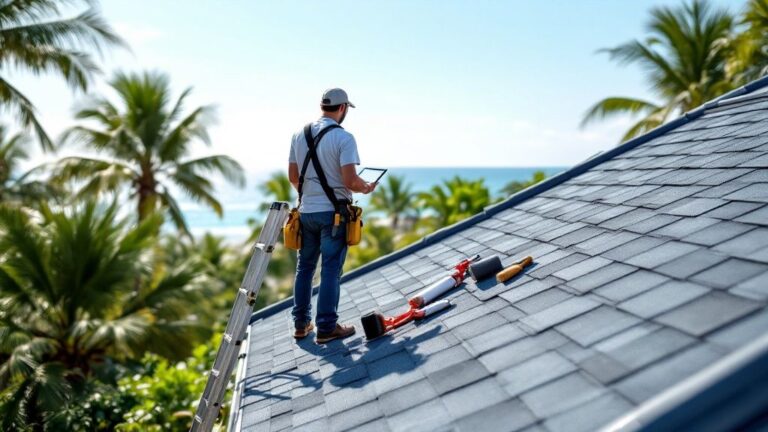
To keep your roof in fighting shape, you’ll want to run through these checks twice a year—once before hurricane season kicks off and again after it wraps up. This simple habit helps you stay ahead of potential problems.
- Inspect Shingles and Tiles: Take a close look for any materials that are cracked, loose, or have gone missing altogether. These are immediate vulnerabilities that wind and rain will absolutely exploit.
- Clear Gutters and Downspouts: When gutters are clogged with debris, a hurricane’s torrential downpour has nowhere to go but back up under your roof's edge. This is a fast track to serious water damage.
- Check Seals and Flashing: Carefully examine the sealant around vents, chimneys, and skylights. The relentless Florida sun can cause these seals to dry out and crack, creating perfect entry points for wind-driven rain.
- Trim Overhanging Branches: Tree limbs hanging over your roof are one of the biggest threats during a storm. In high winds, they become battering rams that can puncture your roof or fall and cause major structural damage. Keep them trimmed back at least ten feet from your house.
This hands-on approach is especially critical when you consider our region's history. From 2000 to today, Florida has been slammed by over a dozen major hurricanes, racking up more than $236 billion in damages. The data doesn't lie: advanced hurricane roof protection in Golden Beach significantly cuts down on failure rates. Compliant roofing systems have been shown to reduce roof-related losses by about 40%. You can read more about Florida's hurricane history) to truly understand what's at stake.
A well-maintained roof is a quiet defender. By addressing small issues regularly, you ensure its structural integrity remains uncompromised, ready to face the immense pressures of a storm without fail.
While doing your own visual checks is a great start, nothing beats an expert’s eye. A professional roofer can spot the subtle signs of wear and tear that an untrained person might easily miss. For a truly thorough evaluation, our team offers a professional roofing inspection to make sure your home is really prepared for whatever comes its way.

Common Questions on Hurricane Roof Protection
When you start digging into hurricane roof protection in Golden Beach, a lot of practical questions pop up. Getting clear, straightforward answers is the only way to feel confident about the decisions you make to protect your home. Let's tackle some of the most common things homeowners ask.
How Can I Tell If My Roof Is Hurricane-Ready?
Honestly, the only way to know for sure is to have a licensed Golden Beach roofing contractor get up there and perform a detailed inspection. They see things you can't from the ground, evaluating the critical factors that decide whether a roof stands up to hurricane-force winds or not.
An expert is going to check for a few key things:
- Material Age and Condition: They're looking for any wear, cracks, or corrosion that could create a weak point.
- Roof Deck Nailing Pattern: This is a big one. They'll verify it meets the strict High-Velocity Hurricane Zone (HVHZ) standards for holding everything together.
- Hurricane Strap Presence: These straps are what anchor your roof to the rest of your house. It's a non-negotiable feature for hurricane readiness.
After the inspection, they can compare what they found against the latest local codes and give you a straight-up report on where your home stands.
Will a Hurricane-Proof Roof Lower My Insurance Bill?
Yes, it absolutely can—and often by a significant amount. Florida law actually requires insurance companies to offer discounts for homes that have certified wind mitigation features. A new roof that meets or blows past the current Florida Building Code is one of the biggest single factors that qualifies you for premium reductions.
After your new roof is installed, a certified wind mitigation inspection report is your golden ticket to those savings. This official document proves to your insurer that you’ve invested in superior protection, which lowers their risk and, in turn, your rates.
Is a Metal Roof Always the Best Option for Hurricanes?
A properly installed standing seam metal roof offers some of the best protection you can get against both wind uplift and flying debris, making it a top-tier choice. That said, it's not the only strong contender for hurricane roof protection in Golden Beach.
Modern architectural shingles with high wind ratings and properly installed tile systems are also fantastic, code-compliant options. The "best" choice really comes down to balancing your budget, the look you want for your home, and your long-term protection goals.
Your roof is your home's first line of defense in a storm. Make sure it's ready for whatever comes its way with a professional inspection from Paletz Roofing and Inspections. Schedule your free, no-obligation quote today!