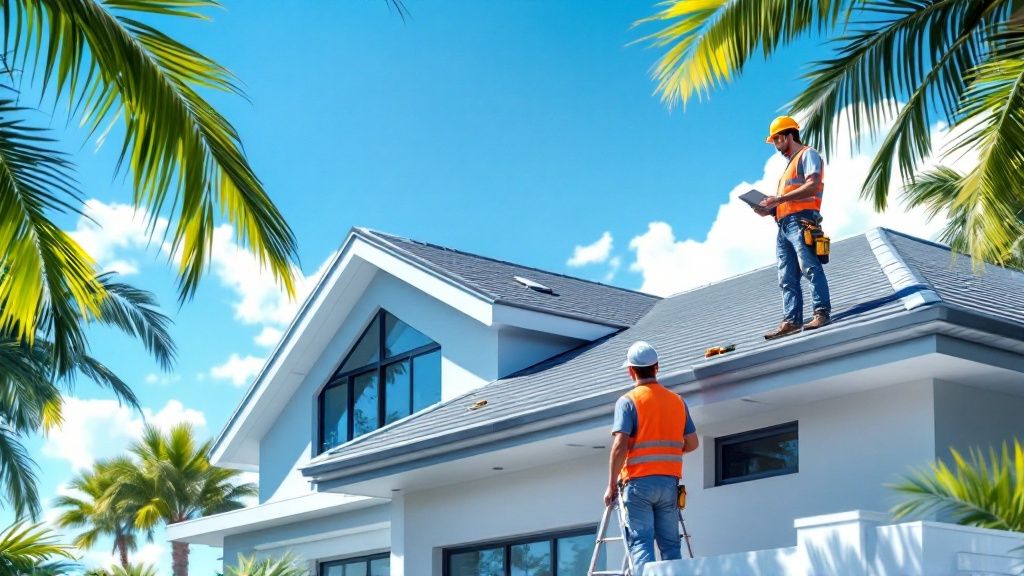
Getting a roof replacement estimate in Sunny Isles Beach isn't a one-size-fits-all deal. You're looking at a range anywhere from $5,000 to over $30,000, and that's a big spread for a reason. Your home's size, the complexity of its roofline, and the materials you pick are the big players here.
But it’s our unique coastal climate and some of the toughest building codes in the country that really shape the final number. That’s why a detailed, itemized quote is non-negotiable—it’s the only way to see what you’re really paying for.
What to Expect in Your Sunny Isles Beach Roof Estimate

Think of a proper roof estimate not just as a price tag, but as a detailed blueprint for the entire project. It lays out the work, materials, and labor needed to truly protect your home from the South Florida elements. Here in Sunny Isles Beach, any legitimate estimate has to account for our local building requirements, especially the High-Velocity Hurricane Zone (HVHZ) codes that dictate everything from nail patterns to underlayment.
When that quote lands in your inbox, it needs to be transparent. A vague, one-page document with a single grand total is a massive red flag. What you want is a professional, itemized breakdown that separates the major costs, giving you a crystal-clear picture of where every dollar is going. This kind of clarity is what empowers you to compare different offers intelligently, making sure you’re choosing based on value, not just the bottom-line price.
Key Cost Drivers in a Roofing Quote
Several key factors will directly push your estimate up or down. Getting a handle on these variables is the first step to understanding why one quote might look so different from another.
- Roof Size and Pitch: It all starts with square footage—the bigger the roof, the higher the cost. But the pitch, or steepness, is just as important. A steeper roof is more dangerous and takes more time and safety equipment to work on, which bumps up the labor costs.
- Material Choice: Your choice of material is a huge factor. Standard asphalt shingles are the most budget-friendly option. On the other hand, materials like concrete tile and standing seam metal demand a higher upfront investment but deliver far superior longevity and storm resistance—a major plus in our area.
- Existing Roof Condition: This is the big unknown. If the crew tears off the old shingles and finds rotted or damaged wood decking underneath, it has to be replaced. This is often an unavoidable add-on that can't be quoted with 100% certainty until the job is underway.
- Permit Fees: Miami-Dade County has very specific permitting rules for roof replacements. These fees aren't optional, and any professional contractor will build them right into your estimate.
One of the most common questions I get from homeowners is, "My neighbor's house looks just like mine, so why did their roof replacement cost thousands less?" The answer almost always comes down to the unseen details—things like rotted decking that had to be replaced, multiple old roof layers needing removal, or a more complex roofline with extra valleys and dormers that just aren't visible from the street.
A Closer Look at the Numbers
Diving into a professional roof estimate reveals several line items that contribute to the final cost. To give you a clearer picture, here’s a breakdown of what you can expect to see from a reputable Sunny Isles Beach contractor.
Key Components of a Sunny Isles Beach Roof Estimate
| Cost Component | Description | Typical Price Impact |
|---|---|---|
| Tear-Off & Disposal | Labor and fees for removing the old roofing materials and disposing of them legally. | $1 – $5 per sq. ft. |
| Materials | Cost of shingles, tile, or metal, plus underlayment, flashing, and fasteners. | 40% – 50% of total cost |
| Labor | The cost for the skilled crew to install the new roof system. This is often the largest component. | 50% – 60% of total cost |
| Permit Fees | Mandatory fees paid to Miami-Dade County for inspection and project approval. | $500 – $2,500+ |
| Decking Replacement | Cost to replace any rotted or damaged plywood sheathing. (Often a contingency item). | $100 – $150+ per sheet |
| Warranties | Cost for enhanced manufacturer warranties (e.g., NDL – No Dollar Limit) that offer extended coverage. | Varies by manufacturer |
This table helps illustrate that the final price is a sum of many parts, not just a single charge for "a new roof."
Recent data shows just how much these variables matter. In 2025, the average cost for a roof replacement in Florida is floating between $5,000 and $15,000 for a standard home using basic shingles. But for the larger, more complex homes common in Sunny Isles Beach—especially those getting premium tile or metal systems—costs can easily jump to $20,000-$30,000 or more. If you want to dig deeper, you can explore more Florida roofing cost factors for some additional context.
Why a Thorough Roof Inspection Is Non-Negotiable
Let's be blunt: any roofer who gives you a quote from their truck or based on a quick satellite image search is doing you a massive disservice. A real roof replacement estimate in Sunny Isles Beach is completely impossible without a detailed, hands-on inspection. This isn't just a preliminary step; it's the absolute foundation for an honest and reliable quote.
A quick glance from the ground misses the subtle but critical issues that can cause your project's cost to skyrocket later on. Professional roofers aren’t just up there counting shingles; they're like detectives, hunting for hidden problems that only a trained eye can spot.
Uncovering Hidden Damage and Structural Issues
When a contractor actually gets on your roof, they're looking far beyond a few worn-out shingles. Their main goal is to check the underlying structural integrity of the entire system. This is where the expensive surprises love to hide.
They are actively searching for things like:
- Spongy or Soft Decking: This is a dead giveaway for rotted wood, almost always caused by a slow, undetected leak. Walking the roof is the only way to feel for these weak spots.
- Signs of Water Intrusion: They’ll check for water stains, mold, or mildew in the attic, especially around vents and along flashing. These signs point directly to compromised areas that need fixing.
- Compromised Flashing: The metal strips around chimneys, vents, and skylights are notorious failure points. A proper inspection involves checking them for rust, cracks, or shoddy installation work.
Ignoring these issues can lead to a homeowner's worst nightmare. Imagine this scenario: a contractor starts tearing off your old roof, only to "discover" that 30% of the underlying plywood decking is rotted through. That cheap initial quote you got just doubled, and now your project is facing major delays and a huge, unexpected bill. A proper inspection prevents this exact situation.
A classic mistake is grabbing the lowest bid, especially if it didn't involve a real inspection. This almost always leads to expensive "change orders" mid-project when the contractor suddenly "finds" problems they should have identified from the start.
The Foundation for an Accurate Quote
Ultimately, that inspection report becomes the blueprint for your estimate. Every single issue found, from a minor flashing repair to a major decking replacement, gets documented. This allows the contractor to calculate the precise amount of materials and labor needed, leaving zero room for guesswork.
This detailed approach is what protects you. It ensures the quote you receive is truly comprehensive, covering the full scope of work required to install a durable, long-lasting roof that meets our strict local codes. It turns the estimate from a rough guess into a reliable project plan.
To get a better sense of what a real inspection involves, you can see an example of the detailed process roofers follow to make sure nothing gets missed. This meticulous work is what separates a true professional from a handyman with a ladder.

Choosing Hurricane-Ready Roofing Materials
When you get a roof replacement estimate in Sunny Isles Beach, the materials will be the single biggest line item. But in our coastal, storm-prone climate, this decision is about so much more than looks—it’s about long-term protection and resilience against hurricanes.
Trust me, investing in the right material upfront can save you an incredible amount of money and stress down the road.
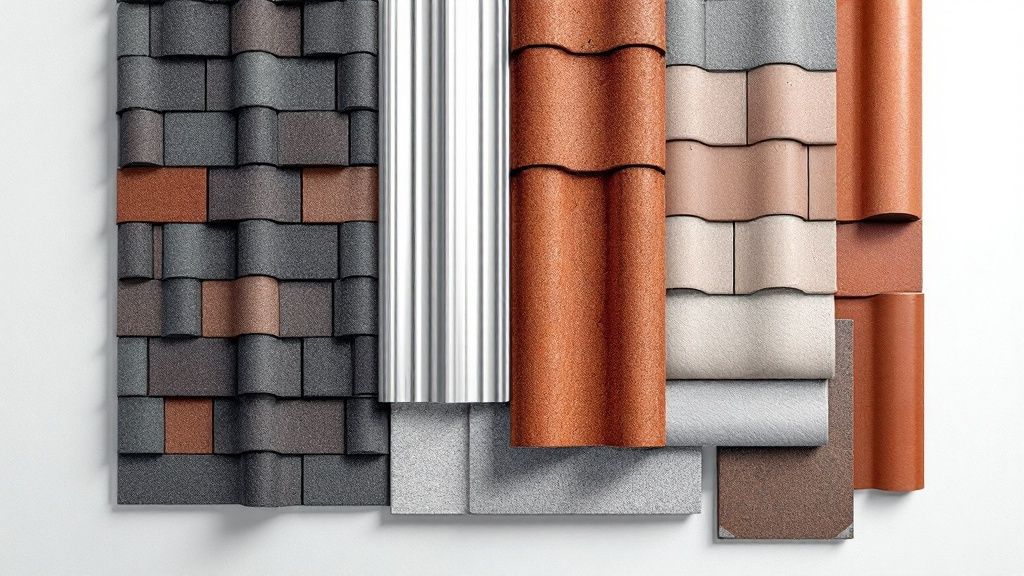
The choice usually boils down to balancing the initial cost with how long the roof will last and how well it holds up in a major storm. While asphalt shingles are everywhere, other options like metal and tile are specifically engineered to handle the extreme weather we face year after year. Their superior durability often justifies the higher initial investment, especially when you think about potential insurance discounts and fewer repairs over the roof's life.
Comparing Top Material Choices
Every material has its own set of pros and cons for a Sunny Isles Beach home. Getting a handle on these differences is the key to making a smart decision that fits your budget and priorities.
- Asphalt Shingles: This is your most budget-friendly option. Modern architectural shingles offer decent wind resistance, but they have the shortest lifespan under Florida's intense sun and are the most vulnerable during a major storm.
- Metal Roofing: Known for being exceptionally tough and long-lasting, standing-seam metal roofs give you some of the best protection against high winds. They're also highly energy-efficient, reflecting solar heat to help lower those FPL bills.
- Tile Roofing (Clay or Concrete): Tile is a classic South Florida choice for good reason. It’s incredibly durable, fire-resistant, and can withstand hurricane-force winds when installed correctly. Just keep in mind that the weight of a tile roof might require some structural reinforcement.
This infographic gives you a great visual breakdown of the primary costs you'll see on a typical estimate.
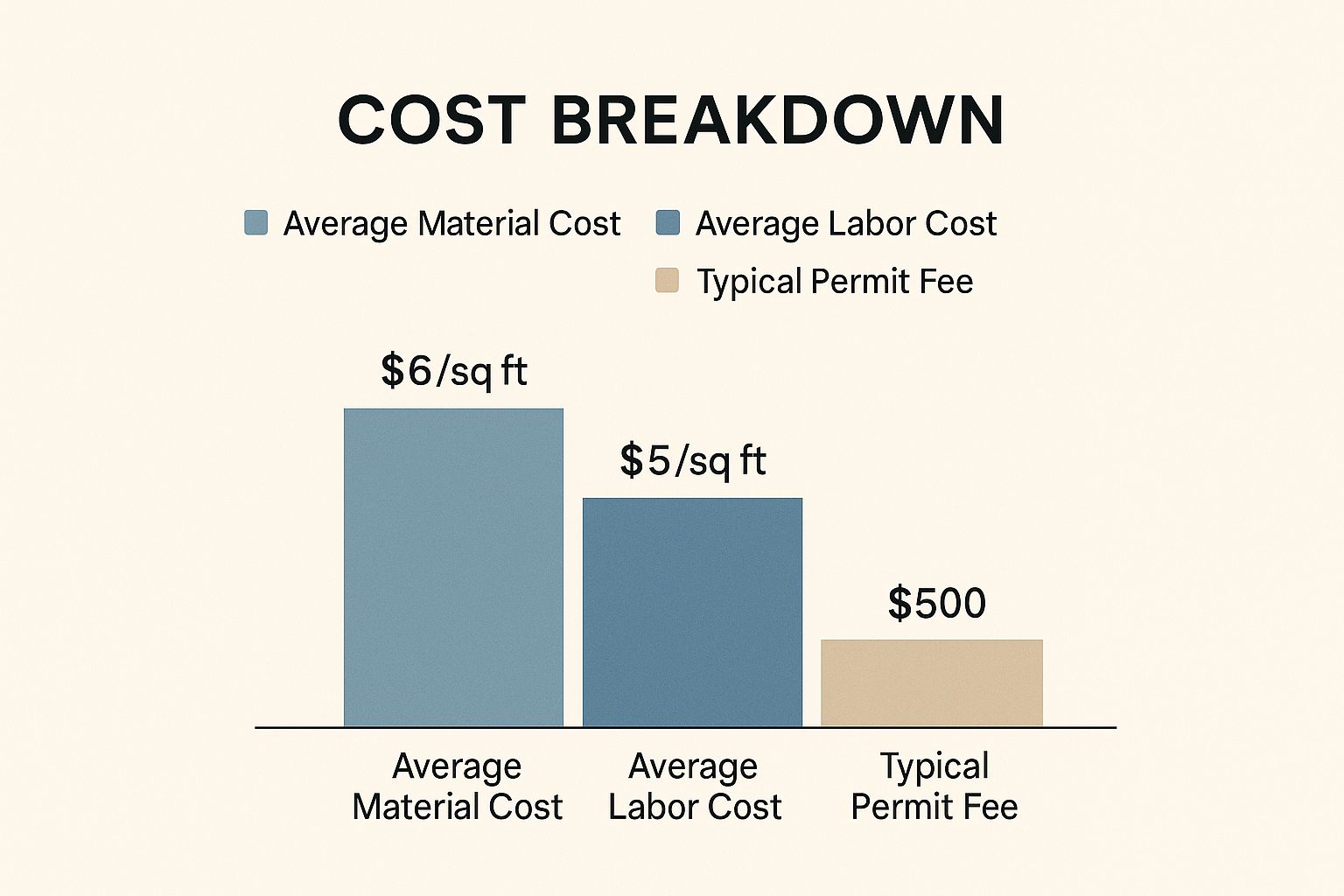
As you can see, materials and labor make up the bulk of the expense, with permits being a smaller but still significant fixed cost. To help you weigh your options, I've put together a quick comparison table that lays out the key details for our local area.
Roofing Material Comparison for Sunny Isles Beach Homes
| Material Type | Average Cost (per sq ft) | Lifespan | Hurricane Resistance |
|---|---|---|---|
| Asphalt Shingles | $4 – $7 | 15-25 years | Good (up to 130 mph) |
| Metal Roofing | $9 – $16 | 40-70 years | Excellent (up to 160+ mph) |
| Concrete/Clay Tile | $12 – $25+ | 50-100+ years | Excellent (up to 150+ mph) |
This table really highlights the trade-offs between initial cost and long-term durability, which is crucial when thinking about a roof that needs to stand up to our weather.
Factoring in Upfront vs Long-Term Costs
It's so easy to get fixated on the initial price tag, but the real value is in a roof's lifecycle cost. A standard asphalt shingle roof, for instance, might average around $177 to $298 per 100 square feet in South Florida. But those numbers often don't include tearing off and hauling away the old roof, which can tack on thousands to the final bill.
The big takeaway here is that spending more upfront for a hurricane-rated metal or tile roof often leads to huge long-term savings. You'll spend less on repairs, the roof will last much longer, and you could even qualify for lower homeowners insurance premiums—a massive financial win in Florida.
Ultimately, your choice of material will dictate how well your home is protected for decades to come. To see how these materials look once they're on a house, you can check out some great examples of completed roofing projects in our area that really showcase their strength and curb appeal.
Navigating Miami-Dade Building Codes and Permits
Here in Sunny Isles Beach, a new roof is far more than just shingles and nails. It’s a major structural upgrade that has to meet some of the most demanding building codes in the entire country. When you get a roof replacement estimate in Sunny Isles Beach, any legitimate contractor must account for the complexities of the Miami-Dade County permitting process.
This isn’t just red tape—it’s your best line of defense as a homeowner.
A building permit is what guarantees every part of your roof replacement is done correctly and signed off on by a county official. It’s the only way to verify that the work meets the tough standards designed to keep your home intact during a hurricane. Skipping this step can lead to massive legal and financial trouble, especially when you go to sell your home or file an insurance claim.
Understanding HVHZ and Its Impact
Sunny Isles Beach sits squarely inside the High-Velocity Hurricane Zone (HVHZ). This isn't just a label; it's a legal designation that completely changes the rules of roofing. It means your roof must be constructed to handle extreme wind forces, and the building codes are written to ensure it does.
These HVHZ standards get very specific, dictating things like:
- Specific Nailing Patterns: The exact number and placement of nails are laid out to give your roof maximum resistance to wind uplift.
- Underlayment Requirements: The type of secondary water barrier and how it's installed are strictly regulated.
- Flashing Details: Every pipe, vent, and penetration on your roof has to be sealed using methods approved for high-wind areas.
Following these rules adds to the material and labor costs. In fact, research shows that these mandatory hurricane mitigation upgrades can add anywhere from $1,000 to $3,000 to a roofing project in Florida. If you want a deeper dive into these figures, you can review this analysis of Florida roofing expenses. Any legitimate local estimate will have these upgrades built in.
Your Contractor Handles the Paperwork
So, what’s the good news? You shouldn't have to deal with any of this yourself.
A reputable, licensed roofing contractor will manage the entire permitting process from the application to the final inspection. This means they handle submitting plans, scheduling the necessary inspections with the county, and making sure the permit is officially closed out when the job is done.
A critical piece of advice: Your contract must state, in no uncertain terms, that the contractor is responsible for securing and closing all necessary permits. If that language is missing, it's a huge red flag. An unpermitted roof can void your homeowner's insurance and leave you on the hook for county fines.
Before you sign anything, double-check that the permit cost and all related administrative fees are included in the total price. This protects you from surprise charges and makes the contractor fully accountable for meeting every legal requirement. A true professional doesn't see permitting as a hassle; they see it as a non-negotiable step in building a safe, compliant, and quality roof that protects your investment and your family.
Comparing Quotes and Finding the Right Contractor
Getting three different quotes for your roof replacement is standard advice, but the real skill is knowing what to do with them. Stacking them side-by-side and just picking the lowest number is one of the biggest mistakes a Sunny Isles Beach homeowner can make.
A truly professional roof replacement estimate in Sunny Isles Beach is a detailed document. You have to look past the final price to understand the true value being offered.
Your first move should be to create a simple spreadsheet or even just a checklist. Line up the key details from each quote side-by-side. This simple step immediately highlights any weird discrepancies and forces you to ask why one contractor's bid is so much higher or lower than the others.
Scrutinizing the Details Beyond the Price Tag
The bottom line is often misleading. I've seen two quotes with a $3,000 price difference that were essentially for two completely different projects. One contractor was using premium, hurricane-rated materials while the other was quoting a basic, builder-grade product. You wouldn't know that from the final number alone.
Here’s what you absolutely must look for when comparing quotes:
- Material Brands and Specifications: A quote should never just say "shingles" or "tile." It needs to list the exact manufacturer and product line, like "GAF Timberline HDZ" or "Boral Concrete Villa Tile." This is non-negotiable for verifying quality.
- Warranty Information: Look for two distinct warranties—one from the material manufacturer and another from the contractor covering their labor. A contractor who is confident in their work will offer a solid workmanship warranty of at least 5-10 years.
- Project Timeline and Cleanup: The estimate should clearly outline the expected start and end dates. Critically, it must also state that the contractor is responsible for daily site cleanup and final debris removal, including the cost of a dumpster.
A vague contract filled with generic terms is a massive red flag. A detailed, transparent quote is a sign of professionalism and protects you from surprise costs and shoddy work down the road.
Spotting Red Flags in a Roofing Bid
A suspiciously low bid is often the most dangerous one. It looks tempting on paper, but it almost always means the contractor is cutting corners somewhere significant.
They might be using subpar materials, hiring uninsured day laborers, or skipping the mandatory (and expensive) permitting process altogether. These "shortcuts" expose you to enormous financial and legal risk.
The most reliable contractors are rarely the cheapest. Their prices reflect proper licensing, comprehensive insurance coverage, skilled labor, and high-quality materials—all non-negotiable elements for a roof that can withstand a South Florida hurricane.
Verifying Contractor Credentials and Reputation
Before you even think about signing a contract, you have to do your homework and verify the contractor’s credentials. This is the most important step in protecting your investment and ensuring your project goes smoothly.
- Check Licensing and Insurance: First, confirm their license is active and in good standing with Miami-Dade County. Crucially, you must ask for a copy of their general liability and worker's compensation insurance certificates. If a worker gets hurt on your property and the contractor isn't insured, you could be held liable.
- Read Local Reviews: Look for reviews from homeowners right here in our area. Pay close attention to how the contractor responds to both positive and negative feedback. Consistent complaints about poor communication or project delays are a clear warning.
- Ask for Local References: A reputable roofer will be happy to give you a list of recent projects. Take five minutes to call a few references and ask about their experience. It's time well spent.
Finding the right contractor is really about building confidence and trust. By looking beyond the price and carefully vetting each company, you can ensure you're hiring a true professional who will do the job right. To get an idea of the quality you should be looking for, check out some examples of professionally installed roofs that showcase excellent workmanship.
Common Questions About Roofing Estimates

Even after you’ve got a few detailed quotes in hand, it’s completely normal to have some lingering questions. Getting those final details ironed out is what helps you feel confident about moving forward. We get it, and we’ve heard just about every question in the book from homeowners looking for a roof replacement estimate in Sunny Isles Beach.
One of the first things people ask is how long their quote is actually good for. Most roofing estimates are valid for 30 to 90 days. That timeframe isn’t just a random deadline; it’s a reflection of how quickly the costs for materials and even labor can change in our market. Always look for an explicit expiration date on your written quote so there are no surprises down the road.
Insurance Coverage and Unexpected Costs
A huge question, and rightly so, is about insurance. Will your homeowner's policy cover the cost of a new roof? The short answer is: it depends entirely on why your roof failed. If a hurricane, a major storm, or another event covered by your policy is the culprit, then yes, insurance will likely cover a big chunk of it, minus your deductible.
But here’s the catch: insurance almost never pays to replace a roof that has simply reached the end of its natural life due to age or a lack of maintenance.
Another real-world concern is what happens when the crew tears off the old roof and finds more damage underneath. This is a very real possibility, especially with older homes in our area.
A professional contract will always include a contingency clause for unforeseen issues, like finding rotted decking. This clause should clearly define the process for notifying you, documenting the problem, and getting your approval for any additional work and associated costs before proceeding.
This is all about transparency. It ensures you stay in control of the budget and protects you from surprise charges. Talking about this "what if" scenario upfront is a great sign that you’re working with a trustworthy, professional roofer.
Living Through the Project
Finally, homeowners always want to know what it’s actually going to be like living at home while the work is being done. The big question is, "Can we stay in our home?" In almost every case, the answer is a definite yes. You won't need to pack up and move out, but it’s smart to prepare for a bit of temporary chaos.
Here’s a realistic look at what you can expect:
- A Lot of Noise: There’s no way around it. Tearing off an old roof and installing a new one involves scraping, hammering, and machinery. It’s going to be loud.
- Vibrations: You’ll probably feel vibrations through the house. It’s a good idea to take down or secure pictures, shelves, or any fragile items hanging on your walls before the work starts.
- Safety First: A good contractor will create a safe work zone. They’ll ask you to keep pets and children away from the area and make sure driveways are clear for crew access and material delivery.
A reliable roofer will communicate their schedule with you daily, so you always know what’s happening and when. Understanding these practical details ahead of time makes the entire process feel much smoother for you and your family.
Navigating the roofing process can feel complex, but you don't have to do it alone. For a clear, detailed, and honest roof replacement estimate from a team with over 30 years of local experience, contact Paletz Roofing and Inspections today. Visit us at https://paletzroofing.com to schedule your free inspection.