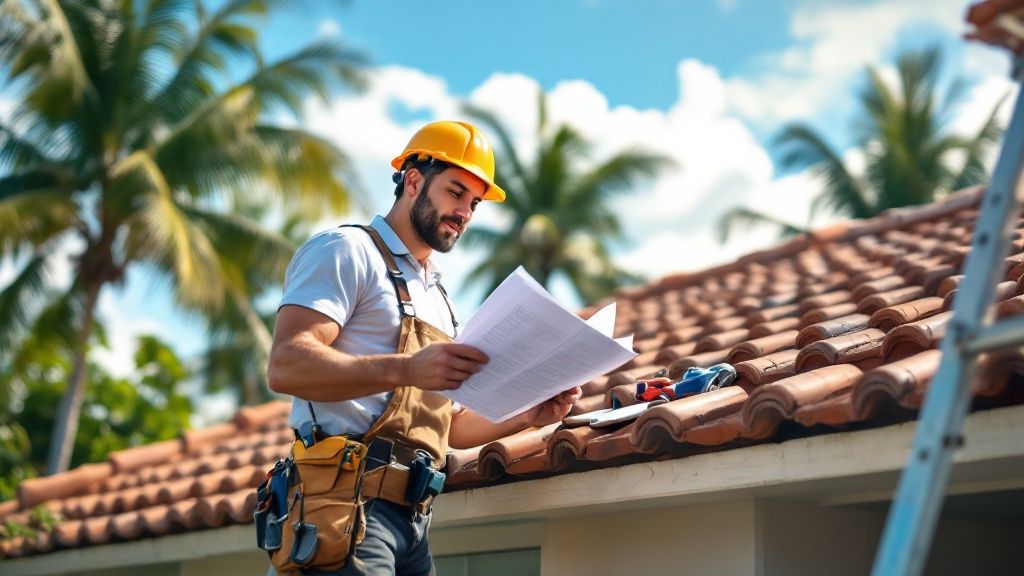
Dealing with a roof problem? The first step toward finding a solid roof repair contractor in West Boca Raton isn't just jumping on Google—it's creating a clear plan of action. The real key is to get a handle on the damage and understand the specific challenges our Florida climate throws at our homes before you even think about making calls.
Your Game Plan for West Boca Raton Roof Repair
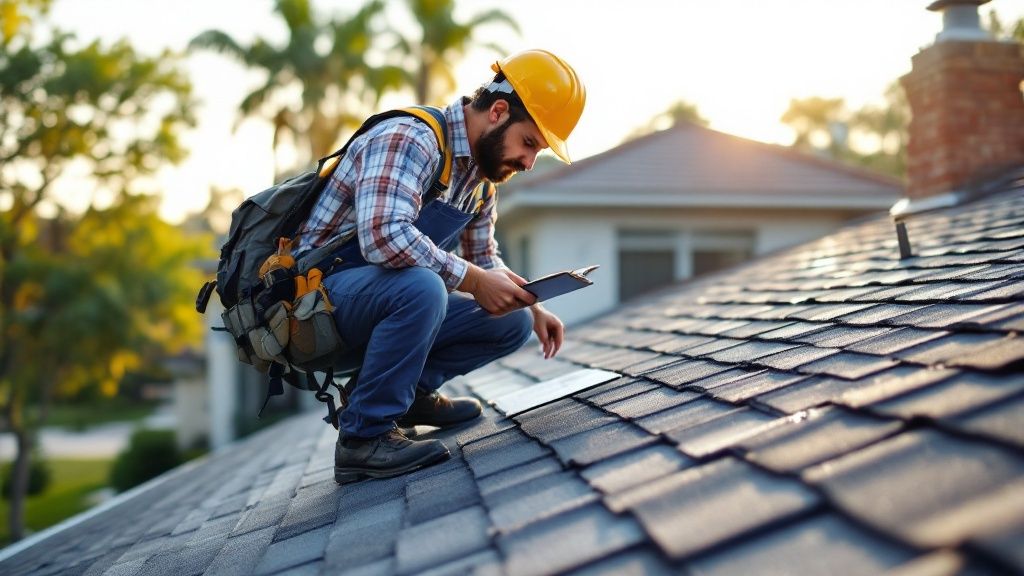
A damaged roof is stressful, no doubt about it. But walking in with a structured approach can make the whole repair process far more manageable. For homeowners here in West Boca Raton, that process starts with knowing what your roof is up against. Our intense sun, torrential downpours, and the ever-present threat of hurricane season place unique demands on roofing materials.
Your initial game plan should revolve around a quick but smart self-assessment. This simple step helps you communicate way more effectively with potential contractors and instantly weed out anyone who isn't the right fit for your specific problem.
Get a Handle on the Immediate Damage
Before you pick up the phone, take a safe look at what's going on. Can you spot missing shingles from your driveway? Are there new, tell-tale water stains on your ceiling? Snapping a few photos of these signs gives any professional you contact a clear and immediate picture of the situation.
Think about it this way: a few shingles blown off after a storm might seem like a small thing, but they leave the underlayment exposed to brutal sun and rain, which can escalate into a much bigger headache fast. Knowing the difference between a localized issue like that and a widespread problem, like a sagging roofline, helps you convey the true urgency.
A huge distinction to make right away is whether you're looking at a simple repair or a full-blown roof replacement. A small, contained leak after a storm usually calls for a targeted repair. On the other hand, seeing widespread granule loss in your gutters and curling shingles all over the roof is a strong signal that it's time for a replacement.
Understand the Local Roofing Landscape
The roofing industry is a massive and growing field, with about 98,980 contractor businesses operating across the U.S. this year. That growth is definitely felt here in a busy market like South Florida. While it means homeowners have plenty of choices, it also makes it tougher to find a true expert you can trust.
As you map out your plan, it’s smart to think about the financial side of things, too. A major home repair is a significant investment. It's always a good idea to explore financing options early on. Getting a clear picture of your budget helps you manage costs and puts you in a much better position when you start getting quotes.
Coming into the conversation with a solid understanding of your situation empowers you to hire with confidence. For homeowners who want professional clarity right from the get-go, a detailed roof inspection from a trusted provider can cut through the guesswork. By organizing your approach from day one, you’ll navigate the hiring process with a clear head and a direct path to a successful repair.

Vetting Contractors Beyond the Online Search
A quick online search can feel productive, but it's really just the first step. To find a truly reliable roof repair contractor in West Boca Raton, you need to dig deeper than surface-level reviews and flashy websites. The real goal is to build a shortlist of professionals who don't just claim to be experts but can actually prove it.
Start by narrowing down your options to three or four local contractors. I always tell homeowners to look for companies with a professional website that clearly outlines their services, showcases a portfolio of past work, and—this is important—provides a physical business address in or near Palm Beach County. A legitimate company will be transparent and easy to find.
Verifying Credentials Is Non-Negotiable
Before you even think about scheduling a consultation, take the time to verify a contractor's credentials. This is a critical step that many homeowners skip, but it’s what protects you from uninsured or unlicensed operators who can leave you with a mess.
Your focus should be on two key items:
- Florida State License: Every legitimate roofing contractor must hold a valid license from the Florida Department of Business and Professional Regulation (DBPR). You can—and should—look up their license number online to make sure it’s active and in good standing.
- Proof of Insurance: The contractor absolutely must carry both general liability insurance and workers' compensation. General liability covers any accidental damage to your property, while workers' comp protects you from being liable if one of their employees gets injured on your job site.
Ask for current copies of their insurance certificates. A professional contractor will have no problem providing this documentation. If they hesitate or give you the runaround, consider it a major red flag and move on. For a wider perspective, you can find general advice on how to check licenses and choose a reliable expert that applies across different trades.
Identifying Common Red Flags
As you start talking with potential contractors, be on the lookout for warning signs. In my experience, dishonest or inexperienced operators often reveal themselves through their sales tactics and communication style. It's helpful to see examples of what professional, completed work should look like so you have a good baseline for comparison.
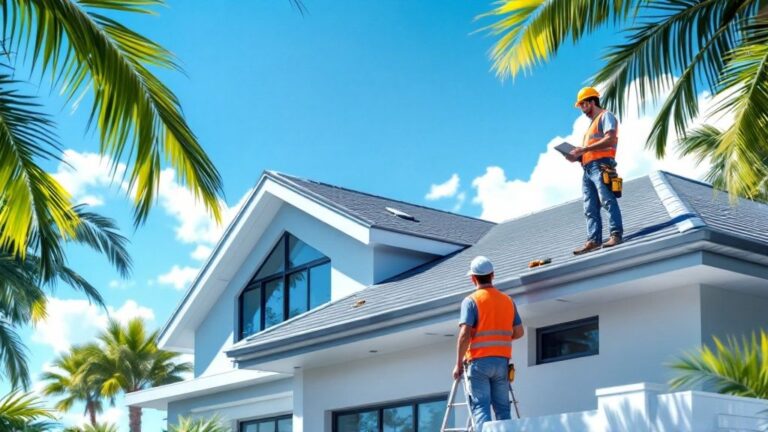
Watch out for any contractor who pressures you for an immediate decision. A true professional will give you a detailed estimate and allow you the time and space to review it without resorting to high-pressure sales tactics.
Be wary of vague estimates that lack a detailed breakdown of costs. A proper quote should clearly list the scope of work, material types and costs, labor charges, and any fees for permits. Similarly, an insistence on a large upfront cash payment is a classic warning sign. While a reasonable deposit is standard, demanding the full amount or a significant portion in cash before work even begins is highly irregular. By scrutinizing these details, you can confidently identify a contractor with a proven track record of quality and integrity right here in our community.
How to Decode and Compare Roofing Estimates
So, you’ve done the legwork and have a few proposals from a roof repair contractor in West Boca Raton. Now comes the tricky part. The quotes are in, but they probably look nothing alike.
One might be a simple, one-page document with a number at the bottom. Another could be a dense, multi-page packet filled with jargon that feels like a foreign language. Your job is to look past the final price tag and figure out what you’re actually getting for your money.
Let's be clear: a suspiciously cheap bid is almost always a sign that corners are being cut. This could mean they’re using subpar materials, rushing the labor, or “forgetting” to pull the required permits. A professional, fairly priced proposal isn’t just a cost—it’s an investment in your home’s long-term health and your own peace of mind. It’s not about finding the lowest number; it’s about finding the best value.
The Anatomy of a Professional Roofing Quote
Any estimate worth considering should be a detailed, itemized breakdown of the entire project. If a quote is vague or missing key information, that’s a massive red flag. A good contractor wants you to know exactly where your money is going, leaving no room for surprise charges down the road.
Here’s what you need to look for in every proposal you review:
- Detailed Scope of Work: The quote must clearly spell out the specific repair being done. It should define the exact area of the roof being worked on and outline the steps involved (e.g., removing damaged shingles, replacing underlayment, sealing flashing) and the methods they’ll use.
- Specified Materials: It should list the exact brand and type of materials—from the specific shingles or tiles right down to the underlayment and sealants. This is critical. A bid using lower-grade materials will naturally be cheaper, but it won’t last.
- Labor and Cleanup Costs: Labor should be a clear line item or, at the very least, be explained within the total. The estimate also needs to confirm their cleanup procedure and that all debris will be hauled away from your property when they’re done.
- Permit and Inspection Fees: If the job needs a permit from Palm Beach County—and many repairs do—the contractor should be handling it. The cost for pulling the permit and managing any necessary inspections should be included in the price.
- Warranty Information: A contractor who stands by their work will offer warranties for both their labor and the materials. The estimate must spell out the length and terms of these guarantees.
A classic trick with lowball bids is to be vague about underlayment or flashing. These are the components you don't see, but they're absolutely essential for keeping water out. Always make a contractor specify the type and quality of these materials in writing.
This graphic shows the typical workflow you can expect when you hire a true professional.
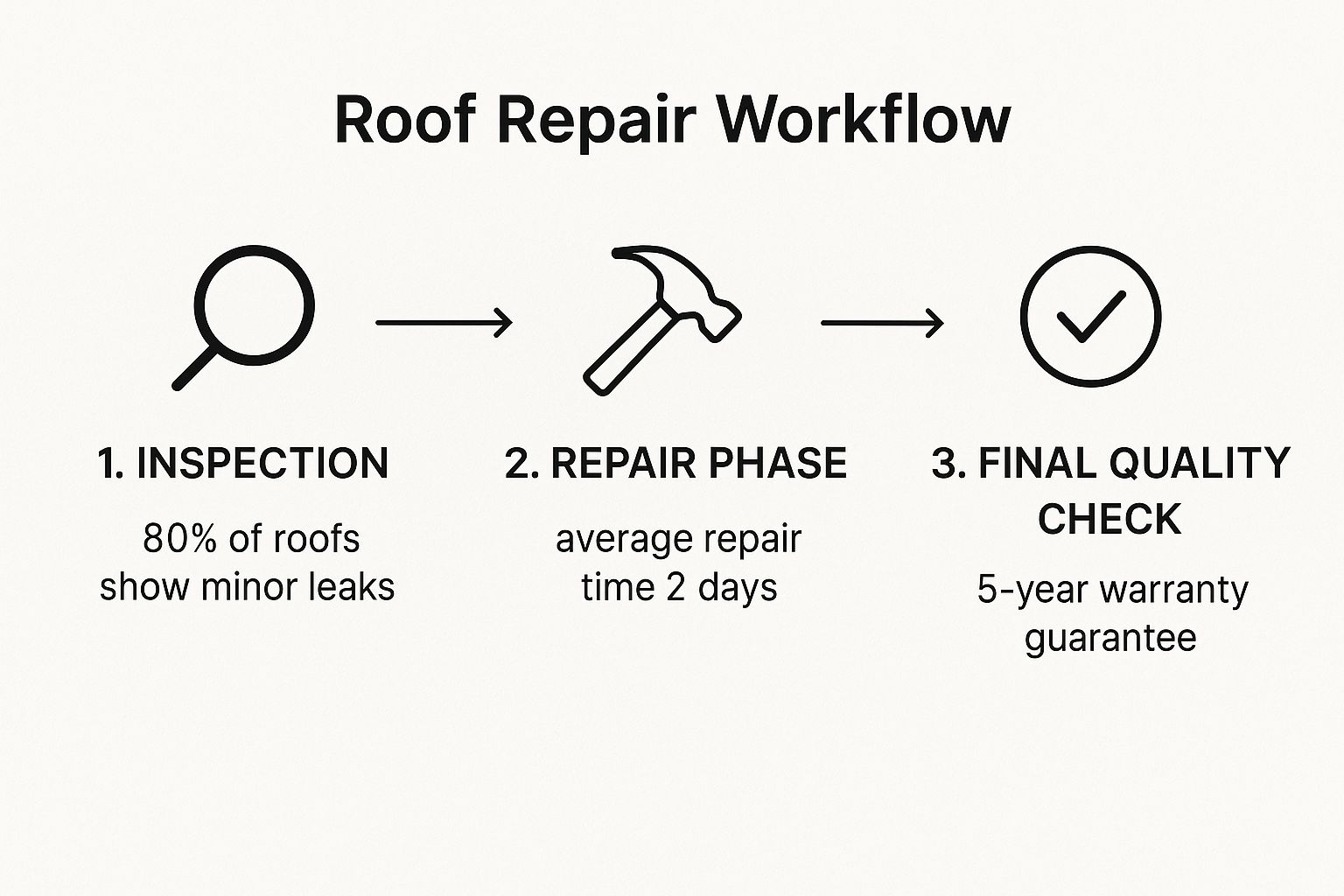
As you can see, most roof problems start small. The good news is that the actual repair phase is often quick and should always be backed by a solid quality guarantee.
To make this process easier, use a simple checklist to compare the quotes side-by-side. This helps you spot what’s missing from one proposal versus another and ask the right questions.
Roofing Estimate Comparison Checklist
| Checklist Item | Contractor A | Contractor B | Contractor C |
|---|---|---|---|
| Detailed Scope of Work Provided? | |||
| Specific Materials Listed (Brand/Type)? | |||
| Underlayment Type Specified? | |||
| Flashing Details Included? | |||
| Labor Costs Itemized or Explained? | |||
| Cleanup and Debris Removal Included? | |||
| Permit Fees Included? | |||
| Workmanship Warranty Detailed (Years)? | |||
| Material Warranty Detailed (Years)? | |||
| Projected Start/End Dates? | |||
| Proof of License and Insurance Provided? | |||
| Total Project Cost |
This simple table turns a confusing pile of papers into an apples-to-apples comparison, empowering you to see which contractor is truly offering the most complete and transparent solution.
Understanding Materials for South Florida Repairs
The materials chosen for your repair play a massive role in how long it will last, especially in the intense West Boca Raton climate. A proper estimate will always recommend a material that makes sense for your existing roof and our weather.
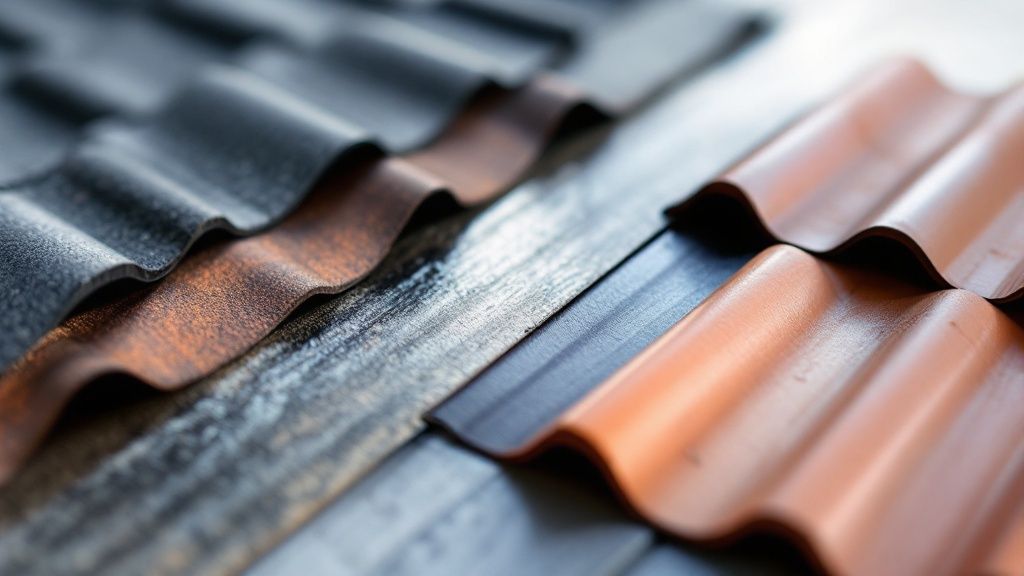
The most common options you’ll see are tile, metal, and architectural shingles. Each has its own pros and cons for repair work. For example, tile is incredibly durable against our high winds, but it can be more expensive to fix if individual tiles are cracked. On the other hand, architectural shingles offer fantastic performance and are often easier to color-match for smaller patches.
Don’t be afraid to ask contractors why they’re recommending a specific material. A good roofer will happily explain their choice, helping you make an informed decision based on what matters most: durability, cost, and how it will look on your home.
Navigating Your Contract and the Repair Project
Once you've picked your roof repair contractor in West Boca Raton, the signed contract becomes the single most important document for the entire job. Think of it as the official game plan for everything—from the first nail driven to the final piece of debris getting hauled away.
Taking the time to understand this document isn't just about legal protection; it's about making sure everyone is on the same page from the get-go. A solid contract gets rid of any guesswork and is the foundation for a smooth, stress-free repair process.
Decoding Key Contract Clauses
Before putting pen to paper, you need to carefully go over a few key clauses. Don't just skim the fine print. These details define the rules of the project and protect your investment. A true professional will have no problem walking you through each point and explaining what it means.
Here’s what you absolutely need to look for:
- Payment Schedule: A typical schedule involves a deposit (usually 10-30%), maybe a progress payment halfway through, and the final balance only after the work is done to your satisfaction. A major red flag is any contractor demanding the full amount upfront.
- Project Timeline: The contract has to lay out a projected start and finish date. We all know Florida weather can throw a wrench in the works, but having a clear timeline is essential for holding the contractor accountable.
- Lien Waivers: This is a big one. A lien waiver is a document proving the contractor has paid their suppliers and any subcontractors. It protects you from having a lien slapped on your property if your roofer doesn't pay their bills.
- Cleanup Procedures: You don’t want to be left with a mess. The contract must spell out that the crew is responsible for daily cleanup and final debris removal, including using magnetic sweepers to pick up any stray nails in your yard.
Your contract should feel like a partnership agreement, not a list of demands. If any clause seems fuzzy or one-sided, ask for changes before you sign. A reputable contractor wants you to feel completely comfortable with the terms.
Managing the On-Site Project Effectively
With a strong contract signed, your attention can shift to managing the work itself. Good communication is everything here. Before the crew shows up, figure out who your main point of contact is—it might be a project manager or the crew foreman.
Knowing who to call with a question saves a ton of time and frustration. It's also a good idea to agree on how you'll communicate. A quick text at the end of the day? A brief phone call? This keeps you in the loop without getting in the crew's way. The goal is to stay on top of progress and tackle any surprises—like finding rotted decking under old shingles—as soon as they pop up.
Right now, the construction market in Florida adds another layer to things. Contractors are dealing with a serious labor shortage, which can affect schedules and costs. Experienced, skilled roofers are in high demand. For a closer look at these market forces, you can discover more about roofing trends in Florida. Understanding this context helps you appreciate why a reliable contractor’s schedule is so valuable and why sticking to the timeline is a team effort.
Finalizing the Job and Protecting Your Investment
The last nail has been hammered in and the crew has packed up, but don’t close the book on your project just yet. Wrapping things up correctly is every bit as important as hiring the right roof repair contractor in West Boca Raton in the first place. This is where you confirm the job was done right and collect the paperwork that protects your investment for years to come.
Your first move should be a detailed final walk-through with the project manager. Don't just give it a quick glance from the driveway. Get up on a ladder (safely!) or ask them for detailed photos showing the finished work up close. This is your chance to create a punch list—a formal list of anything that needs to be fixed, no matter how small it seems.
Your Post-Repair Inspection Checklist
You need to know what you’re looking for. A quality repair should be practically invisible. Are the new shingles or tiles lined up perfectly with the existing ones? Is the flashing around chimneys and vents sealed cleanly and tight against the roof? Make sure there’s no debris left in your gutters or stray nails hiding in the lawn.
- Uniform Appearance: The repair area should blend seamlessly into the rest of the roof.
- Cleanliness: Your gutters should be clear, and the ground around your home must be completely free of nails, old materials, and other debris.
- No Property Damage: Do a quick check of your siding, windows, and landscaping for any accidental scuffs or damage from ladders and equipment.
Your final payment is your ultimate leverage. Never hand over that last check until every single item on your punch list has been addressed to your complete satisfaction and you have all the necessary paperwork in hand.
Securing Your Paperwork and Warranties
Once you’re happy with the physical work, it's time to get the critical documents. This isn’t just clutter for your filing cabinet; it’s your official proof that the project is done and your protection against any future problems. It’s no surprise that in a recent industry poll, an overwhelming 92% of homeowners ranked roofing as a top-three home improvement priority. You can read more about these homeowner priorities to see just why securing these documents is so vital.
Make sure your contractor provides you with these three things:
- A final, paid-in-full invoice that breaks down all the charges.
- A lien release from both the contractor and any major material suppliers. This is critical—it protects you from claims if they didn't pay their bills.
- Copies of all warranties, which should include the manufacturer’s warranty on the materials and the contractor’s own workmanship warranty.
By taking the time for a careful final inspection and collecting these key documents, you can confidently close out your project. These final steps ensure your repair, like this example of a finished professional job, truly protects your home for the long haul.

Got Questions? We've Got Answers
Even when you have a solid game plan, a few questions are bound to come up when you’re hunting for a roof repair contractor in West Boca Raton. Getting straight answers to these common worries is the best way to build confidence and know exactly what to expect.
How Long Should a Typical Roof Repair Take?
Honestly, the timeline for a roof repair can be all over the map. A really minor job, like swapping out a few shingles that a storm tore off or sealing a leaky vent, can often be wrapped up in just a few hours by a pro. Easy peasy.
But for bigger problems, like patching a large section of underlayment after a tree branch came down, you're probably looking at a project that takes one to three days. You also have to factor in things specific to our area, like getting permits approved through Palm Beach County and, of course, dodging those infamous afternoon thunderstorms. Any contractor worth their salt will give you a realistic timeline in writing before they start.
A quick tip from experience: a weather delay is a good thing. It means your contractor is protecting your home and the quality of their work. Nobody should be installing roofing materials in the rain—that’s just asking to trap moisture and create a bigger mess down the road.
What Kind of Insurance Should My Roofing Contractor Have?
This one is a deal-breaker, especially here in Florida. Your contractor absolutely, positively must carry two specific types of insurance to protect you from getting stuck with a massive bill.
- General Liability Insurance: Think of this as the "oops" coverage. It protects your property from any accidental damage that happens during the repair.
- Workers' Compensation Insurance: This is just as critical. It covers the contractor’s crew if they get hurt on your property, protecting you from being held financially responsible.
Before you even think about signing a contract, ask to see current certificates for both policies. You can (and should) also double-check a contractor’s license status on the Florida Department of Business and Professional Regulation (DBPR) website.
Does My Roof Repair Need a Permit in Palm Beach County?
That depends entirely on how big the job is. Really small repairs—usually defined by square footage or a percentage of the total roof—might not need one. However, the minute the work involves anything structural or covers a significant chunk of your roof, a permit is 100% required.
A reputable roof repair contractor in West Boca Raton knows the local building codes inside and out. They'll handle the entire permit process, from application to final inspection, and will build those fees right into your estimate. If a contractor ever suggests skipping the permit or asks you to pull it yourself, that's a giant red flag. Run, don't walk.
When you need a reliable, licensed, and insured expert who handles roofing with the care it deserves, trust Paletz Roofing and Inspections. Contact us today for a free, no-obligation quote and let our 30 years of experience protect your home. Learn more at https://paletzroofing.com.