When it comes to protecting your roof in Eastern Fort Lauderdale, you’re looking at two main types of warranties: manufacturer warranties and workmanship warranties. The first covers the shingles and materials themselves, while the second covers the quality of the installation. Getting a solid combination of both is your best bet against our intense South Florida sun, salt spray, and hurricane season.
Why Your Roof Warranty Is Your Best Defense
Let's be honest, a roof in Eastern Fort Lauderdale takes a beating. It’s constantly battling intense UV rays, corrosive salt air, and the looming threat of hurricane-force winds. Think of your roof warranty less like a piece of paper and more like an insurance policy on a massive investment. It’s the signed promise from both the manufacturer and your roofer that your roof will hold up when it matters most.
Without that protection, just one premature failure—shingles cracking and curling under the sun or a leak springing from a shoddy installation—could cost you thousands out of pocket. A good warranty gives you a clear path forward, making sure you aren't left footing the bill for problems you didn't create.
The Two Pillars of Roof Protection
Every homeowner needs to get familiar with the two distinct types of coverage that create a complete safety net for their roof. They work together, but cover very different things.
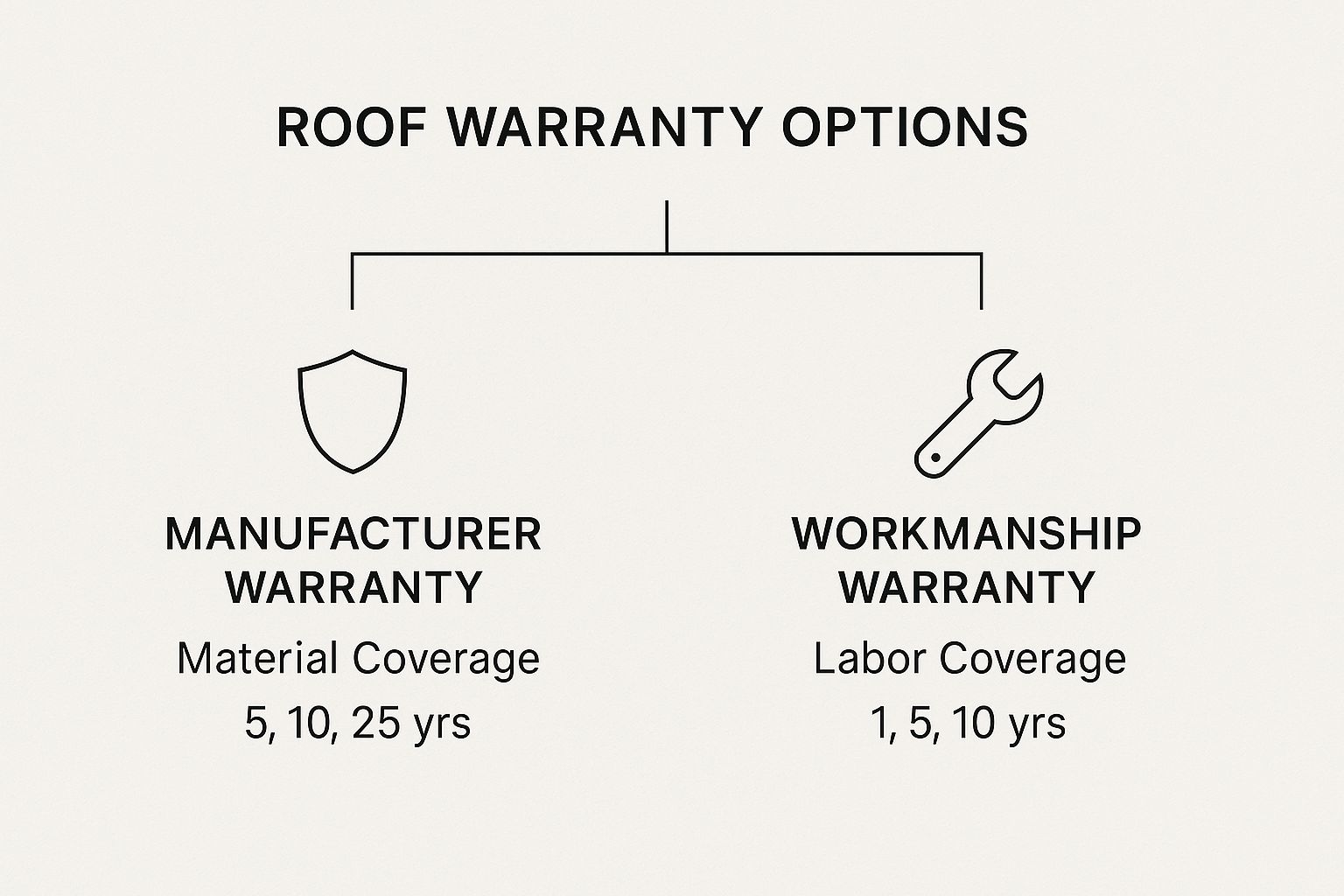
As you can see, one warranty protects the physical materials, and the other guarantees the skill of the person putting them on your house. This is why having both is so critical. A material warranty won't do you any good if the roofer messes up the installation, and even a world-class installation can't fix a batch of defective shingles.
To make this even clearer, here's a simple breakdown of the two main warranty types you'll encounter.
Quick Overview of Roof Warranty Types
| Warranty Type | What It Protects | Typical Duration |
|---|---|---|
| Manufacturer Warranty | Defects in the roofing materials themselves, like cracking or granule loss. | 20 years to Lifetime (often prorated) |
| Workmanship Warranty | Errors made during the installation process, such as improper fastening or flashing. | 1 to 10 years (sometimes longer) |
This table shows how each warranty plays a unique role in protecting your investment for the long haul.
A great warranty is more than just a document; it's a testament to the quality of the materials and the confidence of the installer. It transforms a major expense into a secure, long-term investment for your home.
Ultimately, navigating roof warranty options in Eastern Fort Lauderdale is all about securing complete coverage. The right warranty package ensures your roof remains a reliable shield, protecting your family and property for years. It's about buying true peace of mind.
Understanding Manufacturer Material Warranties
Think of your roofing materials—the shingles, tiles, or metal panels—as the core components of any major appliance, like the engine in a new car. The manufacturer's material warranty is their promise, straight from the factory, that the product itself is free from defects. It’s your safety net against flaws in the physical materials used to build your roof.
Here in Eastern Fort Lauderdale, that’s a big deal. Our intense sun can bake inferior shingles until they crack, and the constant salt spray from the ocean can eat away at certain materials long before their time. A solid manufacturer warranty is designed to cover these specific types of product failures. It ensures you aren't on the hook for a new roof just because the materials themselves weren't made to last.
Prorated vs. Non-Prorated Coverage
Not all material warranties are created equal, and the biggest difference comes down to how they pay out over time. You'll see two key terms: prorated and non-prorated. Getting this distinction right is crucial to understanding the real-world value of your warranty.
Let's use a simple analogy. Say you bought a brand-new, top-of-the-line grill for $1,000 with a 10-year warranty.
- Non-Prorated Coverage: If a critical part fails in year nine, the manufacturer replaces it, no questions asked. You get the full value for that initial period.
- Prorated Coverage: If that same part fails in year nine, the company might only give you a $100 credit toward a new one, reflecting that 90% of its warranted life is over. The value of your protection diminishes each year.
Many standard roof warranties offer an initial non-prorated period, sometimes called a "SureStart" or "SmartChoice" window, which typically lasts for the first 10 to 20 years. After that, the coverage often switches to a prorated model, where the manufacturer's financial responsibility for defective materials shrinks annually.
The best roof warranties available in the Eastern Fort Lauderdale market offer lifetime non-prorated protection. This is a game-changer because it provides homeowners with consistent, full-value coverage for decades, and it's absolutely a feature worth looking for.
How Material Choice Affects Your Warranty
The quality of the roofing material you select has a direct line to the strength of its warranty. Manufacturers simply stand behind their better products with more robust protection, which is particularly important in our harsh coastal climate.
For instance, a standard architectural shingle might come with a 30-year limited warranty that becomes prorated after just 10 years. Step up to a premium, impact-resistant shingle designed to handle debris from high winds, and you could be looking at a 50-year warranty with a far longer non-prorated window.
You see this trend even more clearly with the high-end materials popular in Fort Lauderdale homes:
- Metal Roofing: These systems often carry 30 to 50-year warranties that also cover the integrity of the paint finish against fading and chalking from the sun.
- Clay or Concrete Tiles: Prized for their durability, these materials can easily come with warranties of 50 years or even a lifetime.
At the end of the day, when you invest in a higher-quality roofing material, you're not just buying a better product—you're also buying a more powerful and longer-lasting manufacturer warranty.
Decoding Contractor Workmanship Warranties
If the manufacturer’s warranty is the promise that the shingles are solid, the workmanship warranty is the roofer's personal guarantee that they put everything together the right way. Think of it as the installer signing their name to the finished product—a promise that their skill and technique will hold up against the elements.
This is arguably one of the most critical roof warranty options in Eastern Fort Lauderdale. Why? Because our coastal weather is relentless at finding the weakest link in any installation.
A single improperly driven nail or a poorly sealed flashing might seem like a small detail, but it's a huge liability during a tropical storm. That one tiny mistake becomes an open door for water to pour into your home. A workmanship warranty is your direct line of defense against these installation errors.
What Does a Strong Workmanship Warranty Cover
A workmanship warranty has nothing to do with defective materials; it's all about the "how." It specifically covers problems that pop up because of the installation process itself. Essentially, your roofer is taking full responsibility for the quality of their team's labor.
A good workmanship warranty should absolutely cover issues like:
- Leaks from Faulty Installation: This is a big one. It covers leaks around vents, chimneys, and skylights where the flashing wasn't installed correctly.
- Improper Nail Placement: Shingles nailed too high or at an angle can be ripped off by high winds—a constant worry here in South Florida.
- Shingle Alignment Errors: When shingles are misaligned, it's not just a cosmetic problem. It creates pathways for wind-driven rain to get underneath and soak your roof deck.
- Incorrect Flashing or Sealant Application: These are the most vulnerable spots on any roof. Any mistakes here are a leading cause of serious water damage.
A workmanship warranty is a direct reflection of a contractor's confidence in their own team and processes. A long and comprehensive warranty signals that they build roofs to last, not just to pass an initial inspection.
Why Contractor Reputation Is Everything
Let's be blunt: a warranty is just a piece of paper. It’s only as good as the company standing behind it. A 10-year workmanship warranty from a roofer who shuts down their business in two years is completely worthless.
This is precisely why digging into your contractor's background is just as crucial as reading the fine print on the warranty document.
In Eastern Fort Lauderdale, you need a local, established roofer with a long history of standing by their work. They should have deep roots in the community and be able to show you they’ll still be around if you need to file a claim five or even ten years from now.
Don't just look at the length of the warranty. Look at the stability and reputation of the person providing it. Before you sign anything, getting an expert opinion is always a smart move. You can learn more from the team at Paletz Roofing and Inspections to make sure you're making a secure choice for your home.
How Local Climate and Laws Shape Your Warranty
When you get a roof warranty in Eastern Fort Lauderdale, you're not getting a generic, off-the-shelf document. It’s a specialized contract that’s been shaped by the tough demands of our coastal environment. The non-stop exposure to intense sun, salty air, and the constant threat of hurricane winds heavily influences what you’ll find in both manufacturer and workmanship warranties.
Think of it this way: you wouldn't buy a family sedan and expect it to perform like an off-road truck. The same logic applies to roofing. The materials and installation methods used here have to meet a much higher bar, and the warranties have to reflect that reality. A standard warranty that works just fine in a mild, landlocked state would be practically useless against the forces we face in South Florida.
That's why you'll see specific clauses and features designed for our local conditions. These aren't just fancy add-ons; they are essential protections that acknowledge what it means to live on the coast.
The Impact of Sun, Salt, and Storms
The environmental stress on a roof here isn’t a once-in-a-while problem. It's a constant battle. A truly valuable warranty has to address these threats head-on.
- Intense UV Radiation: The Florida sun is brutal. It breaks down roofing materials, causing them to fade, crack, and become brittle way too soon. A solid material warranty will specifically cover premature aging due to UV exposure.
- Corrosive Salt Air: That beautiful ocean breeze carries salt spray that is incredibly corrosive, especially to metal components like flashing, vents, and fasteners. Good coastal warranties will include provisions against rust and corrosion.
- Hurricane-Force Winds: This is the big one. Your warranty absolutely must have a high-wind rating. A standard shingle might only be rated for 90 MPH, but in Fort Lauderdale, you need a roofing system—materials and installation—guaranteed to hold up against much more powerful gusts.
For anyone in Eastern Fort Lauderdale, a warranty without a specific high-wind provision is a massive red flag. It's like having car insurance that doesn't cover accidents.
Florida Laws and Your Warranty
It’s not just the weather that molds your warranty; recent changes in Florida's state laws have made strong coverage more critical than ever. New insurance regulations are putting more responsibility on homeowners to have newer, code-compliant roofs. If your roof is too old, your insurer might just refuse to renew your policy, forcing you into a replacement you weren't planning for.
In this new reality, a strong, long-term warranty is a major asset. It’s not just about protecting your investment in the roof; it’s also your proof to the insurance company that your roof is built to last and meets modern standards. This direct link between your warranty and your ability to stay insured is a huge factor in our local market.
You’ll see this reflected in the terms offered by reputable local contractors. Many provide 10-year labor warranties alongside material warranties that can go from 20 to 50 years. These warranties often call out key durability features, like wind-resistant membranes rated for up to 150 MPH, which directly tackle both our weather and the demands of insurance carriers. You can learn more about how recent Florida roofing laws are impacting homeowners and their coverage options.
At the end of the day, your roof warranty options in Eastern Fort Lauderdale are a direct answer to a very demanding environment. They’re built to give you real peace of mind against punishing storms, corrosive salt, and an evolving legal landscape, making sure your home stays safe and covered.
How Your Warranty Protects Your Roofing Investment
Let's be honest, a new roof is a major investment—one of the biggest you'll ever make in your home. It’s tempting to just look at the initial price tag, but here in Eastern Fort Lauderdale, the real cost of a roof plays out over decades of intense sun, salt spray, and hurricane seasons.
Think of your warranty as more than just a piece of paper that promises repairs. It’s a direct reflection of the quality you're paying for. A strong warranty is a financial shield, plain and simple. It's the manufacturer and your roofer putting their money where their mouth is, showing they have confidence their work will hold up. A weak warranty might save you a little bit upfront, but it can leave you holding the bag when things go wrong.
The Real Price of a New Roof
When you're looking at different roofing quotes, you're not just comparing shingles and labor costs—you're comparing your future risk. That cheaper option often comes with a basic, prorated warranty. What does that mean? If the materials fail five years down the line, you might only get a small fraction of their original value back, leaving you to foot the rest of the bill.
On the other hand, a premium roof system—say, top-tier impact-resistant shingles or a standing seam metal roof—will cost more initially. But it almost always comes with a much stronger, often non-prorated, warranty. This is where you see the real long-term savings.
Investing in a roof with a superior warranty isn't about spending more; it's about spending smarter. It turns a higher upfront cost into a predictable, long-term asset that protects your property's value and your financial stability.
The cost of roofing around here is high for a reason. In 2025, the average roof replacement in the Miami-Fort Lauderdale area is around $26,220, and a good chunk of that is labor. That price tag is driven by the need for materials that can stand up to hurricane codes, and those high-performance products naturally come with better warranties. You'll see material warranties for these systems running 20 to 50 years, with a roofer’s workmanship warranty covering you for around a decade. It's a robust defense for a serious investment. You can dive deeper into local roofing cost breakdowns and what drives them to see the numbers for yourself.
How a Better Warranty Protects Your Wallet
A great warranty does a lot more than just cover a defect. It actively saves you money over the life of your roof. Here’s a quick breakdown of how that works:
- Fewer Surprise Bills: A solid warranty means you're not paying out-of-pocket when a shingle fails or an installation mistake causes a leak. Those unexpected repair costs are off your plate.
- Happier Insurance Companies: A high-quality, professionally installed roof with a strong warranty can make it easier—and sometimes cheaper—to keep your homeowner's insurance.
- Boosted Home Value: When it's time to sell, a transferable, long-term warranty is a huge plus. It tells potential buyers that the roof is a reliable asset, not a ticking time bomb.
At the end of the day, looking at the different roof warranty options in Eastern Fort Lauderdale is a financial decision. Choosing a stronger warranty turns your roof from a simple expense into a protected investment—one built to last in our tough coastal climate.
Choosing and Maintaining Your Roof Warranty
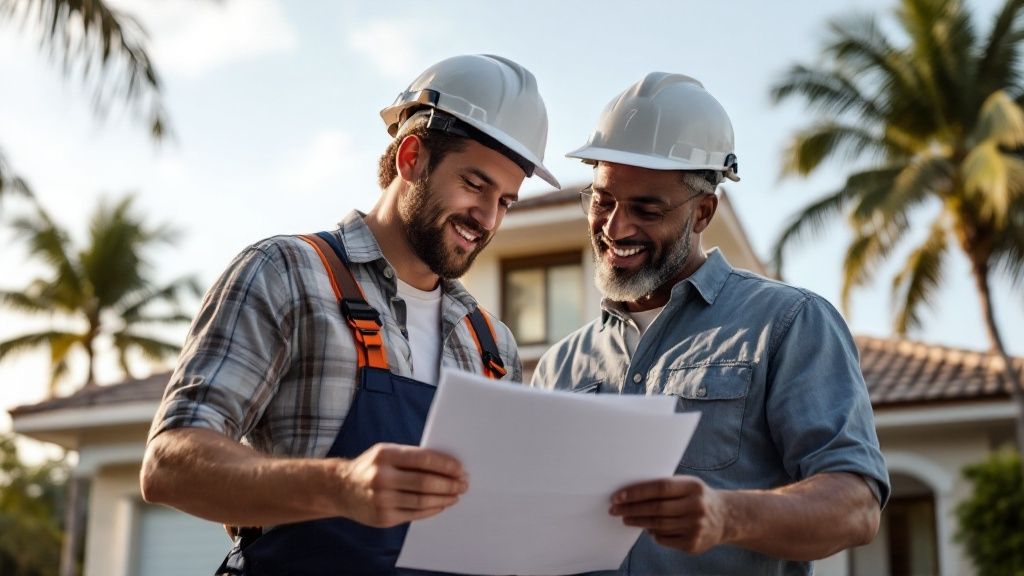
Getting a solid warranty is a fantastic start, but it's only half the battle. Now you have to keep it valid. It’s a lot like a partnership agreement for your roof—both you and the contractor have responsibilities to uphold to keep it in force.
The best warranties, especially the premium ones from manufacturers, aren't handed out to just any roofer. They often require the roofer to be factory-certified. Before you sign anything, confirm your contractor has the credentials to back up their promises. It's as simple as asking, "Are you certified to offer the manufacturer's top-tier warranty for these shingles?" This one question can tell you a lot about their level of expertise.
Reading the Fine Print and Avoiding Pitfalls
The real value of your warranty isn't on the front page; it’s buried in the details. You need to put on your detective hat and scan the document for specific clauses that can trip you up later on.
Pay special attention to anything that could accidentally void your coverage. These are the most common landmines we see homeowners in Eastern Fort Lauderdale step on:
- DIY Repairs: That "quick fix" you did on a small leak? It likely just invalidated your professional workmanship warranty. Always call the pros first.
- Unapproved Alterations: Thinking of adding a satellite dish or solar panels? Don’t drill a single hole without talking to your original roofer. Unauthorized modifications can void both your material and labor warranties in a heartbeat.
- Skipping Inspections: Many warranties aren't a "set it and forget it" deal. They often mandate periodic professional inspections to remain active, particularly after a hurricane or major storm rolls through.
Think of your warranty as a two-way street. You have to hold up your end of the bargain. Proper maintenance isn't just a good idea—it's usually a contractual requirement to keep your coverage intact.
Filing a Claim the Right Way
When you spot a potential problem, time is of the essence. But acting fast doesn't mean acting rashly. A methodical approach will make the whole process much smoother.
Here's the game plan if you need to file a claim:
- Document Everything: The moment you see damage, grab your phone. Take clear photos and videos from multiple angles. Make a note of the date and any recent severe weather.
- Call Your Roofer First: Your original installer should always be your first point of contact. If it's a workmanship issue, it's on them. If it looks like a material defect, they’ll be your best guide for getting in touch with the manufacturer.
- Keep Meticulous Records: Save every email, every text, every repair quote, and every receipt. A detailed paper trail is your strongest ally when you're navigating a claim.
Following these simple rules ensures your warranty remains a reliable safety net for your home, not just a piece of paper.
Got Questions About Fort Lauderdale Roof Warranties? You're Not Alone.
When it comes to roofing in Eastern Fort Lauderdale, warranties can feel like a maze. It’s a topic that comes up with almost every homeowner I talk to, and getting the answers straight can save you a world of headaches and money, especially given our wild weather and tricky insurance rules.
Let's tackle some of the most common questions head-on.
What About Hurricane Damage? Is That Covered?
This is probably the #1 question I get, and it’s a crucial one. Your roof warranty, whether from the manufacturer or the roofer, is designed to cover failures of the product or the installation. Think of it as a promise that the shingles won't fall apart on their own and that the crew installed them correctly.
A hurricane, on the other hand, is considered an "act of God" or an external event. Damage from flying debris or extreme wind uplift falls squarely under your homeowner's insurance policy. This is why having a top-notch warranty and a solid insurance plan isn't optional here—they work as a team to protect your home.
So, Will My Warranty Cover a Leaky Roof?
It's the right question to ask, but the answer always comes down to why it's leaking.
- If a leak pops up because the roofer botched the flashing around your chimney, that’s an installation error. Your workmanship warranty is your go-to for getting that fixed.
- If a batch of shingles was faulty from the factory and starts failing years ahead of schedule, causing a leak, the manufacturer's warranty should cover the material replacement.
But if a falling coconut from a neighbor's palm tree punches a hole in your roof during a storm… well, that’s another call to your insurance agent.
The moment you spot a problem, grab your phone and take clear pictures. Documenting the issue right away makes everything smoother, whether you're filing a warranty claim or an insurance claim. It takes the guesswork out of the equation.
How Do These New Florida Laws Change Things for My Warranty?
The recent legal shifts have really stirred the pot, and rightfully so. The 2025 roofing law changes are a game-changer for homeowners in Eastern Fort Lauderdale. Insurers can now choose not to renew policies for homes with roofs over 15 years old, regardless of their current condition.
This puts a huge spotlight on warranties. Since many are forced to replace their roofs sooner, a strong, long-term warranty becomes a critical piece of the puzzle. It’s not just about peace of mind anymore; it’s about ensuring your home remains insurable and compliant with the latest codes. You can learn more about how recent legal shifts impact Fort Lauderdale homeowners.
A robust, transferable warranty is now one of the most valuable features of a new roof. It serves as concrete proof of quality for your insurance company and is a major selling point if you decide to move.
Navigating all this takes a local pro who's seen it all. Paletz Roofing and Inspections has spent over 30 years helping South Florida homeowners make the smartest choices for their roofs. For a free quote or an expert inspection, come see us at https://paletzroofing.com.