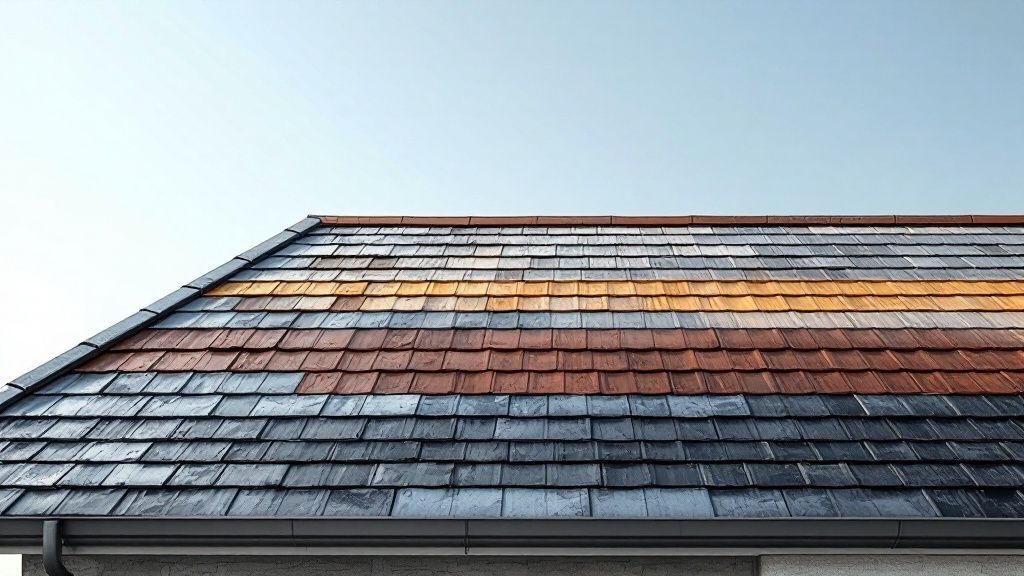
Your roof is one of the most critical components of your home, and its lifespan can vary dramatically—from 20 years to well over a century. The biggest factor in this equation? The material you choose to top your home with. While the standard asphalt shingle roof might last you a couple of decades, other premium materials like slate are designed to last for generations.
Knowing what to expect from your roof is the first step in making smart decisions for your home's long-term health.
What Is the Average Lifespan of a Roof?
Asking "how long does a roof last?" is a bit like asking how long a car will run. The answer always starts with, "Well, it depends." A lot of it comes down to the model you pick and how well you take care of it over the years. A roof isn't just a single sheet of material; it's an entire system working together to protect your home from everything nature throws at it.
You can think of it in car terms. A basic 3-tab asphalt shingle is like a dependable sedan—it'll reliably get you where you need to go for about 20-30 years with some routine maintenance. A slate or clay tile roof, on the other hand, is more like a vintage luxury vehicle. It’s built with superior materials that can easily last over 100 years, but it requires a different level of care and a higher upfront investment.
Of course, the longevity of any roof system hinges on a few key things: the quality of the materials themselves, the skill of the installers, and how consistently you perform maintenance.
Material Makes All the Difference
At the end of the day, the core ingredient determining your roof's lifespan is the material itself. The massive gap between a 25-year roof and a 75-year roof really just boils down to how well each material can stand up to decades of sun, rain, wind, and ice.
To give you a better idea, here's a quick look at some of the most common residential roofing options and what you can expect from them.
Quick Guide to Roof Material Lifespans
This table provides a simple at-a-glance comparison of the lifespans for popular roofing materials. It's a great starting point for understanding how your choice impacts long-term durability.
| Roofing Material | Average Lifespan (Years) |
|---|---|
| Asphalt Shingles | 20 – 30 |
| Architectural Shingles | 30 – 50 |
| Wood Shingles/Shakes | 30 – 40 |
| Metal (Steel, Aluminum) | 40 – 70 |
| Clay or Concrete Tiles | 50 – 100+ |
| Slate | 75 – 150+ |
As you can see, moving up in material quality can add decades to your roof's service life, making it a crucial consideration for any homeowner.
This image offers a clear visual breakdown of these differences.
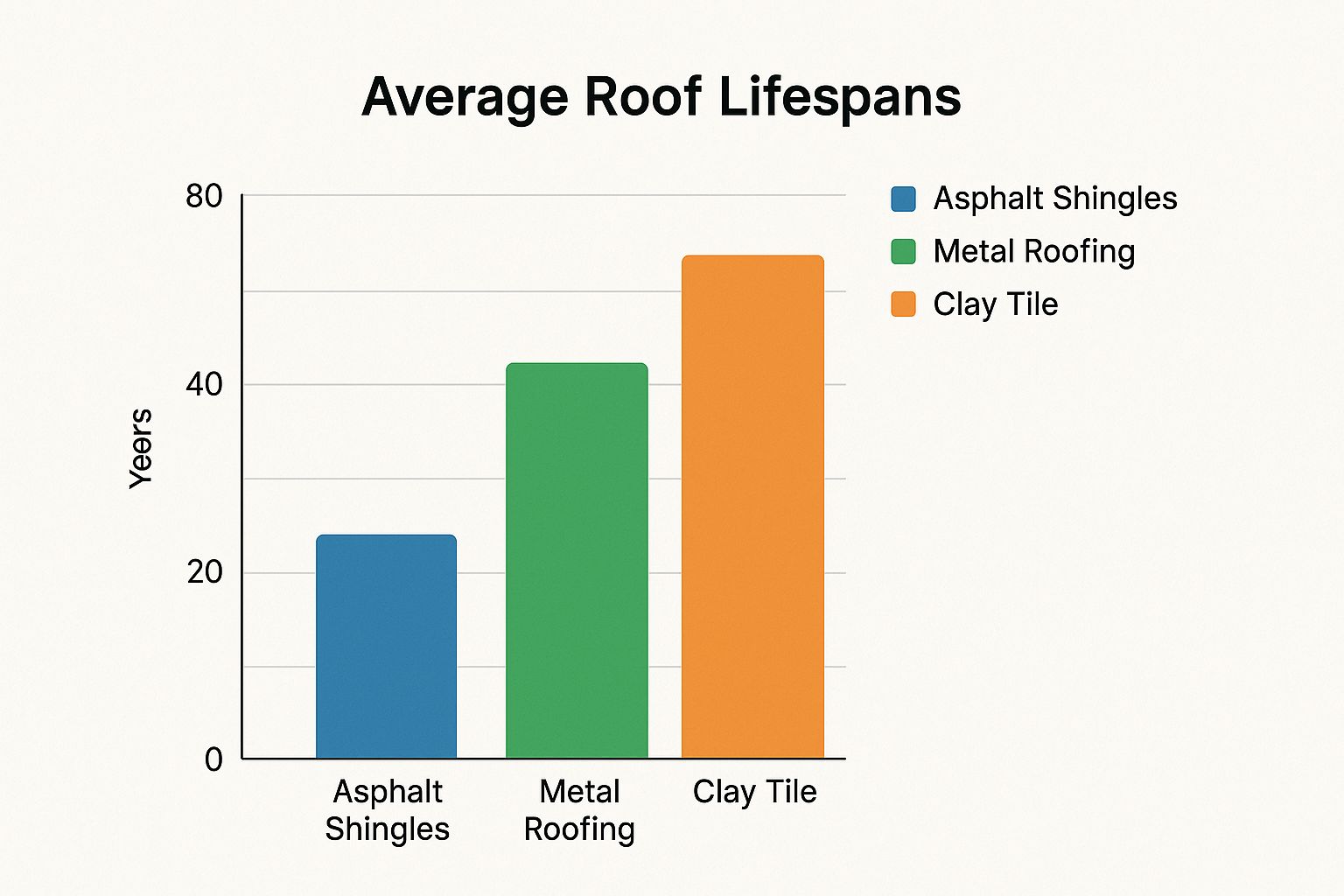
The jump in durability is pretty significant once you move from standard asphalt to materials like metal or tile. It's a trade-off between upfront cost and long-term peace of mind.
Setting Realistic Expectations
So, while the averages give us a good baseline—20-30 years for common asphalt shingles and up to 150 years for slate in perfect conditions—it's important to remember these are just benchmarks. You can dig into even more roof longevity insights on ThisOldHouse.com to get a broader perspective.
A roof's expected lifespan is a benchmark, not a guarantee. Factors like intense sun, storm frequency, and installation quality will ultimately determine its true service life.
Think of the manufacturer's warranty or the "average lifespan" as the best-case scenario. In the real world, other factors come into play. We’ll get into the specifics of what can help your roof outlast its warranty—or cause it to fail early—in the next sections.
Exploring the Lifespan of Different Roofing Materials
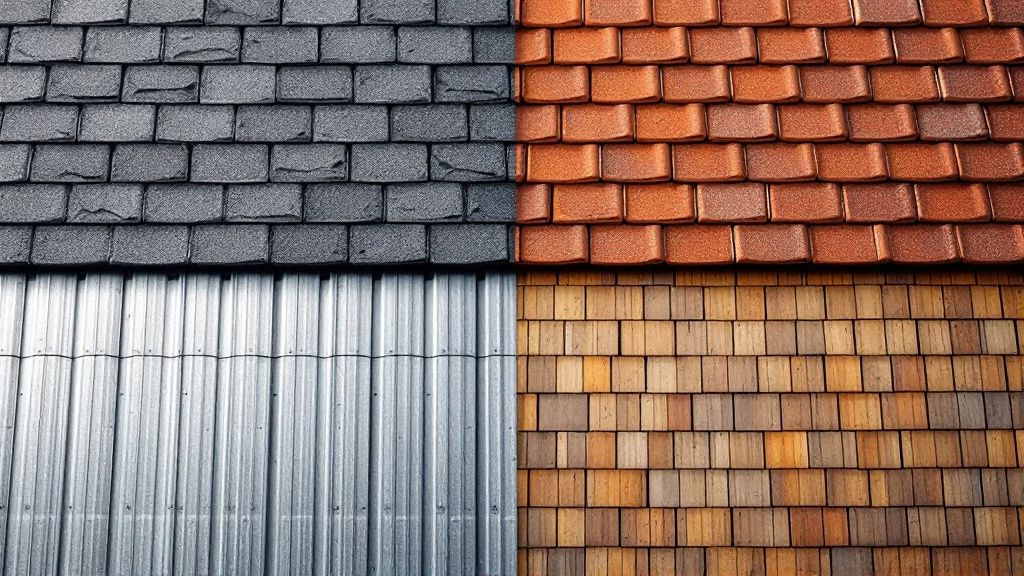
When you start asking, "how long do roofs last?", you quickly realize the answer comes down to one thing above all else: the material. Not all roofs are created equal. Some are designed for an economical, shorter run, while others are engineered to last for generations.
Making the right choice here is the difference between planning for a replacement in 15 years or potentially never having to worry about it again in your lifetime. Let’s dive into the most common options to see what you can really expect from each.
Asphalt Shingles: The Popular Standard
Walk through any neighborhood in North America, and you'll see a sea of asphalt shingles. There's a good reason for their popularity—they hit that sweet spot of affordability, reliability, and straightforward installation. They're the all-around workhorse of the roofing world.
But even within this category, there’s a big difference in quality and longevity.
- 3-Tab Shingles: These are your basic, entry-level shingles. Made from a single, flat layer, they get the job done on a budget. Because they're lighter, they're more vulnerable to wind and physical damage, which is why they typically last about 15 to 20 years.
- Architectural Shingles: This is a serious upgrade. Also called dimensional shingles, they’re made by fusing multiple asphalt layers together. This creates a much thicker, more durable shingle with a striking, textured look. That beefier construction pushes their lifespan up to 20 to 30 years, sometimes even longer.
While architectural shingles were developed to be tougher, both types can take a beating in harsh climates with high winds, hail, or relentless sun.
Metal Roofing: The Durable Contender
Metal roofing has exploded in popularity, and it's easy to see why. People are catching on to its incredible durability and resilience. Once reserved for barns and commercial buildings, modern metal roofs now come in a huge array of styles and colors that look fantastic on any home.
How long a metal roof lasts really depends on the metal itself:
- Steel (Galvanized or Galvalume): This is the go-to for residential metal roofing, reliably lasting 40 to 70 years. Special coatings are key here, as they protect the steel from rust.
- Aluminum: Living near the coast? Aluminum is your best friend. It’s naturally rust-proof and can easily last 50 years or more.
- Copper and Zinc: These are the true "forever" materials. Over time, they develop a beautiful patina that isn't just for looks—it's a natural protective shield. A copper or zinc roof can last 100 years or even longer.
One of the biggest selling points for metal is its incredible resistance to fire, rot, and insects. The upfront cost is definitely higher than asphalt, but when you spread that cost over its incredibly long service life, it often comes out as the smarter financial choice.
Metal is also surprisingly lightweight, which puts less stress on your home's structure. Plus, many types are considered "cool roofs" because they reflect solar heat, which can help trim your energy bills during hot summers.
Tile and Slate: The Generational Guardians
If your top priority is a roof that will outlive you, then tile and slate are in a league of their own. These materials have been protecting homes for centuries and are the gold standard for durability. Their only real weakness isn't age-related decay, but physical impact—a heavy falling branch or someone walking on them improperly can cause cracks.
Clay and Concrete Tiles
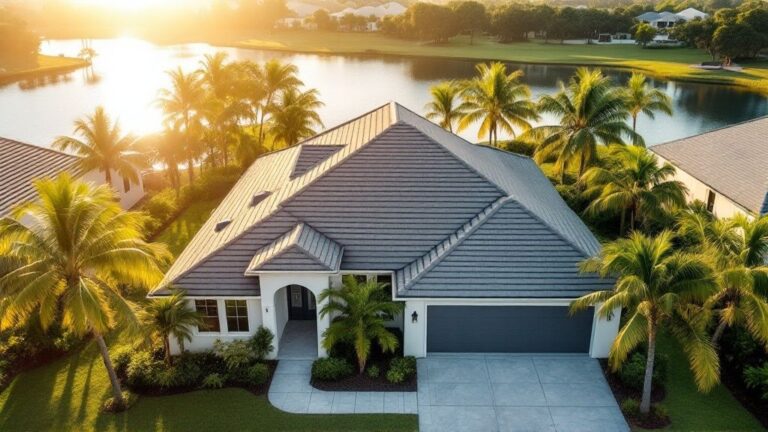
With their classic, elegant look, tiles are a perfect fit for Spanish, Mediterranean, or Floridian-style homes. They are incredibly tough and perform exceptionally well in hot, sunny climates.
- Clay Tiles: Fired in a kiln like pottery, these tiles are extremely dense and can last 50 to 100+ years. They're completely immune to rot and insect damage.
- Concrete Tiles: A more budget-friendly alternative to clay, concrete tiles are molded to mimic different styles and textures. They're nearly as tough, with a lifespan that often hits the 50-year mark or more.
The main consideration with tile is its weight. It's heavy. Your home's framing must be strong enough to support the load, which can sometimes mean adding structural reinforcements.
Slate Roofing
When it comes to longevity, slate is the undisputed king. It’s a natural stone, quarried from the earth and hand-split into tiles. A well-installed slate roof can easily last 75 to 150 years, and it’s not uncommon to see them last even longer.
Since it's literally stone, slate is completely fireproof, waterproof, and impervious to rot. The catch? The high cost of the material and the specialized skill needed for installation make it one of the most expensive options out there. But for that investment, you get unmatched performance and timeless beauty. You can see how different materials look by checking out our gallery of completed roofing projects.
Wood Shakes and Shingles: The Natural Choice
For those who love a rustic, natural aesthetic, nothing compares to wood. Wood shakes (which are hand-split for a rugged look) and shingles (machine-sawn for a uniform finish) have a unique charm that only gets better with age as they weather to a beautiful silver-gray.
Their lifespan is closely tied to the type of wood and the local climate:
- Cedar: This is the top choice for wood roofing. Cedar contains natural oils that help it resist insects and decay, giving it a lifespan of 30 to 40 years when properly cared for.
- Pine: A more economical option, pine shakes are usually pressure-treated to boost their durability, but they generally don't last as long as cedar.
A wood roof demands more upkeep than other types. It's crucial to keep it clear of leaves and debris so it can dry out properly, which helps prevent rot and moss. It's also not the best choice for areas prone to wildfires, though some products are treated with fire retardants. For a wood roof, the answer to "how long will it last" truly depends on your commitment to maintenance.
Key Factors That Shorten a Roof's Lifespan
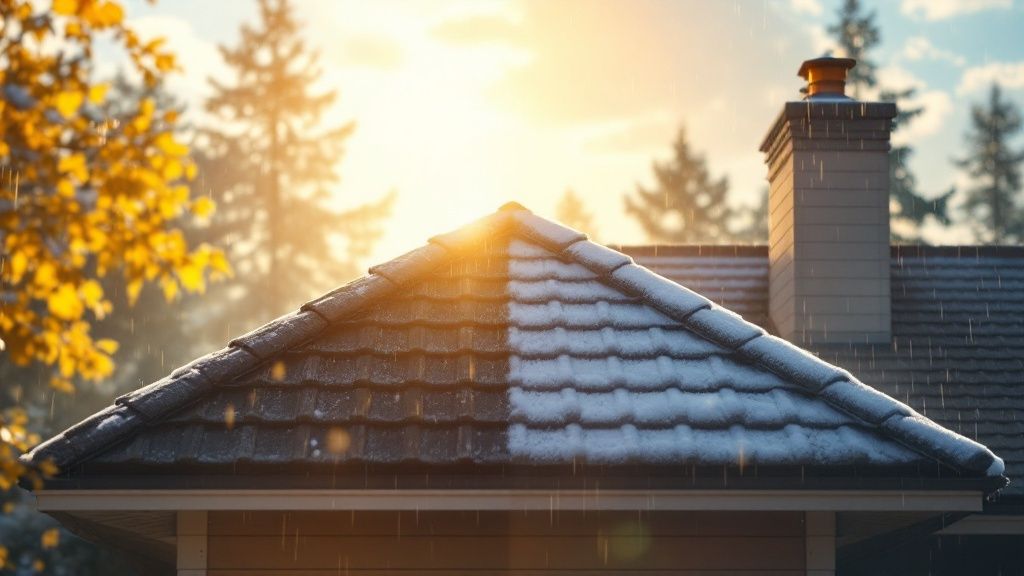
So, you’ve picked a durable material like slate or metal. That’s a great start, but it’s no guarantee of a long, trouble-free service life. Think of a roof's lifespan less as a fixed number and more as a potential—a potential that gets chipped away by all sorts of external forces. To really answer the question "how long do roofs last," you have to look beyond the materials themselves and understand what's working against your roof every single day.
It's a lot like a car. You can buy the most reliable engine on the market, but if you drive it aggressively and skip oil changes, it's not going to last. A roof can fail decades early when subjected to the right (or wrong) combination of stressors. Everything from the intensity of the sun to the quality of the original installation plays a massive role in whether your roof even makes it to its expected lifespan, let alone exceeds it.
The Impact of Sun and Heat Exposure
For many materials, especially the ever-popular asphalt shingles, the sun is public enemy number one. Your roof takes a daily beating from ultraviolet (UV) radiation, which acts like a slow-motion fire. Over the years, this constant exposure breaks down the chemical bonds in the asphalt, making the shingles brittle, dry, and far more likely to crack. You'll see the protective granules start to loosen and wash into your gutters, leaving the core of the shingle exposed and vulnerable.
This whole process gets thrown into overdrive with intense, direct sunlight. A house tucked away in a shady, wooded lot might see its asphalt shingles last years longer than an identical roof on a home sitting in an open field with zero tree cover. The heat itself is also a huge part of the equation.
A roof's surface can easily climb to 150-175°F on a hot summer afternoon. This extreme heat forces materials to expand and contract, which leads to stress fractures and breaks down sealants and underlayment over time.
Poor Attic Ventilation
What's happening in your attic is just as critical as what’s happening on top of your roof. A properly ventilated attic is designed to create a steady airflow, pulling in cooler air from vents in the soffits and pushing hot, moist air out through ridge or gable vents. When that system is blocked or just isn't adequate, your attic essentially turns into a giant oven.
All that trapped heat bakes your roof from the underside, superheating the decking and the shingles. This constant thermal stress will cook the life right out of asphalt, causing it to curl and become inflexible way too soon. In the winter, the problem flips—poor ventilation traps moisture that can lead to condensation, mold, and even rot in your roof deck and support beams.
- Summer Impact: An unventilated attic becomes a pressure cooker, basically cooking your shingles from below while also driving up your air conditioning bills.
- Winter Impact: All that warm, moist air from your living space rises and condenses on the cold underside of the roof deck. This can lead to wood rot, mold, and the formation of destructive ice dams along your eaves.
Flawed Installation Practices
You could have a brand-new roof made from the best materials money can buy, and it could still fail in just a few years if it wasn't installed correctly. The installation is the absolute foundation of your roof's performance. Every mistake made on day one creates an immediate weak point. I'd argue it's the single most important factor after choosing the material itself.
Think of it like building a ship. Even with the strongest steel, one single poorly welded seam can put the entire vessel at risk. The exact same principle applies to roofing. A few common installation shortcuts can have devastating consequences for how long your roof will actually last.
Critical Installation Mistakes:
- Improper Nailing: If nails are driven in too far, they punch right through the shingle. If they're left sticking up, they don't hold it down. Both scenarios create a perfect entry point for water and make the shingles incredibly easy for the wind to rip off.
- Misaligned Shingles: When shingles aren't lined up just right, it exposes the layers underneath to the elements and creates little channels where water can seep in and travel.
- Inadequate Flashing: Flashing is the metal work around chimneys, vents, and in valleys, and it’s absolutely critical for waterproofing. Poorly installed or missing flashing is one of the most common culprits behind mysterious roof leaks.
- Skipping the Underlayment: Using a cheap underlayment—or worse, installing it improperly—leaves your home’s structure with a very weak last line of defense against water intrusion.
How Proactive Maintenance Extends Roof Durability
Think of your roof's lifespan less like a fixed expiration date and more like the health of your car. You wouldn't drive a car for 15 years without changing the oil or checking the tires, right? Your roof is the same. Every storm, every clogged gutter, and every bit of debris is like adding miles without a tune-up. Proactive maintenance is how you keep your roof in peak condition, ensuring small issues don't cascade into catastrophic failures.
This isn't about spending every weekend on a ladder. It's about being strategic and observant. A few simple, consistent habits can prevent the vast majority of premature roof failures. When you catch a cracked sealant bead or a few loose shingle granules early, you stop water from ever getting a foothold. That's crucial, because once water gets in, it can cause widespread, expensive damage to your home’s structure.
The Power of Regular Inspections
You don’t have to be a seasoned roofer to spot the early warning signs of trouble. It really just comes down to knowing what to look for and making a habit of looking. A quick visual scan from the ground with a pair of binoculars, especially after a big storm, can reveal missing shingles or dented flashing long before you see a leak inside.
This simple habit shifts you from being a reactive homeowner—the one who calls for help only after a stain appears on the ceiling—to a proactive one. It’s about spotting the small tear before the whole thing unravels. Of course, for a more detailed look, nothing beats a professional check-up. A thorough evaluation, like what's included in a professional roofing inspection service, can identify subtle issues that an untrained eye would easily miss.
Creating a Seasonal Maintenance Plan
Breaking down your roof maintenance into a simple, seasonal checklist makes the whole process feel less overwhelming and far more effective. Each season brings its own set of challenges, so tailoring your efforts just makes sense.
A structured approach to roof care ensures nothing falls through the cracks. By aligning specific tasks with the changing seasons, you can preemptively address the most common causes of roof damage before they become serious problems.
Seasonal Roof Maintenance Checklist
| Season | Key Maintenance Tasks | Why It's Important |
|---|---|---|
| Spring | Inspect for damage from winter ice/snow. Check for loose or damaged shingles. Clear gutters and downspouts of any leftover winter debris. | Winter can be harsh. This ensures your roof is ready for heavy spring rains and that water can flow freely away from your home. |
| Summer | Look for cracked sealant around vents, skylights, and chimneys. Check for curling, blistering, or cracking shingles caused by UV exposure. | Intense sun and heat can degrade materials. Catching these issues early prevents leaks during summer thunderstorms. |
| Autumn | Clear all gutters and downspouts of leaves and debris. Trim any overhanging tree branches. | This is critical. Clogged gutters in fall lead to ice dams in winter, which can force water under shingles and cause major damage. |
| Winter | (From the ground) Visually check for heavy snow accumulation or large icicles. Ensure attic ventilation is clear to prevent ice dams. | Heavy loads can stress your roof's structure, and large icicles are a clear sign of heat loss and potential ice dam formation. |
Following a simple plan like this one is the single best way to protect your investment and keep your roof performing as it should for years to come.
Your roof’s two greatest enemies are standing water and debris. Clogged gutters and piles of wet leaves create the perfect storm, allowing water to sit and slowly seep into the roof deck. This leads to rot that can compromise your entire roofing system.
By adopting this proactive cycle, you systematically neutralize the most common threats to your roof's health. It's the most effective strategy for maximizing your return on investment and ensuring you get every last year out of your roof's expected lifespan.
Telltale Signs Your Roof Needs Replacement
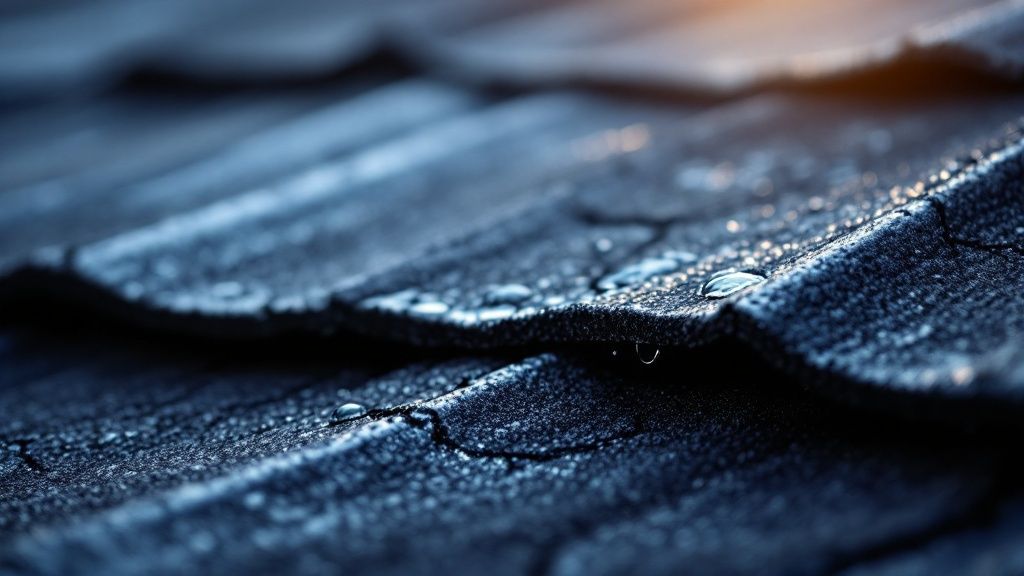
Knowing the average lifespan of a roof is one thing, but spotting the real-world signs of failure is what truly matters for a homeowner. Catching these red flags early is the key to preventing a minor issue from turning into a catastrophic leak that causes water damage, mold, and a mountain of interior repair bills.
Think of it as a health check-up for your home. Some symptoms are obvious from the street, while others require a closer inspection or even a quick trip into the attic. Learning to spot these issues helps you know when a simple repair won't cut it anymore and a full replacement is the only smart path forward.
What to Look for on the Outside
Your roof's exterior is the first and most obvious place to look for trouble. A quick walk around your house can tell you a lot if you know what you’re looking for.
Keep an eye out for these telltale signs that your roof's defenses are starting to fail:
- Curling or Clawing Shingles: Over time, asphalt shingles dry out and lose their flexibility. You might see the edges turning upward (curling) or the middle starting to pop up (clawing). Both are clear indicators that the shingles are brittle and can be easily torn off by the wind.
- Cracked or Missing Shingles: If you notice widespread cracking across your roof, you're looking at advanced wear and tear. Even worse, if you spot areas where shingles are completely gone, your roof's underlayment is exposed directly to the rain, creating a serious and immediate leak risk.
- Bald Spots and Granule Loss: Those little granules on your shingles act like sunscreen, protecting them from harsh UV rays. When you start seeing "bald" patches or find a ton of granules in your gutters, it means your roof is losing its primary protection, which rapidly speeds up its decline. You can see examples of this issue at https://paletzroofing.com/wp-content/uploads/2025/09/thumbnail-23-768×432.jpg.
- Dark Streaks or Moss Growth: Those ugly black streaks, which are especially common in humid areas, are actually algae colonies. While mostly a cosmetic problem at first, heavy moss growth can be more serious—it traps moisture against the shingles and can lead to rot.
Warning Signs From Inside Your Home
Sometimes, the most urgent signs of roof failure aren't on the roof at all but pop up inside your house. These symptoms mean water has already found a way through and is starting to compromise your home's structure.
One of the most dangerous signs of failure is a sagging roof deck. If you ever notice a dip or depression in your roofline, it could point to a severe structural issue like rotted decking. This is an emergency that requires immediate professional attention.
Be on the lookout for these interior red flags:
- Water Stains on Ceilings or Walls: Discolored spots or peeling paint on your ceilings is the classic calling card of a leak. The location of the stain can often help a roofer track down exactly where the water is getting in.
- Daylight Visible Through Roof Boards: Head up to your attic on a bright day. If you can see little beams of light shining through the roof boards, you’ve got a problem. Every single one of those specks of light is a hole that water can pour through.
Deciding to replace your roof is a major financial commitment. In the United States, a new roof costs around $11,500 on average, with the price ranging anywhere from $6,700 to $80,000 based on the home's size, the materials used, and local labor costs. This is a universal concern for homeowners, much like knowing when it's time to upgrade other essential parts of your home. For instance, you can find similar guidance on when to replace other major home systems.
Answering Your Lingering Questions About Roof Longevity
Alright, so we've covered the different materials, the factors that wear them down, and how to take care of them. But even with all that information, I find homeowners are often left with a few specific, practical questions. Things get complicated when you start thinking about warranties, insurance claims, and old repairs.
This last section is designed to tackle those common "what if" scenarios head-on. Let's clear up some of the most frequent questions I hear, giving you straightforward answers to help you plan for your roof's future with confidence.
Does a 30-Year Shingle Really Last 30 Years?
This is probably the number one question I get, and it’s rooted in a huge misunderstanding. The short answer is, rarely. A "30-year" or "50-year" shingle warranty is the manufacturer's guarantee against factory defects—it's not a performance promise for its real-world lifespan.
While those shingles are absolutely built better and are engineered to last, their actual time on your roof depends on everything else. Things like poor attic ventilation, brutal sun exposure, or a shoddy installation can easily shave years off that number. It’s much healthier to think of the warranty period as a benchmark for quality, not a countdown timer.
A manufacturer's warranty is there to protect you from a product failing on its own, not from the effects of Mother Nature or a bad install. The years on the label represent the roof's potential under perfect lab conditions—something very few homes ever have.
Think of it like this: a set of high-performance tires might be rated for 50,000 miles, but if your car's alignment is off and you're constantly driving on gravel roads, you'll be lucky to get half that. It's the exact same principle for your roof.
Can I Put a New Roof Over an Old One?
Ah, the reroof. Layering a new set of shingles over the old one is often sold as a quick and cheap alternative to a full replacement. While most building codes allow it (usually up to two layers), it’s a shortcut that comes with some serious downsides that can sabotage how long your new roof actually lasts.
Here’s why most seasoned roofers will advise against it:
- Trapped Heat: That extra layer of old shingles acts like a blanket, trapping heat and essentially baking your new shingles from underneath. This dramatically speeds up their aging.
- Hidden Damage: You can't see the wood decking underneath. If there's any rot or water damage, you're just covering it up and letting it fester, which can lead to a much bigger, more expensive problem down the line.
- Too Much Weight: Shingles are incredibly heavy. Adding a second layer puts thousands of extra pounds on your home's structure, which it might not have been designed to carry.
- An Uneven Surface: New shingles laid over an old, bumpy surface will never sit perfectly flat. This makes them far more likely to be caught and lifted by high winds.
While an overlay might seem like a good way to save a few bucks upfront, a complete tear-off is almost always the smarter, safer investment for the long haul.
Will My Homeowners Insurance Pay for a New Roof?
This is a critical distinction that trips up a lot of homeowners. Insurance is designed to cover sudden and accidental damage—what the industry calls "perils." If a hurricane tears off your shingles, a tree falls on your house, or a hailstorm pummels your roof, your policy will very likely help pay for repairs or a replacement.
However, insurance will almost never pay to replace a roof simply because it's old and worn out. Gradual wear and tear is considered a maintenance issue, which is the homeowner's responsibility. If your 20-year-old roof has just reached the end of its natural life, that replacement cost is going to come out of your pocket.
How Does Roof Color Affect Longevity?
Believe it or not, the color you choose can make a real difference in your roof's lifespan, especially for asphalt shingles in sunny climates. The science is simple: dark colors absorb heat, and light colors reflect it.
A dark black or deep brown roof gets significantly hotter than a light gray or white roof. That constant, intense heat breaks down the asphalt in the shingles much faster, shortening their service life. On the other hand, lighter-colored "cool roofs" can stay up to 50-60°F cooler on a hot summer afternoon. Not only does this help the roof last longer, but it can also make a dent in your cooling bills.
In a hot region like South Florida, opting for a lighter shade is a simple but powerful strategy to help your roof stand up to the relentless sun.
If you have more questions or you're seeing signs that your roof might be on its last legs, don't wait for a small leak to turn into a disaster. The experienced team at Paletz Roofing and Inspections can give your roof a thorough assessment and provide honest answers about its condition. For a free quote or to schedule an inspection, visit us at https://paletzroofing.com.