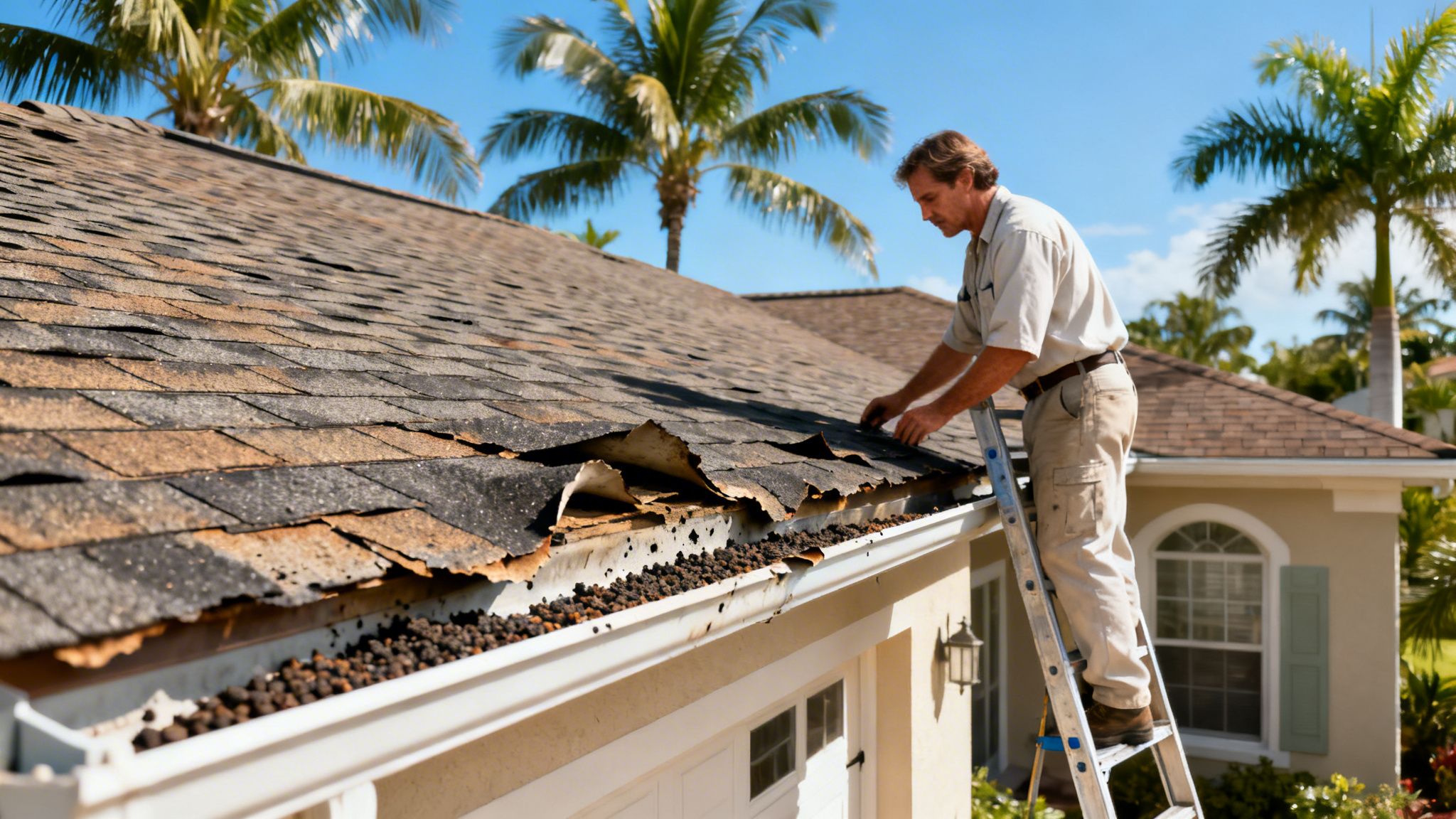
Figuring out whether you need a roof replacement often starts with a simple look. If you see widespread issues like curling or missing shingles, a noticeably sagging roofline, or a ton of granules in your gutters, these are urgent red flags that usually point toward replacement, not just a simple repair.
Your Quick Guide to Spotting a Failing Roof

Your roof is the single most important shield protecting your home from South Florida's intense sun, humidity, and hurricane seasons. But how can you tell when it’s time for a full replacement versus a simple patch job? This guide cuts through the noise, giving you the confidence to assess your roof's health.
The goal here is to give you, the homeowner, the practical know-how to spot red flags early. Catching them now can prevent minor issues from snowballing into major structural damage and costly emergencies down the road. Think of this as your first step toward making a proactive, informed decision about one of your home's biggest investments.
Key Replacement Indicators
The decision between a repair and a full replacement often comes down to a few key factors: your roof's age, the extent of the damage, and a straightforward cost comparison. While a couple of missing shingles on a newer roof might just need a quick fix, widespread problems demand a much closer look.
A good rule of thumb we use is if the repair costs are more than 30% of the price of a new roof, a full replacement is almost always the smarter, more cost-effective solution in the long run.
This is especially true if your roof is already getting on in years. For example, an asphalt shingle roof in Broward or Miami-Dade that’s over 15 years old and showing multiple signs of wear is a prime candidate for replacement. Continuing to patch it just becomes a temporary, and ultimately more expensive, fix.
Your Initial Roof Health Checklist
Before you even think about getting on a ladder, you can start your assessment right from the ground. To make it easier, we've put together a quick checklist of the most critical warning signs.
Quick Roof Health Checklist
Spotting any of these issues from the ground should be your cue that it’s time for a professional to take a look.
| Warning Sign | What to Look For | Urgency Level |
|---|---|---|
| Widespread Shingle Damage | Shingles are curling up at the edges, buckling in the middle, or have large bald spots where granules are missing. | High |
| Visible Sagging or Drooping | The roofline appears uneven, wavy, or dips in certain areas. This signals a potential structural problem. | Critical |
| Granules in Gutters | Finding excessive amounts of coarse, black sand-like granules in your gutters (not just a little bit from a new roof). | Medium to High |
| Frequent or Multiple Leaks | You've had leaks in several spots or have repaired the same area multiple times. Water stains are visible. | High |
If you notice any of these problems—especially a sagging roof or widespread shingle failure—it's time to move beyond a DIY check. These aren't just cosmetic flaws; they’re clear signs that your roof's integrity is compromised and needs an expert diagnosis.
Conducting a Safe Inspection From the Ground and Attic

Before you ever think about setting foot on a ladder, you should know that some of the most powerful clues about your roof's health are right inside and around your home. A surprising amount of what you need to know is visible from the ground and your attic.
This approach isn’t just the safest way to start—it’s also one of the most effective ways to do an initial assessment.
Your Attic Inspection Checklist
Your first stop should be your attic. It’s the closest you can get to the underside of your roof deck without climbing, and it offers direct evidence of moisture problems. For the best results, head up there on a bright, sunny day.
Once you’re safely inside, kill the lights and let your eyes adjust. This simple trick makes it surprisingly easy to spot subtle issues that signal your roof is failing. Here’s what to look for.
- Beams of Sunlight: Do you see any slivers or pinpricks of daylight shining through the roof boards? While some older homes have intentionally spaced boards, any unexpected light is a dead giveaway for cracks, holes, or shingles that have shifted out of place.
- Water Stains and Streaks: Look closely at the plywood sheathing, rafters, and insulation. Dark streaks, discolored patches, or obvious water stains are undeniable proof of a leak.
- Dampness or Musty Smells: Use your hands to feel for damp spots on the insulation or wood. A persistent musty or moldy odor is another powerful sign that moisture has been a problem for a while.
Imagine climbing into your attic on a sunny South Florida day only to find dark, mysterious streaks running down the rafters. Those are the classic calling cards of an attic leak—a major red flag. Water damage from failing roofs impacts over 1.5 million U.S. homes annually, and Florida leads the pack thanks to our relentless hurricanes and humidity.
Just think about Hurricane Ian back in 2022, which slammed Broward, Miami-Dade, and Palm Beach counties and caused over $112 billion in damages nationwide. It’s no surprise Florida has more than 25,000 roofers per capita, far outpacing other states. Leaks like these demand immediate attention. You can discover more insights about how roof replacement costs are driven by these factors on southernhomeimprovement.com.
Your Exterior Ground-Level Walkaround
After you’ve checked the attic, it’s time to head outside. The good news is you still don’t need to get on the roof. A simple pair of binoculars will be your best friend for this part of the inspection, letting you get a close-up look from a safe distance.
Start by slowly walking the entire perimeter of your house, scanning the surface of the roof. Make sure you pay special attention to the slopes that are harder to see from the street.
Pro Tip: Do your exterior check at different times of the day. The changing angles of the sun can reveal subtle problems like buckling or warped shingles that might be completely invisible in direct overhead light.
As you circle your property, keep an eye out for specific problem areas. Don't just give it a quick glance; methodically scan each section, looking for anything that seems out of place. Your ground-level assessment should zero in on a few critical spots.
Gutters and Downspouts
Think of your gutters as a diagnostic tool for your roof. Take a look inside them for an accumulation of asphalt granules, which look like coarse black sand.
While it’s totally normal for a brand-new roof to shed some granules, finding a handful in the gutters of an older roof is a huge warning sign. This granule loss means your shingles are losing their primary layer of protection against UV rays, which makes them brittle and prone to cracking.
Walls and Siding
Next, take a close look at the exterior walls of your home, especially near the roofline and under the eaves. You’re searching for any water stains or areas of peeling paint. These issues often point to a leak coming from compromised flashing or a clogged gutter that's forcing water to overflow and run down the side of your house.
Roof Surface Examination with Binoculars
Now it’s time to grab your binoculars. They will help you spot problems that are nearly impossible to see with the naked eye from the ground. Focus on these details:
- Shingle Condition: Look for any shingles that are curling, cracked, or have bald patches where granules are missing.
- Flashing Integrity: Check the metal flashing around your chimney, vents, and skylights. It should be lying flat and be free of rust or cracks.
- Valleys and Ridges: These areas are critical for channeling water off your roof. Look for any missing shingles or signs of damage. Our guide on how to spot roof damage can provide additional visual examples.
This combined attic and ground inspection gives you a solid foundation of knowledge. If you spot any of these signs, you’ll know exactly what to point out when you call a professional for a definitive assessment.
Decoding the Visual Signs of Roof Failure
Alright, you’ve done the initial legwork from the ground and maybe even poked your head into the attic. Now comes the real detective work: figuring out what you’re actually looking at. Not every imperfection is a five-alarm fire. Some are just cosmetic quirks, while others are blaring sirens telling you it’s time for a replacement.
The trick is learning to tell the difference. Your roof has its own way of communicating when it’s in trouble, and understanding that language can save you from a small headache turning into a full-blown catastrophe.
Curling Shingles Are More Than Just an Eyesore
One of the first things we look for on an aging asphalt shingle roof is curling or cupping. This is when you see the edges of the shingles lifting up or the centers starting to bubble. Don't mistake this for a simple cosmetic flaw—it’s a dead giveaway that the shingles have lost their flexibility and are turning brittle.
Once a shingle starts to curl, it breaks the watertight seal that’s supposed to keep your home dry. This makes it incredibly easy for a strong gust of wind to catch the edge and tear it right off, leaving the layers underneath exposed to the elements.
You'll typically see two types of this problem:
- Clawing: Where the corners of the shingle curl under themselves.
- Cupping: When the edges curl upwards, creating a little cup-like shape.
Think of it like this: if your shingles look like bacon that's been left on the pan too long, that’s your roof screaming for help. This curling happens as asphalt shingles age past their prime, a process that our South Florida sun and humid, salty air can speed up by as much as 25% compared to other parts of the country. In fact, a recent market forecast on logamsroofing.com noted that nationwide, 60% of U.S. roofs over 25 years old show this type of damage, which is a major reason contractors are expecting a surge in replacements.
Bald Spots and Missing Granules
Next, scan your shingles for what we call "bald spots." This is widespread granule loss, and it's another critical sign of failure. Those tiny, sand-like granules are your roof's main line of defense against brutal UV rays and heat. When they wash away, the asphalt underneath is left completely exposed and starts to break down fast.
You'll usually find piles of these granules collecting in your gutters or at the bottom of your downspouts. While a tiny bit of shedding is normal on a brand-new roof, finding handfuls of them from an older roof is a major red flag.
Think of the granules as sunscreen for your roof. Without them, your shingles are basically getting a severe sunburn every single day. They become dry, brittle, and will crack under the slightest stress, dramatically cutting their lifespan short.
Once those granules are gone, the damage is done. Those shingles can't be repaired and are no longer protecting your home, making a replacement the only real fix.
The Clear Danger of Cracked or Missing Shingles
While curling and granule loss signal a roof that’s on its last legs, finding shingles that are cracked, broken, or just plain missing is an immediate threat. These are basically open invitations for water to get into every protective layer of your roof system.
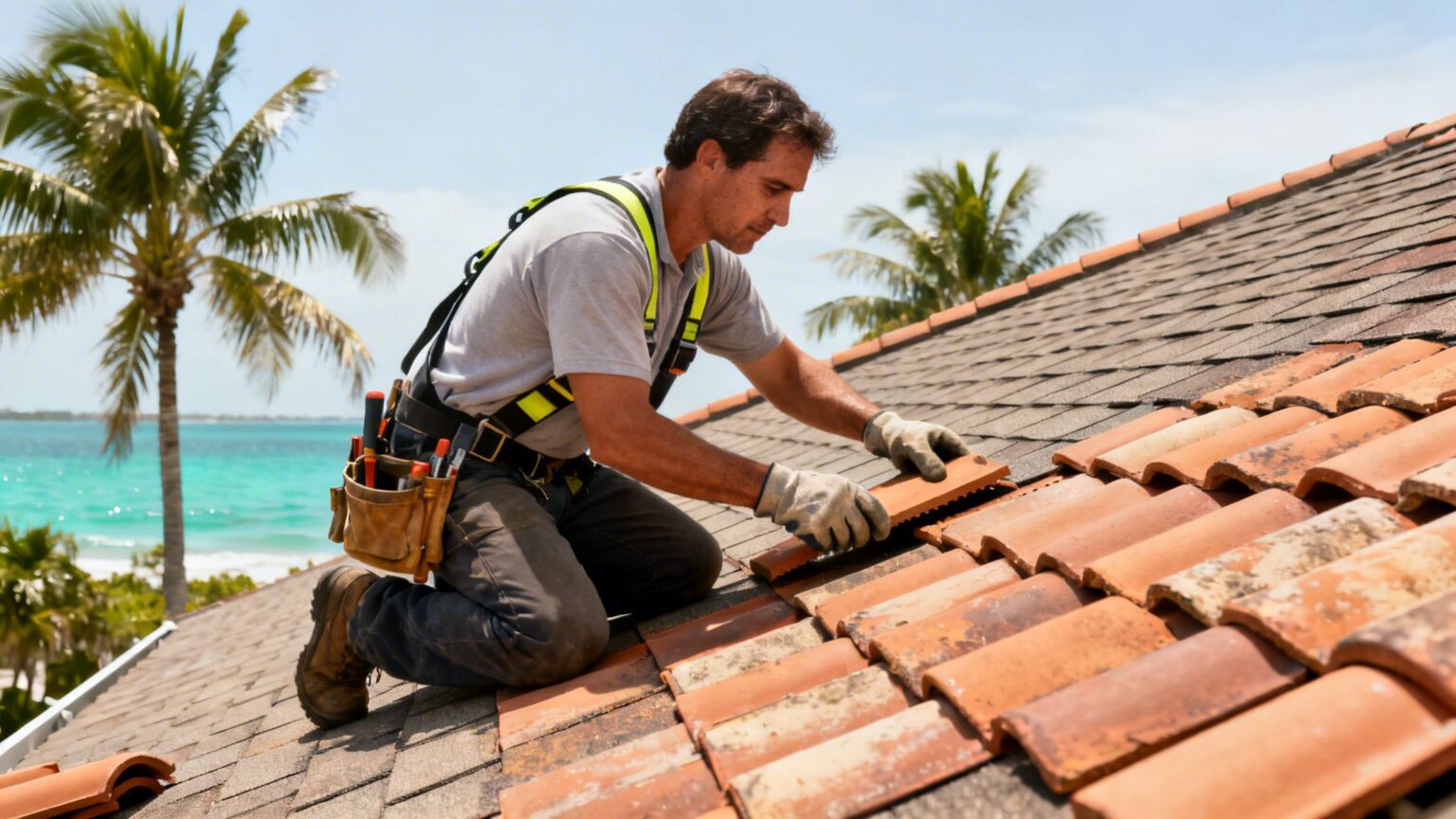
Even one missing shingle can cause a serious leak, leading to water damage in your home's structure, insulation, and ceilings. Cracked shingles are just as bad. During one of South Florida's signature downpours, water will find its way through those fractures with ease. We have a whole post on spotting common types of roof damage with more pictures of what to look for.
Differentiating Between Algae and Moss
Finally, it’s important to know what kind of biological growth you're dealing with, because not all of it is created equal.
Dark Streaks (Algae): You’ve seen them—those long, dark black streaks running down roofs all over the neighborhood. This is an algae called Gloeocapsa magma. While it’s definitely an eyesore, it’s mostly a cosmetic problem and doesn’t usually cause functional damage.
Green Patches (Moss): On the other hand, if you see fuzzy, green patches of moss, especially in shaded parts of the roof, that’s a much bigger deal. Moss is like a sponge; it traps moisture and holds it right against your roof’s surface.
This constant dampness can lead to rot in the wood decking below and speed up the breakdown of the shingles. In the rare event of a freeze, this trapped water can expand and cause even more damage. If you’ve got moss, your roof is holding onto water, and that's a problem you need to address right away.
Factoring in Age and Material Lifespan in Florida
A roof's age is more than just a number—it's one of the most important clues you have. If you know your roof is 15 years old, that's a great starting point. But a 15-year-old roof in South Florida has lived a much harder life than one in a milder, drier part of the country.
Our brutal combination of intense sun, year-round humidity, and corrosive salt spray creates an environment that puts roofing materials to the ultimate test. Understanding this local reality is the first step toward smart, proactive home maintenance.
A manufacturer might slap a 30-year warranty on their asphalt shingles, but that number is usually based on perfect, lab-tested conditions. Down here in Broward, Miami-Dade, and Palm Beach, we have to think in terms of a "Florida lifespan," which is almost always shorter.
South Florida Roof Lifespan Realities
The relentless UV radiation beats down on your roof every single day, breaking down materials and leaving them brittle. That thick, humid air is the perfect breeding ground for algae and moss, which trap moisture right against your shingles. And for those of us closer to the coast, the salty air works tirelessly to corrode metal components like flashing and fasteners.
That’s all before we even bring up the incredible stress of hurricane-force winds.
This unique mix of factors means you simply have to adjust your expectations. Planning for a replacement based on a realistic local timeline can save you from the gut-punch of a sudden, catastrophic roof failure and the massive, unplanned expense that comes with it.
Your roof's age is its baseline story, but the South Florida climate is what writes the final chapter. A 15-year-old shingle roof here has endured far more stress than a 15-year-old roof in a less demanding environment. Ignoring this fact is a recipe for an unexpected and costly surprise.
This infographic breaks down some key metrics related to common roof aging factors and market trends.

The data here backs up what we see in the field every day: as materials age and show signs of wear like curling, the need for replacement isn't far behind.
Roofing Material Lifespan in South Florida
When you're trying to figure out if it's time for a new roof, the material you have is a massive part of the equation. Different materials hold up to our climate in vastly different ways, which directly impacts how long they’ll actually protect your home.
Here's a realistic breakdown of what to expect from the most common roofing materials in Broward, Miami-Dade, and Palm Beach counties.
| Roofing Material | Typical Lifespan (South Florida) | Key Weaknesses in Local Climate | Replacement Indicators |
|---|---|---|---|
| Asphalt Shingles | 15-20 years | UV degradation, high humidity (algae), wind uplift | Widespread granule loss, curling/cracking shingles, leaks |
| Concrete/Clay Tile | 30-50+ years | Cracked tiles from impact/foot traffic, underlayment failure | Widespread broken tiles, multiple active leaks, failed underlayment |
| Metal Roofing | 50-70+ years | Scratches leading to corrosion (salt air), color fading | Significant rust/corrosion, fastener failure, major fading |
This table makes it clear why a "one-size-fits-all" approach to roof age doesn't work here. Thinking about your roof's material and its actual local lifespan is a powerful tool. It helps you shift from a reactive mindset—waiting for a leak to appear—to a proactive one, where you can budget and plan for a replacement on your own terms.
When you combine this knowledge with the visual warning signs we discussed, you get a much clearer, more accurate picture of your roof's true health.
When to Call a Professional for an Expert Assessment

Giving your own roof a once-over is a great first step, but let's be realistic—some problems go way beyond a DIY diagnosis. A few red flags are so serious they demand an immediate call to a certified roofing professional. These aren't issues you can afford to "watch and wait" on.
If you’re seeing widespread granule loss, have damage from a major South Florida storm, or notice even a hint of sagging, it's time to get an expert on the phone. These signs often point to deep, underlying issues with your roof's structure that are impossible to assess from the ground. Knowing when to make that call is a huge part of figuring out how to know if your roof needs replacement.
Recognizing Professional-Only Problems
A DIY check helps you gather the initial clues, but a professional assessment gives you the complete story. Some problems absolutely require this next step because the risk of waiting is just too high.
You need to pick up the phone right away if you spot any of these:
- A Sagging Roof Deck: This is a structural emergency. If you see a dip, bow, or wave in your roofline, it’s a glaring sign that the underlying supports are failing, likely due to moisture and rot. The roof could be at risk of collapse.
- Significant Storm Damage: After a hurricane or even a severe tropical storm, hidden damage is incredibly common. High winds can lift shingles, break their seals, and crack tiles in ways you'd never see from your lawn, compromising your roof long before the first leak appears.
- Widespread Material Failure: If more than 30% of your roof is showing curling shingles, deep cracks, or bald spots from granule loss, you're past the point of minor repairs. This signals a systemic failure of the roofing material itself.
Once you've spotted these kinds of issues, it's crucial to bring in a professional for an expert assessment. These qualified roofing contractors have the training and tools to give you a complete and accurate evaluation.
What to Expect During a Professional Inspection
Scheduling a consultation might feel a little intimidating, but a true professional will make the entire process transparent and straightforward. Their goal isn't just to sell you something; it's to give you an accurate diagnosis and a clear plan.
A thorough inspection from a reputable company like Paletz Roofing and Inspections is a multi-point process. The inspector won’t just glance at the one spot you're worried about—they'll conduct a full assessment to understand your roof's overall health.
A professional roofer will actually get on the roof, walk every section, inspect the attic for moisture, check all the flashing, and assess the ventilation. They're hunting for the root cause of the problem, not just patching the symptoms you can see from the street.
Demystifying the Quote and Process
After the physical inspection, the pro will sit down with you and explain their findings in plain English. They should have photos to show you exactly what they found and be able to connect that damage back to the problems you've noticed, like leaks or granules in the gutters.
The final piece of the puzzle is a detailed, written quote. This document is your roadmap, and it needs to be completely transparent. A proper quote will break down every single aspect of the proposed job.
A comprehensive quote should clearly itemize costs for:
- Materials: The specific type and brand of shingles, tiles, or metal being proposed.
- Labor: The cost for the crew to perform the tear-off of the old roof and the new installation.
- Permits: The fees required by your local municipality, whether it's in Broward, Miami-Dade, or Palm Beach.
- Debris Disposal: The cost for the dumpster and removal of all old roofing materials.
- Underlayment and Decking: Any necessary replacements for the crucial layers beneath the shingles.
This level of detail is non-negotiable. It ensures you understand the full scope of work, guarantees compliance with South Florida’s demanding building codes, and gives you the documentation you’ll need for any insurance claims. Providing this clarity is what our skilled team at Paletz Roofing and Inspections is all about. https://paletzroofing.com/wp-content/uploads/2024/05/logo-Paletz-Roofing-Inspection-4-300×139.webp

Common Questions About Roof Replacement in South Florida
When you're staring up at your roof, wondering if that small leak is a simple fix or a sign of a much bigger problem, you're not alone. Homeowners across Broward, Miami-Dade, and Palm Beach counties often wrestle with the same tough questions. Here are some straightforward answers from our experience to help you figure out how to know if your roof needs replacement.
Can My Roof Be Repaired or Does It Need a Full Replacement?
This is the million-dollar question for most homeowners, and the answer really boils down to two things: the roof's age and just how widespread the damage is.
A few missing shingles after a storm on a roof that’s only a few years old? That’s often a straightforward repair. But if your roof is getting up there in years—especially an asphalt shingle roof that's 15+ years old in our brutal Florida climate—a full replacement is almost always the smarter financial move in the long run. If you're seeing issues like curling shingles across more than 30% of your roof, or any hint of sagging, it's time to think about replacement. A professional inspection is the only way to be certain.
How Does a Recent Hurricane Affect My Roof Replacement Decision?
After any hurricane or major tropical storm rolls through South Florida, getting a professional roof inspection is non-negotiable. Don't wait for a water stain to appear on your ceiling.
High winds are notorious for lifting shingles and breaking their seals, tearing at metal flashing, or cracking tiles in ways you'd never spot from your driveway. This kind of hidden damage can slash years off your roof's remaining lifespan. Your homeowner's insurance policy might cover the storm damage, but they have very strict deadlines for filing a claim. An immediate inspection gives you the professional documentation you need for a potential claim that could cover a large part of a brand-new roof.
What Is the Average Cost of a Roof Replacement in South Florida?
The price tag can swing quite a bit depending on your home’s size, the roof's complexity (like a steep pitch or lots of angles), and, of course, the materials you choose. For a typical 2,000-square-foot house, an asphalt shingle roof might run anywhere from $10,000 to $22,000 or more. Tile roofs usually start closer to $18,000 and can climb from there, while metal is a premium choice with a higher initial cost but an incredibly long life.
It’s vital to remember that South Florida is a High-Velocity Hurricane Zone (HVHZ). Our local building codes demand specific upgrades like better decking attachments or a secondary water barrier. These requirements add to the final cost but are absolutely essential for your home’s safety and for staying compliant with your insurance.
Looking at the average roof replacement cost can be a helpful starting point for financial planning, even if the figures come from different regions.
How Long Does a Typical Roof Replacement Project Take?
The on-site work itself—the tear-off and installation—is surprisingly fast. For an average home, a good crew can get it done in about 2 to 5 days, provided the weather plays along. The complete process, however, is a bit longer.
From the day you sign the contract to the final city sign-off, the entire project can take several weeks. This timeline includes a few key phases:
- Ordering and waiting for all the materials to be delivered.
- Securing the necessary permits from your local municipality.
- The actual hands-on installation by the roofing crew.
- Scheduling and passing the final inspection to close out the permit.
An organized, professional roofer manages this whole circus for you, keeping you in the loop so you’re never left wondering what’s happening next.
If you're asking these questions, it’s a good sign you need an expert opinion. With over 30 years of experience, the team at Paletz Roofing and Inspections has helped thousands of South Florida homeowners get through this process without the stress. Don't let a small concern turn into a full-blown crisis. Contact us today for a free, no-obligation inspection and get the clear answers you deserve. Schedule your free inspection online now at paletzroofing.com.