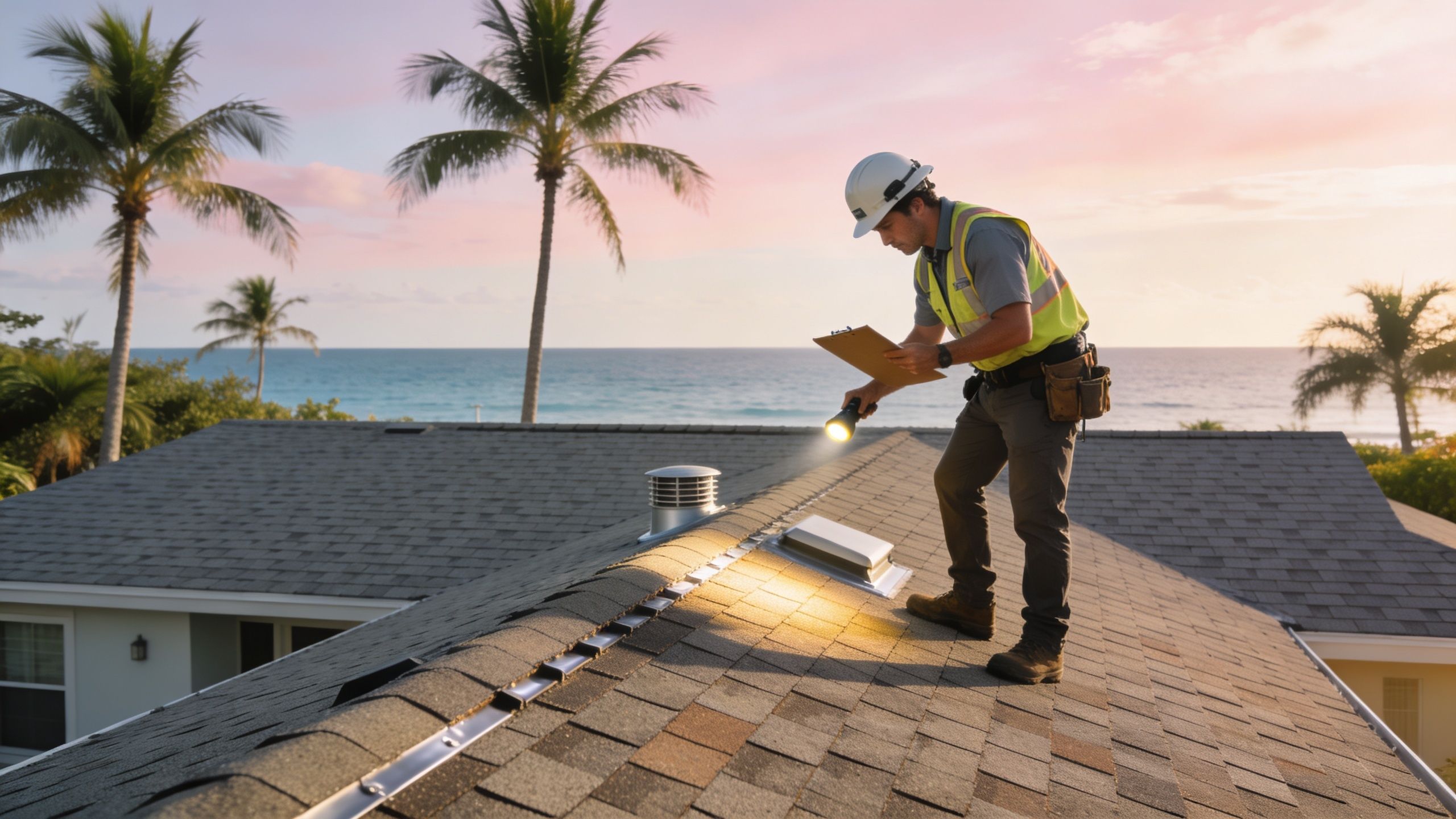
You check the weather app, see another system forming offshore, and then notice the letter on the kitchen counter from your insurance company. It mentions the roof. That’s the moment most Fort Lauderdale homeowners realize the roof isn’t just another part of the house. It’s the barrier standing between a manageable maintenance bill and a major financial problem.
In South Florida, a roof inspection isn’t busywork. It’s documentation, risk control, and early warning all rolled into one. If your roof is aging, if your neighborhood just took a hard rain and wind event, or if you're trying to keep insurance in place without surprises, the right inspection matters as much as the repair itself.
A proper roof inspection Fort Lauderdale homeowners can rely on should answer three questions clearly. What condition is the roof in right now. What issues are starting to develop. What needs to happen next so you don’t get trapped by avoidable repair costs or insurance headaches.
Table of Contents
- Your Roof Is Your Shield especially in Fort Lauderdale
- Why Fort Lauderdale's Climate Demands Proactive Inspections
- The Four Types of Roof Inspections Your Home Might Need
- What We Look For A Detailed Inspection Checklist
- Navigating Costs and Insurance for Your Fort Lauderdale Roof
- Choosing Your Certified Inspector and Preparing for the Visit
- Frequently Asked Questions About Fort Lauderdale Roof Inspections
Your Roof Is Your Shield especially in Fort Lauderdale
A lot of homeowners wait until they see a stain on the ceiling. By then, the roof has usually been telling the story for a while. A lifted shingle edge, a cracked tile, a failing pipe boot, rust around fasteners, soft spots under old repairs. Those are the signs that matter, because they show up before the expensive damage does.
In Fort Lauderdale, the roof takes abuse year-round. Sun cooks materials. Moisture sits where it shouldn’t. Wind tests every weak detail. Salt in the air works on metal components slowly, then all at once. If you treat the roof like something to think about only after a storm, you’re already behind.

Homeowners usually call for one of three reasons. They got an insurance notice. They’re seeing signs of a leak. Or they haven’t had the roof looked at in years and know hurricane season won’t wait for them to get around to it. If that sounds familiar, it helps to review examples of local roof conditions and storm exposure, like this South Florida roofing image reference.
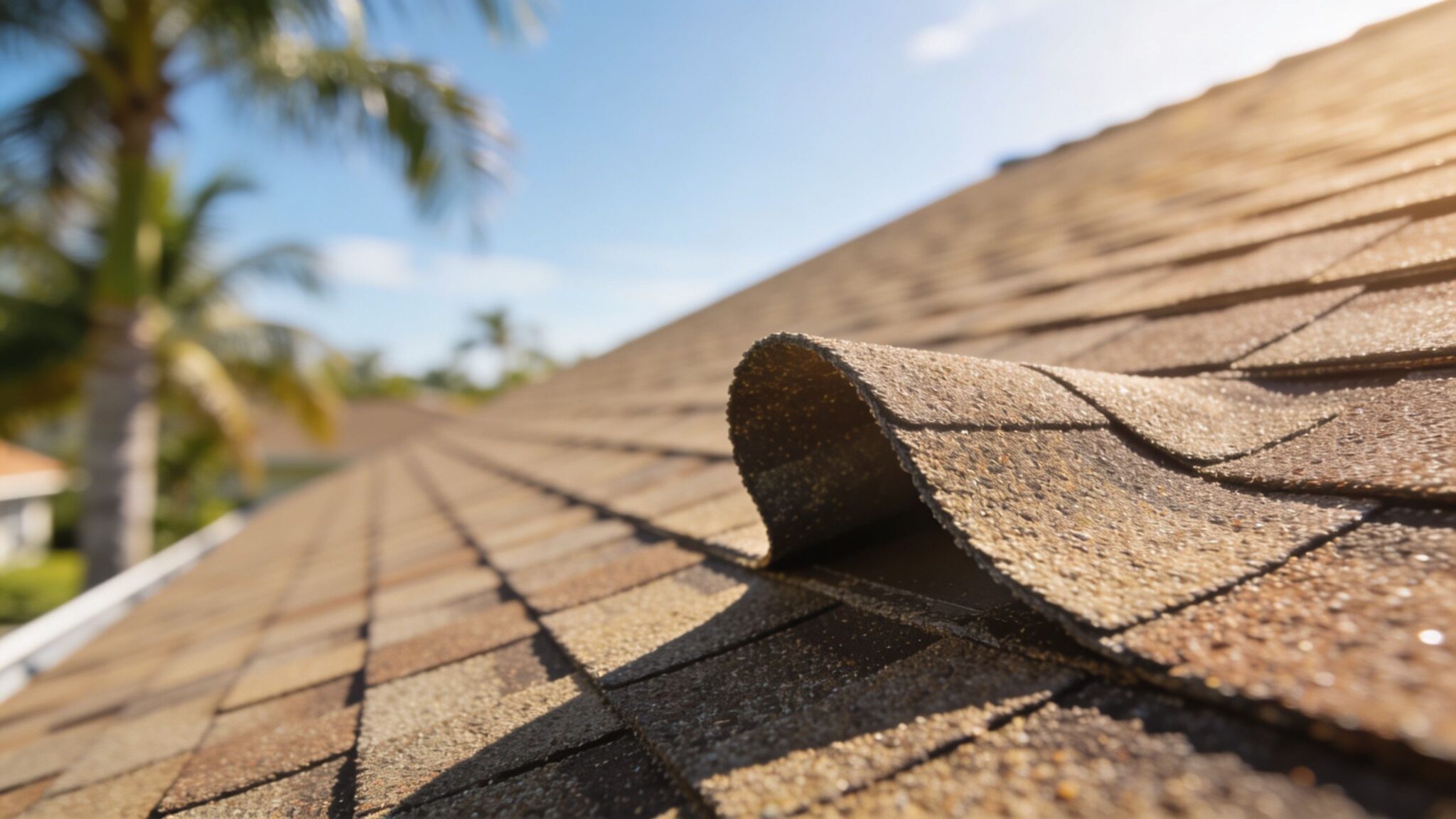
Practical rule: The best time to inspect a roof is before you need the paperwork, not after.
That’s the right way to think about a roof inspection Fort Lauderdale property owners schedule. It’s not just about finding active leaks. It’s about protecting the house, keeping records current, and making smaller decisions early while you still have options.
Why Fort Lauderdale's Climate Demands Proactive Inspections
A Fort Lauderdale roof can look fine in April and fail you in August.
That happens because this climate wears roofs down in small steps. Heat hardens sealants. Afternoon moisture lingers in shaded areas. Salt air works on metal at the edges, around penetrations, and at attachment points. Then the first serious wind-driven rain finds the weak spot.
As noted earlier, Florida roofs should be checked on a regular schedule, with older roofs needing closer attention before and after storm season. In this market, that is not just maintenance. It is asset management. A current inspection helps you plan repairs while they are still affordable, document condition for insurance, and avoid rushed decisions after a leak or storm.

Sun breaks materials down
South Florida sun is hard on every roof system, just in different ways. Shingles lose flexibility and surface granules. Sealants dry out and pull away from the surfaces they are supposed to protect. On tile and metal roofs, the field material may still look serviceable while the accessories and transition details are already aging out.
That is why curb appeal is a poor test. A roof can photograph well and still be one hard rain away from a leak at a vent, wall flashing, valley, or edge detail.
Humidity and salt create slower damage
Moisture problems here are rarely dramatic at first. Humidity keeps sections damp longer after rain, especially under debris, near low spots, and in areas that get less sun. That extra dwell time shortens the life of underlayment, sealants, coatings, and metal components.
Salt exposure adds another layer of wear. Near the coast, corrosion shows up on fasteners, flashing, clips, and rooftop accessories long before a homeowner sees staining on the ceiling. By the time interior damage appears, the repair usually costs more because the failure has spread past the original point.
Owners often miss the same trouble spots:
- Flashing joints: Small separation here can let water behind the roof covering.
- Sealant lines: UV and moisture cause early cracking and shrinkage.
- Fasteners and exposed metal: Corrosion weakens attachment and opens paths for water.
- Drainage paths: Debris and standing water speed up deterioration around vulnerable details.
Storm season exposes existing weaknesses
Wind and tropical rain usually reveal deferred maintenance. They do not need to create a brand-new opening from scratch. A cracked tile shifts. A stressed seam opens wider. An aging pipe boot tears under movement and heavy rain.
One neglected weak point is enough to turn a manageable repair into interior damage, insurance questions, and a more expensive scope of work.
That is the core value of a proactive inspection schedule in Fort Lauderdale. It gives homeowners time to choose the right fix, keep records current, and decide whether a small repair still makes financial sense or whether a larger correction is the smarter move before the next storm cycle.
What works and what doesn’t
A scheduled inspection before and after the roughest weather period works.
A ground-level glance does not.
An inspector who knows how tile, metal, shingle, and low-slope systems fail in coastal South Florida gives you usable information. Waiting for water to show up inside the house usually means the problem has already grown past the cheapest repair.
The Four Types of Roof Inspections Your Home Might Need
Not every inspection has the same purpose. That matters, because the wrong type of inspection often leaves homeowners with incomplete information. A maintenance review is different from an insurance inspection. A post-storm assessment is different from a pre-sale evaluation.

Routine maintenance inspection
This is the inspection most homeowners should schedule before there’s an urgent issue. The goal is simple. Find small failures while they’re still repairable and document current condition.
A routine inspection usually focuses on overall wear, drainage, penetrations, flashing, exposed fasteners, sealants, prior repair areas, and any visible movement in the roofing system. It’s the inspection that gives you a maintenance roadmap instead of a surprise.
Best fit:
- Older roofs: Especially if they’ve been through multiple storm seasons
- Homes with no recent roof records: You need a current baseline
- Owners trying to avoid larger repair bills: It's the start of prevention
Pre-listing or real estate inspection
This one is about transaction clarity. Buyers want to know what they’re inheriting. Sellers want to avoid last-minute renegotiation over roof condition. Agents want documentation that supports the actual state of the property.
The focus is less about routine upkeep and more about condition, remaining serviceability, visible defects, prior patching, and whether there are signs that the roof needs immediate work. A vague opinion doesn’t help much here. Clear written findings do.
What this inspection should answer:
| Question | Why it matters |
|---|---|
| Is the roof showing active problems | Buyers need to know whether repairs are immediate |
| Are past repairs visible | Repeated patching can raise questions |
| Is the roof near a decision point | Sellers need to prepare for negotiation |
| Are there signs of leak history | Interior and exterior findings need to match |
Post-storm damage assessment
This is the inspection you schedule after high wind, heavy rain, or visible storm exposure. The purpose is to identify damage that may not be obvious from the ground and create usable documentation if a claim becomes necessary.
A proper storm inspection looks at dislodged materials, impact points, creased or lifted sections, shifted tiles, broken seals, compromised flashing, drainage problems, and water entry points. The report should include photos and notes that connect the damage to the roof system clearly.
After a storm, the biggest mistake is waiting for a leak to confirm there was damage.
Insurance compliance inspection
This is the most overlooked category, and it causes some of the worst surprises. Insurance-related inspections aren’t just about whether the roof leaks today. They’re about condition, age-related risk, and whether the insurer sees the roof as acceptable for continued coverage.
If your policy is new, under review, or tied to an older roof, this inspection needs to be handled carefully. You want a current, independent view of the roof’s condition before the carrier’s process puts you on the clock.
This type of inspection is especially important when:
- The roof is older: Carriers pay close attention to aging systems
- You’ve received a notice: Don’t guess what the inspector will flag
- You need documentation: Photos and repair notes matter
- You’ve had prior storm exposure: Condition history needs to be clear
Different inspections answer different questions. If you ask for “just a roof check,” you may not get the documentation or detail your situation requires.
What We Look For A Detailed Inspection Checklist
A professional inspection isn’t one generic walkaround. The roof type changes what matters. A tile roof fails differently than a shingle roof. A metal system tells a different story than a low-slope membrane or coated surface.

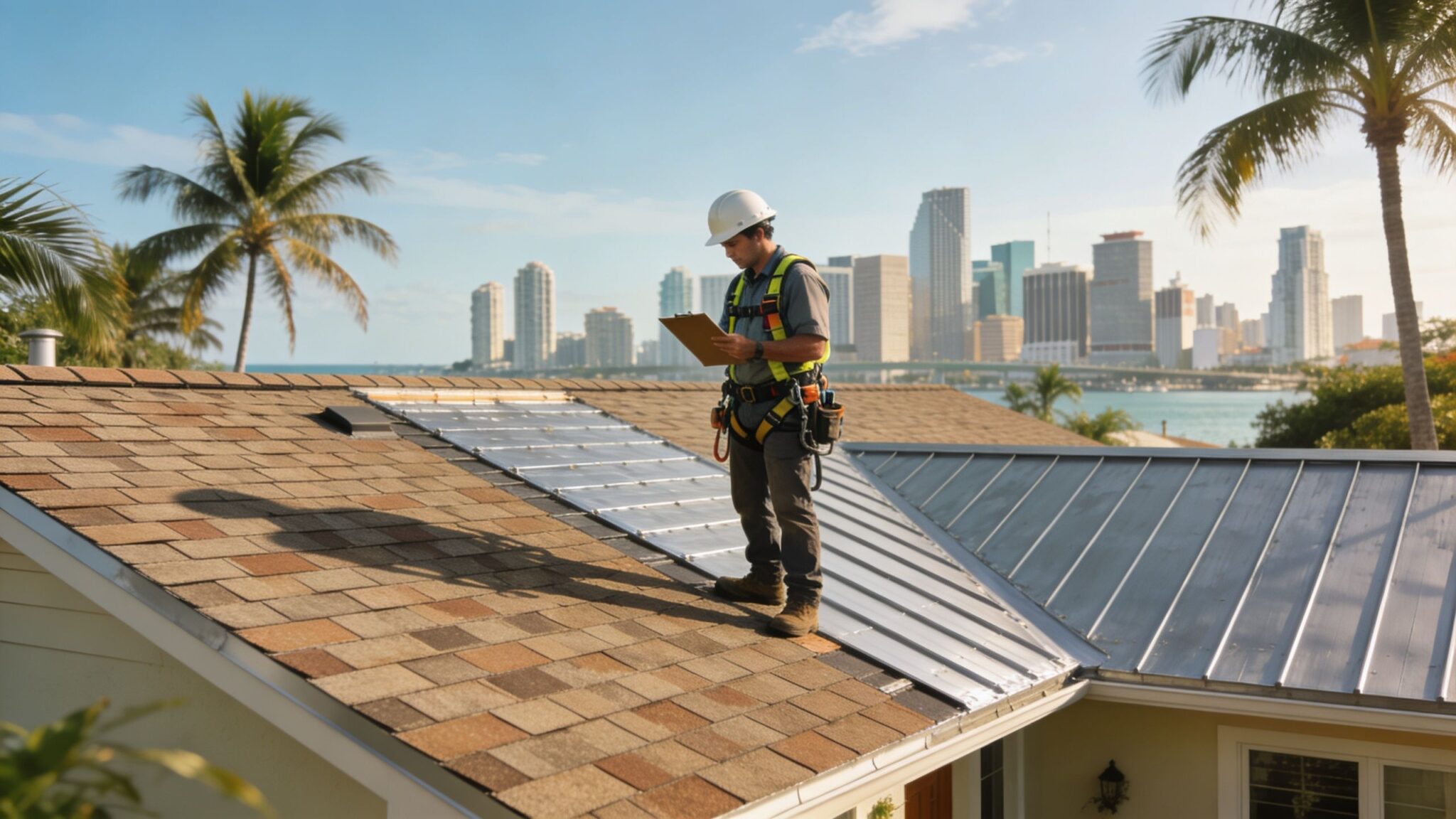
If you’ve ever wondered what an inspector is doing up there, this is the short version. We’re looking for failure points, not just obvious damage. For a visual reference of the kind of roof conditions seen in local inspections, this inspection-related roof image reflects the kinds of areas that often deserve closer review.
Asphalt shingle roofs
Shingle systems usually show their problems in edges, penetrations, and attachment areas before a homeowner notices anything inside.
We check for:
- Lifted or creased shingles: Wind can break the bond even when the shingle stays in place.
- Granule loss and surface wear: This affects how well the shingle holds up under sun and weather.
- Exposed nails or backing out fasteners: These often become leak points.
- Valley condition: Valleys collect water and reveal installation or wear issues early.
- Pipe boots and vent flashing: These are common weak spots on aging roofs.
What doesn’t work is judging a shingle roof only by whether pieces are missing. A roof can still be shedding water poorly long before full shingle loss happens.
Concrete and tile roofs
Tile roofs are common in Fort Lauderdale, and they can fool homeowners because the roof may still look solid from the street. The issue is often underneath or in isolated break points.
Inspection points include:
- Cracked, slipped, or displaced tiles
- Hip and ridge attachment
- Underlayment vulnerability where visible
- Flashing at walls, chimneys, and penetrations
- Signs of movement around repaired sections
A tile roof can have just a handful of broken or shifted components and still allow water into the wrong place. That’s why isolated damage matters more than many owners think.
Metal roofing systems
Metal roofs can perform very well in South Florida, but only if the attachment details, fasteners, seams, and flashing are staying tight.
We look closely at:
| Area | What can go wrong |
|---|---|
| Fasteners | Loosening, backing out, corrosion |
| Panel laps and seams | Separation or stress movement |
| Flashing | Open edges and failed sealant |
| Coatings and finish | Wear that exposes the system |
| Penetrations | Movement and water entry around boots or curbs |
On coastal homes, corrosion is a serious part of the inspection. It isn’t always dramatic. Sometimes it starts at one exposed point and spreads through neglected maintenance.
Flat and low-slope roofs
Low-slope systems require a different eye because water behavior changes. Drainage is everything. If water moves slowly, sits too long, or finds weakness at seams and penetrations, the roof starts losing the battle.
We inspect:
- Ponding or low areas
- Drain and scupper condition
- Seams and transitions
- Parapet intersections
- Previous patch locations
- Surface blisters, punctures, or coating wear
For commercial buildings and some residential additions, these details matter more than curb appeal. A flat roof can look intact from a distance and still have moisture intrusion developing below the surface.
When advanced inspection tools make sense
Not every roof needs advanced imaging or drone documentation. Sometimes a hands-on visual inspection is enough. Sometimes it isn’t.
According to Florida roof inspection pricing guidance on advanced methods, inspections using drone photography or infrared thermal imaging can cost between $300 and $600, and they’re particularly useful in South Florida when you’re investigating recurring leaks of unknown origin or documenting extensive storm damage for insurance claims.
That’s a real trade-off. If the issue is straightforward, advanced tools may add cost without adding much value. But when the leak path is unclear, the roof is hard to access, or documentation quality matters, those tools can save time and missed guesswork.
Paletz Roofing and Inspections is one local company that provides roof inspection services across Broward, Miami-Dade, and Palm Beach counties, including detailed assessments for residential and commercial roof types.
Navigating Costs and Insurance for Your Fort Lauderdale Roof
A Fort Lauderdale homeowner usually calls after one of two things happens. The insurer asks for roof documentation, or a small stain shows up on the ceiling after a hard rain. At that point, the roof is no longer just a maintenance item. It becomes a financial decision with a deadline attached.
What the inspection cost is really buying
For a typical single-family home, an inspection fee is small compared with the cost of major roof work, especially if the report helps you catch repairable issues before they spread. That fee is not just paying someone to walk the roof. You are paying for a written condition record, photos, remaining-life opinion when appropriate, and a basis for deciding whether to maintain, repair, or budget for replacement.
For larger properties or more technical assignments, the price can rise fast. A South Florida proposal document shows $2,950.00 for an initial inspection with detailed scope and specifications work, and $750.00 per additional inspection for follow-up visits in that model, as outlined in this South Florida roof inspection proposal PDF.
Those numbers make sense when you compare the scope. A homeowner with one roof section and a few visible concerns needs a different level of reporting than an association or property manager trying to plan capital repairs, document defects, and compare contractor bids.
If you want an example of a local roofing inspection brand asset used in South Florida, see the Paletz Roofing and Inspections logo file.

The insurance deadline problem
Insurance changes the timing. According to Bankrate’s roof inspection insurance overview, some insurers may deny claims without a current inspection report, and some restrict coverage on older roofs unless a licensed inspector confirms usable remaining life.
That is why waiting for the carrier's notice is a poor strategy. Once the letter arrives, you are working on their clock, not yours. In my experience, homeowners make better decisions when they inspect early, review the findings calmly, and fix what is fixable before an underwriter or field inspector defines the roof for them.
Use a simple sequence:
Get your own inspection before renewal or a carrier change
You need an honest condition report before insurance questions start.Separate minor repairs from replacement-level issues
A lifted tile, failed sealant line, or isolated flashing problem does not always justify a new roof.Document every correction
Keep photos, invoices, permit records if applicable, and the final contractor paperwork.Store the report where you can find it quickly
A good inspection only helps if you can produce it when your agent or carrier asks for it.
A cheap inspection that produces weak photos or vague comments can cost you more later. Good documentation has real value in South Florida.
Why timing affects the repair bill
Florida roof costs are driven by more than leak size. Timing matters. Building code, material availability, and the spread of damage all affect what your options look like once a problem is finally addressed.
The Florida Senate summary of the 25% roof replacement rule changes is worth understanding because code requirements can change how contractors scope repairs and replacements. For a homeowner, the practical lesson is straightforward. Small defects caught early usually leave you with more choices. Deferred defects often leave you with fewer.
That is the actual money issue.
A proactive inspection helps you decide whether to spend a modest amount on maintenance now, schedule targeted repairs, or start planning for replacement before insurance pressure and storm season force the decision. In Fort Lauderdale, that timing can protect both coverage options and your budget.
Choosing Your Certified Inspector and Preparing for the Visit
A homeowner usually calls for an inspection after a ceiling stain shows up, a storm passes through, or an insurance letter lands in the mailbox. By that point, the choice of inspector matters as much as the roof condition itself. A weak report can leave you with blurry photos, vague language, and no clear path for repairs, insurance follow-up, or future planning.
In Fort Lauderdale, a roof inspection should do more than point out damage. It should help you decide what needs attention now, what can be monitored, and what documentation may protect you later if a carrier asks questions. That only happens when the person inspecting the roof understands local roof systems, Florida weather, and the paperwork side of the job.
What to verify before you book
Start with the basics. The inspector or roofing company should hold the proper license, carry insurance, and have real field experience with South Florida roofs. Tile, shingle, flat, and low-slope systems all fail in different ways here. Salt exposure, hard sun, wind uplift, ponding, and flashing movement are common local issues, and an inspector needs to know where those problems usually start.
Ask direct questions before you schedule the visit:
- What roof systems do you inspect every week
- Will the report include clear photos and written findings
- Do you check attic conditions or interior moisture signs if the situation calls for it
- Is the inspection being documented for maintenance, storm damage, real estate, or insurance review
- Will the findings separate active problems from age-related wear and items to monitor
Inspection pricing varies by roof size, access, pitch, and the purpose of the report. A basic inspection costs far less than major repair work or a premature replacement. Paying for a careful evaluation usually saves money because it helps you target the right repair, document the condition properly, and avoid guessing.
If you want a simple local reference while screening companies, this Paletz Roofing and Inspections brand identifier is one example of a licensed South Florida roofing name you may come across.
A good inspector also explains limits. Some visits are meant to assess condition and maintenance needs. Others are built around storm documentation or insurance forms. Homeowners get into trouble when they assume every inspection serves the same purpose.
How to prepare your home
Preparation is simple, but it affects the quality of the visit. If the inspector spends half the appointment working around locked gates, blocked attic access, or missing background information, less time goes into the actual findings.
Use this checklist before the appointment:
- Clear driveway or exterior access: Leave room for ladder setup and safe movement around the house.
- Open gates: Side-yard access often determines whether roof edges and drainage areas can be checked properly.
- Provide attic access: Clear the area below the hatch or pull-down stairs.
- Write down leak history: Note stains, drips, musty odors, and when they appeared.
- Gather prior roof records: Old proposals, repair invoices, warranty papers, and photos help establish a timeline.
- Trim or move immediate obstructions if practical: Branches, patio items, and stored materials can block key viewing areas.
The homeowners who get the most value from an inspection are usually the ones who provide clear history. They can say which room leaked, whether it happened after wind-driven rain, and whether the problem came back after an earlier repair. That kind of detail helps separate an isolated issue from a larger roof management problem.
Treat the visit like part of an asset review, not a quick service call. The goal is to leave with usable evidence, a clear priority list, and a smarter basis for repair or maintenance decisions.
Frequently Asked Questions About Fort Lauderdale Roof Inspections
Can I inspect my own roof instead of hiring a professional
You can inspect from the ground with binoculars and note obvious trouble like missing shingles, loose tiles, dented metal, clogged valleys, or ceiling stains inside. That is useful for spotting a problem early.
It is not the same as a professional inspection. Homeowners usually cannot document flashing failures, soft decking, underlayment issues, drainage defects, or signs of wind uplift safely from the ground. Walking the roof also creates a fall risk and, on some roof types, can cause damage by itself. If you need records for insurance, a sale, or a repair dispute, get a written inspection with photos.
What happens if the inspection finds damage
A good inspection report should sort findings by urgency. Active leaks, exposed underlayment, failed flashing, and structural concerns go to the top. Minor maintenance items, wear-related repairs, and items to monitor should be listed separately.
That order matters. It helps you decide what needs immediate money, what can wait, and what should be documented before the next storm or insurance review. Keep the report, photos, and any repair invoices together. In South Florida, organized records often matter almost as much as the repair itself.
How long does a roof inspection take
It depends on the house and the purpose of the inspection. A smaller, simple roof with good access moves faster than a larger home with multiple elevations, steep sections, brittle tile, attic moisture concerns, or leak tracing.
If the inspector is only doing a surface condition review, the visit is shorter. If the job includes attic review, moisture detection, storm damage documentation, or an inspection report built for insurance or real estate use, expect more time. Rushing this part usually means missing details that cost more later.
Is a leak the only reason to schedule an inspection
No. In Fort Lauderdale, plenty of serious roof problems show up before water reaches the ceiling.
Homeowners schedule inspections after heavy wind, before hurricane season, when the roof is getting older, before listing the home, after buying a house, or after receiving an insurance notice. Smart owners also use inspections to plan money. It is cheaper to repair a failing pipe boot or flashing section than to wait for interior damage, mold, and emergency tarping.
Why do early roof repairs save money in Florida
Because delay changes the repair itself. A small flashing failure can stay a localized repair if you catch it early. Leave it alone through a wet season, and you may be dealing with damaged decking, insulation, interior drywall, and a much larger insurance conversation.
Florida code can also limit your options once a damaged section grows too large, as noted earlier in this guide. That is a primary financial issue. Early inspections give you more repair choices, better documentation, and a better chance of fixing the problem before it turns into a replacement decision.
Are all inspection reports the same
No. Report quality varies a lot.
Some inspections produce a few photos and a general opinion. Others give you marked-up photos, specific defect locations, notes on probable cause, repair priorities, remaining service-life observations, and documentation that can support an insurance file or a property transaction. Before you hire anyone, ask what the final report includes and whether it is written for maintenance planning, insurance, storm damage, or a real estate deadline.
If you need a clear, professional assessment of your roof’s condition, Paletz Roofing and Inspections provides residential and commercial roof inspections across South Florida. Whether you're dealing with an insurance notice, storm concerns, leak investigation, or routine maintenance planning, scheduling the right inspection now can help you protect the home, control repair decisions, and keep better records before problems grow.