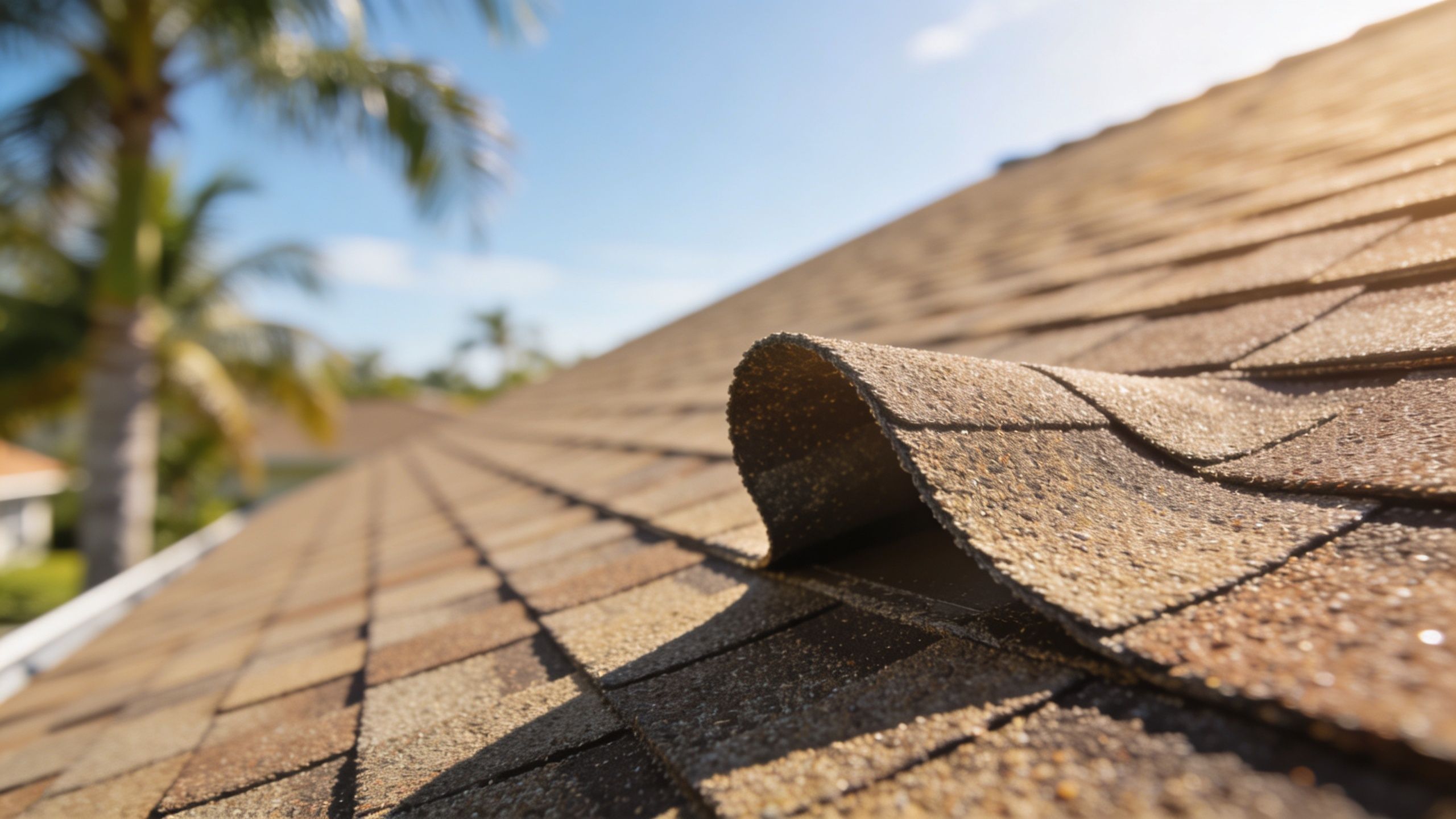
Most homeowners think curled shingles are just a sign of age. In South Florida, that’s only part of the story. Poor attic ventilation can drive 70-80% of premature shingle curling cases, and proper ventilation can extend shingle life by 5-10 years in Florida’s climate, according to this roofing reference on ventilation and curling.
That matters here because heat, humidity, salt air, and storm cycles don’t act alone. They act as stress multipliers. A roof that might hold up reasonably well in a milder climate can start showing edge lift, cupping, or clawing much earlier in Broward, Miami-Dade, or Palm Beach if the ventilation is weak, the nailing was off, or moisture is building under the shingles.
If you’re asking what causes shingles to curl, the short answer is this: aging, trapped heat, trapped moisture, installation mistakes, and occasional material defects. The useful answer is knowing which one is affecting your roof, how South Florida accelerates it, and whether a repair still makes sense.
Table of Contents
- The Hidden Mechanics of a Curled Shingle
- The Top 4 Causes of Curling Shingles in South Florida
- How to Diagnose the Cause of Your Curling Shingles
- Your Options Repairing and Preventing Curled Shingles
- Budgeting for Shingle Repair vs Full Roof Replacement
- When to Contact Paletz Roofing for a Professional Inspection
The Hidden Mechanics of a Curled Shingle
A shingle doesn’t curl by accident. It curls because the materials inside it stop moving together.
Modern asphalt shingles are layered products. The outer asphalt layers take the weather. The fiberglass mat in the middle gives the shingle its shape. Over time, the asphalt loses oils and shrinks, while the fiberglass base stays stable. According to this technical explanation of curling shingles, the outer asphalt layers can shrink by 1-3%, and that mismatch creates the tension that lifts the edges.

Imagine gluing a stable sheet to a material that slowly tightens as it dries. The shrinking layer starts pulling against the layer that won’t move. On a roof, that pull shows up as lifted tabs, curled corners, cupping, or a clawed look across the field of the shingle.
Why the curl starts at the edges
The edges are the least restrained part of the shingle. Once the asphalt tightens enough, the perimeter lifts first. Sun exposure makes that process more aggressive, especially on south- and west-facing slopes that bake day after day.
On homes near the coast, I also pay attention to roofs that look uneven from one slope to another. That often tells you one side has taken the worst of the heat load and weathering.
Practical rule: Curling is not just a surface flaw. It usually means the shingle has changed shape permanently.
Why this matters before you try a repair
A lot of homeowners assume the fix is to press the tab back down with cement. Sometimes that works for a short period on an isolated problem. It does not reverse the material change inside the shingle.
If the asphalt has already dried and contracted, the shingle is fighting to lift again. That’s why cosmetic patching often fails on older roofs. A closer look at roofing wear patterns and roof condition imagery can help you see how subtle distortion starts before leaks show up inside.
The Top 4 Causes of Curling Shingles in South Florida
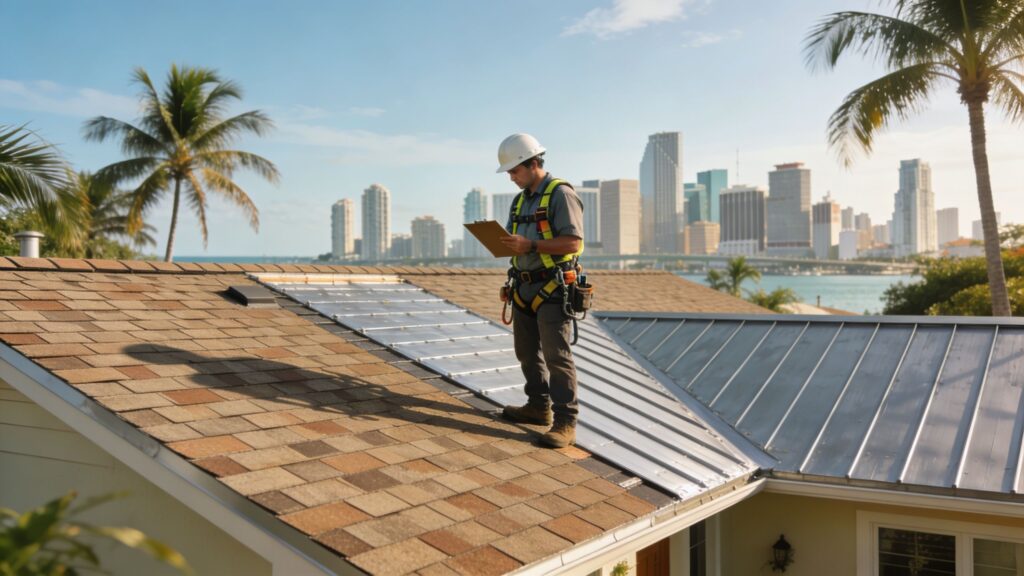
Most curled shingles come from one of four sources. In South Florida, the challenge is how these causes combine. Heat speeds up aging. Humidity worsens moisture issues. Storm exposure punishes weak installation details. A small defect doesn’t stay small for long here.

Aging and UV breakdown
This is the most common cause on older roofs. Asphalt shingles typically last 20 to 30 years, and UV exposure breaks down the protective surface so the asphalt dries out and loses flexibility, as noted in this overview of shingle aging and curling.
In South Florida, that timeline can feel shorter in the field because the sun is relentless. You’ll often see the earliest warning signs as:
- Edge curling: Tabs start lifting at corners and outer edges.
- Surface brittleness: The shingle looks dry instead of slightly pliable.
- Granule loss: Gutters and downspouts start collecting more shingle grit.
Older roofs usually curl in a fairly uniform pattern. If most slopes are showing similar wear, age and solar exposure are usually driving the failure.
Poor attic ventilation and moisture buildup
This is the cause homeowners miss most often. The shingles get blamed, but the attic is doing the damage.
When the attic traps heat and humid air, the roof system gets stressed from below. Moisture can affect the deck and underlayment, and overheated roof decking pushes the shingles through repeated expansion and contraction. In South Florida, that’s a serious issue because the outdoor air is already humid for much of the year.
A roof with weak intake and exhaust ventilation often shows clues beyond the shingles:
| Sign you notice | What it can suggest |
|---|---|
| Musty attic smell | Moisture staying trapped |
| Dark staining on wood | Condensation and prolonged humidity |
| Uneven curling by roof area | Localized heat buildup |
| Premature aging on a newer roof | Ventilation imbalance |
What works is a balanced system. Soffit intake and ridge or properly designed exhaust need to work together. What doesn’t work is adding one vent and hoping for a system-wide fix.
A hot attic can damage a roof from the underside long before a homeowner sees a ceiling stain.
Installation errors
South Florida exposes weak workmanship fast. If shingles were nailed too high, not fastened correctly, or not laid flat and sealed as intended, the climate will find that weakness.
The climate interaction gap becomes most apparent in this environment. A roof might survive mediocre workmanship in a milder region. Here, strong sun, wind-driven rain, and daily thermal cycling punish every shortcut. Typical trouble spots include misaligned courses, poor fastening, weak adhesion at tabs, and details around penetrations.
Look for patterns such as isolated sections curling much more aggressively than the rest of the roof, especially on a roof that still looks young overall. That usually points away from normal aging.
Material defects
Material defects do happen, though they’re not the first thing I assume. The challenge is that defective shingles can look similar to shingles that were installed badly or cooked by poor ventilation.
A defect becomes more believable when the pattern is inconsistent with roof age and attic conditions, or when the curling is unusually widespread despite otherwise sound installation details. On newer roofs, it’s worth documenting the condition carefully because warranty questions can come up.
Here’s the practical takeaway:
- Uniform wear on an older roof usually points to age and UV.
- Early distortion on a younger roof often points to installation or ventilation.
- Patchy, abnormal behavior may call for a closer look at product issues too.
How to Diagnose the Cause of Your Curling Shingles
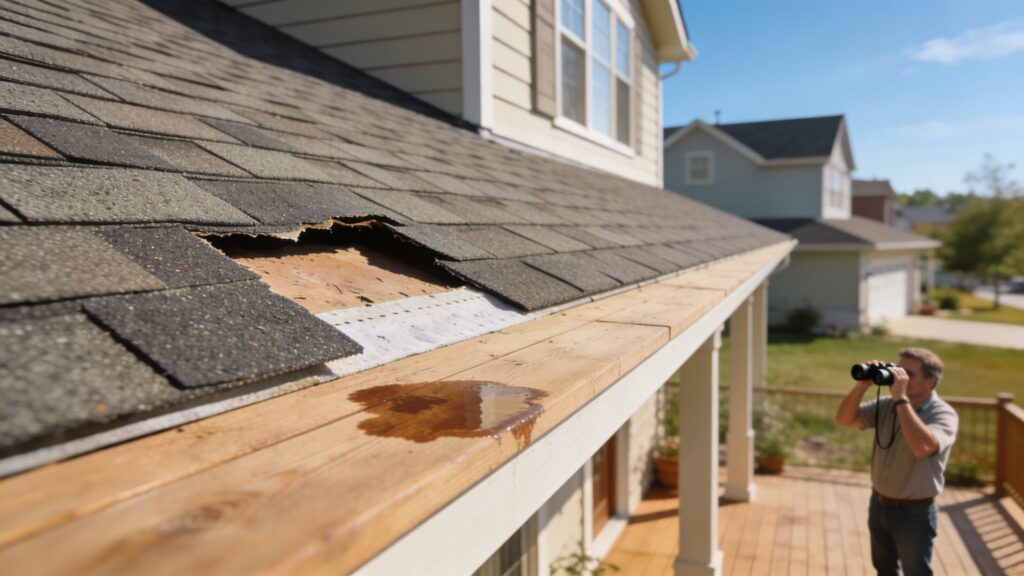
Homeowners don’t need to walk the roof to get useful clues. In fact, on an aging shingle roof, staying on the ground is the smart move. A good pair of binoculars, photos from different angles, and a look inside the attic can tell you a lot.

Start with the roof’s age and the curling pattern
The pattern matters as much as the curl itself. If the roof is older and the curling is spread across broad areas, normal aging is high on the list. If the roof is much newer and the damage is scattered, more aggressive, or limited to certain slopes, I get suspicious of workmanship or attic conditions.
For newer roofs, there’s one especially important benchmark. Shingles curling under 15 years old are a key warning sign of installation defects such as improper nailing, and the industry standard is 4-6 nails per shingle, according to the verified technical guidance provided for this article. When that fastening isn’t right, the shrinking shingle can pull more freely at the edges.
Check for clues inside the attic
The attic often confirms what the shingles are trying to tell you. Don’t overcomplicate it. You’re looking for signs of trapped heat, trapped moisture, or both.
Use this quick checklist:
- Look for dampness: Staining on the underside of the roof deck can point to ongoing moisture.
- Notice the air: A heavy, humid, stale attic is a warning sign.
- Check vent paths: Soffit vents blocked by insulation reduce intake airflow.
- Find bad exhaust routing: Bathroom or kitchen vents dumping into the attic create chronic moisture problems.
If the attic feels harsh and stagnant, the shingles above it are usually paying the price.
On a healthy shingle roof, the attic and the roof field tell the same story. If one looks stressed early, the other usually explains why.
Separate age wear from workmanship problems
A homeowner can usually sort the issue into one of two buckets. The first is expected wear. The second is premature failure.
A simple comparison helps:
| What you see | Most likely direction |
|---|---|
| Widespread, even curling on an older roof | Aging and UV wear |
| Curling concentrated near a repair area or roof transition | Installation detail issue |
| Newer roof with sharp edge lift | Fastening or sealing problem |
| Curling plus attic moisture signs | Ventilation or moisture imbalance |
Photos are useful here. Take wide shots of each slope, then closer shots of valleys, ridges, eaves, and penetrations. If you want a visual reference for roof damage documentation, this roof inspection image example shows the kind of close-up condition detail that helps during an evaluation.
Your Options Repairing and Preventing Curled Shingles
Curled shingles can be repaired, but the right move depends on what is stressing the roof system and how far that stress has already spread. In South Florida, sun, humidity, and storm cycles act like stress multipliers. A small ventilation defect, one bad repair, or a few loosened shingles can age much faster here than it would in a milder climate.

When a repair can make sense
I recommend repair when the problem is limited and the rest of the roof still has service life left. That usually means a small area affected by wind lift, a fastening mistake, or a localized section tied to an older repair.
Repair makes sense when:
- The curling is confined to a small area: One slope section or a few tabs, not broad failure across the roof.
- The shingles can still be handled: They are not dry, brittle, or cracking during repair.
- The roof deck is still solid: No soft sheathing, rot, or moisture damage below.
- The cause is identifiable and correctable: The repair addresses the reason the shingles curled, not just the visible edge.
A patch is only as good as the shingle around it. On an older roof with widespread drying and shrinkage, sealing down a few tabs often buys very little time.
Why prevention usually starts below the shingles
If attic heat or trapped moisture is driving the problem, repeated shingle repairs become an expensive routine. I would rather correct the airflow problem once than keep replacing the same symptoms every storm season.
Balanced intake and exhaust help keep the roof deck and shingle mat from getting overheated and damp from below. In South Florida, that matters more than many homeowners realize. Long hours of intense sun bake the roof surface, then humid evenings slow drying, and summer storms add repeated wetting. That combination pushes already-stressed shingles harder and shortens the life of weak sections first.
Prevention work often includes clearing blocked soffits, improving exhaust ventilation, correcting bathroom or kitchen vents that discharge into the attic, and replacing damaged underlayment in trouble spots. If a roofer only glues down curled edges without addressing those conditions, the roof usually keeps telegraphing the same failure.
Best prevention: Fix the source of the stress, not just the tab that lifted.
The same principle shows up in other exterior assemblies. Builders use products like waterproof membrane for deck joists because protecting the structural surface from repeated moisture extends service life. Roofing follows that same practical logic.
When replacement is the responsible move
Replacement is the better call when curling shows up across multiple slopes, the shingles have turned brittle, or the roof is already near the end of its expected life. At that stage, the field shingles are losing flexibility as a group, not as isolated pieces.
This is the point many homeowners in South Florida wrestle with. A roof may still look repairable from the yard, but once heat aging, humidity, and storm exposure have worn down the whole system, spot repairs stop being dependable weather protection. If moisture has reached the deck or the underlayment is failing in several areas, replacement is usually the cleaner and more honest fix.
Budgeting for Shingle Repair vs Full Roof Replacement
The money question usually comes down to this. Are you paying to solve a contained problem, or are you paying to delay a larger one?
If curled shingles trace back to an isolated issue, a repair may be the sensible spend. If the curling is tied to moisture, ventilation, or broad age-related wear, repair costs can stack up fast while the roof keeps deteriorating underneath.
Where the real cost often hides
The visible shingle is only part of the budget. In South Florida, moisture trapped by inadequate ventilation can compromise the roof deck, and correcting ventilation can extend shingle lifespan by 5-10 years, helping homeowners avoid premature replacement costs that can range from $10,000 to $30,000 or more, based on this discussion of moisture, roof deck impact, and replacement cost range.
That’s why a cheap repair can become an expensive decision. If water has already affected the decking, underlayment, or attachment points, the invoice won’t be about shingles alone.
A practical way to decide
Use this framework before approving work:
- Choose repair when the issue is isolated, the roof still has meaningful remaining life, and the underlying cause has been identified.
- Lean toward replacement when curling is spread across multiple slopes, the roof is aging out, or the deck condition is questionable.
- Include ventilation in the budget if attic heat or humidity contributed to the failure. Otherwise the next roof may age the same way.
Short-term budgeting and long-term value aren’t always the same thing. A smaller invoice today can still be the wrong financial move if it leaves a weakened roof in place through another storm season.
When to Contact Paletz Roofing for a Professional Inspection
Some curling is a wear signal. Some curling is an active failure warning. The difference matters, and it’s not always obvious from the ground.
Call for a professional inspection if you see multiple curled sections, granules collecting in gutters, staining inside the attic, or any sign of water entering the house. I’d also recommend a closer look when a newer roof starts curling in isolated but aggressive patches. That usually means the roof needs more than a simple surface fix.
A thorough inspection should look at the whole system, not just the tabs that are lifting. That includes the shingle field, flashing, underlayment condition where visible, attic airflow, moisture signs, and deck integrity. If you’re evaluating a trusted local roofing company, even the Paletz Roofing and Inspections logo is tied to a team that has spent decades dealing with these South Florida-specific failure patterns.

The main point is simple. In this climate, curled shingles are rarely just cosmetic. Heat, humidity, and storm stress speed up every weakness in the system. Getting the cause right is what protects the house and keeps you from paying twice.
If you’re seeing curled shingles anywhere on your roof, Paletz Roofing and Inspections can help you determine whether you need a focused repair, a ventilation correction, or a full replacement. Their team serves Broward, Miami-Dade, and Palm Beach counties with experienced roof inspections and straightforward recommendations based on what the roof needs.