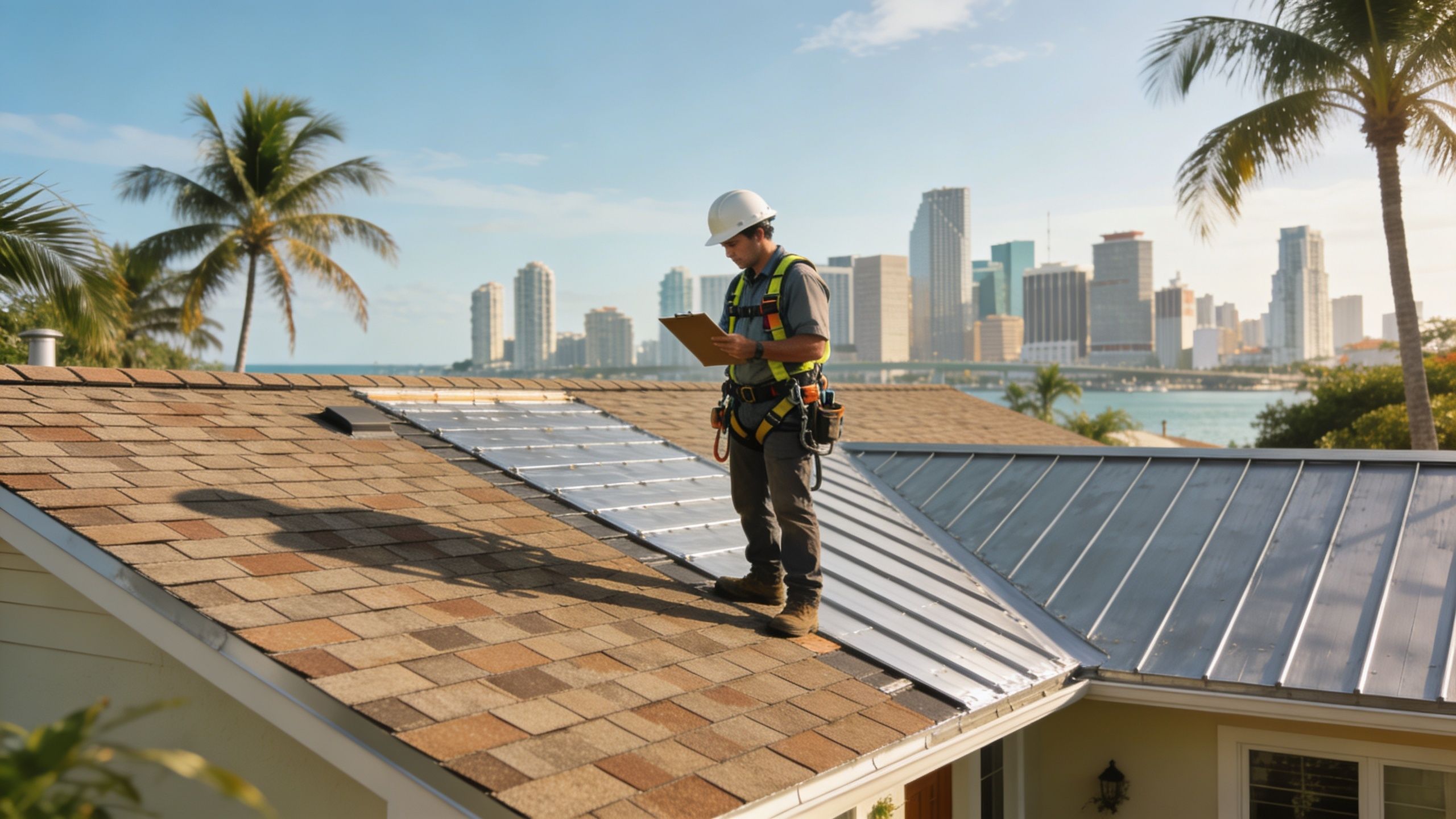
Fort Lauderdale has 87 roofing contractors, and 61 of them carry 5-star review ratings according to local Fort Lauderdale roofing contractor market data. That sounds like good news until you need to choose one after a leak, a wind event, or an insurance dispute. A crowded market gives you options, but it also makes it harder to tell who understands South Florida roofing at the level this area demands.
A roof in Fort Lauderdale isn’t dealing with one problem. It’s dealing with heat, salt, wind, heavy rain, and strict code expectations. The contractor you hire has to understand all of that at once. If they don’t, the mistakes usually show up later, in failed inspections, denied claims, recurring leaks, or a roof system that ages too fast for the money you spent.
That’s why hiring a roofing contractor fort lauderdale homeowners can rely on isn’t just about finding a fair quote. It’s about finding someone who knows how local code, insurance, and material choice all affect one another.
Hiring a Roofer in Fort Lauderdale's Competitive Market
Fort Lauderdale has plenty of roofers to call. The hard part is separating a company that can sell a job from one that can handle HVHZ requirements, permit inspections, and the insurance questions that follow storm damage.
I’ve seen homeowners get three similar-looking estimates and still end up comparing the wrong things. One proposal includes a code-correct secondary water barrier and the right attachment pattern. Another leaves out those details, comes in cheaper, and looks fine until the permit is pulled or the adjuster asks for documentation. In this market, the low number on page one can turn into the expensive choice.
A roofer here needs to do more than install material. They need to explain how the system will be fastened, what product approvals apply, whether the scope fits Broward inspections, and how the paperwork will read if the work is tied to a claim. That overlap between code compliance, material selection, and insurance is where many hiring mistakes start.
Homeowners should ask to see examples of roof replacement work in South Florida conditions, not just a gallery of clean finished roofs. The useful question is whether the contractor can explain why one assembly makes sense for a coastal Fort Lauderdale home and another does not.
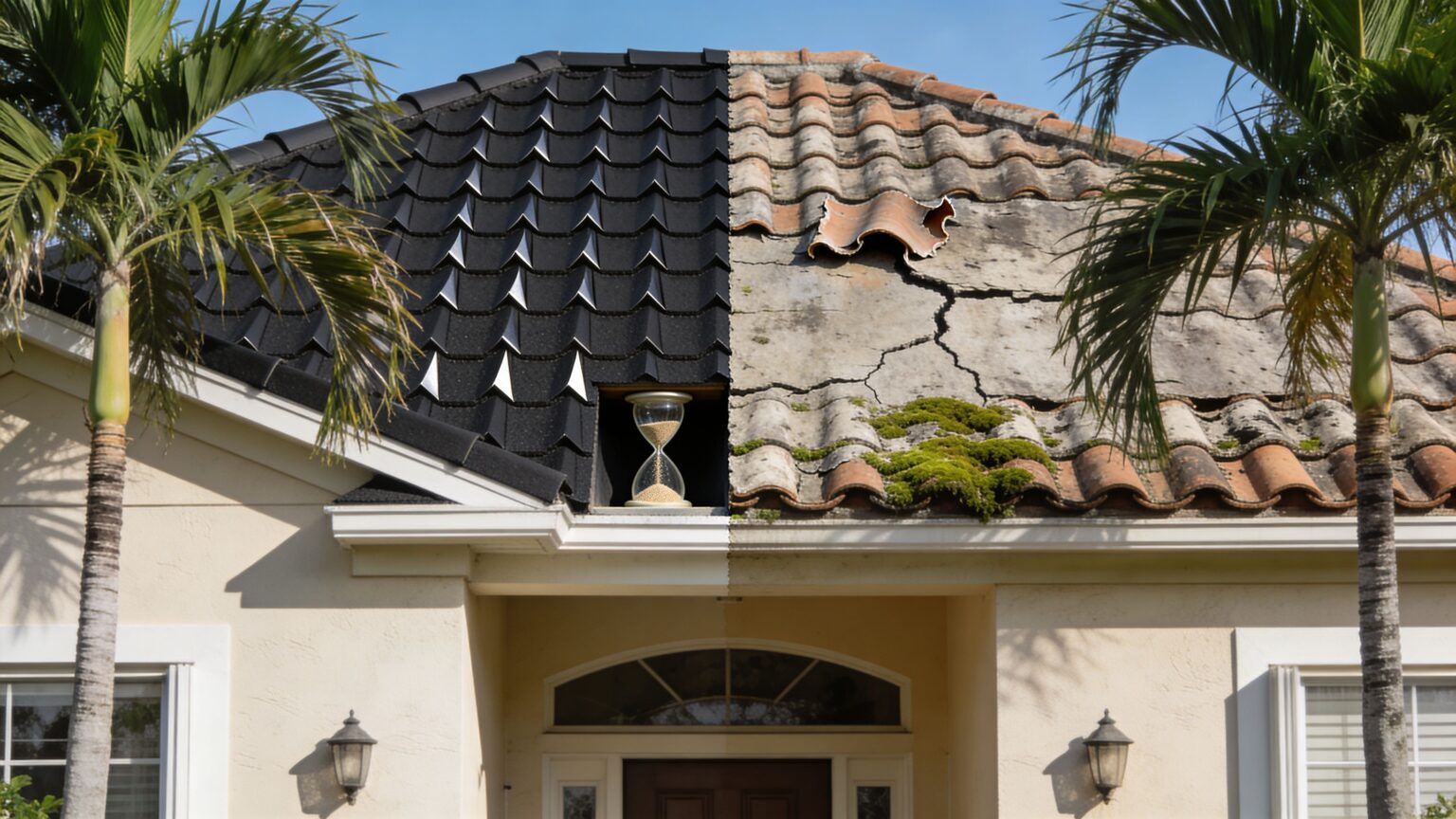
The hiring decision also comes down to risk. Some home projects leave room for trial and error. Roofing does not, which is why the same judgment behind DIY or professional pest control applies here. Once water gets past a roof system, the repair bill usually spreads beyond the roof itself.
Practical rule: Hire the roofer who can explain local code, document the scope clearly, and defend the material choice under both inspection and insurance scrutiny. Then compare price.
Understanding Fort Lauderdale's Unique Roofing Challenges
Fort Lauderdale roofs fail for local reasons. A roof system that performs fine in a milder inland market can struggle here if the design, installation, or material choice doesn’t account for coastal exposure and hurricane-driven requirements.
The three pressures that matter most are sunlight, salt air, and severe weather. Homeowners usually notice the leak first, but the roof often started weakening long before water showed up inside.

What the climate does to a roof
South Florida sun is hard on exposed roofing surfaces. Over time, heat and ultraviolet exposure dry out components, stress sealants, and shorten the useful life of materials that already run hot. Add coastal moisture to that and you also get more wear around penetrations, flashings, and transitions where water likes to sit.
Salt air changes the conversation further. Near the coast, metal components, fasteners, and accessory pieces need the right specification and installation method. A roof can look fine from the street and still have hidden corrosion developing around vulnerable points.
Humidity also punishes poor attic conditions and weak ventilation strategies. If the roof assembly can’t manage heat and moisture well, you often see the consequences in premature aging, interior comfort issues, and repairs that don’t last.
For homeowners trying to judge condition, visual clues help. This roof condition image from Paletz Roofing shows the kind of deterioration patterns that often deserve a closer inspection rather than a quick patch.
Why HVHZ matters on every major roofing decision
Fort Lauderdale sits in a High Velocity Hurricane Zone, and that isn’t just a technical label. It affects the way roofing systems are selected, attached, repaired, documented, and inspected. In practical terms, it means the roof over your home has to satisfy tougher wind-related standards than roofs in many other parts of the country.
That changes the job in several ways:
- Material approval matters: Not every product line or assembly is suitable for this environment. The exact system matters, not just the category of roof.
- Installation details matter just as much as materials: A quality tile, shingle, metal, or flat roof can still fail if fastening, flashing, edge securement, or underlayment work is wrong.
- Repairs can trigger bigger compliance questions: What seems like a small section repair may still need to align with broader code requirements depending on the condition and scope.
- Permits and inspections aren’t paperwork only: They’re part of making sure the roof is legal, insurable, and defensible if a claim comes later.
HVHZ work punishes guesswork. The contractor has to know the assembly, not just the sales pitch.
What homeowners should listen for during an estimate
When a contractor walks your property, listen to what they ask. A contractor who knows Fort Lauderdale well usually wants to know the roof age, leak history, prior repairs, drainage trouble spots, exposure to salt air, and whether there’s been storm-related damage or an open claim.
They should also spend time looking at details many homeowners never see from the ground:
| Area inspected | Why it matters in Fort Lauderdale |
|---|---|
| Flashing points | These often become failure points under heavy rain and wind-driven water |
| Perimeter edges | Roof edges take a beating during storms and need proper securement |
| Underlayment condition | Hidden waterproofing layers often decide whether a leak spreads |
| Drainage paths | Ponding and slow runoff create long-term damage on low-slope areas |
| Fasteners and accessories | Corrosion and poor attachment can weaken the system before visible failure |
A strong roofing estimate in this market should sound more like a building assessment than a quick sales appointment. If the conversation stays generic, the job probably will too.
Choosing the Right Roofing System for South Florida
A roof system that works in Fort Lauderdale has to do three jobs at once. It has to stand up to heat and salt air, meet HVHZ attachment and assembly requirements, and make sense if an insurance claim enters the picture after a storm. Homeowners get in trouble when they choose based on color, curb appeal, or headline price before they understand those three factors.
No roofing material is right for every property. A canal-front home, an inland single-family house, a condo association building, and a low-slope commercial property can all need different answers even within the same ZIP code.

Asphalt shingles
Shingles still make sense for a lot of homes in Broward County. They are widely available, familiar to buyers, and usually simpler to repair in limited areas than tile or some metal systems.
The trade-off is service life under South Florida conditions. Sun exposure, high roof temperatures, wind-driven rain, and coastal air are hard on lower-grade shingles and weak installation work. On a Fort Lauderdale home, shingles need the right underlayment, clean flashing details, and attic conditions that do not trap excessive heat and moisture.
Shingles usually fit owners who want:
- Lower upfront cost
- A traditional residential appearance
- More product and color choices
- Simpler replacement planning if the home is not a long-term hold
They can be a reasonable choice, but they are less forgiving if the installer cuts corners on nailing patterns, starter courses, valley treatment, or ventilation details. In a storm zone, those details matter more than the brochure.
Tile roofing
Tile is common here for good reasons. It handles heat well, suits South Florida architecture, and can last a long time if the assembly under it is built correctly.
Homeowners often focus on the tile itself. The underlayment below the tile usually decides how the roof performs once the system ages. I have seen good-looking tile roofs leak because the waterproofing layer failed long before the tile reached the end of its useful life.
Tile also brings practical trade-offs:
| Consideration | What it means in practice |
|---|---|
| Appearance | Strong resale appeal on many South Florida homes |
| Heat performance | Often a good fit for hot, sunny exposure |
| Weight | The structure has to be suited for the system |
| Repairs | Matching profile and avoiding collateral breakage takes skill |
| Insurance and claims | Damage can be harder to evaluate when tile is cracked in scattered areas |
That last point gets missed. After a wind event, claim disputes often center on whether broken or displaced tiles can be repaired cleanly and whether matching materials are available. A contractor who understands both the roof assembly and the claim process can save a homeowner a lot of grief here.
Metal roofing
Metal deserves a serious look in Fort Lauderdale, especially for owners planning to stay put for years. It sheds water well, offers strong wind performance when specified and installed correctly, and often holds up better than people expect in coastal conditions if the panel type, coating, and fasteners are chosen carefully.
The catch is precision. Metal is not a forgiving system for sloppy crews. Panel alignment, clip or fastener placement, flashing transitions, sealant use, and edge securement all have to be done to spec. If they are not, the problems show up fast as leaks, movement, corrosion at the wrong connection points, or noise during storms.
Metal can be a smart fit for homeowners who want fewer tear-offs over time and are willing to pay more upfront for a longer-term system.
Flat and low-slope roofs
Low-slope roofing is common on additions, multifamily buildings, modern homes, and commercial properties. In Fort Lauderdale, drainage controls the outcome on these roofs. If water moves off the roof as designed and the seams, penetrations, and terminations are handled properly, these systems can perform well. If water sits, small defects turn into interior damage quickly.
Look harder at low-slope proposals when the building has:
- Scuppers, overflow drains, or internal drains
- Multiple penetrations for HVAC or other equipment
- Parapet walls and wall-to-roof transitions
- A history of patch repairs from different contractors
These roofs also create insurance headaches after storms because leaks may come from seam failure, punctures, coping details, or drainage backup rather than one obvious blown-off section. The repair scope has to be diagnosed carefully.
How to choose a system that fits the property
I tell homeowners to narrow the decision with four questions.
How much salt exposure does the property get?
A few miles can change how quickly fasteners, accessories, coatings, and exposed components age.How long do you plan to keep the property?
A short-hold house and a long-term family home rarely justify the same material decision.How complex is the roof layout?
Valleys, penetrations, transitions, and low-slope tie-ins can make one system more sensible than another.If storm damage happens, how repairable is the system?
That question matters in Fort Lauderdale. Material availability, matching concerns, and code-related repair scope can affect both claim strategy and out-of-pocket cost.
For a homeowner comparing options with a contractor, Paletz Roofing and Inspections is one local company that works across shingle, tile, metal, and flat systems in Broward, Miami-Dade, and Palm Beach. That helps when you want a recommendation tied to the building, not to one product line a salesperson happens to prefer.
Decoding Roofing Costs and Financing in Broward County
Roofing prices frustrate homeowners because two estimates can describe the same house and still feel miles apart. Usually that’s because they aren’t pricing the same scope.
A roof quote in Broward County should reflect more than surface material. It should account for tear-off, disposal, deck condition if exposed problems are found, flashing replacement, underlayment, ventilation details where applicable, permit handling, and the labor needed to meet local code expectations. If the estimate is vague, the final bill often won’t be.
What should be in a real quote
A usable quote is detailed enough that you can compare one contractor against another line by line. It should tell you what is being removed, what is being installed, and what assumptions are built into the price.
Look for these items in writing:
- Scope of removal: Whether the contractor is removing the full existing roof or working over parts of it where code and condition allow.
- Material identification: Brand, product line, and system components should be named clearly, not described only as “architectural shingles” or “new underlayment.”
- Flashing and edge details: These are common leak points, so the quote should show whether they’re being replaced, reused, or modified.
- Permit responsibility: Someone needs to own this process clearly.
- Cleanup and debris handling: You want to know how the property will be protected during tear-off and how waste will leave the site.
A short estimate can still be expensive. A detailed estimate can still be fair. Length doesn’t prove quality, but missing scope is a warning sign.
Why the lowest number often becomes the highest cost
The cheapest proposal often leaves room for change orders, excluded details, or weaker components that don’t hold up in local conditions. In roofing, lower price usually comes from one of four places: thinner scope, cheaper labor, cheaper materials, or less accountability after the job starts.
That doesn’t mean every high bid is justified. It means you should ask what explains the spread.
Field note: If one estimate is dramatically lower, ask what they are not replacing. That answer usually explains the difference.
Common ways homeowners fund the work
Most homeowners use one of a few familiar paths, depending on urgency and financial position.
| Financing route | Best for |
|---|---|
| Insurance proceeds | Covered storm-related damage with a valid claim |
| Home equity financing | Larger planned replacements where equity is available |
| Contractor payment programs | Homeowners who want staged payments and simpler approval |
| Cash reserves | Planned projects where speed and flexibility matter most |
Whatever route you use, keep the paperwork aligned. The contract, permit documents, upgrade decisions, and payment schedule should all tell the same story. Problems usually begin when verbal promises and written scope drift apart.
What financially careful homeowners do differently
They don’t buy a roof the way they buy an appliance. They buy a documented scope.
They also separate necessary work from optional upgrades. If a contractor recommends enhanced materials, upgraded venting, or added waterproofing protections, ask them to price those items separately. That gives you a cleaner decision and keeps the core roof scope visible.
Navigating Hurricane Damage Insurance Claims and Repairs
After a storm, most homeowners don’t make bad decisions because they’re careless. They make them because they’re rushed, worried, and trying to stop damage from getting worse. That’s exactly when roofing claims can go sideways.
In Fort Lauderdale’s High Velocity Hurricane Zone, insurance claims already have extra friction. Claim delays can last 6 to 12 months post-hurricane, and a 2025 Broward County study found that 40% of claims involve over-replacement, according to this discussion of Fort Lauderdale HVHZ claim issues. That combination creates two problems at once. Some homeowners get pushed toward more work than the damage supports, while others struggle to get properly paid for work the code and condition require.

What the first day after the storm should look like
Start with safety. If power lines are down, water is entering near electrical fixtures, or sections of the roof look unstable, don’t climb up there. The first priority is protecting people and limiting further interior damage.
Then move in this order:
Document what you can see from the ground
Take wide shots of each roof plane if visible, plus close photos of fallen debris, exposed underlayment, damaged soffit, ceiling stains, and wet interior areas.Prevent secondary damage
Temporary dry-in work, such as tarping, can matter as much as the final repair. Insurers usually expect homeowners to act reasonably to prevent additional loss.Notify the carrier promptly
Open the claim and keep a record of every conversation, email, and uploaded file.Schedule a roofing inspection
You need a contractor who can distinguish cosmetic issues from functional storm damage and who understands how local code may affect repair scope.
Where claims get tangled in HVHZ work
The adjuster may be evaluating visible damage. The roofer is also thinking about assembly requirements, attachment methods, replacement compatibility, and whether partial work can be performed legally and soundly. Those aren’t always the same conversation.
A homeowner may hear one party say “repair” and another say “replace,” with both sounding confident. The difference often comes down to whether the system can be restored to a compliant, watertight condition under local requirements.
That’s why documentation matters so much. Good claim support includes clear photos, a written roof condition assessment, and a repair-versus-replacement explanation tied to actual roof conditions, not sales pressure.
Don’t sign up for the biggest scope on day one. Sign up for the clearest diagnosis.
A practical post-storm workflow
Here’s the workflow that tends to keep owners on solid footing.
| Stage | What the homeowner should do |
|---|---|
| Emergency response | Protect interiors, collect photos, and avoid unsafe roof access |
| Initial inspection | Get a documented roofing assessment from a qualified contractor |
| Claim submission | Send organized photos and notes, not a pile of unmarked images |
| Adjuster meeting | Have the roof issues identified clearly before the visit |
| Scope review | Compare the insurer’s allowance against the actual roofing scope |
| Repair or replacement | Complete work with permit and code compliance in view |
How to avoid underpayment and overreach
Two mistakes show up constantly after storms.
The first is under-documenting damage. Homeowners assume the problem is obvious, but roof damage often isn’t obvious from the street or from a quick carrier inspection. Missing that detail early can affect the whole claim.
The second is letting urgency erase judgment. Some contractors push full replacement on roofs that may support a proper repair. Others understate scope just to get a signature. Neither helps the owner.
What works is a contractor who can explain, in plain language, why the recommended scope matches the actual condition of the roof and the compliance demands of the job. That kind of explanation protects the homeowner whether the outcome is a focused repair or a full reroof.
Your Step-by-Step Checklist for Hiring a Roofing Contractor
A roofing contract is easy to sign and hard to unwind. In Fort Lauderdale, hiring mistakes don’t just cost money. They can cost time, permit approval, insurance clarity, and peace of mind during storm season.
The operational side matters more than most homeowners realize. An audit of 50 roofing companies found that the average roofer loses $50,000 or more annually due to operational gaps, 62% miss at least 1 in 4 inbound calls, and the average lead response time is 47 hours in this roofing operations audit. That tells you something important. A contractor’s communication system is not a side issue. It’s often a preview of how your job will be handled after you sign.

The checklist that actually matters
Use this before you compare prices.
Verify licensing and insurance first
A Fort Lauderdale roofing job needs a contractor who is properly licensed and insured for the work being performed. If they hesitate to provide proof, move on. This matters on every project, and even outside roofing, homeowners can see the same logic in this piece of important advice for Scottsdale homeowners about understanding bonded versus insured service providers.Ask about HVHZ-specific experience
Don’t settle for “we do roofing in Florida.” Ask how they handle wind-related code details, permit expectations, and roofing assemblies common in coastal Broward properties.Check how they communicate before the sale
If you leave a message and wait days for a reply, that’s useful information. Slow communication during estimating often becomes slower communication when there’s a leak, a change order, or an inspection issue.Request a written scope, not a summary number
You need line-item clarity on removal, materials, underlayment, flashing, cleanup, permit handling, and warranty terms.
What to review in person
Some of the best vetting happens when the contractor is standing at your property. Ask them to point out the roof’s weak spots and explain the repair or replacement logic in plain English.
Good signs include:
| What they show you | Why it matters |
|---|---|
| Photos of actual problem areas | You can verify they inspected rather than estimated from the driveway |
| Specific product choices | Named materials are easier to compare than vague categories |
| Clear explanation of transitions and flashing | Most stubborn leaks start in details, not open field areas |
| Permit process awareness | It shows they understand local administration, not just installation |
A useful visual example of the kind of roof assessment details homeowners should expect appears in this Paletz Roofing project image.
Questions that separate professionals from sales crews
Ask direct questions and listen for direct answers.
Who will supervise the job each day?
You want to know whether the estimator disappears after the contract is signed.What happens if damaged wood or hidden issues are found?
The answer should describe a documented approval process, not a shrug.How do you handle manufacturer and workmanship warranty paperwork?
If they can’t explain this cleanly, they may not handle closeout well either.What is your process for rain protection during tear-off?
In South Florida, this isn’t an optional detail.
Hiring shortcut: The right contractor makes the complex parts easier to understand. The wrong one makes simple questions sound fuzzy.
Red flags that deserve a hard no
- Pressure to sign immediately
- Vague promises about “working it out later”
- No local references
- No discussion of permits or inspections
- An estimate that leaves major components unspecified
If you’re searching for a roofing contractor fort lauderdale property owners can trust, responsiveness should count as part of qualification. Roof work is too consequential to hand over to a company that can’t return calls, document scope, or explain the job clearly.
Why Fort Lauderdale Trusts Paletz Roofing and Inspections
Fort Lauderdale property owners don’t need a roofer who only knows installation. They need one who understands the full chain of consequences. Material choice affects longevity. Code affects scope. Documentation affects claims. Responsiveness affects everything.
That’s why long local experience still matters. A company that has worked in Broward, Miami-Dade, and Palm Beach for decades has usually seen the same roof fail in multiple ways. They’ve seen what leaks after heavy rain, what corrodes near the coast, what gets flagged in inspection, and what creates friction in claim reviews. That judgment is hard to replace with marketing.
Paletz Roofing and Inspections has been licensed and insured since 1990 and brings over 30 years of industry experience across residential and commercial roofing in South Florida, as described on the company’s Paletz Roofing and Inspections company profile. For homeowners and property managers, that matters because the work here isn’t one-size-fits-all. A tile reroof, a metal replacement, a low-slope leak investigation, and a hurricane damage inspection all require different judgment.

What tends to build trust in this market is consistency:
- Clear inspections
- Detailed scopes
- Prompt communication
- Familiarity with local permit expectations
- Ability to work across shingle, tile, metal, and flat systems
Those basics sound ordinary until you’ve dealt with a contractor who can’t deliver them. In roofing, dependable process is a big part of craftsmanship.
If your roof needs attention, the smart next move is simple. Get an inspection, get a written assessment, and make the decision from evidence instead of guesswork.
Frequently Asked Fort Lauderdale Roofing Questions
How often should a roof be inspected in South Florida
In this climate, regular inspection is part of ownership, not an extra service. A roof should be checked after major storms, after you notice staining or moisture indoors, and any time you see cracked tile, missing shingles, loose metal, or debris accumulation around drains and valleys. Older roofs and coastal properties usually need closer watch because deterioration can accelerate without dramatic visible warning from the ground.
What should I look for in a roofing warranty
Look for two separate things. One is the manufacturer warranty on the roofing product itself. The other is the workmanship warranty covering installation. Ask who stands behind each one, what can void coverage, whether transfer rules apply if you sell the property, and how repairs are handled if a leak appears. A warranty is only useful if the scope and materials were documented clearly at the start.
Does a small leak always mean full roof replacement
No. A small leak can come from flashing failure, a penetration issue, a broken tile, a seam defect on a low-slope roof, or a localized aging problem. But a small leak should never be dismissed as small damage. Water often travels before it shows up indoors. The right move is a thorough inspection that determines whether the problem is isolated and repairable or whether it points to broader system failure.
If you need a clear answer about your roof, Paletz Roofing and Inspections can help with inspections, repairs, replacements, and practical guidance for South Florida properties. Start with a free quote or roof assessment so you can make the next decision with real information.