
Your roof is your home's primary shield against South Florida's relentless sun, torrential rains, and hurricane-force winds. But this vital protector doesn't last forever, and its decline is often subtle until it's too late. Ignoring the early warning signs can lead to catastrophic water damage, structural decay, and expensive emergency repairs. Many homeowners believe a roof is fine until a leak appears in the living room, but by then, significant damage has already occurred within the unseen layers of your home's structure.
This guide is designed to empower you with the knowledge to proactively assess your roof's health. We will walk through the eight most critical signs you need a new roof, providing detailed, actionable insights tailored specifically for the challenges of our South Florida climate.
From the barely noticeable loss of shingle granules to the unmistakable sag of a compromised structure, you'll learn how to spot trouble early. This checklist will help you determine if a simple repair will suffice or if a full replacement is on the horizon, saving you thousands in potential damages and giving you peace of mind. By understanding these key indicators, you can make an informed decision instead of a panicked one. Let's get started on your expert-level roof assessment.
1. Missing, Cracked, or Curling Shingles
Your roof’s shingles are its first line of defense against the elements. When you see shingles that are missing entirely, developing deep cracks, or starting to curl up at the edges, it’s one of the most obvious signs you need a new roof or at least an urgent professional assessment. This type of damage is a direct signal that the waterproofing integrity of your roof system is compromised.

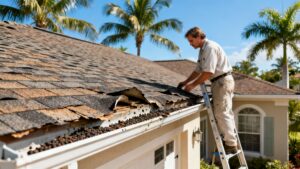
In South Florida, this issue is especially prevalent. The relentless sun exposure accelerates the aging of asphalt shingles, causing them to lose their protective granules and become brittle. Curling shingles are a tell-tale sign of this advanced aging and heat damage. Meanwhile, tropical storms and hurricanes can easily rip shingles from your roof, leaving the underlayment and roof deck exposed to immediate water intrusion.
Why This Damage Is Critical
The condition of individual shingles reflects the health of the entire roofing system. Ignoring these signs can lead to more severe, costly problems down the road.
- Missing Shingles: Each missing shingle creates a direct pathway for rain to penetrate your roof, leading to deck rot, attic mold, and interior water damage.
- Cracked Shingles: Thermal shock-the expansion and contraction from daily temperature swings-can cause cracks. Once cracked, a shingle can no longer effectively shed water.
- Curling Shingles: Shingles curl in two ways: “cupping” (edges turn up) or “clawing” (middle rises). Both indicate that the shingle has reached the end of its useful life and is no longer providing adequate protection.
Expert Insight: After major storms like Hurricane Ian and Hurricane Irma, our teams at Paletz Roofing and Inspections responded to countless calls across Broward and Miami-Dade counties for emergency repairs. The primary issue was widespread shingle loss, which, if not addressed quickly, would have led to catastrophic interior damage during the next rainstorm. You can view some examples of storm-related damage we've addressed.
Actionable Inspection Tips
You don't need to be a roofing expert to spot shingle damage. Regular visual inspections can save you thousands in repairs.
- Safe Ground Inspection: Use a pair of binoculars to safely examine your roof's slopes from the ground. Look for patches of inconsistent color, which may indicate missing shingles, or shingles that are visibly lifted or curled.
- Post-Storm Check: Make it a habit to walk your property's perimeter after any significant wind or rain event. Look for shingles on the ground or an accumulation of black, sandy granules in your gutters.
- Document Everything: If you spot damage, take clear, well-lit photos from multiple angles. This documentation is essential for insurance claims and for showing our inspectors exactly what you’ve found.
2. Interior Water Stains and Leaks
Perhaps the most alarming red flag for homeowners, interior water stains and leaks are an undeniable indication that your roof's waterproofing has failed. These stains, which often appear as yellowish or brown rings on ceilings and walls, are a direct sign that water has breached your roof, soaked through insulation, and is now damaging your home’s interior. These are among the most serious signs you need a new roof because by the time you see them, the problem has likely been developing for a while.

In South Florida's humid environment, even a small, slow leak creates the perfect breeding ground for mold and mildew. This can happen long before a visible drip appears. For commercial properties in Broward County, we've seen interior leaks compromise inventory, disrupt office operations, and create significant liability. For residential homeowners, the musty odor and visible stains are just the surface-level symptoms of a much deeper issue.
Why This Damage Is Critical
An interior leak is never just a cosmetic issue; it's a symptom of a critical failure that can escalate quickly, threatening your property’s structural integrity and your family’s health.
- Structural Decay: Water soaks into wooden beams, attic decking, and wall supports, causing them to rot and weaken. This can eventually lead to sagging ceilings or a compromised roof structure.
- Mold and Health Risks: The persistent moisture from leaks in our warm climate accelerates dangerous mold growth. Black mold can cause respiratory problems and other serious health issues, requiring costly remediation.
- Insulation Damage: Wet insulation becomes compressed and loses its thermal resistance (R-value). This makes your home less energy-efficient and drives up your cooling costs, a major concern for Florida residents.
- Electrical Hazards: Water dripping near electrical wiring, ceiling fans, or light fixtures creates a severe fire and electrocution risk that cannot be ignored.
Expert Insight: We frequently find that the source of an interior leak is not directly above the stain. Water can enter through a damaged flashing, travel along a rafter or pipe, and then drip down many feet away from the entry point. This is why our inspections in Miami-Dade homes after storms are so thorough; we trace the water path from the stain back to the original failure point on the roof, ensuring we fix the cause, not just the symptom.
Actionable Inspection Tips
If you notice any signs of water intrusion, immediate action is necessary to prevent further damage. Here’s what you should do.
- Document and Mark: As soon as you see a stain, take clear photos and note the date. Place a piece of painter's tape next to it to track if it grows. This documentation is crucial for insurance claims.
- Inspect the Attic: If you can safely access your attic, use a flashlight to look for damp insulation, dark wood stains, or a musty smell, especially during or after rain.
- Contain Active Drips: Place a bucket under any active drips to protect your floors and furnishings. However, this is a temporary fix; the source needs immediate professional attention. Beyond obvious drips, persistent dampness or discoloration on your ceiling can be a subtle sign of a hidden roof leak. Learn more about the various signs of ceiling water damage to better identify these risks.
3. Sagging or Uneven Roof Line
A sagging or visibly uneven roofline is one of the most alarming structural signs you need a new roof. A healthy roof should have a straight, crisp line along its ridges and edges. When you see a dip, bow, or sway in the roof deck, it indicates a serious failure in the underlying support system, often caused by prolonged moisture exposure, advanced age, or acute damage. This isn't just a cosmetic issue; it's a red flag for a potential structural collapse.

In South Florida, this problem can develop over many years. The combination of intense humidity, heavy rains, and the potential for hurricane damage puts immense stress on wooden support structures like rafters and decking. We frequently see older residential properties in Palm Beach County with sagging roofs where decades of moisture have led to wood rot, weakening the home's structural integrity from the top down.
Why This Damage Is Critical
A sagging roof deck is a symptom of a deep-seated problem that compromises the safety of the entire building. Ignoring a sag, no matter how minor it appears, puts your property and its occupants at significant risk.
- Weakened Roof Deck: The sheathing or decking underneath your shingles may be waterlogged and rotten. This material loses its ability to support the weight of the roofing materials, let alone a person walking on it.
- Compromised Trusses/Rafters: These are the "bones" of your roof. If they are broken, rotten, or improperly sized for the load they carry, the entire roof structure can fail.
- Risk of Collapse: The most severe outcome of a sagging roof is a partial or total collapse, especially under the added weight of heavy rainfall or during high winds from a tropical storm.
Expert Insight: Our inspection teams have been called to commercial buildings in Miami-Dade where deteriorated support trusses created dangerous sagging conditions that were not immediately obvious from the interior. A ground-level exterior check revealed the dip. This highlights that what looks like a small issue can be a sign of a critical structural failure requiring immediate, expert intervention to prevent a catastrophe.
Actionable Inspection Tips
Identifying a sagging roof can be done from a safe distance, but it requires a careful eye. Immediate action is key.
- View from a Distance: Stand across the street or at the far end of your property to get a clear view of the roof’s ridgeline. Look for any dips, curves, or "saddleback" appearances where a straight line should be.
- Check All Angles: Walk around the property and observe the roofline from different perspectives. A sag may only be visible from a specific angle.
- Document and Report: If you notice any sagging, take photos immediately from multiple angles. This documentation is vital for your records, for insurance purposes, and to show our inspectors precisely what you’ve observed. Do not attempt to get on the roof or store items in the attic below the sag; contact a professional right away.
4. Granule Loss in Gutters and Downspouts
If you’ve ever cleaned your gutters and found a collection of dark, sandy material, you've discovered one of the most reliable early signs you need a new roof. Those tiny particles are granules from your asphalt shingles, and their accumulation is a clear signal that your roof's primary protective layer is breaking down. These granules shield the asphalt from harsh UV rays, and their loss exposes the shingle to accelerated aging and damage.

In South Florida, this process is particularly aggressive. The intense, year-round sun beats down on roofs, weakening the adhesive that holds the granules in place. Then, heavy seasonal rainstorms wash them away into your gutters. While a small amount of granule loss is normal for a new roof, finding excessive amounts on a roof that's 12-15 years old is a predictable sign that its service life is nearing its end.
Why This Damage Is Critical
Losing the granular surface is like removing the sunscreen from your skin; the underlying material is left exposed and vulnerable. Ignoring significant granule loss allows more serious issues to develop.
- Accelerated Aging: Without their protective granules, shingles become brittle and are more susceptible to cracking and curling from heat exposure.
- Reduced Water Resistance: The granules help shed water. As they disappear, the shingle's ability to protect against moisture diminishes, increasing the risk of leaks.
- Sign of Widespread Wear: Unlike a single missing shingle, widespread granule loss indicates that the entire roof is aging uniformly and approaching the end of its functional lifespan.
Expert Insight: After a hurricane, insurance adjusters frequently use significant granule loss as key evidence to support a roof damage claim. Documenting this "baldness" on your shingles can be a critical factor in determining whether your roof qualifies for a full replacement under your policy. It's a measurable indicator of compromised integrity.
Actionable Inspection Tips
Gutter cleaning provides a perfect opportunity to assess the health of your roof before major problems start.
- Seasonal Gutter Checks: Clean your gutters seasonally, especially before the summer rainy season. Examine the debris for an accumulation of black granules. A handful is a warning; a bucketful is a critical alert.
- Document and Compare: Take photos of the granule buildup in your gutters each time you clean them. This creates a timeline that clearly shows the rate of deterioration, which is valuable information for our inspectors and your insurance company.
- Check Your Downspouts: Look at the area where your downspouts discharge. If you see a delta of granules fanning out on your lawn or driveway after a storm, it’s a strong indication of accelerated granule loss from the roof above.
5. Visible Mold, Algae, or Moss Growth
Black streaks, green discoloration, or patches of moss on your roof are more than just an eyesore; they are direct indicators of moisture retention. While this growth may seem cosmetic at first, it's one of the key signs you need a new roof because it signals that your roofing materials are creating an environment for deterioration. This organic growth accelerates the breakdown of your roof’s protective layers and can lead to significant underlying damage.
In South Florida's warm, humid climate, this issue is a constant battle for homeowners. Algae, particularly the type that causes black streaks (Gloeocapsa magma), thrives on aging asphalt shingles that have lost their protective granules and become more porous. Moss growth is rampant on shaded properties in Palm Beach County, where it traps moisture against the shingles, preventing them from ever fully drying out. This constant dampness promotes wood rot in the roof deck below.
Why This Damage Is Critical
The presence of organic growth is a clear signal that your roof's water-shedding capabilities are declining, creating a welcoming habitat for destructive organisms. Ignoring it allows small problems to grow into major structural threats.
- Algae Growth (Black Streaks): The dark streaks you see are caused by algae that feed on the limestone filler in asphalt shingles. Over time, this process dislodges the protective granules, leaving the shingle vulnerable to UV degradation.
- Moss Growth: Unlike algae, moss has roots that can lift the edges of shingles as they grow. This lifting action creates entry points for wind-driven rain and debris, compromising the roof’s entire protective system.
- Mold and Rot: Persistent moisture trapped by algae and moss can lead to mold growth that penetrates the attic and promotes rot in the underlying roof deck, rafters, and sheathing.
Expert Insight: Our teams at Paletz Roofing and Inspections frequently service homes in Broward and Miami-Dade where north-facing roof slopes are covered in black algae streaks. These sections receive less direct sunlight and stay damp longer, accelerating shingle decay. We treat this growth not just as a cleaning issue but as a critical warning sign that the roof is nearing the end of its functional lifespan. Explore our detailed process for handling roof assessments and repairs.
Actionable Inspection Tips
Identifying and addressing organic growth early can prevent premature roof failure. Here are steps you can take to manage it.
- Look for Discoloration: From the ground, look for any black, green, or dark-colored streaks or patches on your roof. Pay special attention to shaded areas or slopes that face north, as these are prime locations for growth.
- Trim Overhanging Branches: Cut back tree limbs that hang over your roof. This increases sunlight exposure, which helps the roof surface dry out faster and naturally inhibits mold and algae development.
- Avoid Pressure Washing: Never use a high-pressure washer to clean your roof. This can strip away shingle granules, break the shingle seals, and force water directly into the underlayment, causing more harm than good. A professional soft-wash is the only safe method.
6. Flashing Damage or Deterioration
Roof flashing is the thin metal material installed at your roof’s most vulnerable points-where it meets a wall, chimney, skylight, or vent. Its sole purpose is to create a watertight seal at these transitions. When you see flashing that is rusted, bent, pulling away from the structure, or has gaps in its sealant, it’s a critical sign you need a new roof or at least immediate flashing repair. This damage creates a direct superhighway for water to enter your home.
In South Florida’s coastal communities, from Fort Lauderdale to Miami Beach, this is a major concern. The salty, humid air accelerates the corrosion of metal flashing, especially older galvanized steel. Once rust takes hold, the metal thins and can develop pinholes or larger breaks. Furthermore, the intense thermal stress from the sun causes flashing and its sealants to expand and contract, eventually leading to separation and gaps that invite water intrusion.
Why This Damage Is Critical
Flashing failures are one of the leading causes of roof leaks, often responsible for damage that homeowners mistakenly attribute to other issues. Ignoring flashing problems is a guaranteed path to significant interior damage.
- Rusted Flashing: Corrosion eats away at the metal, compromising its ability to block water. Rusted flashing will eventually fail completely, leaving a significant opening for leaks.
- Separated or Loose Flashing: When flashing pulls away from a wall, chimney, or roof deck, it no longer directs water flow correctly. Instead, water runs behind it and directly into your home’s structure.
- Cracked or Missing Sealant: The caulk or sealant used to waterproof flashing joints degrades under UV exposure and becomes brittle. Cracked sealant is an open invitation for water to seep into the most sensitive areas of your roof.
Expert Insight: At Paletz Roofing and Inspections, we find that a significant percentage of leak calls in areas like coastal Broward County are traced back to failed flashing, not the primary roofing material. A homeowner might see a ceiling stain in a second-floor room and assume the shingles above are bad, but often the culprit is deteriorating flashing around a nearby chimney or dormer that allowed water to travel sideways before appearing inside.
Actionable Inspection Tips
You can often spot flashing issues from the ground or during other routine maintenance, potentially catching a problem before it causes a major leak.
- Inspect During Gutter Cleaning: When you're on a ladder to clean your gutters, take a moment to safely examine the flashing along the roof edges (drip edge) and where the roof meets walls. Look for any signs of rust, bending, or separation.
- Check Interior Walls: Look for subtle water stains, peeling paint, or discoloration on interior walls and ceilings that are adjacent to chimneys, skylights, and attic vents. This is often the first sign of a flashing leak.
- Perform an Attic Check: On a bright, sunny day, go into your attic (if it's safe to do so) and turn off the lights. Look for any pinpoints of daylight coming through around pipes, vents, or the chimney stack. Daylight means water can get in.
7. Age of Roof (15+ Years for Asphalt, 20+ for Other Materials)
The age of your roof is one of the most direct and crucial signs you need a new roof. While individual damages are important, a roof system's overall age provides a baseline for its expected performance and durability. Like any exterior component of a building, roofing materials have a finite lifespan, and simply reaching a certain age can warrant a replacement, even without visible, catastrophic failure.
In South Florida, a roof’s age is an especially critical factor. An asphalt shingle roof’s typical 20-year lifespan is often shortened to just 12-18 years due to relentless UV exposure, high humidity, and the stress of tropical storms. Tile and metal roofs, while more durable with lifespans of 30-50+ years, are also subject to accelerated wear. It's common for homes built in the early 2000s across Broward and Miami-Dade to now be prime candidates for roof replacement based on age alone.
Why This Damage Is Critical
Ignoring your roof’s age means risking system failure at an inconvenient time. As materials approach the end of their service life, their ability to protect your home diminishes significantly, making them vulnerable to routine weather events.
- Asphalt Shingles (12-18 Years): The protective granules wear away, the asphalt dries out and becomes brittle, and the seals between shingles weaken, making them easy for wind to lift.
- Tile Roofs (25-40 Years): While tiles are durable, the underlayment beneath them degrades over time. An aging underlayment is the primary point of failure for most tile roof systems, leading to hidden leaks.
- Flat Roofs (10-15 Years): The membranes on flat roofs can become brittle, shrink, or develop cracks from sun exposure, leading to widespread water intrusion issues.
Expert Insight: Many insurance carriers in Florida will not renew a homeowner's policy if their asphalt shingle roof is over 15 years old, or they will impose significant coverage limitations for roof damage. Proactively replacing an aging roof is not just about preventing leaks; it's a necessary step to maintain insurability and protect your property's value.
Actionable Inspection Tips
Determining your roof's age and planning accordingly is a key part of responsible homeownership. Here’s how to get started.
- Find the Paperwork: Locate the original installation documents from a past roofer or the closing documents from your home purchase. These should list the installation date. If you can't find them, check your local building department's online portal for permit records.
- Schedule a Mid-Life Inspection: If your asphalt roof is approaching 12-15 years old, it’s time to schedule a professional inspection. This will give you a clear understanding of its remaining life and help you budget for a future replacement.
- Check Your Insurance Policy: Review your homeowner’s insurance policy to understand any age-related clauses or restrictions. Knowing your carrier's requirements can help you avoid a last-minute scramble to find coverage or replace your roof under pressure.
8. Severe Storm or Wind Damage
In South Florida, a severe storm isn't a matter of if, but when. Hurricane-force winds, hail, and flying debris can cause immediate and catastrophic damage to your roof, making this one of the most urgent signs you need a new roof. Unlike slow-developing issues like age, storm damage is an abrupt event that can instantly compromise your home's entire protective barrier, demanding immediate professional attention.
From Hurricane Ian's widespread destruction to localized severe thunderstorms that tear through Broward neighborhoods, the impact is undeniable. Damage can range from obviously missing tiles and punctured metal panels to more subtle issues like lifted shingles where high-velocity winds have broken the sealant bond. Even without a direct hit, hail can create micro-fractures in tile or leave pockmarks on asphalt, accelerating its decline.
Why This Damage Is Critical
The aftermath of a storm creates a critical window for action. Delaying inspection or repair can turn a manageable problem into a disaster, as even a small breach allows for rapid water intrusion.
- Punctures and Holes: Falling tree limbs or wind-borne debris can create direct openings into your attic, leaving your home vulnerable to the next rain shower.
- Lifted Shingles/Tiles: High winds can lift the edges of shingles or tiles, breaking their seals. While they may lay back down, they are no longer secured and can allow wind-driven rain to get underneath.
- Structural Threats: Beyond surface-level damage, extreme winds can compromise the underlying roof frame itself, posing a significant safety and structural risk.
Expert Insight: Following major events like Hurricane Irma, our emergency response teams at Paletz Roofing and Inspections were deployed across Miami-Dade and Broward counties. The first 48 hours are crucial. We prioritize immediate assessments and temporary tarping to prevent secondary water damage while a permanent repair or replacement plan is put into motion.
Actionable Inspection Tips
Your safety is paramount. After a storm, perform these steps from a secure location on the ground before calling in professionals.
- Document Immediately: From a safe ground-level perspective, take numerous photos and videos of any visible damage. Capture wide shots of the roof and close-ups of specific problem areas like missing tiles or debris.
- Check Your Yard: Walk your property and look for fallen shingles, pieces of tile, or metal flashing on the ground. This is direct evidence of roof damage.
- Contact Your Insurer: Notify your insurance company promptly that your property has sustained storm damage. Your photos and our professional damage assessment report will be essential for your claim.
- Schedule an Emergency Assessment: Contact a certified roofing professional within 24-48 hours. Never attempt to get on a potentially unstable roof yourself, especially after a storm. Our inspectors are trained to identify all forms of storm damage, even the subtle kinds. You can find more information from the experts at Paletz Roofing and Inspections to help guide your next steps.

8-Point Guide: Signs You Need a New Roof
| Warning Sign | Implementation Complexity 🔄 | Resource Requirements ⚡ | Expected Outcomes ⭐ / 📊 | Ideal Use Cases | Key Advantages / Tips 💡 |
|---|---|---|---|---|---|
| Missing, Cracked, or Curling Shingles | Low–Moderate 🔄 — visual inspection; isolated repairs possible | Low–Moderate ⚡ — few materials/tools or pro service for storm damage | Moderate ⭐ — prevents leaks if isolated; widespread damage leads to replacement 📊 | Early-stage asphalt roofs; post-storm minor damage | Easy to spot; photograph for claims; replace isolated shingles; consider impact-resistant upgrade |
| Interior Water Stains and Leaks | Moderate–High 🔄 — tracing water paths often requires professional diagnostics | Moderate–High ⚡ — leak repair, drywall/insulation/mold remediation | High ⭐ — indicates active infiltration and secondary damage risk 📊 | Active leaks, attic moisture, visible mold or dripping | Document stains with dates; inspect attic; call pro immediately; use dehumidifiers |
| Sagging or Uneven Roof Line | High 🔄 — requires structural assessment and engineering input | High ⚡ — structural reinforcement and often full roof replacement | Very High ⭐ — structural failure risk; potential collapse if not addressed 📊 | Visible roof dip or interior ceiling sagging | Do not climb; photograph from safe distance; obtain structural and roofing professionals |
| Granule Loss in Gutters and Downspouts | Low 🔄 — observable during routine gutter cleaning | Low ⚡ — monitoring and budgeting; replacement when significant | Moderate ⭐ — early warning of aging; accelerates deterioration if ignored 📊 | Aging asphalt roofs; routine maintenance checks | Track year-to-year loss; clean gutters seasonally; begin replacement budget when loss is significant |
| Visible Mold, Algae, or Moss Growth | Moderate 🔄 — cleaning plus moisture-source investigation needed | Moderate ⚡ — professional cleaning/treatment and ventilation fixes | Moderate ⭐ — cosmetic early; persistent growth signals accelerated shingle decay 📊 | Humid, shaded roofs; older shingles (>10 yrs) | Avoid pressure washing; use soft cleaning or pros; improve ventilation and trim trees |
| Flashing Damage or Deterioration | Moderate 🔄 — often hidden; targeted inspection required | Low–Moderate ⚡ — flashing replacement/caulking; better materials extend life | High ⭐ — common leak source; timely repair prevents interior damage 📊 | Leaks near chimneys, vents, walls; coastal properties | Inspect during gutter work; document gaps/rust; upgrade to corrosion-resistant metals |
| Age of Roof (15+ yrs asphalt; 20+ other) | Low 🔄 — installation date is objective; visual assessment supplements | Low–High ⚡ — planning costs vary from inspections to full replacement | Variable ⭐ — strong predictor when combined with other signs; informs timing 📊 | Roofs approaching expected lifespan; insurance or resale planning | Check permits/records; schedule inspection at 12–15 yrs; budget and research material upgrades |
| Severe Storm or Wind Damage | Moderate–High 🔄 — emergency triage then detailed assessment | High ⚡ — tarping, emergency repairs, full replacement potential | High ⭐ — immediate water intrusion risk; often insurance-covered 📊 | Post-hurricane/thunderstorm damage; visible missing shingles or debris | Photograph immediately from ground; call pros within 24–48 hrs; implement temporary tarping; keep records for claims |
Your Next Steps: From Inspection to Installation
Recognizing the signs you need a new roof is the critical first step toward protecting your home or business. We've walked through the key indicators, from the obvious like missing shingles and interior water stains to more subtle clues such as granule loss and a sagging roofline. Each sign tells a story about your roof's health and its ability to withstand South Florida’s demanding climate. Ignoring these warnings doesn't make them disappear; it simply allows minor issues to escalate into costly, catastrophic failures.
The most important takeaway is that your roof is a complete system. A failure in one area, like deteriorated flashing, compromises the entire structure. A few curling shingles might seem insignificant, but they are often the first signal of widespread material breakdown, especially on a roof nearing the end of its lifespan. Proactive attention is not just about avoiding leaks; it’s about preserving your property's value, maintaining its structural integrity, and ensuring the safety of everyone inside.
From Visual Check to Professional Diagnosis
While a DIY inspection from the ground is a fantastic habit for any property owner, it has its limits. You can spot clear issues like extensive algae growth or a pile of shingle granules near your downspouts, but you can't safely or accurately assess the true condition of your roof’s underlayment, flashing seals, or the extent of wind-lifted shingles without getting on the roof itself. This is where professional expertise becomes essential.
A certified inspector doesn't just look for problems; they understand the why behind them.
- Is the granule loss typical for the roof's age, or does it signal a manufacturing defect?
- Is that minor ceiling stain from a simple flashing leak or a symptom of widespread moisture intrusion in the attic?
- Did the recent storm just damage a few tiles, or did it compromise the integrity of the underlying support structure?
Attempting to answer these questions without proper training and safety equipment can lead to a dangerous fall or a critical misdiagnosis. Don't leave the most important assessment of your property to guesswork.
Navigating the Path to Replacement
After confirming that you have identified some of the definitive signs you need a new roof, the process can feel overwhelming. Questions about cost, materials, and insurance are immediate and pressing. For many homeowners, a significant concern revolves around financial support. After a storm or when facing age-related failure, a major question is often, "Will Insurance Cover Roof Replacement?". Understanding your policy, documenting the damage correctly, and knowing how to file a claim are crucial steps. A reputable roofing partner can provide the detailed inspection reports and photographic evidence necessary to support your claim.
Choosing the right materials and the right team is your next move. For over 30 years, Paletz Roofing and Inspections has been the trusted partner for homeowners, real estate agents, and commercial property managers across Broward, Miami-Dade, and Palm Beach counties. We demystify the process by providing clear, honest, and comprehensive assessments. Our free, no-obligation inspections give you a complete picture of your roof's condition, empowering you to make an informed decision without pressure. We don’t just find problems; we deliver lasting solutions tailored to your property and budget. Protecting your investment and securing your peace of mind is our top priority.
Don't wait for a small leak to become a major disaster. If you've noticed any of the warning signs discussed in this article, contact Paletz Roofing and Inspections for a complimentary, professional assessment. Schedule your free inspection today and take the definitive step toward a secure and reliable roof.