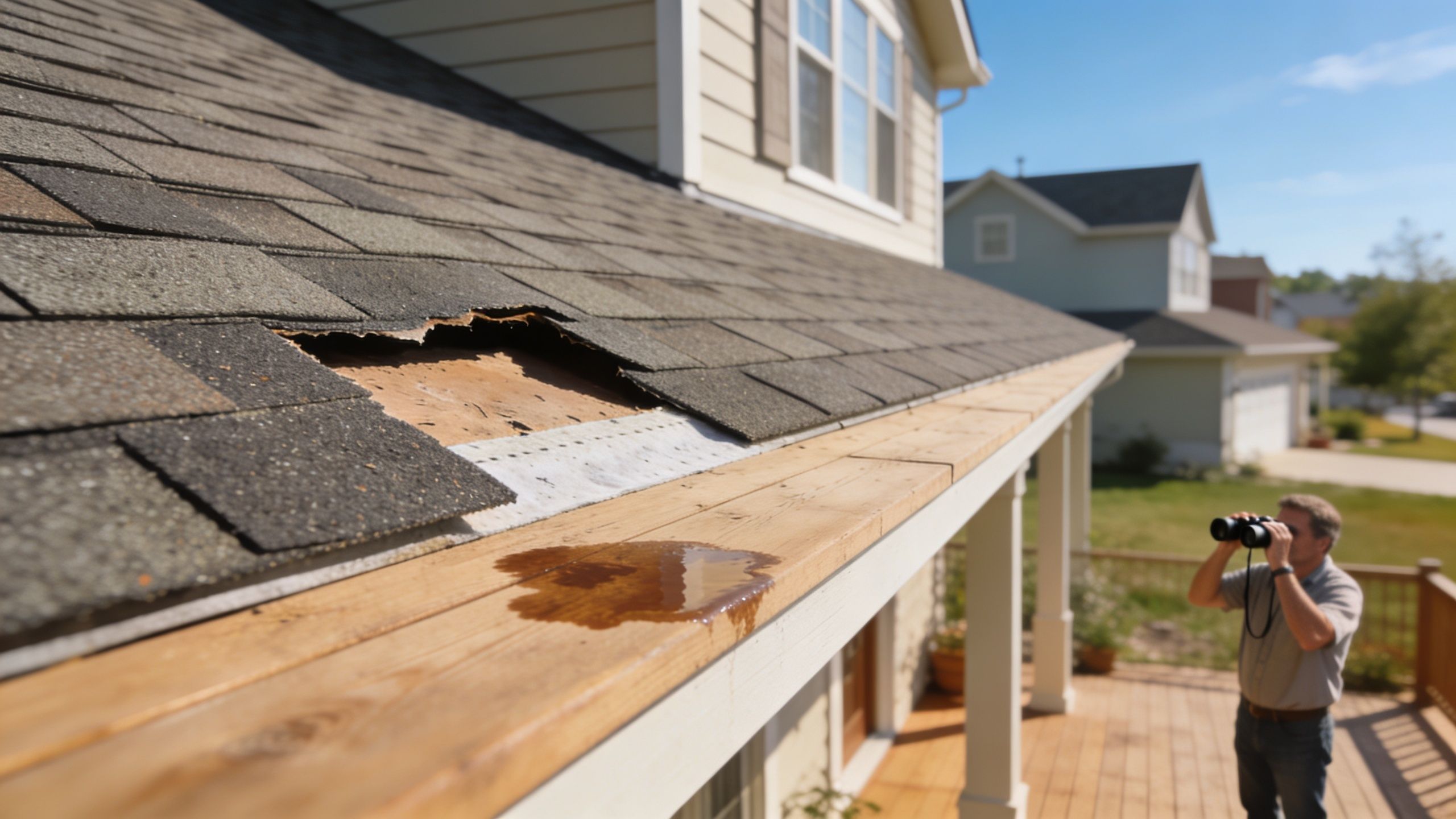
You walk outside after a night of wind and rain, and there it is. One asphalt shingle in the yard. Maybe two. Most homeowners hope it's nothing more than storm debris that blew in from somewhere else.
Sometimes it is. A lot of times, it isn't.
On a South Florida roof, a missing shingle is rarely an isolated problem. It's a warning that one part of the roofing system has already failed, and other weak points may be close behind. That one piece on the lawn can mean wind uplift, age-related brittleness, failed seal strips, bad fastening, or damage that's already exposing the underlayment.
If you're asking what are missing shingles a sign of, the honest answer is this. They're a sign your roof is losing its ability to protect the house the way it was designed to.
In Broward, Miami-Dade, and Palm Beach, that matters fast. Heat, humidity, salt air, and hurricane season don't give a roof much grace period. A small opening today can turn into an attic leak, ceiling stain, or rotten decking problem much sooner than expected. If you want a quick visual sense of the kind of roof damage pattern contractors look for after a storm, this roof damage example shows why a “small” shingle issue often isn't small at all.
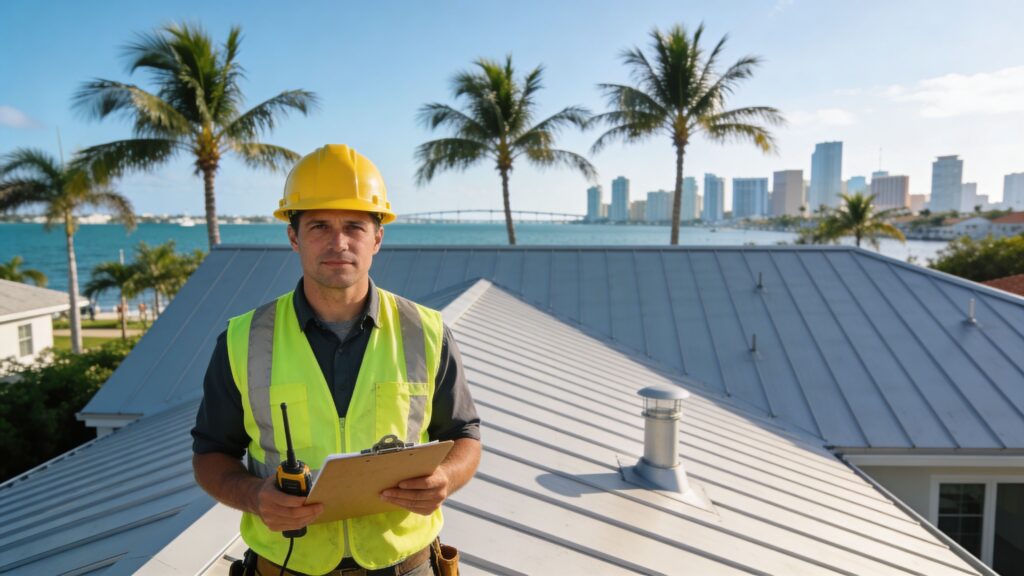
That One Shingle in Your Yard Is a Bigger Deal Than You Think
A missing shingle works a lot like a check engine light. The roof is still there. The house hasn't flooded. From the street, everything may even look normal. But one visible failure usually means stress has been building for a while.
On asphalt shingle roofs, shingles don't just vanish for no reason. Wind may have lifted a tab that was already weakened. Sun exposure may have dried the mat out until it cracked. Nails may have been placed wrong when the roof was installed, leaving a shingle loose enough to tear off when the next storm rolled through.
That matters because the shingle is only the outer skin of the system. Once it's gone, water can work its way into layers that weren't meant to stay exposed.
Practical rule: If you can see missing shingles from the ground, assume the roof needs professional attention, even if you don't see an interior leak yet.
Homeowners often wait because they want to avoid overreacting. That's understandable. Nobody wants to turn a yard cleanup into a roofing project. But waiting is usually what makes the problem expensive. Roof leaks don't always show up directly beneath the damaged area, and by the time a stain appears on the ceiling, water may already have traveled through underlayment, decking, and insulation.
On South Florida homes, I look at missing shingles as a sign of one of three bigger stories. The roof got hit hard by wind. The roof is aging out. Or the roof never had the fastening and sealing quality it should've had in the first place. Sometimes it's a mix of all three.
The Main Culprits Behind Missing Shingles
A missing shingle usually points to one of three causes: storm stress, age, or bad installation. On South Florida roofs, those causes overlap more than homeowners expect. A roof can be old enough to be brittle, then get hit by one hard summer storm, and the failure shows up all at once.

The useful question is not just "what blew off?" It is "why did that area fail first?" That answer tells you whether you are dealing with an isolated repair, a roof that is wearing out, or a system that was never fastened and sealed the right way.
Wind damage and storm lift
Wind is the most obvious culprit, but it is rarely as simple as one big gust. On asphalt roofs, the usual sequence starts with the adhesive strip breaking loose. Once the tab loses that bond, every storm flexes it a little more until it creases, tears, or pulls free.
In South Florida, I pay close attention to where the shingles are missing. Corners, rakes, ridges, and eaves take the hardest pressure changes. If losses are concentrated along those areas after a storm, wind is the lead suspect.
From the ground, these patterns matter:
- One slope with fresh losses: often storm-related, especially if nearby slopes still look intact
- Perimeter damage: common where uplift pressure is strongest
- Tabs folded, creased, or partly torn: a sign wind started the failure before the shingle finally came off
- A few shingles gone after a recent storm on a newer roof: possible repair situation, if the surrounding field still has good adhesion
Humidity and salt air make this worse. Adhesive strips age faster in this climate, and once they weaken, summer wind finds every shortcut.
Age and material fatigue
Older shingles fail differently. They get stiff, dry, and easier to crack. Granules loosen. The mat loses flexibility. Then a storm that a newer roof would shrug off starts pulling pieces away.
That is why missing shingles on an older South Florida roof usually are not a one-spot problem. They are a warning that the whole field may be near the end of its service life. Strong sun, long wet seasons, and coastal exposure shorten the runway compared with milder climates. A roof that still looks acceptable from the street can be brittle up close.
A few field clues usually point toward age:
| Sign | What it usually suggests |
|---|---|
| Shingles look curled, cupped, or cracked | The material has lost flexibility |
| Heavy granules in gutters or downspouts | The weathering surface is wearing away |
| Color looks patchy or washed out across large areas | Broad UV and weather exposure, not one isolated event |
| Multiple small losses in different spots | General fatigue across the roof system |
On that kind of roof, replacing one or two shingles can be like patching rotten wood with fresh paint. The repair may hold, but the surrounding material is still weak.
Installation errors
A newer roof with missing shingles raises a different question. Was it fastened and sealed correctly in the first place?
I see the same workmanship problems over and over. Nails driven too high. Nails angled instead of set flush. Too few fasteners for the exposure. Starter shingles done wrong at the edge. Tabs that never sealed because the materials were installed carelessly or at the wrong time. Those problems may persist unnoticed for a while, then show up after the first real wind event.
These are the field patterns that make me suspect installation trouble:
| Issue | What it means in the field |
|---|---|
| Scattered losses on a relatively new roof | Failure may be tied to nailing or sealing, not roof age |
| Shingles slipping out of line | Fasteners may have missed the correct nail zone |
| Damage concentrated at edges from early in the roof's life | Starter course or edge detailing may be weak |
| Repairs already failing in the same area | The problem may be below the visible shingle line |
This matters for homeowners because the fix changes. Storm damage on a sound roof may call for targeted repair. Installation defects can mean a wider corrective repair, manufacturer review, or a closer look at whether the original work met specifications.
Physical impact and foot traffic
Impact damage is the fourth cause that gets missed. Branches, flying debris, satellite or solar work, and careless foot traffic can loosen tabs or crack brittle shingles without leaving dramatic damage from the street.
I see this a lot around vents, valleys, and service paths. One bad step on warm shingles can break the bond. One dropped tool can fracture a tab. The next storm finishes the job.
If the missing shingles are clustered near penetrations or in an area where someone recently worked on the roof, do not assume weather was the only cause.
A simple way to sort out the likely cause
Homeowners do not need to diagnose every detail from the yard, but a basic framework helps:
- Recent storm, damage along edges or one slope: start with wind
- Older roof, scattered losses, granule loss, curling: start with age
- Newer roof, patchy failures in several spots: suspect installation error
- Damage near vents, valleys, or service areas: include impact or foot traffic in the mix
Sometimes the answer is one cause. In South Florida, it is often two or three working together. That is why missing shingles should be inspected by a roofer who understands how heat, humidity, salt exposure, and storm cycles shorten the margin for error.
What Lurks Beneath A Missing Shingle's True Cost
A missing shingle exposes more than a small patch of roof. In South Florida, that open spot gets hit with hard rain, heavy humidity, salt air, and sun that bakes the surrounding materials day after day. What starts as a simple tab loss can turn into wet decking, stained ceilings, mold growth, and repairs that spread well beyond the original area.

Water gets in fast, then it travels
Homeowners often wait because the ceiling inside still looks clean. That is a costly bet.
As noted earlier, industry guidance ties missing shingles to a high risk of leaks, attic mold, property value loss, and higher cooling costs if the exposed area is left alone. I have seen that pattern plenty of times after summer storms. The opening itself may be small, but the water rarely stays there. It follows underlayment laps, nail lines, decking seams, and roof penetrations before it shows up indoors.
That is why a stain over a hallway or bedroom does not always mean the leak started directly above that room.
The real bill is usually below the roof surface
The first missing shingle is rarely the expensive part. The expensive part is everything beneath it that stays damp in a South Florida attic.
Here is what commonly gets affected:
- Underlayment: Once it is exposed to repeated wind-driven rain and UV, it loses the backup protection it was supposed to provide.
- Roof decking: Plywood and OSB can swell, soften, and delaminate after repeated wetting.
- Insulation: Wet insulation loses performance and can hold moisture against the structure.
- Drywall and paint: Ceiling stains are often the first interior sign, not the first stage of damage.
- Attic air quality: Warm, damp attic conditions give mold a head start in this climate.
- Fasteners and metal components: Salt air and moisture speed up corrosion around nails, flashing, and connectors.
A roof system works like the hull of a boat. One breach may look minor from the outside, but the trouble starts when water gets into the layers you cannot see.
South Florida makes the trade-off harsher
In a drier climate, a homeowner might have a little more time to schedule a repair. South Florida is less forgiving. Afternoon rain, overnight humidity, coastal salt exposure, and hurricane season shorten the margin for error. Materials do not get many chances to dry out fully, especially on shaded slopes or low-ventilation attic spaces.
That changes the repair decision. A single missing shingle on a relatively new roof may still be a straightforward fix if the surrounding shingles are sound and the decking is dry. If the roof is older, if the exposed area sat open through several storms, or if the surrounding tabs have become brittle, the right repair often gets bigger. By then, a contractor may need to replace underlayment, cut out damaged decking, and rebuild a full section so the repair holds securely.
If you want a simple visual reference for the areas where hidden damage often starts, this roof inspection visual guide shows the roof sections and transitions worth documenting before a contractor visit.
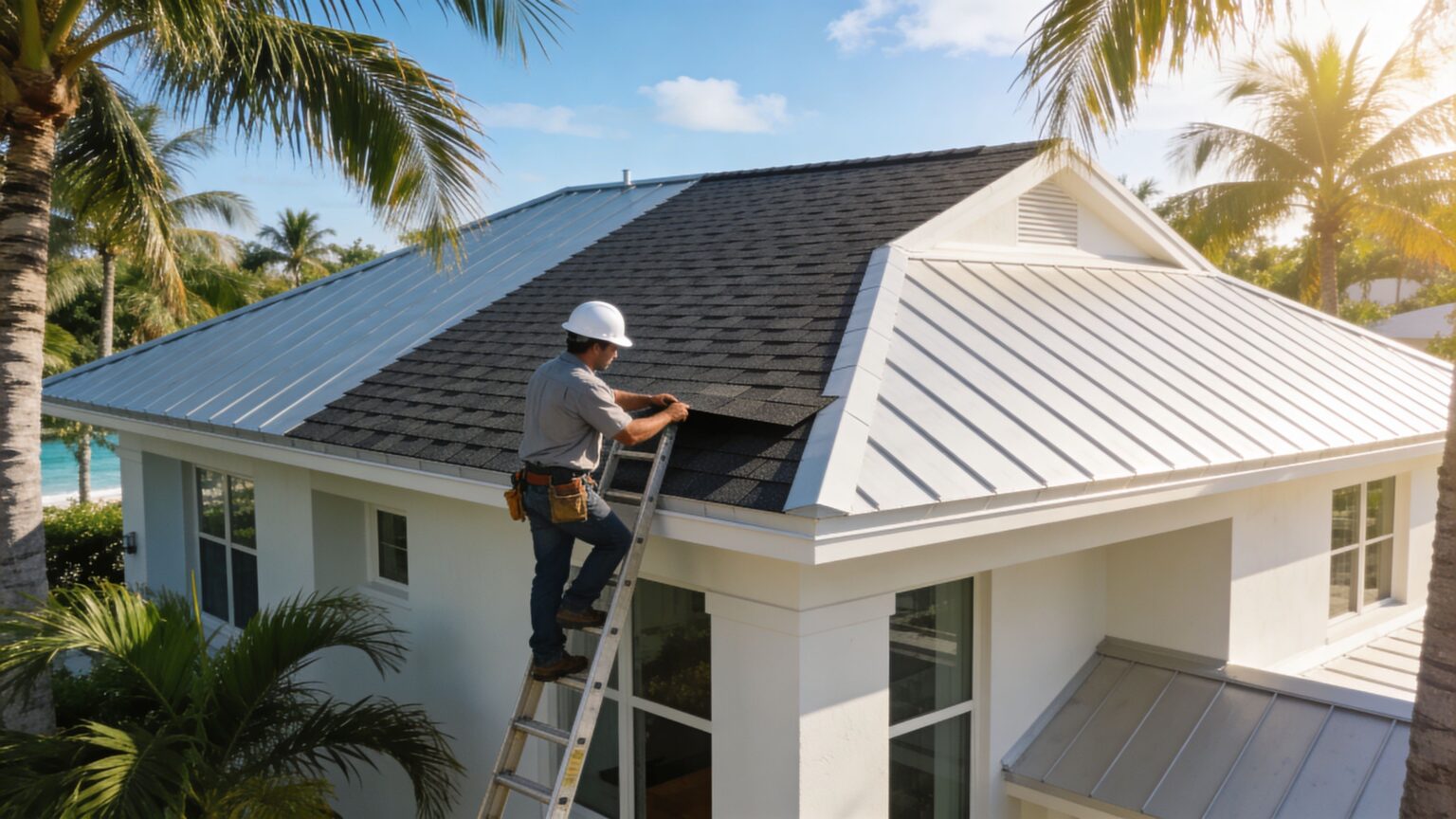
Delay changes the scope of work
I tell homeowners to treat missing shingles the way they would treat a broken window before a storm. The opening may be limited, but the exposure is not.
Wait too long and the job can shift from a shingle repair to interior repairs, mold cleanup, deck replacement, and insurance disputes about how long the condition was left unaddressed. That is the true cost. Protecting the house means protecting the layers you cannot see from the driveway.
If shingles are missing and a storm is on the calendar, call a professional roofer now, not after the ceiling starts to stain.
How to Safely Inspect Your Roof for Problems
You don't need to climb on the roof to spot trouble, and in many cases you shouldn't. A safe inspection starts from the ground with daylight, a phone camera, and a pair of binoculars. If you have access to upper-story windows, use them carefully, but don't lean out or step onto any roof surface.
A lot of homeowners get hurt trying to confirm what they already suspect. The better move is to document what you can see and let a roofer handle roof access. If you want a simple example of the kind of visual references property owners often use before scheduling service, this roof inspection visual guide is the kind of overview that helps you know where to focus.
What to look for from the ground
Start broad. Stand back far enough to view the entire slope.
Then narrow your attention to these visible clues:
- Open patches: Areas where the roof color or texture changes sharply may indicate missing shingles.
- Curled or cracked tabs: These are often the next shingles to fail.
- Dark bald spots: That can mean the granules are gone and the shingle surface is wearing out.
- Debris lines and impact marks: Branch strikes or flying debris often leave a visible pattern.
- Algae or moss growth: Moisture-retaining growth can point to surface conditions that weaken shingles over time.
Check the gutters and the ground
You can learn a lot without ever looking up.
Walk around the perimeter and inspect the areas below downspouts and eaves. Granules from aging shingles often wash into gutters first. If you see gritty black material collecting there, that's a warning sign that the shingles are losing their protective surface. Also look for shingle fragments, torn tabs, or fresh pieces of asphalt mat around the house after wind events.
Use your phone to take clear, dated photos from more than one angle. Wide shots show pattern. Close shots show detail. Both matter if a contractor or insurance adjuster needs to review the damage.
What not to do
Don't do these things:
- Don't climb onto a wet roof: Even a dry asphalt roof can be risky. A humid one is worse.
- Don't pull at lifted shingles: You can turn loose material into torn material fast.
- Don't assume the problem is limited to what you can see: Roof damage often extends under surrounding shingles and flashing.
- Don't wait for interior staining: By then, the roof problem has already moved deeper into the system.
If you can document the problem safely from the ground, you've done your job. The next step is a professional inspection, not a ladder experiment.
Repair or Replace Deciding Your Roofs Future
A few missing shingles can fool people into buying the wrong fix. I have seen homeowners pay for the same small repair twice, then end up replacing the roof a year later after another South Florida storm opens the same weak area again.
The right decision comes from the condition of the whole system, not just the bare spot you can see from the driveway. Age matters. How many areas are failing matters. The condition of the decking matters. In South Florida, the climate also speeds up the decision. Heat dries shingles out, humidity traps moisture below them, and salt air works on exposed metal and fasteners. A roof that might limp along longer in a milder climate often runs out of margin faster here.

If you are comparing options, this roof repair versus replacement comparison helps show the same split a roofer looks for on site.
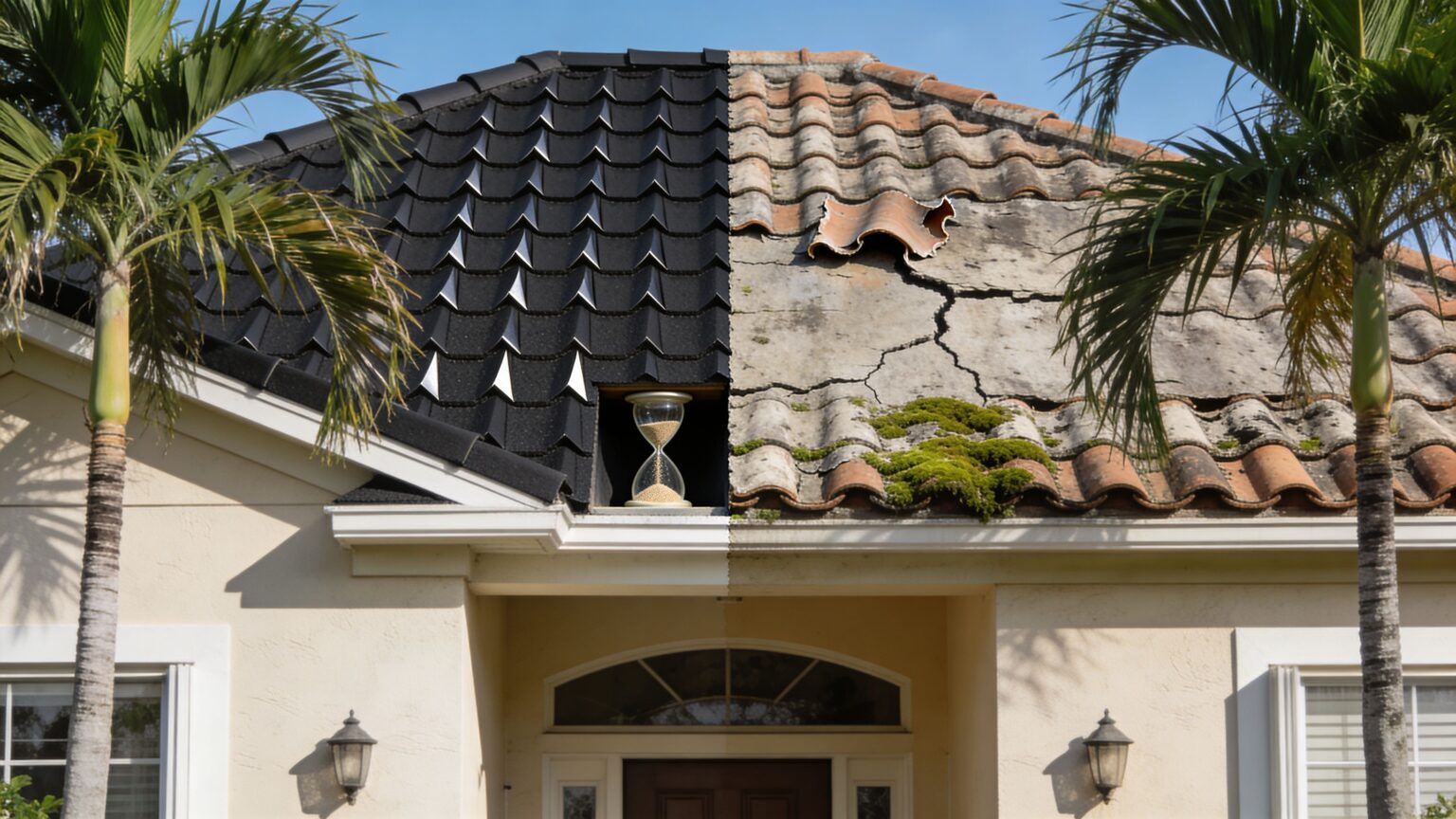
When repair makes sense
Repair makes sense when the failure is limited and the surrounding roof still has service life left.
That usually means:
- The damage is isolated: One slope or one section lost shingles, but the rest of the roof is holding.
- The surrounding shingles still bend and seal properly: They are not brittle, curled, or cracking when handled.
- The deck underneath is still solid: No soft spots, dark staining, or signs that water has been working below the surface.
- The cause is identifiable: A recent wind event, a branch strike, or a few shingles that slipped because of localized fastening issues.
- Matching materials are still available: A patch only works if it can be integrated without creating a new weak point.
A good repair is not just replacing tabs. It should include checking the fastening pattern nearby, confirming the underlayment was not exposed long enough to fail, and inspecting flashing around the damaged area. If the roof was installed well and the problem came from a single event, a repair can buy real time.
When replacement is the better financial decision
Replacement becomes the smarter move when the missing shingles are only one symptom in a larger pattern.
If one area is bare, another is curling, granules are washing into the gutters, and the shingles crack when lifted, the roof is usually at the stage where repair money starts acting like rent. You keep paying, but ownership never improves.
Use this field guide:
| If you see this | It usually points toward |
|---|---|
| Single event, limited loss | Repair |
| Widespread aging and multiple weak zones | Replacement |
| Brittle shingles that will not lift cleanly for repair | Replacement |
| Moisture damage below the surface | Replacement or partial rebuild |
For owners comparing bids, a detailed inspection becomes critical. One contractor may price only the visible shingle loss. Another may find wet underlayment, corroded fasteners, or rotten decking near the same area. Those are not always conflicting opinions. They can be different levels of the same roof problem.
The South Florida trade-off
South Florida changes the math. A modest repair may be reasonable on a younger roof after a clean wind event. The same repair on an older roof, heading into hurricane season, can turn into repeated service calls and interior damage if the surrounding shingles are already tired.
The key is diagnosing the cause correctly. Storm damage tends to look directional and concentrated. Age-related failure usually shows up across several areas at once. Installation errors often leave a pattern too, such as repeated shingle loss in the same exposure zone or fastening problems along one slope. That distinction matters because each problem points to a different solution.
Paletz Roofing and Inspections handles that call by checking whether the roof has isolated storm damage, broad age-related wear, or signs the original installation left the system vulnerable. That is the difference between a repair that protects the house and a patch that only delays the bill.
Navigating Insurance Claims for Roof Damage
A missing shingle after a storm may also be the start of an insurance file, and the way you handle the first day matters. Most claim problems begin with poor documentation, delayed reporting, or temporary damage control that never happened.

Document first and document well
Before anybody touches the roof, take photos and short video from the ground. Include the missing shingles, any visible debris, gutter overflow, fence damage from the same storm, and interior signs like ceiling staining if they're present.
Good documentation should include:
- Wide shots of each roof slope you can see
- Close shots of shingles on the ground
- Photos of gutters with granules or fragments
- Indoor evidence such as stains or damp drywall
- A date record tied to the storm event
Read the policy before you argue the claim
Homeowners often call the carrier before they know what deductible applies. Review the declarations page and look for storm or hurricane-specific deductible language. You don't need to become a claims expert overnight, but you do need to know the basic rules of your own policy before you approve work or dispute a decision.
Keep a simple file with photos, inspection notes, receipts, and every email tied to the loss. Claims get stronger when the timeline is clear.
Mitigate damage without overstepping
If water is getting in, temporary protection matters. That may mean tarping or other emergency measures performed by a roofing professional. Insurers generally expect owners to take reasonable steps to prevent additional damage, but they don't expect homeowners to diagnose structural roofing issues from a ladder.
A professional assessment helps because it distinguishes storm-related shingle loss from older wear, deferred maintenance, or installation defects. That distinction is often what decides how a claim is handled.
Your Immediate Action Plan for Missing Shingles
If shingles are missing, don't treat it like a weekend chore. Treat it like a time-sensitive building envelope problem.
Use this three-step plan:
- Document from the ground. Take photos of the roof, the yard, the gutters, and any interior staining or moisture signs.
- Protect the home from further exposure. If water is entering, arrange temporary protection through a qualified roofer.
- Schedule a full inspection. You need to know whether the root cause is storm damage, age, installation error, or a combination.
For homeowners who also want to understand how roof runoff and drainage affect long-term exterior protection, resources from specialists outside Florida can still be useful. For example, Pine Country's Flagstaff gutter experts explain why water management around the roof edge matters so much once the roofing surface is compromised.
In South Florida, the main mistake is delay. Heat, humidity, salt air, and the next storm don't wait for a convenient time to make roof damage worse. Missing shingles are a sign that your roof needs attention now, not after the next ceiling stain appears.
If you're dealing with missing shingles in Broward, Miami-Dade, or Palm Beach, Paletz Roofing and Inspections can inspect the roof, document visible damage, and help you determine whether a focused repair or a full replacement makes more sense for the condition of the system.