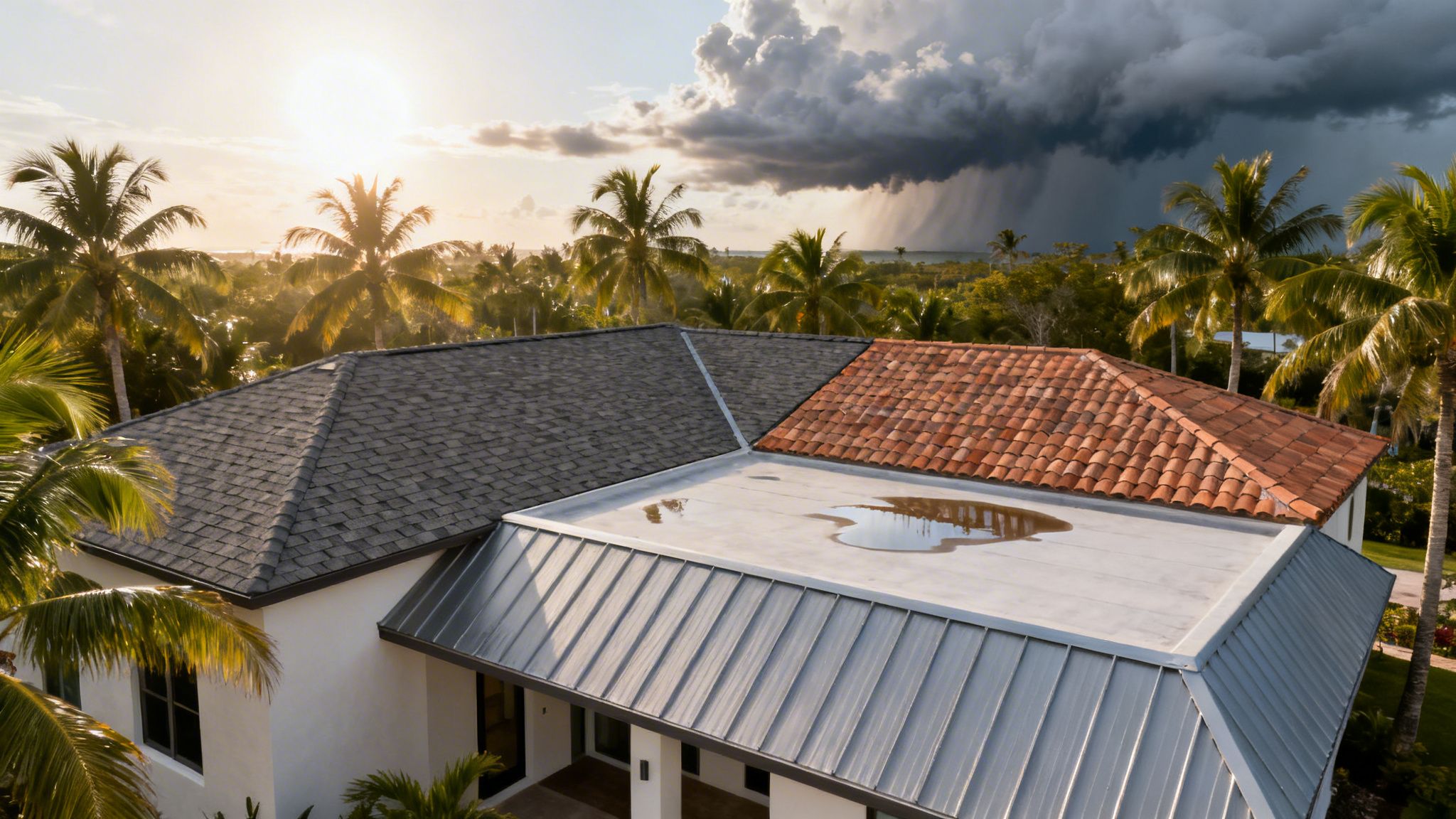
So, how long does a roof really last? You'll see numbers thrown around everywhere, from 15 to 50+ years. But the honest answer from anyone who’s spent time on a roof in South Florida is: it depends. The number on the shingle wrapper is one thing; the reality of our sun and storms is another entirely.
Your Roof's Lifespan: The Quick Answer
It’s easy to get a false sense of security when you see a "30-year shingle" advertised. We’ve all been there. But you have to think of that number as a best-case scenario—what that shingle might achieve in a perfect, mild-mannered climate. That’s not what we have here in Broward or Palm Beach counties.
Down here, your roof is working overtime, every single day. It’s up against relentless UV radiation, oppressive humidity, corrosive salt in the air, and, of course, the constant threat of tropical storms. It’s a combination that puts an incredible amount of stress on any roofing material.
A standard asphalt shingle roof that might comfortably last 25 years in a cooler, northern state is lucky to see 15 to 20 years of solid performance here before it starts showing its age in a serious way.
South Florida vs. National Averages
This difference isn't just a minor detail; it's a fundamental truth for every homeowner in our area. National statistics give you a starting point, but they simply don’t tell the story of the accelerated aging our roofs go through.
Just look at the difference in what you can realistically expect.

As you can see, our climate can slash a roof's expected lifespan by nearly 40% compared to the national average. It’s what we in the business call the "Florida discount."
Think of it like this: your roof has a "Florida discount"—a built-in reduction in its lifespan simply because of where we live. Understanding this changes the conversation from "how long will it last?" to "how do I protect my investment in this tough environment?"
This isn't meant to be bad news. It's actually empowering. When you know what you’re up against—the real-world timelines and the specific enemies of your roof—you can make smarter, more strategic decisions. It helps you budget for the future and protect your home, which is, after all, your most important asset.
Lifespan by Roofing Material

When you ask how long a roof should last, the first question a roofer will ask back is, "What's it made of?" Not all roofs are built to withstand the same challenges, and here in South Florida, that matters a great deal. The material over your head is the number one factor that dictates its real-world lifespan.
Think of your roofing material as its genetic code—it determines how well it stands up to our relentless UV rays, how it performs in a tropical storm, and where its vulnerabilities lie. To get a realistic timeline, you have to start with the specific material protecting your home. Let's break down the most common options you'll find around here.
Asphalt Shingles The Popular Choice
Asphalt shingles are on more American homes than any other material, largely because they’re affordable and come in a huge range of styles. But their performance can be a real mixed bag. A shingle might be rated for 20 or 30 years in a perfect, mild climate, but our heat and humidity tell a very different story. In fact, research shows that architectural shingles lasting 24-30 years in cooler parts of the country might only survive an average of 14 years in intense sun like ours. You can explore more about these roofing timelines and what they mean for your home.
You'll generally run into two types:
- 3-Tab Shingles: This is the classic, budget-friendly shingle. Their flat, single-layer construction makes them more vulnerable to wind uplift and causes them to lose their protective granules faster. In our climate, you can expect a lifespan of around 15-18 years.
- Architectural Shingles: These have a thicker, laminated design that gives them a more textured look and much better durability. They handle high winds better and tend to last longer, typically giving you 18-25 years of service in South Florida, assuming you have proper attic ventilation.
Tile Roofs The Durable Classic
Drive through just about any neighborhood in Broward or Palm Beach County, and you’ll see tile roofs everywhere. There’s a good reason for their popularity. Both concrete and clay tiles are naturally resistant to fire and the sun’s brutal rays, often lasting 40-50 years or even more.
But here’s the inside secret: the tiles are just the armor. The true lifespan of a tile roof depends entirely on its underlayment—the waterproof barrier that sits just beneath the tiles.
The secret to a long-lasting tile roof isn’t just the tile; it’s the underlayment. While the tiles can endure for decades, the underlayment beneath them typically fails first, often needing replacement every 15 to 30 years due to relentless heat and moisture.
This is a hugely important distinction for homeowners. If your tiles are still in great shape but the underlayment is failing, a "re-roof" might just mean carefully removing your tiles, replacing the worn-out underlayment, and resetting the original tiles. This process can restore your home's protection while saving you a significant amount of money.
Metal Roofs The Resilient Modern Option
Metal roofing has become incredibly popular in recent years, thanks to its outstanding strength and longevity. A professionally installed metal roof can easily last from 40 to 70 years, handily outperforming shingles. They are extremely resistant to the high winds we see during hurricane season and do a fantastic job of reflecting solar heat, which can noticeably lower your cooling bills.
That said, they aren't completely "set it and forget it." A metal roof’s integrity relies on its protective coatings and the fasteners holding it down. Over many years, the finish can get scratched or fade, and the rubber washers on the fasteners can dry out and crack. These tiny failures can become entry points for water, so regular inspections are essential to catch small issues before they compromise the whole roof system.
Your Roof’s Toughest Opponents in South Florida

Choosing the right roofing material is only half the battle. The other, more relentless fight is against the South Florida environment itself. Your roof is in a constant struggle against a unique combination of forces working overtime to shorten its lifespan, turning a manufacturer's estimate into a real-world Florida reality.
When you understand these specific threats, it becomes clear why proactive maintenance and smart material choices are so critical here. It’s not just about weathering a few storms; it’s about surviving a daily assault on multiple fronts.
Intense Sun and UV Exposure
The very sunshine that makes Florida beautiful is your roof’s number one enemy. That relentless ultraviolet (UV) radiation acts like a slow-bake oven, gradually cooking the materials right over your head.
For asphalt shingles, this is particularly damaging. UV rays break down the essential oils that keep them flexible, causing them to become brittle and cracked. It also strips away their protective granules—the "sandpaper" coating shielding the asphalt core. Once those granules wash away, the shingle's decline speeds up dramatically. The sun also degrades sealants around vents and flashing, creating weak points where water can easily get in.
High Humidity and Corrosive Salt Air
South Florida's air is heavy with moisture and, for any home near the coast, salt. This mix is a perfect recipe for trouble. The constant high humidity encourages algae and fungus growth, which shows up as ugly black streaks. While it might seem like a cosmetic issue at first, these growths trap moisture against your roof, accelerating deterioration.
For metal roofs and the metal components on any roof—like flashing or fasteners—the salt air is incredibly corrosive. It methodically eats away at protective coatings, leading to rust and, eventually, systemic failure. This corrosive attack is a primary reason how long a roof lasts in coastal Palm Beach or Broward is often shorter than in inland communities.
Think of your roof like a car parked by the beach. The constant exposure to sun, humidity, and salt will cause its finish to fade, its rubber seals to crack, and its metal parts to rust far faster than a car kept in a garage in a mild climate.
Hurricane Season: The Ultimate Stress Test
While the sun and humidity are slow, persistent enemies, hurricanes are the acute threat that can destroy a roof in a matter of hours. The danger comes from a brutal, three-pronged attack that tests every single component of your roofing system.
- Wind Uplift: Hurricane-force winds don't just blow against your roof; they create powerful suction forces that try to lift the entire structure right off your home. This is especially dangerous for shingles and tiles that aren't perfectly fastened.
- Flying Debris: During a major storm, everyday objects like tree branches and street signs become high-speed projectiles. A direct impact can easily crack tiles, puncture shingles, and even compromise the underlying roof deck.
- Torrential Rain: Hurricanes unleash an overwhelming amount of wind-driven rain. If there is even one tiny weakness—a cracked sealant, a lifted shingle, or a damaged piece of flashing—this water will find its way inside.
Warning Signs Your Roof Is Failing
A roof almost never fails in a single, catastrophic event. Long before you see a dreaded leak stain spreading across your living room ceiling, your roof has been sending out distress signals. The real key to avoiding expensive, emergency repairs—and truly understanding how long your roof has left—is learning how to read these signs.
It’s a lot like checking the tread on your car’s tires. You wouldn't just wait for a blowout on the highway, and you shouldn't wait for a leak during a storm. Your roof provides similar clues; you just have to know what you’re looking for. The good news is that many of the most critical warnings are visible right from the ground.

Signs You Can See from the Ground
You don't need to climb a ladder to play roof detective. In fact, a quick walk around your property can tell you a whole lot about the health of your roofing system. Keeping a watchful eye on your roof’s condition can save you a fortune down the road. For a wider look at home health checks that go beyond just the roof, it’s worth reviewing these 10 critical things to look for when inspecting a home.
Here are the big-ticket items to watch for from the safety of your yard:
- Curling or Clawing Shingles: When you see shingle edges starting to curl up, or the middle of the shingle starts to buckle, that’s a direct sign of advanced age and heat damage. This lifting action breaks the watertight seal and practically invites wind to tear the shingle right off.
- Cracked or Missing Shingles: A couple of missing shingles after a big storm might be a simple fix. But if you see widespread cracking across the roof or entire patches of shingles gone, it’s a clear sign the material has become brittle and is at the end of its useful life.
- Dark Streaks or Algae Growth: Those ugly black streaks are a specific type of algae (Gloeocapsa magma) that actually feeds on the limestone filler in asphalt shingles. While it starts as a cosmetic problem, it holds moisture against the roof, which speeds up deterioration.
- Granules in Your Gutters: Take a peek inside your gutters. If you find a pile of what looks like coarse, black sand, those are the protective granules that have worn off your shingles. Think of it as your roof’s "sunscreen" washing away, leaving the raw asphalt underneath exposed to damaging UV rays.
Clues from Inside Your Home
Sometimes, the first red flag pops up inside your house. These signs are serious because they mean water has already made it past your roof’s outer defenses and is now starting to compromise your home’s structure. You can see more examples of what to look for by exploring the different types of roof damage in our gallery.
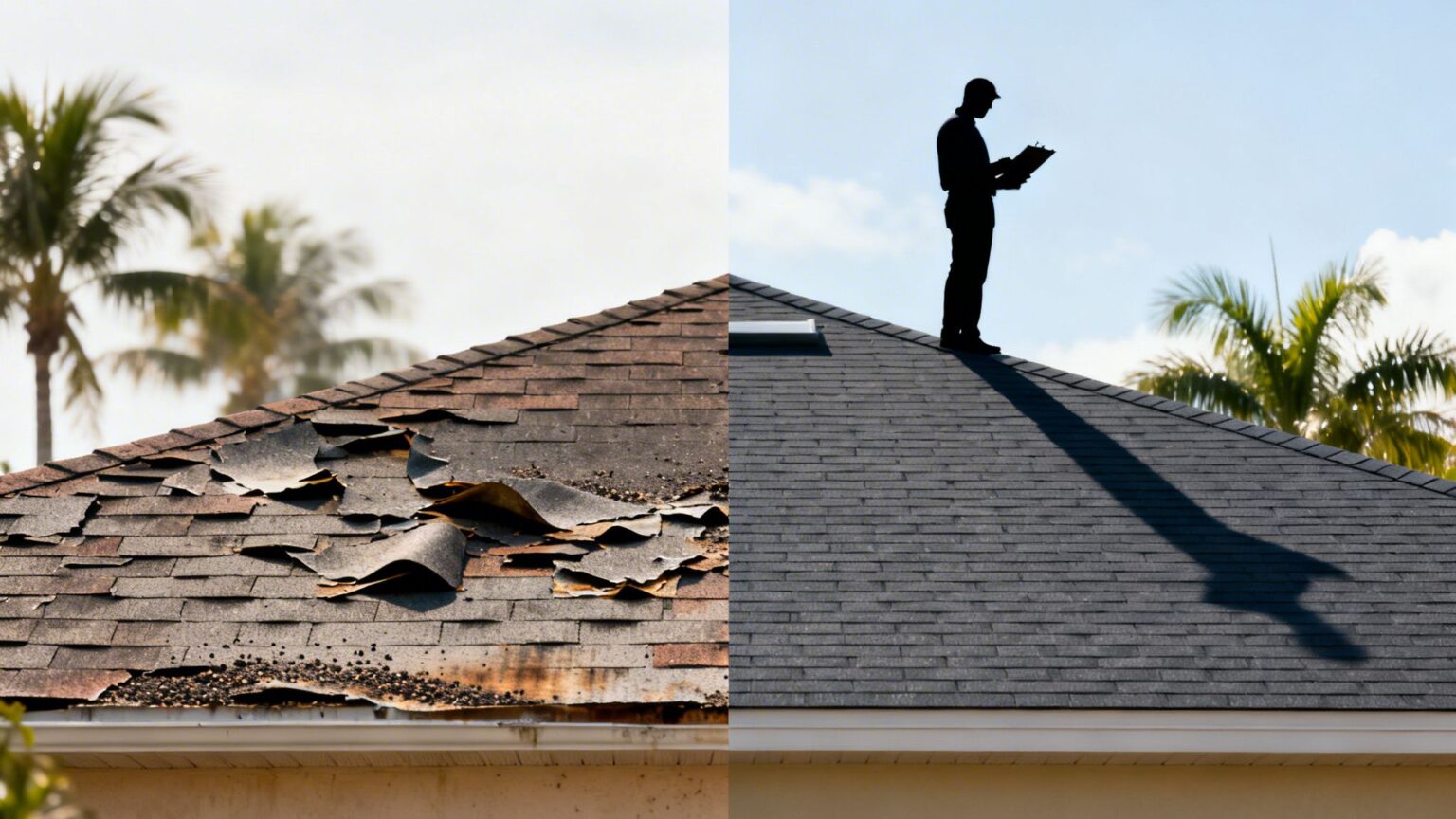
Any visible sign of water inside your home means a roof issue is no longer just a possibility—it’s a reality. At this stage, a professional inspection isn't just recommended; it's urgent.
Be on the lookout for these classic signs:
- Water Stains on Ceilings or Walls: This is the most obvious sign. Those brownish or yellow circles are the calling card of a persistent leak.
- Peeling Paint Near the Roofline: Moisture seeping into your walls can make the paint bubble, blister, and peel away, especially at the joint where the wall meets the ceiling.
- Visible Daylight in the Attic: This is a simple but effective test. On a bright, sunny day, go into your attic (safely!) and turn off the lights. If you see tiny specks or shafts of light coming through the roof, you’ve got holes. Where light gets in, water will follow.
- A Sagging Roof Deck: A drooping, sagging, or "swaybacked" appearance in your roofline is a major red flag. This often points to a structural issue, likely caused by trapped moisture that has rotted the underlying roof deck.
Extend Your Roof's Life with Proactive Maintenance
Spotting problems is one thing, but preventing them is a completely different ballgame. Moving from a reactive "fix-it-when-it-breaks" approach to proactive maintenance is the single best thing you can do to get the most out of your roof. It's the difference between controlling your budget and letting a sudden storm dictate it for you.
Think of it like getting regular oil changes for your car. You spend a little bit on routine upkeep to keep from having a catastrophic engine failure down the road. The very same idea applies to your roof—a small investment in preventative care can easily delay a massive replacement expense by several years.
What a Professional Maintenance Plan Includes
A real maintenance plan isn't just a quick glance from the driveway. It's a thorough, hands-on assessment designed to catch those small issues before they spiral out of control. A trusted roofer will systematically check all the weak points where most roofs fail first.
A professional check-up will cover:
- Debris Removal: Getting leaves, branches, and dirt out of roof valleys and gutters is non-negotiable. Trapped debris acts like a sponge, holding moisture right up against your roof, which is a fast track to rot and decay.
- Sealant and Flashing Inspection: We always check the waterproof seals around chimneys, vents, and skylights. The brutal Florida sun degrades these materials over time, and a simple resealing job can stop a major leak before it ever starts.
- Fastener and Shingle/Tile Check: Making sure every shingle is properly stuck down and all tiles are secure is what prevents wind from getting underneath and tearing them off. A roofer will spot and replace any cracked, loose, or missing pieces that compromise your roof’s armor.
Proactive maintenance turns your roof from a potential liability into a well-managed asset. It’s all about spending a few hundred on preventative care today to avoid spending tens of thousands on a premature replacement tomorrow.
The Clear Return on Investment
This kind of preventative approach delivers a financial return you can see. For example, keeping your roof clean and ensuring water drains properly is a huge part of roof care. As part of a proactive plan, checking out a typical roof pressure cleaning cost guide can help you budget for this critical task.
Replacing a handful of wind-damaged shingles might only set you back a few hundred dollars, but it restores the integrity of the entire roof. If you ignore them, water will inevitably seep into the underlayment, causing damage that can easily lead to a full replacement costing $15,000 or more. If you want a better idea of what our professionals are looking for, you can see more about the Paletz Roofing and Inspections process.

Ultimately, scheduling annual or bi-annual maintenance is just a smart financial move that adds years of reliable service to your roof.
Repair Or Replace Your Roof
When you spot roof damage, the first question that hits is always a tough one: can I get by with a repair, or is it time for a full replacement? It’s a stressful moment, for sure. But making the right call isn’t just about patching a leak—it’s about making a smart financial decision for the long-term health of your home.
The choice really comes down to a few key things that tell the real story of your roof's condition. Thinking it through helps you figure out if you need a quick fix or a lasting solution.
Key Factors in Your Decision
First and foremost, you have to consider your roof's age. If your roof is already past 80% of its expected Florida lifespan, sinking money into one repair after another is like putting a bandage on a problem that’s only going to get worse. In the long run, a full replacement becomes the much more cost-effective choice.
Next, you need to look at how widespread the damage actually is. Is it just a few shingles that came loose in a storm, or are you seeing problems pop up in multiple areas? Localized damage is the perfect candidate for a solid repair, but if the issues are systemic, it’s a clear sign the whole roof is failing. You can see examples of both minor and major issues in our gallery of roof damage types.
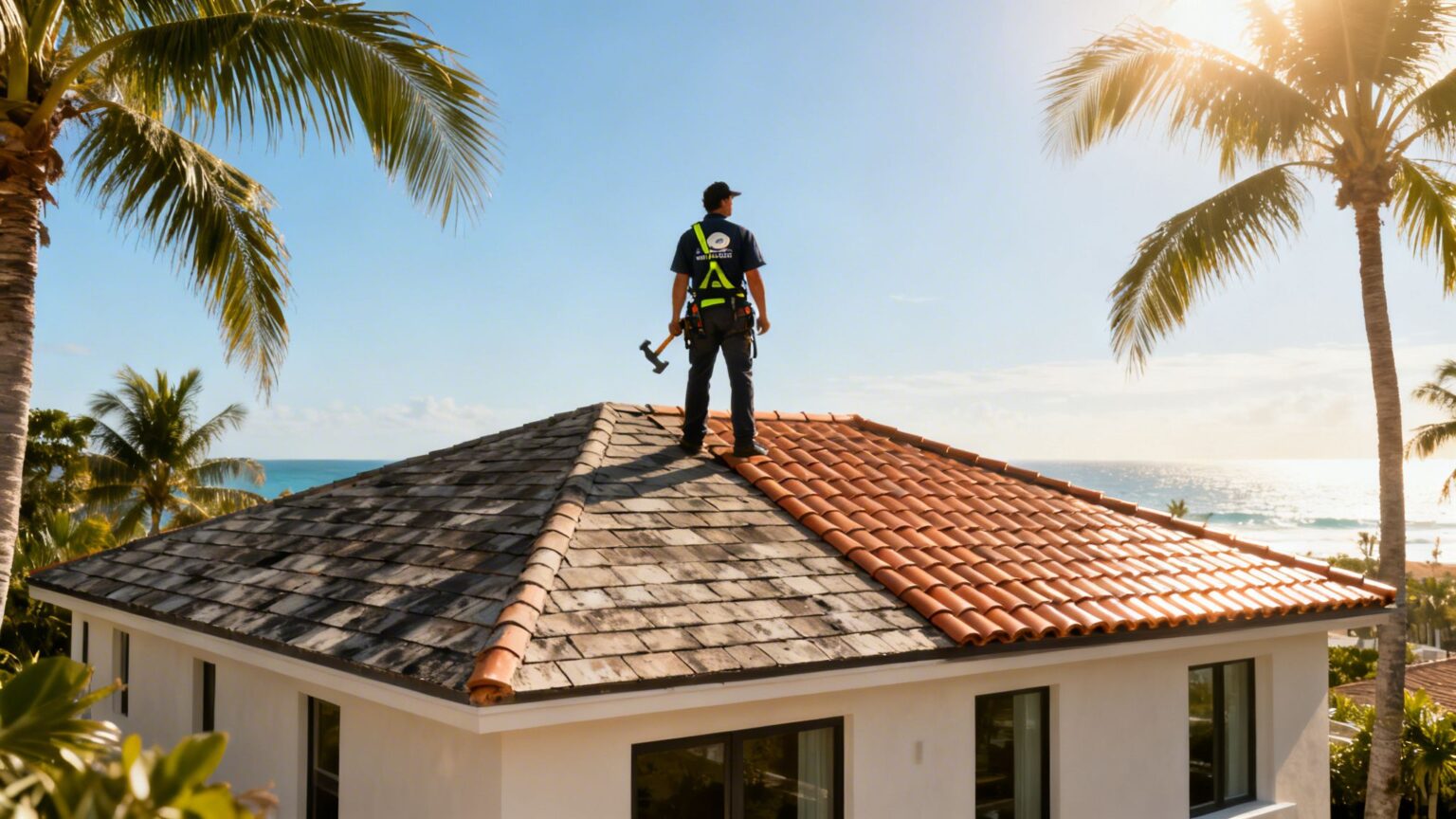
If you find yourself calling for repairs every time a heavy rainstorm hits, your roof is sending a clear message. Recurring problems are the most telling sign that the underlying issues are deeper than what a simple patch can fix.
Finally, don’t forget about the huge benefits that come with a modern roof replacement. A new roof does a lot more than just stop leaks. It’s your chance to upgrade with materials that offer incredible energy efficiency, which can seriously lower your cooling bills. It also gives your home’s curb appeal a massive boost and guarantees you’re in full compliance with today’s strict Florida building codes—a critical factor for keeping your homeowner's insurance happy.
Frequently Asked Questions About Roof Longevity
When it comes to your roof's lifespan, the details can get a little tricky. We get specific questions from South Florida homeowners all the time, so we’ve put together straightforward answers to the most common ones we hear.
Does My Roof Color Affect Its Lifespan?
It absolutely does, especially here in Florida. Think about wearing a black shirt on a sunny day versus a white one. Dark-colored roofs work the same way, absorbing a massive amount of solar heat. This constant baking effect makes asphalt shingles brittle and prone to cracking far sooner than they should.
On the other hand, a lighter-colored or "cool roof" reflects a significant portion of that sunlight. This simple change keeps the roof surface cooler, which not only extends the life of your roofing materials but can also make a real difference in your home's cooling costs.
Can I Install New Shingles Over Old Ones?
While layering new shingles over old ones—a shortcut known as a "roof-over"—might seem like a smart way to save a few dollars, it’s a terrible idea in South Florida. The practice is a recipe for disaster, trapping heat and moisture that quickly rots both the new and old layers.
A roof-over does more than just trap heat; it hides potential rot on the underlying roof deck and adds a dangerous amount of weight. To meet Florida's strict building codes and ensure long-term performance, a complete tear-off is the only correct and safe approach.
What Does My Roof Warranty Actually Cover?
Roof warranties can be confusing because they usually come in two parts: one from the material manufacturer and one from your roofer. The manufacturer's warranty covers defects in the roofing materials themselves—for instance, a bad batch of shingles that fails years ahead of schedule.
The workmanship warranty, however, is what covers the quality of the actual installation. This is a critical distinction, as improper installation or even poor attic ventilation can easily void your manufacturer's warranty. It’s a perfect example of why choosing a certified, reputable contractor is the best way to protect your investment from day one.
A durable roof starts with an expert installation. Paletz Roofing and Inspections has over 30 years of experience protecting South Florida homes. Schedule your free, no-obligation inspection today.