Choosing a roofer in Boca Raton isn't like hiring someone to fix a leaky faucet. It’s a major decision that protects your entire home from South Florida's relentless one-two punch: blistering sun and hurricane-force winds. A truly great local contractor gets this. This guide is your insider's roadmap to finding one you can trust.
Why Your Choice of Roofer in Boca Raton Matters
Hiring a roofer here is one of the most significant investments you'll make in your property. Your roof is the primary shield against our intense sun, torrential downpours, and the constant threat of hurricanes. The right contractor makes sure that shield is strong, up to our notoriously strict local codes, and built to last for decades.
This guide will walk you through every step—from doing your initial homework and vetting professionals to making sense of complex quotes and managing the project. Think of it as advice from a neighbor who’s been in the business for years. We'll share insights from seasoned pros to help you steer clear of the common, costly mistakes many homeowners make.
A Competitive and Growing Market
The demand for skilled roofers in our area is huge, driven by both new construction and the constant need for storm-ready roofs. The South Florida roofing market is incredibly active. In fact, Florida is home to almost 8,800 roofing contractor businesses, and the industry has been growing at an average annual rate of 3.8% between 2021 and 2026. You can dig into more data on the Florida roofing market on IBISWorld.com.
All this growth means you have plenty of options, but it also means you have to be careful. A reputable company like Paletz Roofing and Inspections, which has served the community since 1990, brings a depth of experience that newer outfits just can't offer.
Your goal isn't just to find any roofer; it's to find a long-term partner who is genuinely committed to protecting your investment. The best ones care about your roof's future, not just the initial job.
What Makes a Great Local Contractor
An exceptional Boca Raton roofer does a lot more than just nail down shingles. They act as your guide through a complicated process, making sure your project meets every single requirement and delivers lasting value.
Here’s what really sets a top-tier professional apart:
- Deep Local Knowledge: They live and breathe Boca Raton's specific building codes, permitting hassles, and know exactly which materials stand up to our high-humidity, high-wind environment.
- Proven Experience: They have a long and verifiable track record of successful projects right here in Palm Beach County, complete with local references you can actually call.
- Unwavering Transparency: They provide detailed, itemized quotes that break down every single cost—from materials and labor to permits and cleanup. No surprises.
- Commitment to Quality: They insist on using high-quality materials and follow the manufacturer's installation guidelines to the letter, which is absolutely critical for your warranty to be valid.
This guide is built on the kind of expertise you'd find in established companies that check all these boxes, like the professionals at Paletz Roofing and Inspections.

Choosing Materials That Withstand the Florida Climate
Picking the right material for your Boca Raton roof is one of the biggest decisions you'll make for your home. This isn't just about looks; it’s about choosing your home's first and most important line of defense against our relentless sun, torrential downpours, and, of course, hurricane-force winds.
What you choose directly impacts how long your roof lasts, how much you spend on energy bills, and ultimately, how well your home weathers a major storm. As local roofers, we've seen firsthand how the right material makes all the difference.
Boca Raton Roofing Material Comparison
The three most popular choices you’ll see around Boca are tile, metal, and shingles, and for good reason. Each one brings something different to the table, especially when you factor in our unique climate. For homes with flat or low-sloped sections, modern systems like TPO are also a fantastic, highly effective option.
To make it easier, we’ve put together a quick comparison of the materials we work with every day in South Florida.
| Material Type | Average Lifespan | Hurricane Resistance | Typical Cost Range (per sq ft) | Best For |
|---|---|---|---|---|
| Tile (Clay & Concrete) | 30-50+ years | Very High | $14 – $25 | Homeowners wanting classic Florida aesthetics and top-tier durability. |
| Architectural Shingles | 20-25 years | Good | $7 – $13 | Budget-conscious homeowners who still want reliable performance and style. |
| Metal Roofing | 50-70+ years | Excellent | $10 – $20 | Those prioritizing maximum longevity, storm protection, and energy savings. |
| Flat Roofing (TPO) | 20-30 years | Very High | $9 – $16 | Homes with low-slope or flat roof sections needing seamless water protection. |
Each of these materials has its place, and the "best" one truly depends on your home's architecture, your budget, and your long-term goals as a property owner.
A breakdown of the top contenders:
- Tile (Clay and Concrete): It's the classic South Florida look for a reason. Tile is incredibly tough, standing up to fire and high winds exceptionally well. It also provides fantastic insulation, which you’ll notice on your FPL bill. Concrete tiles give you that look for less, while clay offers a timeless appeal and can easily last 50 years or more.
- Metal Roofing: Once just for commercial buildings, metal is now a top residential choice. It boasts unmatched longevity—often 50+ years—and some of the best hurricane resistance ratings you can get. Plus, its ability to reflect solar heat makes it one of the most energy-efficient options out there.
- Architectural Shingles: Don't confuse today's architectural shingles with the flimsy ones from 30 years ago. Modern versions are far tougher and offer tremendous value. While their lifespan in the Florida sun is shorter than tile or metal (usually 20-25 years), they come in a huge range of styles.
- Flat Roofing Systems: If your home has a flat or low-slope roof, a specialized system like TPO or Modified Bitumen is non-negotiable. These materials create a seamless, waterproof barrier that's critical for preventing leaks where water might otherwise pool. You can discover more about how these modern systems work in our detailed guide.
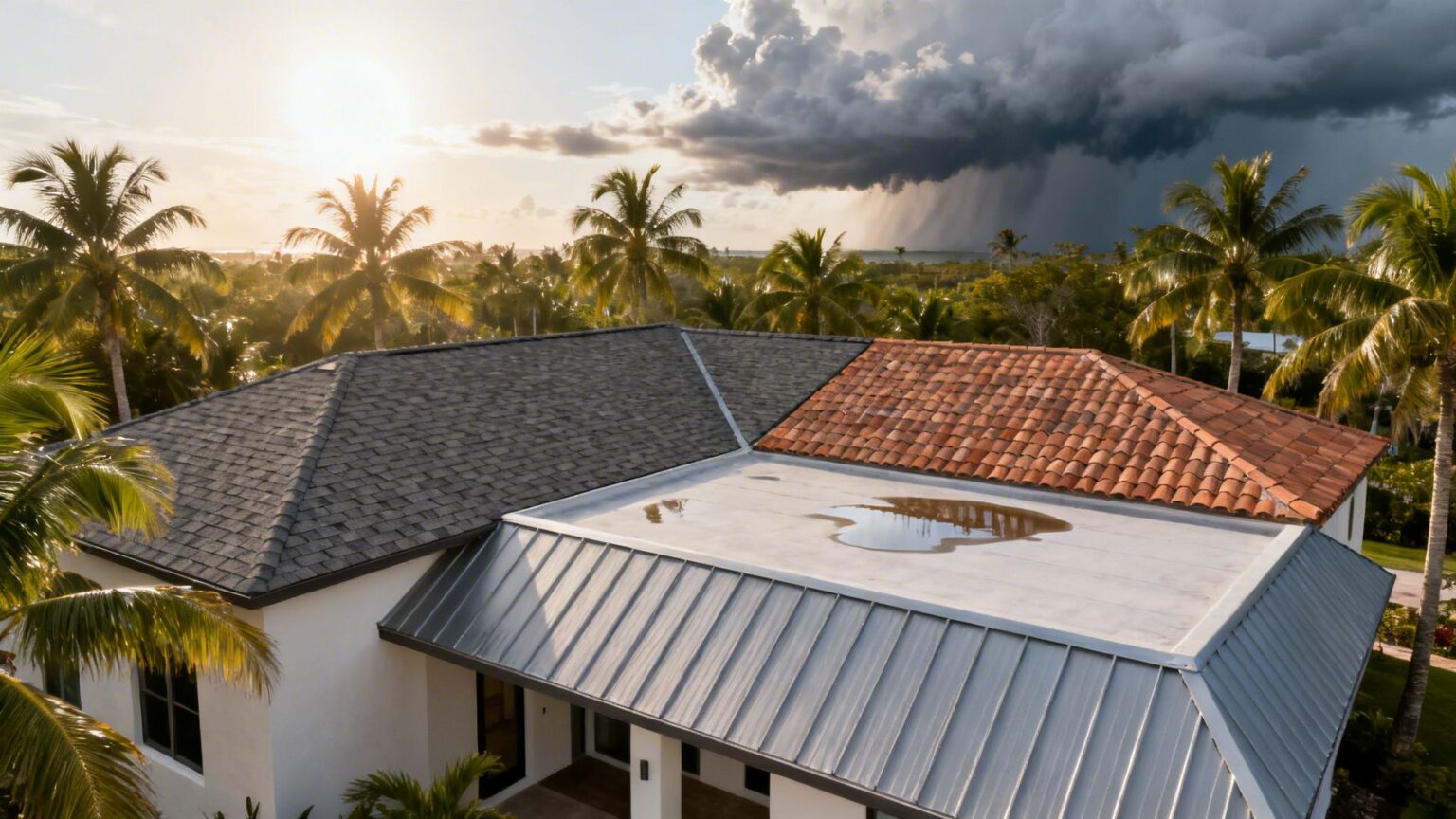
The roofing industry in Florida is massive and continues to expand, which means you have plenty of choices—but it also means you need to choose wisely.

With thousands of companies out there, it’s more important than ever to partner with a contractor who has a long, proven track record right here in our community.
Navigating Florida’s Strict Building Codes
Picking your material is one thing. Making sure it’s installed to meet Florida’s famously strict building codes is another. A seasoned Boca Raton roofer lives and breathes these regulations because a single misstep can make a roof illegal, uninsurable, and unsafe. The 8th Edition of the Florida Building Code is no joke, setting a very high standard for wind resistance and water intrusion.
One of the biggest rules you should know about is Florida's "25% Rule." Put simply, if more than 25% of your roof needs to be repaired, the entire roof section has to be brought up to the current, modern code. This often triggers a full replacement, as it prevents a dangerous patchwork of old and new materials that is guaranteed to fail in a storm.
When selecting materials, it's vital to consider the unique challenges of the Florida climate. Insights into Florida codes for roofing materials and costs can be gained from various local construction guides.
This is exactly where a professional contractor becomes invaluable. At Paletz Roofing, we handle these code requirements every single day. We ensure your project is 100% compliant, protecting you from headaches with inspectors or insurance adjusters down the road.
We’re also seeing shifts in what homeowners want. While traditional asphalt shingles still make up 22% of revenue for residential contractors, there's a huge move toward solar. In fact, 44% of residential roofers now offer solar panel installation. This trend is a perfect match for the long-lasting metal roofs popular in Boca Raton, which provide a durable and energy-efficient base for solar systems. You can read the full research about these roofing industry trends to see where the market is headed.
At the end of the day, the right material installed by a code-compliant expert isn't an expense—it's the best investment you can make in your home's safety and value.
Finding a trustworthy roofing contractor in Boca Raton is about more than just a quick Google search. In a market flooded with options, knowing how to properly vet your candidates is the single most important part of the job. This is where you separate the true professionals from the rest.
Your first step is to build a solid list of names. Start by asking for recommendations from neighbors, friends, and even local community forums—these personal referrals are often the best way to find contractors with a proven track record right here in our area. After that, you can move on to online research, but do it with a critical eye. It can be helpful to understand a few roofing business marketing strategies to see how the most professional companies present themselves online.

The Critical Vetting Steps You Can't Afford to Skip
Once you have a shortlist of three to five companies, it's time to put them to the test. Don't even think about skipping these steps. They are your primary defense against the unqualified or outright fraudulent operators who pop up after every major storm.
Your verification process should always cover these bases:
- Florida State License Verification: Every legitimate roofing contractor must have a current license from the Florida Department of Business and Professional Regulation (DBPR). You can and should verify this yourself directly on the DBPR portal.
- Proof of Full Insurance: The contractor absolutely must carry both General Liability insurance and Workers' Compensation insurance. Ask for the certificates and then call the insurance agent listed to confirm the policies are active.
- Local References and Recent Work: Ask for a list of recent projects they've completed right here in Boca Raton or Palm Beach County. A confident, established contractor will have no problem providing addresses and even phone numbers for you to call.
This isn't optional—it's essential. A company like Paletz Roofing and Inspections, for example, has been providing proof of their state license (active since 1990) and full insurance coverage for decades. A true pro expects you to ask these questions and will have the documentation ready to go.
Never, ever accept a verbal promise about licensing or insurance. Always demand the physical or digital certificates and take a few minutes to verify them yourself. This simple action can save you from a world of financial and legal trouble if an accident happens on your property.
Reading Between the Lines of Online Reviews
Online reviews are a great tool, but you have to know how to read them. A flawless five-star rating across hundreds of reviews can actually be a red flag, as it might hint at manipulated feedback. On the other hand, a couple of negative reviews aren't a deal-breaker if the company has responded professionally and tried to make things right.
Here’s what to look for:
- Patterns in the Feedback: Do multiple reviews bring up the same problem, like poor communication or messy job sites? Or do they consistently praise the crew's professionalism and the project manager's responsiveness?
- Detailed, Specific Stories: Vague, one-line reviews like "Great job!" aren't nearly as helpful as detailed accounts that describe the project, any challenges that came up, and how the contractor handled them.
- How the Company Responds: Pay close attention to how the contractor replies to negative feedback. A defensive or aggressive response is a huge red flag. A professional answer that acknowledges the issue and explains the resolution shows accountability.
Why Calling Local References Is Worth Your Time
This is the step most homeowners skip, but it provides insight you just can't get anywhere else. When you speak to a past client, you get to ask the real questions that reviews don't always answer. Don't just ask if they were "satisfied."
Get specific with your questions:
- "Did the project finish on schedule and stick to the original budget?"
- "How was the crew with daily cleanup and keeping the site safe?"
- "Were there any unexpected issues, and if so, how did the contractor resolve them?"
- "How has the new roof held up, especially during heavy rain?"
The answers you get will paint a much clearer picture of what it’s actually like to work with that roofer. Any contractor with a deep portfolio of successful projects in Boca Raton will have a long list of happy customers ready to vouch for their quality and professionalism. That's the standard of proof you should be looking for.
Decoding Roofing Quotes and Spotting Red Flags
Getting a few roofing quotes in Boca Raton should make your decision easier, but often it does the opposite. You're left staring at a pile of papers filled with jargon and numbers, trying to make an apples-to-apples comparison that feels nearly impossible.
The key to protecting your investment is knowing how to read between the lines. A professional quote isn't just a price—it's a detailed road map for your entire project. It should inspire confidence, not cause confusion. If an estimate feels vague or raises more questions than it answers, consider that your first major warning.
What a Real Roofing Quote Looks Like
A trustworthy estimate is a direct reflection of a contractor's transparency and professionalism. It breaks down every single component of the job, leaving no gray areas for surprise costs or arguments down the road. You should never settle for a quote that doesn't clearly spell out these details.
Here’s what every legitimate proposal ought to include:
- A Detailed Scope of Work: This section needs to state exactly what the crew will do. It should cover everything from the complete tear-off of your old roof to installing new underlayment, flashing, and the final roofing material.
- Specific Material Lists: The quote has to name the manufacturer and exact product line for all major materials—shingles, tiles, underlayment, and vents. A generic phrase like "quality architectural shingles" is a huge red flag and simply isn't good enough.
- Itemized Labor and Material Costs: You need to see a clear breakdown separating the cost of materials from the labor required to install them.
- Permit and Disposal Fees: All related administrative costs must be listed. This includes pulling the required permits from the City of Boca Raton and the price for dumpster rental and debris disposal.
- Comprehensive Warranty Details: The document has to outline both the manufacturer's warranty on the materials and the contractor's own workmanship warranty.
When you get a quote from us at Paletz Roofing, it's meticulously itemized. We believe you have a right to know exactly where every dollar is going. This ensures you feel completely informed and confident before moving forward.
Before you even start calling for quotes, it helps to have a checklist handy. This ensures you're asking the right questions and verifying the most important details for every contractor you consider.
Contractor Vetting Checklist
Use this quick-reference table to systematically evaluate each potential roofer. It will help you spot inconsistencies and make a truly informed decision.
| Verification Step | What to Look For | Red Flag |
|---|---|---|
| State Licensing | A valid, active Florida State Contractor License. Verify it on the DBPR website. | No license number provided, an expired license, or a license under a different name. |
| Insurance Coverage | Proof of both General Liability and Worker's Compensation insurance. Ask for the certificate. | Unwillingness to provide proof of insurance or having only one type of coverage. |
| Detailed Quote | An itemized list of materials (by brand), labor costs, permit fees, and warranty info. | A one-page quote with just a total price. Vague descriptions like "install new roof." |
| Local Presence | A physical office address in the South Florida area and a local phone number. | P.O. box addresses, out-of-state numbers, or unmarked vehicles. |
| Payment Terms | A reasonable deposit (10-30%). Final payment due upon project completion and inspection. | Demands for large upfront cash payments or the full amount before work begins. |
| Professionalism | Clear communication, willingness to answer all questions, no high-pressure tactics. | Rushing you to sign a contract "for a special deal" or avoiding detailed questions. |
This checklist is your first line of defense. A contractor who checks all the right boxes is demonstrating their commitment to professionalism and transparency from the very start.
Why the Cheapest Bid Is Often the Most Expensive
It’s completely understandable to be drawn to the lowest price, but in roofing, a bid that’s significantly lower than the others is a flashing red light. Reputable contractors all have similar overhead for insurance, skilled labor, and quality materials.
A price that drastically undercuts everyone else almost always means one thing: corners are being cut. And those cut corners will end up costing you a fortune down the road.
This might mean they're using cheap, non-compliant materials, hiring uninsured day laborers, or skipping critical steps like replacing old, rusted flashing. The immediate result is a roof that's doomed to fail, leaving you with leaks, expensive water damage, and the heartbreaking cost of paying for a second roof replacement done right.
Red Flags to Watch for in Quotes and Contracts
Your best defense against a nightmare roofing experience is knowing the warning signs. Certain behaviors and vague contract terms are dead giveaways of an unprofessional or, even worse, a predatory contractor. Be ready to walk away the second you spot any of these.
Keep an eye out for these non-negotiable red flags:
- Vague or Ambiguous Language: If the scope of work isn't spelled out or materials aren't listed by brand and model, the contractor has given themselves an open door to swap in cheaper products without you knowing.
- High-Pressure Sales Tactics: A true professional will give you the time and space to review your quotes and make a sound decision. Anyone pushing you to sign on the spot to "lock in a special price" is a major red flag.
- Large Upfront Cash Demands: A small deposit for materials is standard practice, usually around 10-20%. But demanding a huge cash sum upfront is a classic scam tactic. Never pay more than a third of the total project cost before work even begins.
- No Physical Address or License: A legitimate company has a real office, a local phone number, and a verifiable Florida State Contractor License. If they’re operating out of an unmarked van with only a cell number, you need to be extremely cautious.
A detailed, legally sound contract isn't just a formality; it is your single most important form of protection. It ensures that both you and the contractor have a clear, enforceable understanding of the project scope, timeline, and costs.
At the end of the day, a quote from a reputable Boca Raton roofer should make you feel secure, not suspicious. It's a testament to their commitment to quality and transparency, setting the stage for a smooth and successful project from the very first conversation.
Project Execution and Proactive Roof Maintenance
You’ve signed on the dotted line with your Boca Raton roofer. So, what happens now? This is where a contractor’s professionalism (or lack thereof) really shows. A well-run roofing project shouldn't be a chaotic mess; it should be an organized, safe, and surprisingly smooth process from start to finish.
A quality crew doesn't just show up and start ripping off shingles. They begin with careful site preparation. This means protecting your valuable landscaping, pool, and siding with heavy-duty tarps. They’ll also set up a clear safety perimeter and a designated spot for materials and the dumpster, keeping your property as neat and accessible as possible.

What to Expect On-Site
The first major phase is the tear-off. Let's be honest—it's the loud and messy part. The old roofing is stripped all the way down to the wood decking. This is a non-negotiable step because it's the only way to properly inspect the decking for rot or damage that must be fixed before anything new goes on.
Next, the crew installs the underlayment, which is your roof's most important secondary barrier against water. Here in South Florida, that’s almost always a "peel-and-stick" membrane. It seals itself around every single nail, creating a powerful defense against our notorious wind-driven rain. Only then is the primary roofing—tile, shingle, or metal—installed to meet both the manufacturer’s specs and Florida's stringent building codes.
Don't settle for anything less than clear, daily communication from a project manager. You deserve to know what was done each day, be alerted to any surprises like rotted wood, and understand the plan for tomorrow.
Once the new roof is on, the cleanup should be just as impressive. A professional team uses magnetic rollers to find every last stray nail and hauls away all debris, leaving your property looking as good as it did when they arrived, if not better. The job isn’t done until you’ve done a final walk-through with the project manager to confirm you are 100% satisfied.
Shifting to Proactive Roof Maintenance
A new roof is a major investment, but the installation is just the beginning. The secret to getting the full value out of your roof—whether that’s 25 years for architectural shingles or 50+ years for metal—is proactive maintenance. In our brutal Boca Raton climate, a "set it and forget it" mindset can easily slash a roof's lifespan by 20-40%.
Think of it like changing the oil in your car. You don't wait for the engine to seize; you perform routine service to prevent catastrophic failure. Roof maintenance is exactly the same. It’s all about catching small, fixable issues before they turn into huge, expensive emergencies.
This is where a long-term partnership with your roofer becomes invaluable. A company like Paletz Roofing and Inspections doesn't just cash the final check and disappear. We offer ongoing maintenance services designed to protect your investment for decades. For homeowners looking into advanced systems, you can explore our guide on modern materials and their upkeep to see how this commitment pays off.
Your Seasonal Maintenance Checklist
While professional inspections are essential, you can do a lot to protect your roof with simple checks twice a year. We suggest doing one after the spring pollen dump and another after the last of the fall leaves have come down.
Here’s a quick checklist you can safely do from the ground:
- Clean Your Gutters: Make sure your gutters and downspouts are totally clear. Clogged gutters are the #1 cause of water backing up under the edge of your roof.
- Check for Debris: Use binoculars to scan the roof for piles of leaves, pine needles, or branches, paying close attention to the valleys where water needs to flow freely.
- Visually Inspect Shingles or Tiles: Look for any shingles that are cracked, curling, or missing. On a tile roof, scan for any cracked or shifted tiles.
- Examine Flashing: Take a close look at the metal flashing around your chimney, vents, and skylights. You're looking for rust or any spots where the sealant might be cracking or pulling away.
This quick 30-minute check is your first line of defense. If you see anything that looks off, it's time to call a professional for a closer look. This simple habit, paired with the support of a reliable Boca Raton roofer, is the ultimate strategy for protecting your home.
Frequently Asked Questions About Roofing in Boca Raton
When it comes to your roof in South Florida, you've got questions. As a local contractor who's seen it all, we get the same handful of concerns from homeowners and property managers in Boca Raton almost daily. Here are the straight answers you need to make the right call for your property.
How Long Does a Roof Replacement Take in Boca Raton?
For a typical single-family home in our area, you can expect a full roof replacement to take somewhere between 3 to 5 days from the day we start to the final cleanup. Of course, that’s just a ballpark.
A few things can shift that timeline. A complex roof with lots of angles, the material you’ve picked (heavy tile takes more time than architectural shingles), and, of course, our unpredictable South Florida weather can all add a day or two. Any professional roofer worth their salt will give you a clear, realistic schedule before they drive the first nail.
Do I Need a Permit for Roof Repair in Boca Raton?
In almost every case, the answer is a hard yes. Both the City of Boca Raton and Palm Beach County have very clear rules requiring a building permit for most roofing work. This isn’t just for full replacements—it applies to any significant repair, too.
This isn't just about paperwork; it's a critical protection for you. The permit process guarantees that all the work meets the latest Florida Building Code standards. A reputable roofer will never ask you to pull the permit on your own. They handle the entire process, from the application all the way through to the final inspection, as a standard part of their service.
Key Takeaway: If a contractor ever suggests you can "save money" by skipping the permit, that's a massive red flag. It puts you at risk for serious fines and means your roof won’t be officially inspected. That can void your warranties and create a nightmare with your insurance company down the road.
Can I Get an Insurance Discount for a New Roof in Florida?
Absolutely. This is one of the single biggest financial perks of replacing your roof in our state. Most Florida insurance carriers offer substantial discounts on homeowner's insurance premiums when you install a new roof, especially one built to the latest hurricane mitigation standards.
To get that discount, your new roof needs specific features, like strong roof-to-wall attachments (often called hurricane straps) and a sealed roof deck. Once the job is done, you'll need to schedule a Wind Mitigation Inspection. A certified inspector will document these storm-ready features, and you'll submit their report to your insurance company to lock in your savings.
What Is the 25 Percent Rule and How Does It Affect My Roof?
Florida’s "25% Rule" is a piece of the building code every property owner needs to know. Put simply, it says that if more than 25% of any single section of your roof needs to be repaired or replaced within a 12-month period, the entire section has to be brought up to the current, much stricter building code.
What this often means in practice is that a large repair job turns into a full roof replacement. The rule exists to prevent a dangerous patchwork of old and new materials on a single roof plane, which creates weak points that could easily fail during a hurricane. It ensures the whole structure has consistent integrity and is as ready for a storm as possible.
Your roof is your home’s most important line of defense. At Paletz Roofing and Inspections, we bring over 30 years of local experience to every project, ensuring your roof is built to last. For a transparent, detailed quote from a team you can trust, visit us at https://paletzroofing.com.