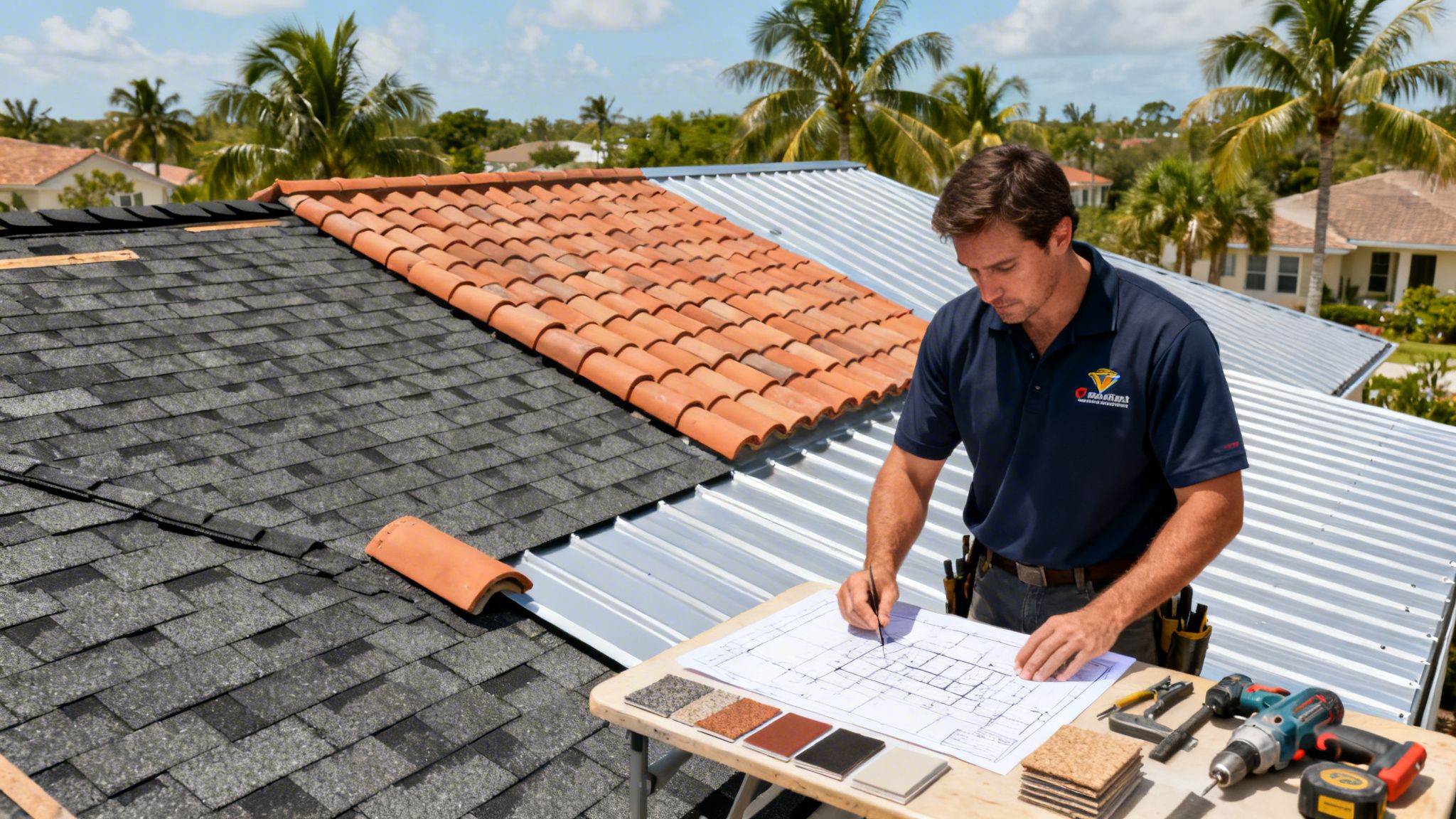
Trying to pin down the cost of a new roof can feel like chasing a moving target, especially when national averages just don’t apply to our local reality. Here in South Florida, roofing isn’t just about keeping the rain out—it’s about defending your home against intense sun, relentless humidity, and the ever-present threat of hurricanes. This creates a completely different pricing structure than you’ll find in other parts of the country.
The bottom line? In South Florida, the average cost for a new roof on a typical home falls somewhere between $16,000 and $28,000. The final price tag hinges on the materials you select, the size and complexity of your roof, and our region’s uniquely strict hurricane-code requirements.
Your Quick Guide to 2026 South Florida Roof Costs
This guide is designed to give homeowners in Miami-Dade, Broward, and Palm Beach counties a clear, realistic look at what to expect in 2026. We’ll break down the numbers so you can build a practical budget and truly understand what drives the total cost of your investment.
Why South Florida Roofing Costs More
While a new roof is a major investment anywhere, several local factors drive costs significantly higher here. National averages you might see online, like those from resources such as NerdWallet.com, often hover around $9,500. That figure just doesn't reflect our market. For a standard 2,000 to 2,400-square-foot home in our area, project totals frequently land between $16,000 and $28,000, and choosing premium materials can push that number even higher.
So, what’s behind the big difference?
- Strict Building Codes: The legacy of Hurricane Andrew means our building codes are among the toughest in the nation. These regulations demand stronger materials, advanced underlayment, and specific installation techniques—like enhanced nailing patterns—to withstand high-velocity winds.
- Material Choices: Tile and metal roofs are incredibly popular for their hurricane resistance and longevity, but they come with a higher upfront cost than the asphalt shingles common in other states. You can see just how impressive these premium materials look in projects like this beautiful tile roof installation.
- Labor and Insurance: Installing a roof to meet Florida’s code requires specialized skills. On top of that, the high cost of liability and workers' compensation insurance for roofers in a hurricane zone is a real factor that gets baked into the labor rates.
- Permitting and Inspections: The permitting process in counties like Broward and Miami-Dade is notoriously thorough. It involves significant fees and a series of mandatory inspections that add both time and expense to the project.
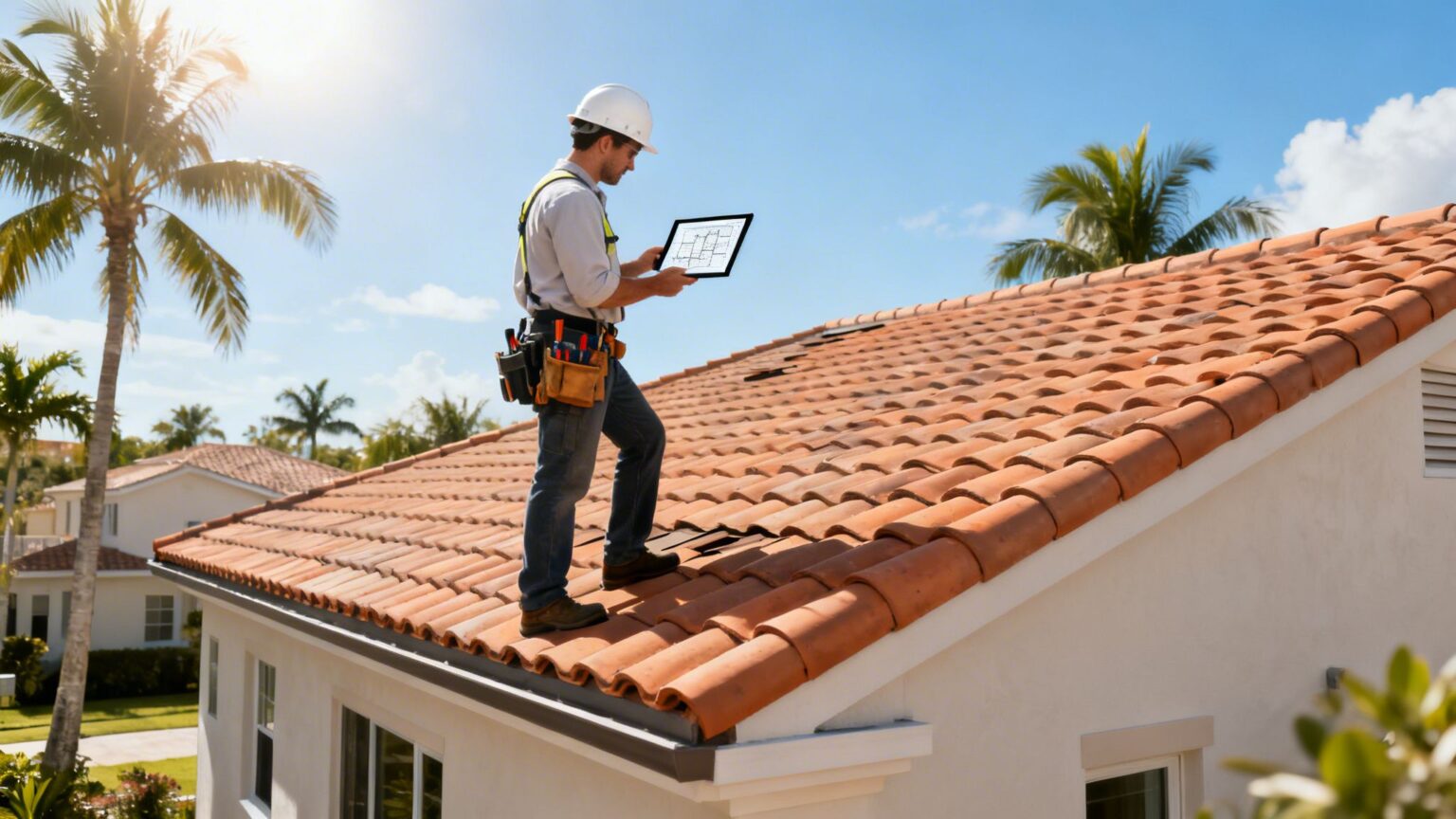
A new roof in South Florida is more than just a home improvement project; it’s an investment in resilience. That higher upfront cost buys you critical peace of mind, knowing your home is fortified against severe weather—a decision that can also lead to significant savings on your homeowners insurance.
To give you a clearer picture, let's look at some estimated costs for a standard home in our area. The table below breaks down the numbers for a typical 2,000 sq. ft. home, showing how material choice is the biggest driver of your final price.
Estimated New Roof Cost in South Florida for 2026
| Roofing Material | Average Cost Range (2,000 sq. ft. Home) | Estimated Lifespan in Florida |
|---|---|---|
| Asphalt Shingles | $12,000 – $20,000 | 15-25 years |
| Metal Roof | $20,000 – $35,000 | 40-60 years |
| Concrete Tile | $22,000 – $40,000 | 30-50+ years |
| Clay Tile | $25,000 – $50,000 | 50-100+ years |
| Flat Roof (TPO/PVC) | $14,000 – $25,000 | 20-30 years |
Keep in mind these figures are estimates for a straightforward replacement. Your final cost will be influenced by other factors we'll explore next, such as the pitch of your roof, the need for structural repairs, and local permit fees.
How Your Choice of Roofing Material Impacts Your Budget
When you ask, "how much does a new roof cost?" the biggest piece of the puzzle is the material you choose. It’s a lot like buying a car—you can go for a reliable, budget-friendly sedan that gets the job done, or you can invest in a high-performance luxury model built for longevity. Both serve the same basic purpose, but the upfront cost, long-term value, and ownership experience are miles apart.
Here in South Florida, that decision is even more critical. Our relentless sun, torrential rains, and hurricane-force winds mean not all roofing materials are created equal. The right choice can give you decades of protection and even lower your FPL bill, while a poor choice might fail much sooner than you’d ever expect. The cost difference between our local market and the national average is stark, driven largely by these material choices and our uniquely tough building codes.

As you can see, South Florida homeowners pay a real premium—our local average is more than double the U.S. average. This just reinforces how important it is to pick the right material that can stand up to our climate and deliver real value.
Asphalt Shingles: The Workhorse Option
Asphalt shingles are hands-down the most common roofing material in the country, covering about 80% of all residential roofs. Their popularity really comes down to one thing: affordability. They make a new roof accessible for many homeowners. Modern architectural shingles have also come a long way, offering better durability and a more dimensional look than the old, flat three-tab styles.
For South Florida, though, their shorter lifespan is a major factor. The constant barrage of UV rays and intense heat makes shingles brittle, causing them to break down much faster than they would in a milder climate.
- Pros: The most affordable option upfront, with a huge variety of colors and styles and a relatively fast installation time.
- Cons: A shorter lifespan in Florida (15-25 years), less resistance to wind uplift during a hurricane, and a tendency to absorb heat, which can drive up your cooling costs.
While they are a budget-friendly choice, you have to weigh that lower initial price against the real possibility of needing another replacement much sooner.
Tile Roofs: The Classic and Durable Choice
Drive through almost any South Florida neighborhood, and the timeless look of tile roofs is impossible to miss. Whether you choose concrete or clay, tile is perfectly suited for our climate and common architectural styles, from classic Mediterranean to sleek modern homes. It’s a true investment in both curb appeal and long-term performance.
Tile roofing is a legacy material for a reason. Its sheer weight and interlocking design give it superior resistance to hurricane-force winds. Plus, its natural thermal mass helps keep your home cooler, which can lead to real savings on your FPL bill over the years.
Yes, the upfront cost is significantly higher than shingles, but the incredible longevity often justifies it. A well-maintained tile roof can easily last 50 years or more—often outliving the homeowner. You can check out our gallery to see how a new tile roof can dramatically boost curb appeal.
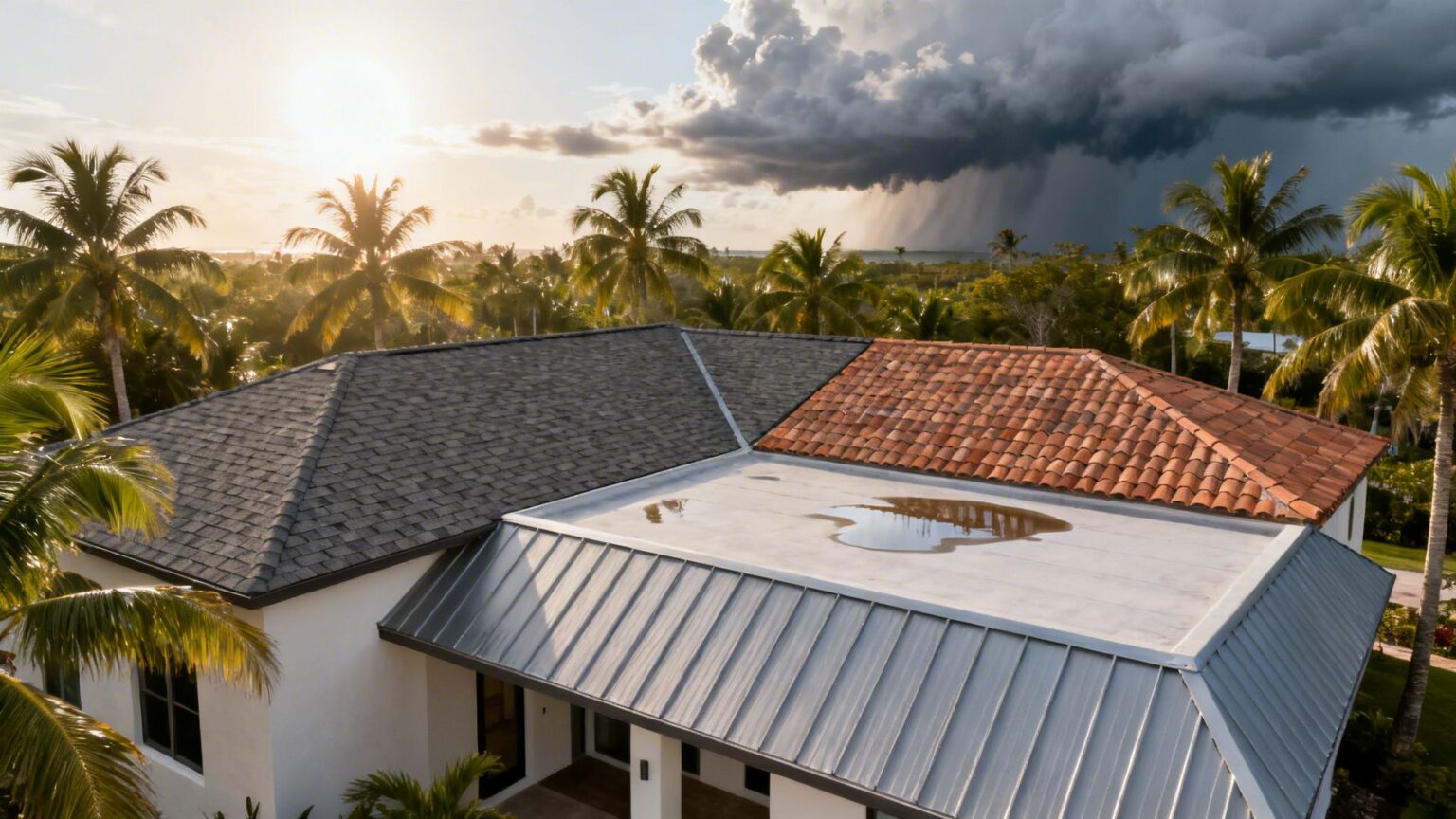
Metal Roofs: The High-Performance Investment
Once considered a purely functional choice for warehouses and commercial buildings, metal roofing has exploded in popularity for homes—and for very good reason. It offers an incredible combination of durability, longevity, and energy efficiency, a perfect trifecta of benefits for any South Florida property. Standing-seam metal roofs are especially effective, with interlocking panels that create an incredibly strong barrier against wind and rain.
Recent market data shows just how popular it’s become. While nationally most people spend between $10,000 and $30,000 on a new roof, demand for metal roofing specifically has soared. Some reports show metal roof costs hitting an average of $17,762 amid a 35% demand increase between 2024 and 2025, largely driven by homeowners looking for better energy efficiency.
Metal's biggest advantages include:
- Exceptional Durability: It’s highly resistant to wind, fire, and impact. A lifespan of 40-60 years is standard.
- Energy Efficiency: Special "cool roof" coatings reflect the sun's rays, which drastically reduces the amount of heat that gets into your attic and lowers your air conditioning costs.
- Low Maintenance: Unlike other materials, metal doesn't crack or erode. It requires very little upkeep over its long life.
Of course, other materials like spray foam offer their own unique benefits. For those exploring options that blend insulation with roofing, it's smart to understand the complete picture of spray foam roofing installation and costs. Ultimately, the best material for your home comes down to balancing your budget, what you want it to look like, and your long-term performance goals.
Uncovering the Hidden Costs in a Roofing Quote
The numbers for materials and labor are just the foundation of your roofing quote—they don’t tell the whole story. To really get a handle on what a new roof costs, you have to look past those main line items and account for a few other critical factors that can seriously move the final price.
It’s a lot like buying a plane ticket. That base fare you see at first is just the starting point. The final cost always includes baggage, seat choices, and other unavoidable fees. A professional roofing estimate is no different; it details several "hidden" but non-negotiable costs. If a quote looks too good to be true, it’s probably because it's missing these crucial elements, leaving you wide open for expensive surprises down the road.

Why Roof Complexity and Pitch Matter
Let's be clear: not all roofs are created equal. The complexity of your roof’s design plays a huge role in labor costs. A simple, low-sloped gable roof is a straightforward and safe job for a crew. But a steep, multi-faceted roof loaded with valleys, dormers, and skylights? That's a different ballgame entirely.
These features drive up the price in a few ways:
- Increased Labor Time: Navigating all those complex angles and cutting materials to fit perfectly takes a lot more time and skill.
- Safety Requirements: Steeper pitches demand extra safety gear, like harnesses and roof jacks. This equipment is essential for safety, but it also slows down the pace of the installation.
- Material Waste: The more intricate the cuts, the more material waste you’ll have. This has to be factored into the total order.
A roof's pitch, or its steepness, is one of the biggest variables. A low-slope roof might be easy to walk on, but a steep 12/12 pitch (a 45-degree angle) is a serious challenge that translates directly to higher labor costs on your estimate.
The Critical Need for a Full Tear-Off
You might hear someone talk about a "roof overlay," which is when new shingles get installed right on top of the old ones. While it sounds like a cheap shortcut, it's a risky move that’s almost always against building codes here in South Florida.
Florida’s tough regulations typically require a full tear-off—the complete removal of all old roofing materials right down to the wood decking. This isn't negotiable for a quality job. It’s the only way a roofer can properly inspect the underlying wood for rot, water damage, or other structural problems. Simply covering up existing issues is a recipe for disaster and much bigger repair bills later on.
A complete tear-off isn't an upsell; it's a fundamental step for ensuring the structural integrity of your new roof. It guarantees that the new system is attached to a solid foundation and that your home is truly protected.
Potential Surprise Wood Decking Repairs
This is the biggest "if" in any roofing project. No one, not even the most experienced roofer, can know the true condition of the wood decking until the old roof is completely gone. Years of slow, hidden leaks can cause the plywood or OSB sheathing to rot and weaken without anyone knowing.
If we find rotted decking, it must be replaced. This is non-negotiable for meeting building codes and providing a solid surface to nail the new roof onto. A reputable contractor, like Paletz Roofing, will always include a per-sheet price for potential wood replacement in the initial estimate. This transparency prevents a major budget shock halfway through the project. You hope it won’t be needed, but planning for it is the mark of a thorough and honest roofer.
Other necessary costs that should always appear on a detailed quote include:
- Permit Fees: Every single city in Miami-Dade, Broward, and Palm Beach has different fees. These are mandatory costs paid directly to the local building department.
- Disposal Costs: Removing and legally disposing of tons of old roofing material involves significant landfill or "dump" fees.
- Hurricane-Rated Underlayment: Florida code demands specific underlayment, like peel-and-stick membranes, that act as a secondary water barrier. This is a crucial component for hurricane protection.
By understanding these often-overlooked costs, you can look at any roofing estimate with confidence. You’ll be able to spot a cheap, incomplete quote from a comprehensive, professional one, making sure you invest in a roof that is safe, compliant, and built to last.
Real-World South Florida Roofing Cost Scenarios
Cost-per-square-foot averages are a good starting point, but they rarely tell the whole story. To really wrap your head around what a new roof costs, it helps to look at real-world estimates where materials, labor, permits, and tear-off all come together.
Let’s break down three common roofing jobs we see right here in South Florida. These examples give you a genuine look at what a transparent, professional quote from a contractor like Paletz Roofing should actually contain.

Scenario 1: The Suburban Ranch Home
First up, a classic 1,800-square-foot single-story ranch in a West Broward suburb like Plantation or Coral Springs. The original shingle roof is about 20 years old and showing its age from decades of sun exposure. The homeowner wants a solid replacement that balances cost and durability, so they've opted for modern architectural shingles.
The roof itself has a simple gable design with a low pitch, making it a fairly straightforward project for an experienced crew.
- Architectural Shingles & Materials: $6,200
- Labor for Installation: $5,500
- Full Tear-Off & Debris Disposal: $2,100
- Permit & Inspection Fees (Broward County): $950
- Hurricane-Rated Underlayment (Peel-and-Stick): $1,250
- Contingency (3 sheets of plywood replacement): $300
Total Estimated Cost: $16,300
What this estimate proves is that even on a simple job, nearly 40% of the total cost has nothing to do with the shingles themselves. The tear-off, high-wind underlayment, and permits are essential, non-negotiable costs for a proper, code-compliant job.
Scenario 2: The Mediterranean-Style HOA Home
Next, we have a 2,500-square-foot, two-story home in a Boca Raton HOA with a Mediterranean aesthetic. Here, the community rules are strict: it has to be a clay tile roof to maintain neighborhood uniformity. This roof is also much more complex, with several valleys, hips, and a significantly steeper pitch.
A job like this is far more labor-intensive and absolutely requires a crew with specialized tile installation skills.
- "S" Profile Clay Tile & Materials: $18,500
- Labor for Installation (specialized tile crew): $15,000
- Full Tear-Off & Debris Disposal: $3,200
- Permit & Inspection Fees (Palm Beach County): $1,400
- Dual-Layer Underlayment System: $2,800
- Skylight Flashing & Replacement: $800
Total Estimated Cost: $41,700
You can see the material cost is a huge factor here. But look closer—the specialized labor needed to properly set this intricate, heavy tile system is almost as expensive as the tile itself. It’s a powerful reminder of why you must hire a contractor with proven tile experience. Seeing how different materials look on real homes can help your decision; check out the beautiful styles in our project photo gallery.
Scenario 3: The Coastal Contemporary Home
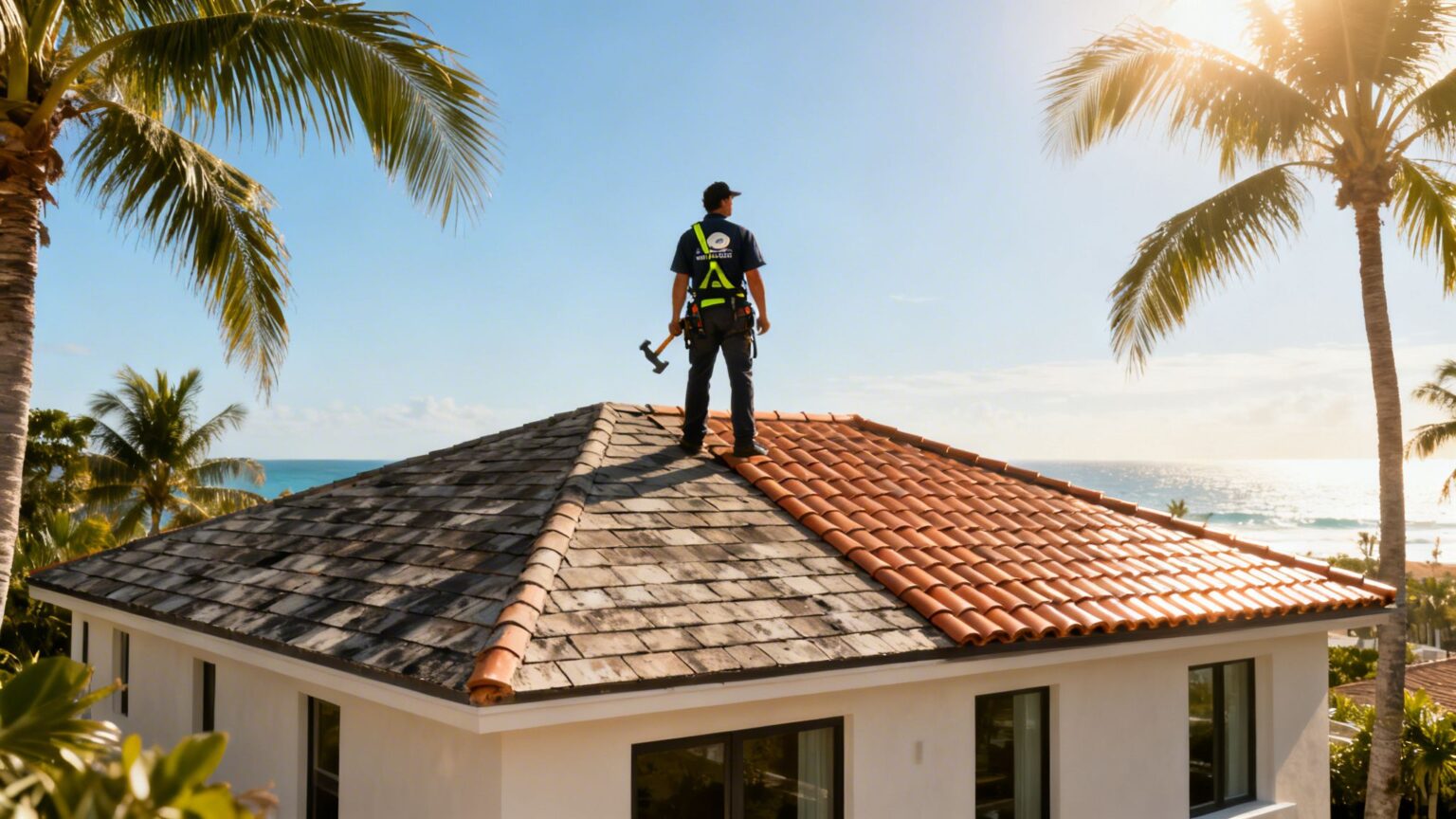
Our final scenario is a 3,000-square-foot contemporary home located near the water in Fort Lauderdale. The owner's top priorities are hurricane resilience and energy efficiency, making a standing-seam metal roof the clear winner. The project has added complexity, with both a pitched main roof and a small flat roof section over a patio.
A standing-seam metal roof is a top-tier investment in coastal resilience. The interlocking panels provide superior wind uplift resistance, and the "cool roof" finish reflects solar radiation, offering significant energy savings that help offset the higher initial price.
Let's look at the numbers for this high-performance system.
- Standing-Seam Metal Panels & Materials: $21,000
- Labor for Installation (metal specialists): $14,500
- Flat Roof Materials (TPO): $2,500
- Full Tear-Off & Debris Disposal: $3,800
- Permit & Inspection Fees (Fort Lauderdale): $1,600
- Custom Flashing for Chimney & Vents: $1,100
Total Estimated Cost: $44,500
These real-world examples make one thing perfectly clear: asking "how much does a roof cost?" has no single answer. Your final price is a detailed calculation based on your home’s specific size, design, location, and the materials you choose to protect it. A quality roofer will always provide an itemized quote so you know exactly where every dollar is going.
How to Navigate Insurance Claims and Financing
Seeing the final estimate for a new roof can be a sobering moment, but that high number doesn't have to mean draining your savings account. Between a potential insurance claim and plenty of financing routes, you have practical pathways to fund this critical investment in your home. The key is understanding how each process works so you can make a clear-headed decision for your budget.
If a storm has damaged your roof, your very first call should be to a trusted local roofer—yes, even before you contact your insurance company. A professional inspection from a team like Paletz Roofing provides the critical documentation you need to build a strong claim from the very beginning. We can identify all storm-related damage—not just the obvious problems—and create a detailed report that gives your insurance adjuster a clear, expert-backed assessment.
Decoding Your Insurance Policy
Here in South Florida, storm damage is the most common reason for a roof replacement, but how your insurance company handles it depends entirely on your specific policy. Taking the time to understand your coverage is non-negotiable when a new roof is on the line. For a deeper look at local policies, you can explore this excellent guide to Homeowners Insurance Florida.
Generally, coverage falls into two main categories, and you absolutely need to know which one you have:
- Replacement Cost Value (RCV): This is the gold standard of coverage. RCV policies cover the full cost to replace your roof with new, similar materials at today's prices, minus your deductible. It does not factor in the age or wear of your old roof.
- Actual Cash Value (ACV): This policy is far less favorable. ACV only pays you for the depreciated value of your old roof. So, if your roof was 15 years old with a 20-year lifespan, an ACV policy would only cover a small fraction of the replacement cost, leaving you to pay the rest.
A third of all roof replacements are due to storm damage. Having a professional roofer document the damage with photos and a detailed report before you file a claim can make the difference between a smooth approval and a frustrating denial.
If your claim gets approved, the insurance company will usually release the funds in two stages. The first check is typically for the ACV amount. The final payment, which covers the remaining cost up to the full replacement value (on an RCV policy), is sent only after the work is done and you provide a final invoice from your roofer.
Exploring Your Financing Options
But what if insurance won't cover your roof because it’s simply old and at the end of its life? Don't worry. You still have several great options to finance the project without having to pay the full amount out of pocket. Many homeowners find that a predictable monthly payment is a much more practical way to handle this large but necessary expense.
Let's look at the most common financing routes available.
Home Equity Line of Credit (HELOC)
A HELOC allows you to borrow against the equity you’ve already built in your home. It functions a bit like a credit card, where you can draw funds as you need them up to a pre-approved limit. Interest rates are often lower than other types of loans, and you only pay interest on the money you actually use.
Personal Loans
An unsecured personal loan from your bank or a local credit union is another popular choice. Because the loan isn't tied to your home's equity, the approval process can be much quicker. Your interest rate will depend on your credit score, but it provides a single lump sum you can use to pay your contractor directly.
Contractor Financing
Many established roofing companies, including Paletz Roofing, have partnered with third-party lenders to offer simple, built-in financing plans. This is often the most straightforward path, as you can apply right through your roofer. These programs are designed specifically for home improvement projects and often feature competitive rates and flexible payment terms, letting you get a safe, new roof over your head without delay.
Your Top Roofing Questions, Answered
Once you start seriously looking at a roof replacement, the practical questions start piling up. It's a major investment, and you need clear, straightforward answers to feel confident about the decisions you're making. We've been doing this in South Florida for a long time, so we've heard them all. Here are the answers to the questions we get asked the most.
How Long Does a Full Roof Replacement Take in Florida?
The timeline for a full replacement really depends on the roof, but let's talk about a typical home. For an average-sized house between 1,500 and 2,500 square feet, a standard asphalt shingle roof replacement usually takes about 2-4 days. That timeline covers everything—the full tear-off of the old roof, any necessary prep work, the installation itself, and the final cleanup.
Things get a bit more involved with other materials. Because they require more specialized, labor-intensive work, a tile or metal roof installation will often extend that timeline to between 5-10 days.
Of course, we're in Florida, and a couple of local factors always play a role:
- Weather Delays: Those sudden afternoon thunderstorms are no joke. For everyone's safety, work has to pause when the weather turns, especially during the rainy season.
- Inspections: The project timeline naturally includes built-in pauses for mandatory county inspections. An official has to sign off on key stages, like the new decking or underlayment, before we can move on to the next step.
A true professional will walk you through a realistic schedule from the get-go, accounting for these possibilities to keep the process as smooth as it can be.
Will My Homeowners Insurance Go Down with a New Roof?
In most cases, the answer is a big yes. From your insurance company's point of view, an old, aging roof is a huge liability. A brand-new roof, especially one installed to meet South Florida's tough high-velocity hurricane zone (HVHZ) codes, is a massive asset that makes your home far less risky to insure.
This drop in risk often translates directly into lower premiums. Florida's insurance carriers know that a modern, code-compliant roof is much more likely to survive a major storm, and they offer significant discounts for that peace of mind.
You have to be proactive to get these savings. As soon as your new roof passes its final inspection, send your insurance agent the final permit documentation and your roofer's paid invoice. This is the proof they need to apply any discounts you’re eligible for.
What Kind of Warranty Should I Expect?
Any quality roofing job should come with two separate warranties. Don't settle for less. Knowing what each one covers is crucial for your long-term protection.
First, there's the manufacturer's warranty. This comes from the company that actually made the materials—think GAF, Owens Corning, or Boral. It covers defects in the shingles, tiles, or metal panels. The length of these warranties can vary wildly, from 25 years for many architectural shingles all the way up to 50 years or even a lifetime for high-end tile and metal systems.
The second warranty, which is just as important, is the roofer's workmanship warranty. This is the contractor’s promise that their actual installation work is done correctly. It protects you from problems caused by installation errors, like faulty flashing or improper fastening that could lead to leaks. Any reputable, established South Florida roofer will proudly stand behind their work with a workmanship warranty of at least 5-10 years.
Can I Stay in My Home During the Roof Replacement?
Yes, you can absolutely stay home. There's almost never a need to check into a hotel or find another place to stay while the work is being done.
That said, it’s important to know what to expect. A roof replacement is a full-blown construction project, and it's going to be loud during the day. You'll hear plenty of hammering, the crew moving around overhead, and the sounds of equipment. There will also be a lot of debris around the outside of your house as the old roof comes off.
A professional crew knows how to manage this. They’ll take care to protect your property by covering your landscaping and AC units with tarps and will do a thorough magnetic sweep for stray nails when they're done. For your own convenience, it's a good idea to move your cars out of the driveway and keep any pets safely inside during work hours.
Navigating the complexities of a roof replacement can feel overwhelming, but you don't have to do it alone. The team at Paletz Roofing and Inspections has been helping South Florida homeowners make confident, informed decisions for over 30 years. If you're ready for a clear, honest assessment and a no-obligation quote, contact us today.