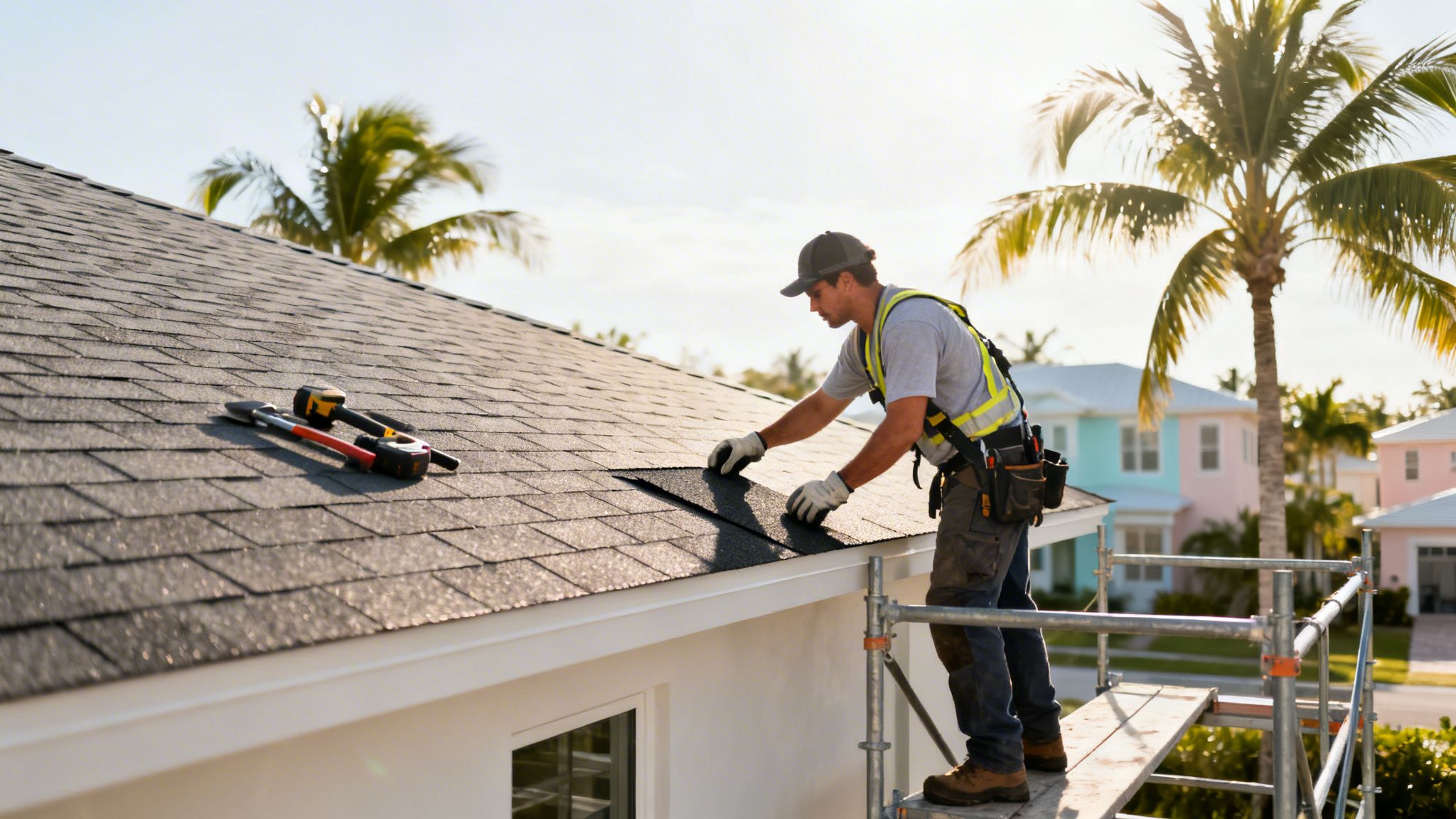
Your roof is the single most important shield protecting your Delray Beach home from South Florida's relentless sun, salty air, and hurricane-force winds. Getting timely roof repair in Delray Beach isn’t just about plugging a leak—it's an essential investment in your property's safety, value, and structural integrity for the long haul.
Why Proactive Roof Repair in Delray Beach Matters

Here in Delray Beach, your roof doesn't get a day off. It’s in a constant fight with a unique mix of coastal elements that wear it down much faster than in other parts of the country. That's why being proactive isn't just a good idea; it's absolutely necessary.
Think of it like taking care of your car. You wouldn't wait for the engine to blow up before you get an oil change, right? In the same way, ignoring a small roofing problem—like one cracked tile, a couple of loose shingles, or a tiny drip in the attic—is a serious gamble. Around here, those "small" issues can turn into total disasters with shocking speed, especially when a tropical storm decides to pay a visit.
The High Stakes of Our Coastal Climate
The threats your roof faces are constant and come from all sides. It’s not just about weathering the occasional big storm; it’s about the slow-and-steady damage that happens every single day.
- Intense UV Radiation: The South Florida sun is absolutely brutal. It literally bakes roofing materials day in and day out, making them brittle, causing cracks, and stripping away their protective layers over time.
- Corrosive Salt Air: Living by the coast is beautiful, but that salty air is constantly working to corrode every metal part of your roof. Your flashing, fasteners, and gutters are all under attack, creating weak spots where water can sneak in.
- Hurricane-Force Winds: From afternoon squalls to major hurricanes, powerful winds put tremendous strain on your roof. They can lift shingles and tiles right off, creating gaping holes for torrential rain to pour through.
This unforgiving environment explains why the Southeast U.S. accounts for a massive 27.65% of the country's entire roofing market revenue, with storm activity being the main driver. Florida is ground zero, leading the nation with over 25,000 licensed roofers—more than any other state. That number is a direct response to our area's vulnerability to major storms, which have put roofs across Palm Beach County to the test time and again since experts like Paletz Roofing and Inspections first got licensed back in 1990.
To put it in perspective, we've created a quick guide to help you spot the most common signs of roof damage here in South Florida and understand what they mean.
Quick Guide to Roof Damage in Delray Beach
| Damage Sign | What It Means | Urgency Level |
|---|---|---|
| Curling or Missing Shingles | The adhesive has failed, often due to age and heat. The roof is exposed to water. | High – Address before the next rain. |
| Cracked or Broken Tiles | Usually caused by impact (debris) or thermal stress. A direct entry point for water. | High – A broken tile is an open door. |
| Dark Streaks / Algae Growth | Trapped moisture and organic growth are eating away at your roofing materials. | Medium – Needs cleaning and inspection. |
| Granules in Gutters | Your shingles are at the end of their life; their protective top layer is washing away. | Medium – Start planning for replacement. |
| Rust on Flashing/Vents | The salt air is corroding the metal, compromising these critical waterproof seals. | High – Weak flashing is a common leak source. |
| Water Stains on Ceiling | You have an active leak that has already penetrated the roof deck and insulation. | Critical – Call a professional immediately. |
Spotting these signs early is the key to preventing a small issue from becoming a catastrophe. A proactive approach is always less expensive than a reactive one.
A tiny, unnoticed leak might seem like no big deal, but it can silently soak your insulation, rot the wooden structure of your roof deck, and spawn dangerous mold inside your home. A smart repair today can save you from a massive, costly, and disruptive restoration project down the road.
From Small Fix to Lasting Solution
Because of these unique challenges, the kind of roof repair Delray Beach homeowners need is highly specialized. A quick patch might stop a leak for a month or two, but it's not going to hold up when the next big storm rolls through. A real, long-term solution demands a roofer who has a deep understanding of our local building codes, knows how different materials perform in a salty, humid climate, and has mastered the right installation techniques.
This guide is here to give you the knowledge you need to protect your biggest asset. We'll walk you through how to spot damage, figure out if you need a repair or a full replacement, and how to pick a contractor who has proven experience right here in our community. By the end, you’ll see how being proactive keeps your home a safe harbor, not a growing liability. You can also see what our finished work looks like in our project gallery.
Identifying Common Causes of Roof Damage in South Florida
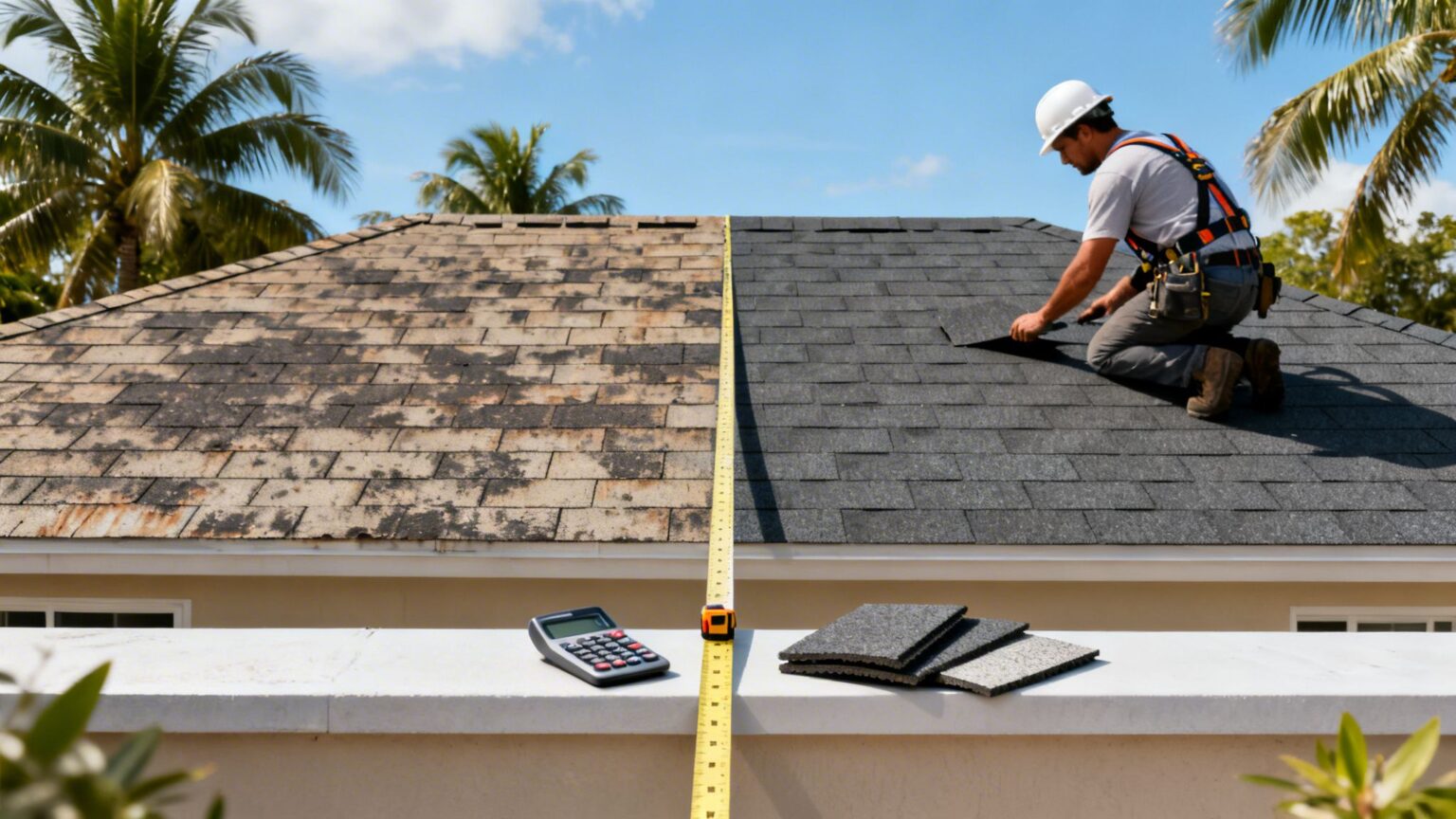
A roof in Delray Beach isn’t just sitting there; it's in a constant fight. It’s not just the big hurricanes we all watch on the news, but a daily grind of sun, salt, and water that team up to break down even the toughest roofing materials. Knowing these specific local threats is the first step in protecting your home and spotting the need for a timely roof repair in Delray Beach.
Imagine leaving a nice leather jacket outside all year long. At first, it’s fine. But the relentless sun slowly cooks the material, making it dry and brittle. Then, the daily humidity and sudden downpours soak it, causing it to swell and weaken. This cycle of baking and soaking will eventually make the leather crack, warp, and fall apart. Your roof goes through a similar, destructive process every single day here.
The Trio of Trouble: UV Rays, Salt, and Humidity
The combination of intense sunlight, corrosive salt air, and high humidity is a uniquely aggressive cocktail for roofing materials. Each of these elements causes its own specific kind of damage, but together, they speed up the aging process in a big way.
- Brutal UV Radiation: South Florida's sun is no joke. This constant blast of ultraviolet (UV) rays superheats your roof, causing asphalt shingles to shed their protective granules, turn brittle, and curl up at the edges. On tile roofs, this constant thermal stress leads to tiny hairline cracks that only get bigger over time.
- Corrosive Salt-Laden Air: Living this close to the Atlantic means your roof is always being coated in a fine mist of salty air. This saline moisture is incredibly corrosive to any metal parts—like the fasteners holding your tiles down, the flashing around chimneys and vents, and even the metal panels themselves. Once rust starts, those critical waterproof seals are compromised, creating the perfect entry points for leaks.
- High Humidity and Torrential Rain: Our tropical climate guarantees high humidity. This constant dampness is a breeding ground for algae and mildew, which can trap even more moisture against the roof surface and literally eat away at the materials. When our classic afternoon downpours hit, all that water is ready to find its way into any weak spot caused by the sun or salt.
This relentless environmental stress is exactly why a small problem here can become a huge one so fast. A single cracked tile isn't just a crack; it's an open door for gallons of water during the next thunderstorm.
Translating Causes into Visible Damage
So, how does all this environmental abuse actually show up on your roof? When you walk around your property, especially after a storm, you can see the direct results of this wear and tear. Knowing what you're looking for is absolutely key to catching problems before they get out of hand.
A small, dark streak on your shingles might look like a simple cosmetic stain, but it's often a sign of algae growth. This algae feeds on the limestone filler in the shingles, slowly breaking them down and cutting your roof's lifespan short. Dealing with it early prevents premature failure.
Keep a close eye out for these specific signs, which are common red flags for homeowners in our area:
- Curled or Buckling Shingles: This is a classic symptom of heat and moisture damage. The shingle is physically shrinking and lifting, which breaks the waterproof seal and makes it easy for a strong wind to rip it right off.
- Cracked or Slipped Tiles: The intense sun can cause stress fractures in both clay and concrete tiles. Once a tile is cracked, it soaks up water like a sponge, and strong winds can cause it to shift or slide out of place, exposing the critical underlayment beneath.
- Rusted Flashing or Fasteners: Take a look at the metal strips around your chimney, vents, and in the valleys of your roof. If you spot orange or brown rust stains, it means the metal is corroding and its ability to keep water out is failing.
- Granules in Your Gutters: For anyone with a shingle roof, finding a pile of sand-like granules in your gutters is a major warning. Those granules are the shingles' primary shield against UV rays; losing them means your roof is getting cooked and deteriorating fast.
Recognizing these issues is the foundation of proactive maintenance. To help you see what we see in the field, you can explore examples of common roof damage. Catching these warning signs and calling in a professional is what separates a minor repair from a major—and much more expensive—replacement.
Deciding Between Roof Repair and Full Replacement
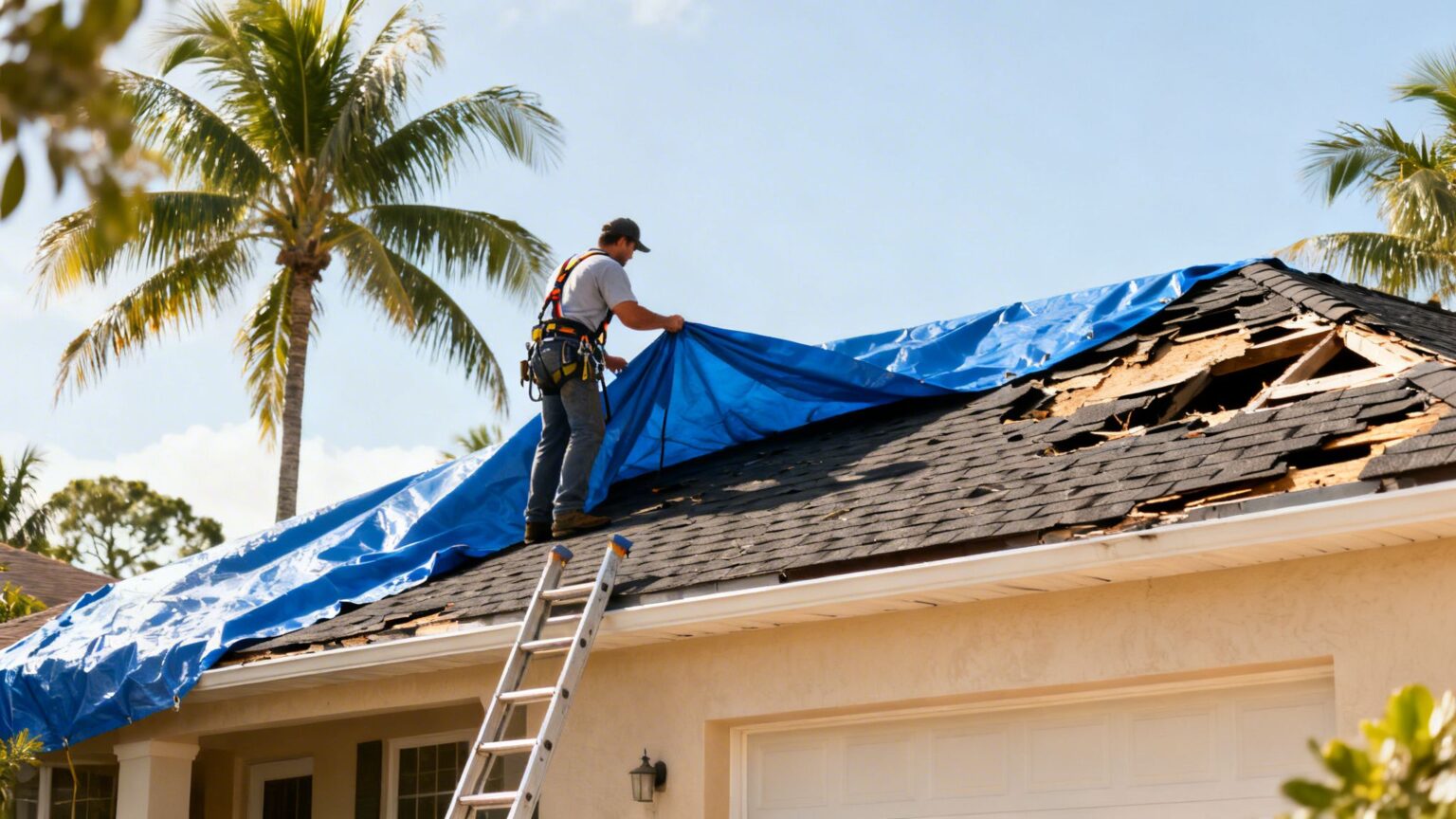
It's the question every homeowner dreads when a roof problem pops up: do you patch the issue, or is it time to invest in a whole new roof? Making the right call for your Delray Beach home means balancing short-term costs against long-term security. The decision isn't always cut and dry, but a few key factors can clear things up fast.
Think of it like an aging car. If it has low mileage and just needs new brake pads, a simple repair is a no-brainer. But if that car is 20 years old with a shot transmission and a rusty frame, you're just throwing good money after bad. A new car gives you reliability and peace of mind. Your roof is exactly the same.
This decision tree can help you start to map out your options based on common issues like visible damage, age, and active leaks.

As you can see, specific triggers like widespread damage or a roof hitting its expiration date often point straight to replacement. On the other hand, isolated issues are usually perfect candidates for a straightforward repair.
Assess the Age of Your Roof
The first and most important number you need is your roof's age. Different materials have very different lifespans, especially under the brutal South Florida sun.
- Asphalt Shingles: Typically last 15-25 years. If your shingle roof is in its late teens and showing problems all over, replacement is almost always the smarter financial move.
- Concrete or Clay Tiles: Can last an impressive 30-50+ years. The tiles themselves are tough, but it's the underlayment beneath them that's the real weak link—it almost always fails first.
- Metal Roofs: Known for their incredible longevity, often lasting 40-70 years. Age is less of a concern here unless you're seeing major corrosion or widespread fastener failure.
A roof nearing the end of its service life is just like that high-mileage car. Fix one leak today, and you can bet another one is right around the corner. Pouring money into constant fixes on an old system is a losing game.
If your roof is more than 75% through its expected lifespan and needs a major repair, a full replacement is almost always the smarter long-term investment. It resets the clock on your roof’s health and adds significant value to your property.
Evaluate the Scope of the Damage
Next, you have to get a handle on the extent of the problem. Is it a small, contained issue, or is it a symptom of a larger, systemic failure? A professional inspection is non-negotiable here, but you can get a pretty good idea just by looking from the ground.
A few missing shingles torn off in a storm is a classic case for a simple roof repair in Delray Beach. A good roofer can easily pop in new shingles and check the surrounding area to make sure everything is sealed up tight. The same goes for a single cracked tile—it can be swapped out without disturbing the whole roof.
But if you’re seeing problems scattered across different parts of the roof—like curling shingles on one side, a leak in another, and algae streaks everywhere—you're probably looking at systemic failure. These widespread issues are a red flag that the entire roofing system is compromised. Patching one area is like putting a Band-Aid on a broken arm; it does nothing to fix the real problem.
When you're up against significant damage, one of the first things to do is get a clear picture by understanding roof repair vs. replacement costs to make the most economical choice for the long haul.
The 25% Rule and Future Costs
A handy rule of thumb many roofing pros use is the "25% Rule." If the area needing repair is more than 25% of your total roof surface, replacement often becomes the more logical option. The same is true if the repair bill climbs to more than 25-30% of what a full replacement would cost.
This is especially relevant in Florida, where new building codes can make large-scale repairs more complex and expensive than they used to be.
You also have to think about your future plans. If you're planning to sell your home in the next few years, a brand-new roof is a massive selling point that boosts your home's value and gets buyers excited. On the flip side, a patched-up old roof is a huge red flag for home inspectors and can become a major sticking point during negotiations.
A professional roof inspection gives you the hard data you need to confidently choose between a targeted repair and a full replacement, making sure your investment protects your home for many years to come.
Of course. Here is the rewritten section, crafted to match the human-written style of the provided examples.
Understanding Roof Repair Costs and Timelines
When your roof is in trouble, two questions hit you immediately: "How much is this going to cost?" and "How long will this take?" Getting a handle on the budget and schedule for a roof repair in Delray Beach is crucial, because the answers can swing wildly depending on what’s actually happening up there.
Think of it like a mechanic's quote. A simple fix is like getting new brake pads—fairly quick and predictable. But if the mechanic finds a bigger problem, like a cracked axle, the cost and time involved change completely. The same goes for your roof. Fixing a few loose shingles is one thing; discovering rotted wood decking underneath a whole section of tile is another job entirely.
Breaking Down the Cost of Roof Repair
Several key factors drive the final price of any repair. The big three are the roofing material itself, how bad the damage is, and how difficult your roof is to work on.
- Materials: The cost of materials runs the gamut. Asphalt shingles are usually the most budget-friendly, metal is in the middle, and high-end clay or concrete tiles carry the highest price tag.
- Labor: The complexity and risk involved directly influence labor costs. A crew needs more time and extensive safety gear for a steep, two-story roof than for a simple, low-slope ranch-style home.
- Permit Fees: In Delray Beach, most structural repairs legally require a permit. These fees are a standard part of any legitimate roofer's estimate and ensure the work meets our strict local building codes designed for hurricane protection.
- Damage Scope: There’s a world of difference between replacing a few missing shingles and repairing a large patch of storm-damaged tile that also needs a new waterproof underlayment.
It’s also important to remember that the South Florida roofing market is incredibly active. Residential projects make up nearly 60% of the U.S. roofing market, and that share is growing fast right here, with a forecasted 7.35% annual growth through 2030. After a major storm season—like in 2024, when winds over 130 mph damaged up to 20% of local roofs—repair demand can spike by as much as 35% in the Palm Beach area.
While a minor shingle fix might only be a few hundred dollars, partial roof replacements now average around $8,500, and material prices keep climbing. For a deeper look at these numbers, you can explore detailed roofing statistics.
Typical Cost and Timeline Ranges by Roof Type
To give you a clearer picture, here are some ballpark figures for common repairs in our area. Keep in mind, these are just estimates. The only way to get a firm price is through a professional on-site inspection.
| Roof Type | Common Repair | Estimated Cost Range* | Typical Timeline |
|---|---|---|---|
| Asphalt Shingle | Replacing missing/damaged shingles (10'x10' area) | $450 – $1,200 | 1 – 4 hours |
| Concrete/Clay Tile | Replacing broken or slipped tiles (5-10 tiles) | $500 – $1,500 | 2 – 5 hours |
| Metal Roof | Sealing popped screws and replacing a panel | $600 – $2,000 | 3 – 6 hours |
| Flat Roof | Patching a puncture or seam separation (small area) | $400 – $1,000 | 2 – 4 hours |
| *Costs are estimates and vary based on damage severity, roof accessibility, and current material prices. |
Being proactive always costs less than reacting to an emergency. A scheduled repair for a handful of cracked tiles might run you $600. But if you wait until that small issue causes a major leak, you could be looking at thousands more for interior water damage restoration, mold remediation, and a much steeper emergency repair bill.
Don't let a small issue turn into a financial catastrophe. Addressing a minor roof problem today is the single best way to avoid a four or five-figure bill tomorrow. With material costs expected to rise 3-5% higher by 2026, delaying a repair means you will almost certainly pay more later.
The bottom line is this: the only way to know your true cost is to get a detailed, itemized estimate from a licensed and insured local roofer. A trustworthy quote will clearly break down every charge for materials, labor, and permits. This transparency not only lets you compare apples to apples but also ensures you’re only paying for the work your Delray Beach home actually needs.
How to Choose the Right Delray Beach Roofing Contractor

When your roof is on the line, picking the right contractor is everything. A great roofer is a partner who protects your home and your investment. A bad one? They can leave you with shoddy work, worthless warranties, and even serious legal headaches.
Think of it like hiring a surgeon for a critical operation. You wouldn’t just go with the cheapest option you could find. You’d demand experience, qualifications, and a proven track record. The same level of care is non-negotiable for a roof repair in Delray Beach, where our intense weather leaves zero room for error.
Here’s a straightforward checklist to help you find a skilled, trustworthy, and reliable roofing professional in South Florida.
Verify Their Credentials Are Rock Solid
Before you even get into the details of your roof damage, the very first thing you need to do is confirm the contractor is licensed and insured to work in Florida. This is a simple but critical step that weeds out the uninsured, unqualified, and downright fraudulent operators.
- Florida State License: Every single legitimate roofer must hold a state-issued license. You should personally verify their license number on the Florida Department of Business and Professional Regulation (DBPR) website. This proves they’ve met the state’s minimum standards for competency.
- Comprehensive Insurance: Proper insurance isn't just for the roofer—it’s for your protection. When selecting a Delray Beach roofing contractor, verifying their coverage, such as Florida Contractor Liability Insurance, is crucial for your protection against unforeseen issues. The contractor must carry both general liability and, most importantly, workers' compensation insurance.
Here’s why workers' comp is so vital: without it, if a crew member gets injured on your property, you could be held liable for their medical bills. Always ask for their insurance certificates and take the extra five minutes to call the insurance company and confirm the policies are active.
Confirm Deep Local Experience
Roofing in Delray Beach is a world away from roofing in Denver or Detroit. A roofer needs proven, hands-on experience with South Florida’s specific challenges—from hurricane-force winds and corrosive salt air to our relentless UV exposure.
Look for a company with a long history right here in Palm Beach County. A contractor who has been in business for decades, like Paletz Roofing and Inspections, has a reputation to uphold and understands how to navigate our unique building codes, especially the High-Velocity Hurricane Zone (HVHZ) requirements. They know which materials truly last here and which ones fail.
A roofer’s local reputation is everything. Check their reviews not just on their website, but on third-party sites like Google, Yelp, and the Better Business Bureau (BBB). A pattern of positive feedback about communication, timeliness, and quality is a great sign.
Scrutinize the Estimate and Contract
A professional estimate is far more than just a price tag; it’s a detailed blueprint for the entire job. Steer clear of any roofer who scribbles a number on the back of a business card or gives you a vague, verbal "deal."
A proper estimate should clearly itemize everything:
- The exact scope of the repair work
- A breakdown of material and labor costs
- The specific brands and types of materials to be used
- Projected start and completion dates
- Details on payment schedules
- Warranty information for both labor and materials
Reading the fine print is absolutely essential. A professional will gladly walk you through every line of the contract and answer your questions without making you feel pressured. For a better understanding of what goes into a professional evaluation, check out our guide to what a thorough roof inspection involves.

Spot the Red Flags Immediately
Knowing what to look for in a good contractor is only half the battle. You also have to know the warning signs of a bad one. Certain behaviors are major red flags that should send you running in the other direction.
Be wary of any contractor who:
- Pressures you for a same-day decision. A reputable roofer knows this is a big decision and will give you the space to review their proposal.
- Asks for a large cash deposit upfront. While a small deposit (typically 10-15%) is standard, a huge upfront payment or a demand for cash only is a classic warning sign.
- Offers to "waive" your insurance deductible. This practice is not only unethical, it’s also illegal in Florida and a clear sign you’re dealing with a shady operator.
- Lacks a physical office or local phone number. "Storm chasers" are infamous for flooding areas after a hurricane, doing cheap work, and disappearing as soon as the checks clear, leaving you with no one to call when problems arise.
By following this checklist, you can cut through the noise and choose a dependable local expert. Taking a little extra time to properly vet your contractor is the best way to ensure your roof repair is done right the first time, giving you lasting peace of mind.
Answering Your Top Roof Repair Questions
When your roof is in trouble, you need straight answers, and you need them fast. This is especially true here in South Florida, where the weather constantly puts our homes to the test. We’ve gathered the most common questions we hear about roof repair in Delray Beach to give you the clear, no-nonsense advice you need to protect your property.
How Often Should I Have My Roof Inspected in Delray Beach?
In South Florida's relentless climate, you absolutely should get a professional roof inspection at least once a year. It’s also a must-do after any major hurricane or tropical storm, even if the roof looks fine from the ground.
The nonstop assault of intense sun, torrential rain, and high winds creates subtle wear and tear that can quickly escalate. An annual inspection from a certified roofer will catch those small problems—like a few cracked tiles, loose shingles, or failing flashing—before they turn into catastrophic leaks and expensive interior damage. Think of it as preventative care for your home; it saves a massive amount of money and stress down the road.
Can I Get My Roof Repaired During the Rainy Season?
Yes, you can and you should. A common myth is that all roofing work has to stop during our rainy season, which runs from about May through October. The reality is that any professional roofer in South Florida is an expert at working with our unique weather patterns.
Crews live by the forecast. They work in smaller, manageable sections to make sure your roof is never left exposed overnight. They also use quick-setting materials and temporary waterproofing techniques to handle those surprise afternoon showers.
Putting off a necessary repair until the "dry" season is a huge gamble. A small, active leak can quickly lead to widespread structural rot and dangerous mold growth inside your attic and walls. A reputable roofer has the skills to get your repair done safely and correctly, rain or shine.
Will My Homeowner's Insurance Cover My Roof Repair?
This is the big question, and the answer always comes down to what caused the damage. Standard homeowner’s insurance policies are designed to cover damage from sudden, unexpected events.
Here’s how it usually breaks down:
- Usually Covered: Damage from what insurers call "Acts of God" or other sudden events. This means damage from hurricanes, tropical storms, hail, trees falling on your house, or fires.
- Usually Not Covered: Damage that happens over time because of neglect, a lack of maintenance, or just old age. If your roof is simply past its warranty, insurance won't pay for a new one.
It is critical to document any damage immediately with clear photos and contact your insurance company right away to get the claims process started. An experienced local roofer can provide the detailed damage assessment report you'll need to back up your claim and successfully navigate the insurance maze.
What Are the Benefits of Using Metal Roofing in Florida?
Metal roofing has become incredibly popular across Delray Beach and all of South Florida for some very good reasons. While the initial cost is higher than asphalt shingles, the long-term advantages make it a smart choice for our demanding climate.
Key Advantages of Metal Roofing:
- Superior Wind Resistance: This is probably the single biggest plus in our hurricane-prone region. Many metal roofing systems are engineered to withstand winds of 140 mph or more, giving you unmatched peace of mind when a storm is brewing.
- Exceptional Durability and Lifespan: A properly installed metal roof can easily last 50 years or more. That's two or even three times longer than a standard shingle roof, meaning it’s very likely the last roof you’ll ever have to buy for your home.
- Outstanding Energy Efficiency: Metal roofs are highly reflective, meaning they bounce solar heat away from your house instead of absorbing it like a dark shingle roof does. This "cool roof" technology takes a huge load off your air conditioner and can lead to real savings on your energy bills.
When you add up the long-term savings, incredible storm protection, and sheer durability, a metal roof becomes a fantastic investment for any Florida homeowner. Thinking about the right material is a key part of any roof repair in Delray Beach, whether it’s for a small patch or a full replacement.
When it comes to protecting your home from the demanding South Florida weather, you need a partner you can trust. For over 30 years, Paletz Roofing and Inspections has been the go-to expert for reliable, high-quality roofing services in Delray Beach and beyond. Whether you need an emergency repair, a detailed inspection, or a full roof replacement, our licensed and insured team is ready to help. Don't wait for a small problem to become a disaster—contact us today for your free, no-obligation estimate