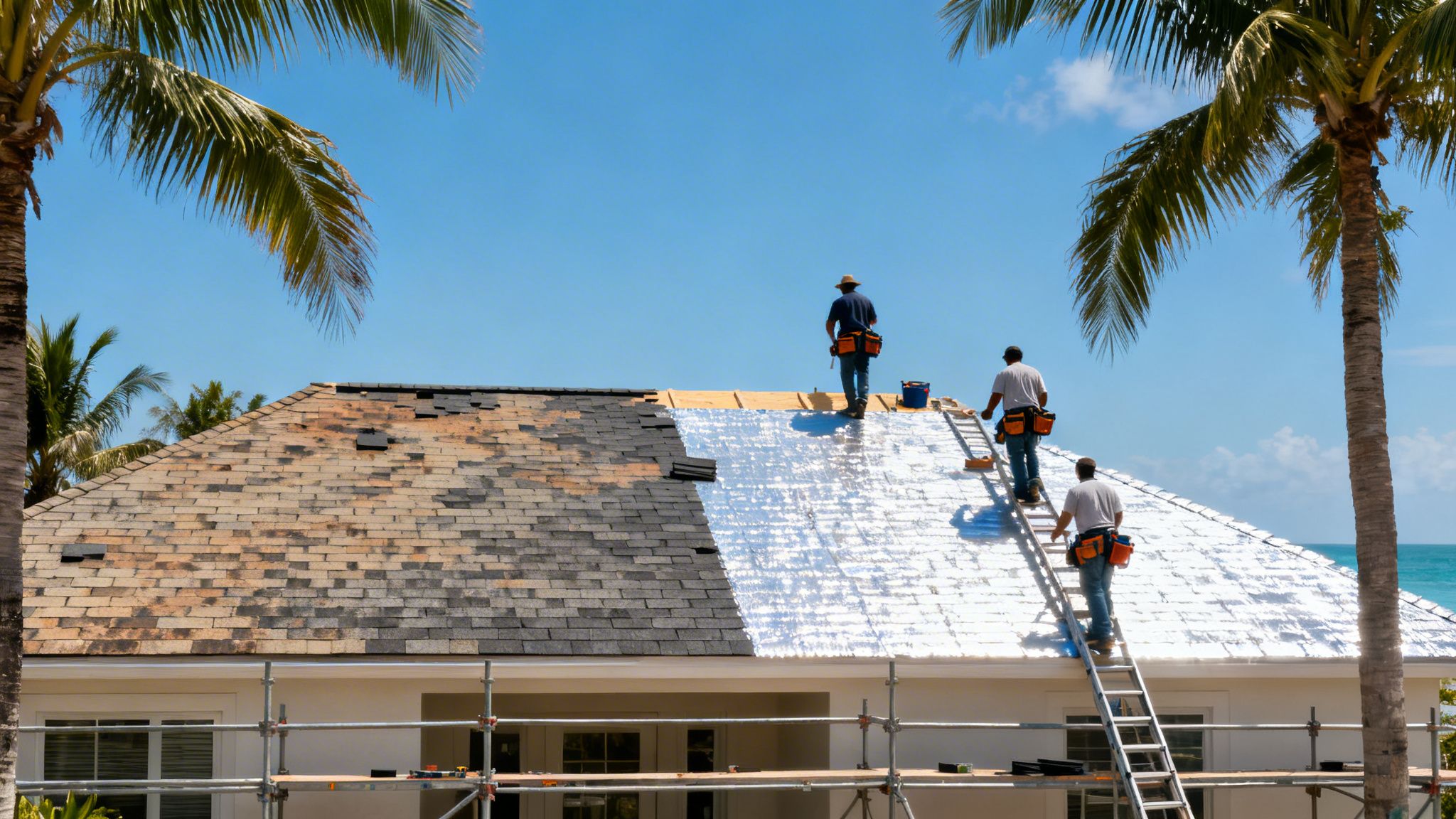
So, you're asking the big question: how long does a roof replacement take?
For most standard homes, the hands-on work of tearing off the old roof and installing the new one can take anywhere from 1 to 5 days. But that simple number doesn't tell the whole story, especially here in South Florida where unpredictable weather and strict building codes are always part of the equation.
Your South Florida Roof Replacement Timeline
It helps to think of a roof replacement like a road trip. The destination is your new, secure roof, but how long it takes to get there depends on a few things. The kind of car you're driving (your roofing material), how complex the route is (your roof's design), and any surprise traffic jams (like our famous afternoon thunderstorms) all play a part in the final timeline.
While the crew might only be on-site for a few days, the entire project—from signing the contract to passing the final inspection—is a longer process. Knowing what to expect makes everything go a lot smoother.
Average Time by Roof Type
The roofing material you choose is probably the biggest factor in how long the installation will take. Some materials are like sprinters, going on fast and efficiently. Others are more like marathon runners, demanding more time and precision to get the job done right for a result that lasts.
The actual installation timeline can vary quite a bit. For a smaller home, say under 2,000 square feet, a skilled crew with good weather might get it all done in a single day. Asphalt shingles, the most common material we see, are generally the quickest to install, often in just 1 to 2 days.
Metal roofs usually take a bit longer, around 2 to 4 days, because of the custom fitting and fastening involved. Heavier, premium materials like concrete tile are the most time-intensive, typically requiring 8 to 9 days due to their weight and the detailed work needed for a proper installation. Industry data on project sizes shows a clear link between material choice and project duration.
Key Takeaway: A "one-day roof" is definitely possible for a straightforward asphalt shingle job on a smaller house. For most South Florida homes, however, especially those with tile or metal systems, it’s much more realistic to plan for a multi-day project.
To give you a clearer idea, we’ve put together a quick-reference table for the most common roofing materials we install in our area.
Average Roof Replacement Time by Material
| Roofing Material | Average Installation Time (Standard Home) |
|---|---|
| Asphalt Shingles | 1–3 Days |
| Concrete & Clay Tile | 5–10 Days |
| Metal Roofing | 3–7 Days |
Keep in mind, this table offers a general estimate for the installation phase itself. Things like the size of your home, how steep its pitch is, and whether we discover any structural repairs are needed can add time to these estimates.
Next, we’ll walk through what a typical day-by-day schedule looks like and break down the other factors that can either speed up or slow down your project.
The Day-by-Day Roof Replacement Process
A full-on roof replacement can feel like a pretty big deal. Let's be honest, the idea of a crew, a dumpster, and a whole lot of noise can be intimidating. But when you work with a professional team, what looks like chaos is actually a highly organized process. Knowing what to expect each day turns that anxiety into confidence.
While the crew might only be on-site for a few days, the entire process from start to finish often takes 3 to 10 days. That timeline accounts for things like pulling permits and ordering materials before we even set foot on your property. You can see how these preliminary steps affect the schedule by checking out our visual guide on roof damage and what crews look for.
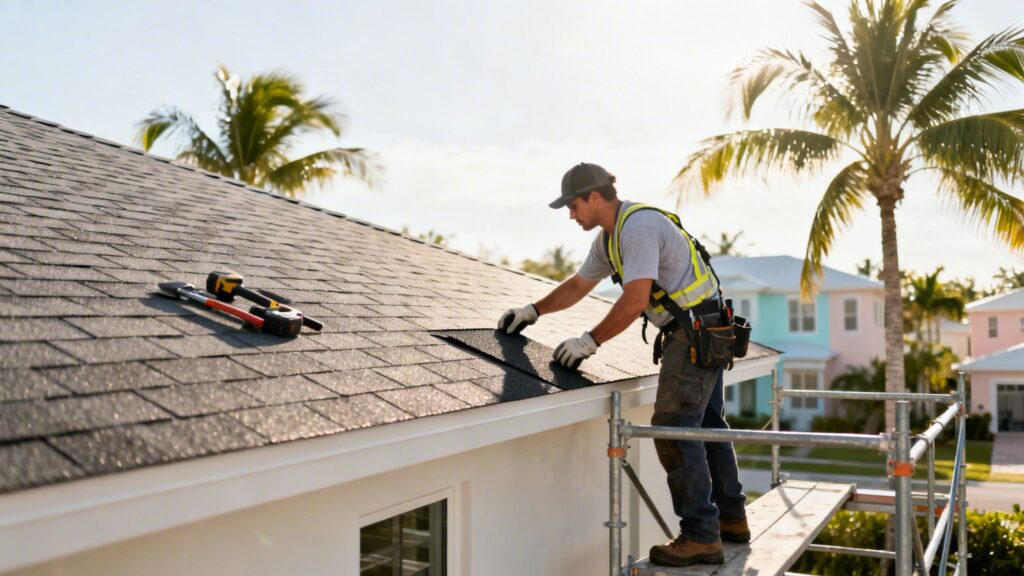
Stage 1: The Setup and Preparation
The first day on the job isn't about tearing things apart—it's about getting everything set up right to protect your home. This is where a professional crew really shows their respect for your property.
- Materials Arrive: A day or two before we begin, all the roofing materials will be delivered. We’ll coordinate with you to place the shingles, underlayment, and other supplies in a convenient spot, usually the driveway.
- Property Protection: First thing on day one, the team gets to work safeguarding your home. Heavy-duty tarps are laid out around the entire perimeter to protect your landscaping, A/C unit, and windows from falling debris.
- Safety First: With your property protected, the crew sets up their ladders and safety gear. This ensures they can move around the roof securely and efficiently for the entire project.
This initial setup is a critical first step. A well-prepped site means the rest of the job will run smoothly, safely, and without any surprises.
A professional roofing crew treats your property with respect. Proper site preparation isn't just about convenience; it's a critical step that prevents property damage and shows a commitment to quality from the very start.
Stage 2: The Tear-Off and Decking Inspection
Once the site is secure, it's time for the most dramatic part of the project: the tear-off. This is where we strip away every layer of your old roof, and yes, it gets a little noisy.
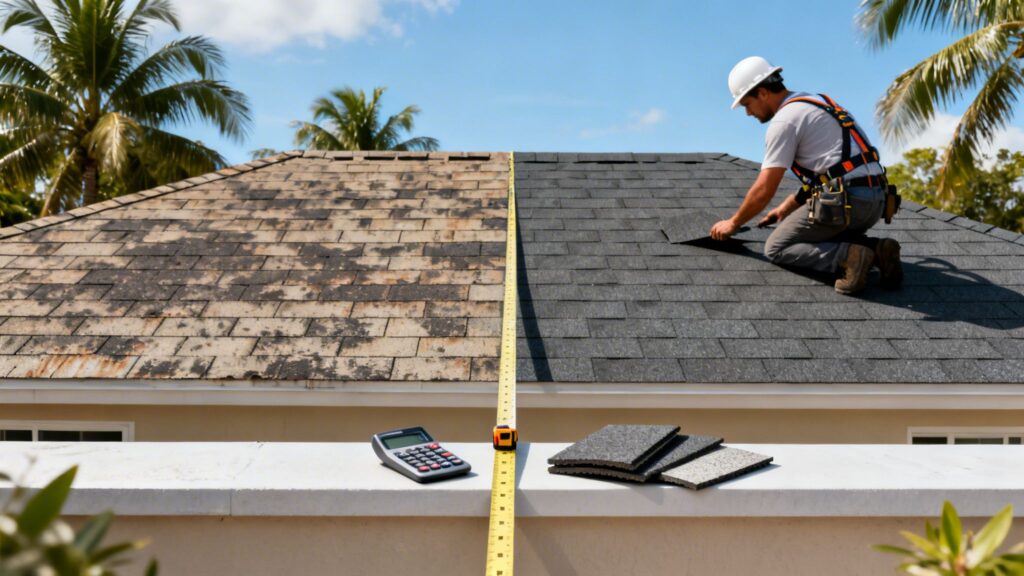
The crew works methodically to remove the old shingles or tiles, the felt paper, and the metal flashing. This exposes the bare wood foundation of your roof, known as the roof deck. This is a make-or-break moment, as it's our first chance to get a clear look at the structural integrity of your roof.
Here in South Florida, it's not uncommon to find issues hidden under old shingles. The crew will meticulously inspect the deck for any water damage, rot, or soft spots caused by our humid climate. Any weak or compromised wood has to be replaced—no exceptions. A new roof needs a solid foundation to last.
The material we're removing—and the new one we're installing—plays a huge role in the timeline.

As you can see, a standard asphalt shingle roof is a much faster job than a complex tile roof, which requires more time and precision.
Stage 3: The Installation and Cleanup
With a sound deck ready to go, the rebuilding process begins. Your new roof is built from the deck up, layer by layer, to create a tough, watertight system.
- Installing Underlayment: First, a brand-new layer of synthetic underlayment is rolled out across the entire roof deck. This is your roof's secondary water barrier, a crucial defense against moisture.
- Adding Flashing and Drip Edge: New, custom-fit metal flashing goes in around chimneys, vents, and in the valleys of your roof. We also install a metal drip edge along the eaves to ensure water flows directly into the gutters, not down your walls.
- Laying the New Material: Now for the main event. Whether it's asphalt shingles, concrete tiles, or metal panels, the crew begins laying the new material, starting at the bottom and working their way up to the peak for a perfect, weather-tight seal.
- Final Cleanup: Once the last shingle is in place, the cleanup operation kicks into high gear. All tarps are carefully rolled up and removed, and the entire area around your home is scoured for debris. We finish by running powerful magnets through your lawn and driveway to pick up any stray nails.
- Final Inspection: The job isn't done until you're completely satisfied. The site foreman will do a final walkthrough with you to inspect the work and answer any questions. We make sure every detail meets our standards—and yours—before calling the project complete.
What Can Delay Your Roofing Project

While most roof replacements stick to a fairly predictable schedule, a few key factors can stretch a two-day job into a week-long project. Knowing what these potential speed bumps are helps set realistic expectations and leads to a much smoother process for everyone involved.
The biggest variable, especially here in South Florida, is one we have absolutely no control over: the weather. An unexpected afternoon thunderstorm isn't just a minor pause; it's a full stop for our entire crew. For everyone's safety and the quality of the job, we can't work in the rain, and we definitely can’t install a new roof over a wet or even slightly damp roof deck.
Laying shingles or tiles onto a damp surface traps moisture, which is a recipe for mold, rot, and serious long-term structural problems. Any professional contractor worth their salt will watch the forecast like a hawk and only tear off a section of roof they know can be made completely watertight by the end of the day.
The Condition of Your Existing Roof
Another major unknown that can add time to your project is discovering hidden damage. Once we tear off the old roofing materials, we get our first real look at the wooden roof deck underneath. This is the moment of truth.
Finding one or two soft or rotted plywood sheets is a pretty straightforward fix. But if the inspection reveals widespread water damage, it’s like a mechanic finding a cracked engine block during a simple oil change—the original job comes to a halt, and a more significant repair has to be done first.
Replacing large sections of the roof deck is non-negotiable for a structurally sound, lasting roof system, but it will add at least a day, sometimes more, to the schedule. This is a common curveball, as nearly 33% of roof replacements are started because of existing leaks that may have caused unseen wood rot over the years.
Architectural Complexity and Site Access
Let’s be honest—not all roofs are created equal. The unique design of your home plays a massive role in how long the replacement will take.
- Steep Pitch: A steeply pitched roof is simply harder and slower to work on. Crews have to use extra safety precautions and move more carefully, which naturally adds to the installation time.
- Complex Design: Roofs with lots of gables, valleys, dormers, and skylights demand a great deal of custom cutting and detailed flashing work compared to a simple, straight-run roof.
- Accessibility: Is your house surrounded by delicate landscaping, fences, or other buildings? Limited access can slow down everything from material delivery to debris removal, tacking on time to both the setup and cleanup phases.
A simple, low-slope ranch-style house is like a straight, flat highway for a roofing crew. A multi-story home with a steep, complex roof is more like a winding mountain road—it requires more time, skill, and care to navigate safely and effectively.
External and Logistical Delays
Finally, some delays have nothing to do with the roof itself. These are the administrative and supply chain hurdles that can push back a project’s start date by days or even weeks.
Permitting and Inspections: Before a single shingle comes off, we have to get the right permits from your local city or county. Depending on how busy they are, this process can take anywhere from a few days to several weeks. Likewise, scheduling the required mid-roof or final inspections can cause a pause if the inspector’s calendar is booked solid.
Material Availability: While standard asphalt shingles are usually easy to get, custom-ordered materials like specific tile profiles or unique metal colors come with lead times. If you've chosen a less common or premium material, waiting for it to be manufactured and delivered can become one of the longest parts of the whole process.
An experienced contractor plans for these potential issues and builds some buffer time into the schedule, but some things are just unavoidable. This is where communication becomes critical; a good roofer will keep you in the loop every step of the way.
How Shingle, Tile, and Metal Roofs Affect Timelines

When we’re asked how long a roof replacement takes, the honest answer is: it really depends on the material. No single choice has a bigger impact on the project schedule. You can think of it as choosing between a quick sprint, a technical obstacle course, or a long-distance marathon. Each material has its own installation rhythm, and that directly sets the pace for the entire job.
Understanding these differences isn’t just for your calendar; it helps you appreciate the real value behind the timeline. A longer installation often means you're investing in greater durability and a much longer lifespan—a crucial trade-off here in South Florida.
Asphalt Shingles: The Speedy Sprinters
There’s a reason asphalt shingles are the most common residential roofing material. They are the true sprinters of the roofing world. For an experienced crew, installing shingles is a streamlined, efficient process they can execute with remarkable speed.
Shingles are lightweight and standardized, which makes them easy to handle, move up to the roof, and install. This leads to a significantly shorter timeline, often just 1 to 3 days for an average-sized home. That speed makes them a fantastic choice for homeowners who need a fast, effective, and budget-friendly solution without having their life turned upside down for a week.
This rapid turnaround works because the process is highly repetitive and doesn't require the same level of specialized tooling as other materials. As long as there are no major surprises with the roof decking underneath, an asphalt shingle replacement is the fastest path to getting your home protected again.
Tile Roofs: The Methodical Marathon Runners
If shingles are the sprinters, then concrete and clay tiles are the marathon runners. Installing a tile roof is a far more deliberate and labor-intensive process. It’s a craft that demands precision and patience, which is why the timeline usually stretches to between 5 and 10 days.
So, why does tile take so much longer?
- Weight: Each tile is heavy. They have to be handled and set one by one, requiring more physical effort and care from the crew. Sometimes, the roof deck even needs structural reinforcement to handle the load.
- Precision: Tiles aren't just laid down; they interlock in a specific pattern to create a bulletproof weather seal. You simply can't rush this part. Every single piece must be perfectly aligned.
- Custom Fitting: Cutting heavy tiles to fit neatly around hips, valleys, and vents is a skillful task that takes up a considerable amount of time.
The trade-off for this extended timeline is exceptional durability. A properly installed tile roof is like a fortress against South Florida's relentless sun and hurricane-force winds, offering superior longevity that absolutely justifies the upfront time investment.
Metal Roofs: The Precision Engineers
Metal roofing sits squarely between shingles and tile, typically taking 3 to 7 days to install. This material is the precision engineer’s choice, blending modern aesthetics with truly formidable strength. The timeline is longer than shingles because a metal roof isn’t just laid; it’s often custom-fabricated right on-site.
Crews have to carefully measure, cut, and fit large metal panels, making sure every seam is perfectly sealed to lock out water. This process requires specialized training and equipment, especially for standing seam systems where panels are mechanically crimped together to form one continuous, unified surface. The result is a sleek, highly wind-resistant roof built to last for decades.
Your material choice is an investment in both time and future performance. A faster installation with shingles gets your life back to normal quickly, while a longer tile or metal installation provides a long-term defense against frequent replacements.
The roofing industry is seeing massive growth, with projections showing that repair and replacement costs could hit nearly $31 billion by 2026. This really highlights why picking the right material from the start is so important. Your decision impacts how often you'll face this process. While asphalt shingles may last 20-30 years, metal and tile can protect your home for 50 to 100+ years, making the initial project timeline a small factor in a lifetime of security. You can explore more about these trends and their impact in this detailed industry analysis.
Preparing Your Home for a Smooth Installation
A successful roof replacement is a partnership. While our crew handles all the heavy lifting and technical work, a little preparation on your end can make a massive difference in how smoothly and quickly the job gets done.
Taking a few simple steps to get your home “roof-ready” helps our team work more efficiently, keeps the project on schedule, and minimizes stress for everyone involved.
Clear the Perimeter
Our crew needs easy, unobstructed access to your home. They’ll be bringing in dumpsters, equipment, and large pallets of materials, so clearing the way is the single most important thing you can do.
- Driveway Access: Please keep your driveway completely clear. This space is the main staging area for materials, tools, and the debris dumpster. An open driveway lets the crew get right to work without delays.
- Move Your Vehicles: Park all of your cars on the street or in a neighbor’s driveway, well away from the work zone. Falling debris is an unavoidable part of a roof tear-off, and you don’t want your car anywhere near the house.
- Unlock Gates: Make sure all gates to your yard are unlocked. This allows the crew to move freely around the entire perimeter of your home without having to stop and ask for access.
Simply clearing the area can shave significant time off the project, especially during the setup and cleanup phases.
A clear work zone is a safe and efficient work zone. By giving the crew the space they need, you're not just protecting your property—you're actively helping to keep the project on track and on time.
Protect Your Property Inside and Out
The work on your roof creates powerful vibrations and, of course, a lot of falling debris. Taking a few minutes to protect your belongings beforehand will give you total peace of mind.
Outside Your Home:
If you have prized gardenias, patio furniture, or a beloved grill near the house, it’s best to move them. If they can’t be moved, cover them securely with tarps. While our crew lays down their own protective coverings, an extra layer of your own ensures your most cherished items are safe.
For homeowners in colder climates looking to protect their home's exterior long-term, understanding a proper roof heat cable installation can also be a wise step to prevent future ice dam issues.
Inside Your Home:
The constant hammering and foot traffic overhead will create vibrations that travel down through your walls. It’s a great idea to take down pictures, mirrors, and any fragile heirlooms from exterior walls to prevent them from shaking loose and falling.
You should also cover any valuable items stored in your attic with a plastic sheet. This will protect them from the fine dust and small bits of debris that can sometimes find their way through tiny gaps in the roof decking during the tear-off phase.
To get a better feel for what to expect on installation day, you can check out this visual guide of the roofing process and see our crews in action.
Choosing an Efficient South Florida Roofing Partner
Now that you have a solid handle on what a roof replacement timeline looks like, the next step is choosing a partner who can actually deliver on that schedule. The real answer to "how long does a roof replacement take?" isn't just about shingles or storms—it’s about the crew you hire and their experience on the ground.
With over 30 years tackling roofs in South Florida's demanding climate, we at Paletz Roofing have turned project management into a science. We get it. Your time is valuable, and having a crew on your property is a disruption. That’s why our entire process is built to deliver a top-tier roof for your home or business with as little chaos as possible.
Our Commitment to a Clear Schedule
Our whole approach boils down to transparency and real-world expertise. We don’t cut corners to shave off a few hours. That’s a recipe for disaster. Instead, we invest in what genuinely makes a project run faster without ever compromising on quality: properly sized, expert crews and time-tested methods for every single job.
The efficiency of your project really hinges on picking the right contractor. Good internal systems, like those used to find an efficient roofing partner, are what keep a complex job from going off the rails.
From the moment you get our detailed quote, you’ll have a clear, realistic timeline. We walk you through each phase so you know exactly what’s happening and when—from site prep all the way to the final inspection. No guesswork, just professional work.
This promise covers every roof type we specialize in, whether it's asphalt shingle, classic tile, or a modern metal system. Each one demands a unique skill set to install correctly and on time, and our crews have the specialized training needed to get the job done right.
The Paletz Promise for South Florida
For homeowners and commercial clients across Broward, Miami-Dade, and Palm Beach counties, our promise is simple. We build durable, beautiful roofs that are made to handle our unique weather, and we do it on a schedule you can set your watch to.
When you’re ready to take the next step, we're here to offer a roofing experience that respects both your time and your property. You can even review our company and inspection credentials to see why so many South Floridians trust us with their homes and businesses.

Contact Paletz Roofing today for a free, no-obligation quote and get a project timeline you can actually count on.
Frequently Asked Questions About Roof Timelines
Even with the best-laid plans, a few questions are bound to pop up. When it's your home on the line, there’s no such thing as being too prepared. Here are some straightforward answers to the questions we hear most often from homeowners about the roof replacement process.
What Happens If It Rains During My Roof Replacement?
This is probably the single most common question we get, and for good reason. Professional roofers are practically meteorologists—we live by the weather forecast. Here in South Florida, our rule is simple: we never tear off more roof than we can make 100% watertight in the same day.
If an unexpected shower does pop up, the crew’s first and only job is to get your home protected. They immediately secure any exposed roof decking with heavy-duty waterproof tarps. Work won't start again until everything is completely dry and safe. Your home's protection from water damage is our non-negotiable priority.
Do I Need to Be Home During the Replacement?
No, you absolutely don't need to take off work or hang around the house all day. We do suggest being there on the first morning just to meet the crew chief and walk through any final details, but after that, you’re free to carry on with your normal routine.
Just be prepared for the noise. The tear-off phase, in particular, is very loud, and many homeowners prefer to make plans to be out of the house. As long as our team has access to the outside of your property and a power outlet, they’ll have everything they need to get the job done.
Pro Tip: While you don’t need to be home, it’s a huge help if you’re reachable by phone. If the crew uncovers unexpected decking rot or has a quick question, getting a fast answer can keep the project on schedule and avoid delays.
How Is a Commercial Roof Timeline Different?
Comparing a residential and a commercial reroof is like comparing a car to a freight train—they operate on completely different scales. Commercial projects are almost always larger and far more complex, which means they take significantly longer.
A house roof might take a few days, but a large commercial flat roof can take anywhere from a week to several months. The timeline really comes down to a few key differences:
- Massive Size: The sheer square footage of a warehouse or office building is the biggest factor.
- Complex Systems: Installing commercial-grade materials like TPO, EPDM, or modified bitumen involves specialized techniques and equipment that are more time-intensive than laying shingles.
- Operational Logistics: The biggest challenge is often working around a functioning business. We have to plan every phase to minimize disruption to your employees, customers, and daily operations.
At the end of the day, both residential and commercial projects rely on the same thing: meticulous planning and flawless execution to keep things on track.
For over 30 years, Paletz Roofing and Inspections has managed countless roofing projects for homes and businesses across South Florida. We understand the importance of a clear, reliable timeline. Contact us today for a free, detailed quote and a schedule you can trust. Learn more at https://paletzroofing.com.