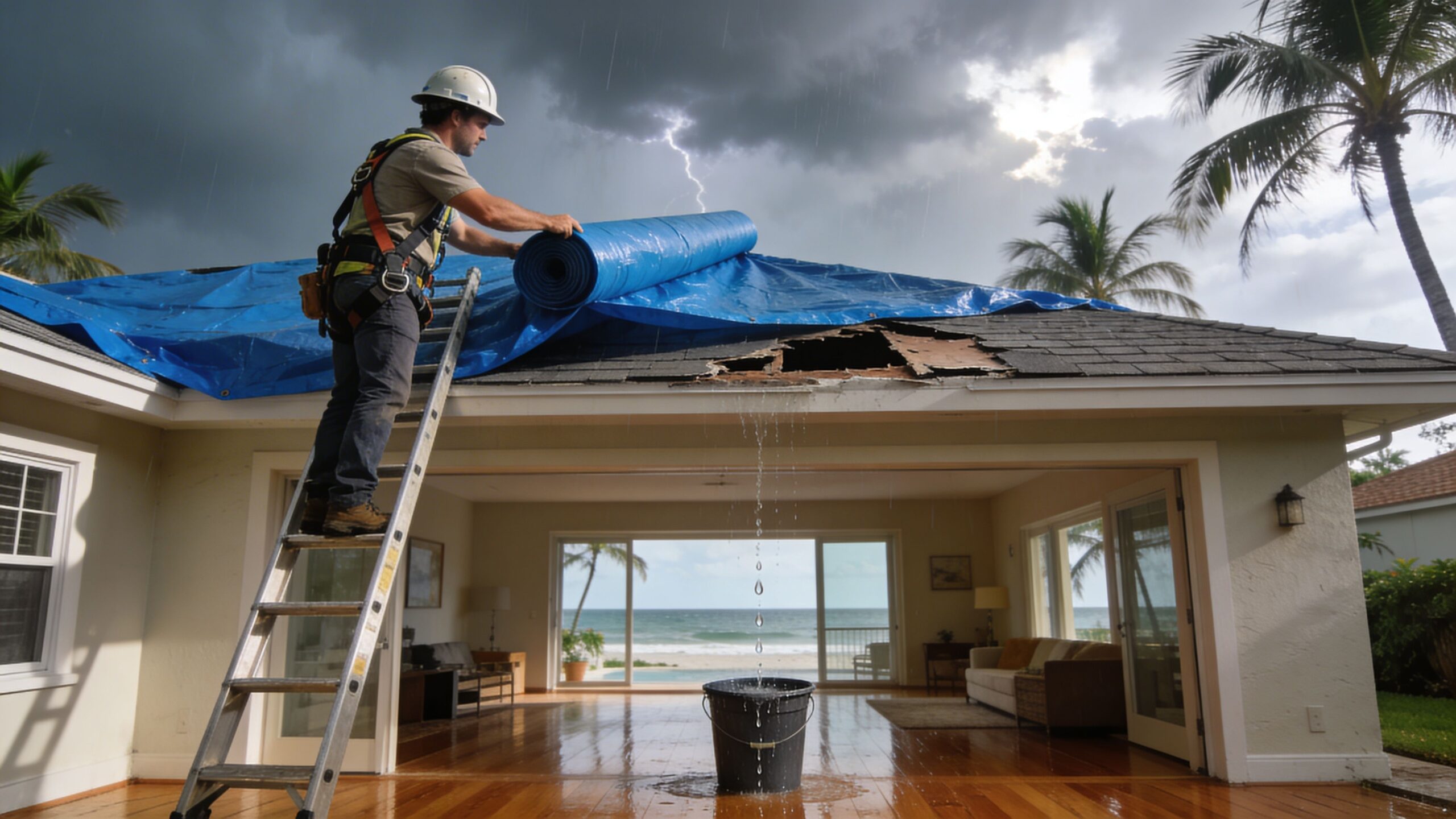
A leak usually announces itself at the worst time. You hear a drip over the TV, see a stain spreading across the ceiling, or notice water running down a wall while the wind is still pushing rain sideways. In Delray Beach, that moment can go from annoying to destructive fast.
The right response is not panic. It is order. Get people safe, protect the inside of the house, stop more water from entering if it can be done safely, and document everything before memory gets fuzzy and materials get thrown away.
That approach matters in South Florida because roof emergencies are common, not rare. The Southeast U.S., including South Florida, accounts for 27.65% of the national roofing market revenue, and Florida has over 25,000 licensed roofers, a reflection of how often storm activity drives urgent repairs in places like Delray Beach (paletzroofing.com/roof-repair-delray-beach). A roof leak here is not just a maintenance issue. It is often a storm event, an insurance event, and if handled poorly, a mold event.
A Homeowner's First Response to a Roof Emergency
It usually starts the same way. Rain is hammering the roof, the house is dark except for one light left on, and then someone notices water collecting where it should never be. A bucket comes out. Towels hit the floor. Everyone looks up and wonders if the ceiling is going to hold.

In that moment, homeowners need a simple rule. Treat the leak as an active emergency, not a small nuisance. Water rarely lands directly below the entry point. It travels along decking, trusses, insulation, wiring paths, and drywall before you ever see it.
What matters in the first few minutes
Your first job is to slow the damage inside the home. Do not start by climbing on the roof in the rain. Do not assume a stain is old. Do not ignore water near a light fixture because the drip seems minor.
Start with these priorities:
- Move people first: Keep children and pets away from the wet area.
- Protect valuables: Shift electronics, rugs, furniture, artwork, and anything wood or fabric out of the drip zone.
- Catch the water: Use buckets, storage bins, and towels to control spread.
- Look for warning signs: Sagging drywall, buzzing fixtures, and wet walls mean the problem may be bigger than the visible leak.
A calm response saves more property than a fast but reckless one.
Delray Beach homes take a different kind of beating
Roofs in this area deal with wind, driven rain, salt air, heat, and repeated storm exposure. That combination wears out sealants, flashing, fasteners, tile attachments, and shingle surfaces faster than many homeowners expect. One storm may expose a weakness that has been building for months.
That is why emergency roof repair Delray Beach calls often come from homes that looked fine the week before. Then one hard storm opens a path for water.
The same mindset applies to any house emergency. If you want a good general example of swift action in a home emergency, the logic is the same. Control the immediate hazard, reduce secondary damage, and bring in the right trade before a small problem multiplies.
Immediate Safety Actions to Protect Your Home's Interior
When water enters the house, the inside becomes the priority. Roofing can wait a few minutes. Electrical risk, ceiling collapse, and soaked contents cannot.

Control the leak path
If water is dripping steadily, set containers under every active drip, not just the biggest one. Put old towels or plastic sheeting around the containers to stop splashing from spreading into flooring and baseboards.
Then reduce what can be damaged.
- Clear the room. Pull furniture and electronics away from the leak zone.
- Lift what you cannot move. Put table legs, chair legs, and boxes on blocks or dry towels.
- Protect floors. Wood, laminate, and carpet can all hold moisture long after the visible water is gone.
Deal with a bulging ceiling carefully
A water-filled ceiling bubble is dangerous. If it keeps filling, drywall can tear loose and fall. If you can do it safely, place a bucket underneath and use a small pointed tool to make a controlled drain hole at the lowest point of the bulge. Expect more water than you think.
This is messy, but it is often better than letting the entire section come down at once.
If the ceiling is sagging badly, cracking loudly, or dropping debris, get everyone out of that room. Do not stand under it to investigate.
Treat electricity as a serious hazard
Water near recessed lights, ceiling fixtures, outlets, power strips, or wall switches changes the situation. At that point, convenience does not matter. Safety does.
If water is touching a light fixture or running inside a wall where wiring may be present, shut off power to the affected area if you can do so safely. If you are not sure which circuit controls it, stop and call for qualified help.
Do not touch wet switches. Do not plug in fans in the middle of a puddle. Do not assume low dripping means low risk.
Drying starts immediately
A lot of homeowners focus only on stopping the leak overhead and forget what happens after the rain. That mistake gets expensive. CDC data indicates mold can begin to proliferate on damp surfaces within 24-48 hours. In Florida's humid climate, improperly handled water intrusion from a roof leak can lead to a 47% chance of significant mold development within 72 hours, with remediation costs averaging $15,000 (ajfroofingfl.com/emergency-services).
Open the area up as soon as it is safe. Use fans, remove wet rugs, pull damp contents away from walls, and do not leave soaked materials piled in a corner overnight.
What not to do inside
- Do not ignore attic access: If water is reaching insulation or framing above, hidden moisture may be building.
- Do not paint over stains: That hides evidence and traps moisture.
- Do not leave wet boxes against drywall: Cardboard and drywall together hold moisture and feed mold quickly.
How to Temporarily Tarp Your Roof Safely
A tarp is a temporary weather barrier. It is not a repair. If it is installed wrong, it can trap water, tear loose in wind, or direct rain into places that were dry before.
For many homeowners, the smartest decision is not to climb up there at all. A wet South Florida roof can be slick even when it does not look slick. Tile cracks under bad foot placement. Shingles lose granules. Metal gets slippery fast. If the storm is still active, if the slope is steep, or if you are alone, stay off the roof.
When not to attempt it
Do not tarp your own roof if any of these apply:
- The roof is wet or storm conditions are ongoing
- You see structural sagging or broken decking
- A tree limb, utility line, or large debris is involved
- You do not have a stable ladder and another adult present
- The damaged area is high, steep, or near an edge you cannot work from safely
The roof is not the place to prove you can handle it yourself. A temporary leak is better than a fall.
Professional emergency repairs have a success rate exceeding 95% in preventing secondary interior damage when handled within 24-48 hours, while DIY attempts have a 40-50% failure rate. That same guidance notes that working on wet surfaces contributes to 60% sealant failure (goodneighborroofingllc.com/2023/06/19/a-step-by-step-guide-for-handling-emergency-roof-repair). Those numbers match what roofers see in the field. Many failed tarps are not just loose. They worsen the water path.
Here is a visual overview of the safe sequence.

If conditions are safe, use this method
A workable tarp setup needs the right materials. A thin plastic sheet from the garage is not enough. Use a heavy tarp, wood strips, corrosion-resistant fasteners, a stable extension ladder, gloves, and shoes with grip. If you have no way to secure the edges to structure, stop there.
The basic principle is simple. Cover more roof than you think you need. Water travels downhill and sideways under pressure.
- Wait for clear weather. Never begin during active rain or gusty conditions.
- Find the damaged zone from inside first. Mark the likely area before you go up.
- Extend past the damage. The tarp should run beyond the visible problem area so runoff sheds over sound roof surface.
- Keep it tight. Loose tarp sections flap, tear, and pump water under themselves.
- Anchor edges with wood strips. Fastening through reinforced edges and trapping them under strips helps resist lifting.
- Secure the top first. If the upper edge fails, water will run under the entire setup.
Common mistakes that make tarps fail
The biggest error is making the tarp too small. Homeowners often center it only over the stain they see inside, but the actual opening is often upslope.
Another problem is fastening only the corners. Wind catches the middle sections first. Once the tarp bellies up, it becomes a sail.
A third mistake is trying to “seal” everything with random roof cement on wet surfaces. That rarely holds. It often creates a mess that has to be cut out later before real repairs begin.
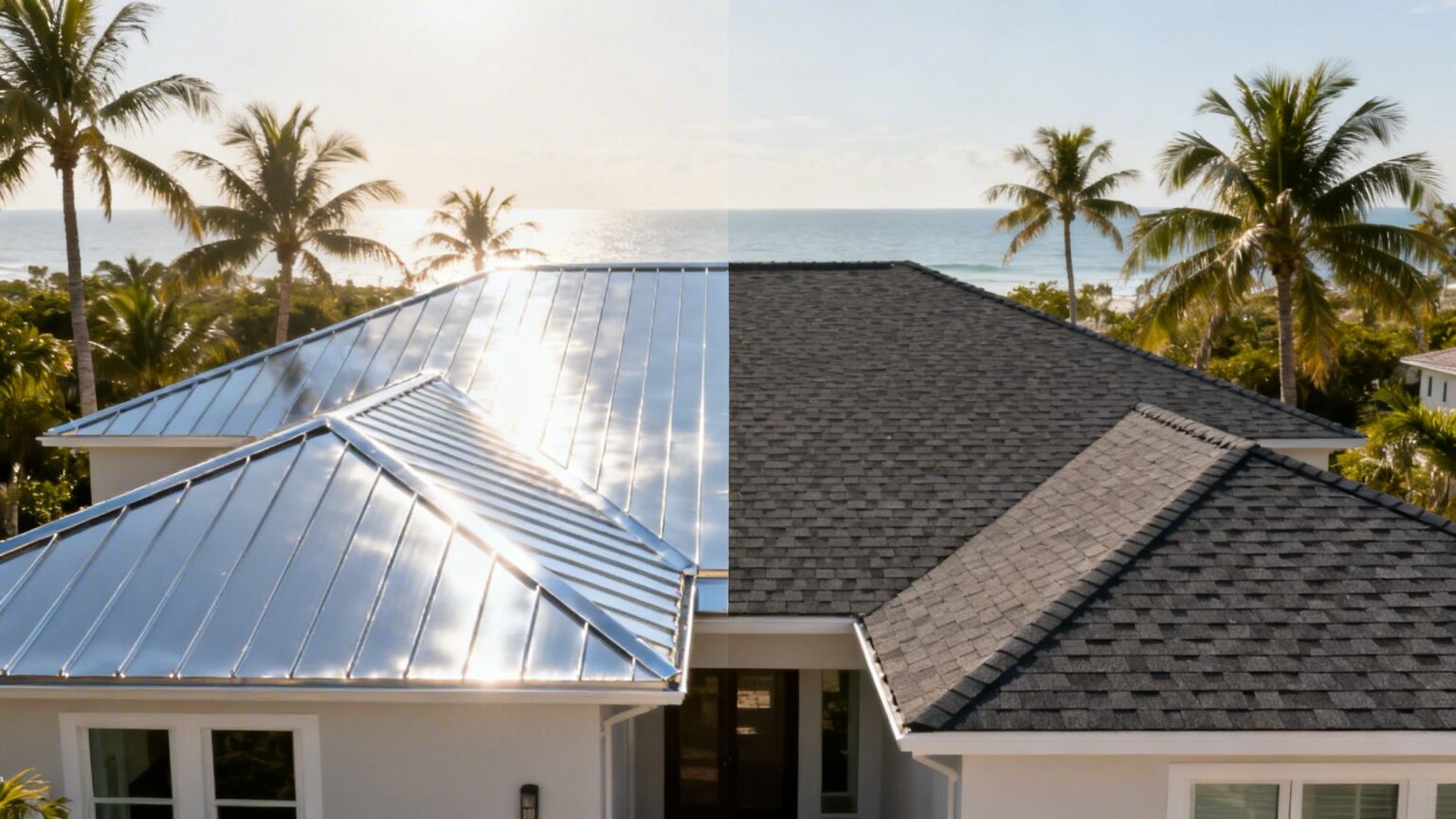
One example of the kind of roof damage homeowners often ask about is localized puncture or opening repairs on metal systems. If that is your roof type, a technical reference like how to recognize and handle a hole in a roof panel can help you understand why material-specific repair methods matter, even during an emergency.
What a tarp is supposed to do
A temporary tarp has one job. Buy time without adding damage. It is there to reduce water intrusion until a roofer can inspect decking, underlayment, flashing, field material, and the hidden path of the leak.
If you cannot install it without rushing, reaching, or guessing, leave that step to a roofing crew. Emergency roof repair Delray Beach work often starts with stabilization, not full repair on day one.
Documenting Damage for a Successful Insurance Claim
A lot of homeowners do the hard part first. They stop the leak, move furniture, throw out ruined materials, and mop the floor. Then they call insurance with almost no proof of what happened.
That is exactly how claims get reduced, delayed, or disputed. In Palm Beach County, 35% of hurricane-related homeowner insurance claims are initially denied or underpaid due to inadequate documentation, and the process can involve delays averaging 45 days (delray-beach-fl.odom-roofing.com). When the evidence is weak, the conversation becomes your word against an adjuster’s file.
Document before cleanup erases the story
Take photos and video before you move too much, as long as doing so does not put anyone at risk. You want to preserve the sequence of damage, not just the final mess.
Capture the room wide. Then go tighter.
Use your phone to record:
- The ceiling stain, drip, bulge, or collapsed section
- Wet floors, damaged furniture, and soaked contents
- Exterior views from the ground
- Fallen branches or debris if present
- Temporary mitigation like buckets, plastic, or tarps
- Screenshots of the weather date and time from your device
Insurance Claim Documentation Checklist
| Evidence Type | What to Capture | Why It's Important |
|---|---|---|
| Photos | Wide shots of each affected room plus close-ups of stains, drips, damaged materials, and contents | Shows scope and specific damage points |
| Video | Continuous walkthrough with narration of what happened and when you first noticed it | Preserves context that still photos can miss |
| Written log | Date, time, weather conditions, rooms affected, when power was shut off, who you called | Establishes a timeline |
| Receipts | Buckets, tarps, drying equipment, hotel stay if needed, emergency service invoices | Supports reimbursement discussions |
| Contractor notes | Inspection findings, temporary repair notes, visible storm-related damage | Adds professional observations to the file |
| Cleanup records | Photos before disposal and notes on what had to be removed | Prevents disputes over missing damaged items |
Build a clean timeline
Claims move more smoothly when the homeowner can state events in order without guessing. Write it down while it is fresh.
A simple log works:
- Storm began
- Leak first observed
- Interior protection started
- Power shut off in affected area if applicable
- Temporary measures taken
- Calls made to insurer and roofer
- Additional damage found later
Keep all of it in one folder on your phone and one cloud folder if possible.
The best documentation is boring, organized, and complete. That is what adjusters can follow.
Do not throw away evidence too soon
If a piece of flashing falls, a tile breaks, or ceiling drywall collapses, photograph it first. If wet insulation, rugs, or damaged belongings have to be removed, record them before disposal. Once they are gone, they are harder to discuss with any certainty.
If you need a quick visual reference for what organized post-damage records can look like, this file example is useful as a simple placeholder format for sorted claim photos and inspection images: organized roof damage image record.
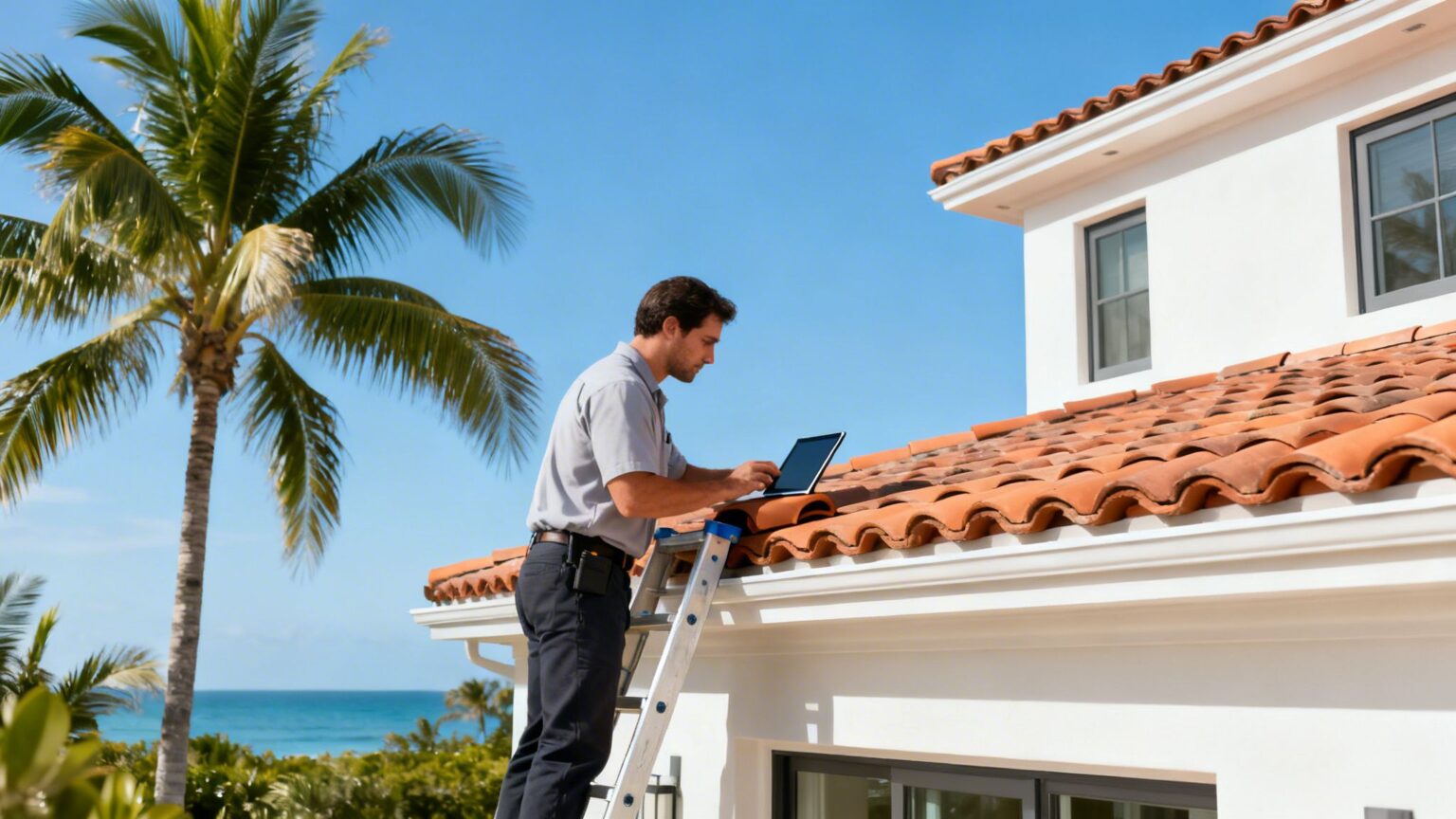
The goal is not to overwhelm your insurer with random pictures. The goal is to show clear cause, clear effect, and clear steps you took to reduce further loss.
Knowing When to Call for Professional Roof Repair
Some roof leaks can be contained for a short time. Others need a roofer immediately. The challenge for homeowners is knowing the difference.
A minor drip in one room can come from a small opening. It can also be the visible end of a larger failure above the decking, around flashing, or across multiple roof sections. Water is deceptive that way.
Red flags that need immediate professional help
Call for professional roof repair right away if you notice any of the following:
- Ceiling sagging or structural movement
- Water entering through light fixtures or electrical areas
- Leaks showing up in multiple rooms
- A tree limb, impact damage, or torn roofing material
- Visible roof opening from the ground
- Persistent leaking after a temporary tarp
- Commercial or low-slope roof ponding with active interior leaks
These are not good candidates for trial-and-error fixes.
What experienced roofers look for
A proper emergency response is not just “find the wet spot and patch it.” A veteran crew looks at how the roof system failed.
That includes questions like:
- Did wind break the primary roof covering, or did water enter at a transition?
- Is the decking still sound, or has moisture softened the substrate?
- Did flashing fail first, or did uplift expose underlayment?
- Is the leak source uphill from where staining appeared?
- Is this isolated, or does it point to broader system fatigue?
That difference matters. A patch at the symptom is not the same as a repair at the source.
What the service process should look like
Since 1990, experienced contractors in Delray Beach have managed thousands of emergency repairs, and the city can process express re-roof permits in as few as three business days when the required documentation is complete (drrooferdelraybeach.com). For homeowners, that means the right contractor should be thinking beyond the first bucket and tarp. They should also be thinking about code, scope, documentation, and whether temporary work needs to transition into permitted permanent work quickly.
A sound emergency process usually looks like this:
Initial call screening
The office or dispatcher asks what is leaking, when it started, whether power is involved, and whether there is visible structural risk.On-site damage assessment
The roofer checks the active leak area, surrounding roof field, flashings, penetrations, and signs of hidden spread.Temporary stabilization if needed
This may include tarping or other measures to reduce ongoing intrusion until repairs can proceed safely.Repair scope and documentation
The homeowner gets a clear explanation of what failed and what needs to happen next.Permit handling if required
In Delray Beach, that paperwork matters. Sloppy or incomplete documentation slows everything.
One local option that handles residential and commercial emergency roofing in South Florida is Paletz Roofing and Inspections, which is licensed and insured and works across Broward, Miami-Dade, and Palm Beach counties. The practical point is not the name. It is that emergency roof repair Delray Beach work should be handled by a licensed roofing contractor who can assess immediate damage and determine whether the next step is repair, deeper structural correction, or reroof permitting.

If the roof failure involves structure, electricity, or widespread water spread, your window for “wait and see” has already closed.
The trade-off homeowners need to understand
Waiting can feel cheaper. It rarely stays that way.
A homeowner may think, “The tarp is holding, so I’ll deal with it later.” But later often means stained insulation, hidden deck rot, mold odor in the attic, bubbled paint, damaged cabinets, and insurance questions about why mitigation was delayed. Fast professional assessment does not just protect shingles or tile. It protects everything below them.
From Emergency Patch to a Permanent Roofing Solution
The emergency phase is about control. Keep people safe. Limit interior damage. Use a temporary barrier only if conditions allow. Document the event well enough that the insurance side does not become another disaster.
After that, the focus changes. A tarp is not a finished repair. It is only a pause button.
What permanent repair means
A real repair addresses the reason water entered in the first place. That may involve replacing damaged field material, correcting flashing details, removing wet underlayment, replacing compromised decking, or evaluating whether the surrounding roof has aged to the point where isolated repair no longer makes sense.
The exact solution depends on the roof type. A tile leak is diagnosed differently from a shingle blow-off. A flat roof seam issue behaves differently from a metal penetration failure. If your home has a metal roof and you want a technical look at material-specific repair logic, this overview of how to repair a hole in a metal roof system is a useful example of why permanent fixes need to match the roof assembly.
The long view matters
The homeowners who come out of a roof emergency in the best shape usually do four things well:
- They act fast inside the house
- They avoid unsafe roof work
- They document the event thoroughly
- They move from temporary control to permanent correction without delay
That is the difference between “we had a leak” and “this leak turned into a whole-house problem.”
If your roof is leaking now, treat the emergency seriously, but do not assume the crisis ends when the dripping stops. The ultimate finish line is a dry, inspected, properly repaired roof system that is ready for the next storm.
If you need help with an active leak or storm damage, contact Paletz Roofing and Inspections for emergency roofing support, damage assessment, and guidance on the next step toward a permanent repair.