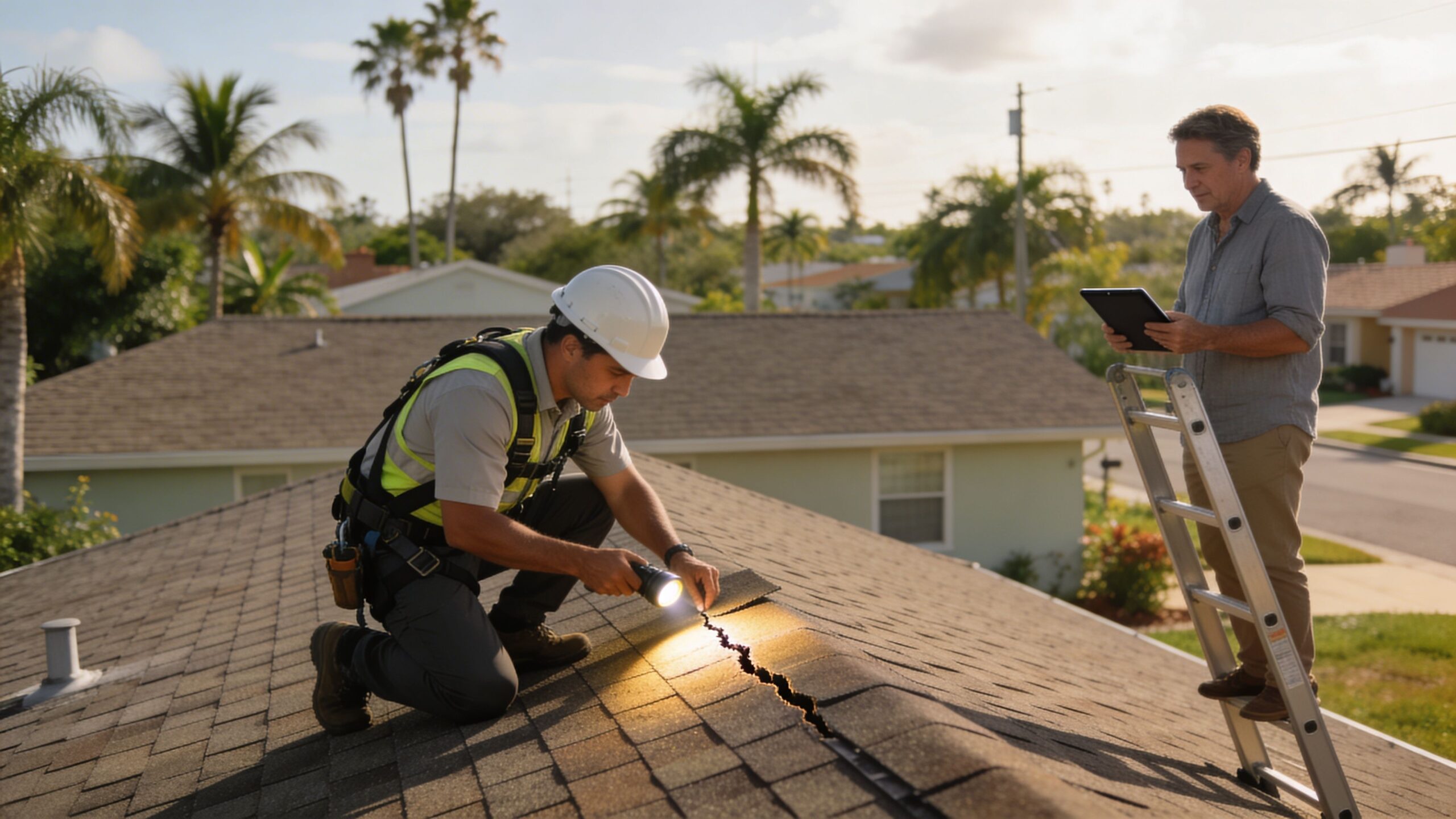
If you are reading this after a hard rain, a named storm, or an insurance renewal notice landed in the mailbox, you are in the same spot as a lot of South Florida homeowners. You know the roof matters. You do not know its true condition.
That uncertainty is what a professional inspection solves.
A proper roof inspection is not someone glancing up from the driveway and saying everything looks fine. It is a methodical check of the roof surface, flashing, drainage, penetrations, attic signs, and structural warning signs so you can make decisions before a small defect becomes interior damage. In Broward, Miami-Dade, and Palm Beach, that matters because roofs here take year-round UV, humidity, wind, and storm exposure.
Its value is not just finding damage. It is knowing what needs immediate action, what can wait, and what is worth watching without spending money too early.
Why Your South Florida Roof Needs a Professional Inspection
A common call starts the same way. A homeowner gets an insurance notice, sees neighbors having their roofs checked after a storm, or spots a stain that was not there last month. They are not always dealing with a major failure. Most are trying to answer a simpler question. Is my roof still protecting the house, or am I one bad storm away from a bigger problem?

In South Florida, the roof is the first shield. It takes direct sun, high humidity, wind-driven rain, and storm debris before any of that reaches your framing, insulation, drywall, or flooring. That is why inspections are not just for old roofs or obvious leaks. They are part of routine ownership.
South Florida roofs fail in familiar places
The weak points are not dramatic from the street. They show up at flashing, valleys, penetrations, drainage paths, and transitions where one roofing component meets another. On tile and flat systems, those details matter just as much as the field of the roof.
A homeowner may think, “I do not see missing material, so I am fine.” That is not how many roof problems start. Water enters through a failed seal, lifted flashing edge, blocked drainage area, or cracked penetration detail long before the ceiling tells you about it.
An inspection is cheaper than guessing
The reason to inspect is simple. A professional roof inspection in South Florida may cost between $300 and $600, while emergency repairs after a hurricane or major storm can run from $5,000 to $15,000, illustrating how proactive checks can lead to significant financial savings. That cost comparison is part of why regular inspections make financial sense.
The homeowner who knows the roof condition has options. The homeowner who finds out during a storm usually pays for urgency.
Inspections also give you documentation. If damage shows up after a storm, you are not starting from zero. You have a record of condition, identified vulnerabilities, and a written basis for repairs instead of a rushed guess made after water is already inside.
The Anatomy of a Thorough Roof Inspection
A thorough inspection follows a sequence. Good roofers do not jump to the most visible spot and stop there. They move through the property in a way that reveals how water moves, where the roof is vulnerable, and whether the damage is surface-level or tied to something deeper.

It starts before anyone climbs the roof
The first part is conversation. The inspector asks what prompted the visit. Maybe you saw a ceiling stain, maybe the property just came through a storm, or maybe the roof is due for a check.
Then comes the interior and perimeter review. According to Florida Southern Roofing, certified roofers start with an interior check for leaks, then move to an exterior perimeter walk to assess gutters and downspouts before climbing onto the roof, and the National Roofing Contractors Association notes that improperly maintained flashing is a primary leak source, often more than the shingles themselves (floridaroofing.com).
If interior staining is present, it helps to understand whether it is roofing-related or coming from another moisture source. In that situation, a separate water damage inspection can help clarify what is roof-driven and what is not.
The on-roof work is where critical answers come from
Once access is safe, the inspector checks the roofing system directly. That includes:
- Surface materials: broken, cracked, loose, or missing shingles or tiles
- Flashing locations: around chimneys, vents, skylights, and transitions
- Valleys: debris buildup, wear, and blockage in heavy water-flow areas
- Drainage points: gutters, downspouts, and low-slope discharge paths
- Penetrations: pipe boots, fans, HVAC curbs, and seals that dry out or split
On flat commercial roofs common in this market, the inspection also looks for peeling lamination, lifting overlaps, pooling water, and irregular areas that suggest sagging or poor drainage.
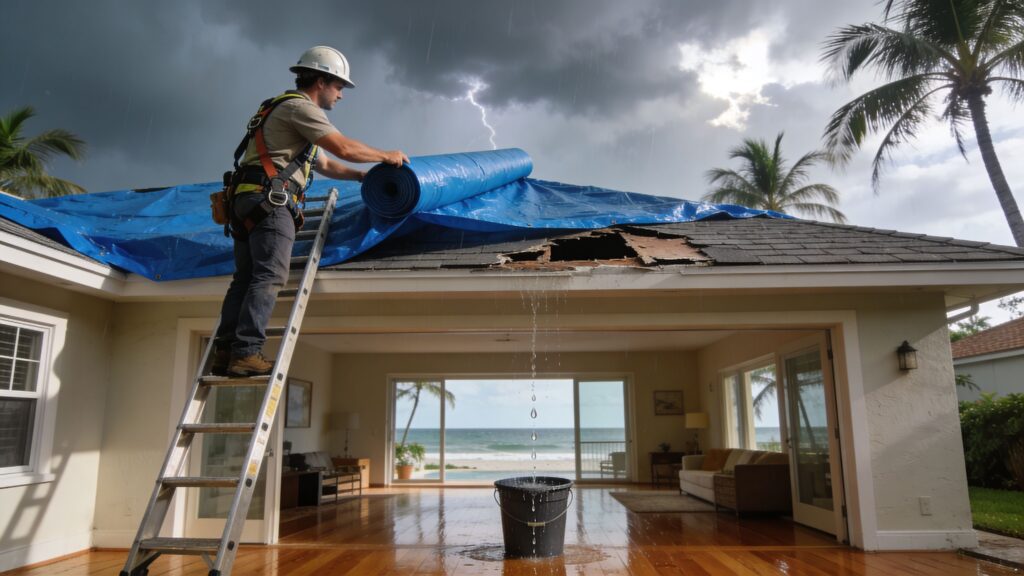
A solid inspection includes photos from both problem areas and sound areas. That matters because the report should show not just what is wrong, but where it is wrong and how extensive it is. A visual example of the kind of documented condition review owners often expect can be seen in this roof inspection image reference: roof inspection photo example.
The attic or interior check confirms what the roof is hiding
Exterior signs do not tell the whole story. In accessible attic space, inspectors look for moisture staining, mold, rot indicators, or daylight gaps in the decking. They also look for soft spots and signs that trapped moisture has started affecting the roof deck or framing.
If a contractor skips the attic when access is available, they may be missing the evidence that tells you whether a repair is minor or whether the roof system is already taking on water below the surface.
At the end, you should get a report, not a handshake and a vague opinion.
Common Issues Uncovered During Inspections
Most inspection reports in South Florida do not uncover one giant failure. They uncover clusters of smaller defects that work together to shorten roof life. A cracked tile by itself may not wreck a house. A cracked tile plus worn flashing plus blocked drainage before a tropical storm is a different story.
The leak-prone details matter more than most homeowners expect
Flashing and penetrations deserve close attention because they are where roofs change direction, meet walls, or get interrupted by vents and equipment. NRCA bulletins cited by Scates Corporation state that flashing and penetration details account for 65% of leak-related failures, which is why experienced inspectors spend so much time on those spots (scatescorporation.com).
For tile roofs common in Broward and Miami-Dade, inspectors also check for cracks exceeding a minimal threshold. Those openings let wind-driven rain in, and the same source notes that this type of intrusion can significantly increase deck damage rates after hurricanes.
That is why “just one cracked tile” is not always a cosmetic issue.
Common findings and what they mean
Some defects point to immediate leak risk. Others tell you the roof is aging and needs maintenance before it becomes urgent.
| Finding | Severity Level | Recommended Action |
|---|---|---|
| Missing or loose shingles or tiles | High | Repair promptly before the next heavy rain |
| Damaged or corroded flashing | High | Address quickly because these joints commonly leak |
| Blocked valleys or gutters | Medium to High | Clear and inspect for hidden water entry or overflow damage |
| Worn pipe boots or sealant cracks | Medium to High | Schedule repair before seasonal storms |
| Granule loss on asphalt shingles | Medium | Evaluate extent and remaining service life |
| Soft spots or sagging areas | High | Investigate structure and deck condition immediately |
| Moss or algae growth | Medium | Clean and correct moisture-holding conditions |
| Minor isolated cosmetic wear | Low | Monitor and document at the next inspection |
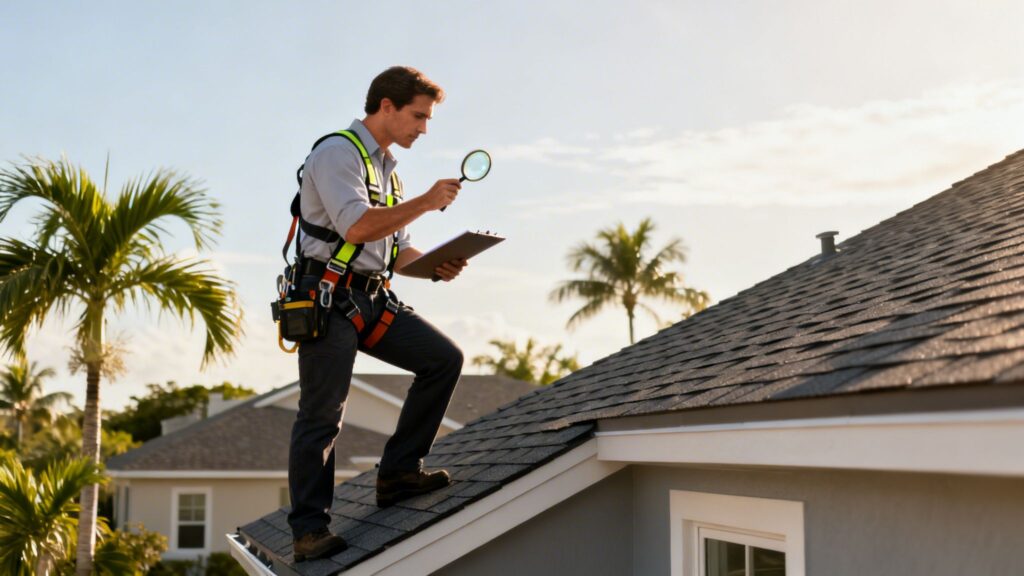
A visual reference for the kind of roof conditions owners often review after an inspection is available in this roof damage image example.
What works and what does not
What works is targeted repair based on where water enters. What does not work is smearing sealant over every suspect area and hoping the next storm tells you whether it held.
Here is the practical breakdown:
- Clogged drainage: Water backs up, sits where it should drain, and starts testing seams and edges.
- Failed flashing: Water gets in at a junction, then travels before it shows up inside. That makes the leak look far from its true source.
- Granule loss and surface wear: This weakens UV protection and tells you the roof is aging, even if it is not actively leaking yet.
- Soft decking: This is no longer just a surface-material problem. The structure underneath may already be compromised.
The roof rarely fails all at once. It usually gives warnings. The inspection is how you catch them while they are still repairable.
Understanding Your Roof Inspection Report
A good report answers three questions. What was found. Where is it. What should happen next. If the report does not do that, it is not helping you make a decision.

What should be in the report
A professional inspection should end with a detailed written report that includes photos, prioritized repairs, and cost estimates. In Florida, that paperwork matters after storms because 80% of insurance claims for roof damage involve issues such as nail pops or sagging that are identifiable in routine checks, and the report also supports insurance documentation and Florida Building Code compliance (vanguardroofs.com).
A useful report usually includes:
- Condition summary: overall roof status in plain language
- Photo documentation: close-up images tied to exact locations
- Finding descriptions: what the defect is and why it matters
- Repair priority: what needs immediate attention versus scheduled work
- Budget guidance: estimated repair or replacement costs
- Maintenance notes: items to watch on the next visit
How to read it like a homeowner, not a roofer
Do not get stuck on jargon. Focus on risk.
If the report says active leak signs, compromised flashing, soft spots, sagging, or failed penetrations, those are action items. If it notes isolated wear, mild granule loss, or minor sealant aging without signs of intrusion, that usually falls into planned maintenance or monitoring.
The key is context. One cracked tile on a younger roof is different from multiple cracked tiles near a valley after a storm. A little staining from an old issue is different from fresh moisture around current penetrations.
Questions worth asking before you approve work
When you review the report, ask direct questions:
- Is this actively leaking, likely to leak soon, or just showing age?
- Is the problem localized, or does it point to broader system wear?
- Can this be repaired properly, or is repair only delaying replacement?
- What should be fixed before the next storm cycle?
The best report does not pressure you. It gives you enough detail to make a clear decision without guessing what the photos mean.
From Report to Resolution Taking Your Next Steps
This is the part many homeowners do not get help with. They receive a report, see several findings, and are left trying to decide what matters first. The right move is not to treat every line item the same.
Use a traffic-light approach
A simple framework works well.
Red means act now.
This category includes active leaks, soft decking, sagging areas, failed flashing in leak-prone sections, exposed underlayment, and anything creating immediate water entry risk.
Yellow means schedule soon.
This covers developing issues such as aging seals, isolated cracked tiles, growing granule loss, blocked drainage, or corrosion that has not yet caused interior damage but should not be pushed off indefinitely.
Green means monitor.
These are minor cosmetic issues, limited wear with no leak path, or conditions that should be photographed and checked again at the next inspection.
Structural findings change the timeline
When inspectors find sagging or soft spots, the conversation changes. According to NRCIA, those conditions can signal water-damaged sheathing, and that damage can reduce load-bearing capacity by up to 50%. The same source notes that ignoring these issues can turn a simple repair into a full roof replacement, with typical residential replacement costs averaging $15,000 to $25,000 (nrcia.org).
That is why structural warnings belong in the red category even when the leak stain inside still looks small.
Emergency protection is not the same as repair
After a storm, owners often need two decisions, not one.
- Immediate stabilization (tarping, temporary waterproofing, and stopping active intrusion)
- Permanent correction (replacing damaged materials, rebuilding flashing details, correcting drainage, and repairing any affected deck)
Temporary protection buys time. It does not solve the defect that caused the water entry. If a report shows active intrusion points, treat emergency work as a bridge, not the finish line.
A practical rule is simple. Fix what can let water in before the next storm. Then schedule the less urgent maintenance items in an orderly way instead of waiting until they pile up into a much larger invoice.
Choosing the Right Inspector and What to Expect for Cost
Not every inspection is equal. Some are true evaluations. Some are sales appointments dressed up as inspections. The difference shows in the questions asked, the time spent on details, and the quality of the report you receive afterward.
What to verify before you book
Use a short screening checklist.
- Licensing and insurance: Confirm the company is licensed and insured for roofing work in Florida.
- Roof-type experience: Ask whether they regularly inspect tile, shingle, metal, or flat roofs like yours.
- Documentation process: Ask if you will receive photos, written findings, and repair priorities.
- Storm experience: In South Florida, they should understand post-storm assessment and insurance documentation.
- Local track record: Recent reviews from Broward, Miami-Dade, or Palm Beach matter more than generic testimonials.
If you want to confirm you are dealing with an established local company, even small details like business branding and documentation consistency can help. For example, this Paletz Roofing logo reference is the kind of basic business identifier you should expect to see matched across reports, vehicles, and communication.

What the cost should tell you
A professional roof inspection in South Florida may cost between $300 and $600. That is a realistic range for a documented inspection that helps prevent more expensive problems later. The reason many owners still hesitate is that they compare the inspection cost to doing nothing, not to the cost of emergency repairs.
That is the wrong comparison.
The better comparison is this. Proactive inspections can identify vulnerabilities before they turn into emergency repairs costing $5,000 to $15,000 after a hurricane or major storm, demonstrating considerable financial benefit.
If you want a broader consumer-style breakdown of how pricing can vary by roof size, access, and complexity, this guide to roof inspection cost is a helpful supplemental read.
What a good inspector does not do
Be careful with anyone who:
- Pushes replacement immediately: before showing evidence
- Avoids giving a report: and relies only on verbal claims
- Skips attic access when available: and still claims certainty
- Uses scare tactics: instead of explaining true risk and options
One local option in this market is Paletz Roofing and Inspections, which performs inspections for residential and commercial roofs in Broward, Miami-Dade, and Palm Beach and provides documented findings for shingle, tile, metal, and flat systems. That kind of scope matters when the goal is diagnosis first, not a rushed sales pitch.
Your Roofs Long-Term Health and Your Peace of Mind
A roof inspection gives you something most homeowners do not have until there is a problem. Clarity.
You find out how the roof is aging, where it is vulnerable, and whether the right move is repair, monitoring, or planning for replacement. That is what turns the inspection from a maintenance expense into a decision-making tool.
The long view saves money
The cheapest roof issue is the one you catch early. The expensive one is the issue that stayed hidden until wind-driven rain found it first.
Regular inspections help you stay ahead of that pattern. They also give you a written history of the roof’s condition, which is useful for insurance, real estate transactions, maintenance planning, and storm response.
Peace of mind does not come from assuming the roof is fine. It comes from knowing its true condition and acting before small defects become interior damage.
In South Florida, where weather can test a roof hard and fast, that knowledge is worth having before the next storm watch is issued.
Frequently Asked Questions About Roof Inspections
How often should I have my roof inspected in South Florida
Regular inspections make sense in this climate because sun, humidity, and storms accelerate wear. Many owners schedule these as part of routine maintenance and after major storm events. If the roof is older, has a history of repairs, or recently took wind exposure, the case for inspection gets stronger.
Can I inspect the roof myself
You can do a basic visual check from the ground and look for interior signs like stains or musty attic areas. That is useful.
It is not the same as a professional inspection. Roofers use safety gear, hands-on checks, and trained observation to spot flashing defects, soft areas, drainage problems, and hidden wear that most owners will miss.
What happens during a roof inspection if there is no visible leak
That is often the best time to inspect. The goal is to find vulnerabilities before they show up inside. Many problem areas start as worn seals, cracked tiles, blocked valleys, or drainage issues that have not yet produced a ceiling stain.
Will the inspection help with insurance
It can. A written report with photos and condition notes gives you documentation if storm damage becomes part of a claim. It also helps show that the roof was evaluated professionally rather than guessed at from the ground.
How long does a roof inspection take
It depends on roof size, pitch, accessibility, number of penetrations, and whether attic access is available. A simple home moves faster than a complex tile roof or a low-slope commercial building with multiple rooftop units.
Is a cheap or free inspection always a good deal
Not always. The value is in the quality of the assessment and documentation, not just the price. A low-cost inspection that produces no photos, no written report, and no useful prioritization can leave you just as uncertain as before.
What should I do right after I receive the report
Sort findings into immediate repairs, near-term scheduling, and monitor-only items. If the report shows active leaks, soft decking, sagging, or failed flashing in critical areas, act on those first. If it shows aging but stable conditions, plan the work before storm season instead of waiting for an emergency.
If you want a documented answer instead of a guess, Paletz Roofing and Inspections can help you understand what happens during a roof inspection, what your report means, and which next steps make sense for your home or property in Broward, Miami-Dade, or Palm Beach County.