
A residential drone roof inspection usually runs $150 to $400 per flight, while a traditional on-roof inspection is often $300 to $600. In many routine cases, that puts drone inspection at roughly half the price before you even factor in the safety and documentation advantages.
In South Florida, cost matters, but context matters more. A simple post-storm look at a one-story shingle roof in Broward isn't priced the same way as a tile roof in Palm Beach or a multi-structure commercial property in Miami-Dade. Wind exposure, insurance documentation, roof complexity, and the level of reporting you need all change the number.
Property owners here also deal with a reality that people in calmer markets don't always think about. You may need roof documentation fast after a storm. You may need clean photos for an insurance file. You may need a report detailed enough to support repairs, maintenance planning, or a sale. That's where drone inspections tend to make practical sense. They cut down climbing, reduce site time, and give you a clearer visual record of what's going on up there.
Table of Contents
- Understanding Drone Roof Inspection Costs in 2026
- What Determines Your Drone Roof Inspection Cost
- Drone vs Traditional Inspection Cost Breakdown
- Sample Inspection Scenarios in South Florida
- Using Drone Reports for Insurance and Permitting
- When Is a Drone Roof Inspection a Smart Investment
- Get Your Free Drone Inspection Quote Today
Understanding Drone Roof Inspection Costs in 2026
For homeowners trying to budget roof maintenance, the most useful starting point is this 2026 baseline: a residential drone roof inspection costs $150 to $400 per flight, while a traditional on-roof inspection often costs $300 to $600 according to SkyeBrowse's roof inspection cost breakdown. The same source notes that the on-site flight portion is often completed in 20 to 45 minutes, which helps explain why labor costs often come in lower.
That speed matters in South Florida. After a wind event, property owners don't just want someone to “take a look.” They want clear documentation, a safe process, and a report they can effectively use. On steep tile roofs, aging flat roofs, or wet surfaces after rain, avoiding unnecessary foot traffic is a real advantage.
Practical rule: If the roof can be documented accurately without sending a person walking across fragile or slick surfaces, that usually saves money and avoids preventable damage.
There's also a difference between price and value. A cheap inspection that gives you a few random photos isn't much help if you need to show storm damage, plan a repair, or compare conditions over time. A proper drone inspection should capture the roof systematically and give you visuals that are easy to review.
Why South Florida owners ask for drones more often
Local conditions change the conversation. South Florida roofs take abuse from sun, wind-driven rain, tropical weather, salt air near the coast, and debris impact after storms. That doesn't mean every roof needs advanced imaging, but it does mean good documentation has more value here than in a market with fewer weather-related claims.
For many owners, the main question isn't just “What does a drone roof inspection cost?” It's “What kind of inspection do I need for this property, right now?” That's the part that moves the quote.
What Determines Your Drone Roof Inspection Cost
A roof inspection quote isn't random. It usually comes down to the structure, the scope, and the deliverable. Two homes can sit on the same block and still get different pricing because one roof is straightforward and the other has valleys, height changes, delicate tile, or access issues that require more careful flight planning and more reporting time.

The roof itself drives the first part of the quote
A simple single-story roof is usually the fastest type of job. A multi-level roof with dormers, ridges, intersecting slopes, and attached structures takes more time to fly and more time to review afterward. The same goes for buildings with tight setbacks, tree cover, pool enclosures, power lines nearby, or limited takeoff space.
Here's what usually changes cost first:
- Roof size and layout: Larger roofs require more flight passes and more images to review.
- Story count: Taller buildings call for more careful positioning and often more time on site.
- Complexity: Tile transitions, parapets, multiple elevations, and roof penetrations all add work.
- Accessibility: Dense neighborhoods, waterfront wind exposure, and tight lot lines can complicate the operation.
Think of it this way. A basic ranch-style roof is one conversation. A two-story South Florida home with hips, valleys, and a heavy tile profile is another.
The report package changes the final number
The other major driver is what you want delivered at the end. Some owners need a basic visual report. Others need detailed mapping, marked damage areas, or thermal imaging to look for hidden moisture or heat anomalies.
According to Optamiss on drone roof inspection pricing, technical scope changes cost because inspections can use high-resolution RGB imagery plus infrared thermal sensors. That source says thermal add-ons commonly increase residential pricing by about $100 to $300, and advanced commercial packages with thermal overlays, AI analysis, and engineering-style reporting can move into the $5,000 to $12,000 tier for large properties.
A simple breakdown looks like this:
| Inspection element | Effect on cost | Why it matters |
|---|---|---|
| Basic photo capture | Lower | Good for general condition checks |
| Thermal imaging | Higher | Helps identify issues not visible from the ground |
| Orthomosaic mapping | Higher | Useful for planning and documentation |
| 3D modeling | Higher | Helps with measurements and complex roof review |
| Detailed annotations | Higher | Better for claims, maintenance, and contractor scope |
Don't buy more report than you need. But don't underbuy if the inspection is tied to an insurance claim, a real estate deal, or a complex repair plan.
Drone vs Traditional Inspection Cost Breakdown
Most property owners compare price first. That's normal. But the better comparison is cost, safety, speed, and proof. A cheaper method isn't really cheaper if it creates more risk, misses damage, or leaves you with weak documentation.

Where the money goes
Traditional inspections often involve ladder setup, roof access equipment, more manual labor, and more time physically moving across the roof. Drone inspections shift the cost into technology, pilot skill, image capture, and processing. For many routine residential jobs, that trade works in the owner's favor because the process is faster and less labor-heavy.
This is also why PropLab's insights on inspection pricing are useful in the broader property-inspection conversation. The total price of an inspection often reflects more than the visit itself. It reflects access difficulty, reporting depth, and how much risk the service provider has to carry.
For a visual example of how aerial documentation looks in the field, see this roof inspection image example.
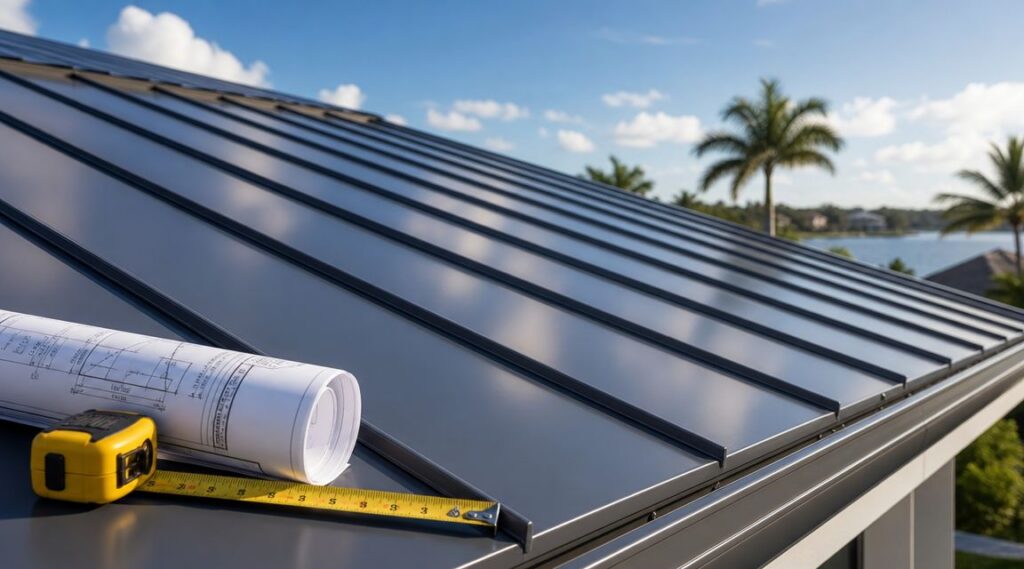
What you get back for the price
The biggest practical difference is that a drone creates a visual record that can be reviewed again later. That matters when a property owner, adjuster, buyer, or contractor needs to look at the same area without another trip up a ladder.
Here's the side-by-side reality:
- Safety: A drone keeps the operator on the ground. A manual inspection usually means climbing and walking the roof.
- Speed: Drone capture is generally faster on routine jobs. Manual inspections slow down when access is difficult.
- Surface impact: Fragile tile, aging shingles, and wet areas are less likely to be disturbed by a drone-first approach.
- Documentation: Drone inspections usually produce more complete visual coverage, especially on complex roofs.
Some roofs still need hands-on evaluation. If there's a question about soft decking, active leaks inside, or a specific repair detail, a roofer may still need physical access after the drone work.
That's why the smartest approach isn't “drone only” or “manual only.” It's using the drone for fast, safe, broad documentation, then sending a technician onto the roof only if the conditions require it.
Sample Inspection Scenarios in South Florida
The easiest way to understand drone roof inspection cost is to look at realistic local situations. These aren't promises or fixed quotes. They're practical examples based on the residential and commercial price ranges commonly seen in the market.

According to Aerially's drone roof inspection guide, residential work is typically priced at $150 to $500, while commercial inspections often fall in the $2,500 to $8,000+ range. That same source identifies the main cost drivers as roof size, story count, complexity, and whether thermal imaging or detailed deliverables such as orthomosaics and 3D models are included.
A related visual reference for roof condition reporting is this inspection photo sample.
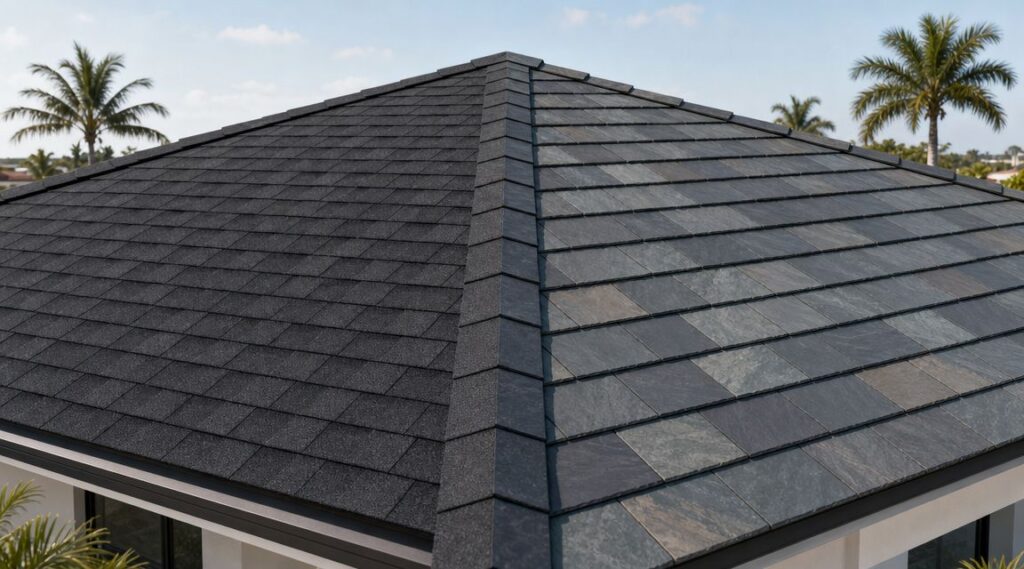
Scenario one after a storm on a typical single-family home
A one-story Broward County home with a straightforward shingle roof usually lands near the lower end of the residential range. The owner wants a post-storm check for lifted shingles, debris impact, flashing issues, and gutter edge damage.
That kind of job tends to stay affordable because the roof is easier to fly, easier to document, and doesn't need advanced deliverables. If the goal is a clear visual record for maintenance or initial insurance review, a basic report is often enough.
Scenario two a larger tile roof before a sale
Now take a two-story home in Palm Beach County with a more complex tile roof. The property owner is preparing for a sale and wants a detailed report that clearly shows roof condition, trouble spots, and overall layout.
This inspection usually prices higher within the residential band because tile roofs need careful review, upper elevations add complexity, and pre-sale documentation often needs to be cleaner and more complete. Buyers, sellers, and agents want fewer gray areas.
Scenario three a commercial roof with thermal imaging
A commercial property in Miami-Dade is different altogether. A large flat roof may require multiple flights, broader coverage, more post-processing, and thermal imaging to help identify moisture-related concerns. Once you move into detailed commercial reporting, the cost rises fast because the job is no longer just about flying the drone. It's also about processing, organizing, and delivering useful building-level information.
On commercial properties, the reporting package often costs more than the flight itself. Owners pay for interpretation and usable documentation, not just airborne photos.
Using Drone Reports for Insurance and Permitting
In South Florida, one of the strongest reasons to order a drone inspection is documentation. After a tropical storm, hurricane, or major rain event, people need more than a verbal opinion. They need organized images that show condition clearly and can be shared with insurance carriers, public adjusters, contractors, and property managers.
Why insurers respond better to organized visual records
Good drone reports help because they show the roof from angles that are hard to capture safely from a ladder. They also create a date-specific record. That matters when you're trying to show what changed after a storm or when you're sorting out whether damage appears isolated or spread across several roof sections.
The practical benefit is simple:
- Clearer claim support: You can point to actual roof areas, not just descriptions.
- Less confusion: Stakeholders review the same image set instead of trading conflicting notes.
- Safer post-storm assessment: The roof gets reviewed without sending people onto unstable or slippery surfaces right away.
For owners who like to understand how coastal property insurance concerns differ by market, this overview of coastal home insurance in Charleston SC is useful background reading. Different coastlines have different underwriting realities, but the need for strong roof documentation is familiar across storm-prone areas.
How drone reports help before repair work starts
A drone inspection usually doesn't replace the permit process. What it does do is give the roofer, owner, and sometimes the design or engineering side a better starting point. The images can help define scope, isolate damaged sections, and reduce confusion before repairs or replacement begin.
That matters on South Florida roofs because systems here often include tile details, flat-roof transitions, drains, flashing conditions, and edge areas that need close review before anyone prices or schedules the work.
A clean report won't solve every permitting issue. It will help everyone start from the same facts.
When Is a Drone Roof Inspection a Smart Investment
Not every roof problem requires a drone first. But there are situations where the value is obvious. If the inspection helps you avoid unnecessary walking, document storm damage early, or spot a developing issue before interior damage spreads, the cost is usually easy to justify.

The situations where it pays off fast
These are the cases where drone inspections tend to make the most sense:
- After a storm: You want fast roof documentation without waiting for someone to walk every surface.
- Before buying or selling: A full visual record helps reduce surprises.
- For routine maintenance: Regular photo-based comparisons make condition changes easier to track.
- On large or complex roofs: Multi-level homes, condos, and commercial buildings benefit from the broader view.
- For hard-to-access areas: Steep sections, fragile tile, and awkward transitions are safer to inspect from the air.
- During claims preparation: Organized images support a stronger file.
If you're also evaluating the hardware side of this field, TruTec's overview of the best drone hardware for inspections gives useful context on why equipment quality affects the final result.
A drone inspection is a smart investment when the cost of missing damage is higher than the cost of documenting the roof properly.
When it may not be the first tool you need
There are still times when old-school inspection methods matter. If a leak source needs physical tracing from inside the attic, if a repair requires tactile testing, or if someone needs to probe for soft substrate, a drone won't replace that work.
What it does well is narrow the problem, document the condition, and reduce guesswork before boots ever hit the roof. For many South Florida owners, that alone makes it worth doing.
Get Your Free Drone Inspection Quote Today
Drone roof inspection cost is usually reasonable compared with the value it can deliver. For many residential properties, the price lands well below traditional on-roof inspection methods, and the owner gets faster documentation with less safety risk. On larger or more technical properties, the quote rises because the reporting and imaging scope rises with it.
The smart move is to price the inspection against the decision you need to make. If you're dealing with storm concerns, insurance questions, maintenance planning, a sale, or a complex commercial roof, a drone inspection can save time and reduce uncertainty.
For brand information, you can view the Paletz Roofing and Inspections logo here.

The best quote is always property-specific. Roof design, height, access, and reporting requirements matter. A quick conversation and a few property details usually tell you whether you need a basic visual inspection or a more advanced package.
If you need a roof inspection in Broward, Miami-Dade, or Palm Beach County, contact Paletz Roofing and Inspections for a free quote. With over 30 years of South Florida roofing experience, they provide practical guidance, clear reporting, and inspection options built around the actual condition of your property.