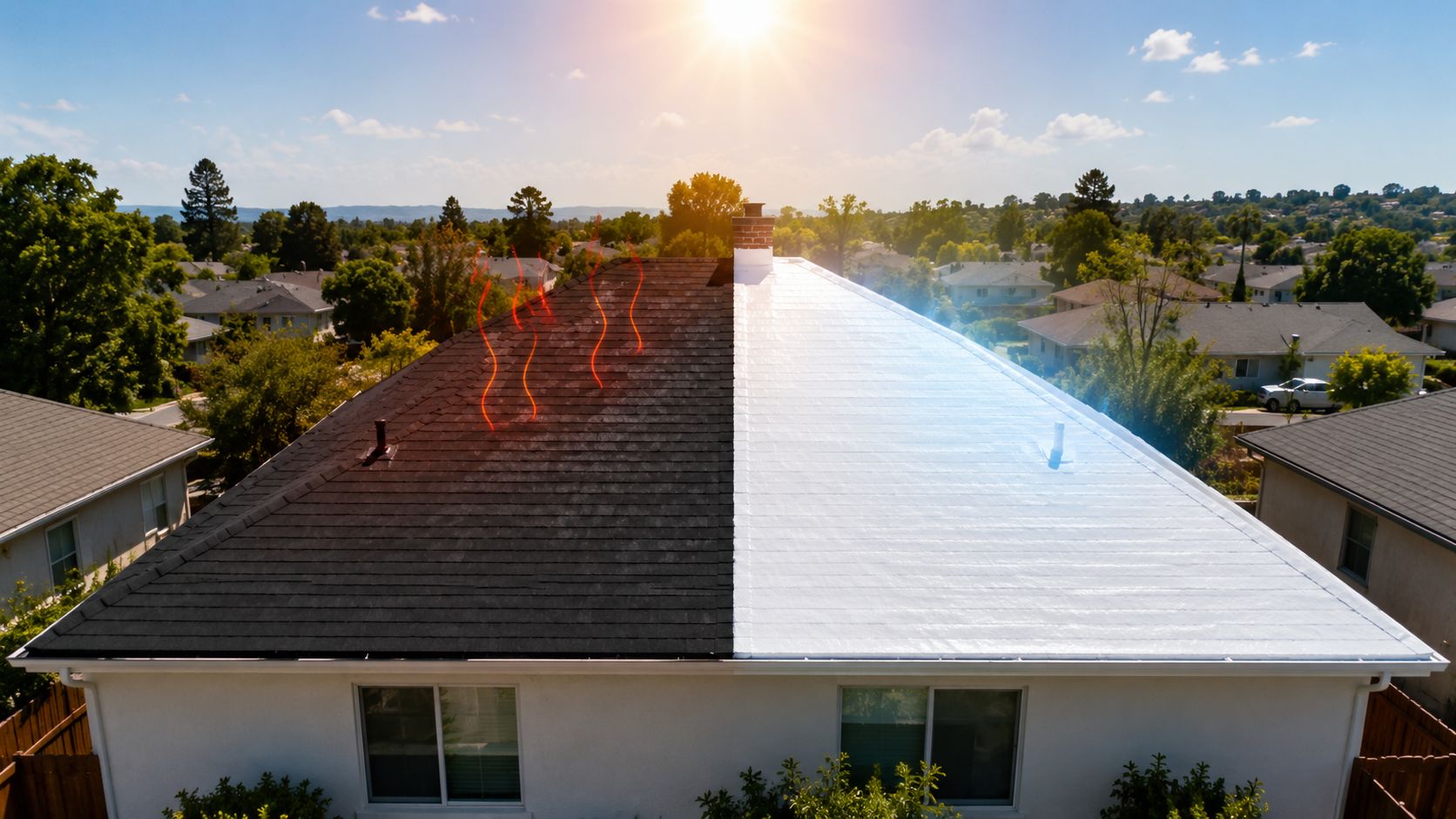
If you live in Broward, Miami-Dade, or Palm Beach, you already know the pattern. By late spring, the roof starts baking before lunch, the second floor gets stuffy, and the AC seems to run all afternoon without ever really catching up. Then the power bill shows up.
That's usually when people start asking about a reflective roof coating. They're not asking for a science lesson. They want to know whether it lowers heat, whether it protects the roof, and whether it still works after a few South Florida summers of humidity, wind, pollen, salt, and grime.
A reflective coating isn't some niche product anymore. The global reflective and cool roof coatings market was estimated at USD 4.9 billion in 2024 and projected to reach USD 9.4 billion by 2034, with the U.S. market at USD 1.22 billion in 2024 according to industry market estimates for reflective and cool roof coatings. That matters because it tells you this isn't a gimmick. Property owners use it at scale because, on the right roof, it solves a real heat problem.
In South Florida, the key question isn't just whether a coating can work. It's whether it will keep working after the roof gets dirty, after storms blow debris across it, and after the surface ages. That's where a lot of general articles stop too early.
Table of Contents
- Your Guide to Reflective Roof Coatings
- How a Reflective Roof Coating Actually Works
- Understanding the Numbers Behind Cool Roofs
- The Major Benefits for Your South Florida Property
- Is a Coating Right for Your Specific Roof System
- The Application Process and Long-Term Maintenance
- Cost ROI and Choosing a South Florida Contractor
Your Guide to Reflective Roof Coatings
A lot of South Florida owners come to this topic from the same place. The roof isn't failing outright, but the building feels hotter than it should. The AC keeps working. The attic or top floor stays warm into the evening. You start looking up and wondering whether the roof is absorbing more heat than it needs to.
That's where reflective coatings enter the conversation. On a roof that's still a good candidate, they can turn the surface from a heat sponge into more of a sun shield. Instead of letting the roof soak up daylong solar exposure, the coating helps bounce a large portion of that energy away before it drives heat into the structure.
For homeowners, that can mean a more comfortable living space and less strain on the cooling system. For commercial properties, it often means a roof retrofit option that can improve performance without jumping straight to full replacement.
A good mental image helps. Think of a dark roof in July like black asphalt in a parking lot. It absorbs and holds heat. A reflective roof coating changes that behavior. It's closer to putting a bright, sun-deflecting layer over the assembly, like swapping dark clothing for a white shirt in direct sun.
One reason these systems have become so common is simple. They address a real-world problem in warm climates. If you want a visual example of the kind of roof environment that often leads owners to ask about coatings, this South Florida roof surface example shows the sort of sun exposure that drives the discussion.

A reflective coating works best when you treat it as part of the roof system, not as a cosmetic add-on.
That distinction matters. Done right, a reflective roof coating can improve comfort, help control cooling costs, and reduce wear on the roof. Done on the wrong roof, or applied too thin, it won't deliver what people expect.
How a Reflective Roof Coating Actually Works
The easiest way to understand a reflective roof coating is to compare it to clothing in the sun. A black shirt gets hot fast because it absorbs solar energy. A white shirt stays more comfortable because it reflects more of that energy away. Roofs behave the same way.
A reflective roof coating is built to increase the roof's ability to bounce sunlight away and manage heat at the surface. One technical source describes reflective roof coatings as increasing surface reflectivity to 80% to 85% while managing thermal emissivity, helping reduce roof temperature and the expansion and contraction stress that ages roofing materials over time, according to these reflective roof coating technical FAQs.

It acts more like a roof membrane than paint
People often call it “white roof paint,” but that wording causes confusion. Paint is mainly decorative. A roof coating is a functional layer designed for exposure, movement, UV, and weather.
Once cured, the coating forms a continuous surface over the roof. On the right substrate, that layer helps the roof handle sun and temperature swings with less stress. In South Florida, where roofs go through repeated heating, cooling, rain, and drying, that stress reduction matters.
Here's the plain-English version of the mechanics:
- High reflectivity: The coating sends more sunlight back out instead of letting the roof absorb it.
- Heat management: The surface stays cooler, so less heat pushes downward into the building.
- Less movement: Cooler surfaces expand and contract less aggressively through the day.
- Lower wear: Reduced thermal cycling can help slow down cracking, seam stress, and aging.
Why the roof feels cooler underneath
The benefit isn't just on the roof surface. It shows up below the roof too.
If the roof skin runs cooler, the deck, insulation, and occupied space below aren't getting hammered by the same level of heat load. That can mean the top floor feels less harsh in the afternoon and the AC doesn't have to fight as hard to recover.
Practical rule: The coating doesn't “create” cool air. It reduces how much heat the roof dumps into the building in the first place.
That's why reflective roof coating makes the most sense where solar exposure is relentless. South Florida fits that profile almost year-round. It's also why roof condition still matters. If the roof has trapped moisture, failed seams, or active leaks, surface reflectivity won't fix the deeper problem.
Understanding the Numbers Behind Cool Roofs
A white roof can still run hotter than expected in August if the coating choice was wrong or the roof has already picked up grime, algae, and salt film. That is why the numbers matter. In South Florida, the best question is not just how reflective the coating looks on the install date. It is how well that performance holds up after heat, rain, humidity, and storm season.

The three ratings that matter
Solar reflectance measures how much sunlight the roof surface sends back instead of absorbing. Higher reflectance usually means the roof starts out cooler under direct sun.
Thermal emissivity measures how well the roof releases heat after it has absorbed some. A roof with good emissivity sheds heat faster once the sun load changes.
SRI, or Solar Reflectance Index, combines those two behaviors into one comparison number. For owners reviewing product sheets, it is a quick way to compare likely surface temperature performance across different materials.
Here is the plain-English version:
| Term | Plain meaning | Why it matters |
|---|---|---|
| Solar reflectance | How much sun the roof bounces away | Less absorbed heat |
| Thermal emissivity | How well the roof releases heat | Faster cooling after heating |
| SRI | Combined cooling performance indicator | Easier product comparison |
How to read a coating data sheet without getting lost
Start with reflectance, but do not stop there. One headline number never tells the whole story on a real roof in a humid coastal climate.
I tell owners to look at the coating the same way they would look at tires on a truck. The sticker matters, but wear rate, road conditions, and maintenance tell you how that product will perform over time. Roof coatings work the same way.
What deserves attention on the data sheet and in the field:
- Initial performance: A strong starting reflectance rating is useful, especially on roofs with full sun exposure.
- Aged performance: South Florida roofs get dirty fast. If the coating loses too much reflectivity after exposure, the cooling benefit fades.
- Required thickness: Coverage rates and dry film thickness affect whether the installed roof matches the published rating.
- Substrate fit: Metal, modified bitumen, single-ply, and previously coated roofs all have different prep needs and adhesion risks.
- Maintenance demand: A coating that performs well only when perfectly clean may need more washing and inspection than some owners expect.
That last point gets missed in a lot of general guides.
On a South Florida roof, lifecycle performance matters more than day-one appearance. Ponding stains, airborne debris, mildew growth, and salt residue can drag down the numbers that looked great on paper. A coating can still be a smart move, but only if the owner plans for inspections, cleaning, and touch-ups after storms. You can see the kind of roof conditions that affect long-term coating performance in this South Florida flat roof example.

Ratings also need context. A reflective coating lowers solar heat gain through the roof surface, but ventilation, insulation levels, roof color underneath, and interior use all affect the result. If you are comparing roof upgrades as a package, this guide to roof vent installation cost helps frame one of the other pieces that can affect attic and upper-floor heat buildup.
The practical takeaway is simple. Use the numbers to compare products, then judge those numbers against your roof condition, maintenance habits, and how the building handles heat and moisture over time.
The Major Benefits for Your South Florida Property
A South Florida roof takes a beating by two in the afternoon. The ceiling below it feels warmer, the AC runs longer, and the roof surface keeps absorbing heat until a storm rolls through. A reflective coating can cut that daily heat load, but the lasting benefit is what happens over years of sun, humidity, salt air, and repeated storm cleanup.

Lower cooling load and less wear on the AC
The first benefit owners usually notice is lower heat gain through the roof. A bright, reflective surface sends more sunlight back out instead of letting that heat soak into the roof assembly. On the right building, that can mean shorter AC cycles during the hottest part of the day and less temperature creep in rooms under the roof.
That matters in South Florida because cooling systems already work hard for much of the year. If the roof passes less heat indoors, the equipment has less to fight. Lower runtime can help with power bills, but it also reduces some of the day-after-day strain on the system.
If you're weighing multiple upgrades at once, this guide to roof vent installation cost is useful because ventilation and roof reflectivity often solve different parts of the same heat problem.
Better comfort where people actually feel it
The comfort benefit is usually more immediate than the utility-bill benefit. Top-floor rooms, perimeter spaces, and areas right under low-slope roofs often stop feeling as loaded with afternoon heat.
That said, a coating is not a cure-all. If the attic is poorly vented, the insulation is thin, or ductwork is leaking cold air into a hot space, some of that discomfort will stay put. Good coating work helps most when the roof is a major source of heat gain, not when the main problem is elsewhere.
A sun-exposed South Florida roof area like this shows the kind of surface where reducing absorbed heat can make a noticeable difference indoors.
Slower roof aging, if you maintain the coating
South Florida owners should also look past day-one reflectivity. A coating helps most by lowering surface temperature over time, which reduces some of the expansion, contraction, and UV wear that age a roof early. On a sound roof system, that can support longer service life and buy time before a full replacement.
But climate affects the conversation. In a humid, storm-prone area, the coating has to stay clean and intact to keep doing its job well. Algae, mildew film, salt residue, standing water marks, and storm debris can dull the surface. That means the long-term value comes from inspection and upkeep, not just the initial application.
I tell owners to treat a reflective coating like the white shirt of the roof system. It performs best when it stays clean. If no one plans to check drains, wash buildup, and repair small storm-related damage before it spreads, the benefit drops faster than many sales pages admit.
One upgrade, two kinds of payoff
A good reflective coating can lower indoor heat and help protect the roof surface at the same time. That combination is what makes it attractive in South Florida. You are not just chasing a cooler building today. You are also trying to reduce wear from constant sun exposure in a climate where roofs rarely get a long break.
The trade-off is simple. Owners who want the longest benefit need to budget for maintenance, especially after heavy rain and wind events. On the right roof, with realistic upkeep, coatings can deliver meaningful value well beyond the first bright, clean month after application.
Is a Coating Right for Your Specific Roof System
Reflective roof coating works well on some roofs and makes very little sense on others. That's the part many sales-driven articles skip. Roof type, age, condition, slope, existing damage, and owner expectations all matter.
The EPA notes that cool roofs can cut peak cooling demand by 11% to 27% in air-conditioned residential buildings, but it also warns that coatings aren't a universal fix and that the choice to coat versus replace depends heavily on the roof's condition, as explained in the EPA guidance on using cool roofs to reduce heat islands.
Roof types that usually make sense
Low-slope and flat roofs are usually the clearest candidates. Modified bitumen, certain single-ply systems, and many commercial roof assemblies often respond well because they have broad sun-exposed surfaces and are commonly coated as part of a restoration plan.
Metal roofs can also be strong candidates if the panels are sound and the fasteners, seams, and penetrations are addressed first. A coating can help reduce heat and shield the metal from ongoing exposure.
Tile roofs are more nuanced. The idea can work in some situations, but tile systems require more caution because the roof sheds water differently, the profile is irregular, and the success of any coating depends on the product, the tile condition, and the installation method.
When coating is the wrong move
A coating is not a shortcut around roof repair. If the roof leaks now, the leak source has to be found and fixed. If you're sorting through that first, this practical guide on repairing a leaky roof gives a good baseline for understanding why source diagnosis matters before any surface treatment goes on.
Some roofs should not be coated until major issues are corrected. Common red flags include:
- Active leaks: Water intrusion has to be traced and repaired before coating.
- Severe ponding: Standing water can point to drainage or structural issues.
- End-of-life membranes: If the base roof is failing broadly, coating may only delay a replacement decision.
- Hidden moisture: A dry-looking surface can still conceal deeper damage.
- Wrong expectations: Coating is for heat and surface protection, not for solving every roof problem.
A quick decision guide helps:
| Roof condition | Coating fit |
|---|---|
| Sound low-slope roof with aging surface | Often a good fit |
| Metal roof with manageable seams and no major failures | Often a good fit |
| Roof with active widespread leaks | Poor fit until repairs are complete |
| Roof near full failure or structural trouble | Replacement is usually the better path |
If the roof system is weak underneath, a bright white top layer won't rescue it.
That's the honest answer. Reflective roof coating is a tool. It's a good one. But it only works when the roof underneath is still worth protecting.
The Application Process and Long-Term Maintenance
The difference between a coating that performs and one that disappoints usually starts before the first bucket is opened. Most failures aren't about the idea of reflective coating. They come from poor prep, rushed detailing, wrong material choice, or thin application.
What a proper application looks like
A professional coating job usually follows a disciplined sequence, not a quick spray-and-go approach.
Inspection first
The roof gets checked for wet areas, seam failure, flashing problems, ponding, punctures, open laps, rust, and movement cracks.Cleaning the surface
Coatings don't bond well to dirt, chalk, grease, mildew, or loose residue. On South Florida roofs, cleaning is a major part of the job because humidity and airborne debris leave buildup behind.Repairs before coating
Seams, penetrations, drains, transitions, and damaged sections need attention first. Coating should go over a prepared roof, not a neglected one.Primer if required
Some substrates need a primer for adhesion and system compatibility.Application to the specified thickness
Coverage rate matters. If the coating goes on too thin, performance and durability suffer.
How South Florida weather changes the maintenance plan
Considering real-world ownership, long-term performance depends on keeping the surface able to reflect sunlight. Independent guidance notes that dirt and debris can reduce a coating's initial high solar reflectance, which is why ongoing cleaning and inspection matter, especially in humid or dusty climates, according to this article on cool roofing and reflective roof coatings over time.
In South Florida, the maintenance issues are predictable:
- Organic growth: Algae and grime can stain a light roof and reduce reflectivity.
- Storm debris: Leaves, branches, and dirt collect around drains and low spots.
- Salt and airborne residue: Coastal exposure leaves surfaces dirtier faster.
- Foot traffic wear: Service trades can damage coating around equipment and paths.
A practical maintenance plan usually includes periodic inspection, cleaning when the surface gets noticeably dirty, and checking details after major storms. Owners who skip that part often blame the coating when neglect is at fault.
A reflective roof coating keeps its value only if the surface stays reflective.
That's the lifecycle point many articles miss. Installation day is only the beginning. In a hot, humid climate, maintenance protects the energy benefit.
Cost ROI and Choosing a South Florida Contractor
Price matters, but roof coating decisions shouldn't be made on price alone. The cheapest proposal often cuts the exact things that control performance: cleaning, repair detail, primer selection, film thickness, and inspection.

What drives cost and payoff
One benchmark source says reflective coatings often show a payback period of 3 to 5 years through energy savings of 20% to 30%, and that achieving that return depends on correct application, including two coats at 15 wet mils each in one product example, as described in this cool roof system reflective coating guide.
That's a useful benchmark because it highlights what owners sometimes miss. ROI doesn't come from buying coating material. It comes from getting the system applied correctly so the roof performs effectively.
The cost side usually moves based on a few practical factors:
- Roof condition: Dirty, damaged, or detail-heavy roofs take more labor.
- Roof type: Metal, low-slope membrane, and other substrates each need different prep.
- Accessibility: Multi-story buildings and limited access slow production.
- Drainage and detail work: Curbs, penetrations, seams, and edges all add labor.
- Maintenance outlook: A roof that can be maintained properly protects the payoff.
What to check before you hire anyone
A good coating contractor should be comfortable talking about prep work in detail. If the conversation jumps straight to bright white finish and energy savings, that's not enough.
Ask direct questions:
| What to ask | Why it matters |
|---|---|
| How will you clean and prep this roof? | Adhesion starts there |
| What repairs happen before coating? | Coating should protect, not hide defects |
| What thickness are you applying? | Film build affects durability and reflectivity |
| How will drains, penetrations, and seams be handled? | These are common failure points |
| What maintenance should happen after install? | Long-term performance depends on it |
You should also verify licensing, insurance, local experience, and whether the contractor has worked on your specific roof type in South Florida conditions. A polished proposal means very little if the crew doesn't understand humidity, storm exposure, and how quickly dirt can change roof performance here.
For a local contractor snapshot, this Paletz Roofing and Inspections logo reference points to a South Florida roofing company profile, but the same vetting logic applies to any contractor you consider.

A reflective roof coating can be a smart move. It can lower heat load, protect the roof surface, and delay bigger expenses. But the return depends on selecting the right roof, the right system, and the right installer.
If your roof is running hot and you want a straight answer on whether a reflective coating makes sense, contact Paletz Roofing and Inspections. Their team serves Broward, Miami-Dade, and Palm Beach, and they can inspect the roof, explain whether coating or replacement is the better path, and provide a clear estimate based on the actual condition of your system.