Figuring out what an affordable roof really costs in Wellington, FL, can feel like trying to hit a moving target. The truth is, local factors play a huge role. Prices are driven by everything from material choices and labor rates to Florida's notoriously strict building codes, which are all designed to keep your home safe during a storm. Getting a handle on these key elements is the first step toward making a smart, cost-effective decision for your home.
Decoding Wellington Roofing Costs

When a roofing quote lands in your inbox, you're looking at more than just the price of shingles and nails. That final number is a complex blend of local economic trends, our unique climate demands, and the specific regulations here in South Florida. It's so important to look past the bottom line and understand what's actually driving the cost.
So, what's behind the price tag on a Wellington roof? A few key things tend to push quotes up:
- Skilled Labor Demand: There's high demand for experienced, licensed roofers, especially after a big storm rolls through. That competition can nudge labor costs higher.
- Hurricane-Rated Materials: Florida doesn't mess around. Building codes require materials tough enough to handle high winds, and these options naturally cost more than standard-grade stuff.
- Permitting and Inspection Fees: The administrative costs for pulling permits and scheduling mandatory inspections in Palm Beach County get factored directly into your total price.
- Supply Chain Hurdles: Like just about every industry, roofing has its share of delays and price swings for materials like metal, tile, and the all-important underlayment.
Understanding the Local Market Dynamics
The roofing market in Wellington isn't just about shingles; it's tied to broader construction trends. Shifting regulations and economic conditions have a direct impact on both the cost and the long-term resilience of your roof.
Right now, Florida's construction industry is growing, which is great for the economy but puts upward pressure on wages and material prices. For homeowners, that makes finding true affordability a bit more of a challenge.
This is exactly why you have to focus on long-term value, not just the lowest price you can find today. A cheap bid might feel like a win now, but if it comes from using subpar materials or cutting corners on installation, you could be looking at premature repairs—or worse, a roof that fails during the next hurricane.
A truly "affordable" roof isn't the one with the lowest sticker price. It's the one that delivers the best performance and protection for your investment over the next 20 to 30 years.
Finding True Value in Your Roofing Project
To get an affordable roof without sacrificing an ounce of quality, you need to think strategically. This means getting detailed, itemized estimates from a few reputable contractors and comparing them apple-to-apples. Ask them where they source their materials and have them explain how each component contributes to the final price.
This is about making an informed decision, not just a cheap one.
For homeowners who really want to dig into optimizing project costs, it helps to understand the principles of value engineering in construction. This approach is all about achieving the necessary function at the lowest possible life-cycle cost—which aligns perfectly with getting a durable, affordable roof in Wellington. By getting smart about these cost drivers, you'll be in a much better position to navigate contractor quotes and invest wisely in your home’s most important shield.
Choosing Smart Materials For Your Budget And Climate
The single biggest factor driving your roof's final cost and long-term durability is the material you choose. When you're looking for affordable roofing in Wellington FL, it's about more than just the initial price tag. You have to consider how any material will hold up under the relentless Florida sun and, of course, during hurricane season.
Your choice here will echo for decades, influencing everything from your monthly energy bills to future maintenance costs. Making a smart decision now is all about striking that perfect balance between what you pay today and the value you get for the next 20 or 30 years.
Comparing Popular Wellington Roofing Options
For most homeowners I talk to in our area, the decision really boils down to three main contenders: architectural shingles, metal roofing, and traditional tile. Each one has a completely different profile when it comes to cost, how long it'll last, and how it handles our unique climate.
Architectural shingles are usually the go-to for anyone keeping a close eye on the budget. They're a huge leap forward in durability from the old-school 3-tab shingles and can handle winds well over 100 mph when installed correctly—a non-negotiable feature here in South Florida.
Metal roofing, which people used to see only on commercial buildings, has become incredibly popular for homes. Why? Incredible longevity and fantastic energy efficiency. The initial investment is higher, no doubt, but a metal roof can easily last 50 years or more. Plus, it reflects solar heat, which can genuinely lower your cooling costs during those sweltering Wellington summers.
Finally, you have tile roofing (both clay and concrete), which gives you that classic Florida look and is exceptionally durable. It’s highly resistant to fire, rot, and insects, making it a tough, long-term investment, though it is the most expensive of the three.
This image gives you a good side-by-side look at what we're talking about.
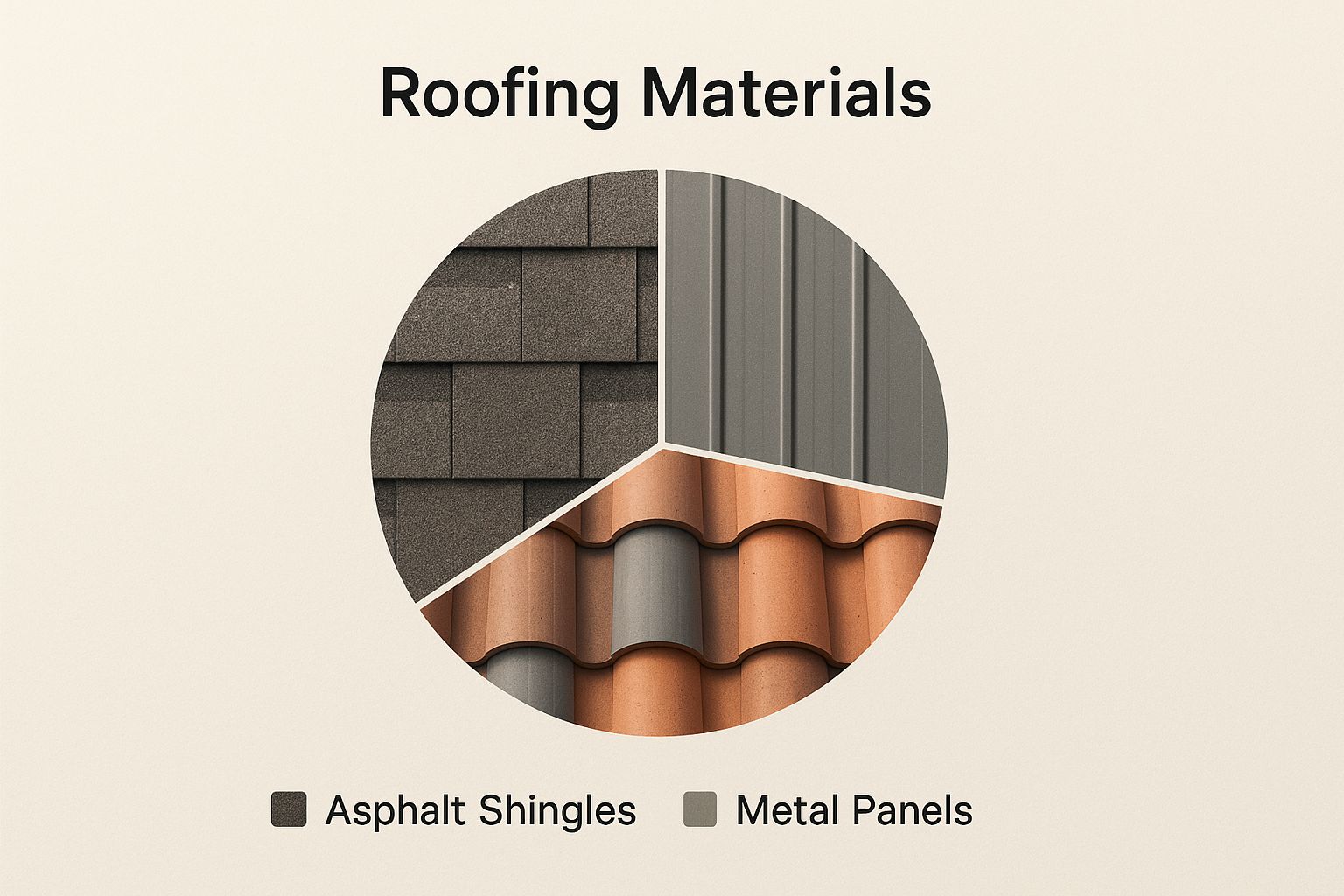
You can really see the distinct textures and construction of architectural shingles, metal panels, and clay tiles, which helps give you a better feel for their aesthetic and structural differences.
Balancing Upfront Cost With Long-Term Value
It’s so tempting to just pick the material with the lowest installation price. I've seen it happen time and time again. But that approach can easily backfire, leading to higher costs down the road from frequent repairs or, even worse, a full replacement much sooner than you expected.
The key to true affordability is finding that sweet spot where the upfront expense and lifetime performance meet.
Here’s a real-world scenario I see play out all the time:
A homeowner opts for basic shingles to save $5,000 on the initial installation. But after just 15 years and a few costly storm repairs, they're already facing another full replacement. Meanwhile, their neighbor who invested more upfront in a metal roof won't have to even think about it again for another 35 years—all while saving a little on their FPL bill every month.
To give you a clearer picture, I've put together a simple table that breaks down what you can generally expect to see for projects in the Wellington area.
Wellington FL Roofing Material Cost and Lifespan Comparison
This table offers a straightforward comparison of the most common roofing materials we install. It's designed to help you weigh the upfront costs against the expected lifespan here in the Florida climate, along with the main benefit each one offers.
| Material Type | Average Cost per Square Foot (Installed) | Expected Lifespan (in Florida) | Primary Benefit |
|---|---|---|---|
| Architectural Shingles | $4.50 – $7.00 | 20-30 years | Best upfront value and great curb appeal. |
| Standing Seam Metal | $9.00 – $16.00 | 50+ years | Superior durability and energy efficiency. |
| Clay or Concrete Tile | $12.00 – $25.00 | 50+ years | Classic look and extreme weather resistance. |
Remember, these are just ballpark figures. The final cost will always depend on your roof's specific size, complexity, and the contractor you choose to work with.
Still, this gives you a solid framework for comparing your options. The goal isn't just to pick a material that fits your budget today, but one that will protect your home and your finances for many years to come.
How To Find And Vet Wellington Roofing Contractors
Let's be honest, choosing the right contractor is just as important as picking the perfect roofing materials. I've seen it happen too many times: a rock-bottom quote from a questionable company quickly turns into an expensive, long-term headache for the homeowner.
Finding a genuinely affordable roofer in Wellington, FL, means hiring a skilled, trustworthy professional who will get the job done right the first time. This process is about more than just collecting a few bids—it's about doing your homework to protect your home. The right roofer ensures your investment is sound, your new roof is up to code, and your family is safe when the next storm season hits.
Building Your Shortlist of Local Roofers
First things first, start by talking to people you trust. Ask your neighbors here in Wellington, friends, or coworkers who've had roof work done recently. You can't beat a personal referral from someone who has firsthand experience.
After you've gathered some names, it's time to do a little online digging. Look for contractors who have a solid, consistent presence and positive reviews on sites like Google, Angi, and the Better Business Bureau. A long track record of happy customers is a fantastic sign of professionalism and quality work.
The good news for homeowners is that the roofing industry is competitive. As of 2024, there are nearly 99,000 roofing businesses across the country, so you have plenty of options to choose from. This competition allows you to be selective and find the perfect fit for your project.
The Non-Negotiable Contractor Checklist
Okay, once you have a shortlist of three or four potential roofers, it's time to put them to the test. Before you even think about scheduling a consultation, you need to verify a few essentials. There is absolutely no wiggle room on these points.
Your roofer must have:
- A Valid Florida State License: Always verify their license number is active and in good standing with the Florida Department of Business and Professional Regulation (DBPR).
- General Liability Insurance: This is what protects your property from any accidental damage during the project. Ask for a current certificate of insurance.
- Worker's Compensation Insurance: This is a big one. It protects you from being held liable if a worker gets injured on your property. Without it, you could be on the hook financially.
Do not move forward with any contractor who cannot immediately provide proof of all three. A reputable, professional company will have these documents ready and will be happy to share them.
Digging Deeper During The Consultation
During your consultations, pay close attention to how the contractor approaches the job. A true professional will conduct a thorough inspection of your roof, not just give it a quick glance from the ground. They should get up there and really look around.
When checking out potential roofers, see if they’re using modern methods. Some of the more forward-thinking companies will utilize drone technology for detailed construction inspections, giving them a comprehensive look at your roof's condition without ever having to set foot on a single shingle. It shows they're invested in doing the job right.
Finally, a detailed, itemized estimate is the mark of a true professional. Vague, one-line quotes are a major red flag. Your estimate should clearly break down the costs for materials, labor, permits, and any other potential expenses. That way, you know exactly what you’re paying for.
Squeezing Value Out of Florida's Building Codes
Most people hear "building codes" and think of headaches and red tape. But if you’re a savvy homeowner in Florida, you start to see them differently. They’re not just rules; they’re your roadmap to a stronger, more cost-effective roof. This is especially true in high-wind zones like Wellington, where every regulation is designed to keep your home in one piece when a storm rolls through.
Instead of seeing codes as a burden, I tell my clients to think of them as an advantage. When a roof is installed to meet—or even better, exceed—these standards, it’s just plain tougher. It holds up better, lasts longer, and won’t need nearly as many expensive patch-ups after a hurricane. That’s the real secret to finding affordable roofing in Wellington FL: you stop focusing on the upfront price tag and start thinking about long-term value and resilience.
The 25 Percent Rule and Your Wallet
One of the most important regulations for any Florida homeowner to get familiar with is the "25% Roof Replacement Rule." For years, this rule was a source of major financial pain. If a storm damaged just over a quarter of your roof, you were often on the hook for a full, and very expensive, replacement.
Thankfully, recent updates have brought some common sense back into the equation. There's a key change you need to know about: if your roof was put on after March 2009 and met the code at the time, you only have to repair the damaged sections, as long as the damage is less than 25% of the total roof. This small tweak can literally save you thousands of dollars, turning a potential catastrophe into a much more manageable repair. You can find more details about these critical roofing trends on whaleroofing.com.
Turning Code Compliance into Insurance Savings
Getting your roof up to code does more than just help you sidestep unnecessary replacements. It unlocks one of the most powerful financial perks available to Florida homeowners: lower insurance premiums. Insurance companies absolutely love a new, code-compliant roof.
An investment in a wind-mitigated, hurricane-rated roof isn't just an expense. It's one of the most direct ways to slash your annual homeowner's insurance bill. Many carriers give huge discounts to homes that are properly fortified against storms.
When you're getting quotes from roofers, make sure to ask them about the specific features that will get you those insurance discounts. You're looking for things like:
- Hurricane Straps: These are simple metal connectors that anchor your roof structure to the walls. They make a massive difference in preventing the roof from lifting off in high winds.
- Impact-Rated Shingles or Tiles: These aren't your standard materials. They've been specifically engineered and tested to withstand hits from flying debris during a major storm.
- Secondary Water Resistance: Think of this as a backup plan. It’s an extra layer of protection installed under your main roofing material that stops water from getting in, even if your shingles or tiles are damaged.
By making sure your new roof includes these features, you’re not just buying a safer home. You're building a system for ongoing savings that makes the entire project more affordable over its lifespan.
Smart Budgeting For Your Wellington Roof
Putting together a solid budget is the secret to a stress-free roofing project. When homeowners in Wellington, FL think about getting an affordable roof, their focus tends to zero in on the contractor’s quote. But that number is just one piece of a much bigger financial puzzle.
A truly smart budget takes every potential cost into account, from the obvious ones to the little surprises that can pop up along the way. This kind of foresight is what keeps last-minute financial strains and unnecessary stress out of the picture. Thinking beyond the initial estimate gives you a real-world picture of the total investment needed to protect your home.
Looking Beyond The Main Quote
Any detailed estimate from a reputable roofer will be comprehensive, but there are still other costs you’ll want to plan for. These are items that might not be in every quote but are common parts of roofing projects right here in Wellington.
Be ready to factor these into your numbers:
- Permit Fees: Palm Beach County requires permits for most roofing work. It’s an unavoidable cost of doing things the right way.
- Decking Replacement: It’s pretty common for contractors to pull off old shingles and find rotten or damaged plywood underneath. A good quote will list a per-sheet replacement cost, but it's always smart to budget for at least a few sheets just in case.
- Dumpster and Disposal Fees: All that old roofing material has to go somewhere. Make sure this cost is either built into your quote or something you've budgeted for separately.
Pro Tip: I always tell homeowners to set aside a contingency fund of 10-15% of the total project cost. This buffer is your peace of mind—it’s there to cover unexpected issues like hidden water damage without completely derailing your budget.
Financing Your New Roof
Not everyone has the cash sitting in the bank for a full roof replacement, and that's perfectly normal. The good news is that Wellington homeowners have several great financing options to make the project much more manageable.
A popular choice is a Home Equity Line of Credit (HELOC). This lets you borrow against the equity you’ve already built in your home, and the interest rates are often lower than other types of loans. Another solid option is a standard home improvement loan from your local bank or credit union.
Many roofing companies also offer their own financing programs, including our team here at Paletz Roofing and Inspections. These are designed specifically for roofing jobs, which means they often have a simple application process and competitive terms, putting a high-quality roof within easier reach.
Tapping Into Insurance Credits
Here's a powerful way to make your new roof more affordable over the long haul: homeowner's insurance credits. In Florida, insurers give significant discounts for homes that have wind mitigation features meeting or exceeding current building codes.
Putting on a new, hurricane-rated roof is one of the single most effective ways to qualify for these credits. These upgrades aren't just about safety; they deliver a direct return on your investment through lower annual premiums. Just make sure to ask your roofer to document all the wind-resistant features for your insurance agent.
Your Top Wellington Roofing Questions Answered
When you’re thinking about a project as big as a new roof, you're bound to have questions. It's a major investment, and getting clear, straight-up answers is the only way to feel confident moving forward. We've pulled together the most common questions we hear from Wellington homeowners to give you the clarity you need.
This isn't just about the nuts and bolts of roofing. It’s about understanding the entire process, knowing what’s coming next, and making sure you’re getting real value for your home. Finding affordable roofing in Wellington FL is a lot simpler when you know what to ask.
How Long Will My Roof Replacement Take?
This is almost always the first thing people ask, and for good reason. For a typical single-family home here in Wellington, a full roof replacement usually takes between two to five days.
Of course, that timeline isn't set in stone. A few things can nudge it one way or the other:
- Weather: We all know about South Florida’s afternoon thunderstorms. For everyone's safety, crews have to stop work during rain or lightning.
- Roof Complexity: A simple, single-story gable roof is a much quicker job than a multi-level roof loaded with steep pitches, valleys, and dormers.
- Material Choice: Lighter materials like architectural shingles can often go on faster than heavier options, such as concrete tiles.
Your contractor should give you a solid, realistic timeline before they start and keep you in the loop as the project progresses.
What Kind Of Warranty Should I Expect?
A solid warranty is your safety net, and it should always have two parts. First up is the manufacturer’s warranty. This covers the actual roofing materials against any defects and can run anywhere from 20 years to a lifetime, depending on the product you choose.
The second part, which is arguably even more important, is the workmanship warranty from your roofer. This protects you from any issues caused by the installation itself. A roofer who stands by their work will offer a warranty of at least 5 to 10 years.
Will My Roof Replacement Help With Insurance?
Absolutely. In Florida, putting on a new roof that’s up to current building codes is one of the best ways to lower your homeowner’s insurance premiums. When your new roof has wind mitigation features—think hurricane straps and a secondary water barrier—you can qualify for some serious discounts.
Once the job is done, you’ll need a Wind Mitigation Inspection Report to send to your insurance company. This is the official document that proves the upgrades have been made and unlocks those potential savings. Many homeowners find that the drop in their premium helps the new roof pay for itself over time. It's a smart financial move.
Ready to get clear answers for your specific roofing needs? The expert team at Paletz Roofing and Inspections has been serving Wellington and Palm Beach County for over 30 years. We’re here to provide a thorough inspection and a no-obligation quote. Schedule your free estimate today.