
If you've ever looked at your roof and wondered, "Where did those ugly black streaks come from?" you're not alone. Those aren't dirt stains. They're actually a living organism setting up camp on your shingles. For homeowners in Lantana dealing with algae stains on shingles, the problem is almost always a pesky algae called Gloeocapsa magma.
What Are Those Black Streaks on Your Lantana Roof?
This stuff thrives in Florida’s warm, humid climate and, unfortunately, it loves to snack on the limestone filler used in most asphalt shingles.
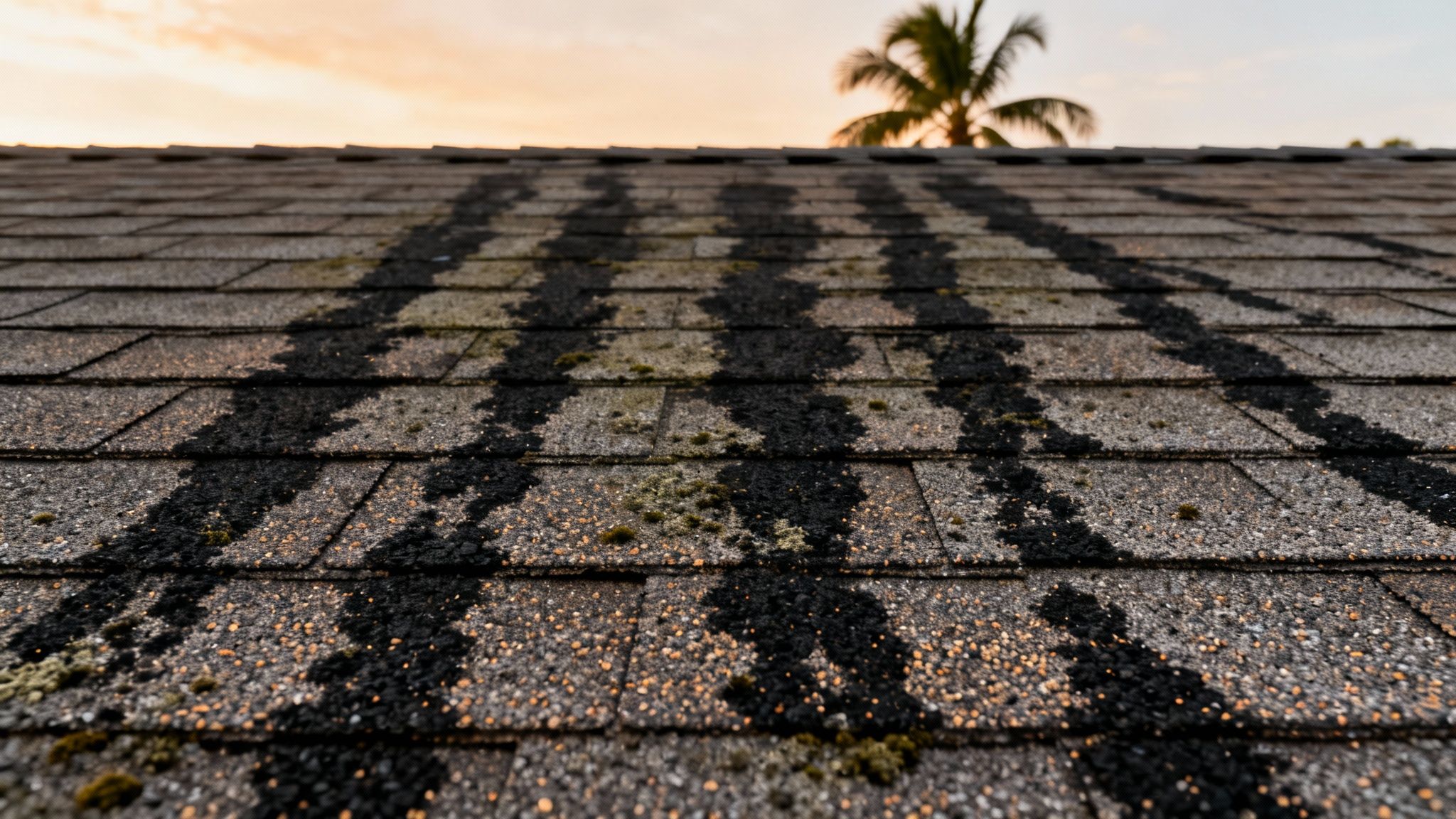
Those dark, vertical streaks you see running down your roof are a classic sign of this specific blue-green algae. It's airborne, which means it can easily hop from one roof to another, quickly spreading throughout a neighborhood. It's a common sight for us here in Lantana.
That dark, hardened outer shell you see is the algae's own version of sunscreen, a defense mechanism to protect itself from harsh UV rays. The real problem for you, though, is that this dark coloring absorbs a ton of heat. This can crank up the temperature in your attic and lead to higher cooling bills during our brutal Florida summers.
So, it's more than just an eyesore; it's a biological process happening right over your head. You can get a clear look at how this algae spreads in some of the photos from our roofing project gallery, showing just how much it can impact a home's appearance.
Why Your Shingles Are the Perfect Home for Algae
Asphalt shingles, particularly older ones, are made with limestone as a filler. For Gloeocapsa magma, that limestone is a five-star meal, giving it all the nutrients it needs to spread like wildfire. The whole process gets kicked into high gear by a few key factors that are all too familiar here in the Lantana area:
- High Humidity: South Florida’s climate is basically a permanent pool party for algae, providing the constant moisture it needs.
- Frequent Rain: All our rain keeps the shingles damp, creating the perfect breeding ground.
- Warm Temperatures: Our year-round warmth means the algae is always in growth mode.
This has become a massive issue. In humid climates, over 70% of asphalt shingle roofs show signs of algae discoloration within just 10 years. In a place like Lantana, some studies suggest that number is closer to 60% of homes in just 5 to 7 years. You can learn more about this shingle-eating organism to understand the full scope of the problem.
Key Takeaway: Those black streaks aren't just dirt or a sign of an old roof. It's a living colony of algae that's actively feeding on your shingles, which can shorten their lifespan if left unchecked.
Why Roof Algae Is More Than Just a Cosmetic Issue
Those dark streaks running down your roof aren't just an eyesore that hurts your Lantana home's curb appeal. The real problem is far more serious. That algae, a pesky organism called Gloeocapsa magma, creates a dark, absorbent blanket that traps moisture on your shingles long after the Florida rain has passed.
This constant state of dampness is the perfect breeding ground for decay. The algae actually feeds on the limestone filler used in asphalt shingles. As it munches away, it loosens and dislodges the tiny, protective granules that act as a shield against the sun's brutal UV rays. Once those granules are gone, the asphalt underneath is left exposed, quickly becoming brittle and prone to cracks. This process can dramatically shorten the lifespan of your entire roof.
This slow-motion granule loss leads to some serious structural and financial headaches. An algae-covered roof can’t reflect sunlight effectively, which can spike attic temperatures by as much as 15°F. In fact, research shows that roofs with persistent algae stains on shingles Lantana lose 20–30% more granules over a 10-year period compared to clean roofs. You can find more insights about how algae discoloration affects roofing from industry experts.
The Financial Drain of Algae Growth
The damage doesn't just stop at the shingles. Those hotter attic temperatures mean your air conditioning has to work overtime just to keep your home cool, leading directly to higher monthly energy bills.
On top of that, the algae layer becomes a welcome mat for even more destructive invaders.
- Moss Growth: Moss can actually put down roots under the edges of your shingles, lifting them up. This makes your roof dangerously vulnerable to wind-driven rain and leaks.
- Lichen Infestation: Lichen is incredibly invasive. Its root-like structures dig into the shingle surface, causing permanent pitting and damage that can’t be reversed.
The bottom line is simple: ignoring roof algae is a costly mistake. It doesn't just lead to a premature roof replacement—it kicks off a whole chain of expensive problems, from higher energy bills to water damage inside your home.
How To Safely Clean Algae Stains From Your Shingles
If you're looking at those ugly black streaks and thinking about tackling them yourself, the good news is you can. It's a manageable project for a determined homeowner, but you have to put safety first. Seriously, it's non-negotiable when you're working up high. Before you even touch a ladder, make sure you have the right gear: a sturdy ladder set at the correct angle, a safety harness properly secured to an anchor point, and shoes with excellent, non-slip traction.
One thing you should never, ever do is point a pressure washer at your roof. The sheer force will strip the protective granules right off your shingles. That causes irreversible damage, shortens the life of your roof, and will almost certainly void its warranty. Gentle, low-pressure cleaning is the only way to go.
Your Shingle-Safe Cleaning Solution
The best and most shingle-friendly cleaning agent is a simple one you can mix yourself with oxygen bleach. Unlike chlorine bleach, which can damage roofing materials and is pretty rough on your landscaping, oxygen bleach products (think OxiClean or similar brands) are a much safer bet.
Just mix one cup of oxygen bleach powder into one gallon of water. This formula is effective because it breaks down the algae without being corrosive to the asphalt in your shingles or the metal flashing. The process isn't complicated, but getting the timing and technique right is key.
This infographic really shows how leaving algae unchecked leads directly to granule loss and severe UV damage.
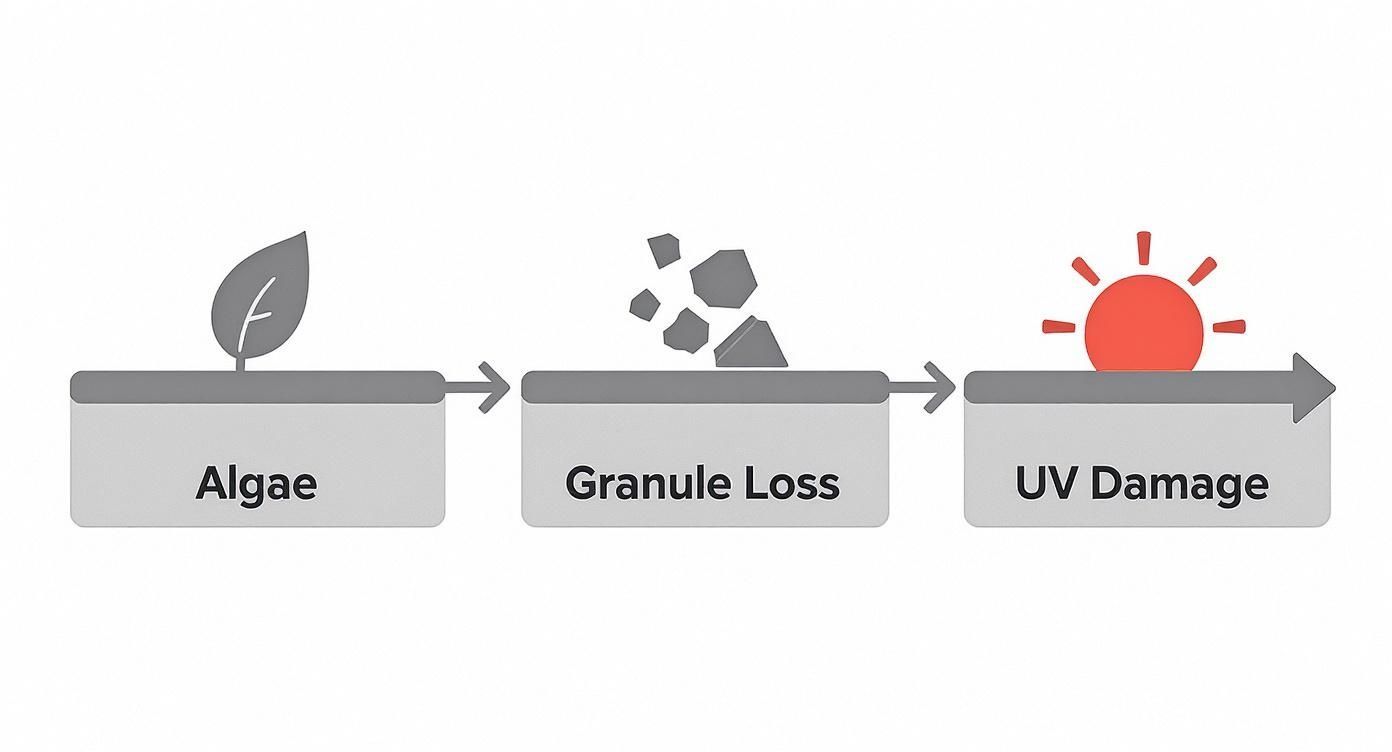
As you can see, getting rid of the algae is the first and most important step to preventing a domino effect of shingle failure.
Before you start, make a plan. You'll need the right gear and supplies to do the job safely and effectively. This checklist covers the essentials for a DIY roof cleaning project here in Lantana.
| DIY Roof Cleaning Safety and Supply Checklist | ||
|---|---|---|
| Item Category | Essential Items | Safety Notes |
| Safety Gear | Safety harness with anchor, sturdy extension ladder, non-slip shoes, safety glasses, gloves | Always have a spotter when using a ladder. Ensure the harness is properly fitted and secured. |
| Cleaning Supplies | Oxygen bleach powder, garden sprayer (2-3 gallons), garden hose with spray nozzle | Avoid chlorine bleach, as it can damage shingles and landscaping. |
| Landscaping Protection | Plastic sheeting, tarps | Thoroughly water all plants and shrubs before covering them to minimize chemical absorption. |
Remember, having everything ready beforehand makes the process smoother and keeps you from having to make dangerous trips up and down the ladder.
Application and Rinsing Technique
Your first step on cleaning day is to protect your landscaping. Give any plants, grass, or shrubs below the roofline a good watering, then cover them completely with plastic sheeting. This prevents the cleaning runoff from harming them.
When you’re ready to apply the solution, a simple garden sprayer is your best tool. It gives you a nice, even, low-pressure mist.
- Work on a Cloudy Day: This is a big one. Direct sun will make your cleaning solution evaporate before it has a chance to work. A cool, overcast day provides the perfect conditions.
- Apply from the Bottom Up: Start spraying at the lowest edge of the roof and work your way toward the peak. This simple trick prevents the solution from running down over dirty shingles and causing clean streaks.
- Let It Dwell: Give the solution about 15-20 minutes to sit on the shingles. You'll actually see the black stains start to fade as the oxygen bleach does its job. Just don't let it dry out completely.
- Rinse Gently: Use a regular garden hose with a gentle spray nozzle to rinse everything off. Start at the top (the ridge) and work your way down. You can see great examples of what a properly cleaned roof should look like in photos from some of our past Lantana roofing projects.
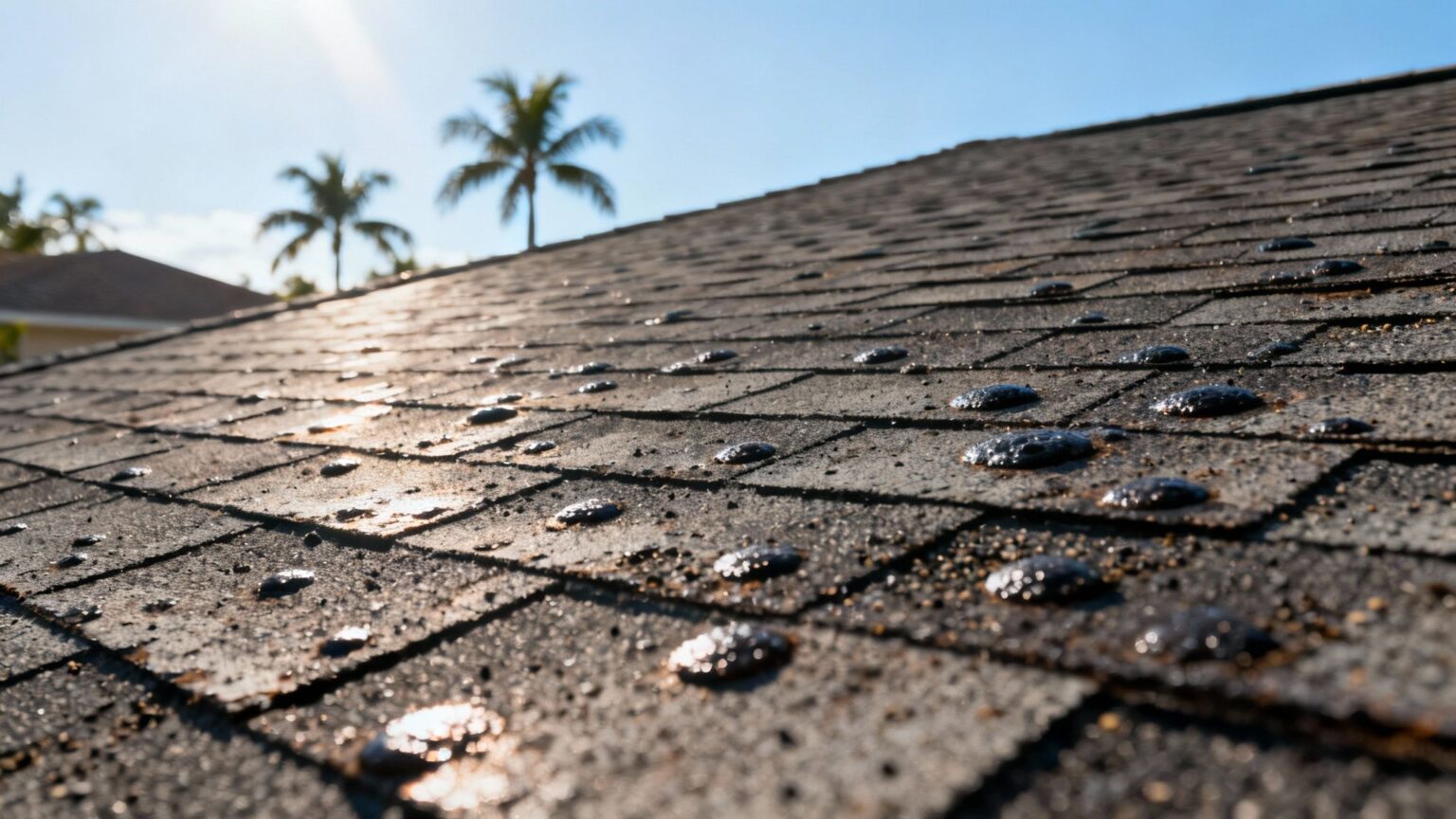
Pro Tip: Resist the urge to scrub! Never use a stiff-bristled brush or any kind of scraper on your shingles. The cleaning solution and a gentle rinse are all you need. Aggressive scrubbing will just tear away more of those vital protective granules.
When to Hire a Lantana Roof Cleaning Professional
Look, a good DIY project can be satisfying, but cleaning your own roof isn't always the best move. Safety has to be the number one priority, and some situations just aren't worth the risk for a weekend warrior. If your home has a steep roof pitch or is a full two stories, the danger of falling skyrockets.
It's one thing to climb a ladder to clear your gutters; it's another thing entirely to navigate a slippery, sloped surface high off the ground. In these cases, calling in a professional isn't about convenience—it's about staying safe. They have the training, the insurance, and the right equipment to tackle tricky rooflines without anyone getting hurt.
Assessing the Severity of the Stains
Sometimes, the sheer scale of the algae is the real problem. If you're looking at years of built-up, stubborn growth, it's time to call in someone with experience dealing with algae stains on shingles Lantana homeowners know all too well. Professionals have a specific technique for this called soft washing.
This isn't just a fancy term. Soft washing uses specialized, eco-friendly cleaning solutions applied at very low pressure—often gentler than your garden hose. This kills the algae right down to the root without blasting away the protective granules on your shingles. A pro can properly diagnose the situation and use the right mix to get your roof looking new again without causing collateral damage.
A professional roof cleaning service really boils down to two things: safety and effectiveness. They have the proper safety gear for high or steep roofs and use specialized soft washing systems that protect your shingles from damage.
When you're ready to find a local company, you need to ask the right questions. For some general tips on vetting service providers, this guide on how to hire a professional cleaning company has some solid advice. Most importantly, always ask if they are fully insured, find out what cleaning methods they use, and see if they can give you references from other homeowners right here in the Lantana area.
Preventing Future Algae Growth on Your Roof
Getting rid of the algae stains on shingles Lantana homeowners know all too well is a great start, but the real victory is making sure those ugly black streaks don’t come back. Winning that fight requires a proactive approach, one that gets ahead of the issues that let algae thrive in Florida's humid climate in the first place.
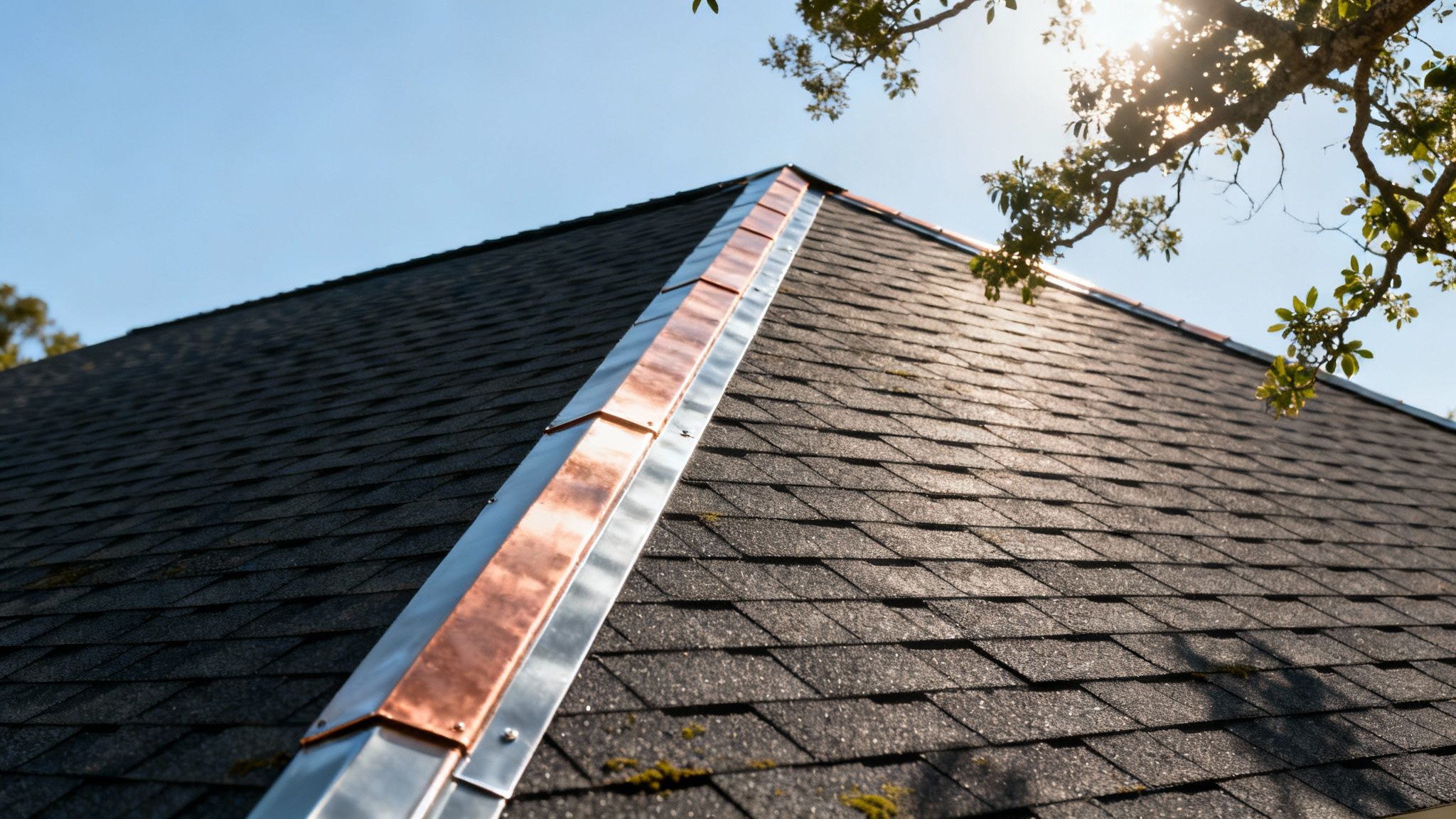
One of the most effective long-term strategies I’ve seen is installing zinc or copper strips along the peak of your roof. It's a simple concept with powerful results. Every time it rains, water washes over these strips and carries microscopic metallic particles down the shingles. These particles make the surface uninhabitable for algae, creating a self-cleaning system that works for years.
Another smart move is to make a few simple adjustments to your landscaping. Algae loves damp, shady spots, so letting in more sunlight and improving airflow is a game-changer.
- Trim Overhanging Branches: Pruning back tree limbs that cast big shadows over your roof is huge. This allows the sun to hit the shingles directly, helping them dry out much faster after a storm.
- Keep Your Gutters Clear: Clogged gutters are a big problem. They trap moisture right at the edge of your roof, basically rolling out the welcome mat for algae. Clean gutters mean water flows away properly, keeping the whole roof surface drier.
You can see more examples of how a roof's components should work together by looking at properly maintained roofing systems.
Consider Algae-Resistant Shingles
If a full roof replacement is in your future, investing in algae-resistant (AR) shingles is one of the smartest decisions you can make. It’s a built-in solution. Manufacturers mix copper granules right in with the standard mineral granules on the shingles. Just like with the copper strips, these granules release ions that stop algae growth every time it rains.
The demand for AR shingles has absolutely exploded. Here in Lantana and across Florida, roofing contractors are seeing 30–40% of new roof installations use these products. That’s a massive leap from less than 10% just a decade ago. These shingles can fight off algae for up to 20 years, with studies showing they cut down on visible discoloration by as much as 90% compared to standard shingles. You can dig into more of the data on the effectiveness of AR shingles on AtlasRoofing.com.
Expert Insight: The best defense is a layered one. When you combine proactive steps like trimming trees with a long-term fix like AR shingles or metal strips, you create a powerful system that makes it incredibly difficult for algae to ever get a foothold again.
Got Questions About Roof Algae? We’ve Got Answers.
When those ugly black streaks show up on a roof in Lantana, homeowners tend to ask the same questions. We’ve been answering them for years, so here are the straightforward answers you need to make the right call for your home.
How Often Should I Clean My Roof Here in Lantana?
For most of us dealing with Florida’s humidity, a professional soft wash every three to five years is the sweet spot. That said, if you’ve got big, beautiful oak trees shading your roof, you’re going to see algae pop up much faster. In those cases, you might need a cleaning every couple of years or want to look into preventative fixes like zinc strips to keep it at bay.
Can I Just Use a Pressure Washer on My Shingles?
Please don't. That’s probably the single most destructive thing you can do to an asphalt shingle roof. Blasting it with high pressure strips away the protective granules that shield your roof from the sun. It drastically shortens your roof's life and is a surefire way to void its warranty.
Always, always insist on a low-pressure “soft wash.” It’s the only safe and effective method that algae stains on shingles Lantana professionals trust.
Quick heads-up: Your homeowner's insurance carrier might view excessive algae as a red flag for poor maintenance. They could see it as a risk for premature roof failure and, in some situations, even require you to clean it to keep your policy active.
Are the Cleaning Chemicals Safe for My Landscaping and Pets?
When done correctly, absolutely. A professional crew knows the right protocols, like pre-soaking all your landscaping with fresh water and carefully managing the runoff to protect your plants, pets, and property.
If you decide to tackle this yourself with an oxygen bleach solution, remember to thoroughly rinse your plants and grass both before and after you apply the cleaner. It’s a crucial step to keep everything green and healthy.
If you’re dealing with stubborn algae stains or just want the peace of mind that comes with a professional touch, the team at Paletz Roofing and Inspections has the know-how to make your roof look new again—safely and effectively. Contact us today for a free, no-obligation quote.