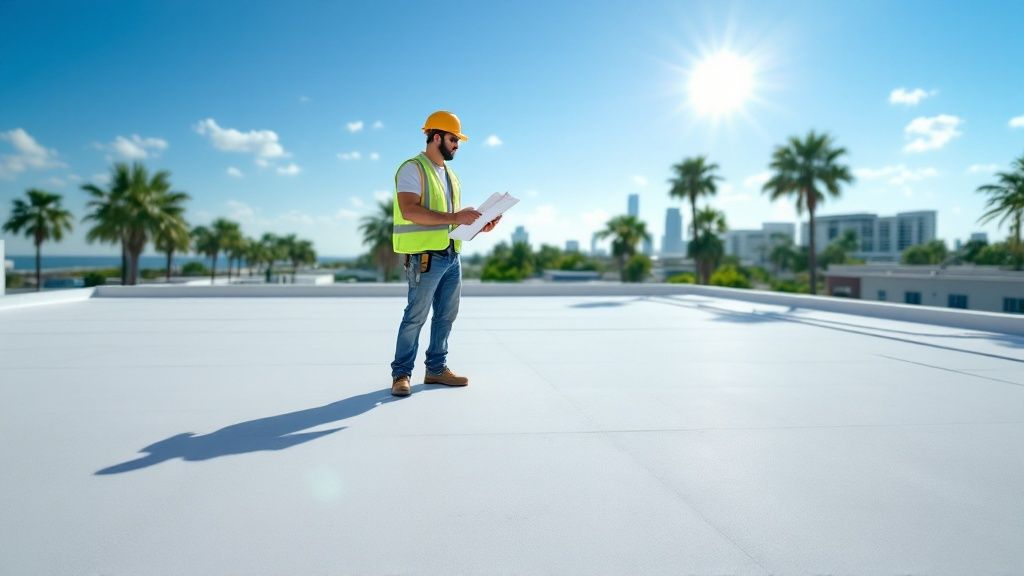
Choosing a commercial roofer in Broward is about more than just finding someone who knows roofing. It's about partnering with a team that truly understands the unique pressures of South Florida—the relentless sun, the threat of hurricane-force winds, and some of the toughest building codes in the entire country.
Your roofer needs to be an expert in materials that can stand up to constant UV exposure and tropical storms. This isn't just a repair; it's an investment in protecting your business asset all year round.
Navigating the Broward Commercial Roofing Market
Before you even think about getting quotes, it's critical to understand the local landscape. We're not just talking about replacing a flat roof here. We're talking about engineering a complete defense system against intense heat, torrential downpours, and the ever-present risk of hurricanes.
The decisions you make at this stage will affect everything from your monthly energy bills to your insurance premiums down the line.
Understanding Local Challenges
The South Florida climate is the boss on any commercial roofing job. The sun here isn't a gentle summer warmth; it's a year-round force that can bake and degrade materials like traditional asphalt. High humidity also creates the perfect storm for moisture to find its way in if a roof isn't sealed flawlessly.
A roofer’s experience in this specific climate isn't just a nice-to-have—it's non-negotiable. A contractor from a cooler, drier state might not fully grasp the forces at play, from thermal shock to the wind uplift pressures demanded by our local codes.
The economy plays a huge part, too. Nationwide, new construction spending is projected to climb to around $2.145 trillion in 2025. Here in Florida, nonresidential sectors like retail and healthcare are on track to grow by 5.9%. This boom puts a massive strain on skilled labor, making it absolutely essential to work with an established commercial roofer in Broward who has a stable, experienced crew. You can find more insights on 2025 Florida roofing trends on floridaroof.com.
The Impact of Building Codes
Let's be clear: Broward County is a High-Velocity Hurricane Zone (HVHZ). That's not just a fancy term; it means we have some of the most demanding building codes in the United States. These regulations are not suggestions. They are strict mandates that dictate every single aspect of the job.
- Wind Uplift Resistance: Every roofing system must be rigorously tested and proven to withstand extreme wind forces.
- Material Specifications: Only specific types and grades of materials are approved for use. No exceptions.
- Installation Methods: From the exact fastening patterns to the smallest flashing details, every step is highly regulated.
Hiring a contractor who isn't fluent in these specific codes is a recipe for disaster. It can lead to failed inspections, expensive project delays, and ultimately, a roof that isn't legally compliant or insurable. You can learn more about local building requirements for your commercial property. Knowing this context is the key to asking the right questions and ensuring your investment is built to last.
Your Vetting Checklist for Broward Roofers
Choosing the right commercial roofer is about a lot more than just grabbing the lowest bid. It’s about finding a true partner who understands the high stakes involved in protecting your Broward County property. This simple checklist will help you vet contractors effectively, filtering out the unqualified players so you’re left dealing with genuine professionals.
Before you get too deep into proposals, it’s a good idea to understand your property's overall health. When you're getting ready to vet roofers, knowing what a broader inspection covers can give you valuable context for your specific roofing project. Taking a look at a comprehensive commercial building inspection checklist is a great place to start.
Verify Licensing and Insurance First
This is your absolute first move. Period.
In Florida, any legitimate commercial roofer in Broward must have a state-issued license. You're looking for either a Certified General Contractor (CGC) or a Certified Roofing Contractor (CRC). Don't just take their word for it, either. You can—and should—verify their license status yourself directly with the Florida Department of Business and Professional Regulation (DBPR). An expired or suspended license is a massive red flag.
Just as critical is their insurance coverage. Any contractor setting foot on your property needs to carry two non-negotiable policies:
- General Liability Insurance: This protects your building and assets from any damage the roofing crew might cause during the project.
- Workers' Compensation: This covers their employees if they get hurt on your job site, protecting you from being dragged into a lawsuit.
Ask for a Certificate of Insurance (COI) to be sent to you directly from their insurance provider. This is the only way to ensure the policy is active and prevents you from being handed a fake or outdated document. Never, ever move forward without this step.
Examine Their Local Portfolio and References
A roofer's past work is the best predictor of their future performance. Don’t settle for a generic photo gallery on their website.
Ask for a list of recent commercial projects they’ve completed right here in Broward County—specifically projects that are similar to yours in size, scope, and material. If you manage a large industrial park with a flat roof, you want to see their experience with similar systems, not just a handful of small retail storefronts. An experienced roofer will be proud to show off their relevant work.
This visualization shows the variety of high-performance surfaces a qualified commercial roofer in Broward should be able to master.
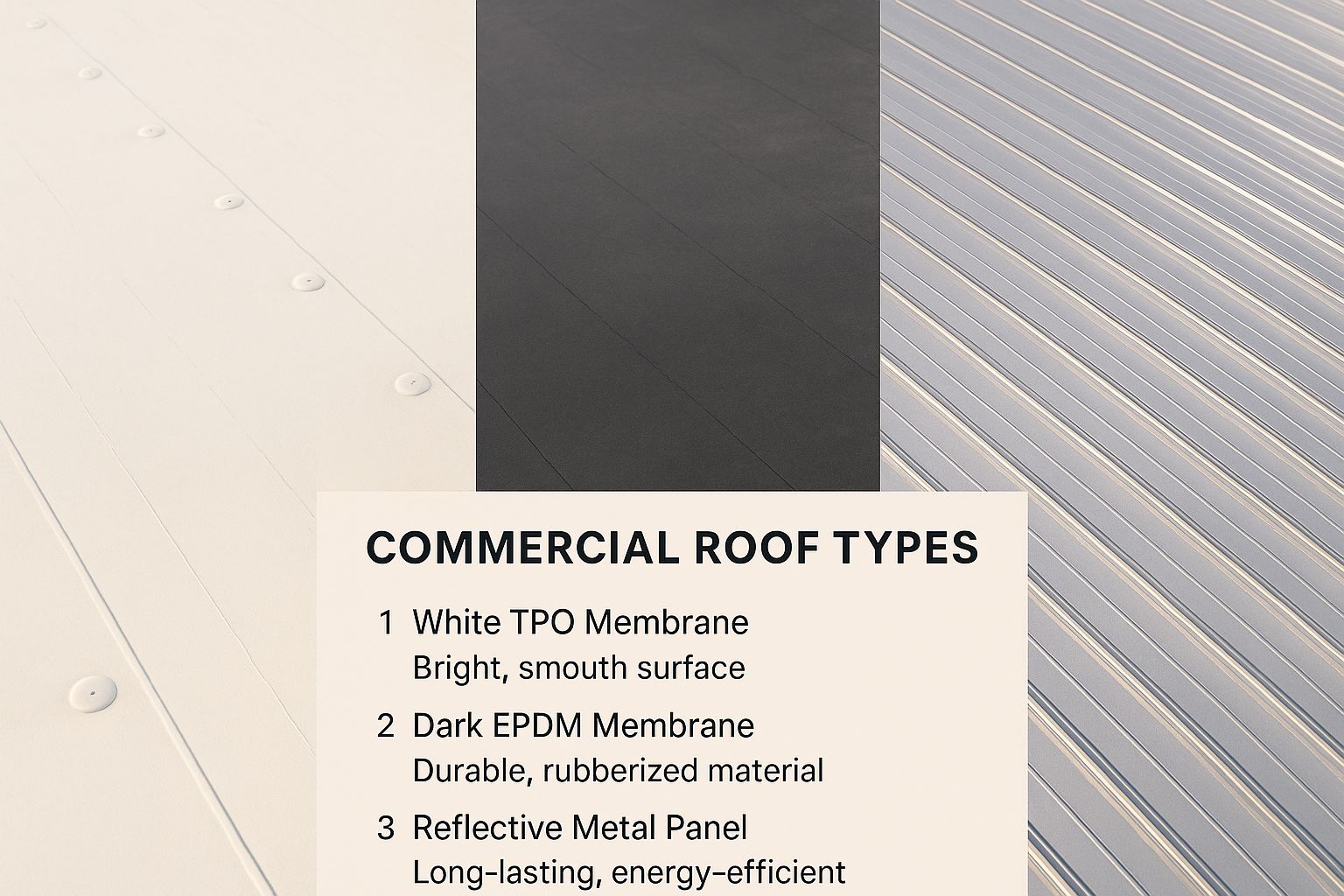
From energy-efficient TPO to heavy-duty modified bitumen, the right material choice is all about your building's specific needs and the demands of our local climate.
Once you've seen their work, it's time to talk to their past clients. A confident, professional roofer won't hesitate to provide references you can actually call.
When you get them on the phone, ask pointed questions:
- Was the project finished on time and on budget?
- How did their team handle unexpected problems or changes?
- Was the job site kept clean, organized, and safe?
- Would you hire them again without hesitation?
This kind of direct feedback is priceless. You can learn more about what to expect during a project by checking out information from a trusted local roofing and inspections team. Remember, vetting isn't about being suspicious; it's about doing your due diligence to protect your property’s most critical asset.

Deconstructing Your Commercial Roofing Quotes
Getting a stack of bids from a commercial roofer in Broward is just the starting line. The real work—and the part that protects your investment—is learning how to read them properly. Trust me, a lower price tag is rarely the sign of a better deal. The devil is always in the details, and what's buried in the fine print can be the difference between a smooth project and a financial disaster.
You have to think of each quote as a window into that contractor's process. It tells you everything about their professionalism, how thorough they are, and the quality you can expect. A vague, one-page estimate is a massive red flag. A detailed, multi-page proposal shows you they’ve done their homework.
Look Past the Price Tag
The single biggest mistake I see business owners make is laying quotes side-by-side and just picking the cheapest one. A suspiciously low bid is almost always a sign that a contractor is cutting corners on something critical, whether it's materials, labor, or insurance.
Instead of getting fixated on that final number, you need to break each proposal down and compare the core components.
So, what are you looking for?
- Specific Materials: The quote must list the exact manufacturer and product name for every major component. For example, it should say "GAF TPO 60-mil membrane in white," not "quality roofing materials." Ambiguity here is unacceptable.
- A Detailed Scope of Work: A professional bid will outline every single step of the process. This includes everything from the tear-off and disposal of your old roof to the installation of new underlayment, flashing, and the primary roofing system itself.
- Labor and Workmanship Warranty: This is completely separate from the manufacturer's material warranty. It’s the contractor's personal guarantee on the quality of their installation. A one-year warranty is the absolute bare minimum; the best roofers will stand behind their work for much longer.
A clear, detailed scope of work protects everyone involved. It eliminates any gray areas and ensures you and the contractor are on the same page about what "done" really means, which is your best defense against surprise charges and disputes later on.
Spotting the Red Flags in a Proposal
A professional proposal from an experienced commercial roofer in Broward should make you feel confident and informed. On the flip side, a sloppy, incomplete quote should set off alarm bells immediately. You should be wary of any roofer who seems hesitant to put their promises in writing.
If it's not in the contract, it doesn't exist. Period. If a contractor promises to clean your gutters or repair a piece of siding, make sure that promise is written directly into the final proposal. Verbal agreements are worthless in a dispute.
Here are a few common red flags I tell clients to watch out for:
- High-Pressure Tactics: Any contractor pushing you to sign right away with a "special one-day-only" discount is using a sales gimmick, not a professional process.
- Huge Upfront Payments: A deposit is standard, but demanding 50% or more of the total cost before a single piece of material has been delivered is a huge risk for you.
- No Mention of Permits: The proposal should clearly state that the contractor is responsible for pulling all necessary municipal permits and that this cost is included in their price. Don't let this fall on your shoulders.
Finally, scan the contract for a few essential clauses. It absolutely must include a clear payment schedule that's tied to project milestones, not arbitrary dates. It also needs to show proof of insurance and, critically, a lien waiver clause. This waiver is what protects your property from having a lien placed on it by a supplier if your main contractor fails to pay their bills. Reading the quote thoroughly is your best defense.
Choosing Materials for the South Florida Climate
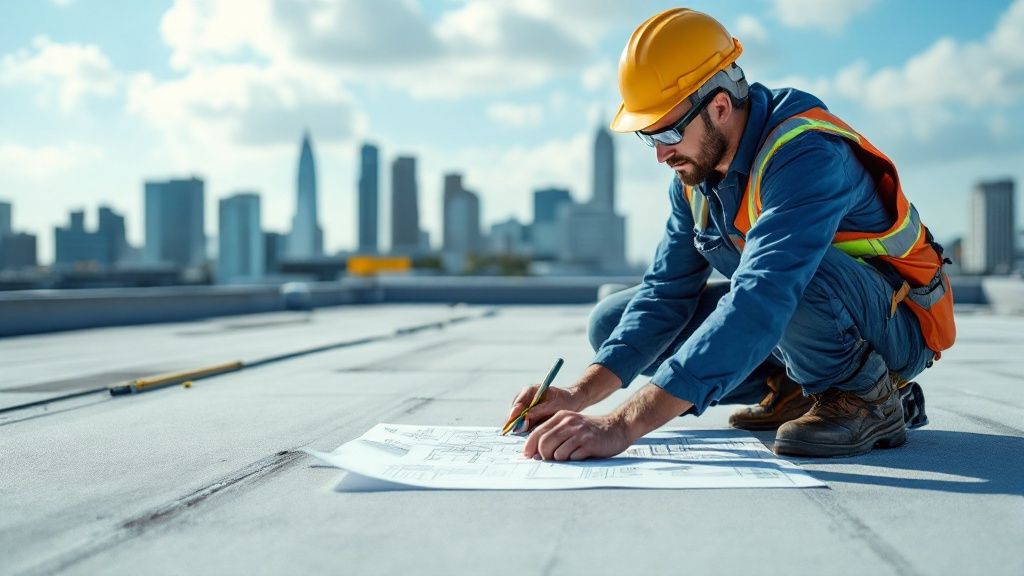
Here in Broward County, picking the right roofing material is just as critical as choosing the contractor to install it. It’s a decision with long-term consequences. The wrong system can lead to sky-high energy bills, premature failure under our relentless UV radiation, and a constant cycle of maintenance headaches. Your choice needs to be a strategic one, balancing durability, energy efficiency, and cost over the roof's entire life.
A qualified commercial roofer in Broward isn’t going to push a one-size-fits-all solution. They should be walking you through an assessment of your building's structure, your budget, and how your business operates to find the perfect fit. This is a conversation you need to have, and you should walk into it with a solid grasp of your options.
Comparing Top Commercial Roofing Systems
For our hot, humid, and storm-prone environment, a few specific systems consistently rise to the top. Each one has its own set of pros and cons that you absolutely need to weigh.
-
TPO (Thermoplastic Polyolefin): This is probably the most common single-ply membrane you'll see, and for good reason. Its bright white, reflective surface is a powerhouse at bouncing solar heat away from your building. This directly translates to less work for your AC units and a lower FPL bill. It’s also tough against punctures and chemical exposure.
-
PVC (Polyvinyl Chloride): Think of PVC as TPO's cousin. It's another highly reflective single-ply membrane, but its real claim to fame is its exceptional resistance to grease, oils, and chemicals. This makes it the go-to choice for restaurants or manufacturing plants where rooftop vents are expelling that kind of stuff.
-
Modified Bitumen: This is the modern, high-tech version of the old-school asphalt roof. As a multi-ply system, it offers outstanding durability and is incredibly resistant to tears. While it's usually dark, you can get it with reflective granules on the surface to boost its energy efficiency.
The roofing industry is a massive part of our economy, with the U.S. market valued at around $56.7 billion in 2024 and expected to clear $60 billion in 2025. That growth is fueled by the demand for high-performance systems like these, especially in busy commercial hubs.
Making the Right Choice for Your Building
So, how do you decide? It really boils down to your priorities. If slashing your energy costs is at the top of your list, the reflective power of TPO and PVC is tough to argue with. Keeping that roof surface cooler means your HVAC systems don't have to fight nearly as hard.
Don’t just look at the installation quote. A roof that's more energy-efficient can easily pay for itself over its lifespan through lower utility bills. Ask your roofer to run the numbers and estimate the potential energy savings so you can see the complete financial picture.
On the flip side, if your roof sees a lot of foot traffic from HVAC crews or has a ton of pipes and vents coming through it, the sheer toughness of a multi-layer Modified Bitumen system might be the smarter long-term play. You can look at a visual guide of common roofing systems and materials to get a better feel for these differences.
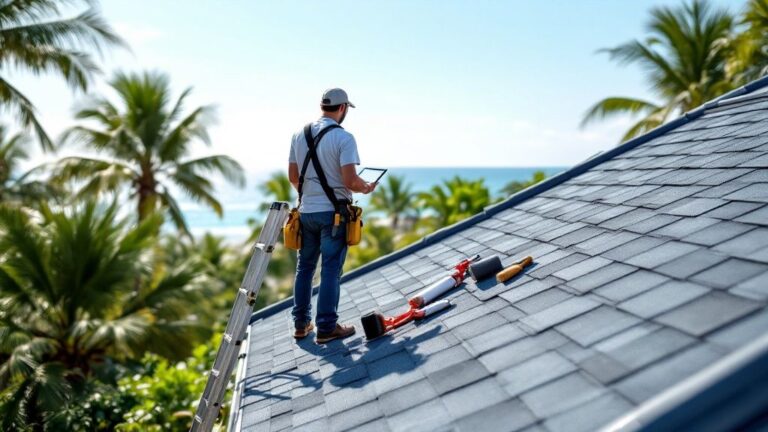
Ultimately, the best commercial roofer in Broward will help you navigate this decision, ensuring your new roof is a durable, valuable asset for years to come.
Keep Your Investment Safe with Warranties and Maintenance
Getting a new commercial roof is a huge milestone, but the job isn't truly done when the last truck pulls away. The real value comes from protecting that asset for the long haul. Here in Broward County, with our relentless sun, torrential rains, and the ever-present threat of hurricanes, a structured maintenance plan isn’t just a good idea—it’s absolutely essential.
Think of it like a brand-new fleet vehicle. You wouldn't run it for years without changing the oil or checking the tires, right? The same logic applies to your roof. A seemingly minor issue, like a clogged drain or a small tear in the membrane, can quickly spiral into a catastrophic failure if you ignore it. Proactive care is your single best defense against premature aging and budget-busting emergency repairs.
Knowing the Difference in Warranties
It's critical to understand that not all warranties are the same. A major point of confusion for property owners is the distinction between what the roofer guarantees versus what the material manufacturer covers. Getting this wrong can leave you with a false sense of security and an unexpected bill.
- Contractor’s Workmanship Warranty: This is the promise from your commercial roofer in Broward that they installed everything by the book. It covers leaks or failures that stem directly from installation mistakes, like seams that weren't sealed correctly or improper flashing work.
- Manufacturer’s Material Warranty: This coverage comes straight from the company that made the roofing materials (think GAF or Carlisle). It protects against defects in the product itself, such as premature cracking, blistering, or degradation.
Here's the most important thing to remember: what you do—or don't do—can void both of these protections. Something as simple as an unauthorized repair, adding new equipment to the roof without proper flashing, or just skipping routine inspections can give both the contractor and the manufacturer an easy out when you file a claim.
What Goes into a Solid Maintenance Plan?
A good maintenance plan is your roof’s personal insurance policy. It needs to be a scheduled, documented process carried out by a qualified professional—not just a quick look-around. Key activities should always include pre- and post-hurricane season inspections, where a technician hunts for potential weak spots before a storm hits and assesses for any damage right after.
Regularly clearing debris from drains and scuppers is also non-negotiable. This prevents water from ponding, which is one of the fastest ways to destroy a commercial roof. The whole point is to catch small issues before they become massive liabilities. This proactive strategy is more important than ever, as government and private sector spending are driving a huge spike in roofing projects. With deferred maintenance programs injecting funds across Florida, the demand for skilled contractors is at an all-time high. You can learn more about the 2025 commercial roofing outlook on registerroofing.com.
Ultimately, a consistent maintenance schedule is what ensures your roof performs as designed and, just as importantly, keeps your warranties fully intact.
Common Questions About Hiring a Broward Roofer
Even with the best plan, pulling the trigger on a major capital expense like a new commercial roof brings up a lot of questions. We get it. We've heard just about every concern from property managers and business owners over the years, so we’ve gathered the big ones here to give you direct, clear answers.
Having this information upfront helps you walk into the process with more confidence. When you're looking for the right commercial roofer in Broward, knowing what to ask—and what the answers should sound like—puts you in a much stronger position. It’s the best way to make sure there are no surprises down the road.
How Long Will My Roofing Project Take?
This is always one of the first questions, and the only honest answer is: it depends. A smaller, straightforward reroof on a 10,000-square-foot warehouse might only take a week or two. But a complex job on a multi-story office building that needs a full tear-off and structural repairs? That could easily stretch over several weeks.
A few key variables always influence the timeline:
- Project Size and Complexity: The sheer square footage and the little details of your building’s architecture play the biggest part.
- Weather Delays: This is South Florida. Afternoon thunderstorms, especially during the rainy season, can bring work to a screeching halt.
- Permitting and Inspections: The time it takes for municipal approvals can vary from one city to the next in Broward.
- Material Availability: While it's not the issue it was a few years ago, supply chain hiccups can still pop up for certain specialty materials.
A true professional will give you a detailed project schedule with realistic milestones. That kind of transparency is a huge sign you’re working with a top-tier contractor.
Will My Business Be Disrupted During Installation?
Any experienced commercial roofer knows that minimizing disruption is priority number one. The whole point is to keep your business running smoothly while we're working overhead. This all comes down to careful planning and constant communication.
For example, if you run a retail space, we'd schedule the noisiest work—like tearing off the old roof—for after hours or on a weekend. A good crew will also establish clear, marked-off safety zones on the ground to protect your employees and customers from any potential debris.
Always talk through your operational hours and specific concerns with potential roofers before you even think about signing a contract. A real partner will work with you to create a logistics plan that respects your business and keeps everyone safe.
How Do You Handle Storm Damage and Emergency Repairs?
In Broward County, this isn't a "what if" question—it's a "when" question. A reputable roofer absolutely must have a clear, battle-tested protocol for responding to storm damage.
It should start with a rapid-response team that can get out to you quickly for an inspection. Their first job is to perform temporary "tarp and dry-in" services to stop any more water from getting in and causing further damage.
After that initial response, they should follow up with a detailed report and a formal quote for the permanent repairs. Just as important, they need to have experience working directly with insurance adjusters, providing all the necessary documentation to help your claim go as smoothly as possible. When vetting a commercial roofer in Broward, make sure you ask about their emergency service capabilities and what their average response times look like.
For over 30 years, Paletz Roofing and Inspections has been the trusted partner for business owners and property managers across South Florida. We provide expert installations, reliable maintenance, and rapid emergency response to protect your most valuable asset. Contact us today for a free, no-obligation inspection and quote at https://paletzroofing.com.