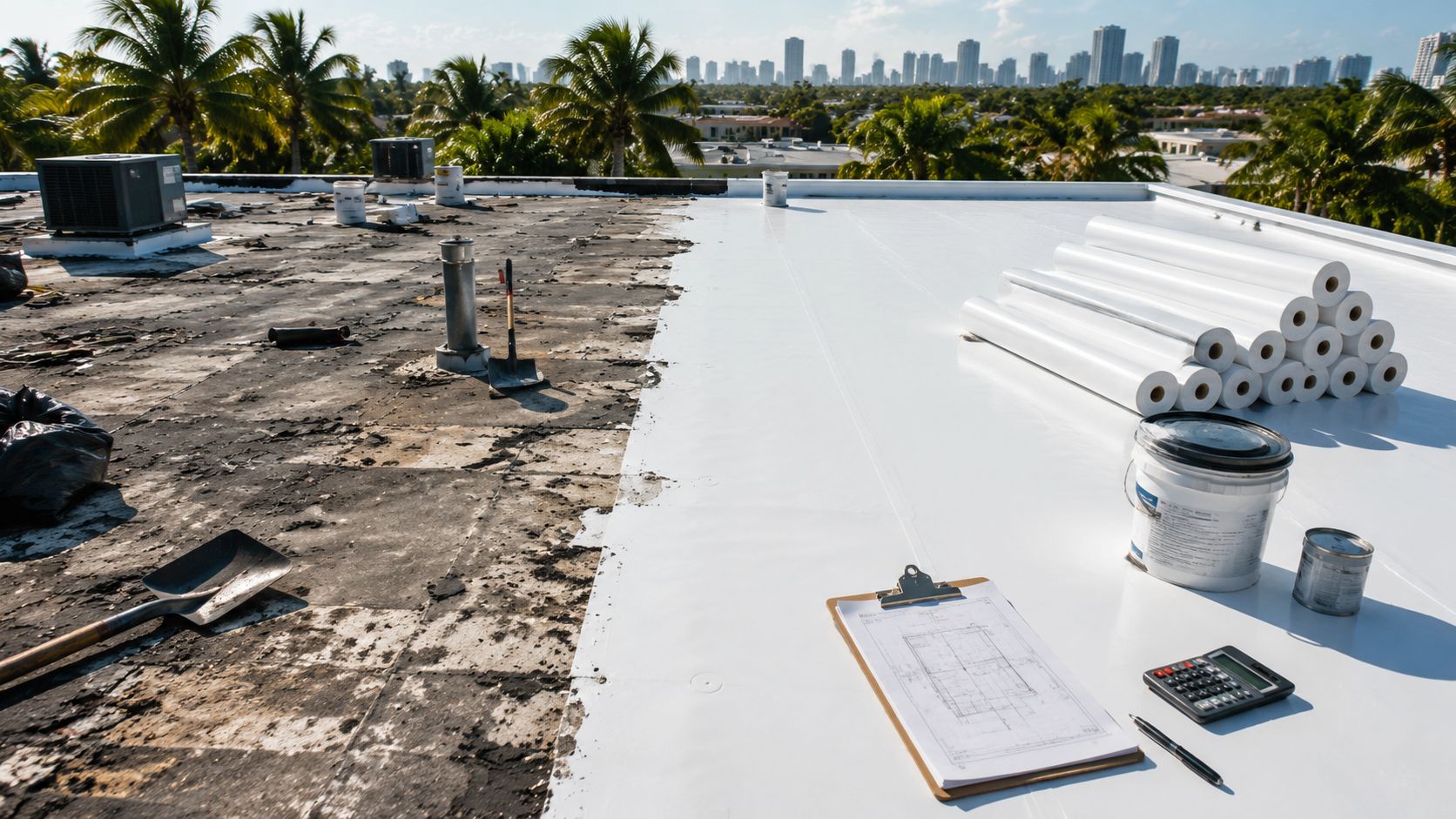
Commercial roof replacement in 2026 typically runs $5 to $14 per square foot installed, so a standard 10,000-square-foot building lands between $50,000 and $140,000, depending on system type and site conditions. A quote that looks inexpensive on a per-square-foot basis can still become a much larger capital project once tear-off, insulation, deck repairs, permitting, access, and South Florida code requirements enter the scope.
Facility managers comparing bids need to evaluate the all-in commercial roofing replacement cost, not just the headline rate. Two roofs with the same footprint can carry very different prices because one requires a fully adhered membrane, upgraded insulation, enhanced edge metal, or extensive deck work, while the other uses a simpler assembly on a sound substrate.
Table of Contents
- Understanding Commercial Roofing Replacement Cost Basics
- Comparing Roof Systems and Material Costs
- Hidden Cost Drivers That Inflate Your Budget
- How Attachment Methods Change the Final Price
- South Florida Regional Factors and Permitting
- When Restoration Makes More Sense Than Replacement
- Cost-Saving Strategies for Your Next Project
Understanding Commercial Roofing Replacement Cost Basics
A commercial roof replacement commonly falls between $5 and $14 per square foot, putting a 10,000-square-foot building at roughly $50,000 to $140,000 before unusual structural work or major code upgrades. The 2026 commercial roof replacement cost guide provides that broad planning range. In South Florida, two bids for the same roof can differ by tens of thousands of dollars because the contractors may be pricing different attachment methods, insulation tiers, edge details, and Miami-Dade or Broward requirements.
The square-foot rate is only the starting point. A proposal should show whether it includes tear-off, deck repairs, insulation, flashing, staging, permits, disposal, and warranty requirements. A lower rate can reflect a mechanically attached assembly on an acceptable deck, while a higher bid may specify fully adhered materials, thicker insulation, enhanced perimeter protection, or upgraded wind-uplift details.
What the square-foot rate usually covers
A clear proposal separates the roof assembly into identifiable work packages:
- Roofing membrane: TPO, EPDM, PVC, modified bitumen, BUR, or metal.
- Attachment materials: Fasteners and plates, adhesives, ballast, or clips.
- Insulation: New insulation may address thermal performance, drainage, or code compliance.
- Labor: Removal, preparation, installation, flashing, detailing, and cleanup.
- Accessories: Drains, scuppers, edge metal, pipe boots, curbs, walk pads, and expansion-joint details.
The listed rate may include some components and exclude others. Confirm every allowance before comparing bids. Manufacturer material warranties and contractor workmanship warranties cover different risks. The manufacturer warranty generally addresses defined product performance under stated terms. The contractor warranty addresses installation defects covered by that roofing company. Ask each bidder to identify the duration, exclusions, inspection requirements, registration costs, and any charges for warranty service.
Building size and project economics
Larger roofs can reduce mobilization and purchasing costs, but the total does not always scale directly with area. A single-story warehouse with open staging access may be simpler than a smaller retail property surrounded by tenants, rooftop equipment, and restricted loading areas. Roof geometry, drainage, access routes, occupancy, and deck condition can affect the final budget as much as the measured footprint.
For planning purposes, applying the cited $5 to $14 per square foot range produces the following estimates:
| Building Size | Low-End Estimate | High-End Estimate | Typical System |
|---|---|---|---|
| 10,000 sq. ft. | $50,000 | $140,000 | Standard low-slope membrane |
| 20,000 sq. ft. | $100,000 | $280,000 | TPO, EPDM, or upgraded membrane |
| 50,000 sq. ft. | $250,000 | $700,000 | Large commercial or industrial assembly |
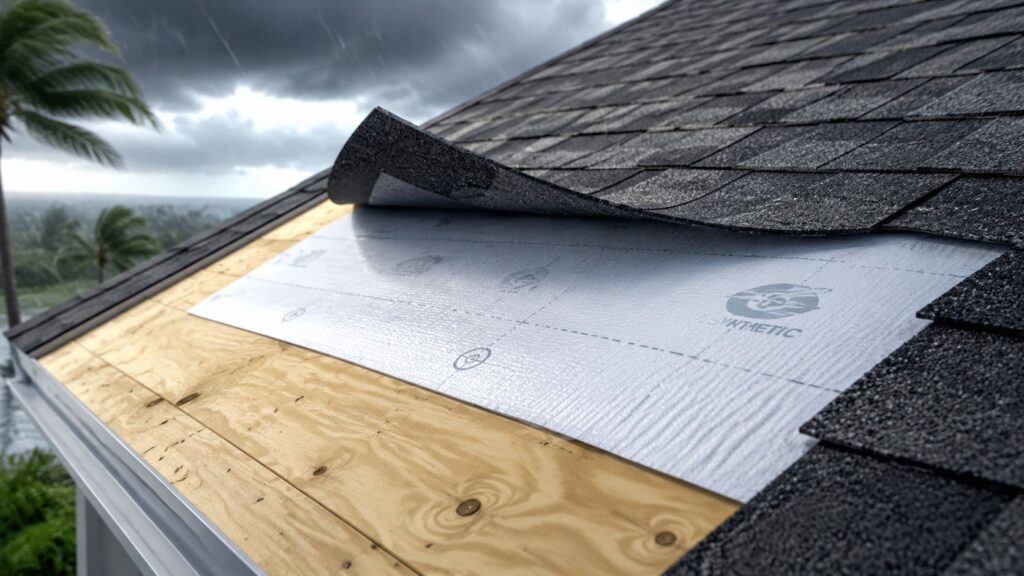
These are budgeting figures, not firm bids. Facility teams reviewing the assembly layers can also use this visual guide to roof underlayment and roof construction. A contractor's all-in scope should explain how those layers, attachment choices, and regional upgrades affect the final price.
Comparing Roof Systems and Material Costs
Material choice is only the first layer of commercial roofing replacement cost. A published commercial roof system cost comparison places EPDM and TPO at roughly $5.50 to $10.00 per square foot, modified bitumen at $9.50 to $15.75, built-up roofing at approximately $12.50 to $22.25, and metal roofing at about $10.00 to $18.75 per square foot.
Those ranges do not describe every South Florida assembly. Two quotes for the same roof can differ by tens of thousands of dollars when one includes a basic mechanically attached membrane and the other specifies full adhesion, a higher insulation tier, stronger perimeter attachment, and Miami-Dade or Broward code upgrades. Membrane thickness, edge details, manufacturer approval, warranty requirements, and the existing deck also change the installed price.
How the main systems compare
TPO is common on low-slope commercial buildings because its light-colored surface supports reflective-roof goals and installation can be efficient. The savings disappear if the scope underprices work around penetrations, drains, parapets, and rooftop units. In hurricane-prone areas, the proposed assembly must be approved for the required wind conditions.
EPDM is a flexible rubber membrane with a long commercial service history. It can fit buildings where repairability and puncture resistance matter, but owners should review surface exposure, flashing details, seams, and any coating or protection requirements in the specification.
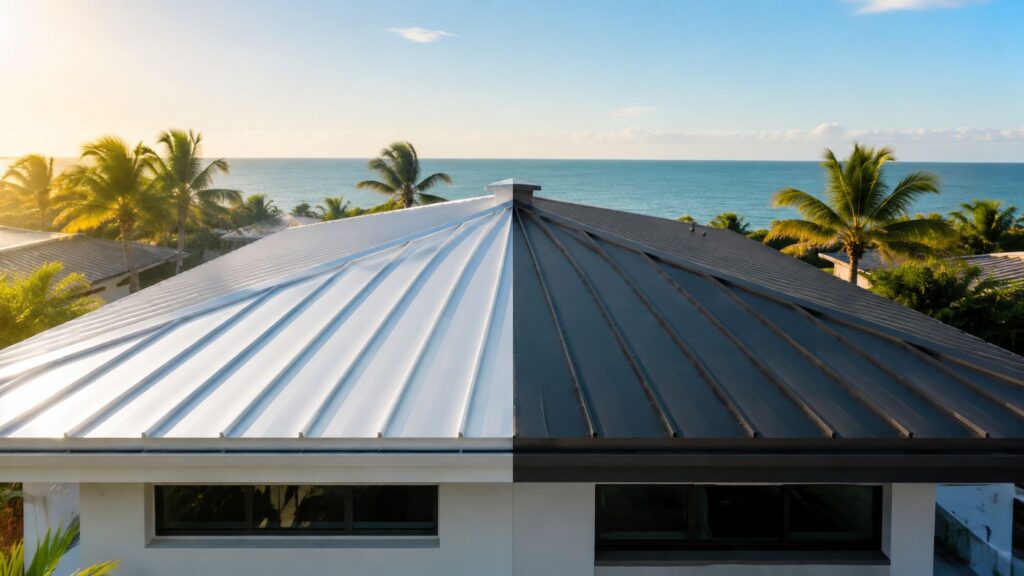
Standing-seam metal usually starts at a higher price because the roof includes panels, clips, seams, trim, underlayment or insulation layers, and detailed perimeter work. Its value depends on durability, appearance, access conditions, and the building's structural capacity. Facility managers comparing aluminum and steel can use this aluminum versus steel roofing comparison when reviewing those material and structural trade-offs.
Built-up roofing, or BUR, uses multiple layers and can suit roofs with significant rooftop traffic or a need for redundant protection. It takes more labor to install, and curbs, drains, penetrations, and transitions require careful detailing.
| Roof System | Installed Cost (per sq. ft.) | Expected Lifespan | Wind Uplift Rating | Energy Efficiency |
|---|---|---|---|---|
| TPO | $5.50 to $10.00 | Depends on specification and maintenance | Assembly-specific | Reflective options available |
| EPDM | $5.50 to $10.00 | Depends on specification and maintenance | Assembly-specific | Depends on color and insulation |
| Built-up roofing | $12.50 to $22.25 | Depends on specification and maintenance | Assembly-specific | Depends on surfacing and insulation |
| Metal roofing | $10.00 to $18.75 | Depends on gauge, coating, and maintenance | Assembly-specific | Depends on finish and insulation |
The installed ranges above are budgeting references, not interchangeable bids. No universal lifespan or wind rating belongs in the comparison because results depend on the tested assembly, substrate, maintenance, exposure, and installation quality. Compare each proposal by its complete assembly, attachment method, insulation package, and regional approval, rather than by membrane price alone.
Hidden Cost Drivers That Inflate Your Budget
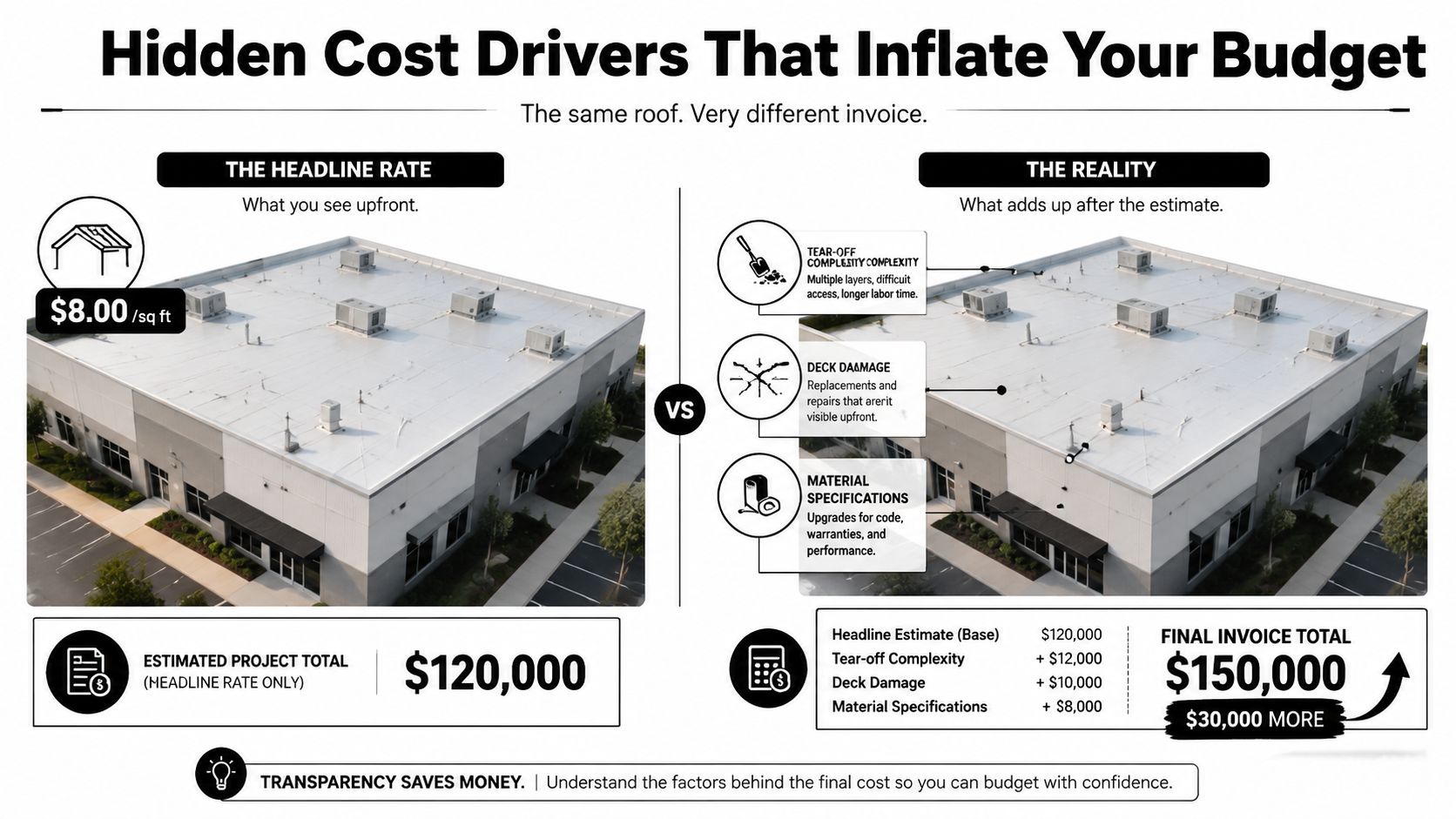
The headline rate rarely tells the whole story. A commercial roofing cost guide identifies tear-off and disposal averaging $11.03 per square foot, labor adding roughly $3 to $7 per square foot, and permits ranging from $500 to $5,000, depending on location and scope (commercial roof replacement cost factors).
Those figures demonstrate why two bids for the same roof size can diverge sharply. One contractor may assume an overlay or limited removal, while another includes complete tear-off, disposal, substrate preparation, and a more demanding installation specification.
Four questions to ask before accepting a bid
What happens to the existing roof? Confirm the number of layers being removed, disposal responsibilities, loading procedures, and whether the price changes if concealed layers are discovered.
What insulation is included? An estimate may include membrane replacement but leave insulation upgrades, tapered insulation, cover board, or wet insulation removal as allowances. Those items affect thermal performance and drainage.
What condition is the deck in? Metal or concrete deck repairs may only become visible after removal. Ask how damaged sections will be measured, documented, approved, and billed.
Which permits and reviews are included? Permit fees, engineering, product approvals, inspections, and closeout documentation should appear as separate line items.
Other cost pressures include crane access, rooftop equipment relocation, occupied-building scheduling, traffic control, mold remediation, and hazardous-material handling. Facility managers researching broader construction budgeting can also review this resource on hidden expenses in rental projects, particularly when roof work affects tenants or building operations.
Practical rule: A low base rate isn't a low project cost unless the scope includes the same tear-off, insulation, deck, edge-metal, permit, access, and warranty assumptions as the competing bids.
Request an itemized proposal with unit prices for concealed conditions. That approach makes change orders easier to verify and gives ownership a defensible record when approving additional work.
How Attachment Methods Change the Final Price
Attachment method is one of the clearest reasons two TPO or EPDM bids can differ even when both contractors name the same membrane. A 2026 commercial roofing cost guide lists TPO 60-mil systems at $5 to $8 per square foot when ballasted, $7 to $9 when mechanically attached, and $8 to $12 when fully adhered. The same source places EPDM at $5 to $7 ballasted, $6 to $8 mechanically attached, and $7 to $10 fully adhered (attachment method cost data).
Ballasted systems
Ballast holds the membrane in place with aggregate or pavers rather than fastening every field section. This can reduce fastening and adhesive labor, but the building must support the added dead load, and the perimeter and corners still require a code-compliant design. Ballast also complicates future leak detection, repairs, equipment work, and access.
Mechanically attached systems
Mechanically attached membranes use screws and plates driven through the membrane or approved fastening strips into the deck. The fastening pattern must respond to wind zones, deck type, substrate condition, and the tested assembly. A sparse or generic pattern may look cheaper, but it won't substitute for engineering and approved installation details in hurricane-exposed areas.
Fully adhered systems
Fully adhered membranes bond to the insulation or cover board with approved adhesive. This method generally demands more substrate preparation, adhesive handling, weather control, and installation discipline. It can produce a clean finished surface and strong wind performance, but the proposal should identify adhesive type, coverage assumptions, substrate requirements, and temperature or moisture limitations.
| Attachment Method | Added Cost per Sq. Ft. | Labor Intensity | Wind Uplift Rating | Best Use Case |
|---|---|---|---|---|
| Ballasted | Varies by ballast and assembly | Lower field fastening labor | Assembly-specific | Structurally suitable buildings with accessible roofs |
| Mechanically attached | Varies by fastening pattern | Moderate | Assembly-specific | Projects needing efficient installation and engineered fastening |
| Fully adhered | Varies by adhesive and preparation | Higher | Assembly-specific | Buildings requiring bonded membranes and detailed wind design |
Don't approve an attachment method from the material label alone. Ask for the tested assembly, fastening or adhesive schedule, edge-zone treatment, insulation substrate, and product approval documentation.
South Florida Regional Factors and Permitting
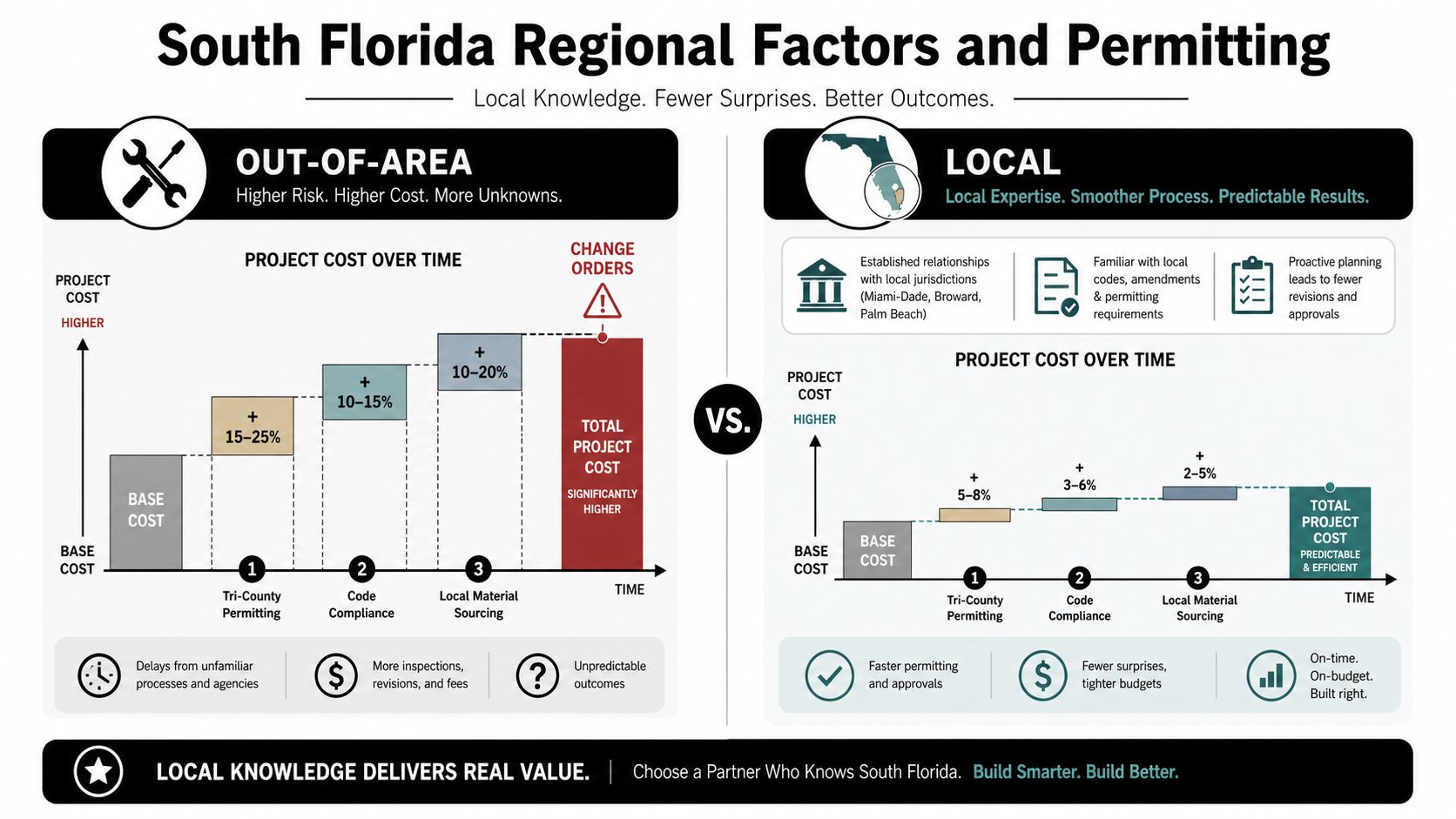
South Florida roofing budgets must account for local jurisdiction, wind exposure, building height, edge conditions, and the specific approved assembly. Miami-Dade County's High-Velocity Hurricane Zone requirements can affect membrane selection, fastener layouts, perimeter metal, engineering, and inspection documentation. Broward projects may involve similar wind-performance considerations, while Palm Beach County still requires careful review of wind-borne debris and energy-code obligations.
A contractor unfamiliar with the local permitting path may submit a price that excludes engineering review, product approvals, special inspections, or revisions requested by the authority having jurisdiction. Those omissions often return as schedule pressure or change orders rather than appearing in the initial commercial roofing replacement cost.
County-level questions for facility managers
- Miami-Dade: Ask whether the proposed membrane, edge metal, fasteners, and attachment assembly carry the approvals required for the property's wind zone.
- Broward: Confirm who handles permit drawings, engineering coordination, inspections, and final closeout documents.
- Palm Beach: Verify wind-borne debris provisions, insulation requirements, drainage details, and the jurisdiction's documentation expectations.
Insurance documentation also matters. A property carrier may request evidence that the reroof complies with applicable code and that the contractor completed the work as specified. Owners reviewing policy considerations alongside their capital budget can consult this Florida commercial property insurance guide from Select Insurance Group, Inc.
Why regional experience affects the invoice
Local knowledge doesn't eliminate legitimate code costs. It helps identify them before the contract is signed. A complete bid should separate permit fees, engineering, inspections, product approvals, special fasteners, edge-metal upgrades, and testing from the membrane and labor price.
Code compliance belongs in the original budget, not in the emergency fund.
The proposal should also identify the responsible party for resubmittals and inspection corrections. If the contractor, engineer, and owner each assume someone else owns that task, a straightforward reroof can stall while the building continues operating under an aging roof.
When Restoration Makes More Sense Than Replacement
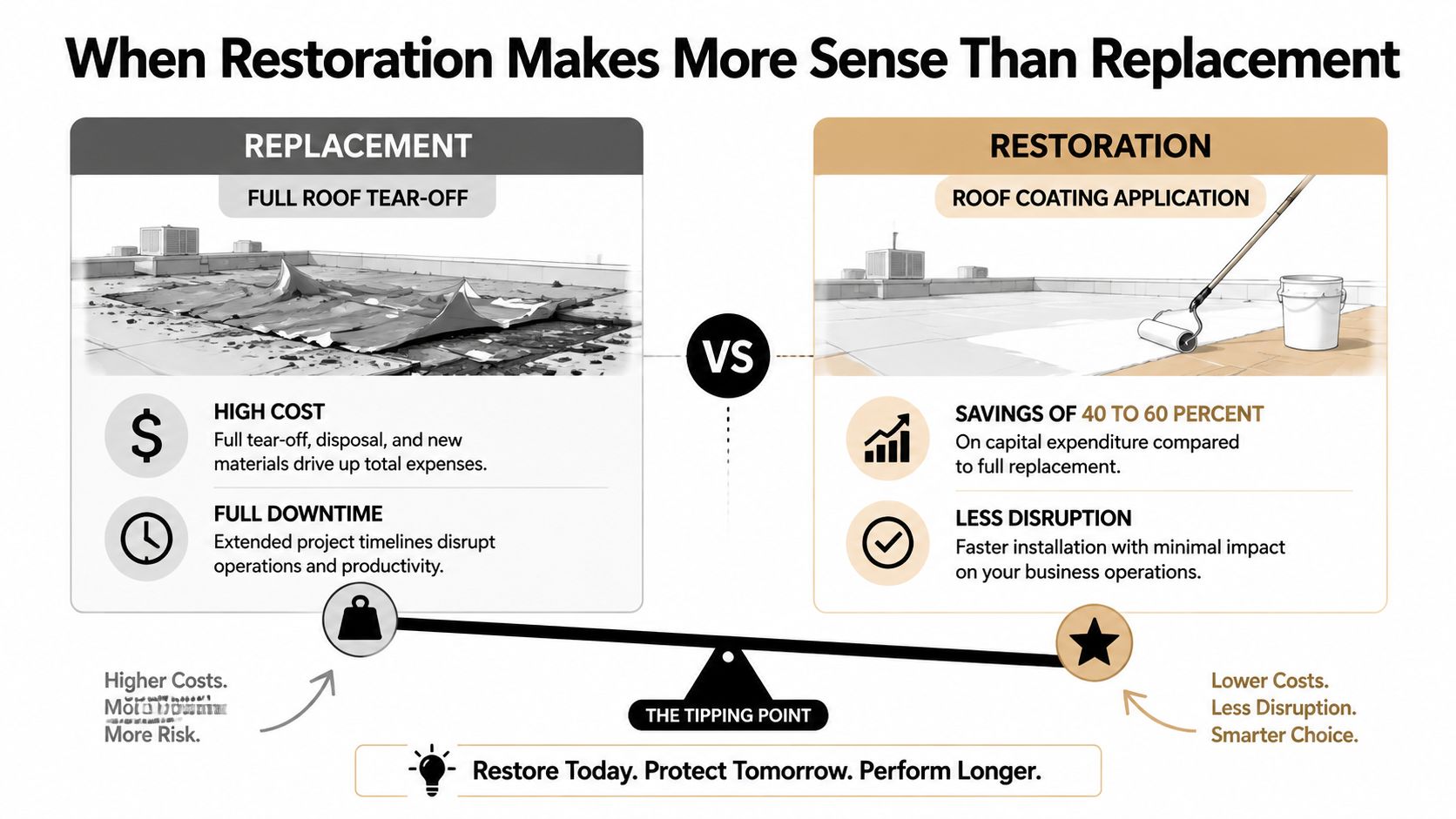
Full replacement isn't automatically the best financial decision. A roof that has a sound deck, serviceable insulation, and repairable membrane deterioration may qualify for fluid-applied restoration at roughly $4 to $8 per square foot, compared with full replacement often beginning around $5.50 to $15 or more per square foot (commercial restoration and replacement cost comparison).
Restoration can involve cleaning, seam reinforcement, repairs at penetrations and flashings, and application of a silicone or acrylic coating system. It doesn't solve saturated insulation, structural deck failure, recurring drainage defects, or a membrane that has lost its basic integrity.
Inspect before choosing the cheaper scope
A roof consultant or qualified contractor should evaluate:
- Moisture: Core cuts, infrared scans, or other approved testing can identify wet insulation that coating won't correct.
- Membrane condition: Widespread splitting, delamination, unrepaired punctures, or failed laps may point toward replacement.
- Deck integrity: Coating over a deteriorated deck only hides the condition temporarily.
- Drainage: Restoration won't correct every slope or drainage problem without additional construction.
- Warranty path: Confirm whether the coating manufacturer will issue the proposed warranty over the existing system.
The most useful comparison isn't restoration price versus replacement price alone. Compare the scope, preparation, warranty, expected maintenance, disruption, and remaining service life. A low restoration quote that excludes seam repairs or moisture removal isn't equivalent to a properly prepared restoration system.
Before authorizing work, facility managers should review their roof repair estimate and verify that every allowance, exclusion, and unit price is understandable. For additional context on maintaining vegetated or specialized roof assemblies, see this guide to living roof maintenance.

Restoration makes sense when the existing roof is sound and the owner wants to extend its useful service without a full tear-off. Replacement becomes more defensible when moisture, deck damage, repeated failures, or code limitations make the existing assembly an unsuitable foundation.
Cost-Saving Strategies for Your Next Project
The most reliable savings usually come from better planning, not from forcing a contractor to remove necessary work. Start by giving every bidder the same roof plan, access information, equipment list, repair history, warranty documents, and known drainage concerns. A clear scope reduces the contingency each contractor must carry for unknown conditions.
Build a comparable bid package
Request separate prices for:
- Base roofing assembly: Membrane or panels, insulation, cover board, fasteners, adhesives, and standard flashing.
- Removal: Tear-off, loading, hauling, disposal, and protection of occupied areas.
- Substrate work: Deck repairs, wet insulation replacement, drain corrections, and curb modifications.
- Compliance: Permits, engineering, product approvals, inspections, and closeout documents.
- Alternates: Attachment methods, insulation tiers, cover boards, warranty levels, and restoration options.
This format shows whether a cheaper bid omitted a necessary component. It also gives ownership genuine value-engineering choices without weakening wind performance or warranty compliance.
Reduce avoidable project friction
Schedule carefully around tenant operations and weather exposure. Coordinate rooftop equipment work, access routes, deliveries, and crane activity before mobilization so crews aren't waiting on another trade. For a portfolio, bundling compatible work can reduce duplicated mobilization and make material purchasing more efficient, although each building still needs its own condition assessment.
Phasing can also help a large owner manage capital allocation. Address sections with active leaks, wet insulation, or deteriorated edges first, then plan later work based on inspection findings rather than treating every roof area as equally urgent.
The cheapest bid is the one that accurately defines the work before the crew arrives.
After installation, keep drains clear, document service calls, restrict unauthorized rooftop traffic, and follow the manufacturer's inspection requirements. Preventive maintenance doesn't remove the next replacement, but it can help the owner preserve the installed system and make future budgeting less reactive.
Paletz Roofing and Inspections provides commercial roof inspections, replacement planning, repairs, maintenance, and installation support across Broward, Miami-Dade, and Palm Beach counties. For an itemized assessment that accounts for system selection, attachment method, code requirements, and hidden cost drivers, visit Paletz Roofing and Inspections to request a commercial roofing evaluation.