In South Florida, the “standard” roofing choice already tells you something important. Architectural shingles now account for over 75% of new residential roofing installations in the U.S. because they hit the middle ground between low-cost basic shingles and premium synthetic systems, while true composite shingles are still the upgrade path for owners who want longer service life and stronger performance at a much higher upfront cost, according to this roofing market comparison.
That's the essential starting point for composite shingles vs Architectural shingles. Most homeowners aren't deciding between a good roof and a bad one. They're deciding between the modern mainstream option and the premium option. In South Florida, that choice gets harder because heat, humidity, salt air, and storm exposure punish weak decisions fast.
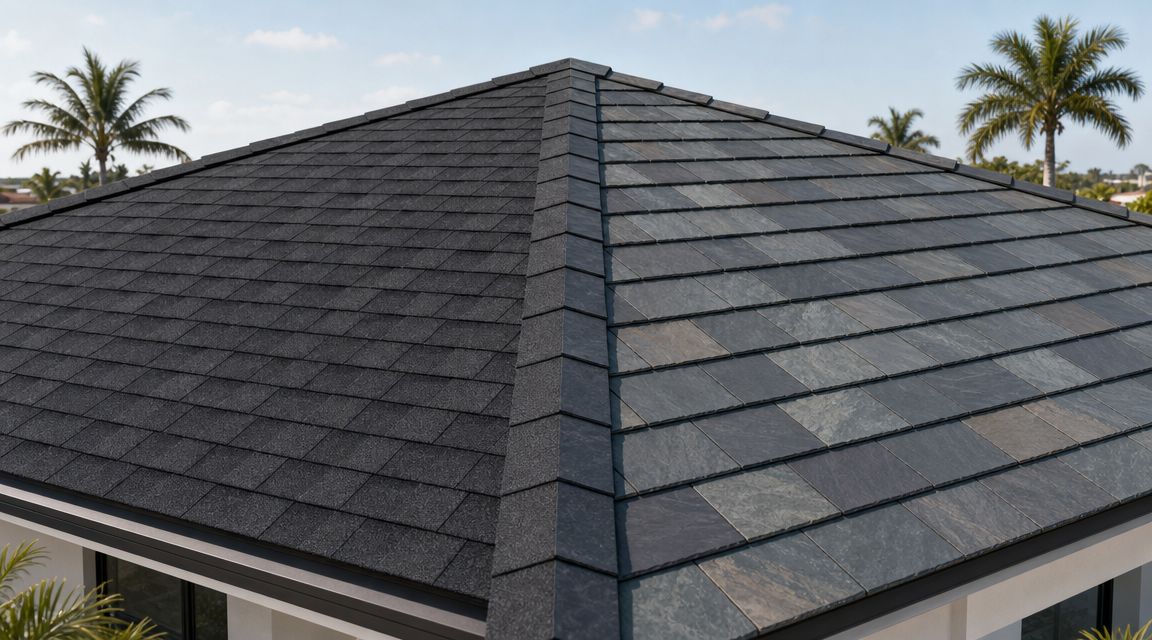
The bigger problem is language. In the field, people use “composite,” “composition,” “dimensional,” and “architectural” like they all mean the same thing. They don't. If you compare the wrong products, you'll misunderstand price, wind ratings, lifespan, and warranty terms before the quote is even signed. A visual example of what homeowners often shop by, rather than what the material is, shows why roof systems can look similar while performing very differently in service on this sample roof image.
Table of Contents
- Understanding the Shingle Showdown An Introduction
- Decoding the Terms Architectural vs True Composite
- A Closer Look at Architectural Shingles
- Exploring Premium Composite Shingles
- Head-to-Head Shingle Performance Comparison
- Installation Nuances and Warranty Protection
- The South Florida Homeowner's Decision Matrix
- Paletz Roofing's Recommendation For Your Property
Understanding the Shingle Showdown An Introduction
More than three quarters of new residential shingle roofs use architectural shingles. That market share is one reason the terms in this comparison get blurred so often.
The first question is not color. It is not even price. The first question is which product class you are comparing.
Architectural shingles are laminated asphalt shingles. True composite shingles are synthetic products, usually polymer-based, built to mimic slate, shake, or other premium roofing profiles. Those are two different categories with different costs, weight, installation details, and long-term performance expectations.
That distinction matters more in South Florida than it does in milder parts of the country.
On roofs in Broward, Miami-Dade, and Palm Beach, I see the same pressures over and over: high wind, year-round humidity, salt air near the coast, and brutal UV exposure. A shingle that looks like a smart value on paper can age very differently once it spends years on a low-slope section with full afternoon sun and storm exposure. Homeowners need a material comparison that reflects local conditions, not a generic national overview. Our team sees that difference every day on South Florida shingle roof projects.
Practical rule: If a roofer says "composite," ask whether they mean laminated asphalt or a synthetic composite product. That one question clears up a lot of bad estimates and weak apples-to-oranges comparisons.
Architectural shingles remain a common choice because they sit in the middle of the market. They cost less than premium synthetic products and usually outperform old 3-tab shingles in both appearance and service life. Composite shingles can offer a longer service window and a higher-end look, but the added cost only makes sense on the right house, with the right exposure, and with an installer who knows the system.
The goal is simple. Choose the shingle type that gives your home the best chance of holding up in South Florida without paying for features your roof does not need.
Decoding the Terms Architectural vs True Composite
The most common mistake in this topic is simple. People compare architectural asphalt shingles to composite shingles, but the term “composite” often gets used so loosely that the quote itself may already be mixing categories.
Why the terminology confuses homeowners
Some contractors, retailers, and even product pages use “composite shingle” to describe almost any shingle made from more than one ingredient. That can pull laminated asphalt into the same conversation as synthetic polymer roofing, even though they aren't the same product class.
A strong homeowner question is this: When is a composite shingle just an architectural asphalt shingle? Roofing guidance notes that the answer comes from checking the manufacturer's material composition and warranty language, because the term is used inconsistently across the industry, as explained in this guide on composite shingles vs asphalt shingles.
If the product is built on an asphalt-and-fiberglass laminated shingle platform, it belongs in the architectural asphalt category. If it's a synthetic product made to mimic slate, shake, or other premium profiles using polymer or similar engineered materials, that's the true composite category homeowners usually mean when they ask for an upgrade.
What architectural shingles really are
Architectural shingles are also called dimensional shingles or laminated shingles. They use layered construction to create depth, shadow lines, and a more textured look than flat 3-tab products.
That layered build is why they became the standard residential asphalt roof. They don't look entry level, they usually carry stronger wind ratings than older single-layer shingles, and they fit a broad range of homes without the premium budget required for synthetic systems.
How to verify what you're being quoted
Use the proposal and product literature, not sales language.
- Check the material description. If the paperwork says asphalt/fiberglass laminate, you're looking at architectural asphalt.
- Read the profile intent. If the product is sold as a synthetic mimic of slate or cedar, it's more likely true composite.
- Review the warranty wording. Warranty language often reveals whether the product is a mainstream asphalt line or a premium synthetic line.
- Ask for the exact manufacturer line. “Composite” by itself isn't specific enough to compare bids fairly.
A clean apples-to-apples decision starts with naming the product correctly. Without that, every later conversation about durability, cost, and lifespan gets muddy.
A Closer Look at Architectural Shingles
Architectural shingles earn their place because they solve the biggest weakness of old basic shingles. They add body, grip, and visual depth without moving the homeowner into a much more expensive material class.

What architectural shingles are made of
Architectural shingles are a multi-layered asphalt/fiberglass laminate. That extra mass matters. Roofing guidance describes them as about 50% heavier than single-layer 3-tab shingles, and that added weight is one reason they commonly carry 110 to 130 mph wind ratings with expected life in the 20 to 50 year range depending on brand and installation quality. Standard 3-tab shingles are commonly described closer to 90 mph and 15 to 20 years, according to this roofing guide comparing composite and asphalt shingles.
On real jobs, the difference is visible before the first rainstorm. Architectural shingles sit with more depth, less flatness, and a stronger shadow line. Homeowners usually notice the curb appeal first. Roofers notice the material body and handling.
A close roof view often helps homeowners understand the difference between flat basic products and dimensional laminated products better than a sample board does. This roof surface example shows the kind of texture people are usually paying for with architectural shingles.

Why they became the modern standard
Architectural shingles took over the residential market because they're the practical compromise.
They cost more than basic 3-tab shingles, but not enough to scare off most reroof budgets. They look more substantial. They usually handle wind better. They also give builders, owners, and buyers a roof that feels current rather than stripped down.
A lot of homeowners don't need the most expensive roof on the market. They need a roof that performs well, looks right on the house, and doesn't blow the whole renovation budget.
That's where architectural shingles shine.
Where they work well in South Florida
They're often the right fit when the homeowner wants a dependable shingle roof and the house doesn't call for a premium synthetic look.
They also make sense when these priorities are at the top:
- Balanced budget: The owner wants stronger performance than entry-level asphalt without the jump to premium synthetic pricing.
- Conventional residential appearance: The home suits a dimensional shingle profile and doesn't need a slate or shake replica.
- Resale-minded upgrades: The goal is to improve appearance and service life with a product buyers already recognize.
What doesn't work is assuming “architectural” means “best possible.” It means better than basic asphalt and often very good value. That's not the same as maximum durability in a hurricane-prone coastal environment.
Exploring Premium Composite Shingles
True composite shingles sit in a different lane. They aren't just a nicer asphalt shingle. They're the premium category for owners who care most about longevity, higher-end appearance, and stronger weather performance.
What makes composite shingles different
Composite shingles are typically described as synthetic products designed to mimic materials like slate or cedar while avoiding the weight and fragility of those natural systems. The premium comes from both engineering and positioning. They're built as a higher-performance alternative, not a modest upgrade.
Industry comparisons commonly place composite shingles in the 30 to 50+ year service-life range, with material costs around $4 to $12 per square foot versus $1 to $4 per square foot for asphalt shingles. Those same comparisons say composite products often cost 2 to 3 times more up front, and wind resistance is commonly listed around 110 to 190 mph, while asphalt often fails near 90 mph, according to this composite versus asphalt comparison.
That price gap is why composite has stayed a premium niche rather than becoming the default roof on most homes.
Composite is for the owner who doesn't want the middle option. It's for the owner who wants the stronger spec and is willing to pay for it.
Where premium composite makes sense
In South Florida, true composite starts making a lot of sense when exposure is severe or the ownership timeline is long.
A few common fits:
- Coastal properties: Homes that take more wind, more salt exposure, and more weather stress than inland homes.
- Long-term ownership: Owners who plan to stay put and care more about long service life than lower upfront spend.
- High-end visual goals: Houses where the roof is a design feature, not just a weather barrier.
- Storm-focused buyers: People who want stronger wind performance on paper and don't want the cheapest acceptable option.
What doesn't make sense
Composite isn't automatically the right answer for every South Florida home.
If the project is highly budget-sensitive, if the house may be sold in the near term, or if the roof design doesn't justify the premium look, the return can feel thin. A homeowner can absolutely overspend by buying a premium product for a property that only needs a solid mainstream system installed correctly.
That's the heart of composite shingles vs Architectural shingles. One is built around value and broad applicability. The other is built around premium performance and premium cost.
Head-to-Head Shingle Performance Comparison
The best comparison is the one you can scan quickly and use in a real estimate meeting. Here's the straightforward version.

Quick comparison table
| Category | Architectural shingles | Composite shingles |
|---|---|---|
| Material type | Laminated asphalt/fiberglass | Synthetic engineered roofing product |
| Market position | Mainstream residential default | Premium niche upgrade |
| Upfront cost | Lower than composite | Higher than architectural |
| Appearance | Dimensional asphalt look | Often designed to mimic slate or shake |
| Wind performance | Stronger than basic 3-tab | Often stronger at the top end |
| Service life | Solid long-term value | Longer-term premium play |
| Best fit | Broad residential use | High-demand performance and design goals |
What the trade-offs look like in South Florida
South Florida changes the conversation because roofs here don't get judged in mild weather. They get judged in wind, humidity, heat, and hard sun.
Architectural shingles usually win the value argument. They're familiar, widely available, and strong enough for many homes when the product line, fastening pattern, ventilation, and underlayment are handled correctly. For a lot of inland properties, they're the practical answer.
Composite shingles usually win the premium durability argument. If the homeowner wants the longest likely service life and stronger wind resistance, that's where composite earns attention.
The wrong way to buy a roof is asking which product is “better” in general. The right way is asking which product is better for this house, on this budget, in this location.
Durability and weather resistance
Architectural shingles improved on basic asphalt by adding mass and better wind capability. That's a real upgrade. But true composite usually stretches further when the conversation shifts to the highest-end durability expectations.
For South Florida homeowners, the practical distinction is this:
- Architectural shingles: Strong mainstream performance, especially for homes that need a dependable but not ultra-premium system.
- Composite shingles: Better fit when the owner wants top-tier durability and doesn't mind paying for the jump.
Cost and long-term value
Upfront cost and lifetime value are not the same thing.
Architectural shingles usually make the bid easier to approve. Composite often makes the long-term ownership case stronger, especially for owners who plan to keep the property. The catch is simple. Long-term value only matters if the owner intends to stay long enough to realize it.
That's why resale timeline matters. A homeowner planning a shorter hold may never personally enjoy the full value of a premium composite roof. A long-term owner often will.
Appearance and neighborhood fit
Architectural shingles look good on most suburban homes because the dimensional profile is familiar and clean. Composite becomes attractive when the owner wants a more custom appearance or a roof that mimics higher-end materials more convincingly.
Neither look is “right” by itself. Roof style has to fit the house.
Weight and system compatibility
Performance numbers matter, but system compatibility comes first. Roof deck condition, roof geometry, ventilation layout, underlayment, flashing details, and local code requirements all affect whether a material performs the way the brochure says it should.
That's why a comparison chart can guide the choice, but it can't replace a roof-specific inspection.
Installation Nuances and Warranty Protection
A good shingle installed on the wrong roof assembly won't act like a good shingle for long. In South Florida, installation details matter almost as much as product choice.
Roof geometry matters first
One of the most overlooked realities in shingle selection is slope. Roofing guidance notes that shingles should not be used on low-slope roofs under a 2/12 pitch and require extra vapor barrier protection on 2/12 to 4/12 roofs, as explained in this article on architectural grade composition roofing.
That matters here because humid air, wind-driven rain, and storm events don't forgive bad system choices.
If a roof is too low in slope, the debate between composite shingles and architectural shingles may be secondary. The first issue is whether a shingle system belongs there at all.
What to check before installation starts
Homeowners should press for clarity on these points before work begins:
- Roof pitch: The roof must be appropriate for shingles in the first place.
- Underlayment plan: On marginal slopes and humid assemblies, underlayment details aren't optional.
- Flashing scope: Valleys, walls, penetrations, and transitions often decide whether a roof stays dry.
- Ventilation approach: Poor airflow can shorten roof life and contribute to moisture problems.
A stronger shingle can still fail early if water management, fastening, or ventilation is sloppy.
What to read before you rely on a warranty
Many homeowners hear “lifetime warranty” and think they're covered for everything that matters. That's rarely how roofing warranties work in real life.
Start with two separate questions.
What does the manufacturer cover?
That usually relates to product defects and specific performance terms under defined conditions.What does the contractor cover?
That's workmanship. It matters because many roof problems come from installation details, not defective shingles.
Also check the fine print on transferability, exclusions, required accessory products, and whether the system must be installed a certain way to keep the coverage valid. The safest habit is getting the exact product line and warranty documentation in writing before the job starts.
In South Florida, a warranty is only as useful as the installation behind it and the paperwork supporting it.
The South Florida Homeowner's Decision Matrix
Most homeowners don't need more roofing jargon. They need a clean way to match the material to the property.

Best fit by property goal
If the main priority is best overall value, architectural shingles are usually the right answer. They're the mainstream choice for a reason. They balance appearance, cost, and durability well enough for a large share of homes in Broward, Miami-Dade, and Palm Beach.
If the top priority is maximum durability, true composite deserves serious attention. That's especially true on homes with heavy weather exposure or owners who plan to stay long term and want to minimize future reroof cycles.
If the priority is appearance without jumping to luxury pricing, architectural shingles often land in the sweet spot. They improve curb appeal over basic flat shingles and suit a wide range of residential styles.
If the priority is premium design and premium weather performance together, composite has the stronger case.
How local conditions change the answer
South Florida isn't one uniform environment. A house near the coast doesn't face the same conditions as a more sheltered inland home.
Use this framework:
- Coastal home with high exposure: Lean toward composite if budget allows and long-term performance matters most.
- Inland home with moderate budget: Architectural shingles are often the smarter balance.
- Rental or shorter-hold property: Architectural usually makes more financial sense unless the owner has a specific premium objective.
- Custom home where roof appearance drives curb appeal: Composite may justify its premium more easily.
Questions that narrow the choice fast
Ask these before picking the product:
- How long will you keep the property?
- How exposed is the house to wind and weather?
- Does the roof design suit a shingle system cleanly?
- Are you buying for lowest upfront cost, best balance, or longest service life?
- Does the roof's appearance need to add to the home's visual appeal, or be a suitable match?
For many South Florida homeowners, architectural shingles are the practical answer. For some, especially on exposed or high-value properties, practical isn't enough and composite becomes the right call.
A durable roof decision comes from matching the product to the property, not chasing the most expensive line item or the cheapest quote.
Paletz Roofing's Recommendation For Your Property
After decades in South Florida roofing, the answer usually comes down to honesty about priorities.

Questions homeowners still ask at the estimate
A few final questions come up on almost every shingle consultation.
Is architectural shingle roofing good enough for South Florida?
Yes, on many homes it is. But “good enough” depends on wind exposure, roof design, installation quality, and the exact product line being used.
Is composite worth the extra money?
It can be, especially if you want longer expected service life, stronger top-end wind performance, and a more premium finished look. It isn't automatically worth it for every house or every ownership timeline.
What's the biggest buying mistake?
Confusing a laminated architectural asphalt shingle with a true synthetic composite product. Homeowners should insist on exact manufacturer line, material composition, and warranty paperwork before comparing bids.
The recommendation after three decades in South Florida
For most residential projects, architectural shingles remain the best balance of cost, appearance, and dependable performance. They're the right answer for a large share of reroofs because they give homeowners a strong modern shingle roof without forcing the project into premium territory.
For owners who want the strongest long-term play, especially on exposed properties, true composite shingles are often the better material. They cost more. They should. They're built for a different buyer and a higher performance expectation.
The best results still come from inspection first, product second. Roof pitch, deck condition, moisture behavior, flashing design, ventilation, and code compliance decide whether either system performs the way it should. Homeowners can also review the company's visual brand and inspection presence through Paletz Roofing and Inspections branding when evaluating who they trust with that work.

If you want a roof that lasts in South Florida, don't buy by label alone. Buy the right system for the house.
If you're weighing composite shingles vs Architectural shingles for a home or commercial property in Broward, Miami-Dade, or Palm Beach, Paletz Roofing and Inspections can inspect the roof, explain the trade-offs, and give you a clear recommendation based on your property's slope, exposure, and long-term goals.