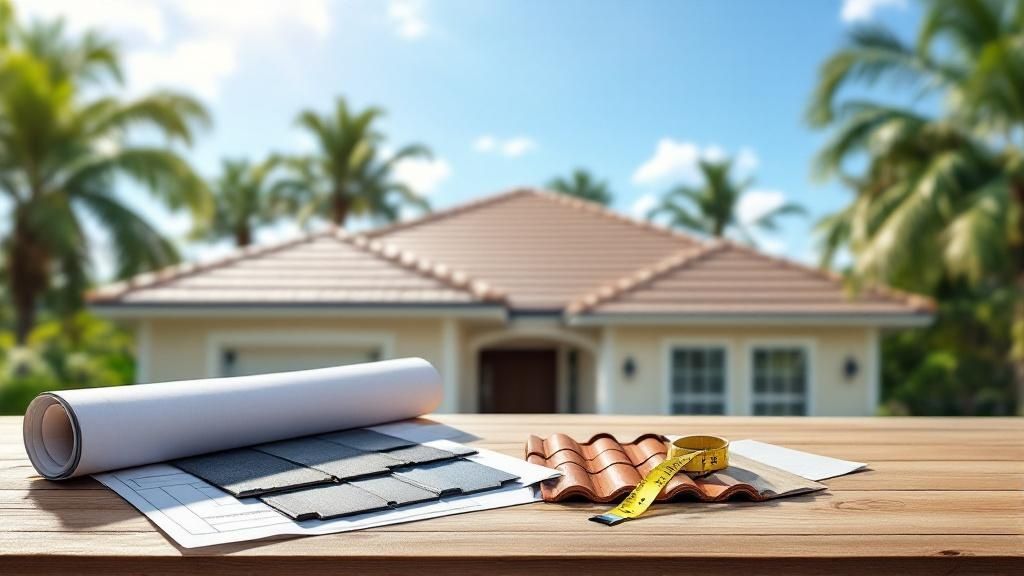
Replacing your roof in Florida is a serious investment, and the numbers can feel all over the map. Most homeowners find themselves looking at a price tag somewhere between $8,000 and $25,000. The final cost really boils down to the materials you pick, the size of your house, and just how complex the job is.
What a New Roof Actually Costs in Florida
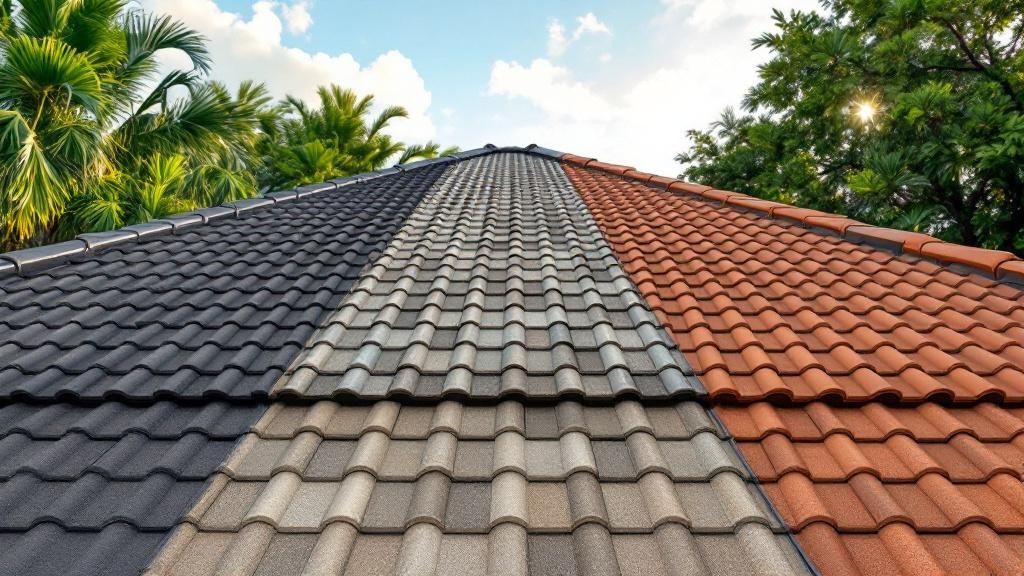
When you start budgeting for a new roof in the Sunshine State, it’s important to get why the costs can swing so dramatically. Florida's one-of-a-kind climate—with its relentless sun, torrential downpours, and the ever-present threat of hurricanes—puts way more stress on a roof than in most other parts of the country. This isn't just about throwing on some new shingles; it's about building a tough, durable shield over your home.
Key Factors Driving the Price
Several core variables come together to shape your final quote. Think of it like building a custom car—the base model has its starting price, but every single upgrade you add tacks on to the total. For your roof, these are the big-ticket items:
- Roofing Material: This is the single biggest driver of your total cost. Your options run the gamut from affordable asphalt shingles all the way up to premium metal or tile.
- Home Size and Complexity: It’s simple math, really. A sprawling, multi-level home with a steep pitch, dormers, and skylights is going to cost a lot more than a simple, single-story ranch house.
- Labor Rates: You need skilled hands for a proper, code-compliant installation. Those labor rates can vary depending on where you are in Florida.
- Permits and Inspections: Local counties and cities require permits to make sure the work meets the strict Florida Building Codes. This adds a necessary—and non-negotiable—administrative cost.
When you put all these factors together, you start to see how the price for your specific project takes shape. To give you a clearer picture, we can break down the average cost to replace a roof in Florida by the material you choose.
Estimated Cost of a New Florida Roof by Material
The material you select will have the most significant impact on your final bill. The table below provides a quick look at the average installed costs for the most common choices here in Florida.
| Roofing Material | Average Cost per Square Foot (Installed) |
|---|---|
| Asphalt Shingles | $5 – $10 |
| Metal Roofing | $7 – $15 |
| Concrete or Clay Tile | $10 – $25 |
As you can see, asphalt shingles are typically the most budget-friendly option, running between $5 and $10 per square foot. More resilient materials like metal come in a bit higher, from $7 to $15. And for tile, known for its incredible longevity and classic Florida look, you can expect a range from $10 to $25 per square foot.
For a more in-depth look at what goes into these numbers, you can check out the full 2025 guide on Florida roofing costs from reroofamerica.com. Getting a handle on these variables is the first step to making a smart, informed decision for your home.
Choosing Your Roofing Material Wisely
Deciding on the right material for your new roof is easily the most important call you'll make in this whole process. It's the biggest factor driving the final cost of a new roof in Florida, shaping not just the upfront price but also what you'll spend on maintenance, your energy bills, and how well your home holds up to our state's wild weather.
Think of it like choosing tires for your car. The standard ones will get you around, but if you're driving through rough terrain, you want something built for the job. It’s the same with a Florida roof—it’s your home's first line of defense against brutal UV rays, biblical downpours, and hurricane winds. This decision is about much more than just looks; you're weighing the initial investment against decades of performance and peace of mind.
Let's break down the most popular choices so you can see what each brings to the table.
The image below shows how a professional roofer starts by evaluating a home's specific needs—a critical first step before any material is chosen.
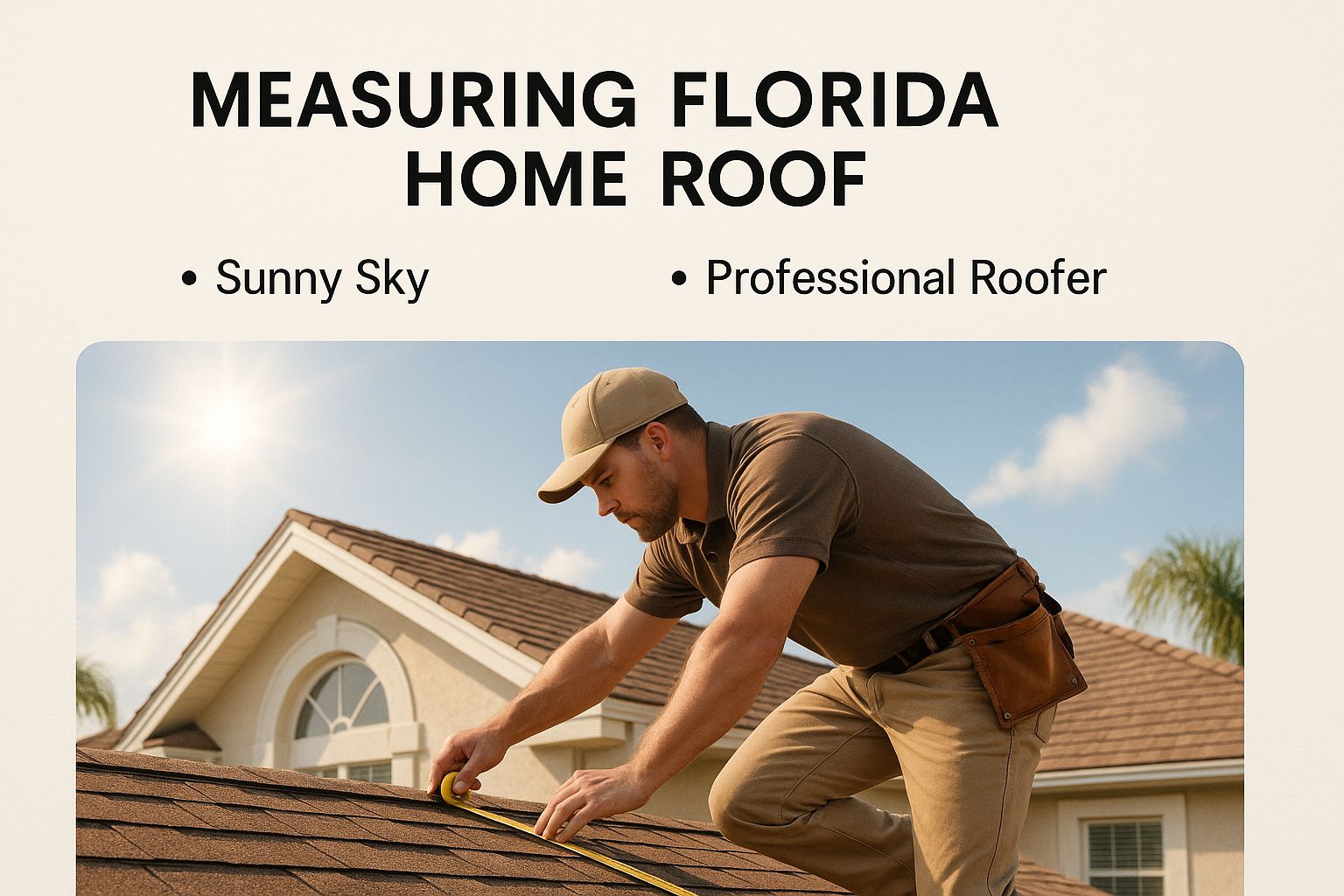
This careful measurement and assessment isn't just for show; it's essential for getting an accurate and fair estimate for your new roof.
Asphalt Shingles: The Popular and Practical Choice
Asphalt shingles are hands-down the most common roofing material you'll see, and for good reason. They hit that sweet spot between cost, performance, and style, which makes them a great starting point for many Florida homeowners.
You've got two main types here: the basic 3-tab shingles and the beefier architectural shingles. While 3-tab is the most budget-friendly option, architectural shingles give your roof more dimension, are far more durable, and offer much better wind resistance—a non-negotiable upgrade in Florida. A roof with architectural shingles can typically handle winds up to 130 mph, which is a huge plus during hurricane season.
An asphalt shingle roof is the dependable workhorse of the roofing world. It provides reliable protection at an affordable price point, though it may not have the extreme lifespan of more premium materials under the relentless Florida sun. Its typical lifespan here is around 15-20 years.
Metal Roofing: The Durable and Efficient Option
Once reserved for commercial buildings, metal roofing has become a go-to choice for homes in Florida. Why the surge in popularity? It comes down to incredible durability and serious energy efficiency. A well-installed metal roof can last 40 to 70 years, easily outliving two or three asphalt shingle roofs.
Metal roofs are champs against wind, fire, and moisture. They're also fantastic at saving you money on your power bill. Their reflective surfaces can block solar heat, which can slash cooling costs by 10-25%—a massive saving in a state where the AC runs almost nonstop. That long-term value helps make the higher initial cost a lot easier to swallow.
Today’s metal roofing isn't just corrugated tin, either. It comes in a wide variety of styles, from sleek standing seam panels to options that perfectly mimic the look of traditional shingles or tiles.
Tile Roofing: The Timeless and Resilient Investment
When you picture a classic Florida home, chances are a tile roof comes to mind. Made from either clay or concrete, tile is famous for its beauty and incredible toughness. It's practically custom-made for our climate, offering top-tier resistance to wind, fire, and the salty air you find along the coast.
A tile roof is a major upfront investment, but its lifespan is almost unbeatable, often lasting 50 years or more with the right maintenance. The sheer weight of tile is actually a benefit during a hurricane, helping it stay put in high winds. Of course, that weight is also a key factor—your home's structure has to be strong enough to support it, which can sometimes add to the project cost.
The thermal properties of tile also help keep your home insulated and cooler in the summer, adding to your energy savings over the years. If you're planning to stay in your home for the long haul, the high initial cost of a new roof in Florida is often justified by its exceptional durability and classic look.
Comparing Florida Roofing Materials
To help you make the best decision for your home and budget, it helps to see the key details of each material side-by-side. The table below breaks down the most important factors for Florida homeowners.
| Material | Avg. Cost/Sq. Ft. | Lifespan in Florida | Hurricane Resistance | Energy Efficiency |
|---|---|---|---|---|
| Asphalt Shingles | $5 – $10 | 15-20 years | Good to Very Good | Fair |
| Metal Roofing | $7 – $15 | 40-70 years | Excellent | Excellent |
| Tile (Clay/Concrete) | $10 – $25 | 50+ years | Excellent | Very Good |
Ultimately, choosing your roofing material comes down to matching your budget with your long-term goals. Whether your priority is upfront affordability, saving on energy bills, or having the toughest roof on the block, there's a great solution out there for you.
Uncovering the Hidden Costs in Your Estimate

When you get a roofing quote, it’s easy to focus on that big number for the shingles or tiles. But the final price is actually a complex recipe with a lot of ingredients beyond just the main material. Getting a handle on these "hidden" costs is the key to avoiding sticker shock and really understanding what you're paying for.
Think of it this way: your roof is a complete system, and the shingles are just the final, visible layer. The total cost of a new roof in Florida has to cover everything happening underneath—from yanking off the old materials to making sure the new roof has a rock-solid foundation. These aren't optional extras; they're essential for a roof that’s safe, durable, and up to code.
Roof Size, Slope, and Complexity
The physical shape of your roof is one of the biggest drivers of labor costs. A simple, low-pitch roof on a single-story home? That’s about as straightforward and affordable as it gets. But the price climbs right alongside the complexity.
Several things can add hours—and dollars—to the job:
- Steep Pitch: A steep roof isn't just harder to walk on; it demands extra safety gear like harnesses and scaffolding. Naturally, this slows the crew down and bumps up the labor charges.
- Multiple Stories: Getting materials up and old debris down on a two or three-story home is a logistical workout, which means more time and effort.
- Architectural Features: Things like chimneys, skylights, dormers, and multiple valleys all create obstacles. Each one requires precise cutting and flashing work, which adds a surprising amount of time to the installation.
This is why two homes with the exact same square footage can get wildly different quotes. It's all in the details.
Tearing Off and Disposing of the Old Roof
Before the new stuff goes on, the old stuff has to come off. This step, called the tear-off, is a standard and non-negotiable part of almost every full roof replacement in Florida. It involves stripping away every last shingle, all the old underlayment, and every nail until you’re down to the bare wood decking.
The tear-off is labor-intensive, and the quote also has to cover the cost of a dumpster and the fees to dump the old materials at a landfill. It might seem tempting to cut corners here, but roofing over an old layer of shingles is a big no-no. It often violates Florida's strict building codes and can instantly void your new material warranties. A proper tear-off is the only way to go.
A complete tear-off isn’t just about getting rid of old materials; it's a critical inspection. This is the one and only time a roofer can get a good, hard look at the condition of your roof’s wood decking—the true foundation of the entire system.
Underlayment and Deck Repairs
Once the old roof is gone, the crew inspects the roof deck—the sheets of plywood or OSB that form the skeleton of your roof. In Florida's humid climate, it’s pretty common to find spots that have been damaged by moisture and have started to rot or weaken. Any bad sheets have to be replaced to create a solid surface for the new roof.
This is the big unknown until the tear-off is done. Most contracts will include a price per sheet for any necessary deck repairs, so you know what to expect.
After the deck is solid, a new underlayment goes down. This is a waterproof barrier that acts as your roof’s second line of defense against leaks. Florida building codes demand a high-quality, peel-and-stick underlayment for better hurricane protection. It’s more expensive than the old-school felt paper used in other states, but it’s a far superior product for our climate.
Ever wonder why your neighbor’s roofing quote looks so different from yours, even if your homes seem similar on the surface? The answer is hiding in the unique details of your property and its exact location in Florida. These factors play a surprisingly big role in shaping the final cost of a new roof in Florida.
Think of it like getting a custom suit made. The base price for the fabric might be set, but the final cost changes based on the complexity of the cut, the number of pockets, and the detailed stitching required. It's the same with your roof—your home’s specific design, local labor rates, and city regulations all add unique costs to the bottom line.
Your Home's Unique Design and Complexity
No two roofs are ever truly the same, and their individual features have a direct impact on the labor and materials needed for the job. A simple, rectangular roof on a single-story home in Gainesville is about as straightforward and affordable as it gets. But the price starts to climb the second you introduce any complexity.
Here are a few of the most common architectural features that will drive up your costs:
- Number of Stories: Working on a two-story home requires more safety equipment and a whole lot more effort to get materials up and haul debris down. That extra logistical work means more labor time.
- Roof Pitch: A steep roof is more dangerous and much harder to work on. Crews have to move slower and use specialized safety gear, which always adds to the labor bill.
- Skylights and Chimneys: Each one of these requires custom flashing and meticulous sealing to keep water out. This is precision work that takes time and adds to the overall cost.
- Multiple Gables and Valleys: Complex rooflines with lots of different angles, like you’d find on a Tudor or Victorian-style home, demand more custom cuts and materials. This pushes up both labor and material expenses.
A roofer isn't just quoting your home's square footage; they're quoting its complexity. Every single valley, vent, and skylight is a potential weak point that needs extra time and real expertise to secure properly against Florida’s wild weather.
The Impact of Your Florida Location
Where you live in the Sunshine State matters just as much as what kind of roof is over your head. Costs can swing pretty dramatically from one county to the next, driven by local economic factors and different regulations. Getting a handle on these regional differences is the key to knowing if your estimate is fair.
A quick look at real Florida roofing quotes shows this loud and clear. For example, a young couple in Tampa got a $13,800 quote for their 1,700 sq ft single-story home. Meanwhile, a retiree in Naples was quoted $22,000 for a two-story home with clay tiles, which are much heavier and trickier to install. Homes with more complex features, like an Orlando property with five skylights, saw estimates pushing closer to $30,000. You can easily explore more real-world pricing examples to see how location and complexity work together.
Regional Labor Rates and Permit Fees
Labor makes up a huge chunk of any roofing bill, and those rates are anything but uniform across the state. Big metro areas like Miami or West Palm Beach almost always have higher labor costs than the more rural parts of North Florida, simply because the cost of living is higher. That difference alone can add hundreds, or even thousands, to your final invoice.
On top of that, permit fees are set by the county or city, and they can be all over the map. A permit for a reroofing project in one county might be $250, while the county right next door could charge $500 or more for the exact same job. Your contractor handles pulling the permits, but you can be sure that cost is passed directly on to you.
Finally, don't forget about Homeowners Associations (HOAs). Many HOAs have very strict rules about which roofing materials and colors you’re allowed to use to keep the neighborhood looking uniform. If your HOA says you have to use premium materials like tile or a specific brand of metal roofing, your choices are limited, and your project cost will be higher than if you had the freedom to pick a budget-friendlier option like asphalt shingles.
Deciding Between a Repair and a Full Replacement
When you spot a leak or a few shingles missing after a storm, it’s easy to jump to the worst-case scenario. But the truth is, not every roof problem means you have to shell out for a brand-new one. The real challenge is figuring out if a targeted repair is a smart, cost-effective fix or just a temporary band-aid on a much bigger problem. Getting this right is absolutely key to managing the overall cost of a new roof in Florida for the long haul.
I always tell homeowners to think of it like a car tire. If you pick up a single nail, patching it is a simple, logical fix. But if that tire is old, bald, and has a few slow leaks, patching it is just throwing good money after bad. A full replacement is the only sensible, safe choice. Your roof works on the exact same principle.
When a Roof Repair Makes Sense
A professional repair is often the perfect solution for isolated, contained damage. If your roof is generally in good shape but took a minor hit, a quality repair can easily extend its life without the massive expense of a full replacement.
Here are a few common situations where a repair is definitely the right call:
- Localized Damage: A handful of shingles got ripped off by high winds in one specific spot.
- Minor Leaks: A leak around a chimney, vent pipe, or skylight usually points to failed flashing, which is a straightforward replacement.
- Age of the Roof: If your roof is less than 10-15 years old and has been holding up well otherwise, repairing it is a solid investment.
Fixing these kinds of issues is cost-effective and restores your roof's integrity, giving you many more years of protection.
A targeted repair can be an excellent financial decision, but only if the underlying roof structure is sound. Attempting to patch an old, deteriorating roof is like putting a band-aid on a broken bone—it doesn't address the fundamental problem.
Knowing When It’s Time for a Full Replacement
At some point, you stop repairing a roof and start chasing problems. When that happens, the repairs become a recurring expense, and it’s time to face facts. A full roof replacement is a major project, but it becomes the most logical and financially sound step when the roof system as a whole is failing.
Here are the tell-tale signs that it’s time for a replacement:
- Widespread Granule Loss: You see a lot of sandy, gravel-like grit from your shingles in the gutters. This means they’ve lost their protective top layer.
- Curling or Buckling Shingles: This is a clear sign that the shingles are past their prime and can no longer seal out water properly.
- The 25-Year Rule: For a standard asphalt shingle roof, hitting the 20-25 year mark means it’s living on borrowed time in Florida’s brutal climate.
- Multiple Leaks: If you're playing whack-a-mole with leaks in different parts of the house, it's a sure sign of systemic failure.
Comparing Repair Costs to Replacement Costs
Looking at typical repair costs really helps put the price of a full replacement into perspective. Here in Florida, storm repairs are a common occurrence. For example, homeowners in the Tampa area often see repair bills averaging around $1,016, usually falling somewhere in the $463 to $1,589 range depending on the damage. These numbers are shaped by the size of the repair, the type of material, and whether it's an emergency call-out. You can see a more detailed breakdown of local roof repair expenses to see how these costs are calculated.
Here's the critical question to ask: if a roofer quotes you $2,500 or more for repairs, does it make more sense to put that money toward a brand-new roof that comes with a full warranty? If your roof is already getting on in years, sinking a big chunk of change into a patch that might only last a year or two before the next issue pops up is rarely the wisest use of your money.
Finding a Trustworthy Florida Roofing Contractor
Once you have a few estimates in hand, the real work begins. Getting a quote is easy; knowing if it’s the right one from the right company is the hard part. Choosing a contractor is about more than just finding the lowest price—it's about hiring a professional who will protect your home with a durable, code-compliant roof.
Think of a roofing quote as a blueprint for your project. A vague, one-page estimate is a major red flag. A trustworthy contractor will provide a detailed, itemized proposal that clearly outlines every single aspect of the job, leaving absolutely no room for surprise charges later on.
Decoding the Roofing Estimate
A comprehensive quote should break down the total cost so you know exactly what you're paying for. You need to see specific line items to ensure complete transparency.
Look for these key details:
- Materials: A clear list of all materials, including the specific brand and type of shingles, underlayment, and flashing.
- Labor: The cost for the crew to perform the tear-off and installation.
- Tear-Off and Disposal: The fees for removing the old roof and hauling away the debris. Don't let this be a hidden cost.
- Permit Fees: The cost of the required municipal or county building permits.
- Decking Replacement: The price per sheet for replacing any rotted or damaged wood decking found after the old roof comes off. This is a common variable, so the price needs to be clear upfront.
- Warranties: Clear details on both the manufacturer’s material warranty and the contractor’s workmanship warranty.
Vetting Your Florida Roofing Contractor
In a state with such strict building codes and ever-present hurricane risks, doing your homework on a potential contractor is completely non-negotiable. It’s the single best way to protect your investment and avoid the massive headaches of a poor installation. Start by verifying their credentials.
Never hire a roofer in Florida without first confirming they are state-licensed and fully insured. A valid license proves they meet state requirements, while liability and workers' compensation insurance protects you from any accidents on your property.
Ask for their license number and verify it on the state’s official website. A reputable roofer should also readily provide proof of insurance. Beyond the paperwork, ask about their direct experience with local building codes, especially those related to the High-Velocity Hurricane Zone (HVHZ) if you live in a coastal county.
A roofer who understands these specific requirements is absolutely essential for ensuring your new roof is not just beautiful, but truly storm-ready. This crucial vetting process helps you confidently select a qualified professional who won't let you down.
Common Questions About Florida Roof Costs
When you start digging into the details of a roof replacement, questions pop up fast. As you figure out the total cost of a new roof in Florida, it's good to have clear, straightforward answers to what homeowners worry about most. This section cuts through the noise to help you feel confident about your decisions.
Think of these as the final checkpoints before you sign a contract. We’re covering the big topics: home value, what insurance will (and won’t) pay for, and how long your new roof will realistically last in Florida’s brutal climate.
How Much Does a New Roof Increase Home Value?
A new roof is a massive selling point in Florida, where buyers are always thinking about tough insurance rules and hurricanes. You might not see a 100% dollar-for-dollar return, but it seriously boosts your home's appeal and can be the one thing that prevents a sale from collapsing.
Across the country, a new asphalt shingle roof can recoup over 60% of its cost in added home value. That number is often much higher in Florida. Why? Because a brand-new, code-compliant roof gives a buyer incredible peace of mind. It tells them the home is solid, well-cared-for, and most importantly, insurable without them having to shell out for costly upgrades right away.
Does Homeowners Insurance Cover a New Roof?
This is the big one, and the answer isn't a simple yes or no. Homeowners insurance is designed to cover a roof replacement if the damage comes from a sudden, specific event like a hurricane, a fire, or a nasty hailstorm. It will not pay to replace a roof that’s just old, worn out, or hasn't been maintained.
Your insurance policy is there for unexpected disasters, not for the slow march of time. An old roof is a maintenance issue, and that responsibility falls on the homeowner.
When a storm does damage your roof, knowing how to handle the home insurance claim process is absolutely critical for managing your out-of-pocket costs. Florida policies can be tricky, especially with hurricane deductibles, so it's smart to know your coverage inside and out before you file. The best first step after a storm is always a professional inspection.
How Long Does a Roof Last in the Florida Climate?
The relentless sun, torrential rain, and thick humidity in Florida take a serious toll on a roof's lifespan. A material that lasts for decades up north might not make it nearly as long down here.
Here’s a realistic breakdown of what you can expect from different materials in our climate:
- Asphalt Shingles: Your standard 3-tab shingles often give out in 15-20 years as the sun’s UV rays make them brittle. Upgraded architectural shingles hold up better, usually lasting 25-30 years.
- Metal Roofing: This is a much tougher choice for Florida. A quality metal roof can easily last 40-70 years, offering fantastic long-term value and superior resistance to whatever the weather throws at it.
- Tile Roofing: As the heavyweight champion of roofing, concrete or clay tile can last 50 years or more. Their sheer weight and durability make them an ideal—though expensive—investment against Florida's extreme weather.
A new roof is one of the most critical investments you'll make for your home. For a detailed inspection and a clear, no-pressure quote from a team with over 30 years of experience in South Florida, trust the experts at Paletz Roofing and Inspections. Contact us today and make sure your home is protected by the best.