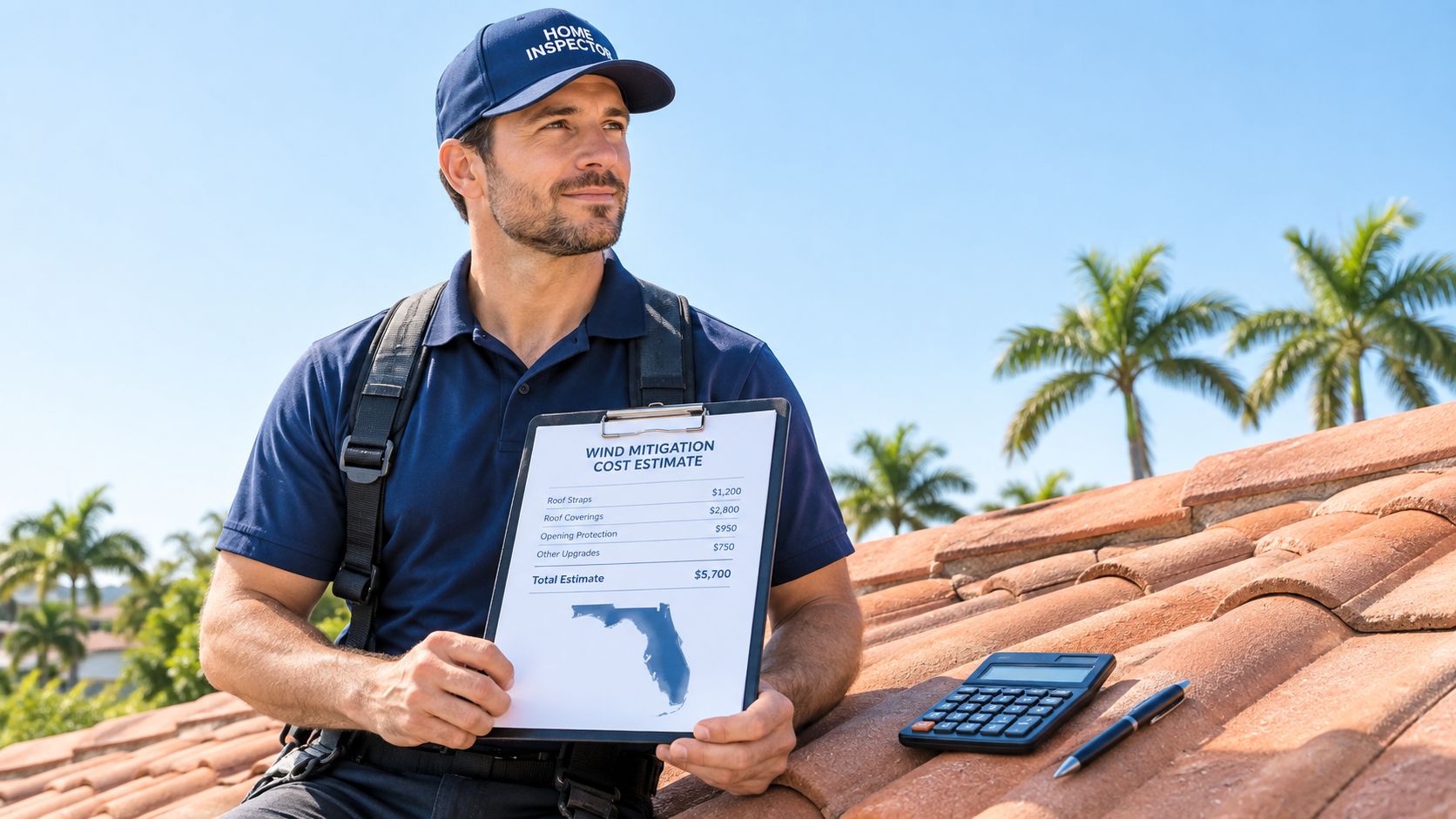
A standalone wind mitigation inspection in Florida typically costs $75 to $150, and the report can remain valid for up to five years. The critical question is the annual cost of that report compared with the wind-premium savings it may produce.
You're probably looking at a renewal, a new policy quote, or a closing deadline and wondering whether paying for another inspection will help. In South Florida, that decision shouldn't be based on the inspection fee alone. The report only affects the wind portion of your homeowners insurance premium, and the result depends on documented features, your carrier's rules, the report's timing, and whether a free or subsidized inspection is available.
Table of Contents
- Why Florida Homeowners Are Booking Wind Mitigation Inspections
- What a Wind Mitigation Inspection Actually Covers
- Typical Price Ranges Across Florida
- The Features That Earn Insurance Credits
- Standalone Bundled and Subsidized Options Compared
- How to Decide If the Inspection Is Worth It
- Practical Ways to Lower Your Inspection Cost
- Final Checklist Before You Book
Why Florida Homeowners Are Booking Wind Mitigation Inspections
At a kitchen table in a 1990s stucco home in Hialeah, a homeowner studies a Citizens renewal and circles the new premium. The inspection quote is $150, which feels like another bill at exactly the wrong time. The sensible question isn't “Can I find a cheaper inspector?” It's “Will this report create enough wind-premium savings to justify its cost?”
Several events push homeowners to book. A non-renewal letter from Citizens can force a rushed search for coverage. A roof reaching 15 years can trigger underwriting pressure or a roof-age surcharge. A buyer may order the inspection before closing to document storm-resistant construction before a new carrier prices the policy. Someone else may be shopping a renewal before hurricane season and wants every eligible credit documented.
A completed report travels from the licensed inspector to the homeowner or agent, then into the carrier's underwriting process. Florida's official guidance explains that the homeowner contracts with a licensed inspector and submits the completed form to the insurance agent to start processing eligible hurricane-loss-mitigation discounts, as described by the Florida Office of Insurance Regulation's premium-discount guidance.
The report matters more than the appointment fee
A wind mitigation report can qualify you for credits on the wind-only portion of a policy. The total premium includes coverage that the inspection doesn't change, so comparing the inspection price with the entire policy premium gives you the wrong answer. Citizens Property Insurance Corporation confirms that its discounts apply only to the wind portion of the premium.
South Florida rule: Never approve a mitigation inspection based on the headline fee alone. Ask how much of your policy is exposed to wind credits and whether the carrier will accept the completed form.
If the home remains unchanged, the form can stay useful for up to five years. That turns a one-time fee into a longer-term insurance document, not an annual subscription. The full pricing breakdown matters, but the net economics matter more.
What a Wind Mitigation Inspection Actually Covers
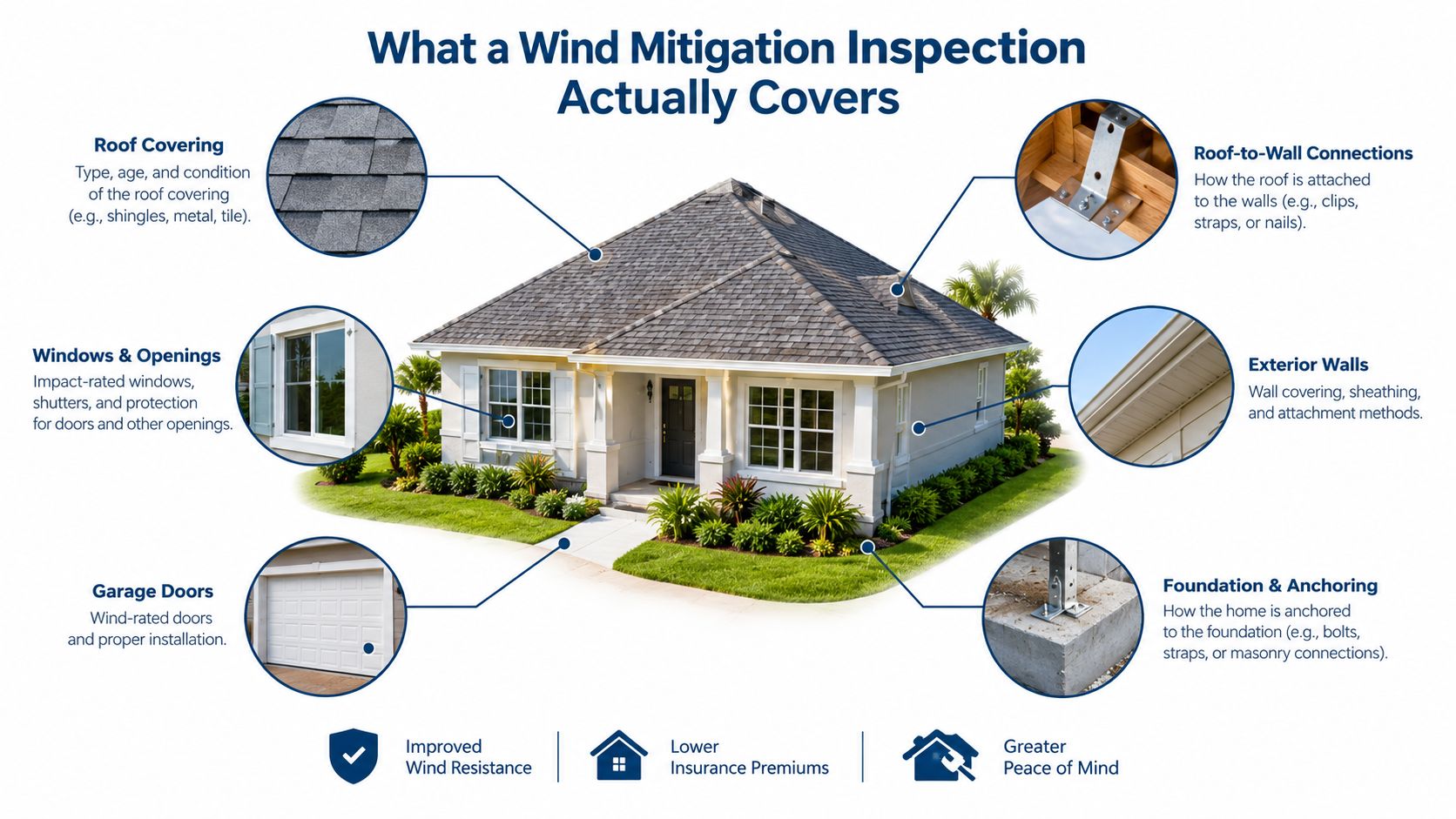
A wind mitigation inspection is a focused examination of hurricane-resistant construction. The inspector isn't evaluating every part of the home. Instead, the inspector documents features that may reduce wind damage and records them on Florida's standardized Uniform Mitigation Verification Inspection Form, OIR-B1-1802.
A typical visit is often completed in roughly 30 minutes, although access, documentation, and property complexity can extend the appointment, according to Florida wind mitigation inspection pricing guidance from Kin. The inspector may photograph the roof covering, roof deck attachment, roof-to-wall connections, roof geometry, secondary water resistance, and protected openings such as windows, exterior doors, skylights, and garage doors.
The inspector may need attic access to verify nail patterns or connection hardware. Permit records, product approvals, invoices, and visible labels can help support features that can't be confirmed from the ground.
What this inspection isn't
A wind mitigation inspection isn't a four-point inspection, roof-condition certification, or general home inspection. A four-point report focuses on major systems for insurance underwriting. A wind mitigation report focuses on storm-hardening features for possible wind credits.
That distinction explains why two visually similar homes can receive different results. One may have documented clips, protected openings, and secondary water resistance. The other may have similar-looking windows or roof materials but no acceptable documentation.
If you want to understand how roof forces are evaluated beyond ordinary visual documentation, this roof uplift testing laboratory equipment reference provides useful technical context. A field inspection won't perform laboratory testing, but it still needs accurate observations and clear photographs.

Typical Price Ranges Across Florida
A straightforward single-family inspection usually costs less than a complex building review. For Florida homeowners, the common standalone price is about $75 to $150, with a broader range of $75 to $200 when travel, property complexity, or bundled documentation affects the quote. Florida PACE's consumer guidance summarizes these common price expectations.
A combined wind mitigation and four-point package often runs about $150 to $250 total, according to FPAT's Florida inspection service information. One visit may cover both forms, but confirm whether the fee includes digital copies, carrier submission, or follow-up questions.
| Service Type | Price Range (USD) | Typical Driver |
|---|---|---|
| Standalone wind mitigation inspection | $75 to $150 | Standard single-family property and straightforward access |
| Broader standalone range | $75 to $200 | Travel, property complexity, or one-trip minimum |
| Wind mitigation plus four-point package | $150 to $250 total | Two forms completed during one appointment |
| Complex or high-rise building inspection | About $135 to $500 per building | Larger envelope and more credit-bearing features to verify, per FPAT's windstorm mitigation inspection guidance |
Multi-story homes, complicated roof geometry, restricted attic access, and high-rise layouts push a quote toward the upper end. The inspector has more areas to document and more construction details to verify across the building envelope.
The inspection fee is only one part of the economics. A qualifying report can remain useful for five years, and the potential savings apply to the wind portion of the insurance premium, not the entire policy. Check whether a free inspection is available through a state or insurer program before paying out of pocket.
The expensive mistake is not a modest inspection fee. It is paying for a report that misses a credit-bearing feature or arrives too late for underwriting.
Ask for the scope in writing. Compare travel, report delivery, submission, reinspection, and follow-up terms, not just the headline price.
The Features That Earn Insurance Credits
The OIR-B1-1802 form turns construction details into insurer-reviewable evidence. Florida's official consumer resources identify the standardized form and explain that it can remain valid for up to five years when the structure hasn't materially changed and the form contains no inaccuracies, as stated by the Florida Office of Insurance Regulation's wind mitigation resources.
The main categories deserve a careful look:
- Roof covering and permit status: The inspector records the covering type, installation information, and whether available documentation supports applicable code standards.
- Roof deck attachment: Nail size, spacing, and fastening patterns affect how securely the deck connects to the framing. Attic evidence often matters here.
- Roof-to-wall connection: Toe nails, clips, single wraps, and double wraps indicate different levels of structural connection.
- Roof geometry: A hip roof and a gable roof don't present the same wind profile, so geometry affects the carrier's mitigation matrix.
- Secondary water resistance: A qualifying underlayment or sealed roof-deck system can protect against water intrusion after covering damage.
- Opening protection: Impact-rated windows, shutters, doors, skylights, and garage doors must be documented carefully. Partial protection may not produce the result homeowners expect.
- Year-built construction credits: The construction era and applicable hurricane-building standards can affect how the carrier evaluates the home.
| Feature Checked | Best Result | Typical Credit Range |
|---|---|---|
| Roof covering and code documentation | Qualifying covering with supporting records | Carrier-specific, not stated as a universal percentage |
| Roof deck attachment | Stronger documented fastening pattern | Carrier-specific |
| Roof-to-wall connection | Documented clips, wraps, or stronger connections | Carrier-specific |
| Roof geometry | Qualifying hip configuration | Carrier-specific |
| Secondary water resistance | Verified qualifying system | Carrier-specific |
| Opening protection | All relevant openings properly documented | Carrier-specific |
| Year-built construction | Applicable hurricane-resistant construction standard | Carrier-specific |
There isn't one statewide credit amount for each feature. The insurer, policy structure, property characteristics, and documented combination determine the result. Don't spend money on an upgrade because it looks impressive in a sales brochure. Ask whether the feature will be accepted on the form and whether your carrier applies a credit to it.
Standalone Bundled and Subsidized Options Compared
Florida homeowners generally have three practical routes to a wind mitigation report.
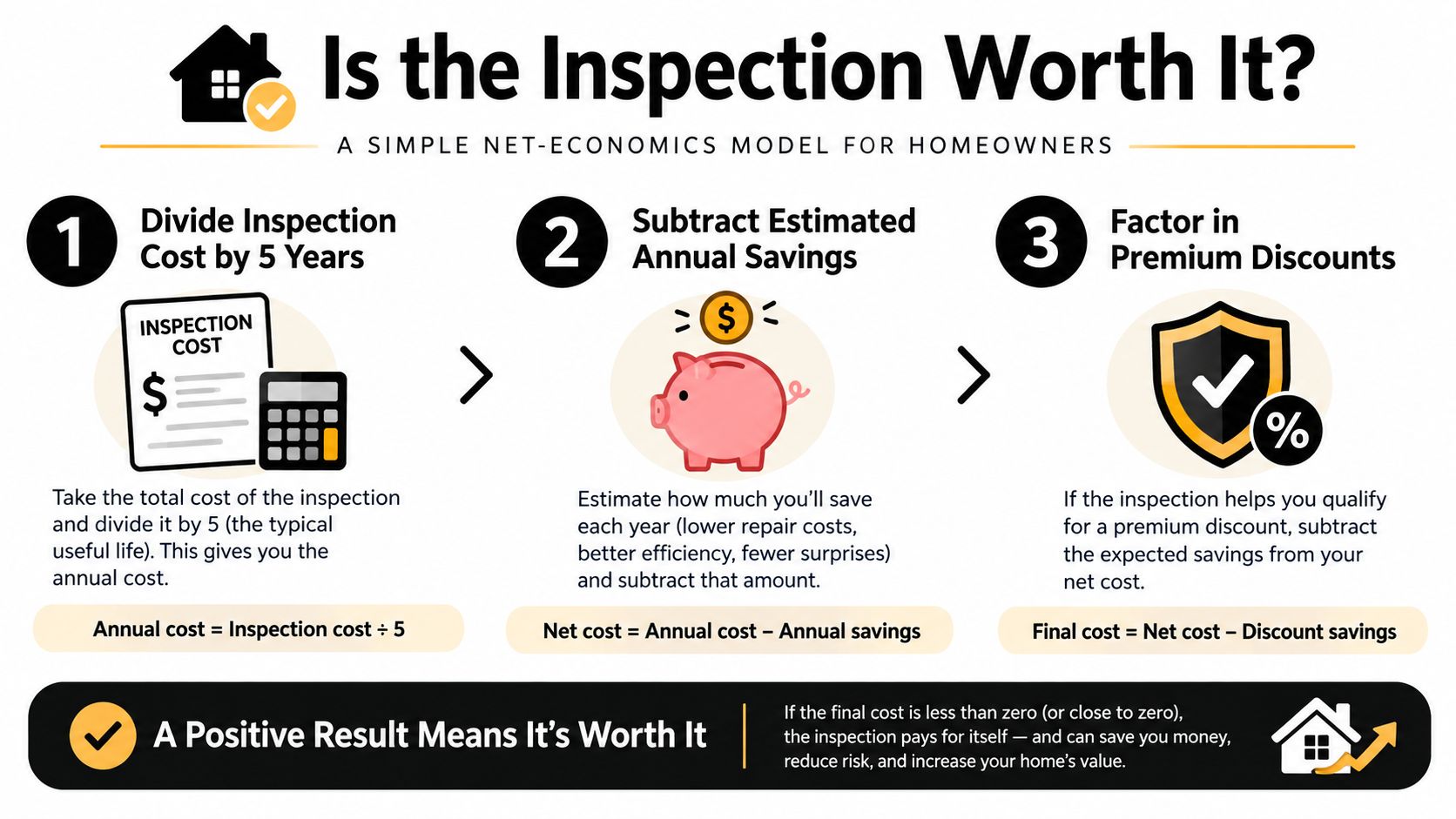
A standalone inspection is the cleanest choice when you already have a recent four-point report and only need wind documentation. Prices commonly fall around $75 to $150, with more complex coastal or high-rise properties potentially costing more. You get a narrow report focused on hurricane-resistant features.
A bundled inspection combines wind mitigation with a four-point inspection or another insurance-related service. Combined pricing can reach $150 to $300 or more, depending on scope and property complexity, as outlined in FPAT's Florida inspection service information. Bundling is often practical during a purchase, renewal, or carrier change, but confirm exactly which forms and photos you'll receive.
A subsidized or program-based inspection may reduce or eliminate the upfront cost for eligible homeowners. The My Safe Florida Home consumer guidance directs homeowners to confirm current eligibility and availability rather than assuming the program is open or that every property qualifies.
Choose based on the real constraint
Standalone service usually wins on speed and simplicity. Bundling can improve value when you already need another inspection. A subsidized route may have eligibility rules, scheduling limits, or less control over timing and follow-up.
For homeowners planning opening upgrades, a practical resource such as this hurricane proof door buyer's guide can help clarify what to ask about product ratings before installation. The inspection should document installed, verifiable protection. It shouldn't be used to validate a product that hasn't been completed.
How to Decide If the Inspection Is Worth It
The inspection fee isn't the major expense. The major expense is paying for documentation that produces no usable wind savings, or delaying the inspection until a policy deadline leaves no time to correct missing evidence.
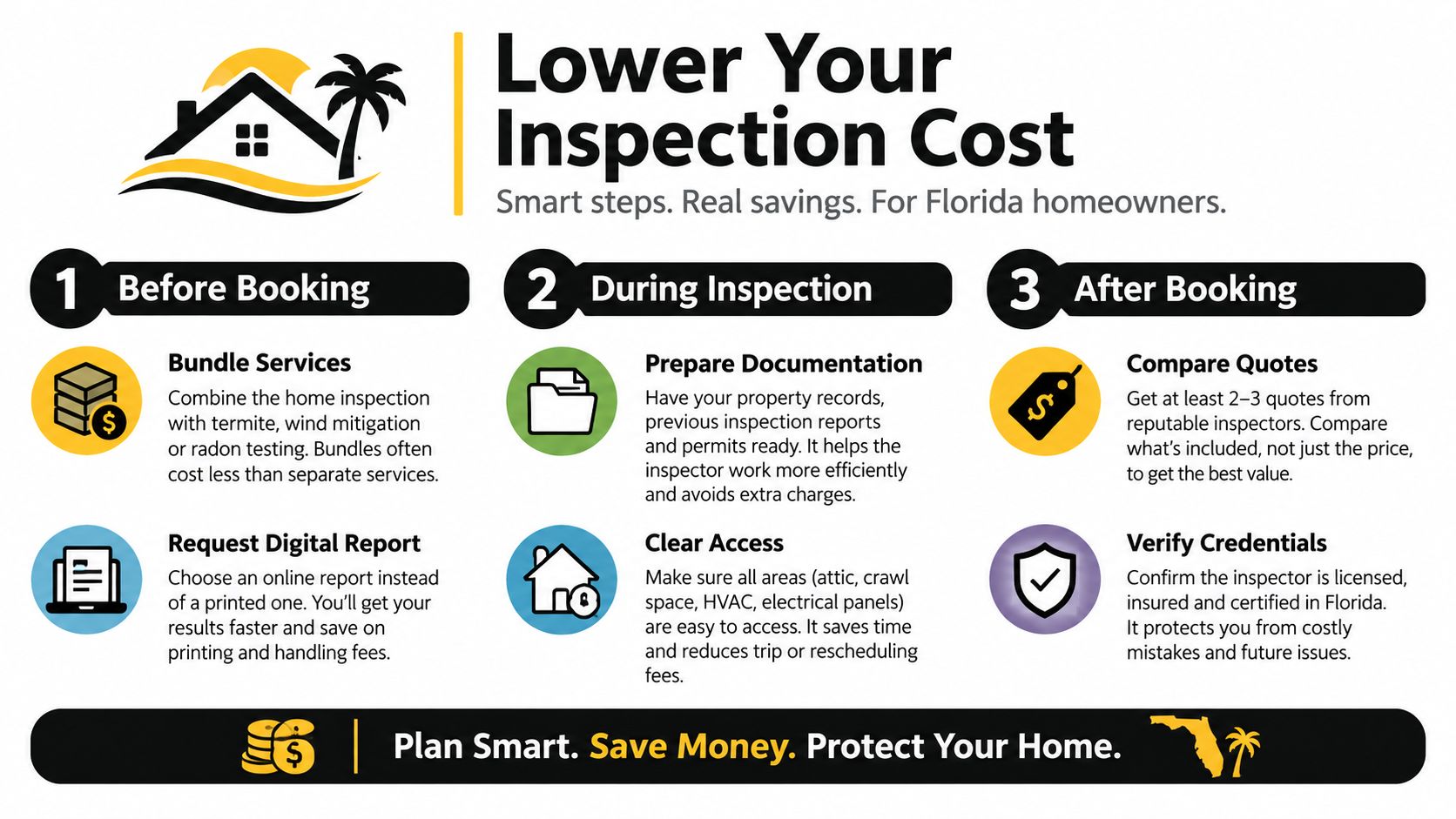
Use a simple model. Divide the inspection price by the five-year validity period, then compare that annualized cost with the estimated annual savings on the wind portion of the premium. If the annual savings exceed the annualized inspection cost, the report produces a positive financial result before considering any broader underwriting benefit.
Three homeowner profiles
The older roof with documented upgrades usually deserves an inspection. A homeowner with a roof that has reached the age at which underwriting pressure begins, plus clips, shutters, or impact-rated openings, may have several features worth documenting.
The gable-roof home with limited opening protection is a borderline case. The inspection may still identify credits, but the homeowner should first ask the agent which missing categories would limit the result. A report can clarify the file, but it can't turn undocumented protection into qualifying protection.
The recently changed property may not be ready. If you plan to replace the roof soon, switch carriers, or finish window and door work, booking immediately can create a short-lived report or require a reinspection.
The right decision depends on timing, documentation, and the wind portion of the policy. Citizens' guidance makes that wind-only limitation especially important, so don't estimate savings from the total premium.
Before booking, confirm:
- Whether your agent expects a current OIR-B1-1802 form.
- Which wind-resistant features are already documented.
- Whether the roof or structure will change soon.
- Whether a free or subsidized program is currently available.
- What the carrier says about potential wind-premium savings.
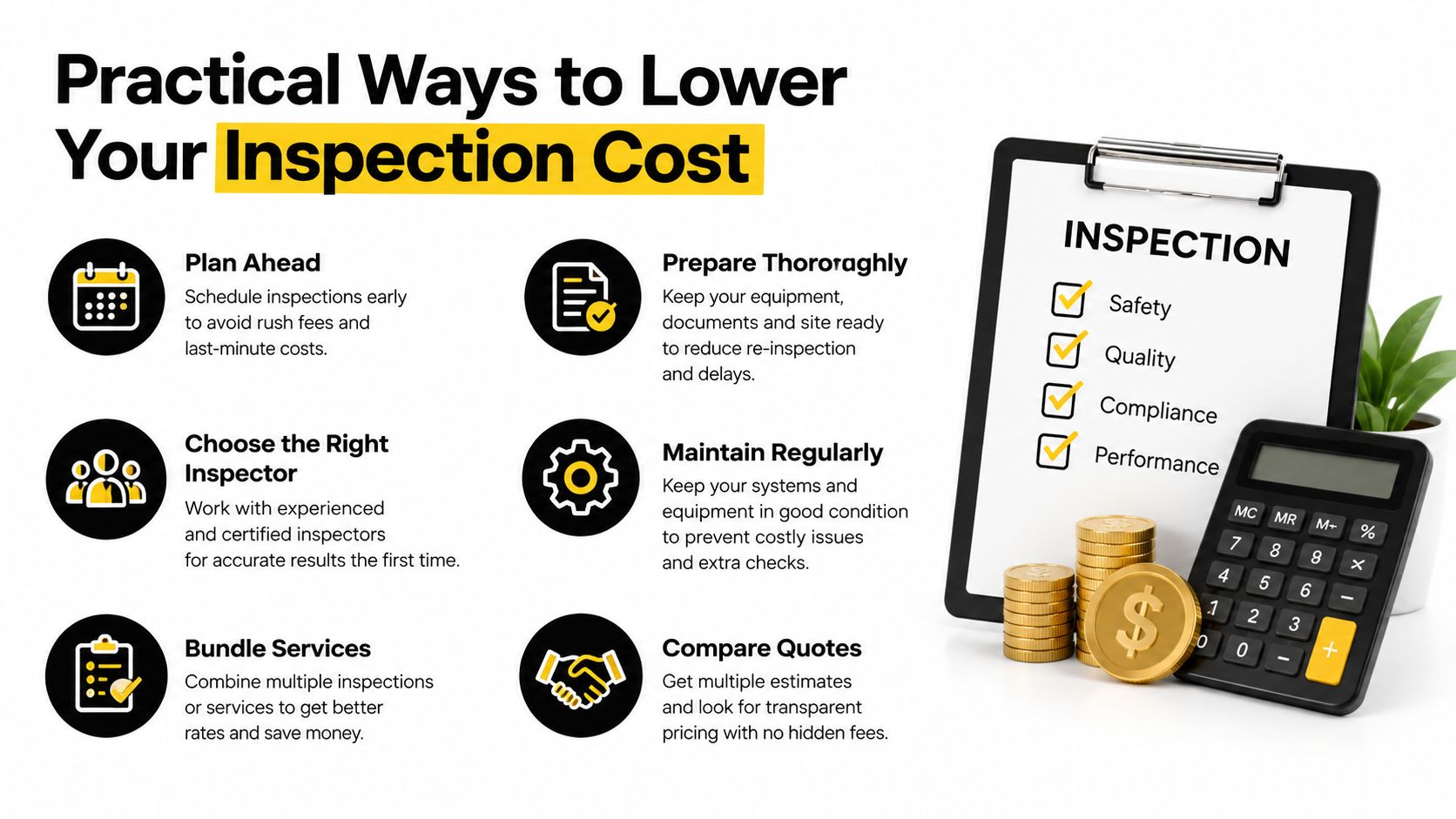
Practical Ways to Lower Your Inspection Cost
Start before the inspector arrives. The cheapest appointment is the one that produces a complete report on the first visit.
- Bundle strategically: Ask whether a wind mitigation inspection can be combined with a four-point or roof certification. A combined visit may lower the marginal cost of the wind inspection.
- Request a digital copy: Confirm that the completed form and labeled photographs will be delivered electronically. This helps avoid unnecessary reprint or delivery charges.
- Schedule before renewal pressure: Book roughly 45 to 60 days before renewal when possible, so your agent has time to submit the report and ask questions. This timing guidance is operational rather than a guaranteed insurer deadline.
- Compare credentialed inspectors: Get competing quotes from two or three Florida-licensed providers and ask each for an all-inclusive scope.
- Check program eligibility: Contact My Safe Florida Home and ask your county or municipality whether an active mitigation initiative applies to your property.
- Prepare access: Clear the attic hatch, open the garage, and arrange access to relevant areas. Missing access can create delays or a return visit.
- Ask about nearby travel: If the inspector is already working in your neighborhood, ask whether the company waives or reduces a travel charge.
Don't choose solely by fee. A report with unclear photographs, missing labels, or unsupported observations can cost more in follow-up time than a properly scoped inspection.
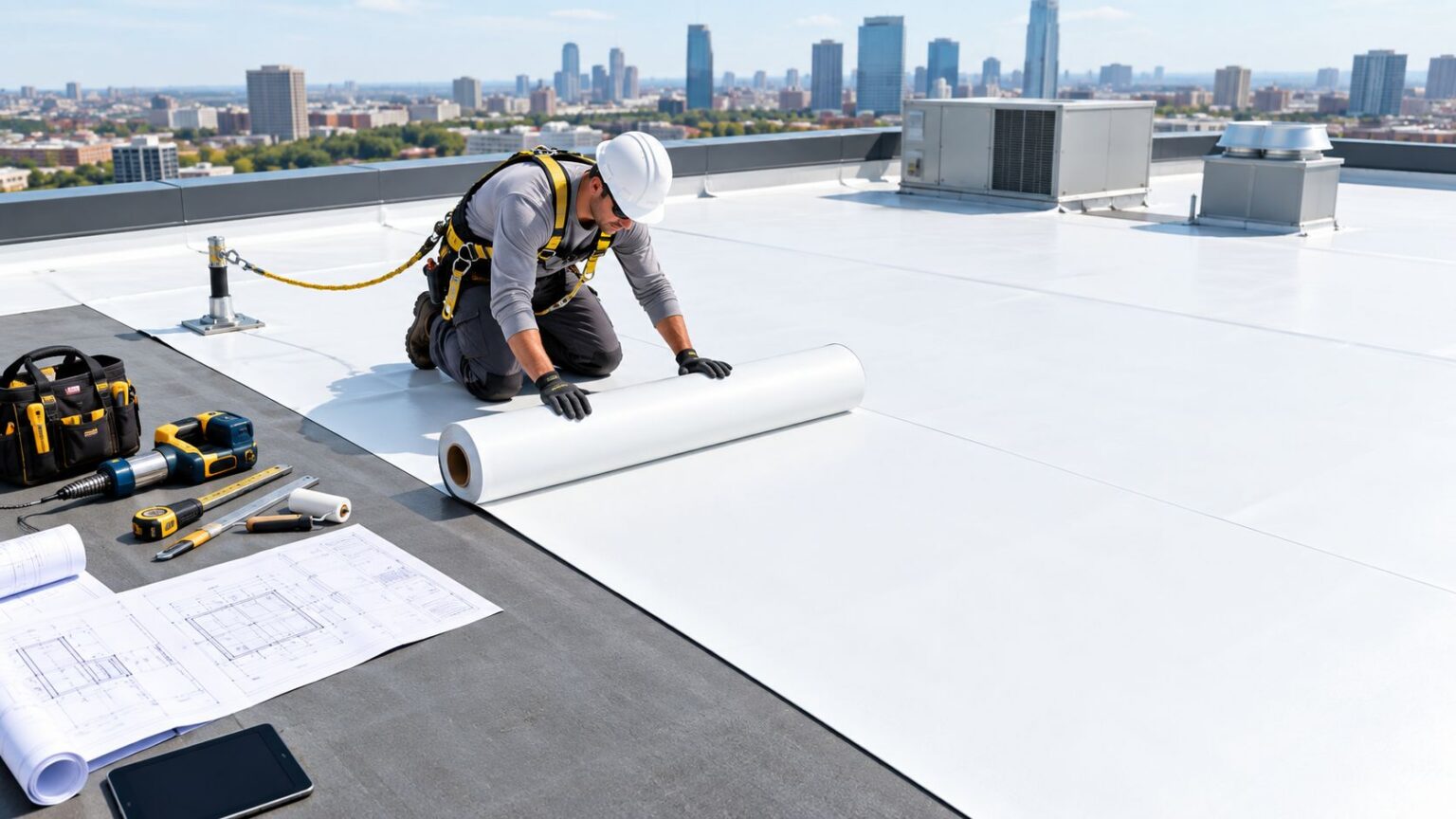
If roof work is part of the larger plan, review the contractor's scope and documentation requirements before the visit. This commercial roofing installation reference illustrates why installation details and records matter when an inspector must verify construction features rather than merely observe the finished surface.
Final Checklist Before You Book
Run through this sequence before paying a deposit:
- Verify the inspector: Confirm the provider is licensed in Florida and ask who will complete and sign the form.
- Get an all-inclusive quote: Ask whether travel, photographs, digital delivery, carrier submission, and any reinspection are included.
- Confirm the form: Make sure the service produces the current OIR-B1-1802 form and ask whether the inspector submits it directly to the carrier or returns it to you.
- Check the property details: If you're seeking construction-related or opening-protection credits, ask the inspector and agent how the home's construction date and documented features affect eligibility. Don't assume age or recent work guarantees a discount.
- Prepare access: Open the attic, garage, and any areas needed to inspect roof connections or opening protection.
- Ask the agent for the estimate: Compare the fee with the expected annual savings on the wind portion of the policy across the report's potential five-year useful period.
Last-minute questions
Is the inspection mandatory? No. It's generally needed when you want an insurer to apply documented wind-mitigation discounts.
Will every hurricane feature earn a credit? No. The feature must be verifiable and accepted under the carrier's rules.
Can I use an old report? Often, a completed form remains valid for up to five years if the structure hasn't materially changed and the form is accurate. Confirm acceptance with your agent.
Should I book the cheapest quote? Not automatically. Compare scope, credentials, documentation quality, turnaround, and follow-up support.
Paletz Roofing and Inspections provides Florida wind mitigation inspections with documented roof and storm-resistant features on the official form, alongside roofing inspection and repair services. If you're in Broward, Miami-Dade, or Palm Beach County, visit Paletz Roofing and Inspections to request an inspection quote and discuss the documentation your insurer needs.