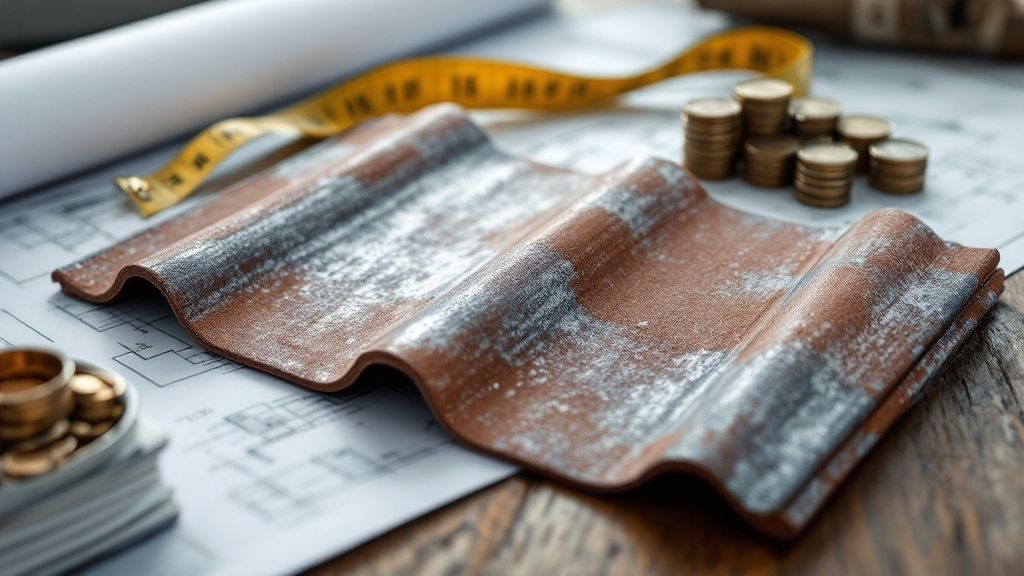
Figuring out the cost to replace roof tiles can feel like hitting a moving target. You'll see numbers ranging anywhere from $7 to $25 per square foot for a full replacement, while a simple, minor repair might only set you back a few hundred dollars. This huge gap exists for a reason—the final price tag is shaped by everything from the materials you choose to your roofer’s labor rates.
Getting a handle on these variables is the first step to setting a realistic budget.
Your Quick Guide to Roof Tile Replacement Costs
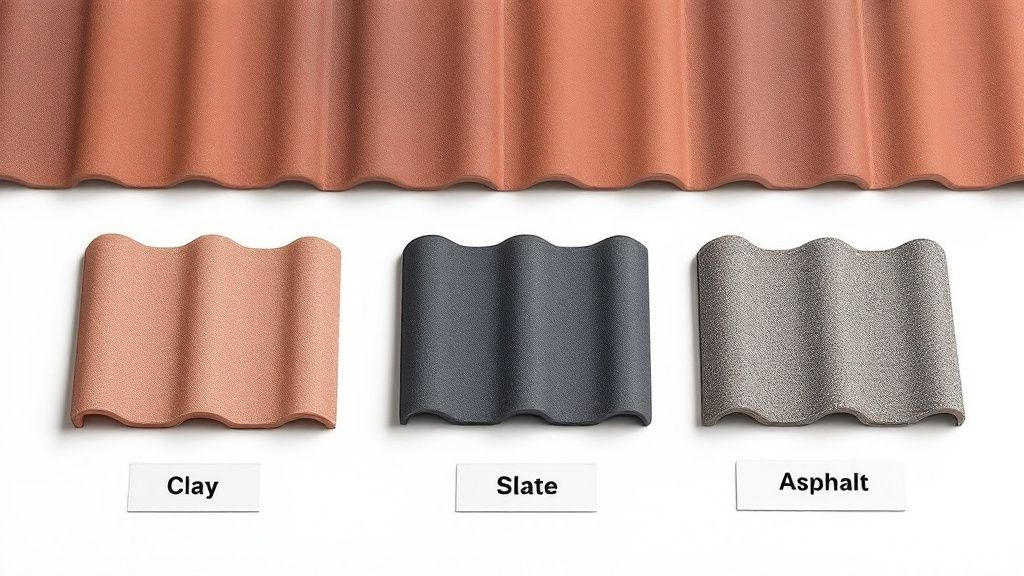
Before we get into the nitty-gritty, let's establish a clear financial baseline. It's best to think of the cost to replace a roof tile not as a single price, but as a custom quote built around your home's specific needs. The big players here are the tile material—ranging from affordable concrete to premium clay or slate—and the complexity of your roof’s design itself.
Looking at recent industry data for 2025, a complete tile roof replacement for an average-sized home can run anywhere from $10,500 to over $62,500. It's also worth noting that labor often accounts for about 40% of that total, which really drives home the importance of hiring skilled professionals to get the job done right.
Estimated Cost Breakdown
To give you a clearer picture, let's break down some typical numbers. The table below offers a snapshot of what you might expect to pay based on the most common tile materials out there.
Estimated Cost Breakdown for Tile Roof Replacement
| Tile Material | Average Cost per Square Foot (Installed) | Estimated Total for a 2,000 sq ft Roof |
|---|---|---|
| Concrete Tiles | $9 – $18 | $18,000 – $36,000 |
| Clay Tiles | $12 – $25 | $24,000 – $50,000 |
| Slate Tiles | $15 – $30+ | $30,000 – $60,000+ |
Think of these figures as a solid starting point for your budget. While our main focus here is on repair and replacement costs, it’s good to remember that a well-maintained roof is a major contributor to your home’s curb appeal and overall value. You can explore other strategies to increase your property value to see how it all fits into the bigger picture.
Ultimately, the final bill for your project will hinge on several key factors that we'll explore throughout this guide. If you want a visual of what a finished project can look like, you can check out this example of a completed tile roof.
Understanding the Core Cost Factors
When you get a quote for a roof replacement, you'll see it’s more than just the price of the tiles. To really understand the cost to replace a roof tile, you have to break it down into the three main drivers: the materials you pick, the labor involved, and the total scope of the job. Each one of these plays a huge part in the final number you see on the invoice.
It’s a bit like ordering a custom-built car. You start with a base price, but the engine you choose, how tricky the assembly is, and any extra features you want will all change the final cost. Your roof is no different; it's a complete system, and every single choice has a price tag attached.
The Role of Materials
The type of tile you go with has the most immediate impact on your material costs. A standard concrete tile is a solid, wallet-friendly choice, while a high-end terracotta or clay tile delivers that classic look but at a premium. The price difference comes down to how they're made, the quality of the raw materials, and how long they're expected to last.
But it's not just about the tiles you can see. The hidden components are just as critical to a long-lasting roof. These include things like:
- Underlayment: This is the waterproof barrier that goes between your tiles and the roof deck. You can get basic felt, or you can upgrade to tougher synthetic or rubberized materials.
- Flashing: These are the metal strips that seal off areas around chimneys, vents, and valleys where water loves to sneak in.
- Fasteners: The nails and screws holding everything together have to be up to code, which can also affect the cost.
Labor and Roof Complexity
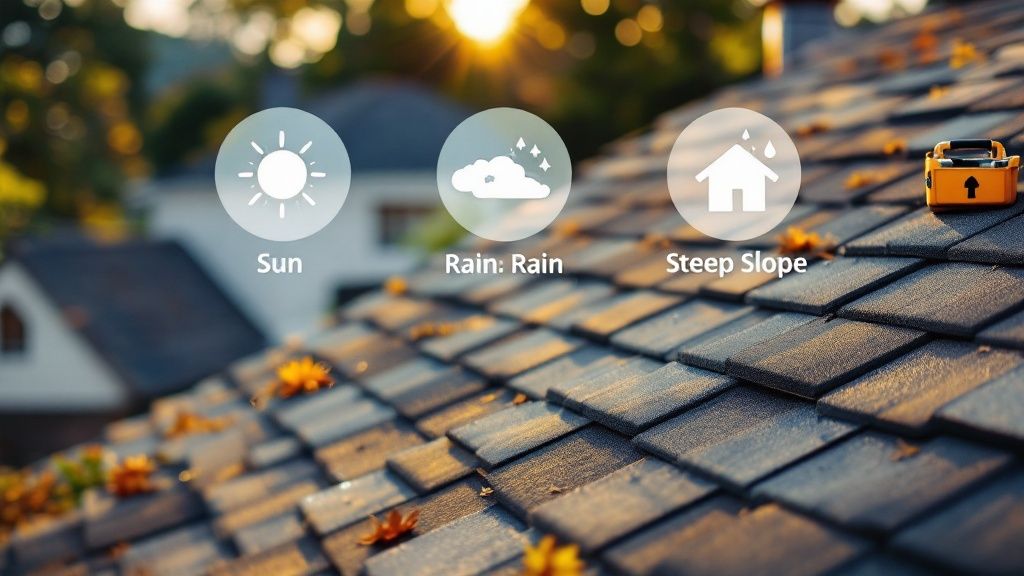
How much you pay for labor is almost always tied to how complex your roof is. A simple, low-sloped gable roof is pretty straightforward for a crew to handle. But throw in a steep pitch, a bunch of different angles, dormers, or skylights, and the job suddenly requires a lot more skill and time.
A steep pitch doesn't just make the work slower; it demands extra safety gear and specialized installation methods. This kind of complexity can easily bump up labor costs by 20% to 50% compared to a simple roof design.
This is all happening as residential roofing costs are on the rise. Recent industry reports show that total spending is expected to climb by 8.2% annually, pushed up by increasing material and labor prices. It’s more important than ever to understand every line item on your quote.
Project Scope and Scale
Finally, the overall size and scope of your project will determine the final cost. A small repair involving just a handful of broken tiles is obviously going to be far cheaper than a full tear-off and replacement.
And sometimes, there are surprises. If the roofers pull off the old tiles and find the underlying roof deck is rotted or water-damaged, that's going to add to both the material and labor costs.
Getting a handle on these key elements is the first step to looking at a roofer's quote and knowing exactly what you're paying for. This knowledge is a huge part of mastering overall construction cost management, helping you make smart decisions without any last-minute shocks.
How Your Location Impacts Roofing Prices
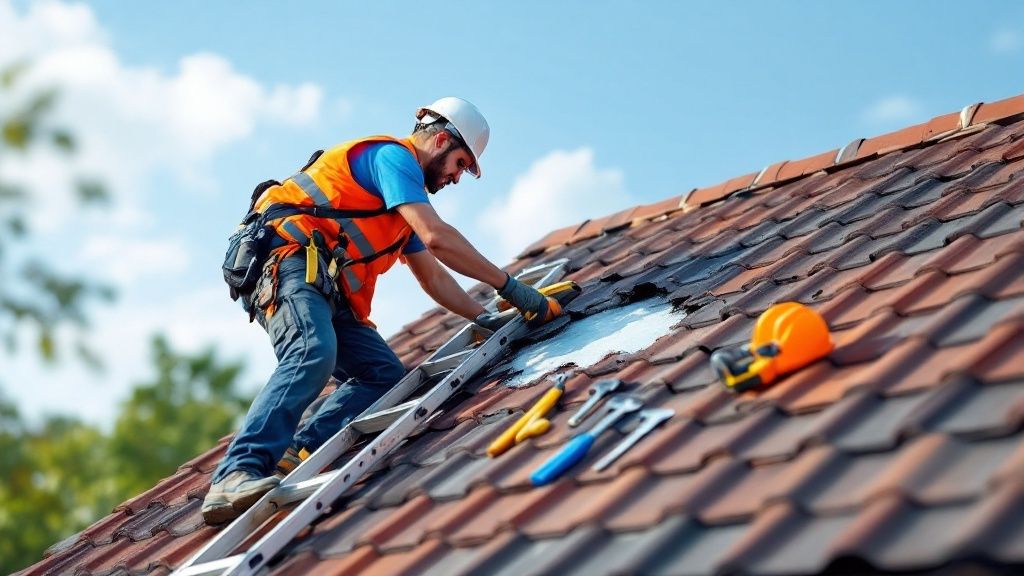
Ever wonder why a roof replacement costs so much more in one city than another just a few hours down the road? It’s a great question, and the answer is simple: your physical location is one of the biggest drivers of the final price tag. The cost to replace a roof tile isn’t a flat rate—it’s a number that gets pulled and pushed by local economic realities and even the weather in your area.
Think about it like real estate. An identical house will cost way more in a buzzing downtown metro than it will in a quiet, rural town. The exact same principle is at play with roofing. Regional labor rates, how far materials have to travel, and local building codes all have a major say in your final quote.
Regional Labor and Material Costs
The most direct way your location hits your wallet is through local labor rates. It just costs more to live and work in major urban centers, so roofers in those areas have to charge more to cover their own expenses. That difference in wages gets passed right into your project quote and can easily be one of the biggest chunks of the total cost.
The availability of materials matters, too. If you’ve got your heart set on a specific style, like Spanish clay tiles, but they aren’t made anywhere near you, the cost to ship them in will bump up the price. This is exactly why getting multiple local quotes is so important; a national average figure can be way off the mark.
The cost to replace roof tiles is heavily influenced by labor rates and material availability, particularly in major markets. Labor costs can vary but often represent 40% of the total cost, highlighting how contractor pricing and location strongly affect the final bill. Discover more insights about regional roofing cost variations on invoicefly.com.
Climate and Building Codes
The local climate pretty much dictates what your roof needs to be able to handle. A home on the coast in South Florida, for instance, has to be ready for hurricanes and constant high winds. As a result, the local building codes are incredibly strict, often demanding specialized, impact-resistant tiles and much tougher installation techniques.
These aren't optional upgrades; they're non-negotiable requirements that drive up your costs in a few key ways:
- Pricier Materials: Tiles engineered to resist high winds or that have special seals will always cost more than standard options.
- Increased Labor: It simply takes more time, skill, and effort to install a roof that meets those stringent codes.
- Permitting Fees: The cost to get the right permits is often higher in areas with more complex building regulations.
On the other hand, a home in a snowy northern climate might need a specific underlayment to fend off ice dams. These kinds of geographically specific needs get baked right into your roofer’s quote, making your zip code a key part of the pricing puzzle. When you understand these local factors, you'll be much better equipped to sort through quotes and set a realistic budget for your project.
Choosing the Right Type of Roof Tile
Not all roof tiles are created equal, and your choice of material is one of the single biggest decisions impacting the final cost to replace a roof tile. Think of it like choosing tires for your car. You can go with a standard, reliable set that gets the job done, or you can invest in premium, high-performance ones built for longevity. Both serve a purpose, but they come with very different price tags.
The material you pick influences more than just the upfront cost. It also shapes your home's curb appeal, its energy efficiency, and how much maintenance you can expect down the line. It's all about balancing your budget with your long-term goals for your property.
Comparing Your Tile Options
Let's break down the most popular choices so you can see how they stack up. From budget-friendly concrete to timeless slate, each has its own unique profile.
-
Concrete Tiles: These are the workhorses of the roofing world. They offer excellent durability and can mimic the look of more expensive materials like clay or slate, but at a fraction of the cost. They are heavy, though, so your roof structure has to be strong enough to support the weight.
-
Clay Tiles: When you picture a classic tile roof, you’re probably thinking of clay. Prized for their rich, earthy colors and exceptional lifespan—often 50-100 years—clay tiles are a premium choice that offers outstanding resistance to the elements.
-
Slate Tiles: Slate is the ultimate luxury option. It’s known for its natural beauty and incredible longevity, often lasting well over a century. It's also the most expensive and heaviest material, requiring specialized installation by highly skilled roofers.
This infographic gives you a clear visual comparison of how different materials influence costs, alongside the typical split between materials and labor.
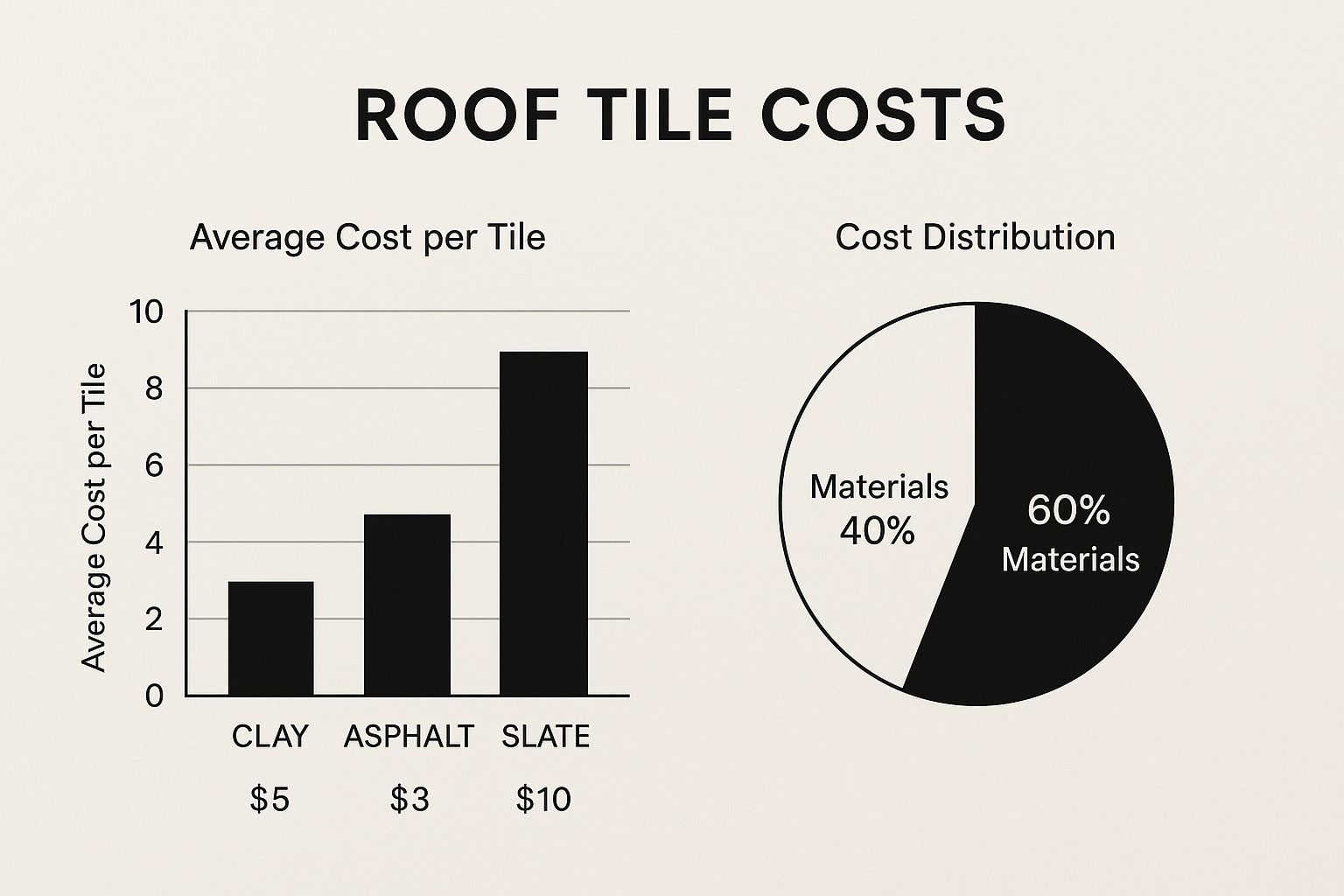
As you can see, materials make up the bulk of the project's expense. That’s precisely why your selection is so critical to the overall budget.
To make this a bit clearer, here's a side-by-side look at what you can expect from the most common tile materials.
Roof Tile Material Comparison
| Tile Type | Average Material Cost per sq. ft. | Estimated Lifespan | Pros | Cons |
|---|---|---|---|---|
| Concrete | $3 – $7 | 30-50 years | Very durable, affordable, mimics other materials | Heavy, colors can fade over time |
| Clay | $5 – $15 | 50-100+ years | Excellent longevity, great curb appeal, fire-resistant | More expensive, brittle and can break |
| Slate | $9 – $20+ | 100+ years | Unmatched lifespan, beautiful natural look | Extremely heavy, very expensive, requires specialists |
This table really highlights the trade-offs. While concrete is a fantastic budget-conscious choice, the incredible lifespan of clay and slate can offer better long-term value if your budget allows for the higher initial investment.
Making the Best Choice for Your Home
So, which tile is right for you? If your primary concern is getting a durable, long-lasting roof without breaking the bank, concrete is almost always the best answer. It provides a fantastic return on investment and comes in a huge variety of styles.
If aesthetics and tradition are your top priorities and you have more room in the budget, classic clay tiles deliver a timeless look that can seriously boost curb appeal. For some inspiration, you can see some beautiful examples of finished tile roofs that showcase different styles.
Ultimately, the "right" tile is the one that best fits your home's architectural style, your local climate, and your financial plan. Don't just look at the initial cost per tile; consider the lifespan and maintenance needs to understand the true long-term value.
By carefully weighing these factors—cost, appearance, durability, and maintenance—you can confidently choose a material that not only protects your home but also fits perfectly within your budget.
Uncovering the Hidden Costs of Your Project
The first quote you get for a roof tile replacement is a solid starting point, but it almost never tells the whole story. Think of it like the sticker price on a car—it covers the basics, but the final bill often includes things like destination fees and optional upgrades. The same thing happens with roofing projects.
To really nail down the cost to replace a roof tile, you have to look past the obvious expenses like materials and labor. There are several other necessary costs that either hide in the fine print or don't show up until the work is already underway. Knowing what they are ahead of time is the secret to a smooth, stress-free project.
Debris Disposal and Removal Fees
The first step in any roof replacement is tearing off all the old stuff. This creates a surprising amount of waste, from busted tiles and worn-out underlayment to old nails and flashing. And, of course, getting rid of all that junk isn't free.
Most contractors will add a line item for waste removal and disposal. This can run you anywhere from $300 to $1,000, depending on your roof's size and what the local landfill charges. This fee pays for the dumpster rental and the crew's time to keep your property clean and safe.
The Cost of Building Permits
Before a single tile comes off your roof, your contractor will need to get a permit from your city or county. This is a good thing—it ensures the entire project meets local building codes, safety standards, and zoning rules. Trying to skip this step is a recipe for disaster, leading to huge fines and major headaches when you decide to sell your home.
The price of a roofing permit changes a lot depending on where you live, but they usually fall somewhere between $250 and over $1,000. It's a non-negotiable expense that protects everyone by making sure the job is done right and up to code.
Addressing Hidden Structural Damage
Sometimes, the biggest surprises—and the biggest costs—are hiding right under your old roof. Once the old tiles are gone, your roofer gets their first clear look at the roof deck, which is the plywood or OSB sheathing that acts as the foundation for everything else.
It’s incredibly common for roofers to find issues like soft, spongy spots from years of moisture, dry rot, or even mildew once the deck is exposed. These problems have to be fixed before any new materials go on.
Fixing or replacing damaged sections of the roof deck is an extra cost that’s simply impossible to quote accurately until the tear-off is complete. Depending on how bad the damage is, these unexpected repairs can tack on several hundred to a few thousand dollars to your project. This is exactly why it’s smart to have a contingency fund of 10-15% set aside.
Practical Ways to Save on Your Roof Replacement
A full roof replacement is one of the bigger investments you'll make in your home, but there are definitely some smart ways to manage the final bill without ever cutting corners on quality. The real key is planning ahead. A few informed choices can seriously lower the overall cost to replace a roof tile and give you much better long-term value.
Think of it like booking a vacation—timing is everything. The roofing industry has its peak seasons, usually in the late spring, summer, and early fall when the weather is perfect for the job. If you can schedule your project during the off-season, like late fall or winter, you’ll often find contractors have more wiggle room in their schedules and might offer more competitive pricing. Just that simple shift in timing can lead to some pretty substantial savings.
Strategic Planning for a Better Price
Another powerful way to keep costs in check is to be a savvy shopper. You should never, ever accept the first quote that comes your way. Instead, make it a rule to get at least three detailed, written estimates from reputable local roofers. This little bit of homework lets you compare not just the bottom-line price, but also the quality of materials and the scope of work each contractor includes.
Getting multiple bids creates healthy competition and ensures you're getting a fair market price. It also gives you a much clearer picture of what different contractors include in their quotes, helping you sidestep any nasty hidden fees.
Finally, think carefully about your materials. If you’ve got your heart set on the classic look of clay tiles but the price tag is making you wince, high-quality concrete tiles are a fantastic alternative. They offer a very similar aesthetic and excellent durability at a much lower initial cost, giving you the best of both worlds.
Take some time to explore these options and look at some examples of different tile styles to find a look you love that also fits your budget. By combining these practical tips, you can make your roofing project far more affordable.

Common Questions About Roof Tile Costs
After breaking down all the variables, you probably still have a few questions rolling around in your mind. That’s completely normal.
To help you feel more confident as you move forward, let’s tackle some of the most common concerns homeowners have when facing a roof tile replacement. Think of this as your final checklist to make sure you've covered all your bases.
Can I Replace Just One Broken Tile?
For isolated damage, like a single tile cracked by a fallen branch or blown off in a storm, the answer is a definite yes. In fact, getting that one tile replaced is the smartest and most cost-effective way to fix a minor issue before it turns into a major leak.
Just keep in mind that most roofing companies have a minimum service fee for small jobs like this one. This call-out charge, which typically runs from $150 to $400, covers the roofer's travel, time, and the hands-on labor for swapping out a tile or two. It guarantees the job is done right, even if the work itself doesn’t take very long.
Does Roof Complexity Affect the Cost?
Absolutely. The architectural style of your roof plays a huge role in the final price tag. A simple, low-slope gable roof is pretty straightforward for a crew to work on, but a roof with a lot of complex features will always drive up labor costs.
What kind of features make a roof more complex?
- A steep pitch: This is a big one. It requires extra safety gear like harnesses and jacks, which naturally slows down the entire installation process.
- Multiple gables, hips, and valleys: All those extra angles mean your roofer has to make dozens of precise, time-consuming cuts to get the tiles to fit perfectly.
- Skylights and chimneys: Every time you have a feature punching through the roof deck, it requires meticulous flashing and sealing to keep water out.
A highly complex roof can easily bump your labor costs by 20% to 50% or even more compared to a basic, no-frills roof design.
Is a More Expensive Tile Worth It in the Long Run?
In many cases, spending more upfront on a premium tile pays for itself several times over. While materials like high-end clay or natural slate come with a steeper initial cost, their longevity is simply in another league. A well-installed slate roof, for example, can last for over 100 years with very little maintenance.
Think of it as a long-term investment in your home's security and value. A cheaper material might need a full, costly replacement in 30 years, while a premium tile roof could easily last for generations. When you look at it that way, the total cost of ownership for a more durable material is often much lower.
By choosing a material that aligns with your long-term goals for your property, you're not just buying a roof—you're investing in lasting protection, peace of mind, and serious curb appeal.
Navigating roofing repairs and replacements requires expertise you can trust. If you're in South Florida, the team at Paletz Roofing and Inspections has over 30 years of experience delivering high-quality, reliable roofing solutions. For a professional inspection and a free, transparent quote, visit our website to learn more.