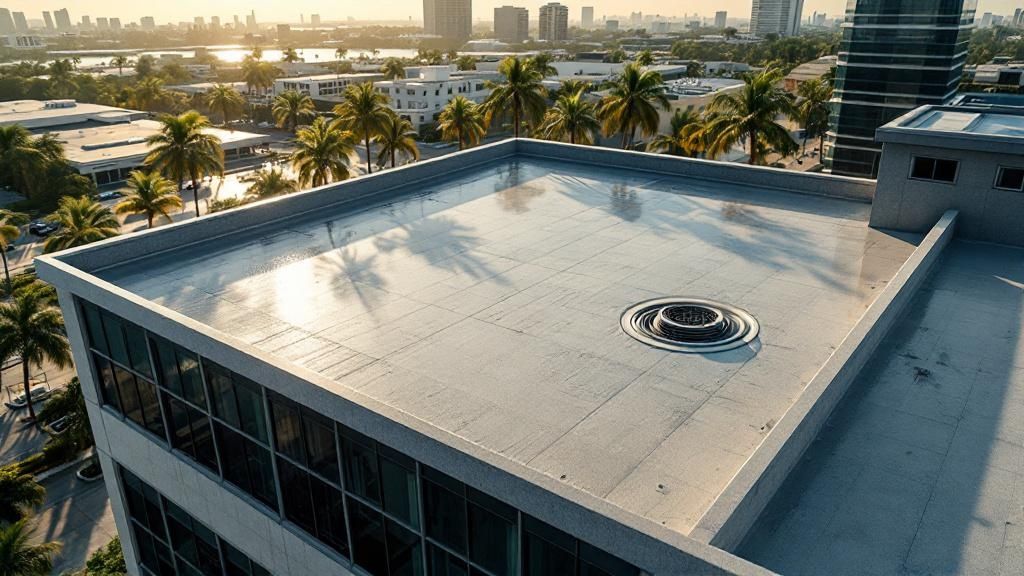
Flat roof drainage systems are the unsung heroes of both commercial and residential buildings, working silently to channel rainwater away and stop it from pooling. Without a solid system in place, standing water can quickly turn into leaks, serious structural damage, and a whole lot of expensive repairs. That makes effective drainage a non-negotiable part of protecting your property.
Why Your Flat Roof Needs a Smart Drainage System
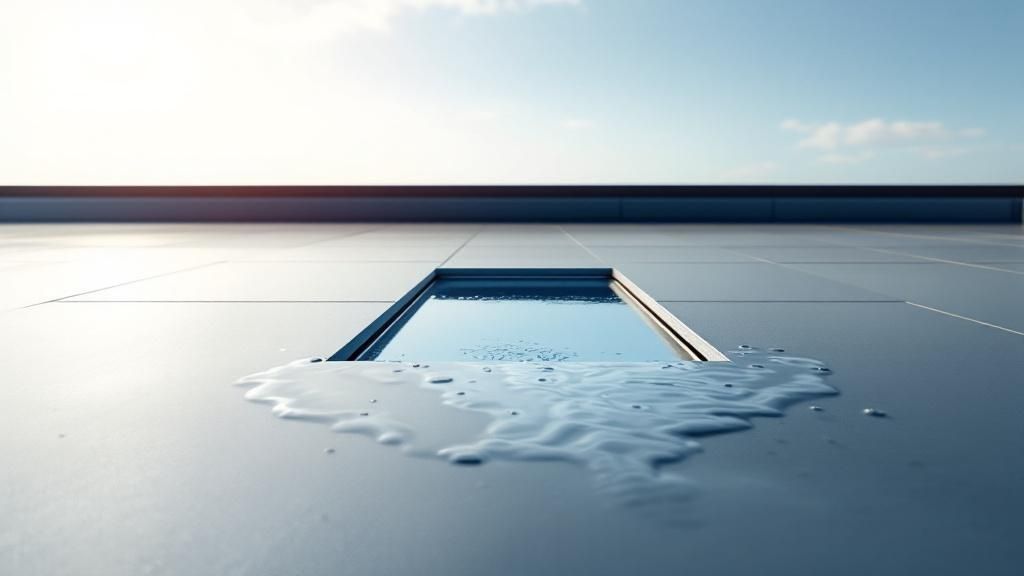
It’s easy to forget about a flat roof, but its very design creates a major challenge: water has no natural escape route. Unlike a sloped roof where gravity does all the work, a flat surface can easily trap water. This creates a hidden danger that can escalate from a small puddle into a catastrophic failure.
Think of your flat roof like a shallow swimming pool that was never meant to be filled. Every inch of standing water, a problem we call "ponding," adds an incredible amount of weight. Water weighs about 5.2 pounds per square foot for every inch of depth. A small 10×10 foot area with just two inches of water is suddenly carrying over 1,000 pounds of extra stress—a load most structures simply aren't built to handle for long.
The True Cost of Standing Water
That immense weight is the main culprit behind a whole cascade of expensive problems. The constant pressure can lead to structural sagging over time, compromising the very framework of your building. More immediately, it creates stubborn leaks that ruin insulation, ceilings, and interior walls, which often leads to dangerous mold growth.
Effective flat roof drainage systems are much more than a convenience; they’re a vital defense mechanism for your property. Their job is really twofold:
- Protect Structural Integrity: By getting water off the roof efficiently, these systems prevent the dangerous weight accumulation that leads to sagging or, in the worst-case scenario, collapse.
- Extend Roof Lifespan: Ponding water is incredibly destructive to roofing materials, breaking down membranes and seals. Proper drainage keeps the surface dry, which can dramatically extend its service life and push back the need for a costly replacement.
A well-designed drainage system isn’t an expense—it’s a foundational investment in your property's long-term health and safety. Managing water proactively is what stops small issues from turning into budget-breaking disasters.
A Proactive Approach to Property Protection
Ultimately, the key is to see your roof's drainage as an essential utility, just like your plumbing or electrical systems. In a climate like South Florida, where sudden, torrential downpours are a regular occurrence, an undersized or poorly maintained system can fail when you need it most.
This guide will walk you through why putting your money into the right system is one of the most important decisions you can make, ensuring your property stays safe, dry, and structurally sound for decades.
Exploring the Core Types of Flat Roof Drainage
To get rainwater off your roof, you need the right hardware for the job. Think of flat roof drainage systems as having three main variations, each designed to channel water away from your building in its own unique way. Knowing how they work is the first step toward designing a system that truly protects your property.
This infographic gives you a quick visual breakdown of the three core drainage types we're about to dive into.
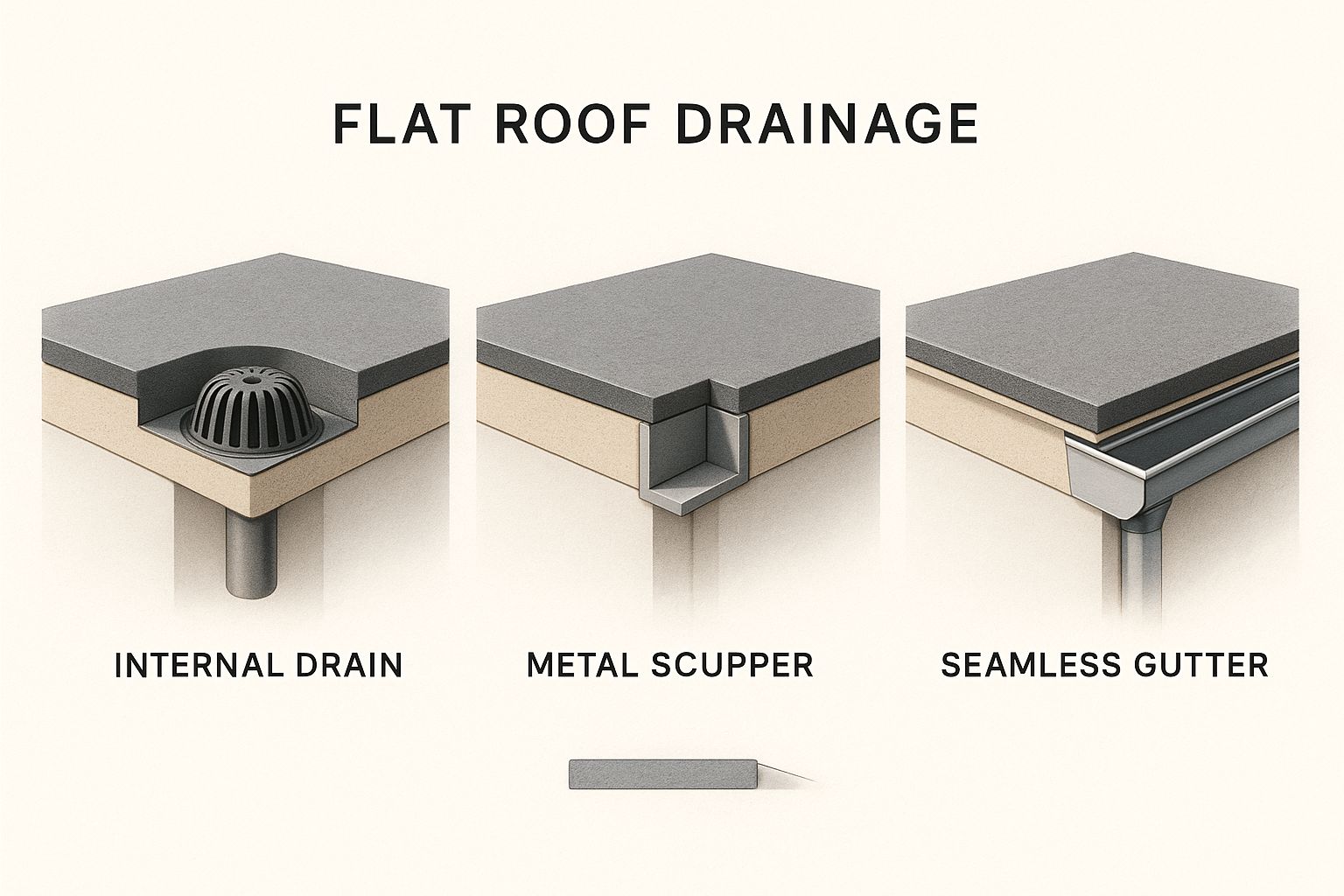
You can immediately see the clean, hidden design of internal drains, the through-wall approach of scuppers, and the familiar edge-mounted setup of gutters.
Internal Drains: The Hidden Workhorse
Internal drains are easily the most discreet and often the most efficient option you can choose. Picture a sink drain, but instead of being in a basin, it’s set right into the surface of your roof. These drains are always placed at the roof's lowest points to grab water and funnel it into a network of pipes that run inside the building's walls.
This setup delivers a clean, modern look because the entire system is out of sight. It’s an especially good fit for large commercial buildings where an external system would be an eyesore or just plain impractical. By keeping the pipes shielded from the elements, internal drains also boast excellent durability.
But here’s the catch: their biggest strength is also a potential weakness. Since all the plumbing is inside the walls, a clog or a leak can cause massive interior water damage that’s a nightmare to access and expensive to fix. This is a system that demands diligent, regular maintenance.
Scuppers: The Simple and Reliable Outlet
Scuppers are basically just openings that go through the parapet walls or the very edge of the roof. Think of them like the overflow drain in your bathtub—a simple, foolproof way for water to escape once it hits a certain level. The water shoots through the scupper and is usually caught by a downspout on the outside of the building.
That simplicity is their greatest strength. Scuppers are incredibly dependable, a breeze to inspect, and easy to maintain because you can see and access every component from the outside. They're a go-to choice for both commercial and residential buildings that have parapet walls.
The main job of a scupper is to give water a direct and reliable escape route from the roof's edge, making it a tough-as-nails solution for stopping water from pooling up against the walls.
Despite their reliability, scuppers aren't perfect. They can get overwhelmed during the kind of torrential downpours we see in South Florida, especially if they weren't sized properly for the roof area. Plus, if the downspout attached to it gets clogged, water will just pour straight down the side of your building, which can lead to foundation problems or ugly water stains over time.
Gutters: The Traditional Perimeter System
Gutters are what most people picture when they think of roof drainage. These are the channels installed along the roof's edge, or eave, to catch water as it runs off the surface. From there, the water travels along the gutter to a downspout, which directs it safely to the ground.
This system has been the classic choice for countless homes and smaller commercial properties, particularly those without high parapet walls. Modern seamless gutters have cleaned up the look and cut down on the leaks that used to plague older, sectional gutters.
Their main benefits are clear:
- Cost-Effectiveness: Gutters are usually the most affordable drainage system to have installed.
- Easy Maintenance: Just like scuppers, they're completely on the exterior, making them easy to see and clean out.
- Versatility: You can get them in all sorts of materials like aluminum, steel, and vinyl to match any building's style.
The biggest headache with gutters? They get clogged. Leaves, twigs, and all sorts of debris can jam them up. In a lush place like South Florida, this means they need frequent cleaning to work right. An overflowing gutter can force water back up under the roofline, causing fascia boards to rot and creating leaks. And since they hang off the edge, they're also more likely to be damaged by high winds and storms.
To help you see how these systems stack up at a glance, we've put together a simple comparison chart.
Comparing the Main Flat Roof Drainage Systems
Here’s a quick-glance comparison of the three primary drainage systems. This table highlights their key characteristics, where they work best, and what to expect in terms of cost.
| System Type | How It Works | Best Suited For | Key Advantages | Potential Drawbacks |
|---|---|---|---|---|
| Internal Drains | Roof-mounted drains funnel water to pipes inside the building's walls. | Large commercial buildings, modern architecture, areas with heavy rainfall. | Aesthetically clean (hidden), highly efficient, protected from elements. | Leaks cause interior damage, difficult and costly to repair, requires strict maintenance. |
| Scuppers | Openings in parapet walls allow water to drain off the roof edge into downspouts. | Buildings with parapet walls, both commercial and residential. | Highly reliable, easy to inspect and maintain, durable construction. | Can be overwhelmed by heavy rain, potential for exterior water damage if downspout clogs. |
| Gutters | Channels along the roof's edge collect runoff and direct it to downspouts. | Residential homes and smaller commercial buildings without parapet walls. | Cost-effective, easy to install and clean, available in various materials. | Prone to clogging, can be damaged by storms, requires frequent cleaning in leafy areas. |
Choosing the right system really comes down to your building’s design, your budget, and how much maintenance you’re willing to commit to. Each has its place, but the wrong choice can lead to a lot of problems down the road.
Advanced Drainage Solutions: Siphonic vs. Gravity

When it comes to getting water off a flat roof, we're not just talking about drains and pipes. We’re really talking about two fundamental forces you can harness: gravity and siphonic action. Most conventional flat roof drainage systems you see are gravity-fed, but the alternative—siphonic drainage—is a high-performance solution that solves some major architectural challenges.
Think of a gravity system like a lazy river. The pipes are installed at a slight, continuous slope, letting water gently flow downhill on its own. It's a reliable, straightforward method that has been the industry standard for ages because it just plain works.
A siphonic system, on the other hand, is more like a high-powered vacuum. It’s engineered to make the pipes run 100% full of water, which creates a powerful suction effect. This vacuum actively pulls water off the roof at incredible speeds, moving far more volume than a gravity pipe of the same size ever could.
The Engineering Behind Siphonic Systems
Siphonic drainage isn't just a different kind of drain; it's a completely different philosophy of water management that hinges on precise hydraulic calculations. Its power comes from a few cleverly designed components working together.
It starts with specialized roof drains that have built-in air baffles. These baffles are crucial because they stop air from getting into the pipes. As water fills the system, the absence of air allows a vacuum to form. Once that happens, water is literally sucked off the roof at high velocity in a self-sustaining flow.
This technology is a total game-changer for massive commercial buildings, warehouses, and properties with tricky roof layouts where traditional drainage just doesn't cut it.
Key Advantages of Siphonic Drainage
For the right project, choosing a siphonic system brings some serious advantages to the table, especially when you need efficiency and design flexibility.
- Fewer Drains and Downpipes: Since siphonic pipes move so much more water, a building needs far fewer roof drains and vertical downpipes. That immediately cuts down on material costs and simplifies the installation.
- Faster Water Removal: The vacuum effect yanks huge volumes of water off the roof in no time. For a climate like South Florida where we get intense, sudden downpours, this is a massive benefit. It can stop ponding water before it even has a chance to form.
- Greater Design Freedom: Gravity systems need those sloped horizontal pipes, which can eat into ceiling heights and box architects into a corner. Siphonic pipes are installed perfectly level, freeing up valuable interior space.
The growing adoption of these advanced systems is reflected in the market's rapid expansion. The global flat roof drainage system market was valued at around USD 2.3 billion in 2023 and is projected to hit nearly USD 4.8 billion by 2032. This surge shows just how much demand there is for smarter water management in modern construction. You can find more insights on the flat roof drainage market on dataintelo.com.
By harnessing the power of physics, siphonic systems offer an engineered solution that turns a building's plumbing into a high-performance water removal engine, providing unmatched efficiency for large, complex roofs.
Understanding the Tradeoffs
Of course, this high-tech approach isn't without its own set of rules. The biggest hurdle with a siphonic system is its complexity and higher initial cost. The design demands specialized engineering software to get the hydraulic calculations perfect. If the math is even slightly off, the system won't create the siphonic action, and it will fail.
Installation also has to be flawless. The pipework must be perfectly level and completely airtight to maintain the vacuum. This means hiring a contractor with proven, verifiable experience in siphonic installations is absolutely non-negotiable. While the upfront investment is steeper, the long-term payoff in performance and architectural freedom often makes it a smart bet for the right kind of project.
Key Considerations for Designing Your System
Getting a flat roof drainage system right isn't about guesswork; it's a careful piece of engineering. It comes down to a few critical decisions that, when made correctly, mean your roof can handle whatever the weather decides to throw at it. We've talked about the what, so let's dig into the how—the essential design factors that turn a simple plan into a powerful defense for your property.
It all kicks off with a simple, yet widely misunderstood, idea. You see, even a so-called "flat" roof can't actually be level. To get water moving, you need a subtle, deliberate incline built right into the roof's surface.
The Myth of the Perfectly Flat Roof
A truly flat roof would be a disaster waiting to happen. It would let water sit and pool forever. Instead, every flat roof has to be designed with a positive slope, gently guiding water toward the drains. Imagine a massive tabletop that's been tilted just enough for a spilled drink to run off—the incline is barely noticeable, but it's there, and it does all the work.
Industry standards and building codes demand a minimum slope of 1/4 inch per foot, which works out to about a 2% grade. This gentle pitch is the secret weapon against ponding water and the crushing structural stress it can create. An engineer or a seasoned roofing contractor will design this slope into the roof's structure itself or build it up using tapered insulation.
Once you’ve got the slope handled, the next big question is where all that water is going to go.
Strategic Drain Placement and System Capacity
Just having drains on the roof isn't enough. They have to be positioned at the lowest points, exactly where that gentle slope is directing all the water. Bad placement creates "dead zones" where water collects with nowhere to go, completely defeating the purpose of your drainage system.
Even more important than placement is the system's capacity, especially in a place like South Florida where sudden, biblical downpours are a fact of life. The whole system—from the drain openings to the pipe diameters—has to be sized to handle a worst-case-scenario rainstorm.
Figuring this out involves a few key variables:
- Total Roof Area: Bigger roof, more water. It’s that simple.
- Local Rainfall Intensity: Engineers don't guess. They use historical weather data to calculate the maximum rainfall rate a system must handle, usually measured in inches per hour.
- Drainage System Type: Different systems have different superpowers. A siphonic system, for example, can pull a whole lot more water through smaller pipes than a standard gravity setup.
A drainage system is only as strong as its weakest link. Trying to save a few bucks by undersizing a component is a recipe for catastrophic failure during a heavy storm, which will cost you far more in water damage down the line.
The Unbreakable Rules of Building Codes
While slope, placement, and capacity are the pillars of good design, they all have to answer to one higher power: local building codes. These aren't just suggestions; they are the law, written to ensure safety and structural integrity.
Building codes will spell out everything from the minimum required slope and the number of drains needed per square foot to whether you need a secondary (emergency) drainage system. Sticking to these codes isn't optional—it's the only way to get a safe, effective, and compliant flat roof drainage system. For any professional contractor, the codebook is the project's true blueprint.
Choosing the Right Materials for the Job
The final piece of the design puzzle is picking the right materials for your pipes, drains, and gutters. The choice usually boils down to finding the sweet spot between durability, cost, and what works best for the local climate.
Here's a quick look at the most common materials in the ring:
| Material | Key Characteristics | Best Use Cases |
|---|---|---|
| PVC (Polyvinyl Chloride) | Lightweight, affordable, and tough against corrosion and chemicals. Easy to work with. | The go-to for residential and commercial gravity systems because it's so cost-effective. |
| Cast Iron | Extremely durable, fire-resistant, and does a great job of quieting water noise. | A premium pick for internal drain systems in commercial buildings where longevity is everything. |
| Aluminum | Lightweight, totally rust-proof, and comes in a wide range of colors. | Perfect for external gutters and downspouts, especially in coastal areas where salt is a factor. |
In a harsh environment like South Florida, your choice of materials is even more critical. They have to stand up to intense UV rays, relentless humidity, and salty air without breaking down. This makes tough, corrosion-resistant options like high-grade PVC, aluminum, and properly coated metals the only smart long-term investment.
Adapting Drainage for South Florida's Climate
Standard flat roof drainage systems often fail spectacularly when faced with South Florida's uniquely aggressive climate. Designing for this region means planning for extremes—from sudden, blinding downpours that drop inches of rain in minutes to the destructive force of hurricane winds. A generic, one-size-fits-all approach isn't just ineffective; it's a direct path to catastrophic water damage.
The climate here presents a triple threat. First, there's the sheer volume of water during our rainy season, which brings intense deluges that can quickly overwhelm undersized drains and gutters. Second, the constant exposure to intense UV radiation degrades many common roofing materials, making them brittle and prone to cracking. Finally, the salt-laden coastal air accelerates corrosion, eating away at metal components like fasteners, scuppers, and downspouts.
Designing for Deluge and Debris
To survive, a system must be intentionally over-engineered to handle peak rainfall events, not just average showers. This requires a specific, region-focused strategy that anticipates the worst-case scenario. It’s not about if a major storm will hit, but when.
Proactive design in this environment involves several key adjustments:
- Larger Components: Using larger-diameter drains and pipes is a simple but incredibly effective upgrade. This increases the system's capacity to move massive amounts of water quickly, preventing it from pooling during a torrential downpour.
- Robust Overflow Systems: A secondary, or emergency, overflow system is completely non-negotiable here. These are typically scuppers installed slightly higher than the primary drains. If the main system clogs with debris during a storm, the overflow provides a crucial escape route for water, preventing a dangerous buildup of weight that could compromise your roof structure.
- Debris Management: Our lush, tropical vegetation means leaves, palm fronds, and twigs are a constant threat. Installing oversized drain strainers or "leaf guards" is essential to prevent the frequent clogs that can render a system useless in minutes.
In South Florida, your roof's drainage isn't just for rain—it's your first line of defense against hurricanes. An underbuilt system is a liability that will fail when you need it most, turning a powerful storm into a devastating flood inside your property.
Choosing Materials That Endure Salt and Sun
Material selection is just as critical as system design. The wrong materials will quickly degrade under the relentless assault of sun and salt spray, leading to premature failure and costly replacements. Your system must be built to last in this harsh coastal environment.
When we look at materials, these properties are essential for longevity:
- UV Resistance: Materials like high-grade PVC and TPO are formulated with stabilizers that keep them from breaking down under intense sunlight. For any metal components, specialized coatings can provide a much-needed protective barrier.
- Corrosion Resistance: Aluminum and stainless steel are excellent choices for gutters, scuppers, and fasteners because they naturally resist the corrosive effects of salt air. Standard galvanized steel, on the other hand, will rust out far more quickly and should be avoided in coastal applications.
Ultimately, adapting a flat roof drainage system for South Florida is all about building in resilience. It requires acknowledging the specific environmental threats we face and investing in a tougher, higher-capacity design that can withstand the unique challenges of a subtropical climate. Anything less is simply gambling with your property.
Proactive Maintenance to Prevent Drainage Failure
A perfectly designed flat roof drainage system is a huge asset, but it’s definitely not a "set it and forget it" kind of deal. Skipping out on maintenance is like ignoring a check-up with your doctor; you’re just letting small, fixable problems snowball into expensive emergencies. Being proactive is hands-down the best way to protect your investment and get the most life out of your roof.
Think of it as preventative care. You don't wait for a heart attack to visit a cardiologist. In the same way, routine checks catch little things—a small crack, some early rust, a bit of debris—before they cause a total system failure during one of our classic South Florida downpours. Consistent upkeep is everything, and that means scheduling comprehensive annual roof inspections to spot trouble before it starts.
Your Seasonal Maintenance Checklist
Tying your maintenance schedule to the seasons keeps your roof ready for whatever comes next, from the intense summer rainy season to the threat of hurricanes. This simple routine helps you stay miles ahead of potential disasters. For anyone in South Florida, getting a professional inspection is a critical part of this plan. You can see what's involved by checking out the services from a certified

roofing team.
1. Pre-Hurricane Season Prep (Late Spring)
This is your most important check of the year. Before the storm season kicks off, your system needs to be in prime condition to handle whatever Mother Nature throws at it.
- Clear All Drains and Scuppers: Get every last leaf, twig, and bit of gunk out that’s built up over the winter and spring.
- Inspect Strainers and Guards: Make sure drain covers are locked down tight and don't have any cracks or damage.
- Check Seals and Flashings: Hunt for any gaps or peeling around drains and the edges of the roof where water could sneak in.
A single clogged drain can make an entire section of your roof's drainage system useless. During a hurricane, that leads to water piling up dangerously fast, turning a simple clog into a structural emergency.
2. Post-Storm Inspection (After Any Major Weather Event)
Even small storms can dump a surprising amount of junk on your roof. A quick look-over after any serious wind or rain is a must.
- Look for New Debris: Strong winds can toss branches and other junk onto your roof, creating instant blockages.
- Scan for Damage: Check for loose parts, dented gutters, or any visible harm to the roof membrane from flying debris.
This disciplined approach turns maintenance from a chore into a powerful strategy. It ensures your flat roof drainage system works perfectly when you need it most, protecting your property from the ever-present threat of water damage.
Of course, here is the rewritten section, crafted to sound completely human-written and natural, following the provided style guide and examples.
Answering Your Top Questions About Flat Roof Drainage
Even after you get the basics down, a few specific questions always seem to pop up about flat roof drainage systems. Getting straight answers on these details can be the difference between a confident conversation with a roofer and lingering uncertainty.
Let's tie up a few loose ends. We've gone over the big picture, so now it’s time to dig into the practical questions that property owners ask most often.
How Much Slope Does a Flat Roof Actually Need?
This is easily one of the most common points of confusion. Despite the name, no flat roof is ever truly level—or at least, it shouldn't be. To get water moving, a flat roof needs a minimum slope of 1/4 inch per foot. That small incline creates a gentle 2% grade, which is all gravity needs to do its job.
This slight slope isn't just a suggestion; it's a building code requirement and the fundamental principle that keeps water from pooling. A professional roofer will either frame this slope into the roof's structure from the start or build it up later using tapered insulation. Either way, it’s non-negotiable for a healthy roof.
What Is the Difference Between a Primary and Secondary Drainage System?
Think of your primary drainage system as your roof's everyday workhorse. It’s the network of drains and pipes designed to handle normal, predictable rainfall. Your secondary (or emergency) system, on the other hand, is your critical backup plan. It's a completely separate set of outlets, usually scuppers, installed just a bit higher than the primary drains.
The secondary system has one job: to kick into action if the main drains clog up or get overwhelmed in a massive downpour. This fail-safe prevents water from piling up to a dangerous weight that could cause a roof collapse, making it an essential safety feature—especially here in South Florida.
Can I Install a Flat Roof Drainage System Myself?
While cleaning out gutters or clearing leaves off a drain cover is a perfectly fine DIY task, installing or making major repairs to the drainage system itself is a job strictly for certified professionals. There's just too much at stake.
Getting it right involves:
- Precise Calculations: Figuring out the correct slope, flow rate, and pipe size requires math based on your roof's square footage and local rainfall data.
- Deep Knowledge of Building Codes: A pro knows the local requirements to ensure the system is safe, compliant, and actually works.
- Expert Waterproofing Skills: Every connection and penetration has to be sealed perfectly. A single mistake can lead to hidden leaks and catastrophic structural damage.
Trying to tackle this yourself can easily void your material warranties and lead to repair bills that are far more expensive than hiring a professional in the first place. It’s always smarter to invest in getting it done right the first time.
Your roof is one of your property's most critical assets, and its drainage system is the key to its longevity. For expert assessment, installation, and maintenance of flat roof drainage systems in South Florida, trust the certified professionals at Paletz Roofing and Inspections. Contact us today to schedule your comprehensive inspection at https://paletzroofing.com.