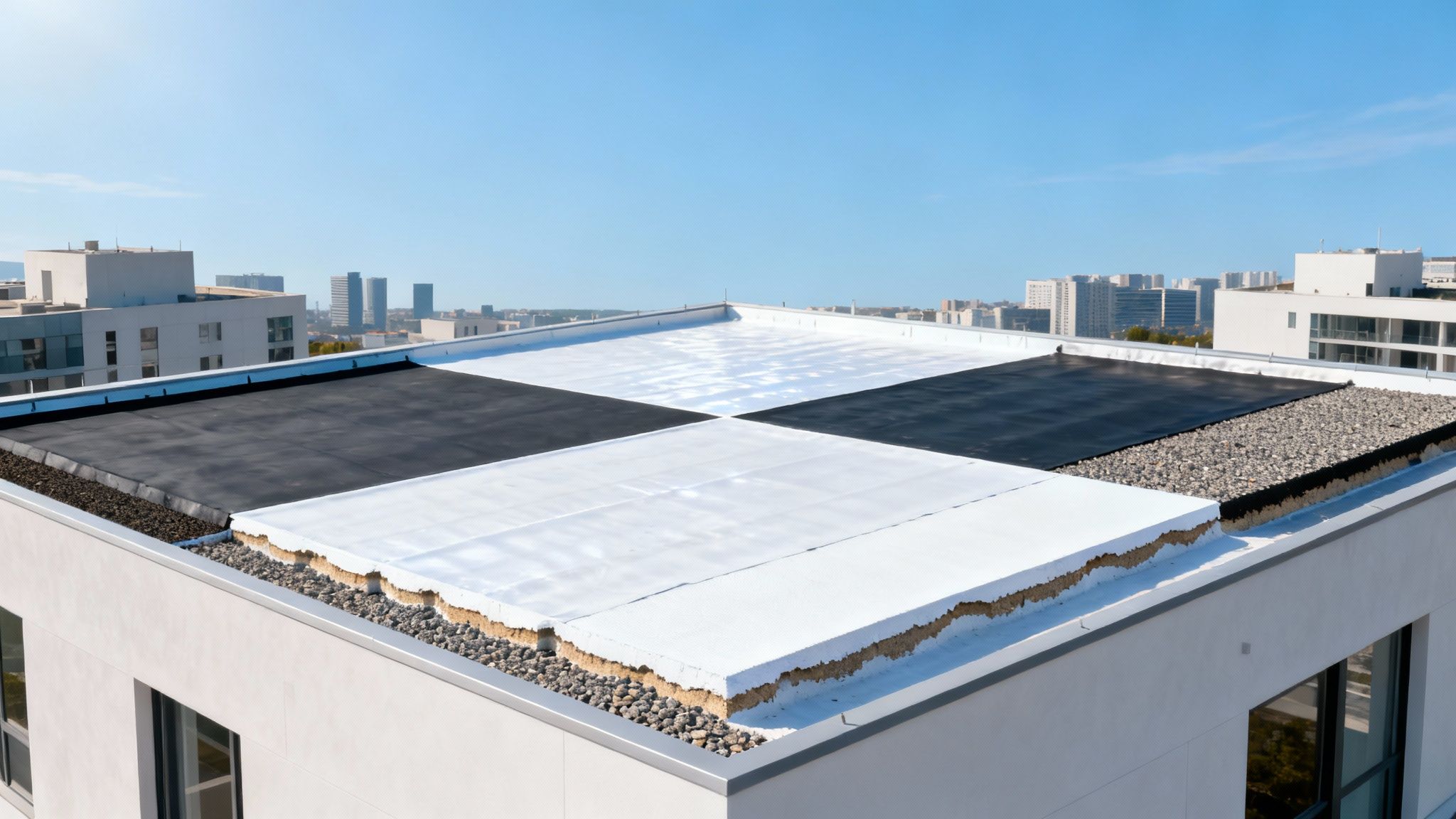
When you think of a flat roof, you might picture old-school tar-and-gravel surfaces that seemed to leak at the first sign of rain. Forget that image. Today’s flat roofing systems are a world away from their predecessors—they’re highly engineered platforms designed to protect your property and add serious functional value.
These aren't just simple coverings anymore. Modern options include sophisticated single-ply membranes and advanced multi-layer assemblies that deliver incredible durability, energy savings, and a lifespan that rivals many traditional roofs.
Why Modern Flat Roofs Are More Than Just a Surface
If you've heard horror stories about leaks and constant repairs on old flat roofs, it's time for an update. The technology behind today's systems has taken a massive leap forward. They're now a top choice for both commercial buildings and sleek, contemporary homes, turning what used to be a problem area into a high-performance asset.
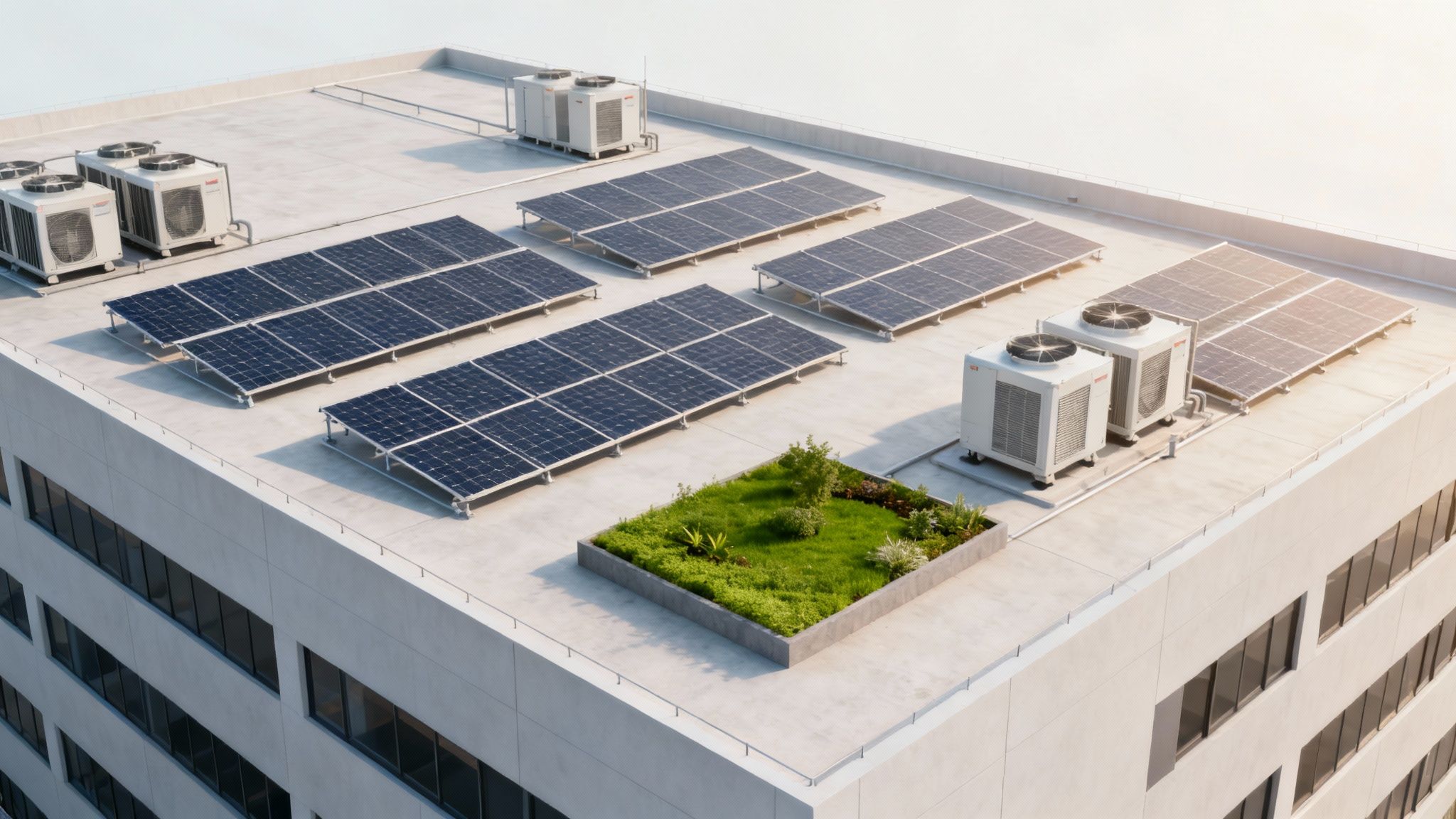
Think of a modern flat roof as a versatile, usable platform. Its design creates the perfect space for everything from essential building equipment to green initiatives and even outdoor living areas. This practicality is a huge reason they’ve become so popular.
A Platform for Modern Building Needs
The utility of a flat roof goes way beyond just keeping the rain out. That open, accessible surface is ideal for housing critical infrastructure that would be a nightmare to install on a sloped roof.
- HVAC Equipment: Large commercial heating, ventilation, and air conditioning units can be installed and serviced with ease, keeping them out of sight and off the ground.
- Solar Arrays: Flat roofs provide a completely unobstructed canvas for solar panels. Installers can position the panels at the perfect angle to catch the most sun, maximizing energy production in a way that’s just not possible on a fixed-slope roof.
- Rooftop Gardens and Patios: Especially in urban areas, a flat roof can become a "green roof" or a stunning outdoor living space. It's a fantastic way to add both functional and aesthetic value to the building.
It's a common myth that solar panels are only efficient on sloped roofs. The truth is, flat roofs are excellent platforms for solar, giving installers the freedom to orient panels for maximum energy production and making maintenance a breeze.
Understanding the Core Technologies
Modern flat roofing systems boil down to two main categories, and getting a handle on them will help you navigate your options. The first category is single-ply membranes, which are flexible sheets of advanced synthetic materials. The second is multi-layer systems, which involve building up protection with several layers of reinforcing fabrics and asphalt.
The demand for these advanced solutions is skyrocketing. The global flat roofing market was valued at around USD 10.5 billion in 2023 and is projected to hit approximately USD 16.8 billion by 2032. This incredible growth underscores the industry's shift toward energy-efficient systems that support sustainable building.
If you want to dig deeper into the numbers, you can check out the full report on the global flat roofing market. For now, this guide will walk you through the leading technologies to help you make a smart investment in your property’s most critical asset.
Choosing Your Single-Ply Membrane Material
When you start digging into roofing systems for flat roofs, single-ply membranes are almost always the first stop. Think of these materials as high-performance, engineered fabrics rolled out and secured to your roof deck, creating a seamless, waterproof barrier. In this world, three major players dominate the field: TPO, EPDM, and PVC.
At first glance, they might seem pretty similar. But each one has its own personality, built for different environments, challenges, and budgets. The real key is figuring out not which one is "best," but which one is the best fit for your specific building, climate, and goals.
This infographic gives you a quick visual comparison of the textures and appearances of these three primary single-ply materials.
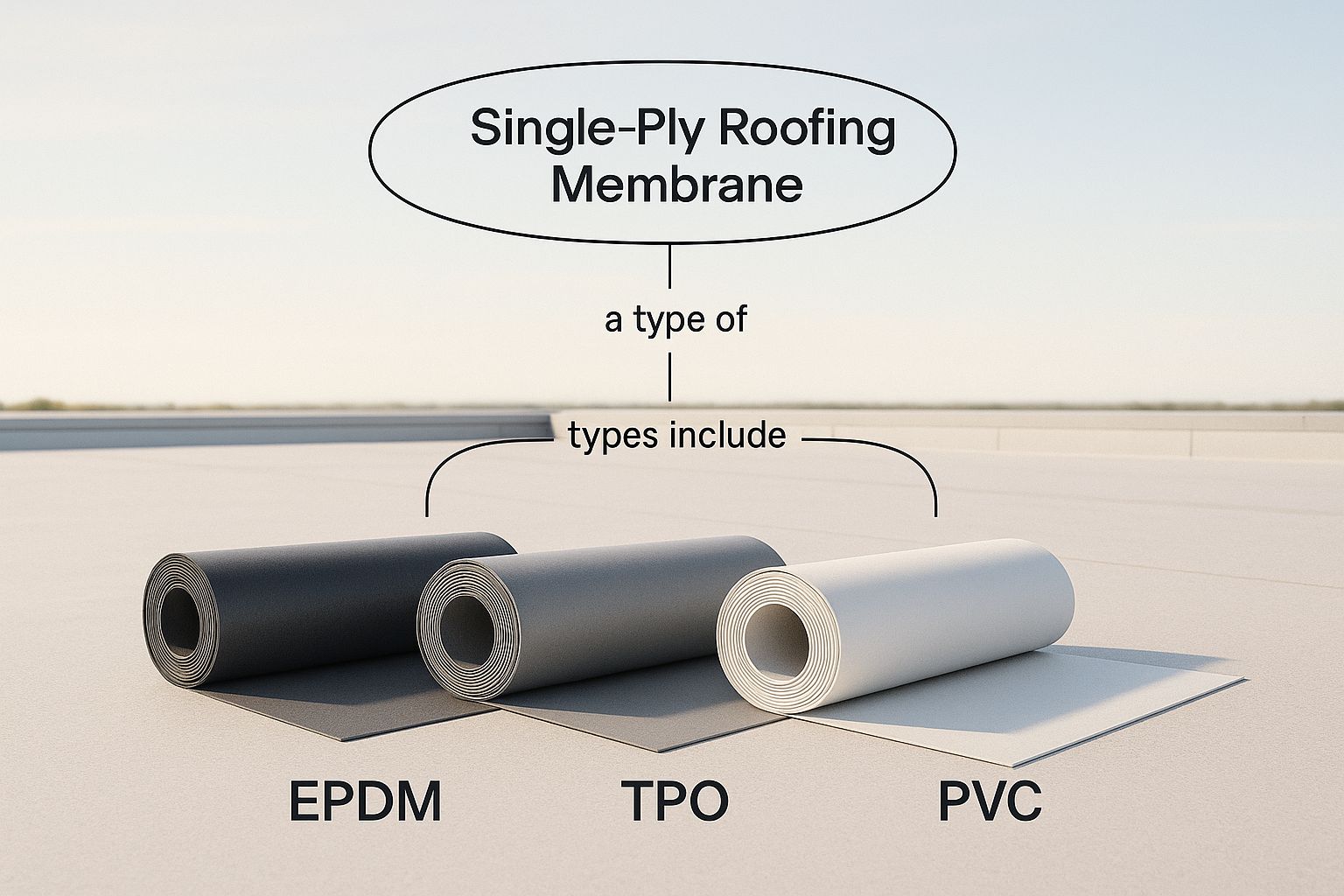
You can see how each surface is engineered for a different job: EPDM’s smooth, durable rubber, TPO’s flexible plastic, and the reinforced texture of PVC.
TPO: The Energy-Efficient All-Rounder
TPO (Thermoplastic Olefin) has exploded in popularity over the last 20 years, and for good reason: its brilliant white, reflective surface. You can think of it as a cool shield for your building. This isn't just about looks—it actively bounces the sun's radiation away, dramatically cutting down on your building's cooling needs and lowering energy bills in hot, sunny climates.
One of its biggest advantages is how the seams are joined. Instead of messy adhesives, TPO seams are hot-air welded. This process literally melts the edges of the material and fuses them, creating a bond that’s even stronger than the membrane itself. The result is a single, unified sheet protecting your building.
Key Takeaway: The power of TPO lies in its one-two punch of energy efficiency and superior seam strength. For buildings in places like South Florida, a reflective TPO roof is one of the smartest, most cost-effective ways to beat the heat and stay dry during torrential downpours.
Installers also love TPO because it's flexible and lightweight, which can sometimes lead to lower labor costs compared to heavier, more cumbersome systems.
EPDM: The Durable Rubber Workhorse
EPDM (Ethylene Propylene Diene Monomer) is, at its core, a synthetic rubber membrane. It's been a trusted workhorse on flat roofs for more than 50 years. Picture the tough, flexible rubber of a tire's inner tube—that’s the kind of resilience EPDM brings to the table. Its typically black surface is great at absorbing heat, which can be a real plus in colder climates where it helps melt snow and ice.
EPDM is manufactured in massive rolls, sometimes up to 50 feet wide. This allows installers to cover huge areas with very few seams. And as any roofer will tell you, fewer seams mean fewer potential weak points for water to find. While its seams are sealed with special adhesives and tapes, modern formulas have made these bonds incredibly strong and reliable when done right.
Without a doubt, one of EPDM's most celebrated features is its incredible longevity. It's not uncommon for these roofs to last 25 to 30 years or even longer, standing up to wild temperature swings, hail, and harsh UV rays without turning brittle.
PVC: The Chemical and Fire-Resistant Fortress
PVC (Polyvinyl Chloride) is another heat-welded membrane, but it’s best known for its sheer toughness. If TPO is the energy-saver and EPDM is the long-lasting workhorse, then PVC is the industrial-strength defender. Its unique chemical makeup makes it exceptionally resistant to grease, oils, and other harsh chemicals.
This is exactly why PVC is the top choice for restaurants, airports, and manufacturing plants. Exhaust vents from these places can spew out chemicals and grease that would chew right through other roofing materials. On top of that, PVC has excellent fire resistance, often earning it a high safety rating that can even help lower insurance costs.
Just like TPO, its seams are heat-welded to create a permanent, watertight bond. The membrane itself is usually reinforced with a polyester or fiberglass mesh, giving it incredible strength and resistance to punctures. It’s a more premium option, but for harsh environments, that extra durability is a worthy investment.
Want to see what these materials look like on actual buildings? Take a look through our gallery of recent flat roofing projects to see these systems in action.
Comparing TPO vs EPDM vs PVC Flat Roofing
Choosing between the big three single-ply membranes often comes down to a direct comparison of their strengths and weaknesses against your specific needs. This table breaks down the key differences to help you see which material might be the best fit for your property.
| Material | Average Lifespan | Key Advantages | Primary Disadvantages | Best For |
|---|---|---|---|---|
| TPO | 15-25 years | Highly reflective and energy-efficient, strong heat-welded seams, cost-effective. | Can be less resistant to some chemicals, newer material with a shorter track record. | Commercial buildings in hot climates, budget-conscious projects. |
| EPDM | 25-30+ years | Exceptional longevity, superior flexibility in cold, few seams due to large sheet sizes. | Black surface absorbs heat, seams are adhered instead of welded. | Buildings in cold climates, large and simple roof layouts. |
| PVC | 20-30 years | Excellent chemical, grease, and fire resistance, durable heat-welded seams. | Generally higher in cost, can become brittle in extreme cold if not formulated properly. | Restaurants, industrial facilities, airports, roofs with chemical exposure. |
Ultimately, the best choice depends on your climate, building use, and budget. A hot, sunny climate points toward TPO's reflectivity, while a restaurant roof exposed to grease exhaust is a perfect job for PVC's chemical resistance.
While modern single-ply membranes are sleek and efficient, there's another school of thought in the world of flat roofing—one built on the idea of strength in numbers. These are the multi-layer systems, constructed piece by piece right on your roof deck to create an incredibly tough, thick barrier against whatever nature throws at it.
Think of these systems as the seasoned veterans of the roofing industry. They offer a level of rugged, brute-force puncture resistance that’s tough for any single layer to match, making them a go-to choice for roofs with heavy foot traffic or those in particularly harsh environments. Let's dig into the most common multi-layer and alternative options out there.
The Classic Built-Up Roof (BUR)
You’ve probably heard this one called a "tar and gravel" roof. The Built-Up Roof (BUR) is one of the oldest and most trusted methods in the book. Imagine building a protective layer cake directly on your roof—that's essentially what a BUR system is. The process involves alternating layers of bitumen (asphalt) with reinforcing fabrics called ply sheets.
This builds up a thick, seamless slab of waterproofing material. A typical BUR system will have three to five of these alternating layers, which is precisely why it’s so durable. A clumsy tool drop or constant foot traffic from maintenance crews is far less likely to cause a leak in a multi-layered BUR system.
To top it all off, the final layer is usually covered with gravel, crushed rock, or a special reflective coating. This top coat pulls double duty:
- UV Protection: It shields the asphalt layers underneath from the sun’s damaging rays, which keeps them from drying out and cracking over time.
- Fire Resistance: That layer of stone provides a serious degree of fire resistance, a major safety benefit for any building.
Modified Bitumen: The Modern Evolution
If BUR is the tried-and-true classic, then Modified Bitumen (Mod-Bit) is the high-performance remix. It takes the core concept of asphalt-based roofing but supercharges it with polymers, blending the multi-layer security of a BUR with some of the modern flexibility you’d find in a single-ply membrane.
These polymers—either rubber-like or plastic-like compounds—are mixed into the asphalt during manufacturing. This gives the material a kind of "memory," allowing it to expand and contract with a building's natural shifts and temperature swings without cracking. It has a toughness that feels a lot like the tread on a car tire.
Modified Bitumen systems really bridge the gap between old-school and new-school roofing. You get the proven, multi-layer waterproofing of a classic built-up roof, but with added flexibility and more advanced installation options that make it a better fit for today's buildings.
Installation is more versatile, too. Mod-Bit comes in rolls that can be heat-welded with torches, applied with cold adhesives, or even installed in self-adhering formats. This gives contractors plenty of options depending on the project's needs and safety rules, making it a popular workhorse for everything from schools to industrial plants.
Spray Polyurethane Foam: A Seamless Insulating Blanket
For a completely different approach, Spray Polyurethane Foam (SPF) roofing is in a class of its own. Unlike systems that rely on rolled sheets and seams, SPF is applied as a liquid that expands to about 30 times its original volume. The result is a solid, seamless, and perfectly custom-fitted layer of protection across the entire roof surface.
Picture blanketing your roof in a continuous layer of high-density foam that perfectly seals every pipe, vent, and rooftop unit. That seamless quality is its biggest advantage because it completely eliminates the weakest point of any traditional roofing system: the seams.
But SPF isn't just waterproof—it's an incredible insulator. That dense foam layer provides one of the highest R-values (a measure of thermal resistance) per inch of any roofing material out there. This can lead to serious energy savings on heating and cooling bills, making it an incredibly smart choice for property owners focused on lowering long-term operational costs.
The Critical Role Of Installation And Design
Choosing the right membrane is just the first chapter. What really determines your roof’s longevity is how it’s designed and put together. In other words, material choice is like picking a hull for a ship—but installation is the engineering that keeps it afloat.
The Undeniable Importance Of Drainage
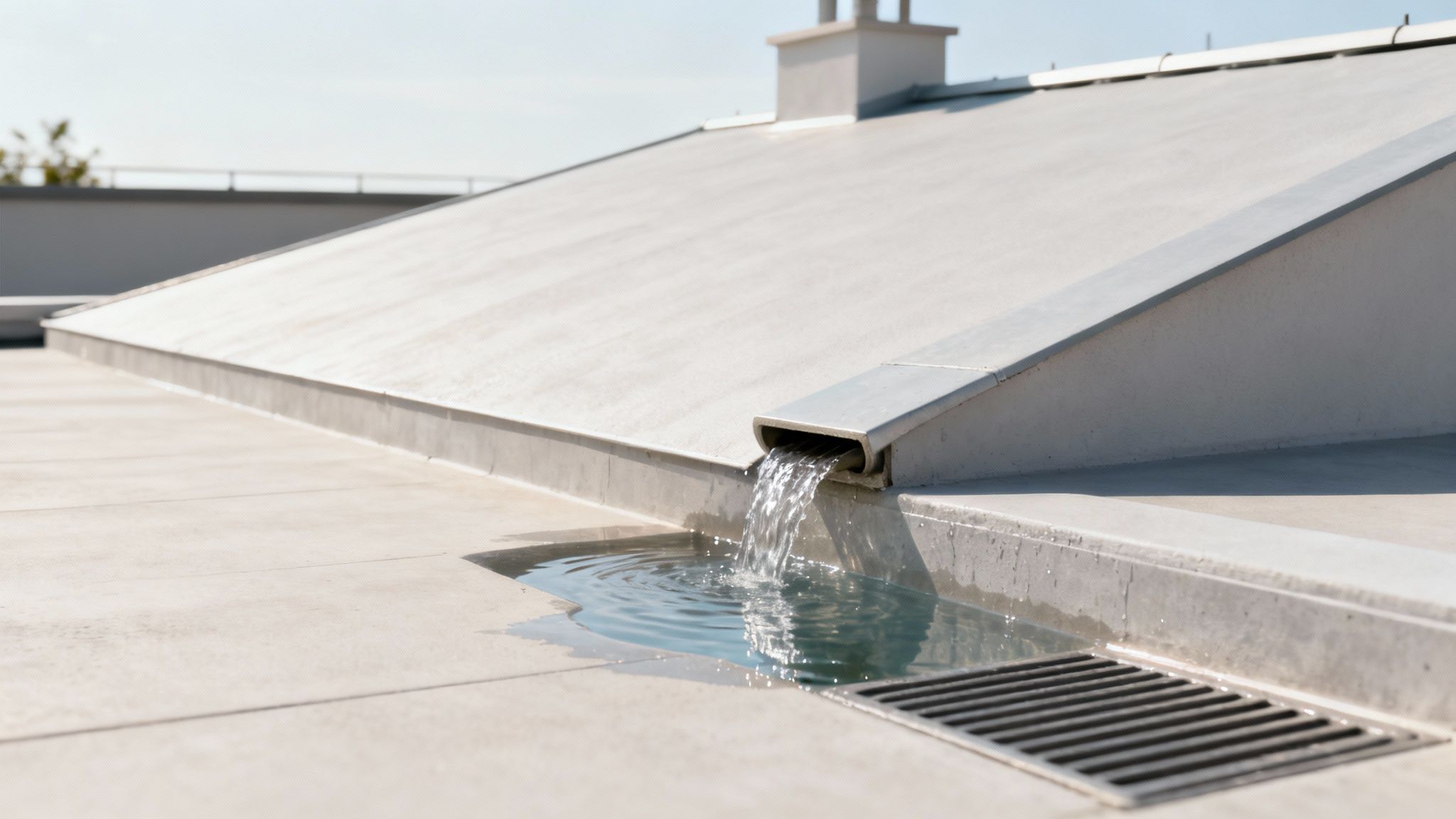
Water lingering on a flat roof is its worst enemy. Although called “flat,” these roofs need a subtle pitch—enough to send water away, but not so much that it looks sloped.
If water sits longer than 48 hours, it speeds up material decay, adds weight stress, and exploits the tiniest seam flaw. A solid drainage plan typically includes:
- A Slight Slope (at least ¼ inch per foot) built into the deck or via tapered insulation
- Internal Drains that funnel water down through the building’s plumbing
- Scuppers—openings in parapet walls that let water pour off the edge
Skip these elements and you’ve essentially built a shallow pond on your roof, inviting leaks and structural headaches.
The Foundation Of Performance Insulation
Beneath the waterproof layer lies another hero: insulation. More than a thermal barrier, it’s the structural bedrock of your roof system. Boards like polyisocyanurate (polyiso) or extruded polystyrene (XPS) deliver different R-values, influencing energy use and comfort.
Higher R-values slow heat transfer—keeping your space cooler in summer and warmer in winter. Over time, that means lower utility bills and less wear on HVAC equipment. For deeper insight into matching insulation to building and climate, check out professional flat roof installation services.
How Your Roof Is Attached Matters
Securing the membrane shapes cost, wind resistance, and lifespan. Here are the three main attachment methods in use today:
Fully Adhered Systems
The membrane is glued directly to insulation or deck, creating a seamless surface. This monolithic bond offers top-tier wind uplift resistance—ideal for high-rise or storm-prone areas.
Mechanically Attached Systems
Fasteners and plates penetrate the membrane, insulation, and deck. Installation moves quickly, making it cost-effective on large, open roofs. In fact, the global flat-roof fasteners market was valued at USD 4.56 billion and is projected to reach USD 7.16 billion by 2033.
Ballasted Systems
Here, weight does the work. Loose-laid membrane is covered with river rock, pavers, or similar ballast. No penetrations mean fewer leak points, but your structure must support the extra load. For an idea of how these systems look upon completion, you can see examples of finished flat roof installations.
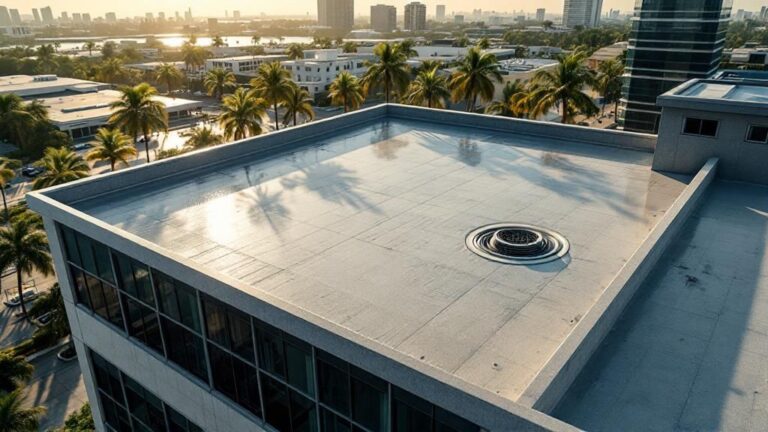
Choosing an attachment method isn’t a mere technicality; it’s a strategic choice. A fully adhered system in a hurricane zone offers peace of mind, while a mechanically attached solution can unlock significant savings on sprawling warehouse roofs. The best fit always balances performance, budget, and building requirements.
Protecting Your Investment with Proactive Maintenance
Putting a new roof on your property is a massive investment in its safety and value. But even the best materials and the most skilled installation are just the beginning of the story. Think of proactive maintenance as the ongoing insurance policy that protects your investment, turning what could be a huge liability into a reliable, long-lasting asset.
It’s a lot like getting regular oil changes for your car. Skipping one doesn't cause an immediate breakdown, but you can bet it guarantees premature failure down the road. The exact same principle applies to flat roofing systems; a few small, manageable tasks today can prevent catastrophic, wallet-draining emergencies tomorrow.
Your Seasonal Maintenance Roadmap
The easiest way to stay ahead of trouble is with a simple, season-by-season checklist. This isn’t about trying to become a roofing expert overnight. It’s about empowering you to spot the red flags early, ensuring your roof performs exactly as it should for years to come.
Here’s a practical guide to follow throughout the year:
- Spring Inspection: After winter has done its worst, give your roof a thorough check for any signs of damage. Look for cracked sealants, any blisters or bubbles that have formed in the membrane, and check for loose flashing around vents, skylights, or rooftop AC units.
- Summer Vigilance: That intense summer sun and heat can really stress out roofing materials. Pay close attention to the seams to make sure they’re still tightly bonded. This is also a great time to confirm your roof’s reflective coating, if you have one, is still in good shape.
- Autumn Cleanup: Falling leaves, twigs, and other debris are a flat roof's worst enemy. They’re notorious for clogging drains and scuppers, creating the perfect recipe for ponding water. Make sure every drainage point is completely clear before the winter rains set in.
- Winter Preparation: Before the first freeze hits, inspect all the sealant and caulking around penetrations. Water loves to seep into tiny cracks, freeze, expand, and turn a minor flaw into a major leak.
Key Areas to Focus On
While a general seasonal check is a great habit, some parts of a flat roof demand more frequent attention. These are the zones where problems almost always get their start. Make it a habit to inspect these critical points regularly, especially right after a big storm with heavy rain or high winds.
- Drainage Systems: Clogged drains are the number one cause of flat roof failure, hands down. Routinely clear all debris from internal drains, scuppers, and gutters to guarantee water has a clear path to escape.
- Membrane Surface: Take a walk on the roof and keep an eye out for any punctures, tears, or unusual wear spots. Small punctures from a dropped tool or wind-blown debris are simple to patch if you catch them early, but they can lead to widespread water damage if ignored.
- Seams and Flashings: The points where your roofing material meets a wall, vent, or another structure are the most vulnerable spots. Check these flashings and seams for any signs they are pulling away, cracking, or breaking down.
A proactive maintenance plan isn’t an expense; it’s the single most effective way to reduce the total cost of ownership for your roof. Studies show that consistent, proactive maintenance can extend a roof's service life by as much as 50%.
Even with the best proactive care, unexpected issues can lead to roof damage and water getting inside. If that happens, a comprehensive resource like a water damage restoration guide is crucial for minimizing the fallout. For routine professional check-ups, you can learn more about our dedicated roofing inspection services. By staying vigilant, you’re not just protecting the roof—you’re protecting the entire building and everything in it.

How to Budget for Your New Flat Roof
Trying to pin down a budget for a new flat roof can feel like you're aiming at a moving target. It’s tempting to look for a simple price-per-square-foot, but that number only gives you a vague ballpark idea. The final quote you receive is actually shaped by several critical variables that go far beyond your building's basic dimensions.
Knowing what these factors are is the key to intelligently reading a contractor's bid and understanding where your money is going.
The biggest driver of your budget will almost always be the roofing material you choose. A standard TPO or EPDM membrane, for instance, generally has a lower upfront cost than a premium, chemically-resistant PVC system. And both of those are typically less than a labor-intensive Built-Up Roof. Each material comes with its own price tag, not just for the product itself but for the specialized labor needed to install it correctly.
Deconstructing the Costs Beyond Materials
Beyond the membrane itself, several other elements play a huge role in the final price. Think of it like buying a car—the base model has one price, but all the features and customizations are what really shape the final number.
- Size and Complexity: A massive, wide-open warehouse roof is far simpler and faster to install than a smaller but more complex roof on a restaurant. Why? The restaurant roof is probably crowded with vents, pipes, HVAC units, and skylights. Every single one of those penetrations requires meticulous flashing and sealing, which adds significant labor time and, therefore, cost.
- Insulation Requirements: The type and thickness of the insulation boards sitting beneath the membrane directly impact your budget. Going with thicker insulation that has a higher R-value will cost more initially, but it pays you back over time through lower energy bills. It's an investment, not just an expense.
- Tear-Off and Disposal: Do you have an old roof that needs to be removed first? That process involves not only the labor to tear off the existing layers but also the fees to properly dispose of the old materials. This step alone can add a substantial amount to the project total.
The demand for reliable, long-lasting flat roofing systems is a major factor in the global roofing industry, which was valued at a staggering USD 245.62 billion and is expected to keep growing. This trend shows a strong preference for systems that offer durable protection and straightforward construction. You can see how these trends are shaping the market in this detailed global roofing market report.
Your budget shouldn't just focus on the upfront installation cost. A cheaper material that requires frequent repairs or leads to higher energy bills can end up costing you far more over a 20-year lifespan than a more expensive but durable, energy-efficient system. Always consider the total cost of ownership.
To give you a clearer picture, let's break down the typical cost ranges for some of the most common flat roofing systems. Keep in mind that these are just estimates—your final price will depend on the factors we've just discussed.
Estimated Cost Ranges for Flat Roofing Systems
| Roofing System | Estimated Cost per Square Foot (Installed) | Typical Lifespan |
|---|---|---|
| TPO | $7 – $13 | 20-30 Years |
| EPDM | $6 – $12 | 25-35 Years |
| PVC | $8 – $14 | 25-35+ Years |
| Built-Up Roof (BUR) | $9 – $15 | 20-30 Years |
Ultimately, the final quote you get from a contractor is a detailed breakdown of materials, labor, and the specific challenges your roof presents. By understanding these different components, you can have a much more informed conversation with your contractor. This ensures you're not just buying a roof, but investing in a long-term solution that truly fits both your budget and your building's needs.
Frequently Asked Questions About Flat Roofs
When you start digging into roofing systems for flat roofs, it’s natural for questions to pop up. To help you get a handle on the important stuff, we’ve put together some straightforward answers to the questions we hear most often from property owners.
What Is the Average Lifespan of a Flat Roof?
How long your flat roof lasts really comes down to three things: the material you choose, the quality of the installation, and how well you keep up with maintenance. Every system has a different ballpark lifespan.
- EPDM is the marathon runner of the group, often lasting 25-30 years or even longer.
- TPO and PVC membranes are solid performers, generally giving you 15-25 years of service.
- The old-school Built-Up Roofs (BUR) can hold up well for 15-20 years when done right.
The real secret to a long-lasting roof isn’t just the material—it’s the care you give it. Consistent inspections and quick repairs are what get you to, and often past, these timelines. Think of it as an investment in getting the most out of your roof.
Of course, these numbers aren't set in stone. Your local climate and a proactive approach to care can make a huge difference.
What Is the Most Common Problem with Flat Roofs?
Without a doubt, the number one enemy of any flat roof is ponding water. This is what we call it when water just sits there for more than 48 hours after a storm, and it’s a killer for roofing materials.
That standing water doesn't just sit there—it adds a ton of stress to your building's structure and relentlessly works its way into the tiniest seam or imperfection, eventually causing a leak. This is exactly why a slight, deliberate slope and clean, working drains aren't just nice to have; they're non-negotiable for a reliable flat roof.
Are Flat Roofs a Good Choice for Homes?
Yes, absolutely. While we're used to seeing them on commercial buildings, flat roofs are a signature feature of modern home design. They give houses that clean, minimalist look and open up amazing possibilities for rooftop patios, gardens, or decks.
Today's high-performance materials like TPO, EPDM, and PVC are all fantastic choices for homes with low-slope or flat sections. They bring the same durability and weather protection that commercial properties have relied on for years, making them a smart and stylish option for any homeowner.
Ready to figure out the best roofing system for your property? The experts at Paletz Roofing and Inspections have more than 30 years of experience installing and maintaining high-performance roofs across South Florida. Contact us for a free, no-obligation quote.