
If you've noticed your energy bills creeping up in Plantation, the culprit is often hiding in plain sight: your roof. It almost always boils down to the same few issues—a combination of inadequate attic insulation, poor attic ventilation, and sneaky air leaks. Together, they force your air conditioner to work overtime just to keep your home comfortable in the Florida heat.
Why Your Roof Is the Silent Driver of High Energy Costs
Here in Plantation, the sun doesn't mess around. Your roof soaks up an incredible amount of solar heat every single day. Without the right protective systems, that heat doesn't just stay on the shingles; it radiates straight down, turning your attic into a sweltering oven that can easily hit 140°F or more.
That intense heat then moves right through your ceiling and into your living space.
This process is called heat gain, and it's the number one reason your AC seems to be running a marathon with no finish line. You might have the thermostat set to a comfortable 75°F, but your system is fighting a losing battle against a giant, superheated radiator sitting just above your head. This isn't just a small inefficiency—for many homeowners, it's the single biggest reason for sky-high cooling costs.
The Three Main Culprits
Three specific problems usually work together to crank up this heat transfer and send your energy bills through the roof:
-
Insufficient Insulation: Good insulation is your home's thermal barrier, slowing down the movement of heat. But when it’s old, compressed, or just not thick enough for Florida (we recommend an R-value of R-30 to R-38), heat passes from your attic into your home with ease.
-
Blocked or Inadequate Ventilation: Your attic needs to breathe. A proper ventilation system uses soffit vents to pull in cooler, fresh air and ridge or gable vents to push out the hot, stale air. If this airflow gets blocked by old insulation or debris, your attic just traps all that heat.
-
Unsealed Air Leaks: It’s the little things that add up. Small gaps around light fixtures, plumbing stacks, and attic hatches create a pathway for hot attic air to seep down into your home, while also letting your expensive, conditioned air escape.
A poorly performing roof and attic system can be responsible for up to 25% of the heat gain in your home. That means a quarter of your cooling bill could be directly tied to what's happening right above your ceiling.
Let's take a quick look at how these issues stack up.
Top 3 Roof-Related Causes of High Energy Bills
Here’s a simple breakdown of the problems we see most often and how they directly impact your wallet.
| The Problem | How It Increases Your Bills | Common Sign |
|---|---|---|
| Weak Insulation | Allows intense attic heat to transfer directly into your living space, making your AC work harder and longer. | Your second-floor rooms are always much hotter than the first floor. |
| Poor Ventilation | Traps superheated air in the attic, creating a massive heat source that radiates downward through the ceiling. | You notice frost on your roof sheathing in winter or feel a blast of hot air when opening the attic hatch. |
| Hidden Air Leaks | Creates drafts that pull hot, humid attic air into your home while pushing your cool, conditioned air out. | Rooms feel stuffy, and you have inconsistent temperatures from one area to another. |
Understanding how these three elements play off each other is the first real step toward figuring out why your energy bills are so high. Once you know the "why," you can start taking effective, cost-saving actions to fix it.
How to Perform a DIY Attic and Roof Check
Before you can fix the problem, you have to find it. The good news is you can do some initial detective work yourself to figure out if your roof is the reason your energy bills are so high. This isn't about climbing ladders; you can spot some major red flags right from your attic access and the ground.
Think of it this way: your roof is supposed to be a shield, but when it's not working right, it becomes an oven. Solar heat blasts your roof, gets trapped in the attic, and slowly bakes your entire home from the top down.
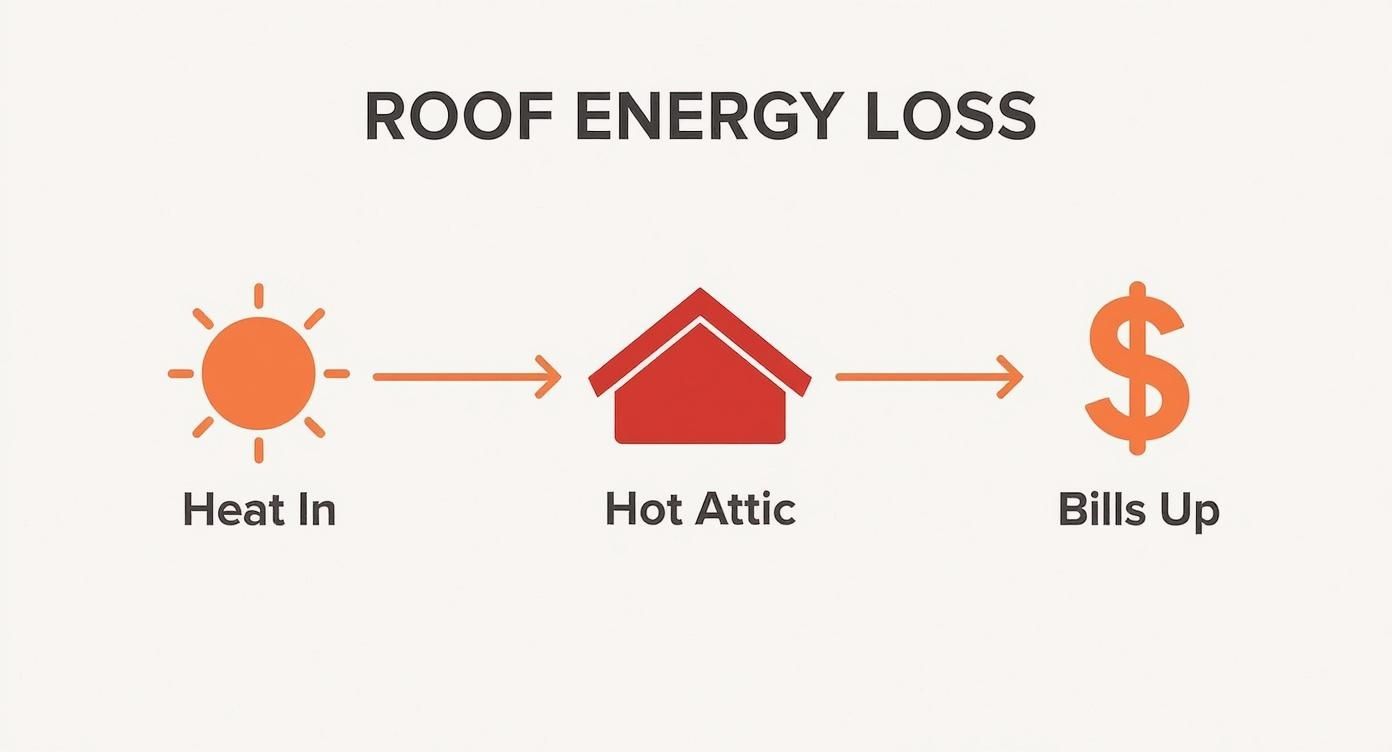
This process forces your AC to run constantly just to keep up. Let’s pinpoint where the system is failing.
Starting with the Attic Inspection
Your attic is the first place to look. You don’t even need to go all the way in—just pop open the hatch and see what hits you. If you’re greeted by a wall of thick, stagnant heat, that’s your first clue. It’s a classic sign of bad ventilation; all that hot air is trapped with nowhere to escape.
Next, take a look at the insulation. Here’s what to check for:
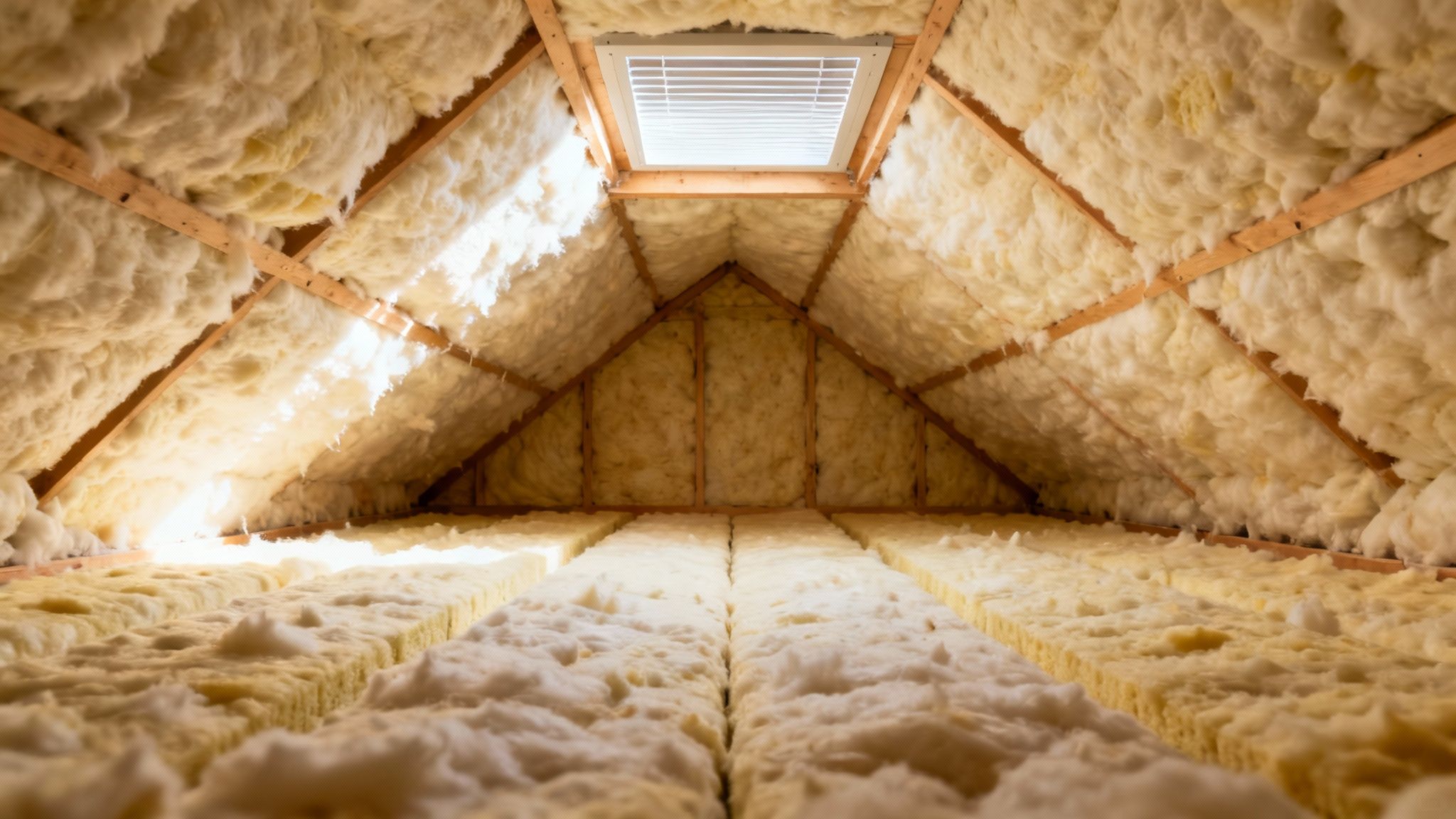
- Look for the Joists: Can you easily see the tops of the wooden ceiling joists? If so, you almost certainly don't have enough insulation. For a climate like Florida's, you should see a deep, continuous blanket of insulation that's at least 10 to 14 inches thick, covering everything.
- Check for Consistency: Scan for any bare patches, areas where the insulation looks squashed down, or spots where it’s been moved aside. Every gap acts like an open window for energy to pour out, creating hot spots that your AC has to fight against all summer.
If you want to get more systematic, using a practical home energy audit checklist can walk you through other common weak points in your home's thermal defense.
Ground-Level Visual Roof Check
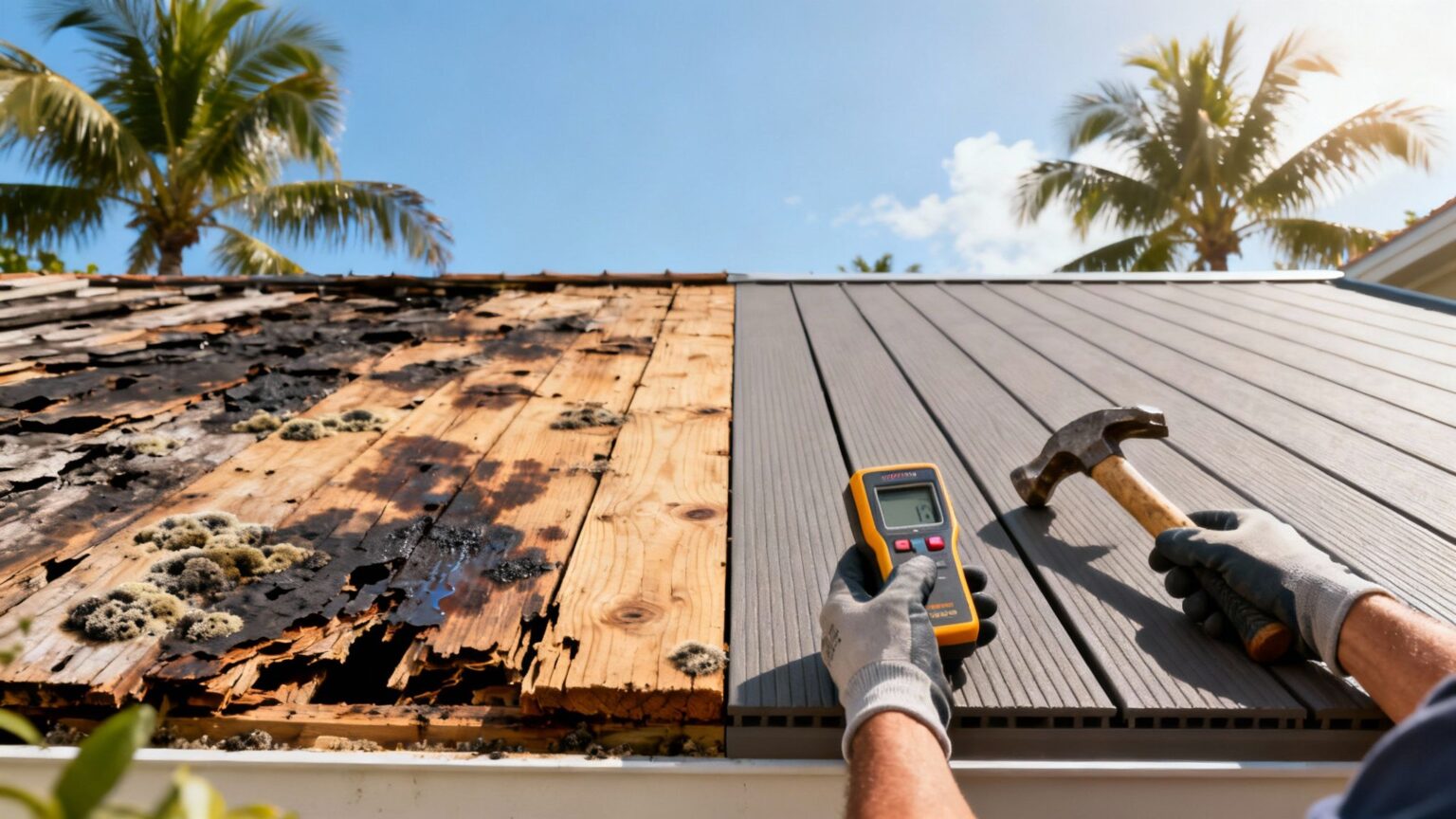
You can learn a lot just by walking around your house. Take a slow stroll and look up at your roof from a few different spots. Are any shingles curling up at the edges, cracked, or missing altogether? These are obvious entry points for water, but they also signal an aging roof that's lost its ability to protect your home.
Also, keep an eye out for any dark streaks or stains on the shingles. Sometimes it's just algae, but it can also point to moisture problems or areas where the protective granules have worn off. When those granules are gone, your roof absorbs more heat instead of reflecting it. You can see clear examples of roof wear like this on many older homes.
Key Takeaway: An attic that feels like an oven and insulation that doesn't cover your ceiling joists are the two most definitive signs that your roof system is contributing to high energy bills. These are not minor issues; they are direct causes of energy waste.
This push for efficiency is happening everywhere. Homeowners are tired of high energy bills and are looking for real, long-term solutions. It's no surprise that residential properties are expected to make up 38.2% of the solar roof market by 2025. People are investing in high-efficiency options, like monocrystalline panels, which are projected to grab a 44.6% market share because they produce more power in less space.
Practical Upgrades for an Energy-Efficient Roof
Alright, you've done the assessment. Now it’s time to move from diagnosis to action—this is where you start seeing real savings on your power bill. Making a few strategic, energy-saving improvements to your roof system is one of the smartest investments you can make for your Plantation home. Let's walk through the most effective solutions, from quick fixes to long-term game-changers.
The goal here isn't just to patch problems. It's to create an entire system where your roof actively works to keep your home cool. By tackling insulation, ventilation, and the roof's surface itself, you can dramatically cut down on the heat gain that causes the high energy bills from roof Plantation homeowners know all too well.
These upgrades work together, creating a powerful thermal barrier that shields your living space from the intense Florida sun. Your HVAC system will finally be able to catch a break.
Bolster Your Attic Insulation
Think of your attic insulation as the primary shield between a scorching hot attic and your comfortable living space below. If it's thin, compressed, or patchy, heat will radiate right through your ceiling, forcing your air conditioner into overdrive just to keep up.
Upgrading is a pretty straightforward process with a significant payoff. Here are the go-to options for our climate:
- Fiberglass Batts: These are the familiar pink or yellow rolls you've probably seen. They're cost-effective and relatively easy to install in attics with standard joist spacing and not too many obstructions.
- Blown-In Cellulose or Fiberglass: This loose-fill material is blown into the attic, creating a seamless blanket of insulation. It’s fantastic for filling in all the nooks and crannies around pipes, wires, and irregular framing, ensuring you get complete coverage.
- Spray Foam: It’s the most expensive option, but spray foam insulation offers the highest R-value per inch and creates an airtight seal. It doesn't just insulate; it stops air leaks, giving you a powerful two-for-one benefit.
The Department of Energy recommends an R-value of R-30 to R-38 for attics in our hot, humid climate zone. Hitting that target can slash your cooling costs by 10% to 20%—a substantial saving that adds up month after month.
Optimize Your Attic Ventilation
Here’s the thing: insulation can't do its job alone. It needs a well-ventilated attic to work effectively. Proper ventilation creates a continuous flow of air that pushes that superheated air out of the attic before it has a chance to bake your home.
A good system relies on a balanced partnership between intake and exhaust vents.
- Soffit Vents (Intake): Found under the eaves of your roof, these vents pull in cooler, outside air.
- Ridge Vents (Exhaust): Running along the very peak of the roof, these vents allow the hottest air—which naturally rises—to escape.
When this system is working correctly, it creates a natural convection that acts like a constant, silent cooling fan for your entire attic. If you want a better look at how all these parts work together, you can find some great visuals in our resources showing the complete roof system anatomy.
Energy-Saving Roof Upgrades Comparison
Choosing the right upgrade involves balancing cost, impact, and what makes the most sense for your home and the Plantation climate. This table breaks down the common options to help you decide.
| Upgrade Type | Average Cost | Energy Savings Potential | Best For |
|---|---|---|---|
| Attic Insulation | $1,500 – $3,500 | 10-20% reduction in cooling costs | Homes with old, thin, or compressed insulation; a must-do for Florida attics. |
| Attic Ventilation | $500 – $1,500 | 5-10% reduction in cooling costs | Homes with stuffy, hot attics, especially when paired with new insulation. |
| Reflective Roof Coating | $1.50 – $4.00 per sq. ft. | 15-25% reduction in cooling costs | Extending the life of a structurally sound roof and dramatically cutting heat absorption. |
| Cool Roof Shingles | Part of a full roof replacement cost | 10-20% reduction in cooling costs | Homeowners who are already planning a roof replacement and want built-in efficiency. |
Each of these upgrades offers a solid return on investment, but combining them—like adding proper ventilation when you upgrade your insulation—multiplies the benefits for a truly energy-efficient home.
Consider Long-Term Roofing Solutions
When it’s finally time for a full roof replacement, you have a golden opportunity to make a lasting impact on your energy bills for decades to come. Modern roofing materials are engineered with energy efficiency in mind, especially for relentlessly sunny climates like ours.
Reflective Roof Coatings: These are specialized, high-tech coatings that can be applied to many types of existing roofs. They’re packed with ceramic or reflective pigments that bounce a huge portion of the sun's UV rays away from your home. This can lower your roof's surface temperature by as much as 50-60 degrees. That's a massive difference.
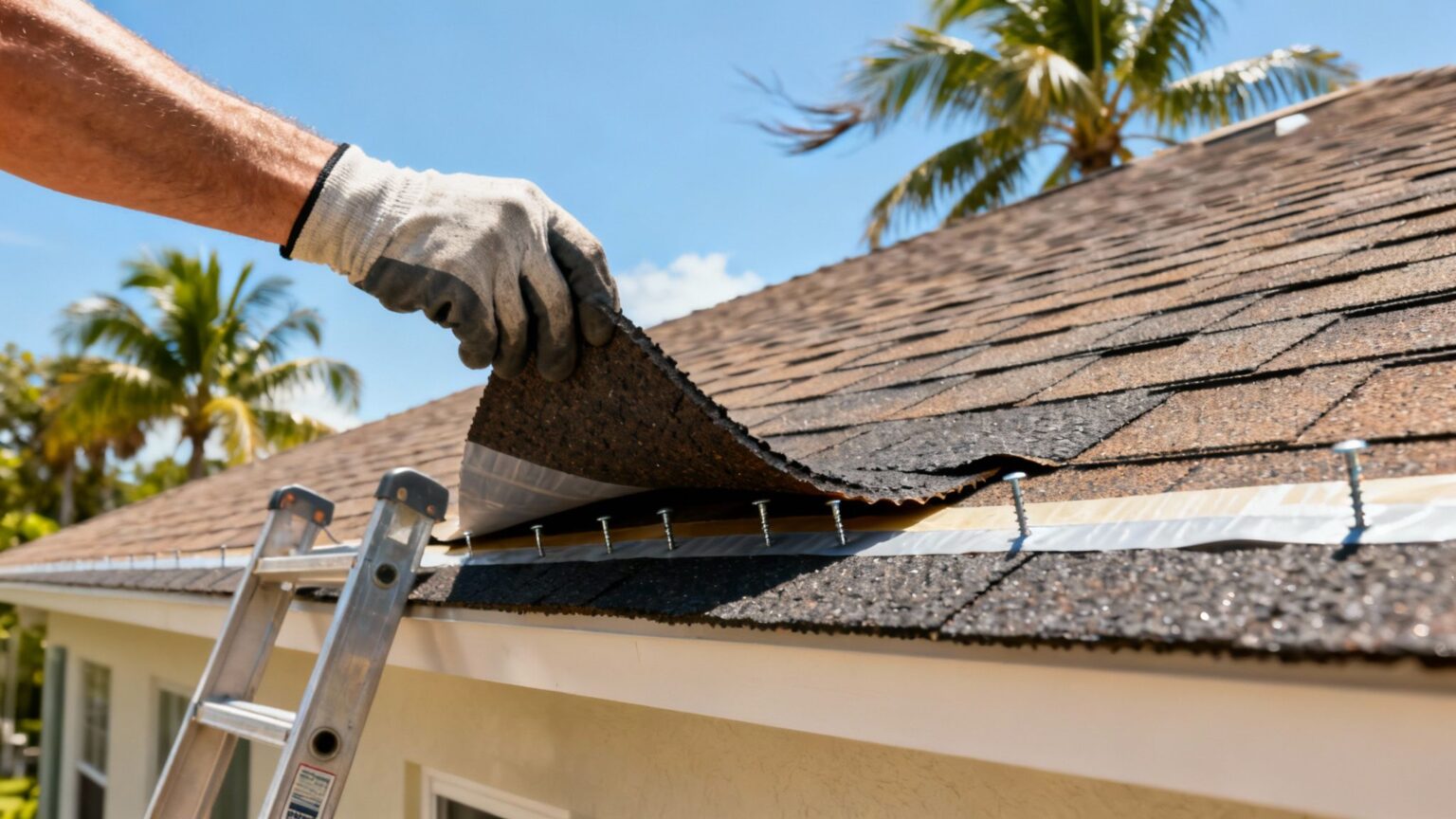
Cool Roof Shingles: If you're replacing shingles, make sure you opt for "cool roof" versions. These shingles look like normal ones but have special granules that reflect more solar radiation, even in darker colors. It’s a simple choice at replacement time that can significantly reduce the amount of heat absorbed into your attic. Such upgrades are a smart investment. For example, some homeowners find that after an initial investment in energy solutions, the monthly savings are substantial. Discover more about how your home can profit from the sun and see how these investments pay off over time.
Finding and Sealing Hidden Air Leaks
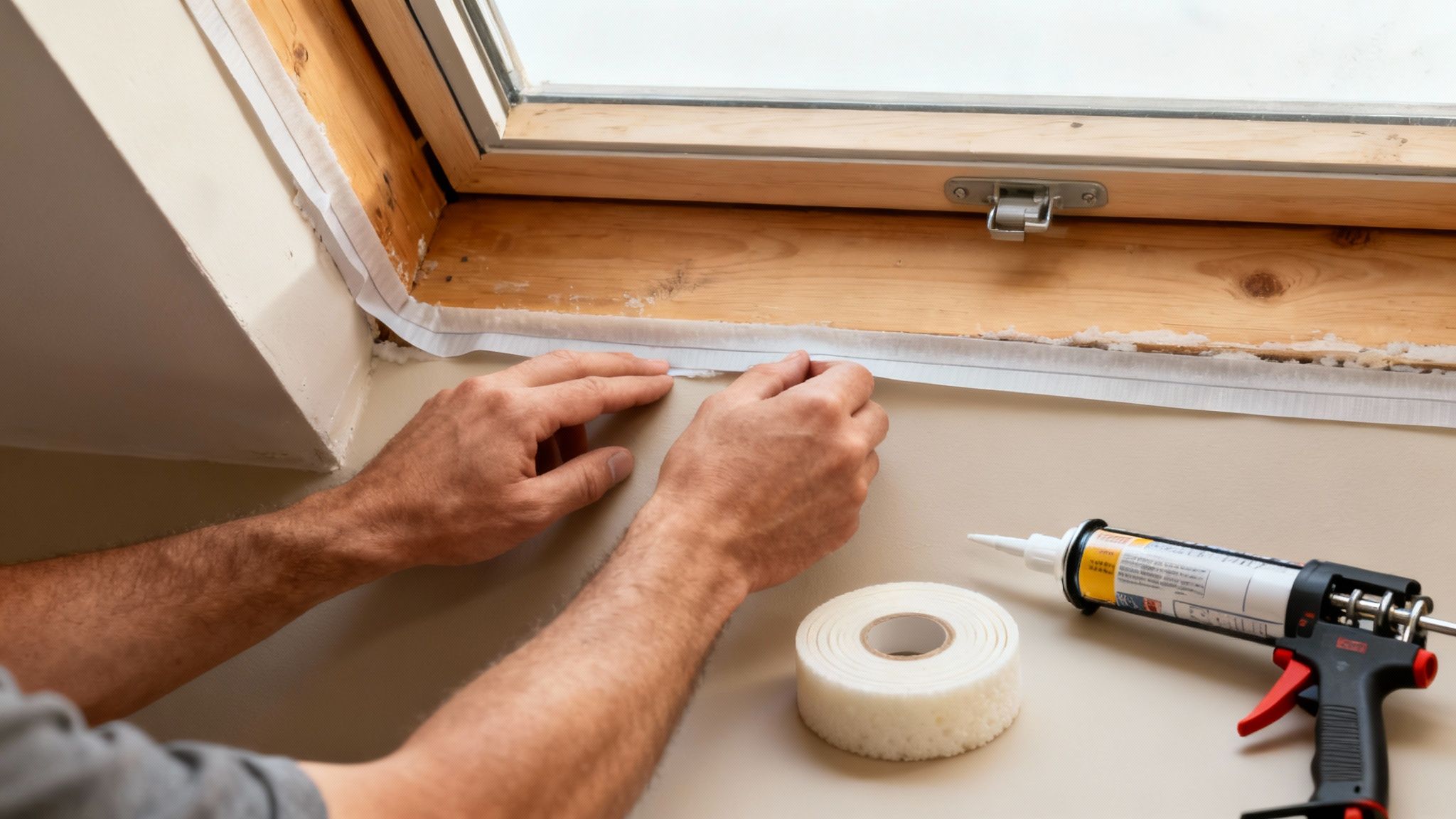
While poor insulation and ventilation are the usual suspects, one of the biggest energy vampires in your home is completely invisible: escaping air. You might not think much of it, but the tiny gaps and cracks around your ceiling and attic floor add up, creating a massive pathway for energy loss.
Think of that subtle draft you feel near the attic door. On its own, it seems like nothing. But combine it with dozens of other small leaks, and it’s like leaving a window cracked open all year long. This is an incredibly common—and often overlooked—reason for high energy bills, especially for roof Plantation homeowners.
What’s happening is that your expensive, cool air gets sucked up into the sweltering attic, while hot, humid attic air gets pulled down into your living space. This air exchange, known as the "stack effect," forces your HVAC system to work overtime just to keep your home comfortable.
Pinpointing the Common Culprits
Most of these energy-wasting gaps are found where something punches through your ceiling's drywall. A quick trip up to the attic is all you need to start your investigation.
You don't need any fancy equipment to find them, either. On a cooler day, you can often feel the drafts with your bare hand. On a hot day, you'll feel the warmth seeping in from the attic.
Here are the primary spots to check:
- Around Plumbing Vents: Look where PVC pipes from your bathrooms and kitchen pass through the attic floor.
- Recessed Lighting Fixtures: Older "can" lights are notoriously leaky, creating a direct channel between your living room and the attic.
- The Attic Access Hatch: This is one of the biggest offenders. Without a proper seal, it’s a huge source of air transfer.
- Wiring Holes: Check for gaps where electrical wires for ceiling fans and light fixtures poke through the drywall.
A typical American home has enough air leakage to be equivalent to leaving a medium-sized window open 24/7. Sealing these leaks is one of the most cost-effective energy-saving measures you can take.
Simple Sealing for Immediate Savings
The good news is that plugging these leaks is a low-cost, high-impact DIY project you can easily tackle in a weekend. For a more detailed look at this, you might want to explore additional strategies for finding and sealing household air leaks.
For most attic leaks, you'll only need a few basic materials from the hardware store:
- Caulk: Grab a tube of high-quality, long-lasting caulk. It's perfect for small gaps (less than 1/4 inch) around wiring and plumbing penetrations.
- Weatherstripping: Apply adhesive-backed foam weatherstripping around the perimeter of your attic hatch or pull-down stairs. This creates an airtight seal when it's closed.
- Spray Foam: For the larger gaps around plumbing stacks or vents, a can of spray foam sealant is your best friend. It expands to create a durable, airtight plug.
By dedicating just a few hours to finding and sealing these hidden leaks, you can significantly reduce heat gain in the summer, make your home feel much more comfortable, and see a real drop in your monthly energy bills.
Knowing When to Call a Roofing Professional
Let’s be honest, many energy-saving fixes are perfect weekend warrior projects. But some roofing problems demand a professional eye. Knowing the difference between a DIY task and a job for the pros is crucial for your safety and your wallet. A botched repair can easily turn a small issue into widespread, expensive damage.
The most obvious red flag is any sign of water. If you see those dreaded yellowish-brown stains on your ceilings or walls, it means water has already breached your roof and soaked the drywall. This isn't just a cosmetic problem—it's a clear sign of a persistent leak that could be causing rot and mold growth in your attic right now.
Signs That Demand an Expert Opinion
Beyond active leaks, there are other critical indicators that your roof system is compromised. These aren't issues you can fix with a tube of caulk from the hardware store. Trying to tackle them yourself is risky and often ineffective, especially when you're already dealing with the high energy bills from roof Plantation residents know all too well.
Here’s what to look for, even from the safety of the ground:
- A Sagging Roof Deck: If you notice any part of your roofline looking bowed, wavy, or dipped, it could signal a serious structural problem with the sheathing underneath, most likely from long-term moisture damage.
- Widespread Shingle Damage: I’m not talking about one or two cracked shingles. If you see large patches where shingles are curled up, buckled, or have lost most of their protective granules, your roof's primary defense is failing.
- Debris in Gutters: Finding a lot of gritty, sand-like granules in your gutters is a bad sign. It means your shingles are deteriorating and can no longer effectively reflect solar heat.
A professional inspection will uncover hidden issues your untrained eye is almost certain to miss. An experienced roofer knows exactly how to spot the subtle signs of hail damage, improper flashing around a chimney, or blocked soffit vents that are crippling your attic's airflow.
Choosing the Right Contractor in Plantation
Once you decide it's time to call for backup, finding a reputable contractor is everything. You need to ask direct questions about their experience with energy-efficient roofing solutions. A good roofer should be able to discuss not just the repairs, but also how ventilation, insulation, and even the roofing materials themselves impact your energy use. After all, the Earth gets hit with an incredible amount of solar radiation every day, and a well-designed roof system is your home's main shield. For a sense of scale, check out these solar energy statistics that really highlight the power we're dealing with.
When you're vetting a company, always confirm they are licensed and insured in Florida—no exceptions. A quality contractor will provide a thorough assessment, like the one detailed in our guide on the essentials of a professional roof inspection, not just a quick quote scribbled on a business card. Making an informed choice is the only way to protect your home and finally get those energy bills under control.

Have Questions About Your Roof and High Energy Bills? You're Not Alone.
Even when you have a good idea of what's wrong, it’s completely normal to have more questions. When Plantation homeowners see their cooling bills creeping up, they often ask us the same things. Let’s clear up some of the most common concerns we hear every day.
These are the real-world answers you need to feel confident about what to do next.
How Much Can I Really Save by Upgrading My Attic Insulation?
Honestly, the savings are significant. Most homeowners see a 10% to 20% drop in their total cooling costs. For a typical home here in Plantation, bumping up your insulation from the bare minimum to the recommended R-38 or higher can put hundreds of dollars back in your pocket every single year.
It’s one of the fastest paybacks you can get for any home energy upgrade. Think of it like putting a proper sun hat on your house—without one, the sun just bakes everything. With one, you create a simple barrier that keeps the worst of the heat out.
Does My Roof Color Actually Impact My Florida Energy Bill?
Absolutely. It’s one of the biggest factors we see. A dark roof acts like a giant sponge for solar heat, soaking it up and transferring it straight into your attic. This forces your air conditioner to run constantly just to keep the house comfortable.
This is a huge reason behind the high energy bills from roof Plantation homeowners call us about.
Switching to a lighter color shingle or a specialized "cool roof" system can drop your attic's temperature by as much as 30 degrees. That's not just a number—it translates directly into real, noticeable savings on your monthly FPL bill.
My Roof Is Fairly New, but My Bills Are Still High. Why?
This is a frustrating one, and we see it all the time. A new roof doesn’t automatically mean it's energy efficient, and that’s a common misconception. More often than not, the real culprit is poor or completely nonexistent attic ventilation.
Many roofers are great at putting on new shingles, but they don't always address the airflow system. They might not ensure the soffit vents (for intake) and the ridge vents (for exhaust) are working together correctly.
Without that steady airflow, hot air gets trapped and just sits up there, baking your home from the top down. A brand-new shield is useless if the heat it absorbs has nowhere to escape. This one oversight can completely cancel out the benefits of a new roof, leaving you with the same high bills you had before.
If you think your roof is making your AC work overtime, don’t wait for the problem to get worse. The team at Paletz Roofing and Inspections has over 30 years of experience helping South Florida homeowners create more comfortable, energy-efficient homes. Contact us today for a free, no-obligation inspection and get expert answers for your home.