
That damp, earthy smell wafting down from your attic isn't just a minor nuisance—it’s your home sending up a flare. It’s a direct signal of excess moisture, and for homeowners dealing with a musty odor in their attic in Sunrise, our humid climate creates the perfect storm for mold and mildew, the true culprits behind that distinct smell.
Pinpointing The Source Of Attic Odors In Sunrise
The moment you catch a whiff of that unmistakable musty odor, it's easy to jump to conclusions. Is this a small, fixable issue or the beginning of a major headache? The good news is that the smell itself is a powerful clue. It almost always points to one of a few common problems, each with its own set of telltale signs you can learn to spot.
For those of us in Sunrise, this is a particularly familiar problem. The relentless combination of intense sun, heavy rainfall, and high humidity puts constant stress on our roofing and ventilation systems. This means even a tiny, unnoticed roof leak can quickly become a serious issue, allowing moisture to saturate insulation and wood, paving the way for mold.
Common Causes Behind The Smell
That musty odor is the byproduct of microbial growth. As these microbes thrive, they release microbial volatile organic compounds (MVOCs), which is what your nose is actually detecting. It's not just a theory; a fascinating case study found a strong scientific link—with an r-value of 0.89—between rising indoor humidity and the intensity of mold-related odors. In simple terms, more moisture directly equals a stronger, more noticeable smell.
Think of a musty attic odor as your home's early warning system. Ignoring it allows the underlying issue—whether it's a leak, condensation, or poor airflow—to cause much bigger problems over time, including wood rot and seriously compromised indoor air quality.
This diagnostic flowchart can help you visualize the process. You start with the smell, then look for visible clues like water stains or pests to narrow down the source of the problem.
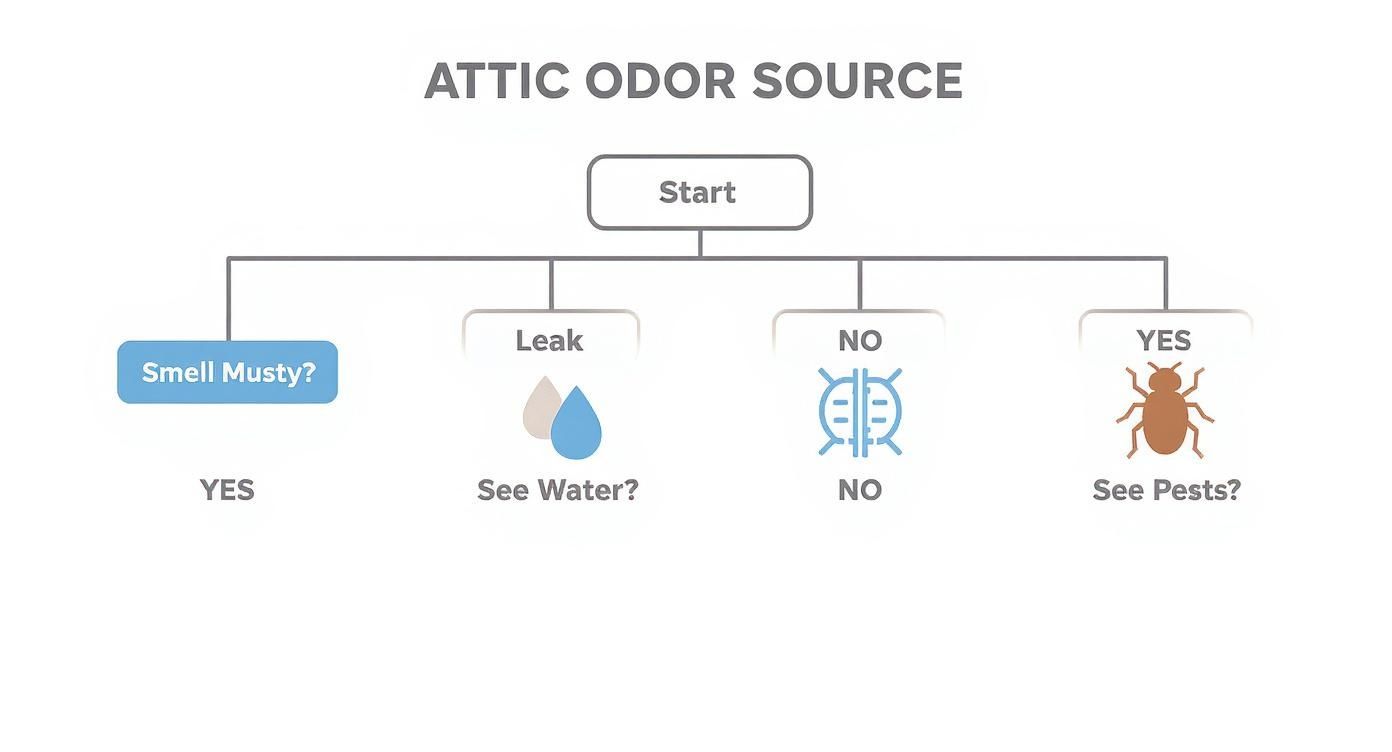
The flowchart simplifies your investigation, guiding you toward potential leaks if you see water damage or suggesting poor ventilation if the space feels damp but looks dry.
To help you connect the dots, here's a quick guide to what you might be seeing (or smelling).
Common Attic Odor Sources and Their Telltale Signs
| Potential Cause | Key Signs to Look For | Common Location in Attic |
|---|---|---|
| Roof Leak | Water stains on insulation, dark spots on wood, drips during rain | Directly below roof penetrations (vents, chimneys), valleys, or damaged shingles |
| Poor Ventilation | Condensation on rafters or sheathing, damp feeling in the air | Widespread throughout the attic, especially on north-facing roof slopes |
| Pest Infestation | Droppings, nests, chewed wires or wood, ammonia-like smell | In corners, along eaves, or burrowed into insulation |
| Leaky Ductwork | High humidity concentrated in one area, condensation on ducts | Around HVAC air handlers or where ducts run through the attic space |
This table should give you a solid starting point for your own inspection.
Beyond Visual Inspection
Sometimes, the source of the moisture isn't immediately obvious. It could be trapped behind walls, buried deep under insulation, or hiding in a hard-to-reach corner. In these cases, your sense of smell becomes your most important tool.
If a thorough visual check doesn't turn up the culprit, it might be time to consider more advanced methods. Specialized professional mold VOC testing can detect these hidden issues by analyzing the air itself. Accurately diagnosing the problem is critical because the fix for a roof leak is completely different from the solution for an airflow issue.
Your Attic Inspection and Safety Checklist
Okay, you have a better idea of what might be causing that funky smell. Now it’s time to get your hands dirty and actually inspect the attic. But before you even think about pulling down those attic stairs, let's talk about safety first. Attics can be nasty places, full of tripping hazards, bad lighting, and air you really don't want to be breathing.
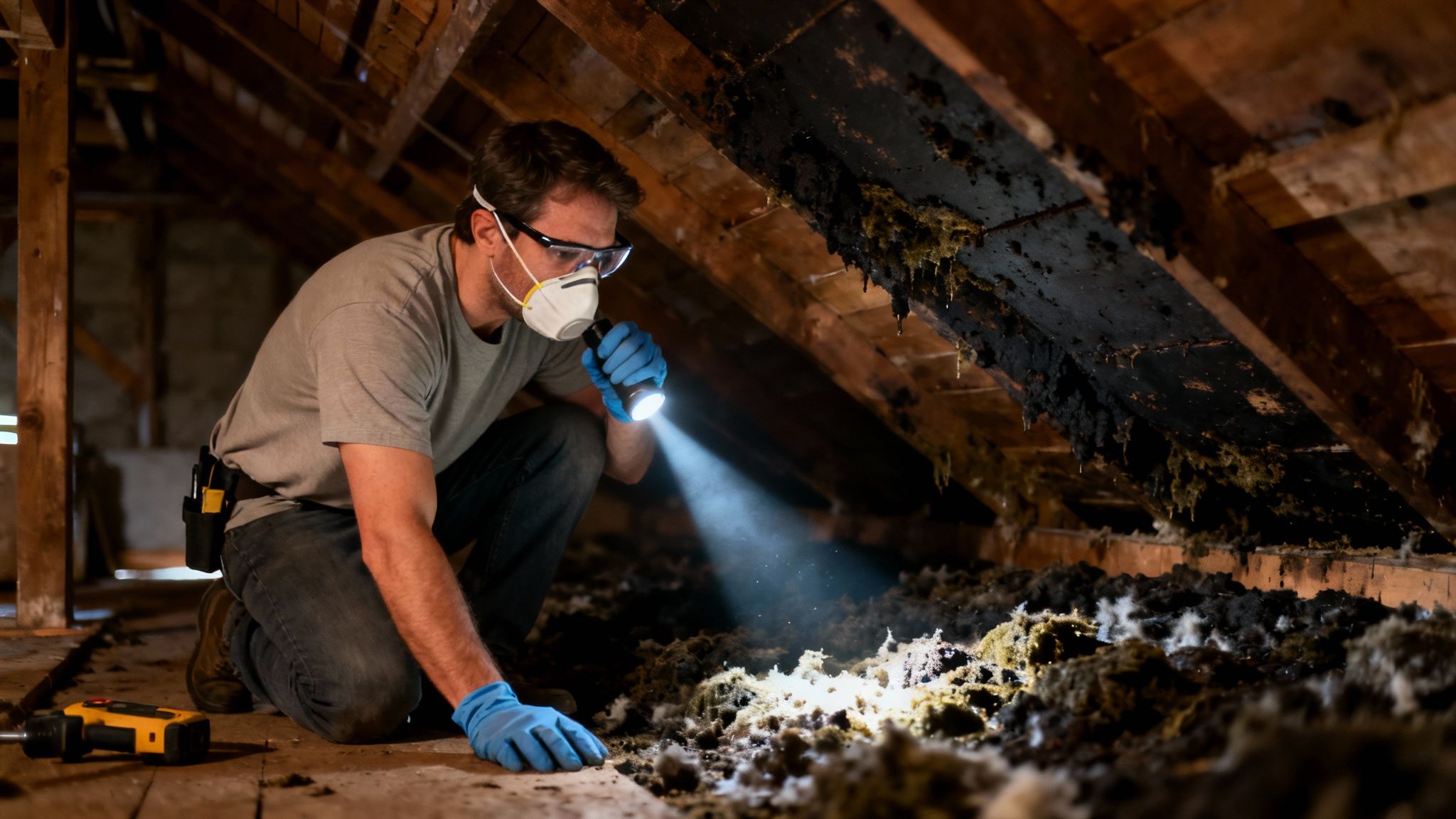
This isn’t just a quick peek; it’s a methodical search for clues. Gearing up properly will not only keep you safe but will also help you do a much better job of figuring out what’s going on up there.
Preparing for a Safe Inspection
Before you head up, take a few minutes to grab the right protective gear. This little bit of prep makes a world of difference in your safety and comfort.
- A Quality Mask: An N95-rated mask is non-negotiable. You don't want to be inhaling mold spores, dust, or tiny insulation fibers.
- Safety Glasses: A must-have to keep falling debris and dust out of your eyes.
- Gloves: A pair of heavy-duty work gloves will save your hands from splinters, rusty nails, and other irritants.
- Bright Flashlight: Don’t count on that single, dusty attic bulb. A powerful, reliable flashlight is your single most important tool for this job.
- Sturdy Footing: This is a big one. Only walk on the joists or any plywood platforms. That ceiling drywall will not hold your weight.
Once you're geared up, you can start your visual sweep. The goal here is to systematically scan every inch of the attic, hunting for anything out of the ordinary that points to moisture.
Expert Tip: Use your phone to take pictures as you go. Documenting any stains, damp spots, or blocked vents will be incredibly helpful later, whether you're tackling a DIY fix or showing the problem to a professional.
A good first step is to turn off any attic fans. This keeps dust and other particles from getting kicked up into the air. Move slowly and deliberately—the clues are often in the small details people miss.
The Systematic Search for Clues
Your flashlight is your best friend up here. You're going to use it to methodically scan every surface, starting from the very top—the underside of the roof deck—and working your way down.
Keep an eye out for dark stains on the wood rafters and roof sheathing. These are the tell-tale signs of a water leak. Pay extra close attention to the areas around anything that pokes through your roof, like plumbing vents, chimneys, or skylights. These spots are notorious for leaks.
Next, get a good look at the insulation. Does it look compressed, discolored, or feel damp when you touch it? Saturated insulation is completely useless and, worse, it's a perfect breeding ground for mold. While you're at it, look for signs of pests, like droppings or nests burrowed into the fluffy stuff.
Here's a critical step that a lot of people miss: check your soffit vents. These are the vents along the eaves of your roof. Way too often, I see insulation that's been crammed right up against them, completely choking off the airflow your attic needs. Use a small rake or even just a stick to gently pull insulation back and make sure those vents are clear.
Finally, inspect any metal you can see. Rust on roofing nails or the metal straps holding your trusses together is a dead giveaway that condensation has been forming. This points straight to a ventilation problem, where warm, moist air from your house is hitting the cooler attic surfaces and turning to water—a common cause of a musty odor in an attic in Sunrise.
The key is to figure out if you're looking at an old, resolved problem or something that's still active. An old water stain will be dry and maybe even a little brittle to the touch. An active leak, on the other hand, will feel damp or cool.
If you're pretty sure you have a roofing issue but just can't pinpoint the source, calling in a professional is the smart move. The experts at Paletz Roofing have the tools and decades of experience to trace even the sneakiest leaks back to their source. You can find out more about their professional roofing inspection services to get a definitive answer.

Getting Rid of Attic Odors: Effective Fixes
Once you've played detective and pinpointed the source of that musty attic smell, it’s time to switch gears from investigation to action. What you do next depends entirely on what you found. A small issue caught early is often a straightforward fix, but knowing when to call for help is just as important as knowing how to do the repair yourself.
Here in Sunrise, our constant humidity means even minor moisture problems can spiral out of control fast. The real goal is to knock out the root cause for good, so you’re not dealing with the same smell a few months from now.
Tackling Small Patches of Mold
If your inspection turned up a small, isolated patch of mold—think less than 10 square feet—you can probably handle it on your own. This is pretty common when a tiny leak or a bit of condensation has just started to cause trouble.
Before you even think about starting, get your safety gear on. I'm talking about an N95 mask, safety glasses, and gloves. No exceptions. Then, you'll need a cleaning solution that actually neutralizes the mold spores.
- Your Cleaning Mix: A simple but potent mixture of one part household detergent, ten parts water, and one part borax works great. Steer clear of bleach; it can damage wood and its effects on mold are often just temporary.
- How to Apply It: Use a spray bottle to lightly mist the area. This is a pro tip—it keeps the spores from getting kicked up into the air while you work.
- Scrub It Out: Grab a stiff-bristled brush and scrub the surface mold off the wood or drywall.
- Dry, Dry, Dry: This is the make-or-break step. Get that area completely dry with fans or a dehumidifier. If you leave any moisture behind, the mold will come right back.
This method is only for minor surface mold. If you’re seeing significant growth, dark black patches, or the mold reappears after you've cleaned it, that’s your cue to stop and call in a professional remediation team.
Here's What You're Actually Smelling: That musty odor is a direct byproduct of mold doing its thing. It thrives when humidity gets high, and anything above 50-60% is basically an open invitation. In fact, studies show that around 60% of indoor mold complaints start with a musty smell that's directly tied to poor ventilation or a hidden leak. You can get more details on how humidity affects your home's air quality over at Panasonic's Healthy Living blog.
Repairing Minor Leaks and Boosting Ventilation
Did you trace the moisture back to a small roof leak? Maybe a single shingle that’s lifted up or a little crack in the flashing around a vent pipe? If you’re comfortable and safe working on a roof, a DIY fix might be on the table. A tube of roofing cement is often all it takes to seal a small crack or tack down a loose shingle, stopping the water in its tracks.
But be honest with yourself. If the leak is a mystery, involves a bunch of shingles, or is anywhere near a roof valley, it’s time to call a roofer. A botched repair can cause way more damage—and cost a lot more money—than the original leak ever did.
When poor ventilation is the problem, the fix is all about getting the air moving again. Start simple: check your soffit vents and make sure they aren’t clogged with insulation or debris. If the attic still feels stuffy and damp, installing a powered attic fan can be a total game-changer, especially in our Florida climate. These fans actively pull all that hot, humid air out of the attic, stopping condensation before it can even start. Taking this step is one of the best ways to prevent a musty odor in your attic in Sunrise from ever showing up in the first place.
Proactive Steps to Keep Your Attic Fresh and Dry
Once you’ve tackled the immediate cause of that musty attic smell, the real work begins: long-term prevention. A proactive approach is the only way to guarantee the problem doesn’t come creeping back, especially with the humidity we get here in Sunrise. This is about moving past quick fixes and embracing a simple, consistent maintenance routine.
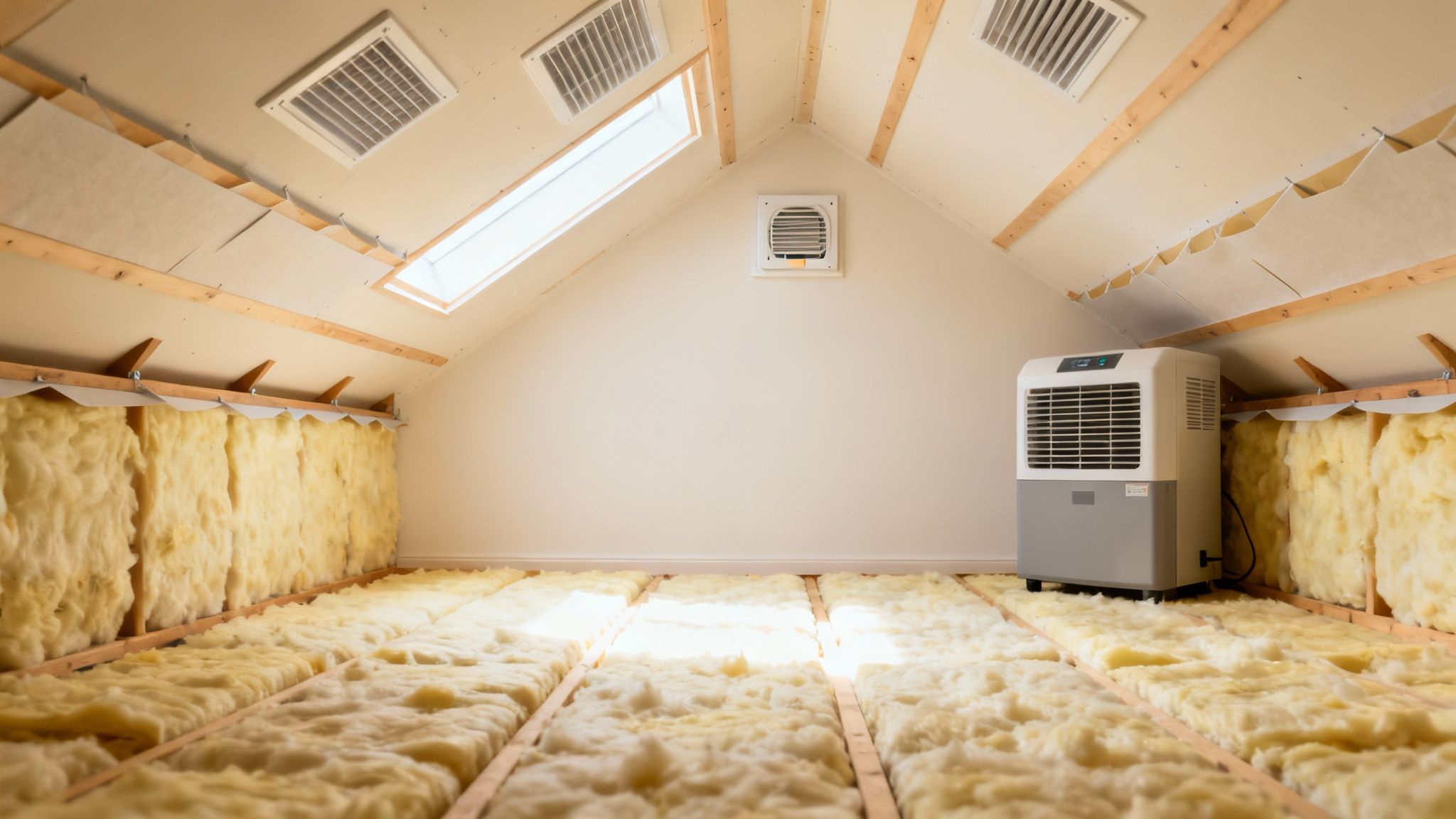
This strategy doesn’t just keep your attic smelling clean. It also protects your home’s structural integrity and even improves its energy efficiency. By getting ahead of potential issues, you can save yourself from some seriously expensive repairs down the line.
Establish a Biannual Inspection Routine
The best way to stop major problems is to catch them when they’re small. A quick attic check twice a year can honestly make all the difference. I recommend scheduling these for spring and fall, right before and after our most extreme weather seasons kick in.
This routine doesn't need to be some huge ordeal. Just grab a good flashlight and look for the same red flags you did during your initial hunt.
- Look for new stains: Give the underside of the roof deck and the rafters a good scan. Are there any new spots of discoloration?
- Check the insulation: Make sure it’s still dry and fluffy. Pests can disturb it, or it can shift and block crucial airflow from your vents.
- Confirm vents are clear: Take a peek at your soffit and ridge vents. They should be completely free of leaves, debris, or stray insulation.
This simple 15-minute walkthrough is your best defense against a returning musty odor in your attic in Sunrise.
Mastering Humidity and Insulation
In our part of the country, constant high humidity is the main culprit behind most attic problems. Good ventilation is your number one weapon, but sometimes, you need a little more backup to keep moisture levels down.
An attic dehumidifier can be a game-changer, especially for attics that just always feel damp even with decent airflow. If you go this route, find a model with an automatic drain hose—trust me, you don’t want to be emptying a bucket up there every day. Your goal is to keep the relative humidity below 50%, which is the magic number where mold has a tough time growing.
Keep in mind, a dehumidifier is a maintenance tool, not a repair. It’s fantastic for managing ambient moisture, but it won’t do a thing to stop an active leak. You always have to fix the source of the water first.
Proper insulation is just as critical. It’s the barrier that stops warm, humid air from inside your house from condensing when it hits the cooler roof sheathing. Make sure your insulation is spread evenly and meets the recommended R-values for Florida. Most importantly, it needs to be installed correctly, leaving clear channels for air to move from the soffit vents up to the ridge. I’ve seen countless cases where poorly placed insulation was the direct, and easily fixable, cause of major attic moisture buildup.
Knowing When to Call a Professional in Sunrise
There's a special kind of satisfaction that comes from tackling a home maintenance issue yourself. But let's be honest—some attic problems are way beyond a weekend DIY project. Knowing your limits isn't just smart; it's critical. A well-intentioned but misguided repair can quickly spiral into a much bigger, more expensive disaster.
When that musty smell in your Sunrise attic just won't quit, recognizing the red flags that scream "call an expert" is the key to protecting both your home's value and your family's health.
Red Flags That Demand an Expert
Certain discoveries during your attic inspection should be an immediate, full stop on any DIY plans. These are the non-negotiable moments when you need to put down the flashlight, pick up the phone, and bring in a certified professional.
If you find widespread mold—we're talking patches larger than 10 square feet or anything that looks dark and fuzzy—it's time to call in a certified mold remediation specialist. Trying to clean that yourself without proper containment gear is a huge mistake. You could end up releasing millions of spores into your home's air, creating a serious health hazard for everyone inside.
Another major warning sign is any hint of structural damage. Be on the lookout for a sagging roofline, rafters that are cracked or feel soft and spongy, or any wood that seems to be decaying. These are all signs that moisture has been around long enough to compromise the actual frame of your house. This isn't a handyman job; you need a structural engineer or a highly experienced roofer to assess the damage right away.
A professional assessment isn't just about fixing the problem you can see; it’s about finding the one you can’t. Experts come equipped with specialized tools, like infrared cameras and moisture meters, that can trace water intrusion back to its hidden source without having to tear your attic apart.
Complex roof leaks also fall squarely into the "call a pro" category. If you can't easily pinpoint where the water is getting in, or if the leak is in a notoriously tricky spot like a roof valley or around flashing, a professional roofer is your best bet. Their experience ensures the repair is done right the first time, preventing a frustrating and costly sequel down the road.
Choosing the Right Pro in the Sunrise Area
Once you’ve made the smart call to hire help, your next move is to find the right company. Don't just pick the first name that pops up in a search.
- Verify Credentials: Always, always ask for proof of licensing and insurance. For mold issues, look for certifications from respected organizations like the IICRC (Institute of Inspection, Cleaning and Restoration Certification). It shows they've been properly trained.
- Ask Pointed Questions: Dig a little deeper. Ask about their experience with attic moisture issues in South Florida specifically. Find out about their process, the materials they plan to use, and what kind of warranty they offer on their work.
- Get Multiple Estimates: This is non-negotiable. Get at least three written estimates before making a decision. This helps you compare more than just the price tag; you can see the proposed scope of work and ensure you're getting a fair, thorough solution.
Taking the time to choose the right professional safeguards your investment and, more importantly, brings back your peace of mind.
Common Questions About Attic Odors
Even after you’ve done a thorough inspection, it's completely normal to still have some questions about that musty smell. I get it—dealing with potential mold and moisture issues can be stressful. Getting clear, straightforward answers is the best way to feel confident about your next steps. Here are a few of the most common questions we hear from homeowners in Sunrise facing this exact problem.
Is a Musty Attic Smell Actually Harmful?
Yes, it absolutely can be. That earthy, musty odor isn't just an unpleasant smell; it's a direct sign of active mold or mildew growth. As part of their life cycle, these fungi release microscopic spores into the air.
When inhaled, these spores can kick off a whole range of health issues. For many people, it starts with allergy-like reactions—sneezing, coughing, itchy eyes. But for anyone with asthma or other respiratory conditions, that exposure can make their symptoms much worse. Long-term exposure is a risk for everyone in the house, so addressing the source of the musty odor in your attic in Sunrise is critical for healthy indoor air quality.
Think of that smell as a warning sign from your home. It’s an alarm bell telling you that conditions are perfect for microbial growth, which can impact both your family’s health and your home's structural integrity if you let it go.
How Do I Know if My Attic Ventilation Is Good Enough?
Proper ventilation is your attic's number one defense against moisture buildup, especially here in our humid climate. On a hot day, a well-ventilated attic should feel warm, but it shouldn't feel stifling, thick, or damp.
Here are a few tell-tale signs that your ventilation just isn't cutting it:
- Condensation: You can actually see water droplets or feel dampness on the underside of your roof sheathing or on metal fixtures, like your roofing nails.
- Frost in Winter: On a rare cold morning, you might spot a thin layer of frost on the roof deck from inside the attic—a crystal-clear sign of trapped moisture.
- Stagnant Air: The air feels heavy and still. There's just no noticeable flow.
A healthy attic has a balanced system. Intake vents, usually under the eaves or in the soffits, pull in fresh air, while exhaust vents at the peak or ridge push hot, moist air out. If that airflow is blocked or just isn't enough, you’re going to run into problems.
Can I Just Use a Dehumidifier to Solve the Problem?
A dehumidifier is a great tool, but it only treats a symptom—the excess humidity—not the root cause of the problem. Running a dehumidifier will certainly lower the moisture level in your attic and make it a less friendly place for mold, but it won’t fix a leaky roof or get rid of existing mold colonies.
It's like this: if you have a hole in your roof, using a dehumidifier is like putting a bucket under the drip. Sure, it manages the immediate mess, but it does nothing to stop more water from coming in. You have to repair the source of the moisture first and then properly clean up any contamination. After that’s done, a dehumidifier becomes an excellent proactive tool for keeping humidity in check.
If you've traced your attic's moisture problem back to a roofing issue, don't wait for it to get worse. The expert team at Paletz Roofing and Inspections has over 30 years of experience diagnosing and repairing leaks in Sunrise homes. Visit https://paletzroofing.com to schedule a professional inspection and get your peace of mind back.