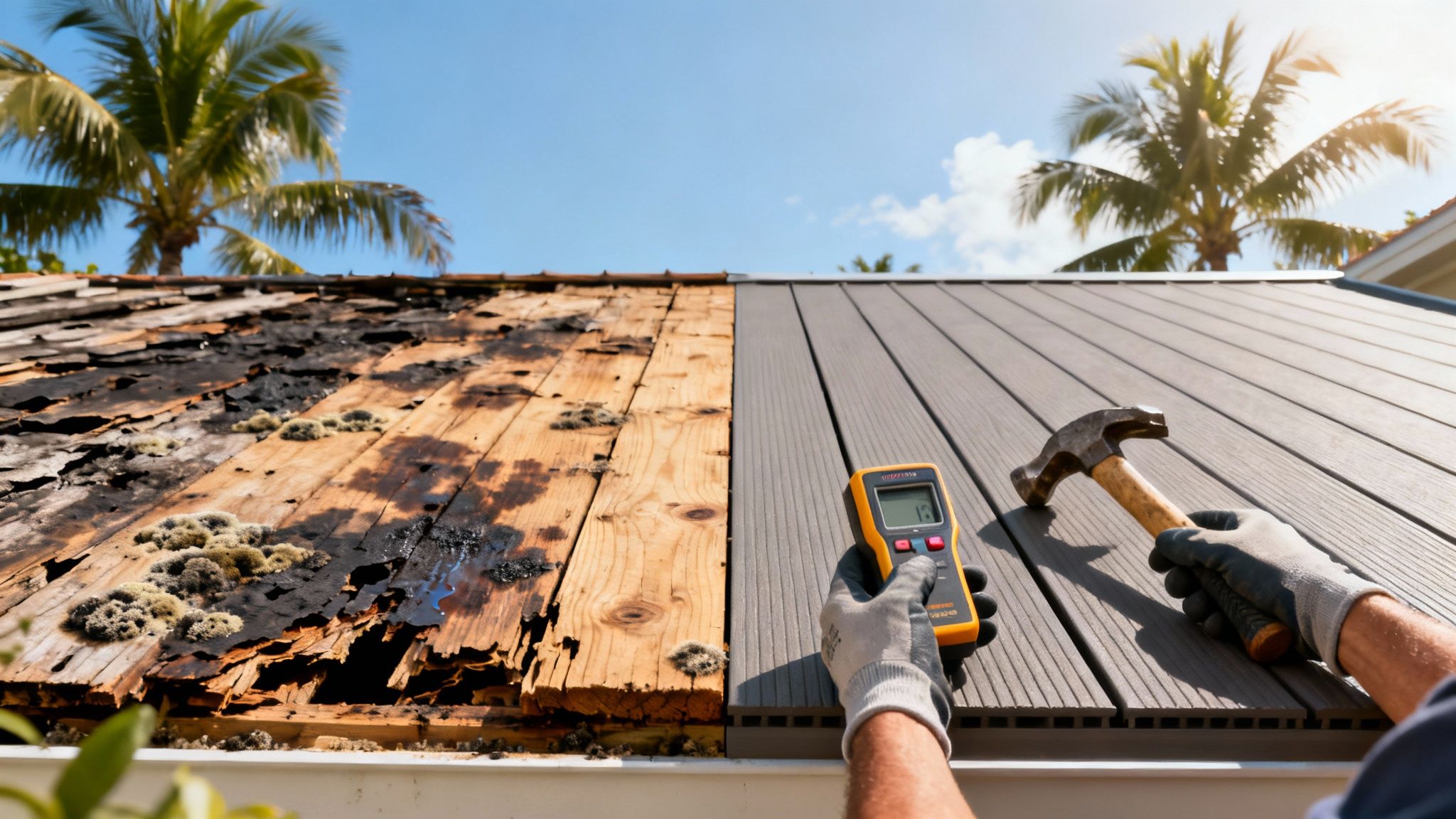
Dealing with rot in a roof deck in Deerfield Beach homes isn't just another item on the maintenance list—it's a serious structural threat. Our humid, storm-prone climate creates the perfect breeding ground for wood decay. This isn't a minor problem that can wait; it's an issue that can escalate quickly, compromising your home's safety and value if you don't get ahead of it.
Why Roof Deck Rot Is a Major Threat in Deerfield Beach
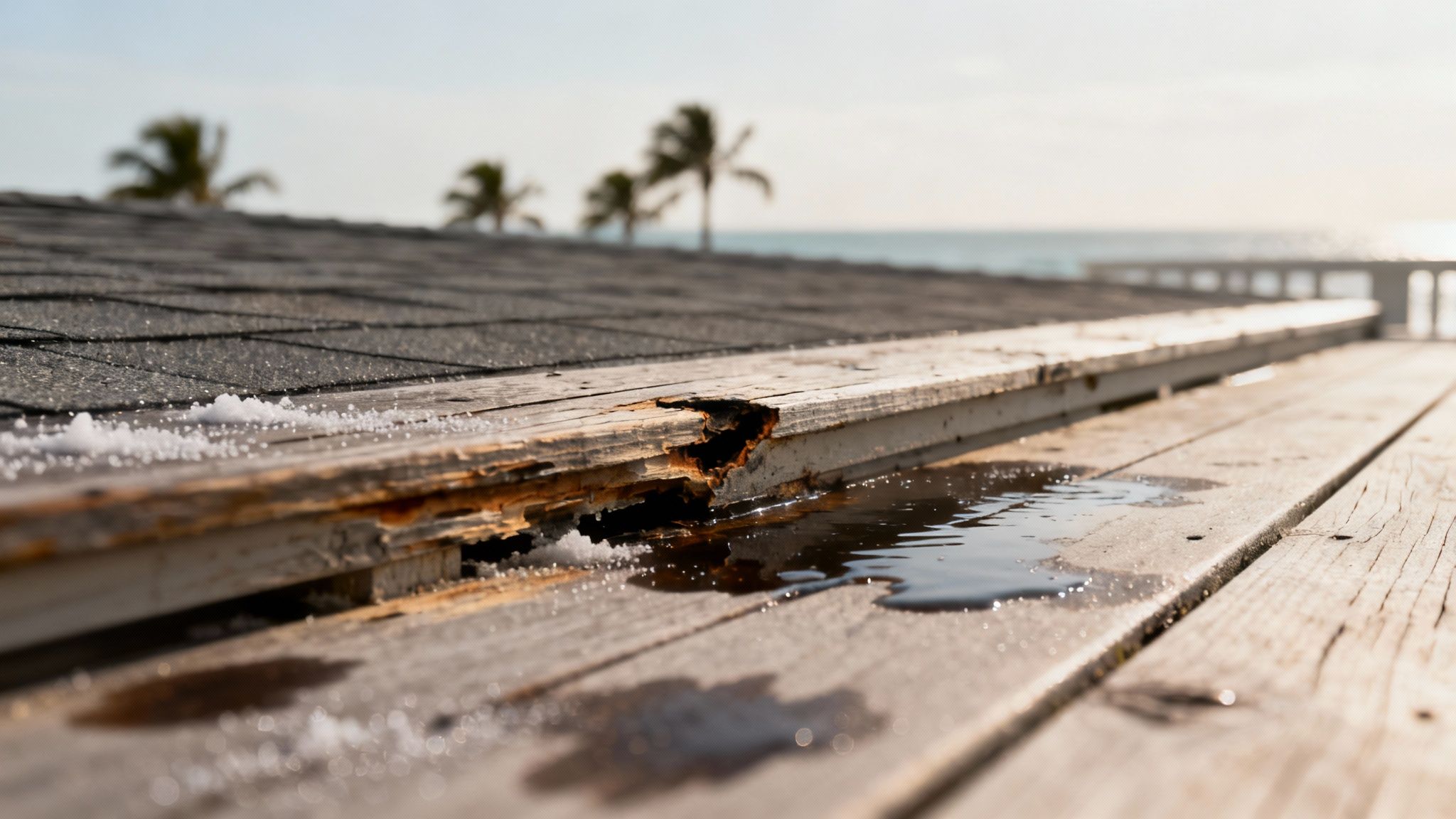
The unique environment right here in Deerfield Beach makes our homes particularly vulnerable. In drier climates, a small leak might just leave a stain for a while. Here, it can trigger rapid, catastrophic deterioration. The combination of intense sun, heavy rainfall, and constant high humidity means any trapped moisture quickly becomes a catalyst for fungal growth and wood decay.
This process turns what seem like minor, often unnoticed, issues into significant structural problems faster than most homeowners realize. It all starts with something small—a single loose shingle or a tiny crack in the flashing. That’s all it takes for water to seep into the roof deck, which is the foundational plywood or OSB layer that supports your entire roofing system.
The Role of South Florida Climate
Let's be blunt: Deerfield Beach's subtropical climate is the primary antagonist in this story. The consistent moisture in the air means wooden structures almost never fully dry out, creating an ideal environment for the very fungi that cause rot. This is especially true in poorly ventilated attics, where heat and humidity get trapped, essentially cooking the roof's sheathing from the inside out and accelerating the decay.
On top of that, our intense rainy season and the constant threat of tropical storms and hurricanes place immense stress on our roofs. Wind-driven rain is notorious for forcing water into the smallest crevices, bypassing protective barriers and saturating the underlying wood deck.
A proactive approach is always less expensive and far less stressful than dealing with emergency repairs. Catching the problem early is the key to protecting your investment and ensuring the structural integrity of your home.
Why Age Matters in Deerfield Beach
If you live in an older home, you're particularly at risk. Building codes and materials have evolved significantly over the years. Homes constructed decades ago often lack the advanced moisture barriers and ventilation systems that are standard today.
This vulnerability is something we see reflected in local building assessments.
For instance, a 2022 review of Broward County building inspections revealed that 14% of jurisdictions, including our own in Deerfield Beach, reported issues with buildings over 40 years old. Roof structures were a common point of failure, often stemming from the exact kinds of leaks and system deterioration that lead directly to rot. You can actually explore the full Broward County building inspection assessment for more details.
Understanding this heightened risk is the first step toward effective prevention. It’s not a matter of if moisture will test your roof, but when. We'll cover what you need to know:
- How to catch the problem early
- What your repair options really are
- Simple habits to prevent future damage
By taking a realistic look at how rot compromises your home's integrity, you can take control and protect your property from this silent but incredibly destructive threat.
How to Spot the First Signs of Roof Deck Rot
Catching roof deck rot early in Deerfield Beach means you have to become a bit of a detective for your own home. The clues are usually subtle, showing up long before a major leak turns into a catastrophe in your living room. If you know what to look for—both inside and out—you can catch the problem before it spirals into a massive structural repair.
Many people first suspect something is wrong from inside the house, usually in the attic or near the ceilings on the top floor. That faint, musty odor in your attic? Don't just write it off as an "old house smell." More often than not, that smell is the first red flag for moisture buildup and the beginning of fungal growth, which is exactly what causes wood to rot.
Clues From Inside Your Home
When you head up into the attic, grab a good flashlight and inspect the underside of the roof sheathing. That’s the plywood or OSB panels that make up the deck. You're looking for more than just active drips.
Pay close attention to these signs:
- Dark Water Stains: These can look like faint shadows or discoloration on the wood. Even if they feel bone dry, they’re a historical record of a past water leak that has almost certainly weakened the wood.
- Sagging or Spongy Areas: Gently press on the sheathing in between the rafters. If the wood feels soft, spongy, or gives way at all, you’ve found active rot. Healthy wood should be completely firm.
- Mold or Mildew Growth: Look for black, white, or greenish patches on the wood or nearby insulation. While mold isn't rot itself, it's a giant warning sign that moisture levels are high enough for rot to take hold. You can see what rotting wood appears to look like in these conditions.
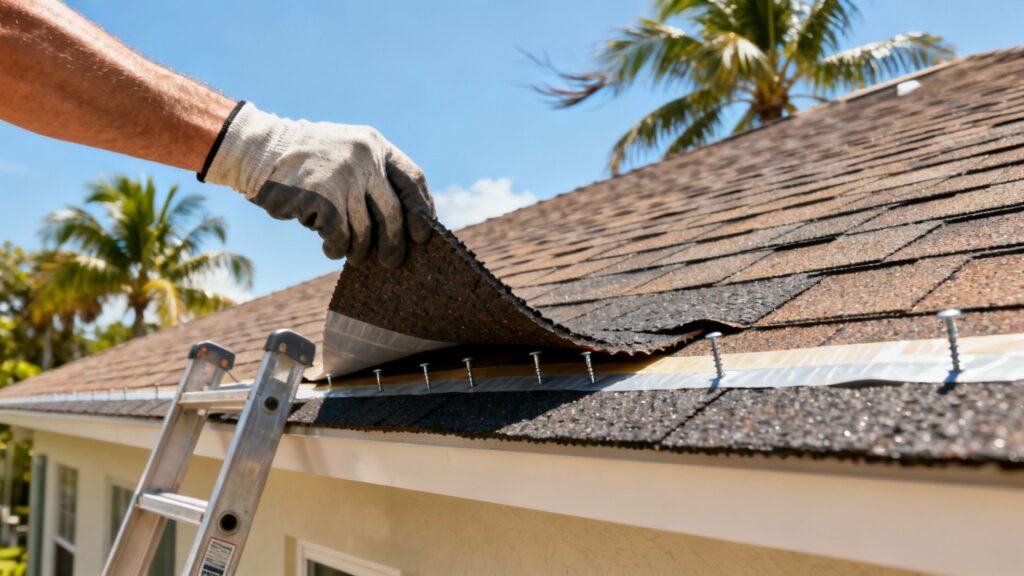
These signs from inside are your most direct warnings. Ignoring them lets the decay spread silently above your head, weakening the entire roof structure.
Telltale Signs From the Outside
You don’t always need to climb into a sweltering attic to find proof of rot. A careful walk around your property can reveal some pretty big clues about your roof deck’s health. Often, the symptoms of rot in a roof deck in Deerfield Beach start showing up on the roof's surface.
One of the most obvious signs is a sagging or uneven roofline. Take a look at your roof from the street or a neighbor’s yard. If you spot any dips, depressions, or waves where it should be flat, that’s a strong signal the underlying support—the roof deck—is failing.
This is a particularly common issue in our area. Relentless moisture from Florida's heavy rainfall and humidity is the main driver of roof damage in Deerfield Beach, and it can drastically shorten a roof deck's life if it's not managed well. Research has shown that frequent, heavy rain in coastal areas can cut the expected life of a typical asphalt shingle roof in half, leading directly to the wood rot and sagging that are all-too-common early warnings. You can find more details on identifying these roof damage signs.
Other exterior signs require a closer look, sometimes from a ladder if you feel safe doing so.
Pro Tip: Never, ever walk on a roof you suspect has rot. The decking could be severely compromised and might not hold your weight. It's a serious fall hazard. A professional inspection is always the safest bet.
Here are a few other things to look for from the ground or a ladder:
| Exterior Sign | What It Indicates |
|---|---|
| Excessive Granules | Finding a pile of shingle granules in your gutters means the shingles are breaking down, exposing the underlayment to moisture. |
| Curled Shingles | Shingles that are curling up at the edges or buckling are no longer sealed properly, creating perfect entry points for water. |
| Spongy Feel | If a roofer is on your roof and mentions a soft or bouncy feeling underfoot, that’s a direct sign of a rotted deck right below. |
By combining what you see inside and outside, you can get a pretty clear picture of your roof’s condition. Catching these signs early gives you the power to act fast and fix the rot before it becomes a full-blown structural emergency.
Understanding Roof Deck Repair And What It Costs
Catching rot in your roof deck in Deerfield Beach can shake your confidence, but with the right team, the fix is clear-cut. It’s more than slapping on a patch—it’s a careful restoration of your roof’s backbone. From pinpointing the decay to laying down fresh decking and sealing everything tight, each phase matters.
A skilled roofer starts by exposing the trouble spot—stripping back shingles and underlayment until the full extent of damage is visible. Once every weakened plank is identified, they cut away the bad wood like a surgeon, leaving only sturdy decking behind. New plywood or OSB then gets anchored to trusses, creating a reliable platform for underlayment and shingles that keep water out for years to come.
Key Factors That Influence Repair Costs
Repair bills vary widely. Knowing what drives up the price helps you compare estimates like a pro.
- Extent Of The Damage: A tiny, 2×2-foot patch is a bargain compared to swapping out several sheets of decking.
- Roofing Materials: Asphalt shingles are budget-friendly; clay tiles or metal systems demand more skill and labor.
- Roof Pitch And Accessibility: Steep slopes or cramped access push labor hours (and costs) upward.
- Structural Damage: If rot has crept into trusses or rafters, you’re looking at carpentry-level repairs—not just decking.
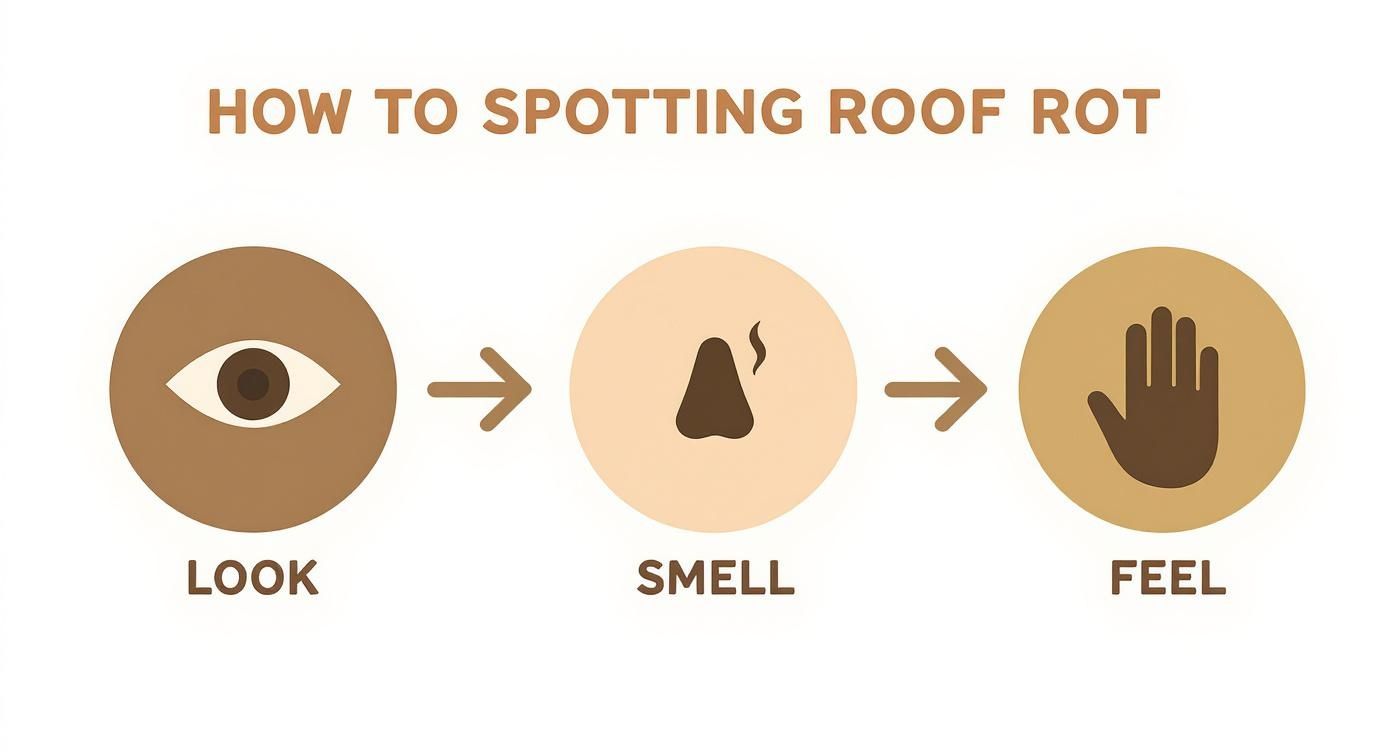
This visual guide proves a simple truth: spotting rot starts with your eyes, nose, and fingers. Early detection saves you from major structural headaches down the road.
Budgeting For Your Deerfield Beach Roof Repair
No one nails down exact figures before an inspection, but Deerfield Beach homeowners can lean on local averages to plan their budgets. Sometimes, widespread decay makes a full roof replacement the smarter choice over multiple spot fixes.
Below is a breakdown of typical repair scopes and what you might expect to pay in Deerfield Beach:
Estimated Roof Deck Repair Costs in Deerfield Beach
| Repair Scope | Description | Estimated Cost Range |
|---|---|---|
| Minor Deck Patching | Replace up to 2×2 ft of plywood | $250 – $500 |
| Moderate Section Repair | Swap out 2–4 sheets of plywood or OSB | $800 – $1,500 |
| Extensive Deck Replacement | Replace entire decking area (500–1,000 sq ft) | $6,000 – $8,000 |
| Structural Rafter Repair | Include truss or rafter replacement due to rot | $3,500 – $5,500 |
| Full Roof Replacement | Complete replacement including decking and shingles | $6,537 – $8,308 |
These figures should guide your conversations with contractors and help you set realistic expectations.
As of late 2025, a full roof replacement in our area usually lands between $6,537 and $8,308, with most projects running $6,980 to $7,865. These numbers generally factor in replacing rotted decking under new materials—learn more about the variables behind local roof replacement pricing.
When you get a quote, make sure it is itemized. It should clearly list costs for materials, labor, permits, and, crucially, debris removal. You don't want to be surprised by a dumpster fee after the work is done.
It’s also smart to rule out other sources of wood damage. If you suspect bugs, factor in potential termite treatment costs during your inspection. And for a thorough evaluation of both rot and pests, consider a trusted local roofing inspection professional.

Choosing Rot-Resistant Materials for Your Roof Deck
When you're dealing with rot in a roof deck in Deerfield Beach, picking the right replacement material is your single best defense against history repeating itself. This isn't just about patching a hole; it's a chance to upgrade to materials built to handle South Florida's oppressive humidity and moisture. Stepping up from standard plywood is a smart move for your home's long-term health.
Once a rotted section of your roof deck is torn out, you're at a critical decision point. You can either put back the same stuff that failed or choose a replacement that won’t become a buffet for fungus in a few years. It's all about balancing durability, the initial cost, and future headaches to protect both your home and your wallet.
Pressure-Treated Lumber: A Popular and Proven Choice
For coastal areas like ours, pressure-treated lumber is almost always the go-to recommendation, and for very good reason. This isn’t your average wood. It’s been put in a high-pressure tank and infused with chemical preservatives, forcing those protective agents deep into the wood fibers. This process creates a powerful shield against the two things that wreck wood down here: constant moisture and hungry insects like termites.
This treatment makes the wood incredibly resistant to the very conditions that cause rot in the first place. Yes, it costs more than standard plywood, but that extra protection is worth its weight in gold in a climate where wood almost never gets a chance to fully dry out. It’s a practical upgrade that tackles the root cause of deck failure head-on.
Quick tip from the field: Pressure-treated wood has a chemical makeup that corrodes standard fasteners. Always, and I mean always, use hot-dip galvanized or stainless steel nails and screws. If you use the wrong ones, they'll rust out and fail long before the wood ever does.
Comparing Your Material Options
Pressure-treated lumber is a great choice, but it's not the only one. Several other materials offer fantastic durability, each with its own pros and cons when it comes to cost and performance. Knowing the differences helps you make a solid decision that fits your budget and what you expect for the long haul.
Here’s a quick rundown of the top contenders for a roof deck repair in Deerfield Beach:
| Material Type | Key Advantages | Best For |
|---|---|---|
| Pressure-Treated Plywood | Top-notch resistance to rot and insects; a direct, powerful upgrade from standard sheathing. | Homeowners who want a proven, durable solution specifically for high-moisture areas. |
| Exterior-Grade Plywood | Uses waterproof glue to bond its layers, which stops it from delaminating when it gets wet. | A solid, mid-range option that gives you better moisture resistance than basic interior-grade sheathing. |
| Composite Decking | Made from a blend of wood fibers and recycled plastics; completely immune to rot and insects. | Situations where maximum durability is the absolute priority, even if it means a higher upfront cost. |
You might also hear about OSB (Oriented Strand Board). It's a common, budget-friendly choice for new construction in drier parts of the country, but it's a gamble for repairs in our humid climate. OSB acts like a sponge, swelling up and losing its structural strength much faster than plywood when it's constantly exposed to moisture.
Making a Smart Investment for the Future
Choosing the right material isn't about finding the cheapest possible fix. It's about making a strategic investment to avoid another round of repairs for rot in your roof deck in Deerfield Beach. The slightly higher upfront cost for a better material can literally save you thousands of dollars down the road.
When you're getting quotes from your roofing contractor, ask them to price out the different material types. This way, you can see the actual cost difference and weigh it against the payoff of longer life and less maintenance. For instance, on a medium-sized repair, upgrading from standard sheathing to pressure-treated plywood might only add a few hundred dollars to the final bill.
That small investment buys you invaluable peace of mind. You'll know your roof’s foundation is built to withstand the unique environmental challenges we face every single day in South Florida. By choosing materials designed for our climate, you’re not just fixing damage—you're reinforcing your home's most important line of defense.
Proactive Maintenance Your Roof Needs to Prevent Rot
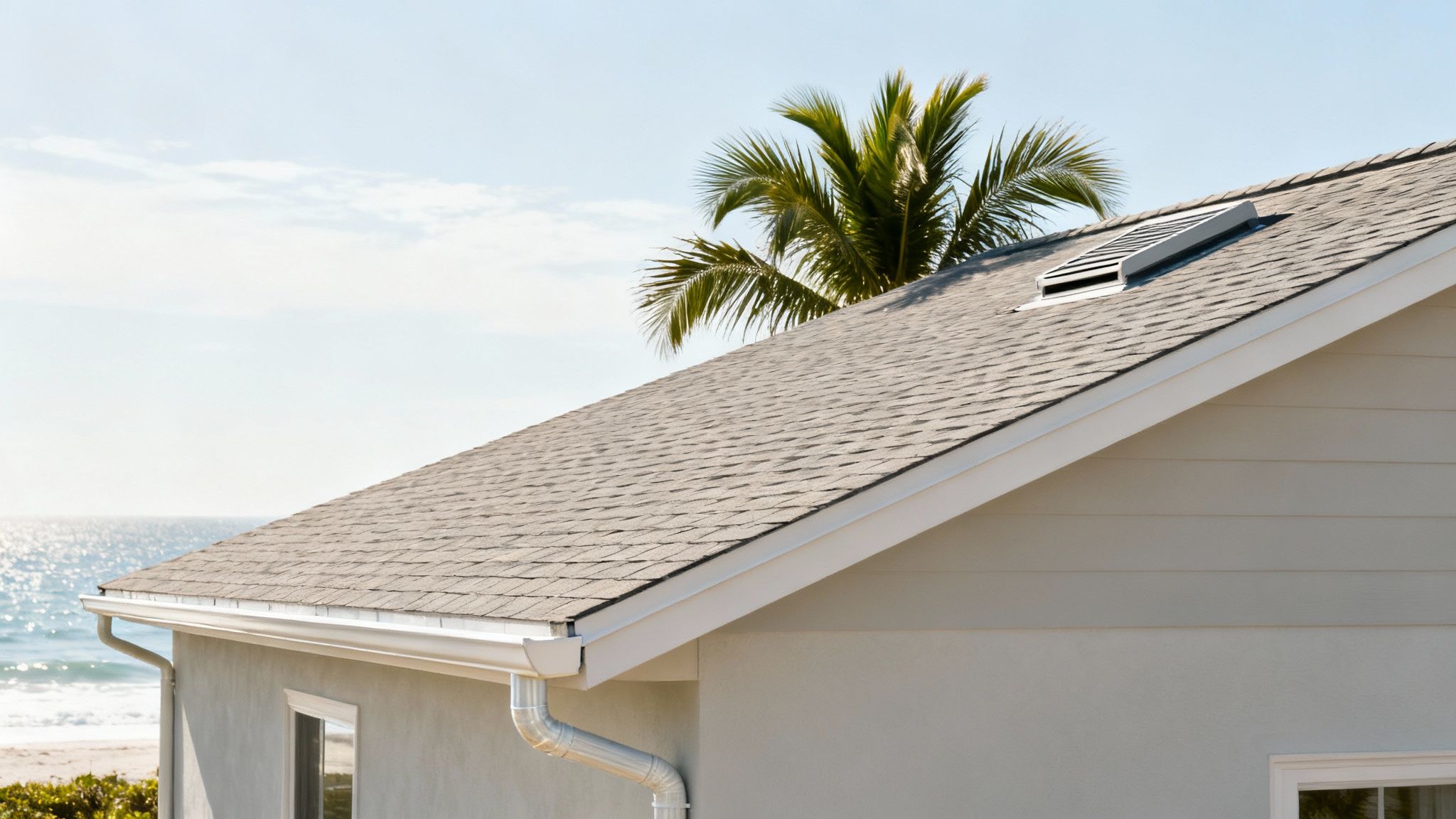
Dealing with rot in a roof deck in Deerfield Beach is a reactive, expensive mess. The smarter play is to prevent it from ever getting a foothold. A consistent maintenance plan is your best defense against the relentless moisture and humidity we live with in South Florida.
This isn't about some complicated weekend chore list. It’s about building a few simple habits that directly counter the causes of wood decay. These tasks protect your roof's integrity, stretch its lifespan, and save you from the headache of major repairs down the road.
Schedule Annual Professional Inspections
The single best thing you can do is have a professional roofer inspect your entire system at least once a year. Think of it as an annual check-up for your home's most important shield. A trained eye can spot subtle problems that are incredibly easy for a homeowner to overlook.
A pro knows exactly what to look for:
- Cracked or missing shingles that create a welcome mat for water.
- Worn-out flashing around chimneys, vents, and skylights.
- The first signs of granule loss on asphalt shingles.
- Hidden damage on the underside of the deck, visible only from the attic.
This inspection is absolutely critical after a major storm. High winds and driving rain can cause unseen damage that quietly sets the stage for future rot. What looks like a few ruffled shingles from the ground could be a much bigger issue a professional can properly diagnose.
Keep Gutters and Roof Surfaces Clear
It’s a simple job, but it's one of the most important. When gutters get clogged with leaves and debris, they essentially create dams. That backed-up water has nowhere to go but under your shingles, where it soaks the edges of your roof deck—the perfect recipe for rot.
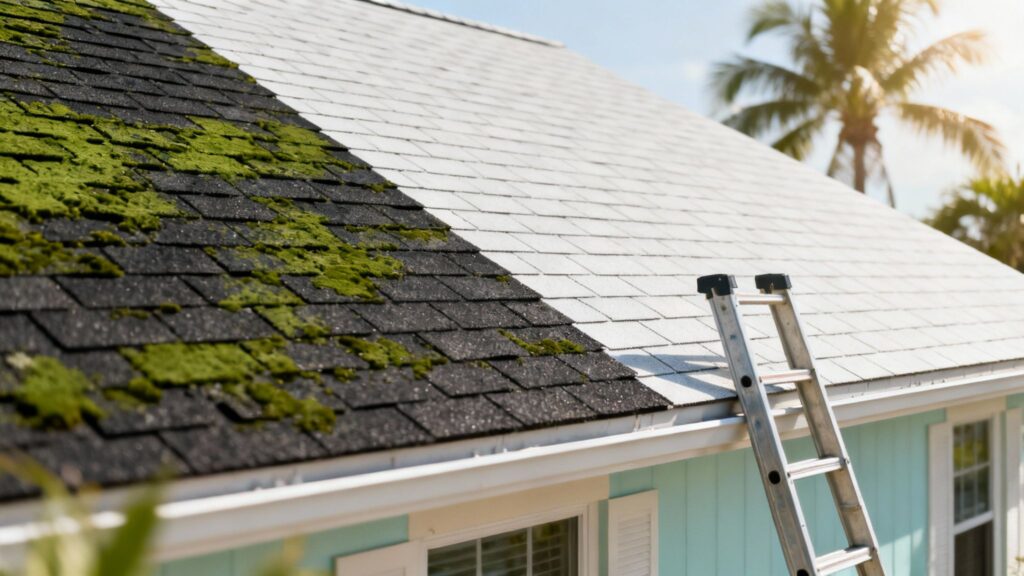
Along those same lines, trimming overhanging tree branches does more than prevent storm damage. It allows sunlight and air to reach your roof, helping it dry out faster after a downpour. Constant shade keeps the surface damp, encouraging algae and fungus that can eat away at your roofing materials over time. For a solid overview on this, TimberSol has great info on how to prevent wood rot.
Ensure Your Attic Has Proper Ventilation
Your attic is the hidden battleground against roof rot. Here in Deerfield Beach, the intense sun can turn a poorly ventilated attic into a sauna. That superheated, humid air rises and condenses on the cooler underside of the roof deck, soaking the wood from the inside out.
Proper ventilation creates a steady airflow, pushing hot, moist air out while pulling cooler, drier air in.
An effective ventilation system—combining soffit vents for intake and ridge or gable vents for exhaust—is non-negotiable in our climate. It actively works to keep the roof deck dry and drastically reduces the risk of rot and mold.
Making sure these vents aren't blocked by insulation or old boxes is a key part of your routine. Good airflow is everything. You can see how different parts of a roof work together by looking at these visual examples of well-maintained roof systems. By combining these habits, you’re not just maintaining a roof; you’re defending your home against the specific threats posed by our unique coastal environment.
Have Questions About Roof Deck Rot? We've Got Answers.
When you suspect rot in your Deerfield Beach roof deck, it's natural for a lot of questions to pop into your head. Homeowners often find themselves wrestling with the same concerns: How often should I get my roof checked? Can I fix a small spot myself? And the big one—will my insurance even cover this? Getting straight answers is the first step to feeling in control and protecting your home.
We hear these questions all the time from folks right here in our community. Let's tackle them head-on with practical answers, drawing from our years of experience dealing with South Florida's unique and demanding climate.
How Often Should I Really Be Inspecting My Roof for Rot?
Here in Deerfield Beach, the old "inspect it every few years" advice just doesn't cut it. Our coastal environment, with its relentless humidity and punishing storm seasons, means we have to be far more proactive.
We strongly recommend a professional inspection at least once a year. Think of it as an annual check-up for your home's most important asset. A trained eye can spot the subtle signs of trouble—like a failing sealant around flashing or the earliest stages of shingle wear—long before they turn into a leak that soaks your roof deck. This is your single best defense.
On top of that, it is absolutely essential to get an inspection immediately after any major tropical storm or hurricane. Don't just glance up from the driveway. High winds can lift shingles and break seals in ways you’d never see from the ground, creating a perfect pathway for water to get in.
Key Takeaway: For any home in Deerfield Beach, a yearly professional inspection and an immediate post-storm check are non-negotiable. This isn't being overly cautious; it’s being smart in the high-risk environment we live in. Early detection is everything.
Can I Just Fix a Small Spot of Rot Myself?
It's tempting, isn't it? You see a little soft spot, and the DIY instinct kicks in. But when it comes to your roof's structure, this is one area where we have to give some firm advice: please don't. That small, seemingly minor blemish is almost always just the tip of the iceberg.
Rot spreads like a disease through moisture. The little soft patch you can see is likely connected to a much larger, unseen area of damp, weakened wood hidden under the shingles. Without the right gear and experience to peel back the roofing layers and see the full picture, a simple patch-up job can actually do more harm than good.
A professional has to:
- Isolate the entire affected area to track how far the moisture and decay have spread.
- Securely fasten new decking to the roof trusses to ensure it’s structurally sound.
- Install new underlayment and flashing with expert precision to create a waterproof seal that won't fail again.
An improper repair often traps moisture, which just accelerates new rot and sets you up for a catastrophic—and much more expensive—failure later on. It’s a gamble that’s simply not worth taking with your home.
Does Homeowners Insurance Cover Roof Deck Rot?
This is easily one of the most common—and complicated—questions we get. The answer nearly always hinges on why the rot happened in the first place. Insurance policies are very specific: they draw a hard line between sudden, accidental damage and problems caused by slow-moving issues or a lack of maintenance.
Here’s a simple breakdown of how it usually plays out for a Deerfield Beach homeowner:
| Scenario | Is It Usually Covered? | Why? |
|---|---|---|
| Hurricane Damage | Yes | A hurricane rips off shingles, water pours in, and rot starts. This is a clear case of sudden, accidental damage from a covered event. |
| Slow Leak | No | Old flashing around a vent has been dripping for months, slowly rotting the deck. This is almost always considered a maintenance issue. |
| Age-Related Wear | No | The roof is simply old and has reached the end of its life, causing materials to fail and rot to form. This is predictable wear and tear. |
Simply put, if the rot is a direct result of a covered event like a storm, you should have a solid claim. But if it developed over time from a slow leak you didn't fix, your policy will almost certainly deny the claim.
This is precisely why proactive maintenance and regular inspections are so important. They don't just stop rot before it starts; they also show your insurance company that you're a responsible homeowner, which can make all the difference if you ever need to file a claim.
If you're seeing signs of trouble or it's just time for your annual inspection, don't wait for a small issue to become a major headache. The experienced team at Paletz Roofing and Inspections provides thorough assessments and expert repairs to keep your home safe and dry. Contact us today for a free, no-obligation quote!