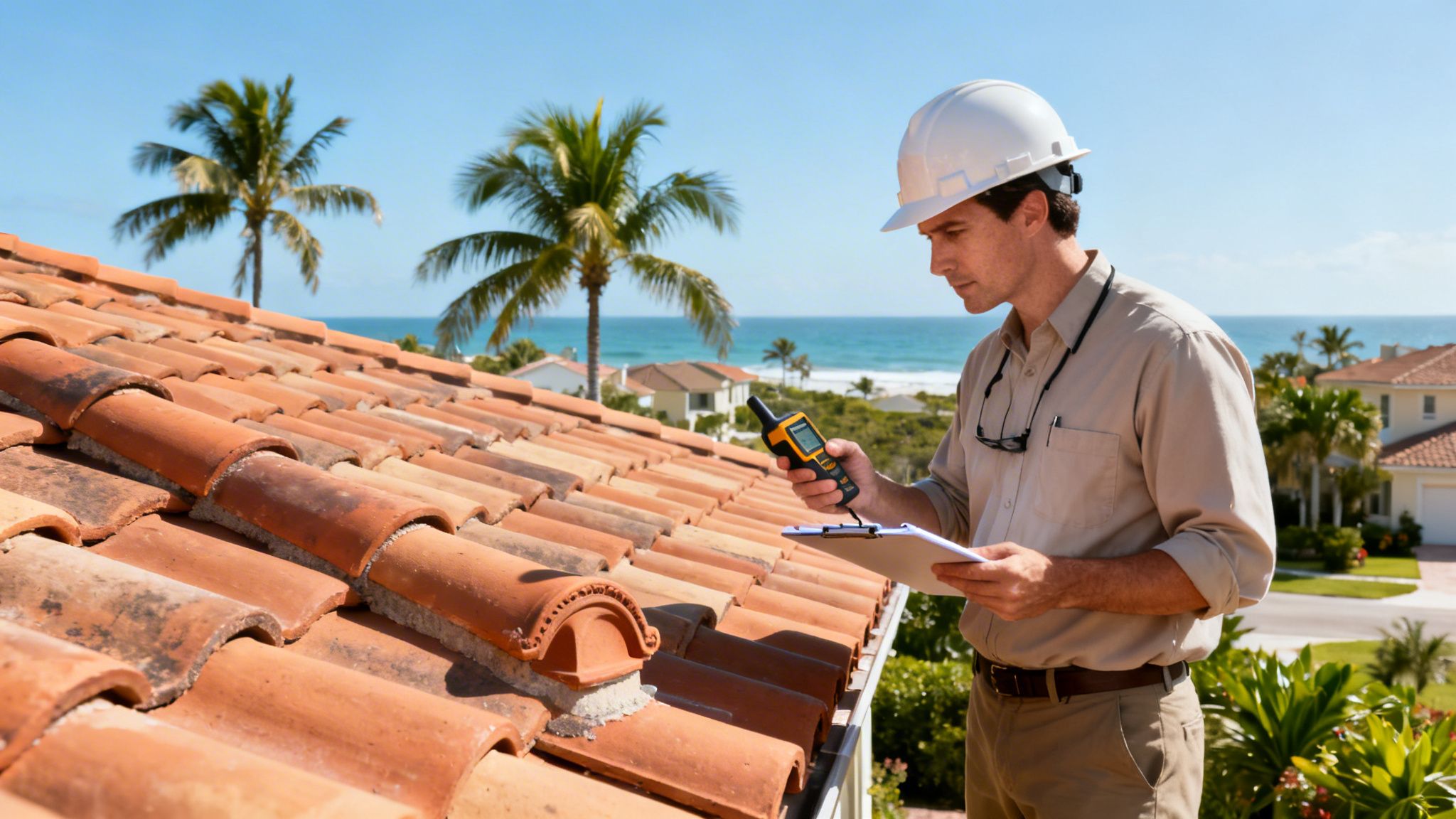
A professional roof inspection in Boca Raton is more than just a quick look-over. It's the single most important preventative step you can take to protect your home from South Florida's uniquely harsh climate, identifying weak spots before they turn into costly disasters. Think of it as an expert check-up for your home's most critical shield, catching hidden issues like UV damage, tiny leaks, and wind uplift risks long before a storm does.
Why Your Roof Is Your Home's First Line of Defense in Boca Raton

Your roof is on the front lines every single day. Here in South Florida, it’s not just holding off a bit of rain—it’s enduring a constant battle against some of the most challenging weather in the country. We’re talking about hurricane-force winds, torrential downpours, and a relentless, year-round assault from the sun.
A professional roof inspection acts as your early warning system. It finds the small cracks and weaknesses in your home's protective armor before they fail during a storm. Skipping this crucial check-up is like heading into hurricane season without putting up shutters—you’re leaving the safety of your home and everything in it up to chance.
The Unique Challenges Facing Boca Raton Roofs
A roof in our area isn’t just a simple cover. It’s a complete system designed to stand up to specific, recurring threats that roofs in other parts of the country never see. Knowing what your roof is up against is the first step to understanding why a regular, thorough inspection is so critical.
Here’s a look at what your roof is fighting every day:
- Intense UV Radiation: That beautiful Florida sun is brutal on roofing materials. It bakes asphalt shingles, causing them to lose their protective granules and turn brittle and weak over time.
- High Humidity and Salt Air: Living near the coast means our humid, salty air is constantly working to corrode any metal on your roof. This includes flashing, nails, and fasteners, creating the perfect entry points for water.
- Wind-Driven Rain: During a bad thunderstorm or hurricane, rain doesn’t just fall down. It gets blasted sideways and even upwards, attacking every single seal, seam, and overlap on your roof.
The only way to catch this slow, silent damage before it’s too late is with a proactive inspection from a certified professional. This guide will walk you through exactly what our detailed inspections cover and how we document our findings, just like in our gallery of roofing project images.
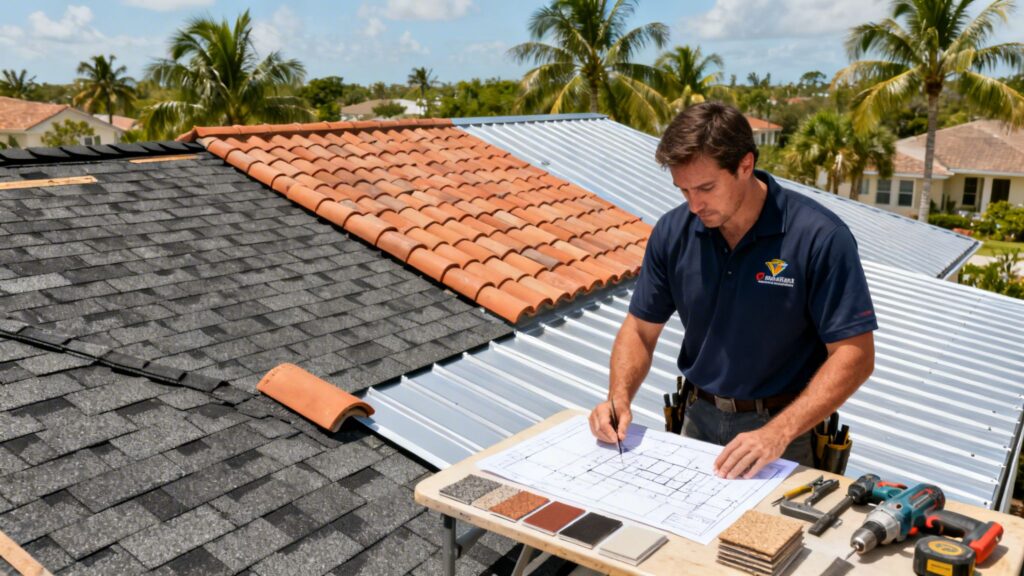
A regular roof inspection isn't an expense—it's a strategic investment in your home's resilience. It turns reactive, expensive emergency repairs into proactive, manageable maintenance, protecting your property value and giving you true peace of mind.
Ultimately, this guide will give you the knowledge you need to protect your most valuable asset. From understanding detailed checklists and typical costs to navigating insurance requirements and choosing the right licensed inspector, you'll be ready to make smart, confident decisions for your home.
The Hidden Risks of Neglecting Your South Florida Roof
Think of your roof as the first line of defense for your home. Getting it checked regularly isn't just about fixing problems you can see—it's a critical preventative step to stop them from ever starting. In a high-risk hurricane zone like Boca Raton, this isn't a luxury. It's absolutely essential.
Ignoring your roof means letting silent threats slowly eat away at your home's most important shield.
Day after day, the relentless South Florida sun bakes your roofing materials. Those intense UV rays turn asphalt shingles brittle and weak, stripping away the protective granules that guard the layers underneath. It’s an aggressive assault, and once that first line of defense is gone, your home is wide open to the next threat.
And then comes the water. Here in Boca Raton, wind-driven rain doesn't just fall; it attacks your roof from every angle. It finds the tiny, invisible gaps left behind by UV damage and corroded fasteners. Add in our high humidity, and you have a perfect recipe for algae and mold, which trap moisture and speed up rot.
The Age Factor Your Roof’s Vulnerability
The age of your roof plays a huge role in how well it can stand up to these threats, especially during a storm. If your roof was installed before Florida’s building codes got stricter, it's far more vulnerable. This isn’t just a theory—we’ve seen it proven time and time again in recent hurricane seasons.
For example, research after major storms shows a stark difference in how older and newer roofs perform. In South Florida, roofs installed before 2015 face dramatically higher risks. Data shows that nearly 90% of these older roofs were damaged after Hurricane Ian, compared to just 28% for newer, code-compliant ones. This single statistic shows why a professional roof inspection in Boca Raton is so critical, particularly for older homes. Having served Palm Beach, Broward, and Miami-Dade counties since 1990, we at Paletz Roofing and Inspections have seen this reality firsthand. You can explore more about these findings and the best local contractors in this detailed 2024 analysis.
A proactive roof inspection shifts your perspective from seeing it as a mere expense to recognizing it as a vital investment. It is the most effective way to secure your home’s resilience and ensure your family's safety against the inevitable forces of nature.
From Small Signs to Major Failures
The damage rarely starts with a bang. It begins quietly, out of sight. A few lifted shingles, a cracked tile, or a corroded nail might seem like nothing. But each one is an open invitation for water to get in. Over time, that slow, steady leak can lead to devastating problems that are expensive and difficult to fix.
These hidden leaks can cause a domino effect inside your home:
- Structural Rot: Moisture seeping into your attic can rot the wooden decking and support trusses, compromising the very structure of your roof.
- Insulation Damage: Once insulation gets wet, it’s useless. It loses its ability to insulate, driving up your energy bills as your AC works overtime. It also becomes a breeding ground for mold.
- Interior Damage: A tell-tale sign that things have gone too far is a water leak from a ceiling light. This often means severe, widespread water intrusion has already traveled through your entire attic.
By the time you see a stain on your ceiling, the damage is already well underway. A professional inspection catches these issues at the source, long before they become visible in your living room, turning a potential disaster into a manageable repair.
What a Comprehensive Roof Inspection Actually Involves
Ever wondered what a professional inspector is actually looking for up on your roof? A proper roof inspection in Boca Raton is so much more than a quick peek from the driveway. It’s a systematic, top-to-bottom evaluation, kind of like a detective story where the inspector follows clues from inside your attic all the way to the peak of your roof.
The goal is to find those hidden weak spots before they turn into full-blown disasters. The whole process is methodical, and it almost always starts where roof problems eventually show themselves: inside the house.
The Critical Interior Check
The first stop is usually the attic. It’s the nerve center for spotting subtle signs of trouble that are completely invisible from the outside. A good inspector is hunting for specific evidence that the roof system is failing.
- Signs of Water Intrusion: This means looking for dark stains on the underside of the roof deck, checking for damp or compacted insulation, and spotting any water trails along the rafters. These are the classic footprints of a leak.
- Poor Ventilation: An inspector will check for blocked soffit vents or a lack of proper exhaust. In a Boca Raton attic, trapped hot and moist air can literally "cook" your shingles from the inside out and encourage mold, which can take years off your roof's life.
- Structural Integrity: They'll also scan for any sagging in the roof decking or look for cracked trusses. These are serious red flags that point to a bigger structural problem that needs immediate attention.
This inside-out approach provides crucial context. If an inspector finds a water stain in the northwest corner of your attic, they now have a prime suspect area to examine closely once they get on the roof.
The sun, the rain, and time itself are in a constant battle against your roof's materials. This diagram breaks down exactly how those forces work to degrade your roof over time.

As you can see, the sun weakens the materials, rain exploits those weaknesses, and time just makes everything worse, eventually leading to leaks if you don't step in.
The Meticulous Exterior Assessment
Armed with clues from the attic, the inspector heads outside for the hands-on part of the job. This is where they physically check every single component of your roofing system for the kind of wear and tear we see all the time here in South Florida. It’s a detailed, checklist-driven process.
First up is the main roofing material itself, whether that’s shingles, tiles, or metal panels.
A key thing an inspector looks for on asphalt shingles is granule loss. Think of those little granules as your roof’s built-in sunblock. If you’re finding a lot of this "sand" in your gutters, it’s a major sign that your roof's UV shield is failing, leaving it exposed and vulnerable.
Next, the focus shifts to the usual suspects—the areas where leaks most often start. These are the spots where different materials join together or where something pokes through the roof.
- Flashing: They’ll carefully inspect the metal strips around chimneys, vents, and skylights. If that flashing is corroded, loose, or badly sealed, it’s a leak waiting to happen. In fact, it's one of the most common causes we find.
- Seals and Valleys: The rubber boots around pipes and the sealant in roof valleys (where two roof planes meet) get a close look for cracks and decay. In our intense climate, these parts often give out long before the actual shingles or tiles do.
- Gutters and Drainage: The inspector makes sure your gutters are firmly attached and clear of clogs. Backed-up gutters force water under the edge of your roof, where it can rot out the fascia board and underlying decking.
The Final Structural Review
Finally, the inspection comes full circle by looking at the roof's core structure from the outside. The inspector will carefully walk the roof, feeling for any soft or "spongy" spots under their feet. This is a tell-tale sign that the wood decking underneath has been soaked with moisture and is starting to rot.
They’ll also assess the general condition of the trusses and support beams where possible from the exterior, looking for any sagging or stress that wasn't obvious from the attic. You can get a better idea of the kinds of things inspectors are documenting by checking out our gallery of completed roofing projects.
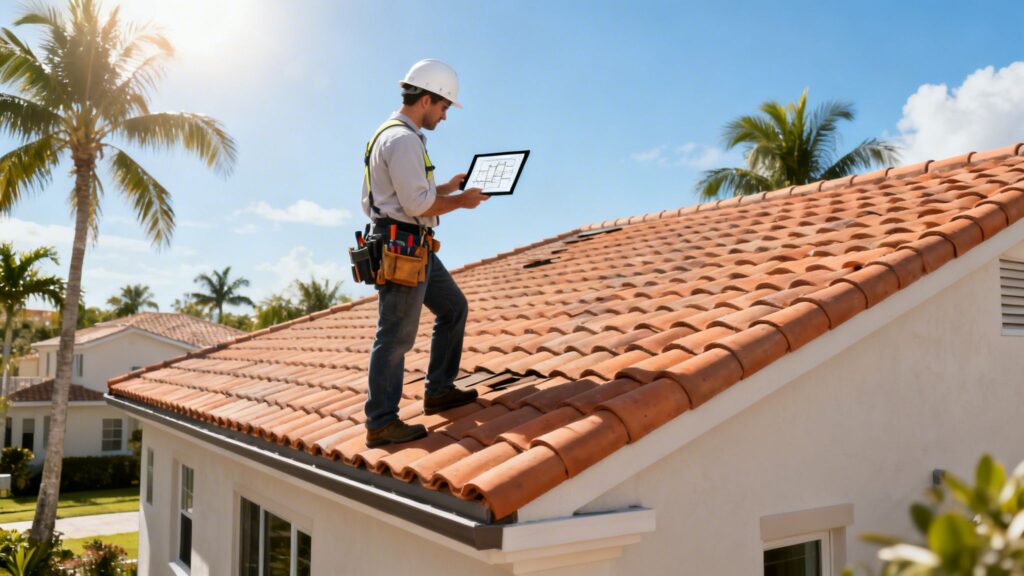
This complete, three-part process—interior, exterior, and structural—gives you the full picture of your roof's health. It gives you the knowledge to understand what a high-quality roof inspection in Boca Raton really is, so you can hold any inspector you hire to the highest standard.
How an Inspection Unlocks Significant Insurance Savings

For homeowners in Florida, a professional roof inspection in Boca Raton is much more than just a routine maintenance task—it’s a powerful financial tool. An official inspection report is the documented proof you need to directly lower your annual insurance premiums and protect yourself during a claim. It’s how you turn a simple check-up into a strategic investment that can literally pay for itself.
The key to unlocking these savings is a specific type of report called a wind mitigation inspection. This specialized assessment verifies that your roof has certain hurricane-resistant features. When a licensed inspector officially documents these upgrades, your insurance company is often required by Florida law to give you discounts, also known as credits.
Turning Roof Features into Real Dollars
Think of your roof’s construction like a car's safety features. Just as anti-lock brakes and airbags reduce your auto insurance risk, things like hurricane clips and secondary water barriers reduce your home's risk during a major storm. The inspector is the one who officially certifies that you have these critical safety features installed.
This certification is absolutely crucial. A professional inspection report is the only way to prove to your insurer that your home is better equipped to handle high winds than the average property. This proof is what leads to substantial, real-dollar savings on your policy.
The specific features an inspector looks for that can trigger these insurance credits include:
- Roof-to-Wall Attachment: This confirms how securely your roof trusses are connected to your home’s walls. The strongest connections, like double wraps or clips, earn the largest discounts.
- Roof Deck Attachment: The inspector checks the size and spacing of the nails holding your roof deck to the trusses. Closer spacing creates a much stronger roof and unlocks more potential savings.
- Secondary Water Resistance (SWR): This is a self-adhering membrane applied directly to the roof deck before the shingles or tiles go on. It provides a critical second layer of protection if the main roofing is damaged, a feature highly valued by insurers.
- Roof Geometry: Certain roof shapes, like a hip roof (where all sides slope downward), perform far better in high winds than others. Having a qualifying roof shape can earn you a significant credit all on its own.
Roof inspections are central to insurance savings in Florida. State laws mandate that insurers provide credits for verified wind-resistant upgrades, often cutting premiums by 20-50%. For homeowners in Palm Beach County, this can mean saving hundreds or even thousands of dollars every single year.
Your Best Defense in an Insurance Claim
Beyond the annual savings, a recent inspection report becomes your most valuable asset right after a storm hits. Imagine trying to prove the exact condition of your roof before a hurricane blew through town. Without prior documentation, it's nearly impossible. A pre-storm inspection report provides indisputable, time-stamped evidence of your roof's health.
This report eliminates the frustrating guesswork and helps prevent potential disputes with your insurance adjuster. If an insurer tries to claim that some of the damage was pre-existing, your report serves as concrete proof that the roof was in good shape right before the event. This simple document can be the difference between a smooth, fair claim and a long, drawn-out battle.
Just as a thorough roof inspection can identify issues that prevent costly claims, using a Home Inventory App for Insurance: A Guide to Faster Claims helps you accurately document your belongings, ensuring smoother and faster claims processing if disaster strikes.
In fact, data gathered after major storms shows a stark difference: roofs built to modern, post-2015 codes sustained damage at only a 28% rate, while pre-2015 roofs saw damage rates of 90%. An inspection is your best tool for confirming your roof meets these higher, more resilient standards. This data powerfully reinforces why an inspection isn’t just about savings, but about ensuring your roof is truly prepared to protect your home.
Finding a Trusted Roofing Professional in Boca Raton
In Florida's crowded and often confusing roofing market, picking the right expert can feel completely overwhelming. Let’s be clear: choosing a professional for a roof inspection in Boca Raton isn’t like hiring a general handyman. It’s more like picking a surgeon for a critical operation—you need a specialist with proven credentials and deep local knowledge, not just a contractor with a low bid and a nice-looking truck.
This is especially true when you consider the sheer number of options. Florida actually leads the nation in roofing professionals, with over 25,000 licensed roofers as of May 2023. That density is a direct result of our volatile climate, but it also makes it much harder for homeowners to separate the true experts from the rest. You can see more about how our local climate impacts the industry and prepares for hurricane season on pxlhomes.com.
To confidently sort through your options, you need to focus on a few non-negotiable qualifications that set the best apart from the rest.
Verifying Essential Credentials
Before you even think about looking at a quote, you have to verify a contractor's core qualifications. These are the absolute minimum requirements that protect you, your home, and your wallet. Think of them as the pillars of a trustworthy company.
- State Licensing: In Florida, any roofing contractor must hold a state-certified license. You can—and absolutely should—verify this license number on the Florida Department of Business and Professional Regulation (DBPR) website. This is your proof that they’ve met the state's tough testing and experience standards.
- Full Insurance Coverage: This is non-negotiable and has two critical parts. The contractor must carry General Liability Insurance to cover any potential damage to your property. They also need Worker's Compensation Insurance to cover their crew if someone gets hurt on your property. Without both, you could be held financially liable for any accidents.
- Deep Local Experience: A contractor who gets the specific challenges of Boca Raton—from our salt-heavy air to our strict building codes—is simply invaluable. Look for a company with a long, verifiable history of working right here in Palm Beach County.
Always ask for copies of a contractor's license and insurance certificates. A legitimate company will hand these over without a second thought. If they hesitate or refuse, it’s a massive red flag. Walk away immediately.
Gauging Quality and Reputation
Once you’ve confirmed the basics, your next step is to evaluate the quality of their work and their reputation in the community. Credentials prove they’re qualified, but reputation tells you how they actually perform on the job. For a trusted partner like

, this reputation is built on decades of service.
Look for a solid portfolio of recent projects and a consistent pattern of positive customer reviews across multiple sites like Google, Yelp, and the Better Business Bureau. One or two glowing reviews are nice, but a long history of satisfied customers speaks volumes about their consistency and commitment to doing things right.
Questions to Ask Every Potential Inspector
To vet a company further, arm yourself with specific questions that cut through the sales pitch and get straight to what matters. A real pro will welcome these questions and give you clear, confident answers.
- Who will actually perform the inspection? Is it a certified inspector or a salesperson? You want an experienced technician on your roof, not someone just looking for an upsell.
- What does your inspection report include? Ask to see a sample. A quality report is detailed, packed with high-resolution photos, and gives clear explanations for every finding.
- How do you handle urgent repairs? If the inspection uncovers a serious issue, what’s their game plan for addressing it quickly and effectively?
- Are you certified by any manufacturers? Certifications from major brands (like GAF or CertainTeed) show that their team has been professionally trained to install and inspect those specific products the right way.
Choosing the right professional for your roof inspection in Boca Raton comes down to prioritizing your home’s safety and your own peace of mind. By focusing on verifiable credentials, a proven track record, and transparent communication, you can confidently select an expert who will protect your most valuable asset for years to come.
Common Roof Inspection Questions Answered
Even with a solid grasp of the process, it's completely normal to have a few practical questions before scheduling a roof inspection in Boca Raton. Making a smart decision about your property means getting clear, direct answers first. We hear the same questions from homeowners all the time, so we've put them all in one place to give you the confidence you need.
Think of this as your no-nonsense Q&A for roof care. We'll cut right through the industry jargon and give you the essential information, so there are no surprises when it's time to protect your home.
How Often Should I Get My Roof Inspected?
This is easily the most common question we get, and the answer really comes down to your roof's age and what it's made of. For most homes here in South Florida, an annual inspection is the gold standard. Our climate is just too harsh to risk waiting any longer.
Still, a few key guidelines will help you stay on track:
- Asphalt Shingle Roofs: These are incredibly common but also take a beating from UV rays. You absolutely want a professional inspection every single year. Since their lifespan in Florida can be as short as 15-20 years, annual check-ups are non-negotiable.
- Tile and Metal Roofs: While they are definitely more durable, they’re not invincible. An inspection every two years is a safe bet, unless you spot a slipped tile or something else that looks out of place.
- After Every Major Storm: This one is critical. No matter what type of roof you have, getting an inspection after a hurricane or severe storm is a must. Hidden damage is far more common than you'd think, and you need that documentation right away for any insurance claims.
A proactive inspection schedule is like a regular dental cleaning for your home. It prevents small, easily treatable issues from turning into painful, expensive root canals. Waiting until you see a leak is waiting too long.
What Does a Roof Inspection Cost in Boca Raton?
The cost of a professional roof inspection will shift a bit based on the size and complexity of your roof. It makes sense—a simple, one-story home with an easy-to-walk roof will cost less to inspect than a massive two-story house with steep pitches and lots of valleys.
In most cases, you can expect a standard visual roof inspection to fall somewhere between $250 and $600. This type of inspection is perfect for routine check-ups and catching obvious problems. If you need something more specific for an insurance company, like a Wind Mitigation or Four-Point Inspection, the cost might be a little different, but those reports often pay for themselves with the policy discounts they can unlock.
Just remember that fee isn't just for a quick look. It covers a certified inspector's time, their expertise, and the creation of a detailed report packed with photos that gives you a complete picture of your roof's health. It’s a small investment for some serious peace of mind.
What Happens If the Inspector Finds Damage?
Hearing that your roof has damage can be unnerving, but catching it during an inspection is actually the best-case scenario. It means you’ve found the problem before it could lead to water pouring into your living room. When our inspectors find damage, they follow a clear, structured process.
First, they document everything—and I mean everything. They'll take high-resolution photos of any problem areas, whether it’s a tiny crack in a tile, failing sealant around a vent, or a patch of shingles that has lost its protective granules. This documentation is your most important asset.
Next, we deliver a detailed report that clearly explains:
- The specific type of damage found.
- The exact location of the issues on your roof.
- The potential consequences if the problems aren't fixed.
- A recommended course of action.
That recommendation might be for a simple, targeted repair, like replacing a handful of shingles or resealing a pipe collar. If the issues are more widespread, it might point toward a partial or full roof replacement. A trustworthy inspector will give you a clear, no-pressure explanation and a written estimate for any work they propose. This report puts you in the driver's seat, giving you a roadmap to get your roof back in fighting shape.
Don't leave the safety of your home to chance. A proactive roof inspection is the smartest investment you can make to protect your property from Florida's demanding climate. The experienced, certified professionals at Paletz Roofing and Inspections are ready to provide a thorough assessment and give you the peace of mind you deserve. Schedule your comprehensive roof inspection today by visiting https://paletzroofing.com.