
Choosing the right roofing contractor is a big decision, and it starts long before you ever pick up the phone. Your first move? Building a solid shortlist of 3-5 potential candidates. This isn't about a quick Google search; it's about tapping into trusted local sources. Think of this initial screening as your best defense against the usual contractor nightmares.
How To Vet Roofing Contractors Before You Call
The biggest mistake I see homeowners make is calling the first roofer they find online. That’s a fast track to high-pressure sales tactics and vague, confusing quotes. A much better approach is to proactively build your own list of candidates who are already trusted within your community.
Start With Local Recommendations
You want to find pros who have a real stake in your local area. They know the specific building codes, they understand our unique weather challenges, and they have established relationships with the best local suppliers.
Start by talking to people you actually trust:
- Neighbors: Your best bet is to chat with neighbors who’ve had their roofs replaced recently. They can give you the real story on everything from the crew's professionalism to how well they cleaned up the site.
- Local Hardware & Supply Stores: The folks behind the counter at specialty building supply shops see the same contractors day in and day out. They know who buys quality materials and who has a reputation for cutting corners.
- Community Groups: Local Facebook groups or HOA forums can be goldmines for honest reviews—and warnings about which companies to steer clear of.
As you gather names, it's also smart to see who handles more specialized work. For instance, finding top-rated skylight installers can often point you toward roofing companies that are trusted with more complex, detail-oriented projects.
Key Takeaway: Nothing beats a good old-fashioned referral. A contractor who thrives on word-of-mouth business has every reason to do fantastic work and keep their customers happy. It’s their best form of advertising.
Conduct Your Initial Online Screening
With a list of 3-5 names in hand, it's time for some quick online recon. You're not trying to read every last review just yet. Instead, you're looking for clear signals of stability and professionalism.
Before you even think about requesting a bid, run each company through this simple vetting checklist. It’ll help you quickly screen out any obvious red flags.
Initial Contractor Vetting Checklist
Use this checklist to quickly screen potential roofing contractors before you request a detailed bid.
| Vetting Step | What to Look For | Why It Matters |
|---|---|---|
| Professional Website | A clean site with a real, physical local address. Look for clear service descriptions and a gallery of their actual work, not stock photos. | A serious business invests in its digital storefront. A missing local address is a huge red flag that could signal a "storm chaser." |
| Local Presence | Do their project photos or customer reviews mention your city or nearby towns? You want proof they work in your area consistently. | A truly local contractor is accountable to the community and far more likely to honor their workmanship warranty down the road. |
| Company History | Check the "About Us" page. How long have they operated under their current business name? | A company with 10+ years of local history isn't a fly-by-night operation. They've proven they can stick around and will likely be there if you have a warranty issue. |
Going through these steps helps you filter out the storm chasers and temporary operations right from the start. Now, with a vetted list of solid contenders, you can finally make that first call with confidence.
Checking for Licenses, Insurance, and Credentials

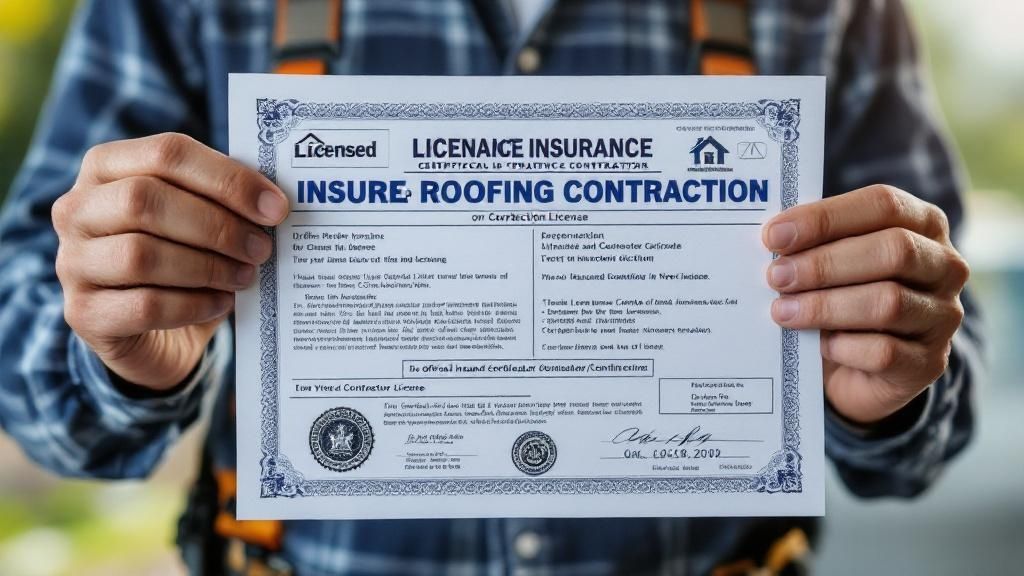
Don't let a slick truck and a friendly handshake fool you. The most critical part of hiring a roofer happens long before they set foot on your roof—it’s the part where you verify their credentials. Skipping this step is a huge gamble. Think of it this way: hiring an uninsured roofer is like handing your car keys to a stranger with no license. If they crash, you’re the one left with the bill.
Any roofer worth their salt will have their license and insurance information ready to share. If you ask for it and they hesitate, give you excuses, or get defensive, that's a massive red flag. Thank them for their time and move on.
What “Licensed, Bonded, and Insured” Really Means
You’ll see the phrase "licensed, bonded, and insured" thrown around a lot, but these aren't just buzzwords. Each one is a specific layer of protection for you, the homeowner.
-
Licensed: This is the bare minimum. A license proves the contractor has met your state or city's requirements to operate legally. It shows they've registered with a governing body and have at least a baseline of knowledge.
-
Insured: This is non-negotiable. Proper insurance protects you from being held liable for accidents or property damage. If a worker falls from your roof or a ladder smashes your neighbor's car window, their insurance should cover the costs—not your homeowner's policy.
-
Bonded: A surety bond is your safety net if the contractor flakes out. It protects you if they fail to finish the job, neglect to pay their suppliers (who could then put a lien on your property), or don't pull the right permits.
It's also a good idea to review your own policy. For instance, understand the insurance considerations for home installations if you're thinking about adding solar, as that can directly impact your roof and coverage.
How to Actually Verify Their Insurance
Never, ever just take their word for it. You need to see the proof yourself. Ask every single contractor you're considering for their Certificate of Insurance (COI).
This is a standard, one-page document that summarizes their coverage. When you get it, here's what to look for:
- Policy Numbers and Dates: First, check that the policies are active and won't expire in the middle of your project.
- Coverage Types: You need to see two specific kinds of insurance: General Liability (to cover property damage) and Worker's Compensation (to cover injuries to their crew).
- Coverage Limits: For a residential roofing job, a reputable contractor should carry at least $1,000,000 in general liability coverage. Anything less is a risk.
Expert Tip: The single best thing you can do is call the insurance agent listed on the COI. A quick five-minute call will confirm the policy is real, active, and hasn't been doctored. It's the only way to be 100% sure.
I can't stress this enough. The roofing industry is facing major challenges, with 85% of contractors reporting skilled labor shortages. This can lead to rushed jobs and less experienced crews. On top of that, roofing is consistently ranked among the top five most dangerous jobs. Proper insurance is an absolute must to protect everyone involved.
Taking the time to verify these details is crucial. It’s not just about paperwork; it's about protecting your home, your finances, and your peace of mind. For those interested in how businesses get found online, our guide on using tools from Rank Math offers deeper insights into digital visibility.
How to Compare Roofing Bids Like a Pro
Getting a few different bids for your roofing project is smart, but one of the biggest mistakes I see homeowners make is jumping at the lowest price. It's an easy trap to fall into, but that rock-bottom price often hides some serious risks—think subpar materials, inexperienced labor, or a sudden list of "extra" charges once the job starts. Learning to read between the lines of a roofing estimate is the key to finding a contractor who gives you real, lasting value, not just a cheap, temporary fix.
Think of a professional, detailed bid as the blueprint for your project. A vague, one-line quote? That's not a blueprint; it's a warning sign. The price difference between two bids almost always comes down to what the cheaper one isn't telling you.
Look for Itemized Details, Not Just a Total Price
A trustworthy roofer will give you an estimate that breaks everything down. This isn't just about being organized; it’s about transparency. It lets you see exactly what you're paying for and, just as importantly, compare quotes on an even playing field. If a bid simply says, “New Roof: $15,000,” you have absolutely no idea what that includes.
A proper estimate should clearly list:
- The Specific Shingle Type: Is it a basic 3-tab shingle or a more durable 30-year architectural shingle? The bid should name the manufacturer (like GAF or Owens Corning) and the exact product line being used.
- Underlayment and Flashing: It needs to specify the type of underlayment—a quality synthetic is the modern standard—and detail where new metal flashing will be installed. This is especially critical in leak-prone areas like valleys, chimneys, and skylights.
- Tear-Off and Disposal: Does the price cover the complete removal of all old roofing layers right down to the wood sheathing? Does it also include the dumpster and disposal fees? This step is essential for a proper inspection of the roof deck.
- Decking Replacement: A good contractor knows they might find rotted or damaged wood after the old roof comes off. A professional bid will include a per-sheet price for replacing this decking, so there are no surprises.
A vague estimate is basically a blank check you’re handing to the contractor. If a detail isn't in writing, it doesn’t exist. Getting everything itemized protects you and ensures everyone is on the same page from day one.
Spotting Red Flags in a Vague Quote
Let's paint a picture. Contractor A hands you a single-page quote with one number on it. Contractor B gives you a three-page document detailing every material, their cleanup process, and the specific warranty terms. Which one feels more professional? Contractor B is demonstrating they have a clear, thorough process you can trust.
This flow chart really drives home the right way to look at different estimates—it’s about finding the best overall value, not just the lowest cost.
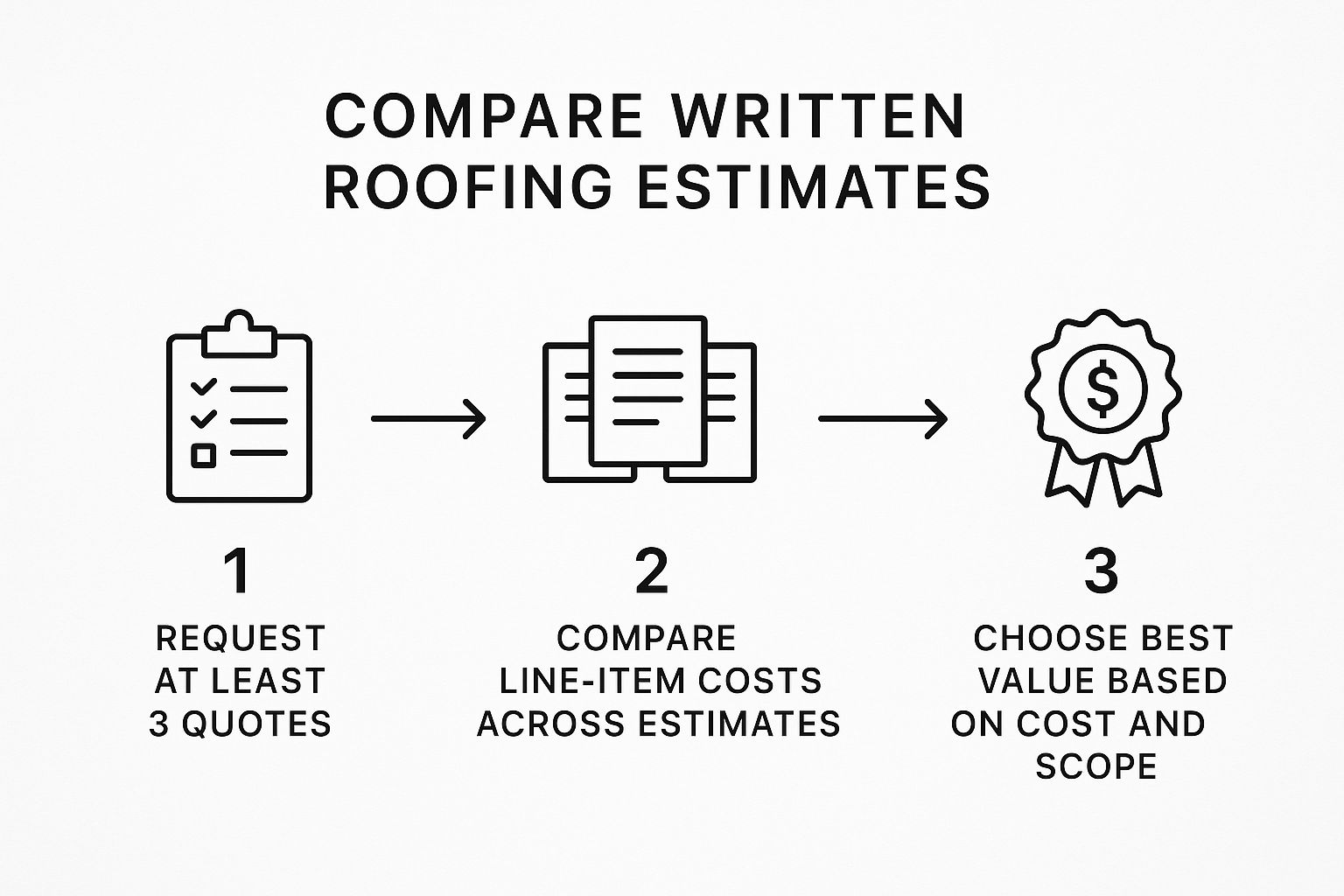
As the visual shows, a true comparison goes far beyond the final number. It requires you to dig into the line items and understand the complete scope of work each contractor is promising to deliver.
Comparing Value Over Price
I’ll say it again: the cheapest bid is almost never the best deal. A lowball price usually means corners are being cut somewhere you can't see… at least not right away.
I've seen all the tricks they use to get the price down:
- Reusing Old Flashing: This is a classic. Failing to replace old, rusted, or bent flashing is one of the leading causes of leaks down the road.
- Skipping Ice & Water Shield: This self-adhering membrane is a critical barrier that protects the most vulnerable parts of your roof, like the eaves and valleys, from ice dams and wind-driven rain.
- Using Fewer Nails: It sounds small, but skimping on nails per shingle or placing them incorrectly can completely void the manufacturer’s wind warranty. When a big storm hits, you’ll be left with no protection.
In the end, you aren't just buying shingles. You're investing in a complete roofing system that needs to be installed by skilled hands to protect your home. The best bid is the one that clearly outlines how the contractor will build a system designed to last. By focusing on the details in the scope of work, you can confidently pick a roofer who delivers long-term protection and genuine peace of mind.
Gauging a Contractor's Knowledge of Materials and Their Warranties
A great roof isn’t just about the shingles you pick; it’s about the skill of the hands that install them and the quality of the materials they use. The real mark of a pro is their deep understanding of modern roofing products and their willingness to stand behind their own work with a solid guarantee.
This expertise is more important than ever. The U.S. roofing industry is on track to become a $33.44 billion business by 2030, driven largely by new technologies. While good old asphalt shingles still dominate, covering about 80% of homes, we’re seeing a huge spike in demand for "cool roofs" that reflect heat and save energy. A contractor worth their salt needs to be fluent in both old-school materials and these newer options to give you advice that actually fits your home and budget. You can dig into more of these industry trends in this detailed roofing statistics report.
This knowledge directly impacts the quality of the warranties you’ll receive.
What Manufacturer Certifications Really Mean
You've probably seen contractors advertising titles like "GAF Master Elite" or "Owens Corning Platinum Preferred." These aren't just marketing fluff. Think of them as a seal of approval from the people who actually make the materials. To get these top-tier certifications, a roofer has to prove they meet some pretty high standards:
- Verified Credentials: The manufacturer confirms they have all the required state licenses and adequate insurance. No shortcuts allowed.
- A Solid Track Record: They need a history of quality work and happy customers in your local area.
- Up-to-Date Training: Certified installers are required to stay current with the latest product specifications and installation methods.
The biggest win for you? Better protection. A certified contractor can offer enhanced warranties straight from the manufacturer—coverage that a run-of-the-mill roofer simply can’t get their hands on.
The Two Warranties You Absolutely Must Understand
Every single roofing job should come with two distinct warranties. It's crucial you know the difference between them, because mixing them up can lead to some expensive headaches down the road.
Key Takeaway: The manufacturer's warranty covers the physical products—the shingles, underlayment, etc. The contractor's workmanship warranty covers the labor used to install everything. A defective shingle is the manufacturer's problem. A leak caused by a nail in the wrong place is the contractor's responsibility.
From my experience, most premature roof failures aren’t because the shingles were bad. They happen because of sloppy installation. That’s why the contractor's workmanship warranty is arguably the more critical of the two.
I always tell homeowners to look for a workmanship warranty of at least 10 years. If a company offers anything less, especially if they haven't been around for very long, consider it a major red flag. And please, get the warranty details in writing. A verbal promise is worthless the moment their truck pulls away. A professional will provide clear documentation, much like this example of proper paperwork.
Finally, always ask what could void your warranties. Common mistakes like installing a satellite dish, pressure washing the shingles, or even just walking on the roof incorrectly can nullify your coverage. A great contractor won’t just install your roof; they’ll teach you how to protect your investment for years to come.
Alright, you've done the legwork. You've vetted your list of potential roofers, pored over their estimates, and called their references. Now comes the moment of truth: the contract.
This isn't just a piece of paper; it's the single most important document in your entire project. I’ve seen far too many homeowners get burned because they glossed over the fine print or accepted a handshake deal. A vague or incomplete contract is a recipe for disaster, turning what should be a straightforward job into a months-long nightmare of surprise costs and legal wrangling.
A professional roofer will always provide a detailed, comprehensive contract. It’s a sign of their legitimacy and it protects both of you. If a contractor pressures you to sign immediately or dismisses your questions, that’s a massive red flag. Walk away. A true professional will encourage you to take your time and will be happy to clarify every single line item.
What to Look for in Your Roofing Contract
Before you even think about signing, grab a pen and a highlighter. You're looking for specifics, not generalizations. If any of the following elements are missing, you need to insist they're added in writing. Think of the contract as the blueprint for your new roof—it should leave absolutely nothing to chance.
A solid contract must clearly define:
- The Full Scope of Work: This needs to be more than just "install new roof." It should detail the complete tear-off of the old roof, the process for replacing rotten decking (including a specific cost per sheet), and the installation of all new components like underlayment, flashing, and the shingles you chose.
- A Complete Materials List: The contract should specify the exact manufacturer and product names for everything being installed. It shouldn't just say "architectural shingles." It should say "GAF Timberline HDZ in Charcoal" or "Owens Corning Duration in Black Sable." This applies to underlayment, ice and water shields, vents—everything.
- A Project Timeline: Your contract needs a projected start date and an estimated completion date. Of course, weather can throw a wrench in the works, but having this timeline in writing establishes a clear expectation and holds the contractor accountable.
My Two Cents on Payment: Pay close attention to the payment schedule. A pro will never ask for the full amount upfront or demand a huge cash deposit. A standard, fair structure is a reasonable deposit—usually 10-30%—to secure materials, with subsequent payments tied to key project milestones. The final payment should only be made after the job is done, the site is clean, and you've given it your final approval.
Red Flags to Spot in the Final Agreement
Just as important as what's in the contract is what's missing—or what shouldn't be there. High-pressure sales tactics and confusing, jargon-filled language are telltale signs of a contractor you don’t want to hire. This final review is your last chance to protect yourself. It's no wonder that 79% of homeowners trust professionals for their roofing needs; a solid contract is the cornerstone of that trust. You can discover more about these homeowner trends and roofing statistics if you're curious about the data.
Also, be on guard for contracts that are vague about property protection and cleanup. A good agreement will explicitly state how they'll protect your landscaping, siding, and driveway from damage. It should also promise daily site cleanup and a final pass with a magnetic roller to find any stray nails.
By taking the time to meticulously review these details, you can sign on the dotted line with confidence. You'll know you’ve partnered with a roofer who values transparency and is committed to delivering a quality job from start to finish.
Common Questions About Hiring a Roofer
Even when you've done all your homework, a few nagging questions can make picking a roofer feel like a huge gamble. Knowing how to choose the right contractor often boils down to getting these last few details straight. Let's walk through some of the most common questions I hear from homeowners, so you can feel completely confident in your final decision.
The first question is almost always about the numbers. How many companies should you actually bring in to bid on your project?
How Many Roofing Estimates Should I Get?
My rule of thumb? Aim for at least three detailed estimates from different, well-vetted contractors. This isn't just a random number. It's the magic number that gives you a clear picture of the fair market rate for your project without drowning you in paperwork.
Getting three bids is all about spotting the outliers. If one quote comes in way below the others, that's a serious red flag. It often means someone is planning to cut corners, either with cheap materials or inexperienced labor. On the flip side, an unusually high bid might just be a sign of price gouging. Three solid quotes give you a reliable baseline to work from.
This process is also a test of professionalism. The quality and detail in their estimate often mirror the quality of their work on the roof itself, much like the thoroughness you’d see in a professional roofing inspection report.
What Are the Biggest Red Flags to Watch For?
Beyond the numbers on the estimate, you have to pay close attention to a contractor's behavior. Certain actions should immediately sound the alarm bells. These are the classic signs of a roofer you want to run from, not hire.
Be on high alert for any contractor who:
- Asks for a large cash deposit upfront. Reputable companies have supplier credit. They don't need a huge chunk of your money to get started.
- Pushes you with high-pressure sales tactics. If you hear phrases like, "This deal is only good for today," or "We have leftover materials from a job down the street," it’s a manipulation tactic designed to rush your decision.
- Can't provide a real, physical office address. A P.O. box doesn't cut it. You need proof they have a local presence and aren't a "storm chaser" who will vanish the moment your check clears.
- Fumbles when you ask for their license and insurance. If they can't promptly show you a valid Certificate of Insurance, that conversation is over.
Your home is your biggest investment. The whole point of a roofing project is to protect it, and that protection starts with choosing the right person for the job.
Does a Manufacturer Certification Really Matter?
Absolutely, certifications like GAF Master Elite or Owens Corning Platinum Preferred carry a lot of weight, but they aren't the only thing that matters. Think of them as a powerful seal of approval. It tells you the contractor has passed a manufacturer's rigorous standards for training, insurance, and reputation in the community.
The biggest win for you? Access to enhanced manufacturer warranties. A certified roofer can offer you stronger, longer-lasting coverage on the materials that a standard installer simply can't provide. But don't stop there. You still need to check their local reviews and, crucially, understand their workmanship warranty. The manufacturer covers the shingles; the roofer covers the labor that keeps them on your house.
Sorting through these final details will help you make a smart choice. Once you know how to choose a roofing contractor, you might also find this ultimate yearly house maintenance checklist helpful for keeping the rest of your home in top shape.
At Paletz Roofing and Inspections, we’ve built our name on transparency and expert craftsmanship. With over 30 years of experience serving South Florida, we provide honest, detailed estimates and back up our work with warranties you can trust. If you’re looking for a partner for your next roofing project, visit us at https://paletzroofing.com for a free, no-pressure consultation.