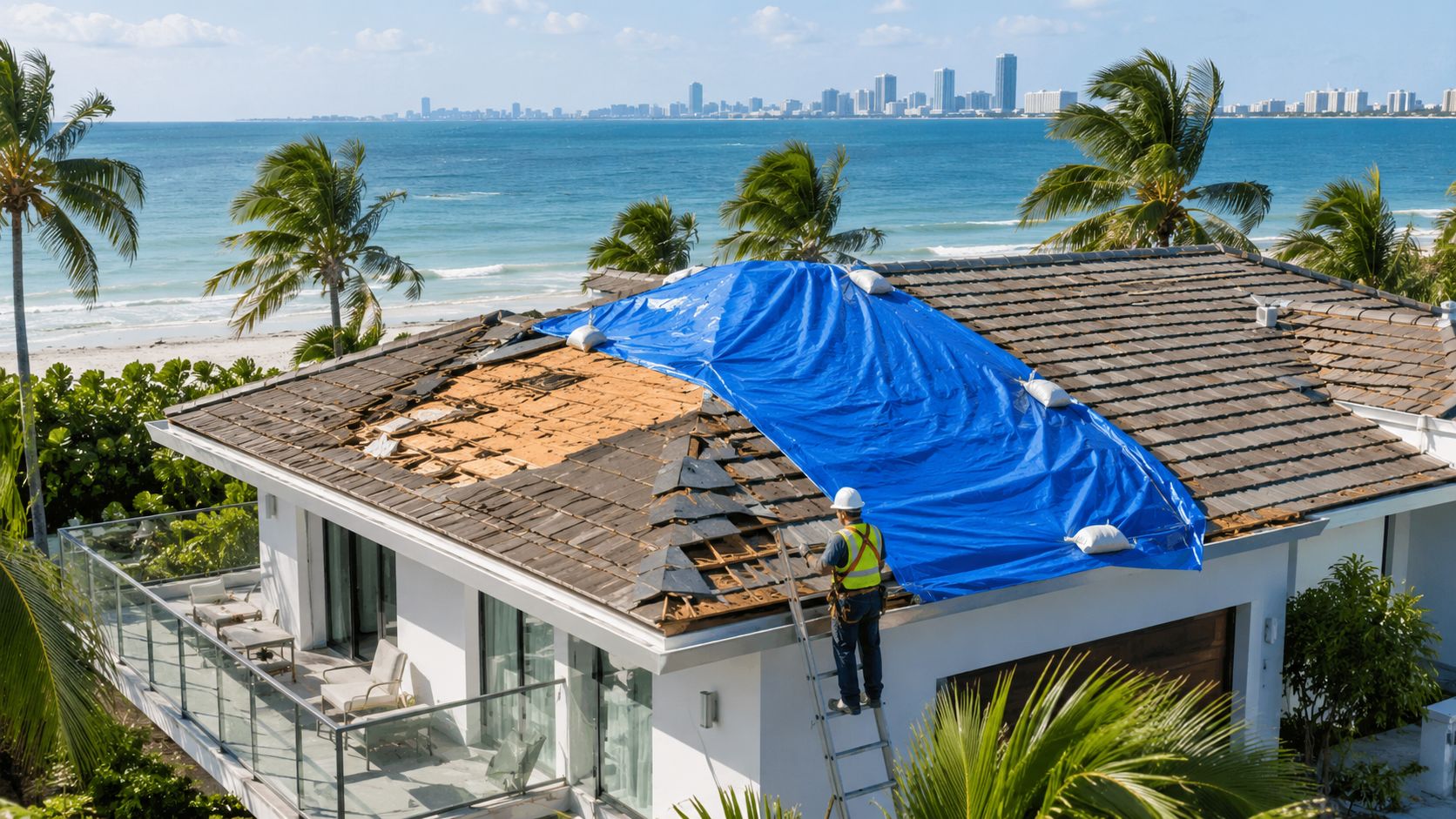
The wind's gone quiet, but the roof isn't telling you the full story yet. In Miami Beach, that's the moment many homeowners feel the most pressure, because the visible mess on the ground rarely matches what's happening above the ceiling. The smart move is to slow down, protect the property, and document everything before anyone starts moving debris or throwing up a tarp.
Hurricane Roof Damage Repair Miami Beach isn't just a search for a roofer, it's a sequence of decisions that can protect your home, your claim, and your wallet. The recovery process is often long, code-sensitive, and tied to what you prove in the first hours after landfall. Industry data shows storm-related roofing insurance claims have risen 40% since 2015, and insurers now pay roughly $15 billion to $20 billion annually for roof damage nationwide, with Hurricanes Irma and Michael driving major roof damage and accounting for 55% and 75% of all maintenance work, respectively, according to storm damage claims data.
Table of Contents
- After the Hurricane The First Steps to Recovery
- Your First 24 Hours A Post-Storm Action Plan
- How to Assess Your Roof Damage Like an Expert
- Deciding Between Roof Repair and Full Replacement
- Navigating Contractors and Miami Beach Permitting
- Strengthening Your Roof for the Next Hurricane Season
After the Hurricane The First Steps to Recovery
A storm can leave a Miami Beach block looking normal from the street and still hide serious roof failure underneath. I've seen homeowners focus on broken branches and blown fence panels while water stealthily works its way into insulation, decking, and interior finishes. That's why the first reaction should never be panic, it should be sequence.
Start with safety, not repairs
Do not climb the roof, and don't let family members or neighbors do it either if there's any chance of slip hazard, loose power lines, or unstable decking. Stay clear of obvious electrical dangers, then walk the property from the ground and look for the most obvious warning signs, such as fallen tile, torn underlayment, missing flashing, or water entering through soffits and ceilings.
Once the property is safe enough to approach, treat the damage as both a building problem and a claims problem. Hurricane roof repair in Miami Beach is rarely a simple patch job because the work has to account for hidden water intrusion, permit requirements, and current Florida Building Code expectations. That's why every move after the storm has to support both immediate protection and later documentation.
Think in terms of recovery, not cleanup
The roof is only one part of the system. If water has entered the home, the roof, attic, insulation, and interior finishes now depend on one another, and the repair order matters. The longest delays usually come from homes that were not stabilized quickly, because the damage expands while people wait for the weather to calm down or for a contractor to call back.
Practical rule: protect the structure first, then preserve the paper trail, then authorize permanent work.
That order matters in Miami Beach because roof damage here is often tied to permit delays, contractor backlogs, and hidden intrusion that doesn't show up until the attic or drywall is inspected. In a recovery cycle like that, speed matters, but only if it's paired with documentation and code-compliant planning.
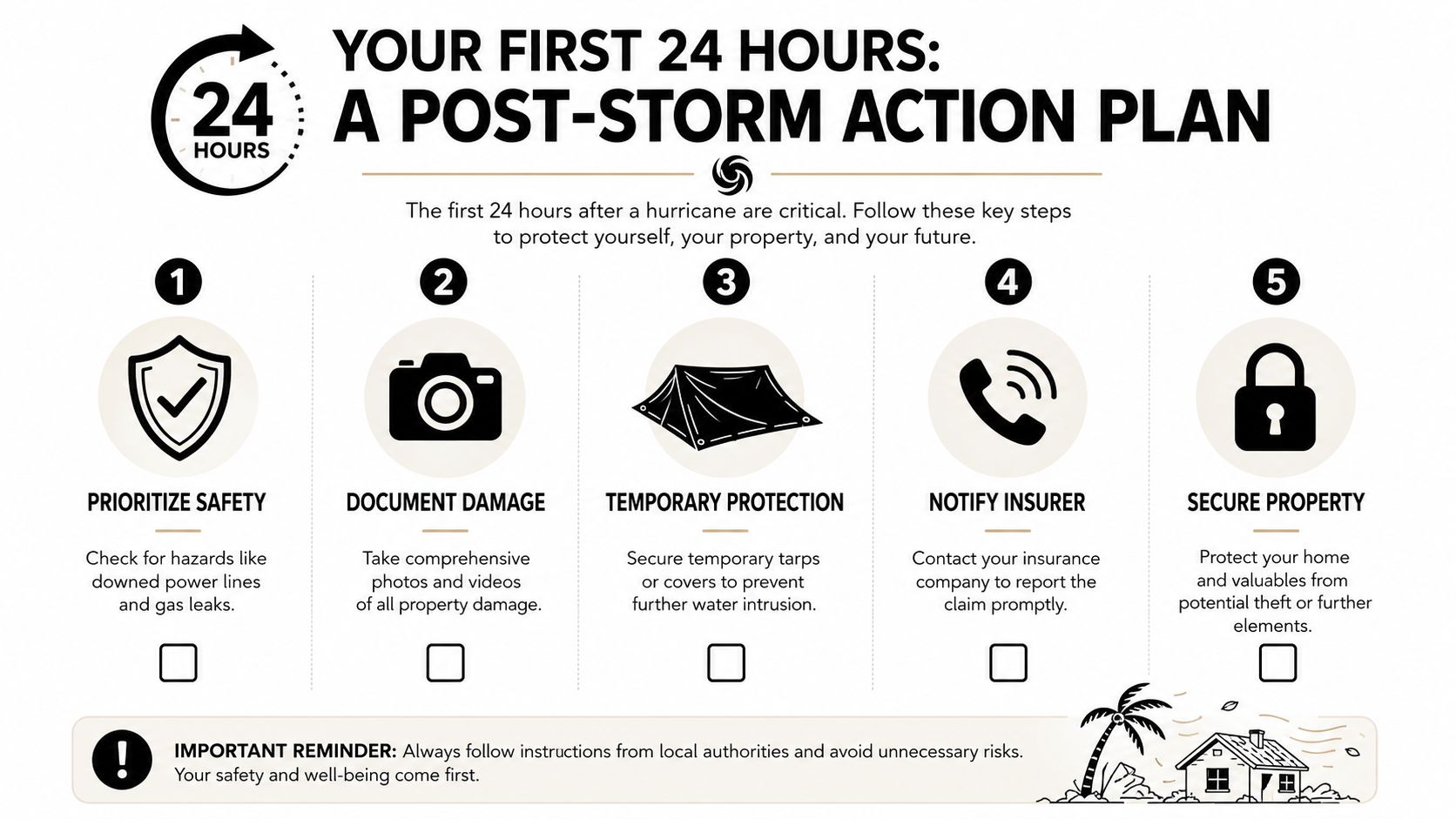
Your First 24 Hours A Post-Storm Action Plan
The first day after the storm is about controlling the scene before it controls you. If you wait to document, you lose proof. If you clean too early, you may erase the very evidence your insurer needs to see.
Photograph before anything moves
Take wide photos of all sides of the home, then move in for close-ups of missing tiles, lifted shingles, torn flashing, fallen tree limbs, gutter impact, and any visible openings. Inside, shoot every room with water marks, ceiling staining, damp baseboards, and wet flooring before towels, buckets, or fans change the scene. Neutral disaster-recovery guidance stresses exactly that approach, exterior and interior photos first, all sides of the home, close-ups of specific damage, and room-by-room evidence of water marks before major repairs begin, as temporary fixes often happen before adjusters arrive, according to disaster repair guidance.
Keep the phone steady and narrate what you're seeing. State the room, the date, and what changed since the storm, because a simple photo without context can leave gaps later. If you're unsure what matters, take more than you think you need.
Document, then stabilize
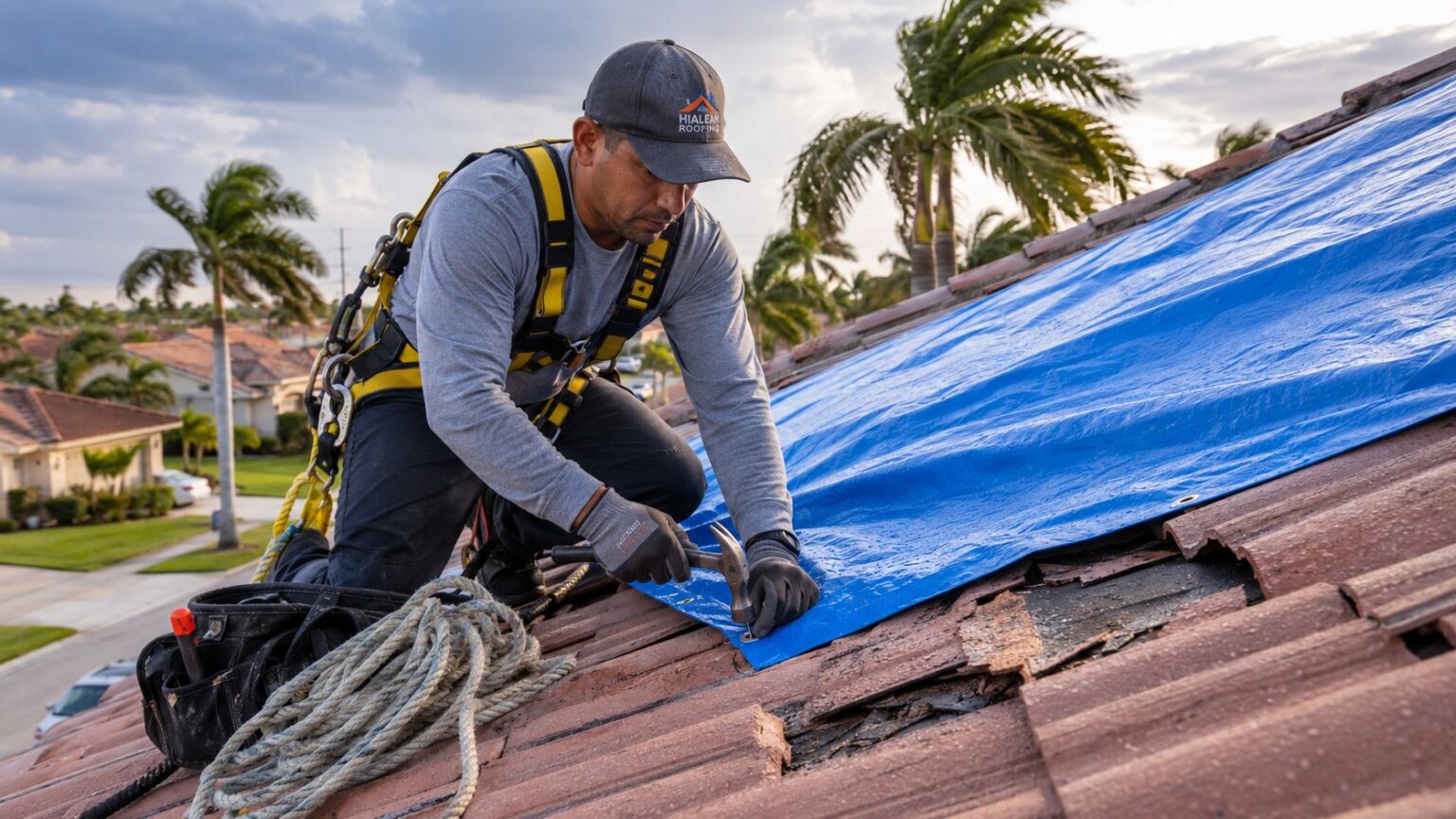
After the photos, the roof gets temporary protection. That may mean tarping, boarding openings, or blocking active leaks until a roofer can assess the structure. If you need a reference on temporary stabilization methods, temporary storm roof repair info is a useful starting point for understanding how emergency coverage is typically handled.
One thing homeowners often get wrong is cleaning up first and calling the insurer second. That usually feels productive in the moment, but it can make the claim harder to verify. Keep damaged materials unless they're creating a safety hazard, and don't throw away soaked insulation, broken tiles, or torn flashing until the adjuster or contractor has reviewed them.
The internal record matters too. Save emails, take screenshots of weather alerts, and keep a simple written log of who entered the property and when. If you need an example of how emergency access is sometimes staged, this internal reference shows the kind of structure contractors use for rapid response: emergency roof repair reference image.
Notify the insurer early
Call the carrier as soon as you've documented the condition and secured the property. Early notice helps establish that you acted promptly, which matters when water intrusion is still active. Then keep a running list of claim numbers, adjuster names, and the dates of every conversation.
Don't let anyone tarp, remove, or toss materials before you've photographed the damage unless there's an immediate safety risk.
That one habit protects the claim more than most homeowners realize.
How to Assess Your Roof Damage Like an Expert
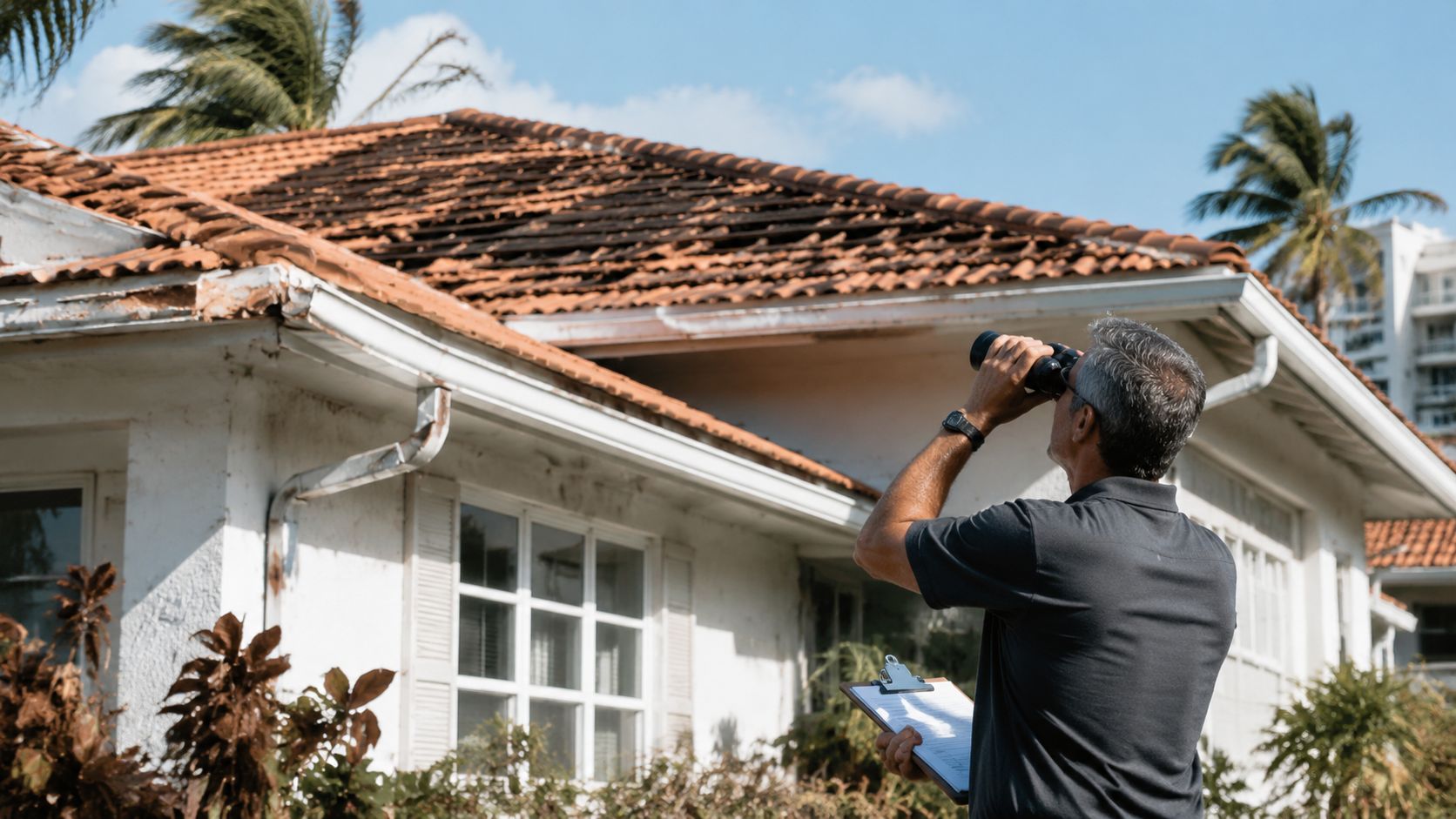
A proper assessment starts from the ground, but it doesn't end there. Miami-Dade guidance is clear that you can't rely on what you see from the driveway, because damage can hide in the roof assembly and the attic may tell the story first, with staining or wet insulation as the initial clue according to roof damage signs guidance.
What to look for outside
From the ground, scan the roof edge, ridge, valleys, vents, and any penetrations where flashing meets the surface. Missing tiles, cracked shingles, lifted metal, displaced ridge caps, and bent gutters all matter because they often point to wind uplift or impact.
Check the yard and downspouts too. Broken tile fragments, asphalt granules, and debris caught in gutters can tell you where water and wind were hardest on the system. On flat and low-slope roofs, ponding areas and compromised seams are especially worth noting because they often fail where the surface changes direction.
What the attic can reveal
If it's safe to enter, look for daylight peeking through the roof deck, dark staining, damp wood, or wet insulation. Those signs often show that water has already passed the outer covering and started moving through the assembly. That doesn't automatically mean the whole roof is lost, but it does mean the damage is deeper than a surface patch.
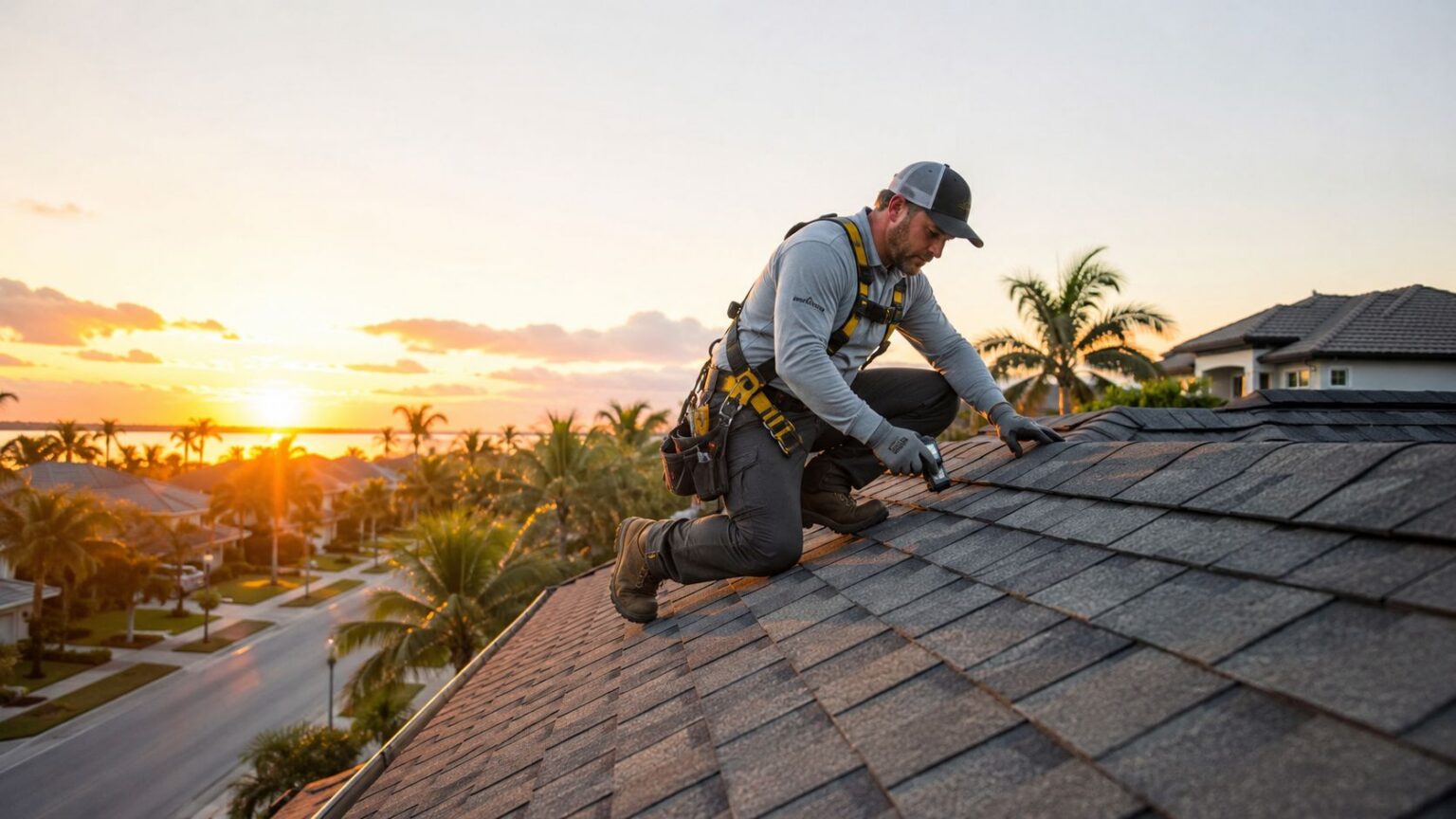
A professional inspection is vital. A homeowner can spot symptoms, but a roofer can confirm whether the damage is isolated or whether hidden intrusion has spread through underlayment, decking, or flashing details. If you need a visual reference for what a documented inspection setup can look like, this roofing inspection image is a useful example: roof inspection reference image.
How to separate urgent from non-urgent damage
Use a simple filter. If water is entering the home, if the roof is visibly open, or if attic materials are wet, treat it as urgent. If the roof looks intact from below but there are staining, lifted pieces, or signs of previous patchwork, get it inspected before assuming it's minor.
Plain truth: ground-level views can tell you something is wrong, but they rarely tell you how bad it is.
That's why a careful assessment is less about confidence and more about evidence.
Deciding Between Roof Repair and Full Replacement
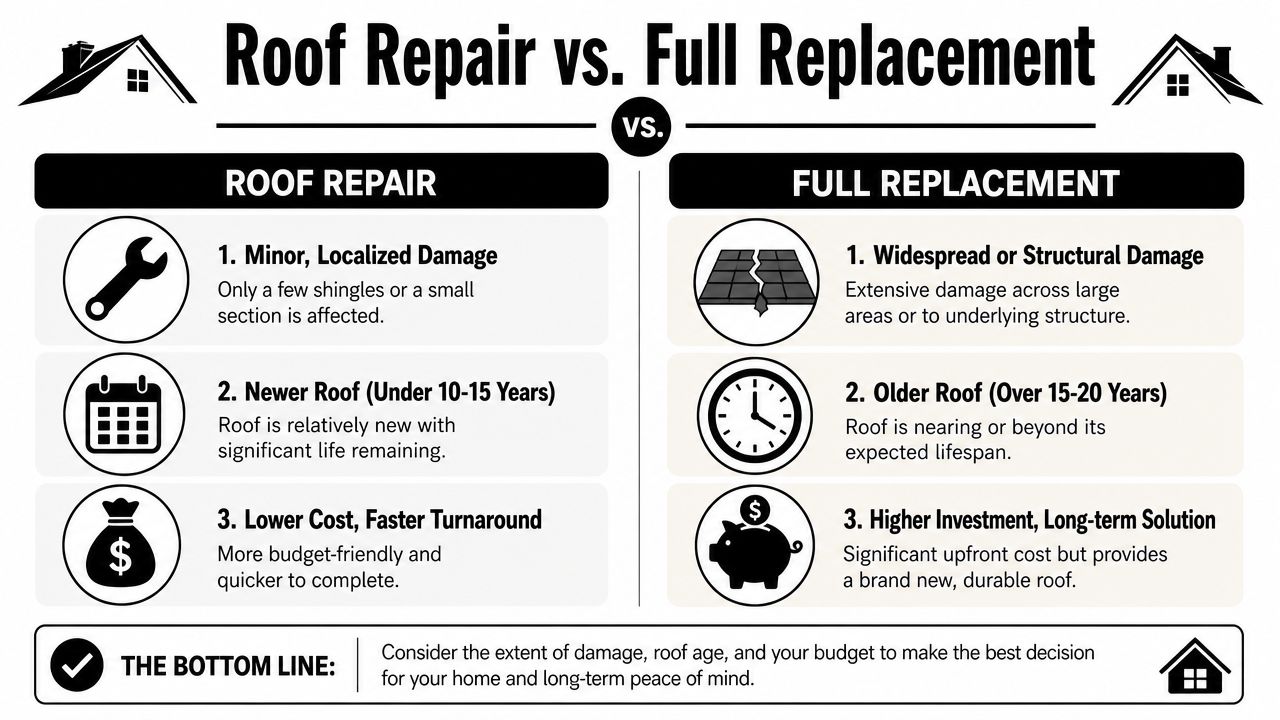
The repair-or-replace decision is where a lot of homeowners lose money by guessing. A quick patch can be smart if the damage is small and localized, but Florida's post-storm rules can also force a replacement when the damaged section crosses the 25% threshold in a roof section, and roofs permitted before March 1, 2009 are especially subject to that rule, according to roof repair versus replacement guidance.
When a repair still makes sense
Repair is the better answer when the damage is confined to a small zone, the roof still has useful life left, and the underlying structure is sound. A newer roof with limited missing material can often be restored without disturbing the whole system, as long as the repair stays code-compliant and the surrounding materials can still tie in properly.
That said, local conditions matter. In Miami Beach, a “small” problem can become a larger one if the roof has repeated patchwork, soft decking, or previous leak history. Once those conditions show up, the smart repair often stops being a repair and starts becoming a partial rebuild.
When replacement is the safer call
Replacement becomes more attractive when the roof is older, damage is widespread, or the assembly has multiple weak points. A roof with repeated leaks, degraded flashing, or large areas of compromised material may cost less in the long run if it's rebuilt once rather than patched repeatedly after every storm.
If you're trying to decide how to finance that scope, it can help to explore investor rehab options when the property needs broader restoration work beyond a simple roof patch. That's not a roofing decision by itself, but it can affect whether the whole exterior recovery gets done on time.
What the market reality looks like
In Miami Beach hurricane restoration cases, water-damage repair costs are described as ranging from a few thousand dollars for contained incidents with fast mitigation to tens of thousands of dollars when flooding affects multiple rooms or structural components and response is delayed, according to Miami Beach restoration cost guidance. That spread is why speed, scope, and code compliance matter more than the cheapest quote.
Use the roof's age, the percentage of damage, and the condition of the deck as the decision tree. If the roof can't pass that test, patching it only postpones the larger bill.
Navigating Contractors and Miami Beach Permitting
After a hurricane, the market fills up with people who sound ready and disappear once the deposit clears. That's why the contractor question is really a trust question. A legitimate roofer will talk about licensing, insurance, permits, and scope before they talk about price.
What to verify before anyone starts work
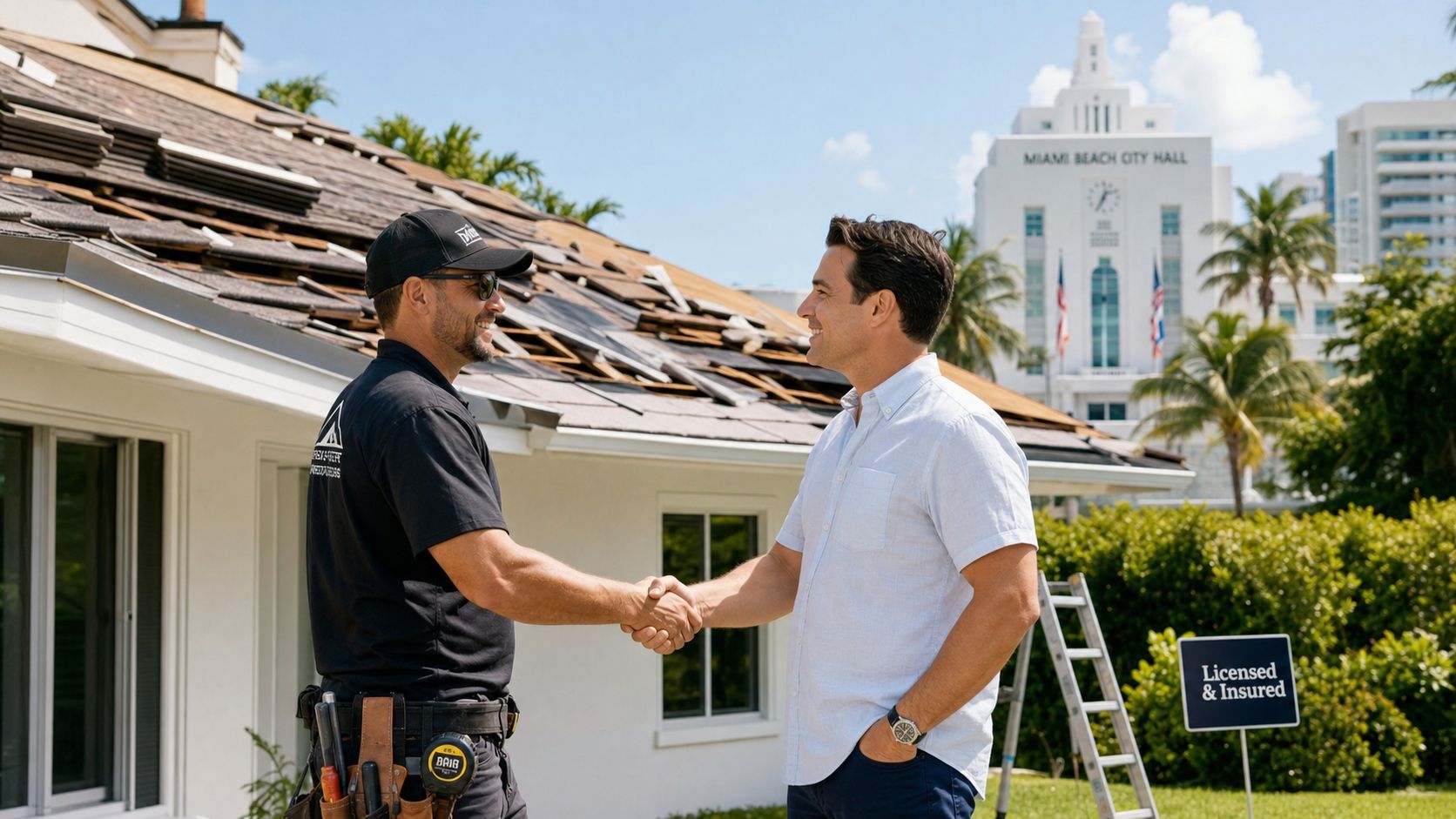
Ask for a Florida license, proof of general liability insurance, and workers' compensation coverage. If a contractor hesitates, sends blurry documents, or wants to skip the paperwork because “it's just emergency work,” walk away. Emergency conditions do not cancel liability, and they don't erase permit requirements.
This is also where you should insist on a written scope. It should say whether the job is a stabilization, repair, or full replacement, and it should spell out what material is being removed, what gets reused, and what gets permitted. The more detailed the scope, the less room there is for arguments later.
Why permitting matters in Miami Beach
Miami Beach sits inside a high-wind environment where roof work can't be treated as a casual fix. Repairs and replacements have to be permitted and brought back to current Florida Building Code and HVHZ expectations, not to whatever the roof looked like before the storm. That means the contractor should be comfortable talking about flashing details, fastening patterns, and code-compliant recovery rather than just selling shingles or tile.
For estimating and scope control, some contractors use tools like Exayard roofing estimating software to organize material counts and labor line items. The software doesn't replace field judgment, but it can help keep a repair proposal organized and easier to compare.
Red flags that should stop the job
Watch for pressure to sign immediately, requests for cash-only payment before any inspection, or promises that a full permit won't be needed. Also be wary of anyone who avoids discussing attic damage, underlayment, or code upgrades. Those omissions usually show up later as delays, change orders, or leaks.
If the quote only describes surface materials and ignores the hidden layers, it's not a complete roofing proposal.
A solid contractor protects the home and the claim file. A bad one creates a second disaster after the first storm has already passed.
Strengthening Your Roof for the Next Hurricane Season
Once the emergency is behind you, the smartest money goes into reducing the next round of damage. That doesn't mean overbuilding everything. It means fixing the weak points that hurricane wind and water usually exploit first.
Upgrade the parts that fail under pressure
Impact-resistant shingles or a well-designed metal roofing system can improve wind uplift resistance when installed correctly, especially if the rest of the roof assembly is sound. Secondary water barriers matter too, because they give the home another layer of protection if the outer covering is breached.
Reinforced roof-to-wall connections are worth attention as well. A strong surface with weak connections is still vulnerable, and a good reroof plan should think about the whole load path, not just the visible finish. That's especially true in Miami Beach, where the roof has to stand up to repeated exposure, not a one-time repair cycle.
Keep the roof on a maintenance schedule
Annual professional inspections catch small openings before they turn into active leaks. Loose flashing, cracked sealant, minor tile displacement, and clogged drainage are all easier to handle before hurricane season than after. A short inspection now can prevent a much larger claim later.
The roof that survives the next storm is usually the one that was maintained before the forecast turned serious.
Use this moment to make the roof harder to damage, not just easier to replace. The goal is a system that sheds water, resists uplift, and gives you a better shot at staying dry when the next named storm hits.
If your roof took a hit and you want a clear, code-aware plan, contact Paletz Roofing and Inspections for a professional assessment, emergency stabilization, or a repair-versus-replacement review that fits Miami Beach conditions.