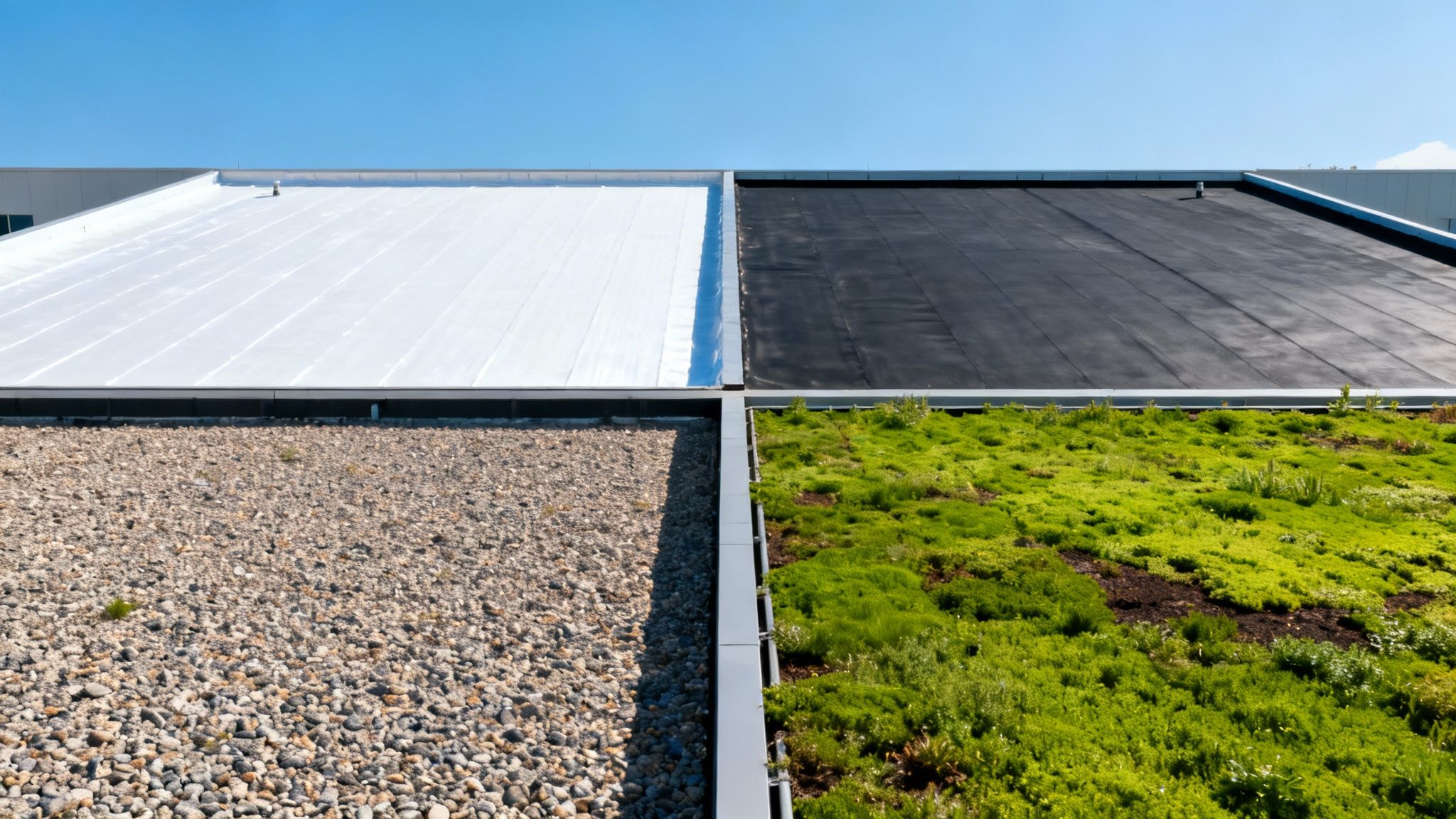
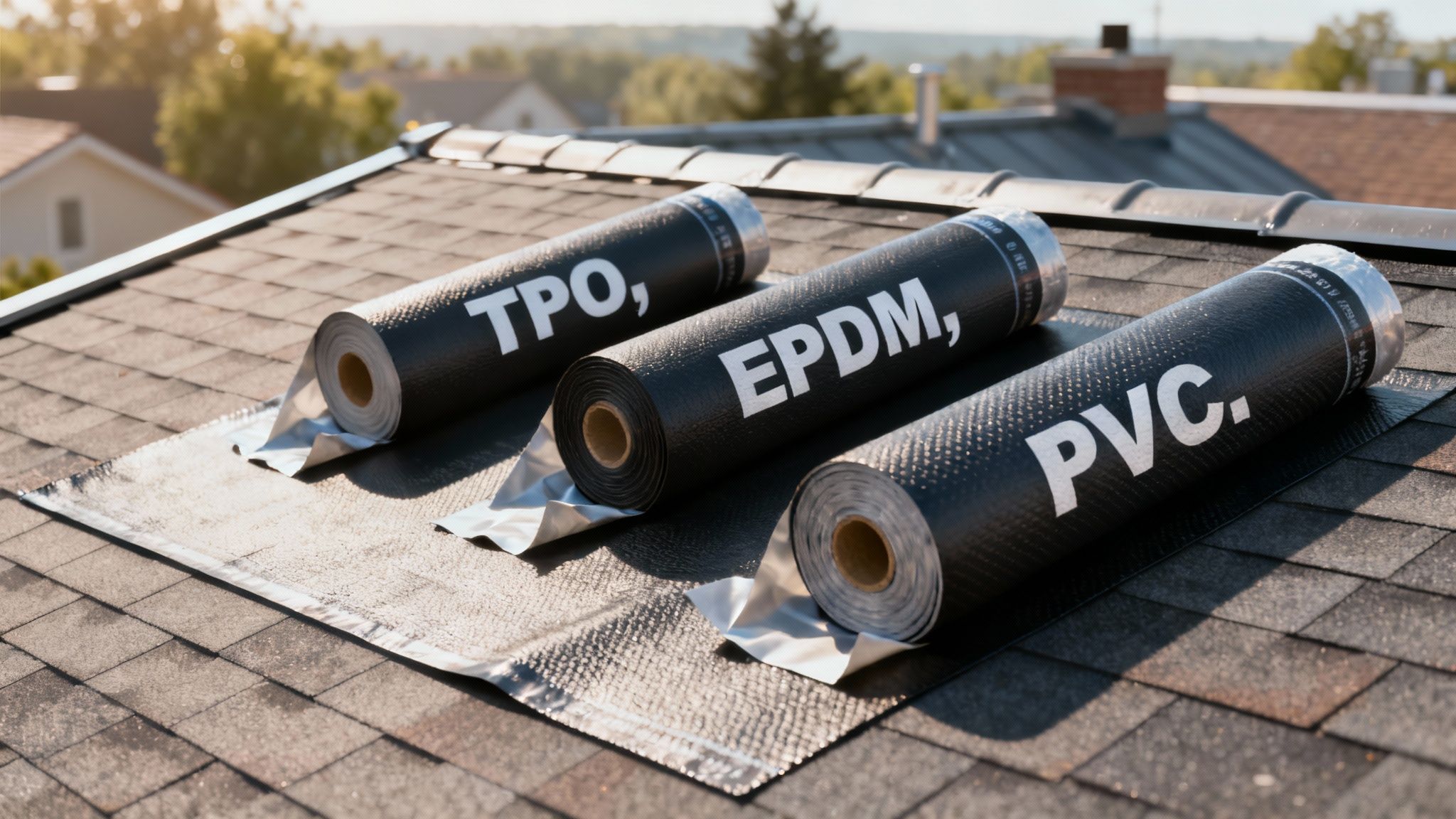
When it comes to low slope roof options, the best choices are almost always single-ply membranes like TPO, EPDM, and PVC, or multi-layered systems like Modified Bitumen. Unlike the shingles on a typical sloped roof that rely on gravity, these materials create a continuous, waterproof barrier that's absolutely essential for roofs with very little pitch.
Why Low Slope Roofs Need Special Attention
A lot of people hear "low slope roof" and immediately picture a surface that's completely flat, but that’s a common misconception. In reality, these roofs are more like a slightly tilted tray. They're engineered with a gentle pitch—usually between 1/4 to 2 inches of fall per foot—which is just enough to guide water toward drains.
This subtle incline is the single biggest thing that separates them from steep slope roofs.
Standard materials like asphalt shingles are designed to overlap, letting water shed quickly down a steep grade. On a low slope surface, that whole system falls apart. Water moves way too slowly, giving it plenty of time to creep underneath the shingles, which is a recipe for leaks, rot, and serious structural damage. To get a better sense of what a finished low slope roof looks like, you can explore examples of modern flat roofing applications.
The Science of Water Management
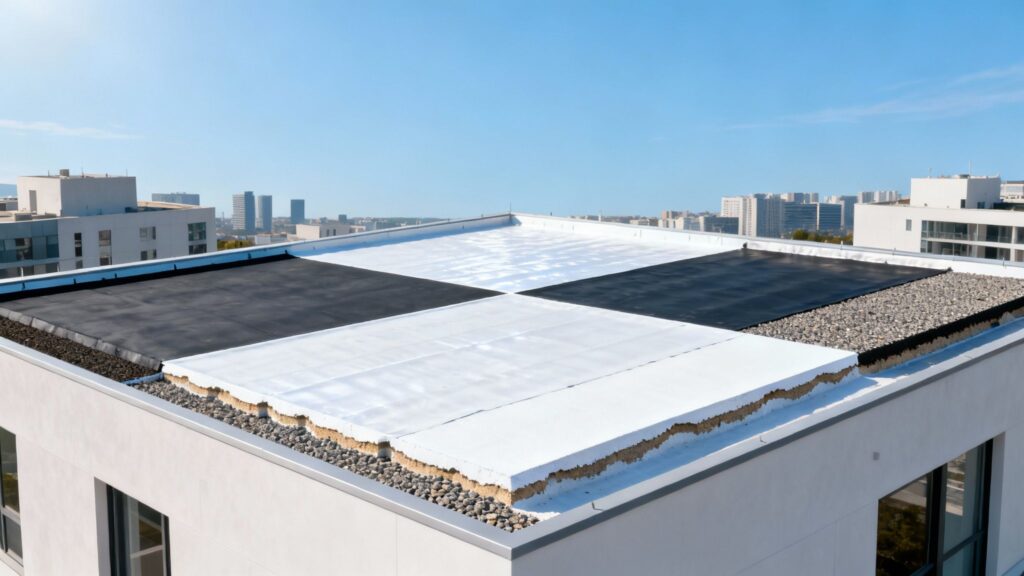
Because they can't rely on a steep pitch to do the heavy lifting, low slope roofing systems have to function as a single, seamless waterproof membrane. This is a fundamental shift in how we think about roofing. Instead of just shedding water, these systems are built to hold water if needed, creating a completely sealed barrier against any moisture getting through.
A low slope roof doesn't just shed water; it must manage it. The entire system is engineered to be a seamless, waterproof shield, which is why material choice is not just a suggestion—it's a requirement for performance.
This infographic does a great job of breaking down the key differences between low and steep slope systems.
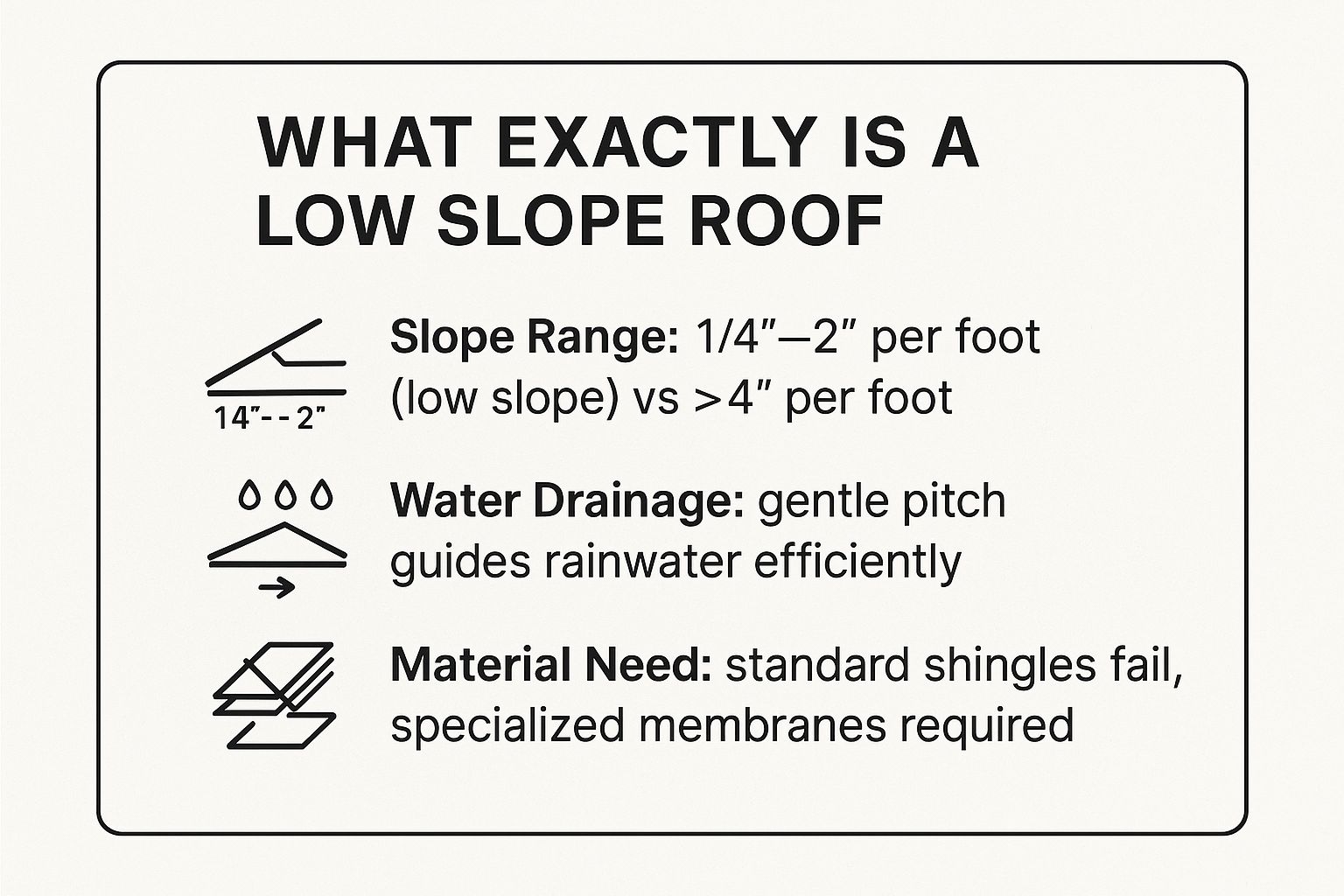
As you can see, the minimal pitch of a low slope roof is what drives the need for specialized, seamless materials that are up to the task of preventing leaks. Grasping this core principle is the first step toward picking a durable and effective roofing solution for your property. In the sections that follow, we'll dive into the specific materials engineered to meet these unique demands.
Comparing Modern Single-Ply Membranes
When you look at modern low-slope roofs, one category stands out above all others: single-ply membranes. These have become the undisputed champions in the commercial roofing world, and for good reason.
Think of them as giant, perfectly engineered sheets of high-tech rubber or plastic. We roll them out across the entire roof surface to create a single, seamless, and completely waterproof barrier. This technology is so effective that it now dominates a huge slice of the commercial sector.
The market numbers back this up. The global demand for these low-slope roofing membranes hit $4.33 billion in 2021 and is on track to reach $5.47 billion by 2025. That’s not just growth; it’s a clear signal that building owners are choosing the superior waterproofing and long-term durability these systems provide.
Three key players make up this category: TPO, EPDM, and PVC. They all aim to do the same job, but their chemical makeup gives each one a unique set of strengths and weaknesses.
TPO: The Energy-Efficient Choice
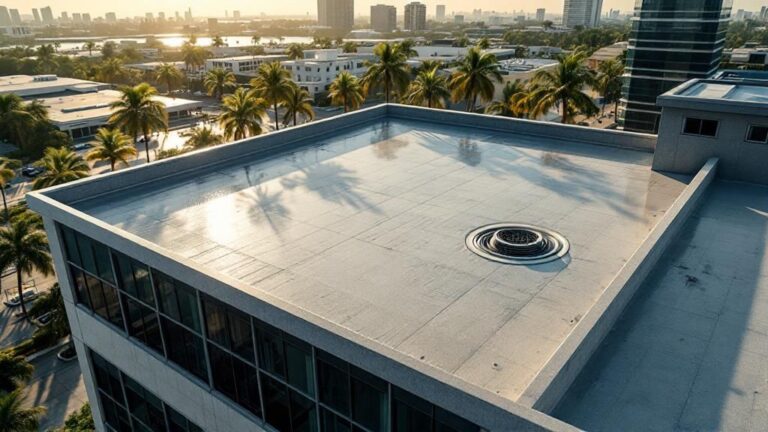
Thermoplastic Olefin, which everyone just calls TPO, has seen explosive growth in the commercial roofing scene. It’s usually a brilliant white, and that color is its superpower.
TPO’s bright surface is incredibly reflective. It acts like a giant mirror, bouncing the sun's harsh rays away from the building. This simple act drastically reduces heat absorption, which can lead to some serious savings on cooling costs, especially during those long, hot summer months.
- Key Benefit: Exceptional energy efficiency due to its high heat reflectivity. It's a no-brainer for buildings in sunny climates.
- Installation: The seams are welded together with a hot-air gun. This process melts the material at the edges, fusing them into one continuous, monolithic piece—far stronger and more reliable than any glued or taped seam.
- Drawback: It's the new kid on the block compared to the others. While today's TPO formulations are excellent, the material just doesn't have the same decades-long track record as its competitors.
EPDM: The Durable Workhorse
For over 50 years, Ethylene Propylene Diene Monomer—or EPDM for short—has been the go-to choice for a tough, reliable roof. At its core, EPDM is a high-performance synthetic rubber, and it has absolutely earned its reputation as the industry’s durable workhorse.
Its typically black surface is incredibly resistant to the punishing effects of UV radiation, hail, and extreme temperature swings. Think of it as the seasoned veteran of flat roofing; it’s seen it all and can handle just about anything nature throws at it.
EPDM’s rubbery flexibility is its secret weapon. It allows the roof to expand in the summer heat and contract in the winter cold without cracking or becoming brittle. This makes it an incredibly robust choice for climates that see dramatic seasonal changes.
PVC: The Resilient Defender
Polyvinyl Chloride, or PVC, is another thermoplastic membrane celebrated for its sheer strength and resilience. Just like TPO, its seams are heat-welded to create a permanent, watertight bond that is second to none.
Where PVC really shines, though, is in its ability to stand up to harsh conditions. It offers top-tier resistance to chemicals, grease, animal fats, and even fire. This makes it the perfect defender for buildings like restaurants, airports, or manufacturing plants where exposure to these elements is a daily reality.
When you're looking at different options, it's helpful to see what trusted manufacturers offer. For example, products like Sikamembran single-ply membranes are known for their high performance and versatility in these kinds of low-slope applications.
The choice between TPO, EPDM, and PVC often comes down to balancing three factors: your local climate, the building's specific use, and your budget. There is no single "best" option—only the best option for your unique situation.
To make things a little easier, we've put together a quick comparison to help you see how these popular low-slope options stack up against each other.
Single-Ply Membrane Roofing At a Glance
| Feature | TPO (Thermoplastic Olefin) | EPDM (Ethylene Propylene Diene Monomer) | PVC (Polyvinyl Chloride) |
|---|---|---|---|
| Typical Color | White, Gray, Tan | Black (White available) | White, Gray, Tan |
| Average Lifespan | 20-30 years | 25-40 years | 20-35 years |
| Installation | Heat-welded seams | Adhered or mechanically attached; taped seams | Heat-welded seams |
| Best For | Sunny climates needing energy efficiency | Climates with extreme temperature swings | Buildings with chemical/grease exposure (e.g., restaurants) |
| Key Advantage | High solar reflectivity (cool roof) | Proven longevity and flexibility | Superior chemical and fire resistance |
| Main Drawback | Shorter real-world track record | Black color absorbs heat | Typically higher initial cost |
This table gives you a solid starting point, but the best decision always comes from a detailed conversation with a roofing professional who understands your building’s specific needs.
Understanding Built-Up and Modified Bitumen Roofing
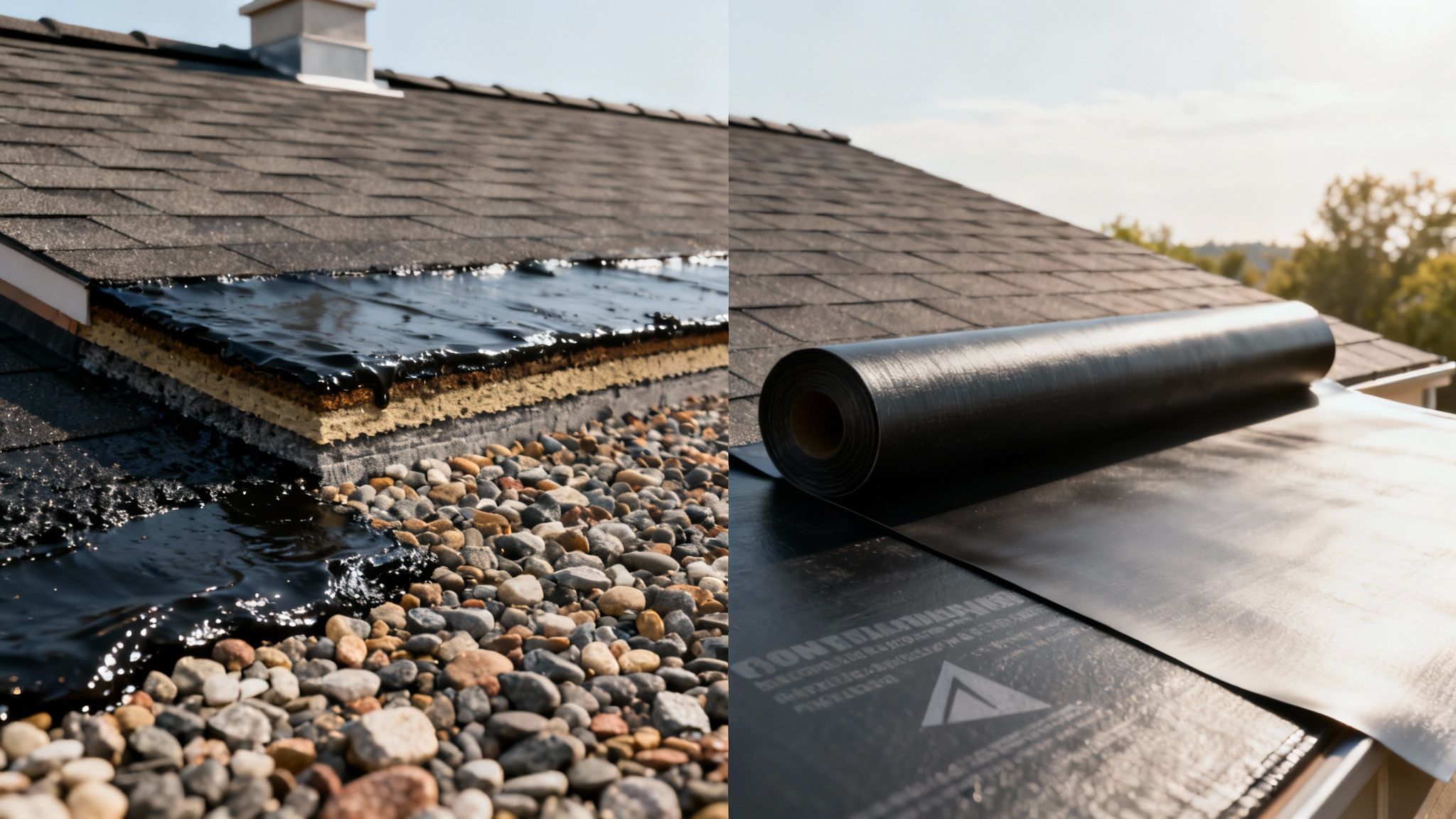
While sleek, modern single-ply membranes get a lot of attention these days, some of the toughest low slope roof options are the ones that have been trusted for generations. These are the heavyweights of the industry, built on a time-tested philosophy of layered, redundant protection: Built-Up Roofing (BUR) and its more advanced cousin, Modified Bitumen.
Think of building a roof like making a club sandwich. That’s the basic idea behind Built-Up Roofing (BUR), which most people know as a "tar and gravel" roof. It's assembled right on-site by layering reinforcing fabrics (called ply sheets) with applications of hot liquid asphalt (bitumen).
This process creates a thick, seamless, and incredibly durable waterproof barrier. The beauty of this system is its redundancy—if one layer were ever to fail, there are several more right behind it ready to keep the water out. The whole thing is then finished with a top layer of gravel or a reflective coating, which acts as a shield against harsh UV rays and physical damage from foot traffic.
The Evolution to Modified Bitumen
As roofing technology moved forward, the industry wanted something that combined the brute strength of BUR with the flexibility of newer systems. That's where Modified Bitumen (Mod-Bit) comes in. It’s essentially a factory-made, high-tech version of the traditional built-up roof.
With Mod-Bit, manufacturers take standard asphalt and infuse it with rubber or plastic polymers. This sounds simple, but it completely changes the material's properties, creating roofing sheets that are far more flexible and resilient. It’s like giving the asphalt a dose of elasticity, allowing it to stretch and shrink with temperature swings instead of cracking under pressure.
This added flex makes Mod-Bit incredibly tough, especially in climates that see big temperature changes from day to night. To get a better sense of how these materials look on a finished building, you can view a gallery of completed low slope roofing projects.
Modified Bitumen takes the proven, multi-layer redundancy of a classic BUR system and enhances it with modern polymer technology. The result is an industrial-strength membrane that offers superior elasticity and performance.
Application Methods Matter
A key difference among these asphalt-based low slope roof options is how they’re put down. The installation method has a huge impact on everything from job site safety to the roof's final performance and lifespan.
- Hot-Applied: This is the old-school method for BUR and some Mod-Bit systems, involving kettles of hot, liquid asphalt. It creates a solid, monolithic bond but comes with strong fumes and serious safety considerations.
- Torch-Applied: A popular choice for Mod-Bit, this method uses an open-flame torch to melt the underside of the roofing roll, fusing it directly to the surface below. It’s effective, but it absolutely requires a highly skilled and careful professional.
- Cold-Applied: A much safer approach, this method uses specially designed cold-process adhesives to bond the layers together. It completely eliminates the risks that come with open flames and hot kettles.
- Self-Adhered: This is the most modern and safest technique. These Mod-Bit sheets come with a powerful adhesive backing protected by a peel-off film. The crew just peels and sticks the layers, creating a strong bond without any torches or messy liquid adhesives.
At the end of the day, both BUR and Modified Bitumen are true workhorse systems. They're known for their incredible puncture resistance and proven track record, making them a top choice for commercial roofs that see a lot of action.
Exploring Cool Roofs and Sustainable Solutions
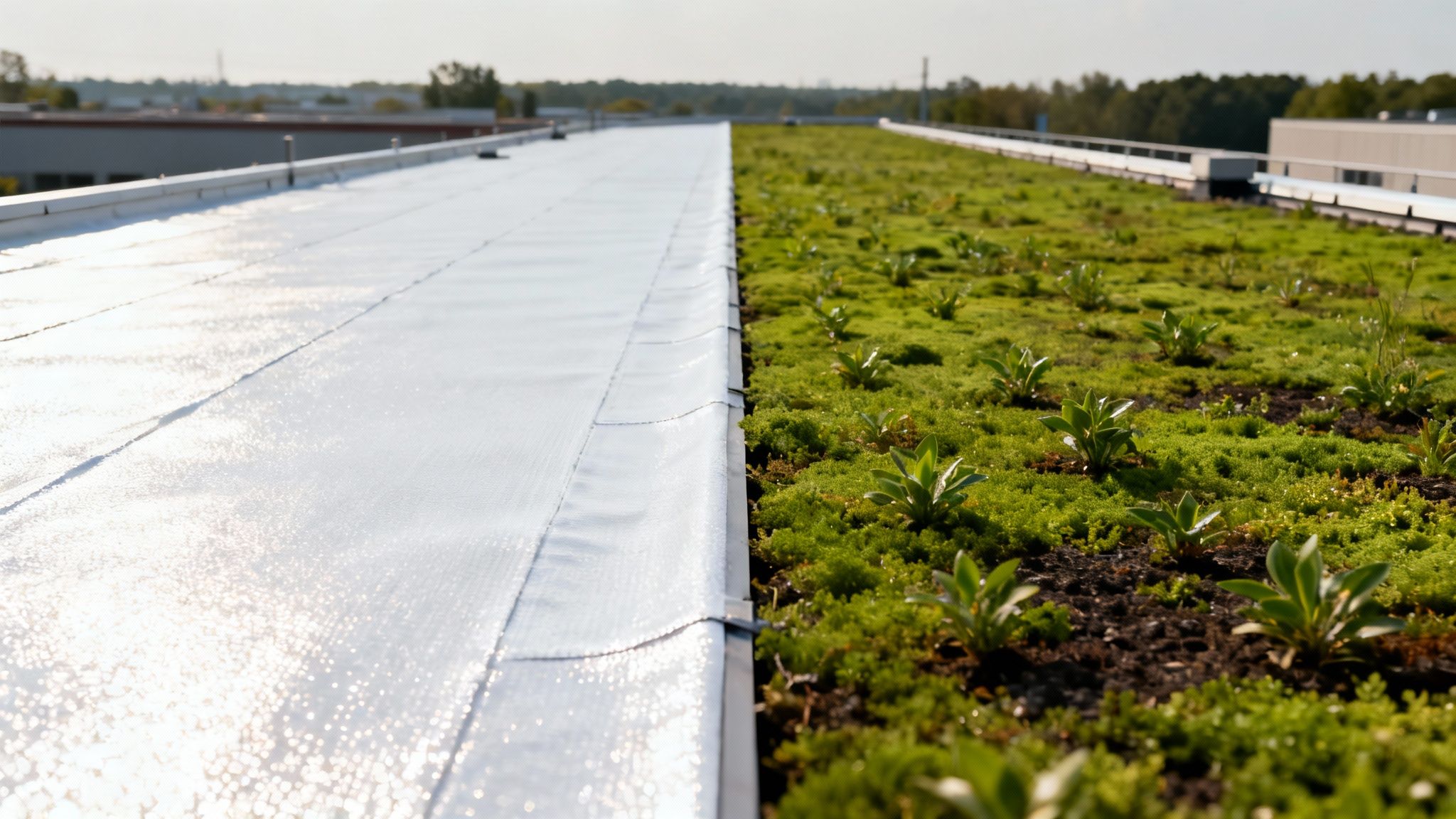
These days, a roof does more than just keep the rain out. Modern low slope roof options have evolved, with many now engineered to improve a building's sustainability and slash long-term energy costs. It’s a smart shift, creating roofing systems that not only protect but also actively reduce a building's environmental impact and day-to-day expenses.
Leading this charge are cool roofs. The concept is brilliantly simple. We all know dark surfaces soak up heat while light ones reflect it away. A cool roof puts this basic principle to work on a massive scale, using highly reflective materials—like those bright white TPO membranes we covered earlier—to bounce a huge chunk of the sun’s heat back into the atmosphere.
It's just like choosing a white t-shirt over a black one on a scorching summer afternoon. The effect on a building is almost identical, preventing a massive amount of heat from getting inside and keeping the interior spaces much cooler. This immediately cuts the workload on air conditioning systems, which can add up to serious savings on your energy bills.
The Science of Reflectivity
A cool roof's performance is measured by two key metrics: solar reflectance and thermal emittance. Solar reflectance tells you how much solar energy is bounced away, while thermal emittance measures how well the surface sheds any heat it did absorb. Get a material with high marks in both, and you can lower a roof’s surface temperature by as much as 50°F.
This technology isn't just a niche idea; it's a major force in the market. The global demand for cool roof systems is part of an industry projected to soar to $27.1 billion by 2025. Why? Because building owners are seeing real results, with energy savings typically falling between 10% and 30% on cooling costs alone.
Choosing a cool roof is a proactive investment in your building's efficiency. It’s a passive cooling system that works from day one to lower energy consumption, reduce urban heat island effects, and extend the life of the roofing membrane itself by minimizing thermal stress.
Green Roofs: Living Infrastructure
Another powerful, sustainable solution is the green or vegetated roof. This incredible system transforms a standard low slope roof into a living, breathing ecosystem. It’s built in layers, starting with a waterproofing membrane, followed by a root barrier, a drainage system, and finally, a layer of soil and plants.
These roofs offer far more than just a pretty view. They deliver a whole host of environmental and financial perks that you just can't get from a traditional system. For a closer look at these kinds of eco-friendly building practices, check out this comprehensive guide to green construction materials.
Here’s a quick rundown of what a green roof can do:
- Stormwater Management: A green roof acts like a giant sponge, absorbing rainwater and dramatically cutting down the runoff that overwhelms storm drains.
- Improved Air Quality: The plants naturally filter pollutants and produce oxygen, making the air around the building cleaner.
- Enhanced Insulation: Those layers of soil and vegetation provide fantastic thermal insulation, helping to keep the building cooler in the summer and warmer in the winter.
- Usable Amenity Space: They can be designed as rooftop gardens, patios, or recreational areas, adding valuable and desirable square footage to the property. You can see how a green roof can be integrated into a design to create truly stunning and functional spaces.
How to Choose the Right Low Slope Roof
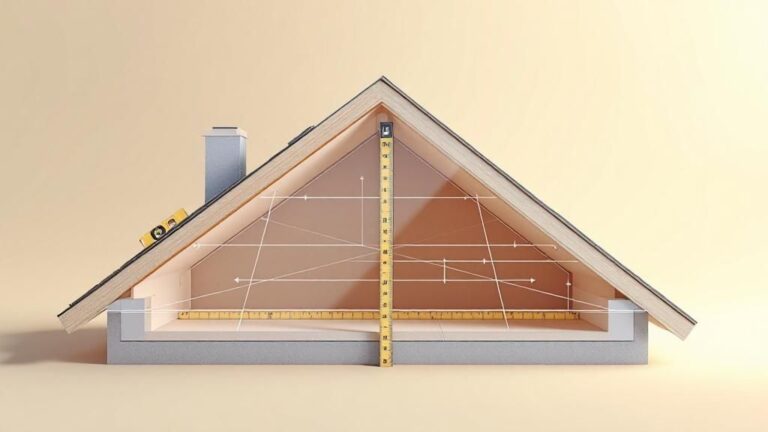
Picking the right system from all the low slope roof options out there can feel overwhelming, but it really just boils down to asking three practical questions about your project. By working through your budget, the local climate, and how you use the building, you can zero in on the solution that gives you the best performance and long-term value.
Think of it like creating a blueprint for your decision. Each question you answer adds another critical detail, making sure the final choice is a perfect fit for your building's needs.
Aligning Budget with Long-Term Value
For most property owners, the first and biggest factor is always the budget. It's tempting to just look at the upfront installation cost, but the smart money is on balancing that initial investment with what you'll spend down the road. A cheaper material might save you a few bucks today, but it could lead to bigger maintenance bills and a shorter lifespan, costing you a whole lot more in the long run.
For example, a premium PVC roof might have a higher price tag than other systems right out of the gate. But its incredible durability and resistance to chemicals could mean fewer repairs and a much longer service life, giving you a lower total cost of ownership over 20 to 30 years.
Your budget isn’t just about the installation price; it’s about lifetime value. The most cost-effective roof is one that provides durable, reliable protection with minimal maintenance, saving you money for decades to come.
Matching Your Roof to the Climate
The weather in your area plays a huge role in figuring out which roofing material is going to hold up. A roof in a hot, sunny place like South Florida has completely different needs than one in a region that gets heavy snow and freezing temperatures. Every material has its own strengths that are suited for specific environmental challenges.
Think about these climate-specific situations:
- Intense Sun and UV Exposure: In sunny areas, a highly reflective "cool roof" like white TPO is a fantastic choice. It bounces solar radiation back into the atmosphere, which helps keep the building cooler and cuts down on energy costs.
- Heavy Rain and Humidity: All low slope systems have to be waterproof, but materials with heat-welded seams like TPO and PVC offer superior protection against leaks, especially in places prone to torrential downpours.
- High Winds or Hail: For areas that get hit with severe storms, a multi-ply system like Modified Bitumen offers incredible puncture resistance, giving you a tough defense against physical damage.
Considering How the Building is Used
Finally, think about what your roof does day-to-day. Is it just a cover, or does it have other jobs? The answer will narrow your choices down in a big way. For instance, a roof on a restaurant with grease vents needs a material like PVC that can handle chemical and oil exposure without breaking down.
If your roof is going to see regular foot traffic from maintenance crews working on HVAC units, you'll want a system known for its toughness, like Modified Bitumen or a single-ply membrane with a dedicated walkway pad system. The goal is to pick a roof that's strong enough for its specific job without compromising its integrity.
Common Questions About Low Slope Roofing
When you start digging into the world of low slope roof options, a few questions always seem to pop up. Getting clear, straightforward answers is the key to feeling confident about protecting your property. Let's tackle some of the most common things property owners ask.
How Long Should a Low Slope Roof Last?
This is usually the first question on everyone's mind, and for good reason. You want to know how long your investment will hold up. While things like climate and how well you maintain it play a huge role, each type of roofing material has a general life expectancy. Knowing these timelines helps you balance the upfront cost against the long-term value you're getting.
Here’s a rough guide to what you can expect from the most popular systems:
- TPO (Thermoplastic Olefin): A modern favorite, you can generally expect a TPO roof to last somewhere between 20 to 30 years.
- EPDM (Ethylene Propylene Diene Monomer): This durable rubber membrane is a real workhorse, often performing reliably for 25 to 40 years.
- BUR (Built-Up Roofing): The classic multi-layer "tar and gravel" roof is a true heavyweight, frequently lasting 20 to 35 years or even longer with proper care.
Think of these numbers as a reflection of how well each material stands up to the sun, rain, and constant temperature shifts day in and day out.
What Are the Most Common Maintenance Issues?
Even the best-installed roof needs a little TLC to reach its full potential. Low slope systems have a few unique weak spots that you can easily stay ahead of with regular check-ups.
The issues we see most often include:
- Ponding Water: While these roofs are designed to handle some water, any area that stays wet for more than 48 hours is a red flag. That standing water will absolutely accelerate wear and tear.
- Seam Failures: The seams where roofing material is joined are almost always the weakest link. On some systems, the adhesives break down over time; on others, even heat-welded seams can be pulled apart by the building shifting and settling.
- Punctures and Blisters: Something as simple as foot traffic from an HVAC technician or a dropped tool can puncture the membrane. Blisters can also bubble up when moisture gets trapped between the roofing layers.
Proactive maintenance is without a doubt the single best way to get more years out of your roof. A small, inexpensive repair today can prevent a catastrophic—and very expensive—failure down the road.
Can I Install Solar Panels on My Roof?
You bet! In fact, a low slope roof is often a fantastic platform for a solar array. Unlike a pitched roof that forces you into a fixed direction, a flat surface gives you complete flexibility. Installers can use mounting systems to tilt the panels at the perfect angle for soaking up maximum sunlight.
That said, not all low slope roof options are created equal when it comes to solar. Modern, tough membranes like TPO and PVC are usually the top choice because they can handle the installation traffic and have a long service life that lines up with the 25-plus-year lifespan of solar panels. But before you get started, it's critical to have a structural engineer confirm your roof can handle the extra weight of the panels and the ballasted racks used to hold them in place without drilling.
The growing synergy between low slope roofs and solar is a big reason the market is expanding. The global low-slope roofing market is on track to be worth around $50 billion in 2025 and is expected to keep growing. You can learn more about the drivers of this market growth if you're interested in the details.
With over 30 years of experience, Paletz Roofing and Inspections has the expertise to guide you through all your low slope roofing needs in South Florida. Whether you have questions about repairs, replacement, or new installations, our certified team is here to provide reliable, professional service. Visit us at https://paletzroofing.com to schedule a free quote and protect your investment with a roof built to last.