
Seeing a gap on your roof is a lot more than a simple eyesore; it’s an open door for serious, cascading damage. For any homeowner, a single missing roof tile is the starting point for costly water intrusion, structural rot, and even pest problems, especially with Lauderhill's unique climate. Dealing with it fast is non-negotiable if you want to protect your home's integrity and value.
The Hidden Dangers of Missing Roof Tiles in Lauderhill
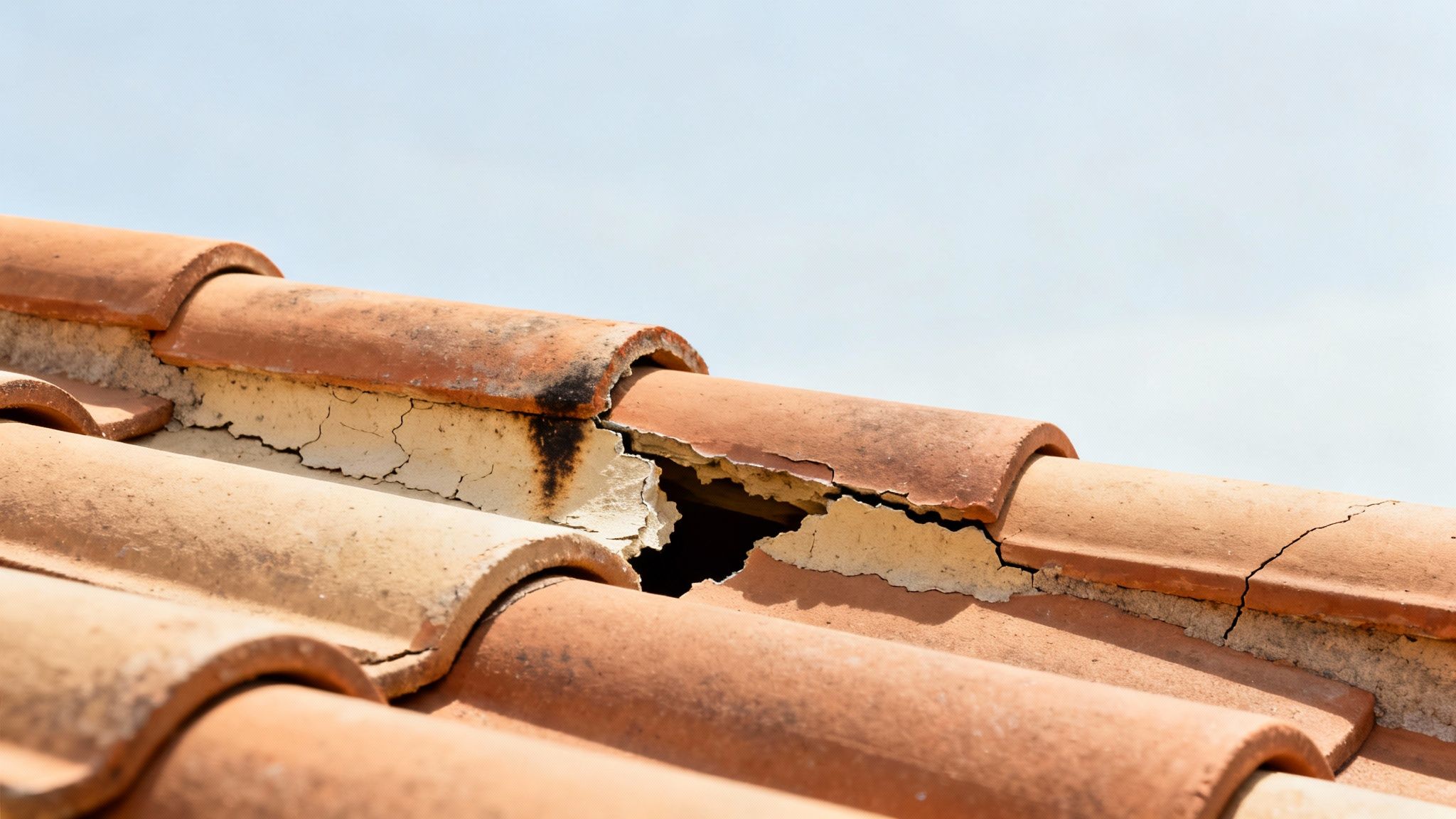
When a tile gets blown off or cracks, it exposes the underlayment—that waterproof barrier that’s your home's last line of defense. And while that layer is designed to be water-resistant, it was never meant to take a direct hit from the elements.
The intense Florida sun bakes this exposed material, making it brittle and weak. It doesn't take long for it to crack and lose its protective qualities, creating a direct path for water. During one of Lauderhill's famous downpours, rain will find its way through that weakened spot and into the wooden roof deck below. This is where the real trouble begins.
The Chain Reaction of Damage
Once moisture hits the wood, it kicks off a destructive sequence. Persistent dampness leads straight to wood rot, which silently compromises the structural integrity of your roof deck and rafters. The scary part is this is often invisible from the ground until significant damage has already been done.
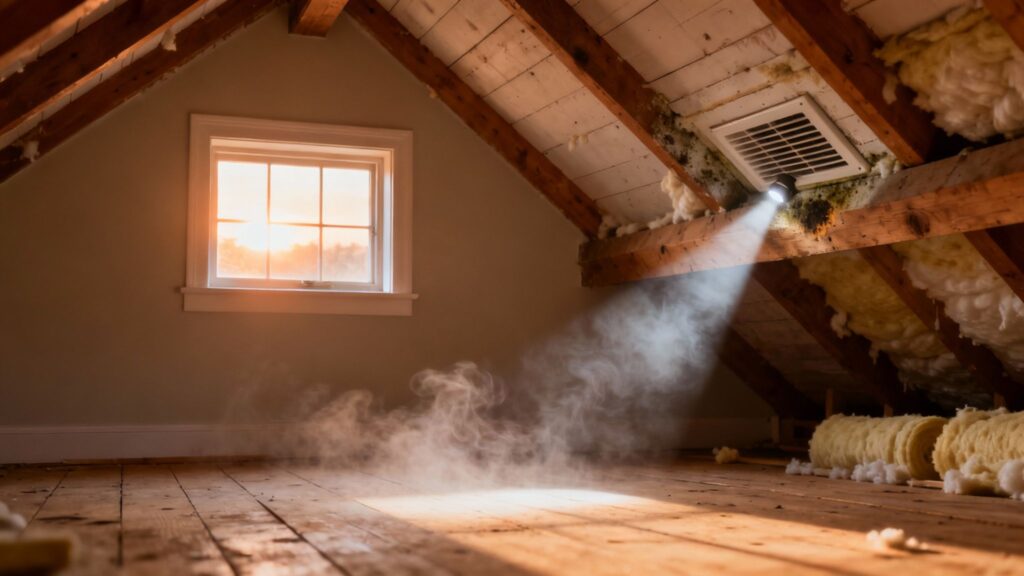
Inside your attic, this moisture creates the perfect breeding ground for mold and mildew. These fungi don't just ruin your insulation; they can pose serious health risks to your family if spores get into your home's ventilation system.
"A single missing tile can feel like a small problem, but in South Florida, it's a ticking clock. The combination of intense UV exposure and torrential rain means that underlayment can fail in a matter of weeks, not months, leading to thousands in hidden damages."
The problem isn't just water, either. Those gaps are welcome signs for pests. Rodents, insects, and even birds can make their way into your attic, causing even more damage to wiring, insulation, and wooden supports.
How Fast Can The Damage Happen?
It’s easy to think, "It's just one tile, I'll get to it later." But in our climate, the damage escalates much faster than most people realize. A small issue can quickly become a major structural problem.
Immediate Risks from a Single Missing Tile
| Timeframe | Potential Damage | Why It Matters in Lauderhill |
|---|---|---|
| First 24-48 Hours | Water seeps into the underlayment and begins saturating the roof deck. | A single afternoon thunderstorm can kickstart this process, saturating the wood before it has a chance to dry. |
| 1-2 Weeks | The sun-exposed underlayment becomes brittle. Wood decking shows early signs of swelling or dark stains. | Intense UV rays degrade underlayment rapidly. High humidity prevents wood from fully drying out between storms. |
| 1-3 Months | Wood rot begins, compromising structural integrity. Mold and mildew start growing in the attic. | Our warm, humid environment is a perfect incubator for mold, which can spread quickly and affect air quality. |
| 6+ Months | Significant structural decay in rafters and decking. Pests may have established nests. Costly repairs are now unavoidable. | Damage becomes systemic, potentially requiring roof deck replacement and extensive mold remediation, not just a simple tile fix. |
As you can see, waiting is not an option. A quick response not only prevents these issues but saves a tremendous amount of money and stress down the road.
Storms Are The Primary Culprit
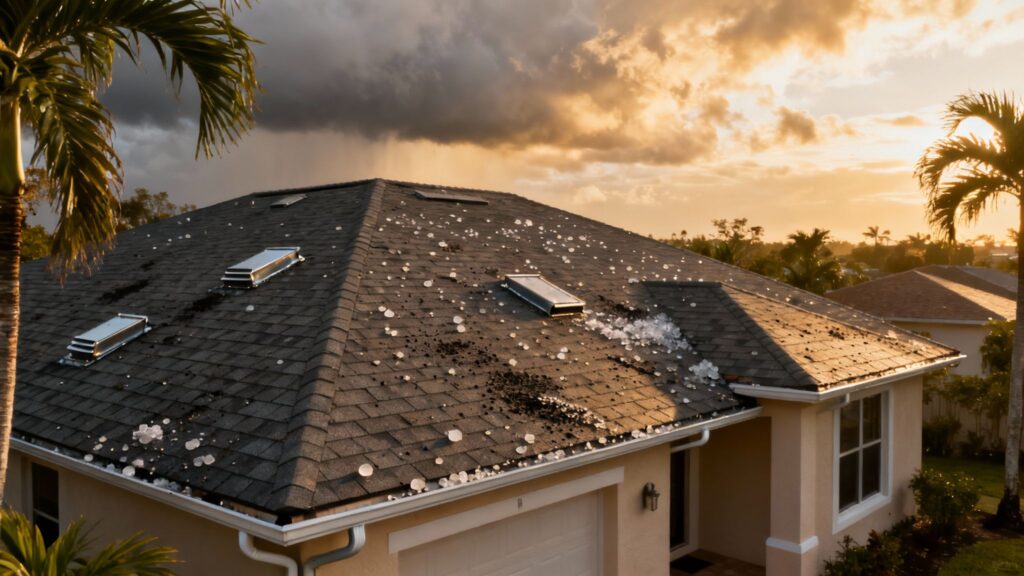
Missing tiles are a common headache here for a reason. Data from local contractors and the Florida Building Commission shows that between 2017 and 2023, over 28,000 homes in Broward County reported roof damage after major storms, with missing tiles being the top complaint.
After Hurricane Irma, for example, it was found that roughly 15% of Lauderhill homes with tile roofs lost a significant number of tiles.
To get ahead of these problems, understanding why regular property maintenance is key can save you a fortune in future repairs. It’s all about being proactive.
How to Safely Inspect Your Roof from the Ground
Let's be clear: climbing up on a ladder to check out your roof is a risky business, and it's something I always tell homeowners to leave to the pros. The good news? You can get a surprisingly good idea of your roof's condition with both feet planted safely on the ground. This quick walk-around can help you spot potential missing roof tiles in Lauderhill long before they turn into a major headache.
Your best friends for this job are a decent pair of binoculars or even just the zoom on your smartphone camera. You’d be amazed at the detail you can see. Make a point to walk the entire perimeter of your house, looking at the roof from several different angles. What’s hidden by a shadow from one spot might be in plain sight from another.
What to Look for Beyond Obvious Gaps
A completely missing tile leaves a pretty obvious dark spot, like a missing tooth in a smile. But the real skill is learning to spot the subtle clues that a tile is about to fail. Don't just scan for the big, empty spaces; look for the warning signs.
Here’s what I always look for:
- Hairline Cracks: These tiny fractures are the first sign of stress. One good storm or a sharp temperature drop can split that tile right open.
- Chipped Corners or Edges: This might seem minor, but it weakens the tile's ability to lock in with its neighbors. A strong gust of wind can easily get underneath and lift it right off.
- Lifted or Misaligned Tiles: If you see a tile that isn't sitting perfectly flat like the others, its fasteners have likely failed. It's not a matter of if it will come off, but when.
- Debris in Gutters: When you clean your gutters, are you finding little tile fragments or a layer of sandy grit? That’s a tell-tale sign the tiles are becoming brittle and starting to break down.
Learning to spot these early indicators is what separates a proactive homeowner from one who's just reacting to disasters. Catching a cracked or lifted tile today is how you prevent a full-blown leak during the next Lauderhill thunderstorm. It’s the smartest way to manage your roof’s health.
Documenting Your Findings
While you're doing your walk-around, use that phone of yours. Snap clear, zoomed-in photos of anything that looks off. These pictures are worth their weight in gold when you call a professional roofer. They give us an immediate idea of what we're dealing with before we even pull up to your home.
Having a visual record, like this example of roof damage, means you can show a roofer exactly what caught your eye. This simple step leads to a much more productive conversation and helps us develop an accurate repair plan that much faster. A ground inspection isn’t about you becoming a roofing expert; it’s about gathering solid intel so you can hire the right one for the job.
What to Do Immediately to Prevent Water Damage
The second you notice missing tiles on your Lauderhill roof, the clock starts ticking. Every minute counts before the next downpour, and taking swift, smart action is the key to preventing a small issue from turning into a massive water damage headache. Your number one job is to get a temporary barrier in place over that exposed underlayment.
Just to be clear, this is pure damage control, not a permanent fix. That's a job for a pro. Your best friend in this situation is a heavy-duty, waterproof tarp. Make sure it's big enough to cover the entire exposed spot with a few extra feet of overlap on every side—you don't want any water sneaking in around the edges.
Securing a Temporary Tarp Safely
Once you've got the tarp, the goal is to get it secured without making things worse. A common mistake is nailing it directly to the roof, but that just creates more holes for water to find. A much better way is to use 2×4 wood battens to hold the edges down.
First, lay the tarp out flat over the damaged area. Next, place the wood battens along the tarp's edges. You can then secure the battens to the roof (if it's safe to do so) or simply use sandbags to weigh them down. This method spreads out the pressure and keeps strong winds from turning your tarp into a kite, buying you precious time until a professional can get there.
Critical Safety Note: I can't stress this enough: stay off your roof. Especially if it's wet, steep, or if you don't have the right safety gear. A fall is a life-altering event. If you aren't 100% confident you can safely handle this, your very next move should be calling an emergency roofing service.
This simple process flow visualizes how to spot roof issues safely from the ground.
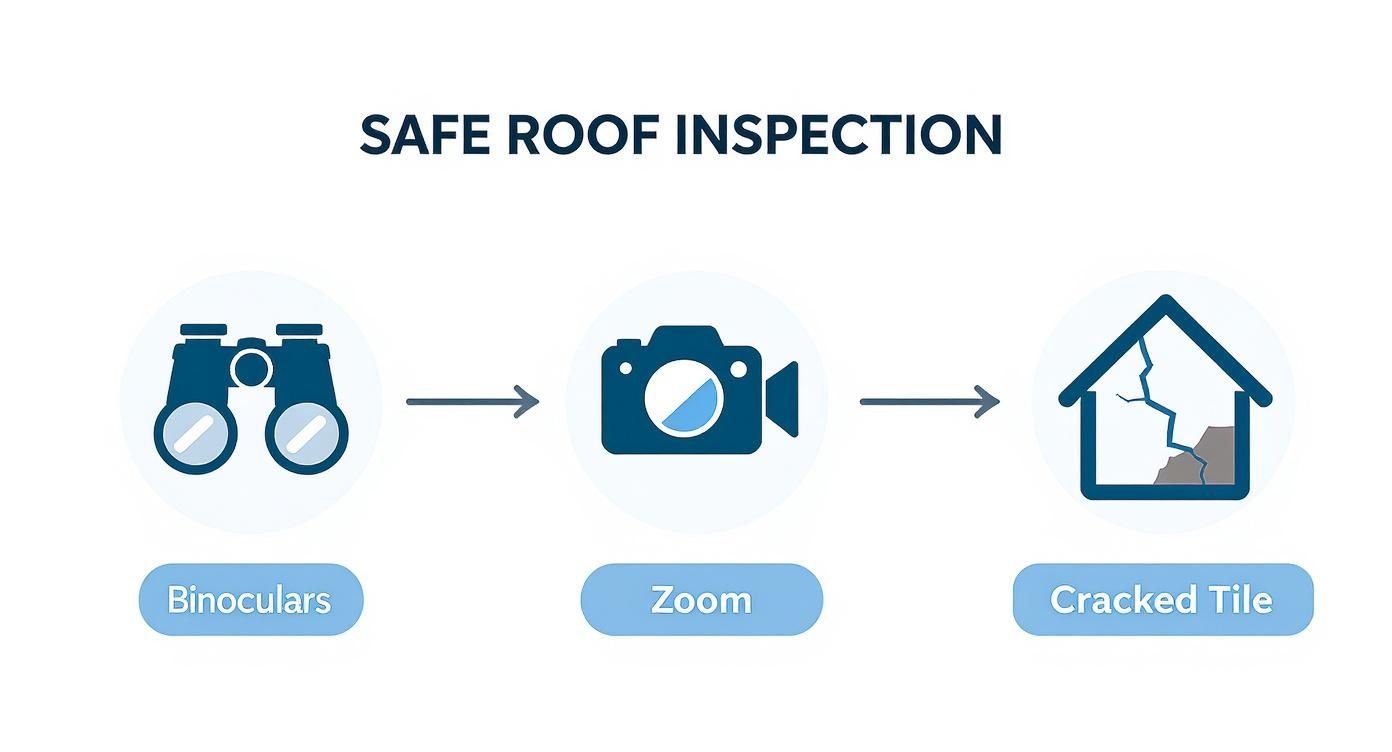
This visual guide emphasizes that you can effectively identify potential problems like cracks or misaligned tiles without ever stepping on a ladder.
Common Mistakes to Avoid
In the heat of the moment, it's easy to make a bad call. Here are a few things you should absolutely not do when you find a missing tile:
- Don't Use Caulk or Sealant: It's tempting to grab a tube of roofing cement, but smearing it on the underlayment can cause more harm than good. These materials can damage the membrane and make the professional repair more complicated and costly down the line.
- Don't Attempt a DIY Tile Replacement: There's more to replacing a tile than just sliding a new one in. Without knowing the right way to fasten and waterproof it, you could easily end up creating an even bigger leak than the one you started with.
- Don't Delay Calling a Professional: A tarp is just a Band-Aid. The real issue needs a proper fix to prevent long-term rot and structural damage. To get a sense of what's really going on up there, you can see how a professional might document roofing issues for a quote, which often uncovers damage you can't see from the ground.
Breaking Down Roof Repair Costs in Lauderhill
Trying to nail down the exact cost to fix missing roof tiles in Lauderhill isn't as straightforward as picking a number from a menu. The final bill is a mix of several key factors, each one influencing the time, materials, and complexity of the job. It's a lot like a car repair—swapping out a single bad fuse is worlds away from a full transmission rebuild.
The biggest variable, right out of the gate, is the type of tile sitting on your roof. Standard concrete tiles are common in our area and generally easier on the wallet to source than clay or terracotta. If your home is graced with premium Spanish or barrel tiles, you can expect both the materials and the labor to climb, simply due to their unique shape and the specialized skill needed to install them correctly.
Another huge piece of the puzzle is the extent of the damage. Replacing a few tiles that a strong gust of wind ripped off is a pretty routine fix. But if those missing tiles were gone long enough for water to sneak in and start rotting the underlayment or the wooden roof deck, the job gets a whole lot bigger—and more expensive.
Key Factors Influencing Your Repair Bill
The quote you get from a roofer is a custom blend of variables specific to your house. A true professional has to look at more than just the cost of the tiles themselves.
Here’s what any good contractor will be sizing up:
- Roof Pitch and Accessibility: A steep, two-story roof is a different beast entirely from a low-slope, single-story home. The extra risk and need for safety gear like harnesses and scaffolding will naturally be reflected in the labor costs.
- Underlying Damage: A roofer worth their salt will always inspect the area under the missing tiles. It costs more to replace water-damaged sheathing, but skipping this step is just asking for bigger, more expensive problems down the road. It’s a non-negotiable part of a proper repair.
- Tile Matching: This can be a real headache, especially on older homes. Finding a perfect match for tiles that were discontinued years ago is a challenge. Sometimes, sourcing salvaged tiles costs more than new ones, and the hunt itself adds to the labor hours.
I see this all the time in Lauderhill homes built a few decades back—the original tiles are nowhere to be found. A creative solution we often use is to "harvest" matching tiles from a less visible part of the roof (like the back side) for the repair. Then, we'll use a close-but-not-perfect match in the spot we harvested from.
Realistic Cost Scenarios
To give you a better idea of what to expect, let's walk through some typical repair situations. Keep in mind, these are just ballpark figures. The only way to get a firm number is to have a licensed roofer come out and give you a formal, written quote.
To help you budget, here’s a look at how different factors can influence your final cost.
Estimated Lauderhill Roof Repair Cost Factors
| Repair Scenario | Estimated Cost Range | Key Influencing Factors |
|---|---|---|
| Minor Repair (2-5 Tiles) | $300 – $750 | A simple job with common concrete tiles and no signs of underlayment damage. |
| Moderate Repair (6-15 Tiles) | $750 – $2,000 | Might require some minor underlayment patching and more effort to match existing tiles. |
| Significant Repair (Large Section) | $2,000+ | Involves extensive underlayment or decking replacement; often includes hard-to-find tiles. |
These price ranges generally cover everything—materials, labor, and the professional know-how to make sure the fix is watertight and built to last. For a wider view on home upkeep and budgeting, understanding the principles of mastering rental property maintenance costs can provide a valuable financial perspective.
Ultimately, getting a detailed, itemized quote is your best defense against surprises and ensures you're paying a fair price for quality work.
How to Find and Vet a Reliable Lauderhill Roofer

Let's be blunt: the success of your tile roof repair hinges entirely on the professional you hire. A great roofer gives you a lasting fix and peace of mind. A bad one? They can turn a small problem into a recurring nightmare that costs you a fortune.
Your goal here is to hire with confidence, not just hope. The first move is always to focus locally. Look for roofers with a physical office and a long, verifiable history right here in Lauderhill and the greater Broward County area. A company with deep local roots knows our unique weather challenges, understands the building codes like the back of their hand, and has a reputation to protect in our community.
Your Non-Negotiable Checklist
Before you even think about getting a quote, there are three absolute must-haves. If a contractor can't provide these documents instantly and without hesitation, you walk away. No exceptions.
- Florida State License: This is non-negotiable. You need to verify their license number is active and in good standing. It’s your proof they’ve met the state's requirements for competency.
- General Liability Insurance: This protects your property. If they accidentally crack a window or damage your landscaping during the repair, their insurance covers it—not your homeowner's policy.
- Workers' Compensation Insurance: This is absolutely critical. It protects you from liability if one of their crew members gets hurt on your property. Without it, you could be on the hook for medical bills.
A huge red flag is any roofer who seems hesitant to show you their insurance certificates or, even worse, suggests you pull the permit for the job yourself. This is a classic move by uninsured or unlicensed operators to put all the legal risk squarely on you.
Digging Deeper Than Online Ratings
Online reviews on sites like Google and Yelp are a decent starting point, but don't let them be your final word. You need to look for detailed reviews that describe a problem similar to yours—specifically tile roof repairs. A roofer might have a dozen five-star ratings for shingle roofs but have very limited experience with tile.
Ask every potential roofer for a portfolio of recent tile jobs they've completed in or near Lauderhill. Better yet, ask for addresses of a few completed projects. A quick drive-by to see their work firsthand is invaluable. A confident roofer will be proud to show off their craftsmanship. For our part, we make sure every job is thoroughly documented, similar to what you'd see in a professional roofing inspection report.

Critical Questions for Your Potential Roofer
Once you’ve narrowed it down to a few qualified candidates, it's interview time. Getting a detailed written quote is essential, but how they answer your questions is what truly reveals their level of expertise.
Here are the questions you absolutely must ask:
- How will you match my existing tiles? Do you use salvage yards or have specific suppliers for older, discontinued tile profiles?
- What's your waterproofing process? Can you walk me through the specific steps you take to seal the underlayment and decking before the new tiles go on?
- What are the warranty details? What kind of warranty do you offer on the workmanship itself, separate from the material warranty? How long is it and what does it cover?
- What’s the project timeline? Once I sign the proposal, when can you actually start, and how long do you estimate the repair will take, weather permitting?
Their answers should be clear, detailed, and confident. Any vague responses or an unwillingness to get into the weeds of their process is a clear sign to keep looking.
Common Questions About Missing Roof Tiles
When homeowners in Lauderhill see a gap where a tile should be, the questions start flying. I get it. After years of fielding these exact concerns, I've put together some straight answers to the things I hear most often. This is practical, no-fluff info to help you figure out your next steps.
One of the first things that always comes up is money—specifically, who's paying for this.
Will My Homeowners Insurance Cover Missing Roof Tiles?
Whether your insurance will cover missing tiles in Lauderhill almost always boils down to one thing: why they’re missing. If a named storm or a freak wind gust ripped them off, your policy will likely cover the repair. That’s what insurers call "sudden and accidental" damage.
But—and this is a big but—if an inspector finds that the tiles failed because of old age, bad installation, or just plain lack of maintenance, your claim is almost guaranteed to be denied. Insurance companies see that as homeowner neglect, and they won't pay for it.
Here's my pro tip: Document everything, and do it immediately. Before you even think about putting up a tarp, get on the ground and take clear photos of the missing tiles. If you have any water stains inside, photograph those too. Then you can call your agent and start the claims process. Also, keep in mind that Florida's building codes can sometimes trigger a need for wider upgrades than just replacing the tiles you lost, which is a key point to discuss with your adjuster.
How Long Can I Really Wait to Replace a Missing Tile?
Honestly? You shouldn't wait at all. In our climate, one heavy afternoon downpour is all it takes for water to get past the underlayment and start soaking your roof's wooden deck. That’s the first step on the road to rot, mold, and much bigger headaches.
Even when the sun is out, the exposed underlayment is taking a beating. Those intense UV rays are baking it, making it brittle and weak. A temporary tarp is a smart move to buy yourself a little time, but treat it as just that—temporary. You should have a professional repair scheduled within a couple of weeks, max.
What Happens If My Roof Tiles Are Discontinued?
This is a really common problem, especially for older homes in established Lauderhill neighborhoods. Finding a perfect match can feel like a wild goose chase, but an experienced roofer has a few tricks up their sleeve to solve this exact puzzle.
Here are the solutions we turn to most often:
- Sourcing from Salvage Yards: We have connections with specialty suppliers and salvage yards that are treasure troves for discontinued tiles. It might cost a bit more, but it’s the best shot at a perfect match.
- The "Harvesting" Method: This is a clever and very effective strategy. We carefully remove matching tiles from a less visible part of your roof—say, the back slope that nobody sees from the street. We then use these "harvested" tiles to make the repair on the more visible area.
- Installing a Close Match: Where we took the original tiles from, we install new ones that are a very close (but not perfect) match in color and profile. Since this area is out of sight, the slight difference is rarely noticeable.
If you’re looking at a large patch of missing or damaged discontinued tiles, it sometimes makes more sense to just replace that entire section of the roof. It guarantees a seamless look and, far more importantly, a perfectly sealed, watertight surface that will protect your home for years.
Don't let a few missing tiles turn into a major, costly problem. For a professional inspection and a repair that lasts, trust the experts at Paletz Roofing and Inspections. Contact us today for a free, no-obligation quote.