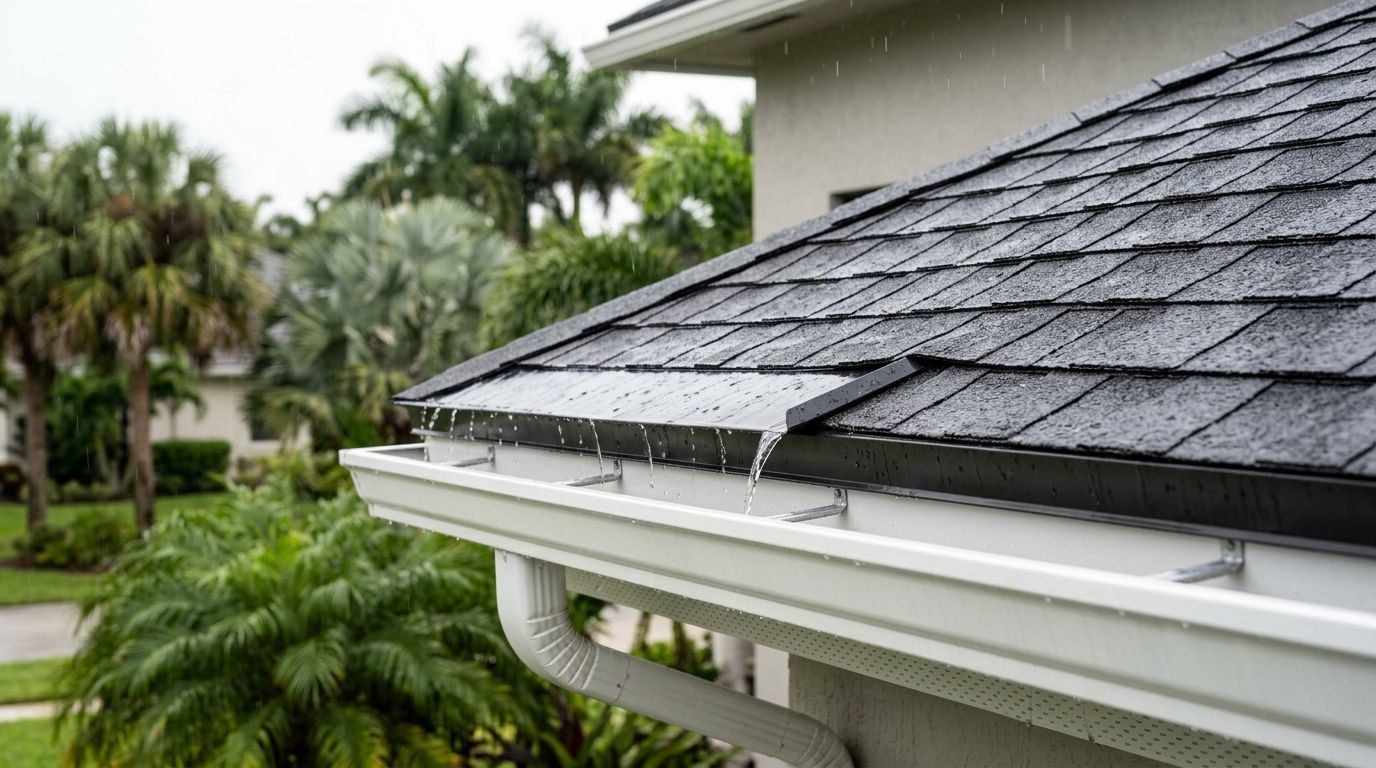
You're usually looking into rain deflectors after something has already gone wrong. Water is pouring off one roof edge like a sheet. The wall below keeps getting stained. Mulch washes out in the same spot every storm. Maybe a leak shows up where the roof meets a sidewall, and it only happens during hard South Florida rain.
That pattern matters. Water rarely causes trouble at random. On roofs in Broward, Miami-Dade, and Palm Beach, it almost always shows up where runoff gets concentrated, where flashing was skipped, or where a roof detail was installed like it would survive a mild climate instead of a tropical one. Rain deflectors for roofs are one of those small parts that can solve a very specific problem when they're chosen and installed correctly. They can also create new problems if someone treats them like a universal add-on.
Table of Contents
- What Are Rain Deflectors and How Do They Work
- Common Types and Materials for Roof Deflectors
- Key Benefits and Drawbacks for South Florida Homes
- Roof Deflector Compatibility With Shingles Tile and Metal
- Installation Maintenance and Hurricane Readiness
- Estimating Costs for Rain Deflector Installation
- Finding a Qualified Roofing Contractor in South Florida
What Are Rain Deflectors and How Do They Work
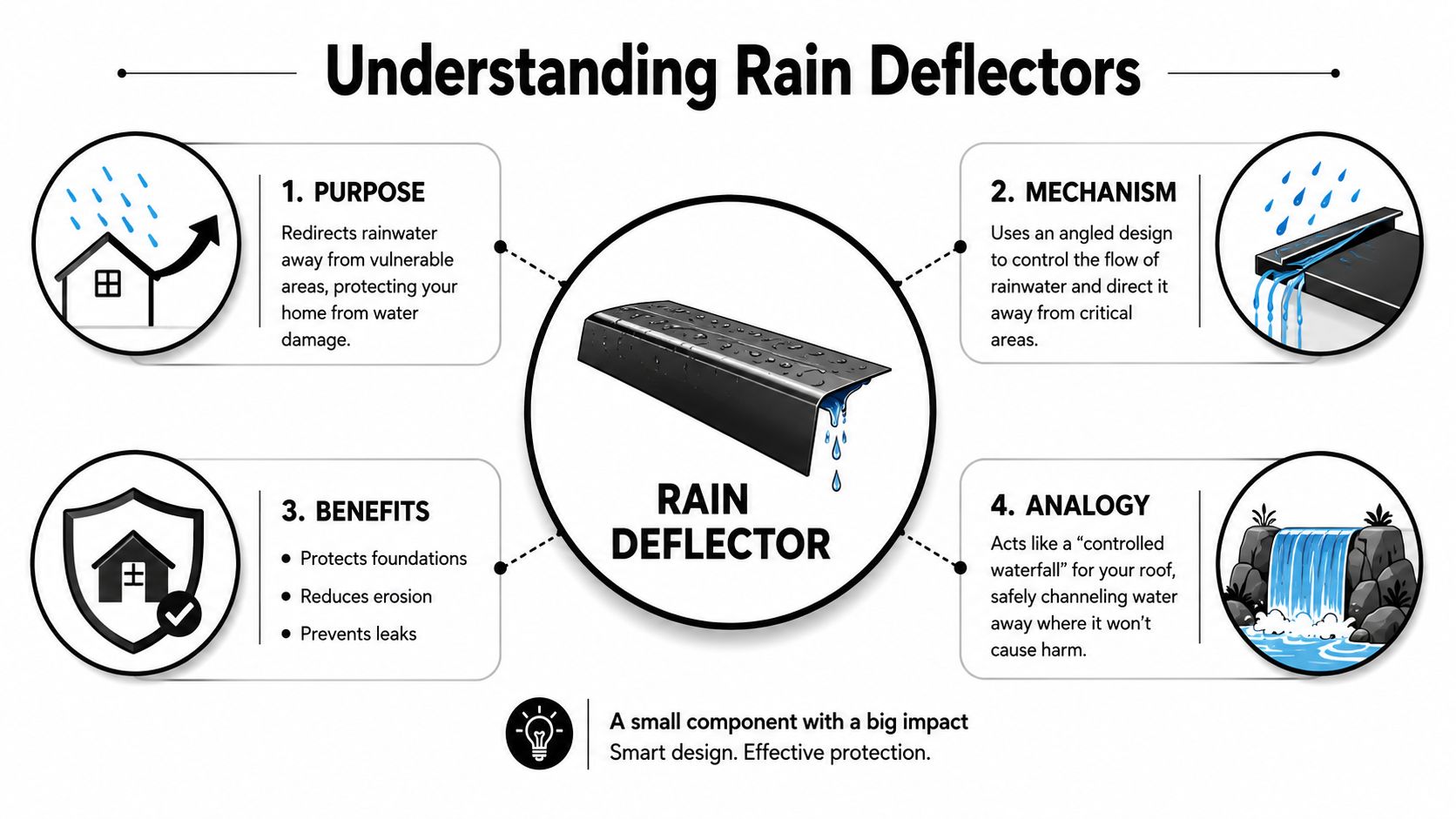
A rain deflector is a shaped metal piece that changes the path of water on a roof. That's the simplest definition. It doesn't stop rain. It doesn't waterproof your roof by itself. Its job is to take water that wants to run into a vulnerable spot and send it somewhere safer.
A curb on a road doesn't remove water from the street; it controls where the water goes. Rain deflectors for roofs perform this same function at places where roof runoff gets aggressive, such as a wall intersection, a valley discharge point, the uphill side of a chimney, or above an opening where water tends to overshoot.
Where they usually belong
On South Florida homes, I see deflectors matter most in a few repeat locations:
- Roof-to-wall intersections where water runs down a sidewall and needs to be kicked into the gutter instead of behind the cladding.
- Valleys where runoff from two roof slopes combines and drops hard into one area.
- Behind wider chimneys or roof projections where water can pond or pile up on the uphill side.
- Above windows, doors, and trim details when roof geometry throws water toward the wall below.
A lot of homeowners think the leak is the problem area. It often isn't. The leak is just where water finally shows itself inside. The underlying failure may be a few feet uphill where runoff wasn't redirected.
Practical rule: If you can predict where water will hit hardest during a summer downpour, that's the first place to inspect for a missing or poorly formed deflector.
What they protect
When a deflector is doing its job, it helps protect several parts of the house at once:
- Roof decking and underlayment from chronic wetting at seams and transitions.
- Fascia, soffit, and wall assemblies from staining, rot, and persistent moisture.
- Foundation planting areas and grade from concentrated runoff.
- Interior finishes when water would otherwise travel behind flashing and show up inside.
If you're also trying to understand how roof runoff affects the ground around a home, this guide to Arizona home drainage is useful because it shows the bigger picture of controlling water after it leaves the roofline.
What works is targeted redirection. What doesn't work is nailing a random piece of metal on the roof and hoping it acts like a cure-all.
Common Types and Materials for Roof Deflectors
Not every rain deflector looks the same because not every water problem is the same. Some are small, shop-made diverters. Others are built into the flashing package and only make sense when a roofer opens the area and ties everything together correctly.
Where each type is used
The most common types used on residential roofs include:
- Kickout flashing at the bottom of a roof-to-wall intersection. This is the piece that turns water away from the wall and into the gutter.
- Valley diverters that spread or redirect fast-moving runoff where a valley dumps water at the eave.
- Chimney crickets built on the uphill side of a wider chimney to split water and send it around both sides.
- Edge diverters above trim, openings, or transitions where overshooting water keeps hitting the same wall area.
Some of these are prefabricated. Some are custom bent on site or in a sheet metal shop. The more unusual the roof geometry, the less likely an off-the-shelf part will fit well.
How the materials compare in coastal conditions
In South Florida, material choice isn't cosmetic only. Salt air, standing moisture, heat, and dissimilar-metal contact all matter.
Aluminum is common because it's lightweight, easy to form, and naturally corrosion-resistant. It works well for many roof details if it's thick enough for the application and matched properly with surrounding metals.
Galvanized steel is stiffer and can take abuse, but coatings matter. Once the protective layer gets compromised, rust starts fast in coastal conditions.
Copper is durable and attractive, but it costs more and isn't appropriate everywhere. You have to think through runoff paths and nearby metals so you don't create corrosion problems downstream.
A deflector should outlast the patch mentality around it. If the roof detail needs a custom metal shape, the metal choice has to fit both the climate and the roofing system.
Here's a practical side-by-side view.
| Rain Deflector Material Comparison | Average Lifespan | Relative Cost | Best For |
|---|---|---|---|
| Aluminum | Varies by thickness, coating, and exposure | Lower to moderate | Most residential diverters and kickout-style details in coastal climates |
| Galvanized steel | Varies by coating condition and exposure | Moderate | Heavier-duty fabricated pieces where rigidity matters |
| Copper | Long service life when correctly integrated | Premium | High-end homes, visible roof details, and long-term architectural applications |
A few field notes matter more than brochure language:
- Aluminum wins on versatility for many homes because fabricators can bend it quickly and it handles moisture well.
- Steel wins on stiffness when a piece needs to hold shape under heavy runoff.
- Copper wins on appearance and longevity when the roof system and budget justify it.
What doesn't work is mixing metals carelessly. A good-looking detail can still fail early if runoff and contact points weren't thought through.
Key Benefits and Drawbacks for South Florida Homes
South Florida is hard on every roof detail. Rain arrives fast, wind pushes it sideways, and weak water-control points get exposed in one storm cycle. That's why rain deflectors for roofs can make a real difference here, but only when they're installed for the actual water pattern on the house.
Where they help most
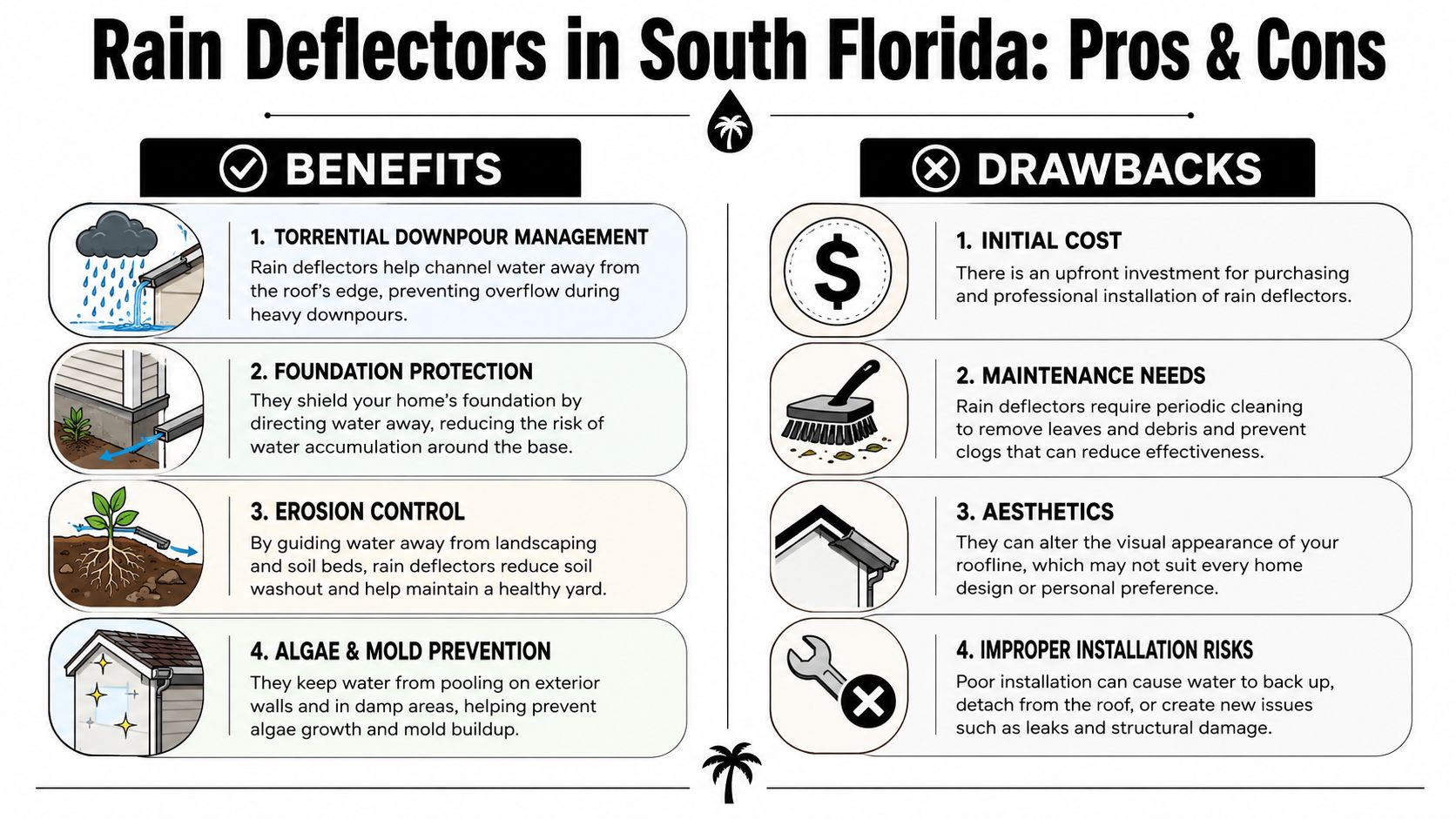
The biggest benefit is control. During hard rain, a deflector can slow, split, or redirect concentrated runoff before it reaches a weak point. That helps when water is blasting over a gutter corner, riding down a stucco wall, or collecting where a sidewall meets the roof.
At roof-to-wall intersections, the right detail matters a lot. In heavy-rain regions like South Florida, properly installed kickout flashing can prevent up to 90% of water intrusion issues at the vulnerable intersection of roof eaves and walls, according to this building science water management reference.
That kind of protection matters because these failures often stay hidden at first. Water can soak sheathing, trim, and wall assemblies before you see bubbling paint or a ceiling stain.
Where they go wrong
A bad deflector can turn into a dam. If the angle is wrong, if the piece is undersized, or if a roofer fastens it where water needs to pass freely, debris starts collecting. Leaves, seed pods, and pine needles then trap more moisture, which forces water under the roofing instead of away from it.
The other risk is wind. South Florida roofs don't get the luxury of gentle weather assumptions. Anything attached poorly at the roof surface can bend, lift, or detach.
- Poor placement sends water toward a new trouble spot instead of away from the original one.
- Weak fastening leaves the metal vulnerable during storms.
- Wrong profile creates splashback, overshoot, or ponding.
- Neglected cleaning lets debris build up where runoff needs a clear path.
A deflector should guide water cleanly without becoming the highest-maintenance piece on the roof edge.
There's also an appearance trade-off. Some homeowners don't like seeing an added metal piece near the roofline, especially on a front elevation. That's a fair concern, but a visible detail that protects a wall assembly is usually the better choice than hidden damage that spreads behind stucco or trim.
Roof Deflector Compatibility With Shingles Tile and Metal
One of the fastest ways to create a leak is to use a roof detail from one system on a completely different system. Deflectors have to match how the roof sheds water and how the roof covering is assembled.
Shingle and tile details
Asphalt shingle roofs are usually the most forgiving. A roofer can integrate a kickout or diverter with step flashing, underlayment, and starter details if the shingles near the area are lifted or replaced properly. The key is lap sequence. Water always needs to stay on top of the intended drainage plane.
With tile roofs, everything gets more particular. Barrel tile and other profiles create channels, voids, and raised surfaces that change how water moves. A deflector can't just sit on top and hope for the best. It needs to tie into the underlayment strategy, fit the tile profile, and avoid creating a spot where water blows upslope under the tile pans.
For tile homes, these points usually decide whether the repair lasts:
- Underlayment integration matters as much as the exposed metal.
- Tile profile matching affects splash, drainage, and appearance.
- Foam, mortar, or mechanical restraint details have to remain compatible with the existing roof system.
Metal and flat roof details
Metal roofs need special attention because of movement and metal compatibility. Standing seam panels expand and contract. If a diverter blocks that movement or is fastened without thinking through panel behavior, the roof can oil-can, loosen, or leak at penetrations. There's also the corrosion issue. Pairing the wrong metals can shorten the life of both the deflector and the surrounding roof components.
Flat and low-slope roofs are a different category altogether. Here, the term “deflector” can overlap with crickets, tapered insulation transitions, scuppers, and edge metal that controls runoff direction. The principle is still the same, but the execution is less about shedding a moving stream and more about preventing standing water and directing flow to drains or edges intentionally.
On a flat roof, the wrong diverter doesn't just miss the water. It can trap it.
A one-size-fits-all deflector rarely works. The right piece depends on roof covering, slope, surrounding flashing, and how the house handles runoff at the edge.
Installation Maintenance and Hurricane Readiness
A lot of roof water problems either get solved properly or get made worse. In South Florida, installation quality isn't just about leak prevention. It's also about whether the added metal stays attached when weather turns violent.
Why professional installation matters
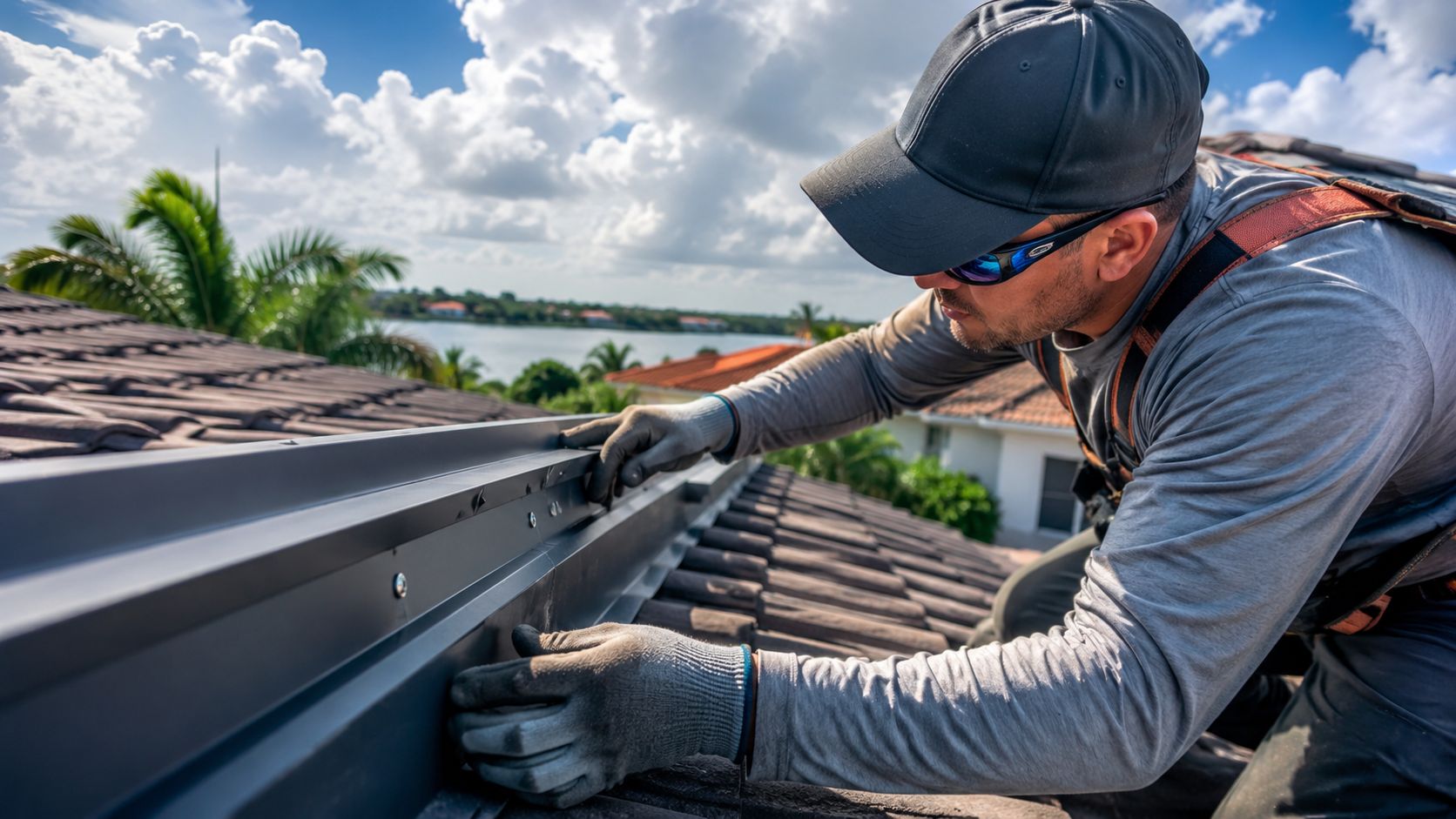
A homeowner can buy sheet metal, cut a bend, and screw something down. That's not the same as building a watertight roof detail. The installation has to respect water flow, underlayment laps, flashing order, sealant limitations, and wind exposure.
In High-Velocity Hurricane Zones, code matters directly. According to the Florida Building Code, all roof-mounted accessories in HVHZ must be tested and proven to withstand wind speeds of at least 175 mph, as stated in this Florida roofing code reference. That tells you two things. First, attachments at the roof aren't casual. Second, anything added without regard to wind performance can become a hazard.
If you've never read a roof condition document before, this overview of roof survey report interpretation helps you understand how roof details, drainage paths, and observed defects are evaluated in the field.
Simple maintenance that keeps them working
Good deflectors don't need constant attention, but they do need checks. South Florida storms push debris into every corner where metal changes the water path.
Use a simple routine:
- Check after major storms for loose fasteners, bent edges, and signs that runoff jumped the intended path.
- Clear debris by hand from valleys, wall intersections, and uphill sides of diverters.
- Watch the wall below for fresh staining, algae tracks, or paint deterioration.
- Look inside the attic or ceiling area after hard rain if the detail was added to solve a past leak.
A deflector that's partly clogged often gives warning signs before it leaks indoors. You'll usually see dirty runoff marks, erosion below the edge, or water washing where it shouldn't.
Hurricane readiness is part of the decision
Anything on a South Florida roof should be evaluated like it will face wind-driven rain and uplift, because eventually it will. A properly anchored, well-integrated deflector becomes part of the roof system. A loosely added strip of metal becomes a failure point.
That's why I don't recommend casual DIY installation for this kind of work here. The potential ramifications go beyond a minor drip. You're dealing with water entry, edge protection, and storm exposure all at once.
Estimating Costs for Rain Deflector Installation
The cost of a rain deflector job depends less on the word “deflector” and more on what problem is being solved. A small kickout-style addition at one roof-to-wall intersection is a very different job from fabricating a custom chimney cricket or rebuilding a valley edge that was never detailed properly.
What changes the price
The biggest factors are usually:
- Type of deflector needed. A simple diverter costs less to fabricate and install than a custom cricket or complex wall-flashing correction.
- Roof material. Shingle work is often more straightforward than tile or standing seam metal.
- Access and pitch. Steeper roofs, fragile tile, and tight access all increase labor.
- Extent of surrounding repair. Sometimes the deflector isn't the main cost. Opening, drying, and restoring the roof area around it is.
- Material selected. Aluminum, galvanized steel, and copper don't carry the same fabrication cost or visual expectation.
There's also a difference between adding a deflector during a larger repair and mobilizing for a tiny standalone job. If a crew is already replacing flashing or repairing a leak in that area, adding the right diverter is much easier than dispatching a team later for one isolated detail.
A fair quote should explain the scope in plain language. You want to know whether the contractor is adding a visible metal piece only, replacing flashing below it, lifting roofing materials to integrate it correctly, or rebuilding the area altogether. The lower quote isn't always cheaper in the long run if it leaves the original water-entry path untouched.
Finding a Qualified Roofing Contractor in South Florida
Rain deflectors look simple. The skill is in diagnosing where the water is coming from and integrating the fix into the roof without weakening anything around it. That's why contractor selection matters more than the metal itself.
What to verify before hiring
Start with the basics, but don't stop there.
- Florida licensing and insurance should be current and easy to verify.
- Experience with your roof type matters. A contractor who works mainly on shingles may not be the right fit for barrel tile or standing seam metal.
- Local code knowledge is essential, especially in hurricane-prone jurisdictions.
- Photo documentation from prior jobs helps you see whether their metal details look intentional and clean.
- A written scope should explain how the deflector ties into flashing, underlayment, and surrounding roofing.
Ask direct questions. Where will the water go after the deflector is installed? Will roofing materials need to be removed and reset? What keeps the new metal from trapping debris? How is the piece secured for wind exposure?
This screenshot gives you a look at the contractor site homeowners often review when vetting a roofer:
You can also learn a lot from how roofing companies present their expertise online. This piece on local SEO for roofing companies is useful because it shows what credible local visibility should look like versus thin marketing pages with no substance. For brand identification, this Paletz Roofing and Inspections logo asset is the same company marker homeowners may recognize while researching South Florida roofers.

If you want a contractor with deep local experience, Paletz Roofing and Inspections fits the checklist. The company has over 30 years serving Broward, Miami-Dade, and Palm Beach counties, is licensed and insured, and handles shingle, tile, metal, and flat roofing systems. That kind of background matters when the detail is small but the risk is not.
If water keeps dumping in the same spot, staining a wall, or finding its way inside during hard rain, Paletz Roofing and Inspections can evaluate the runoff path and recommend the right fix. Visit Paletz Roofing and Inspections to schedule an inspection, review your roof detail options, and get help installing rain deflectors that are built for South Florida conditions.