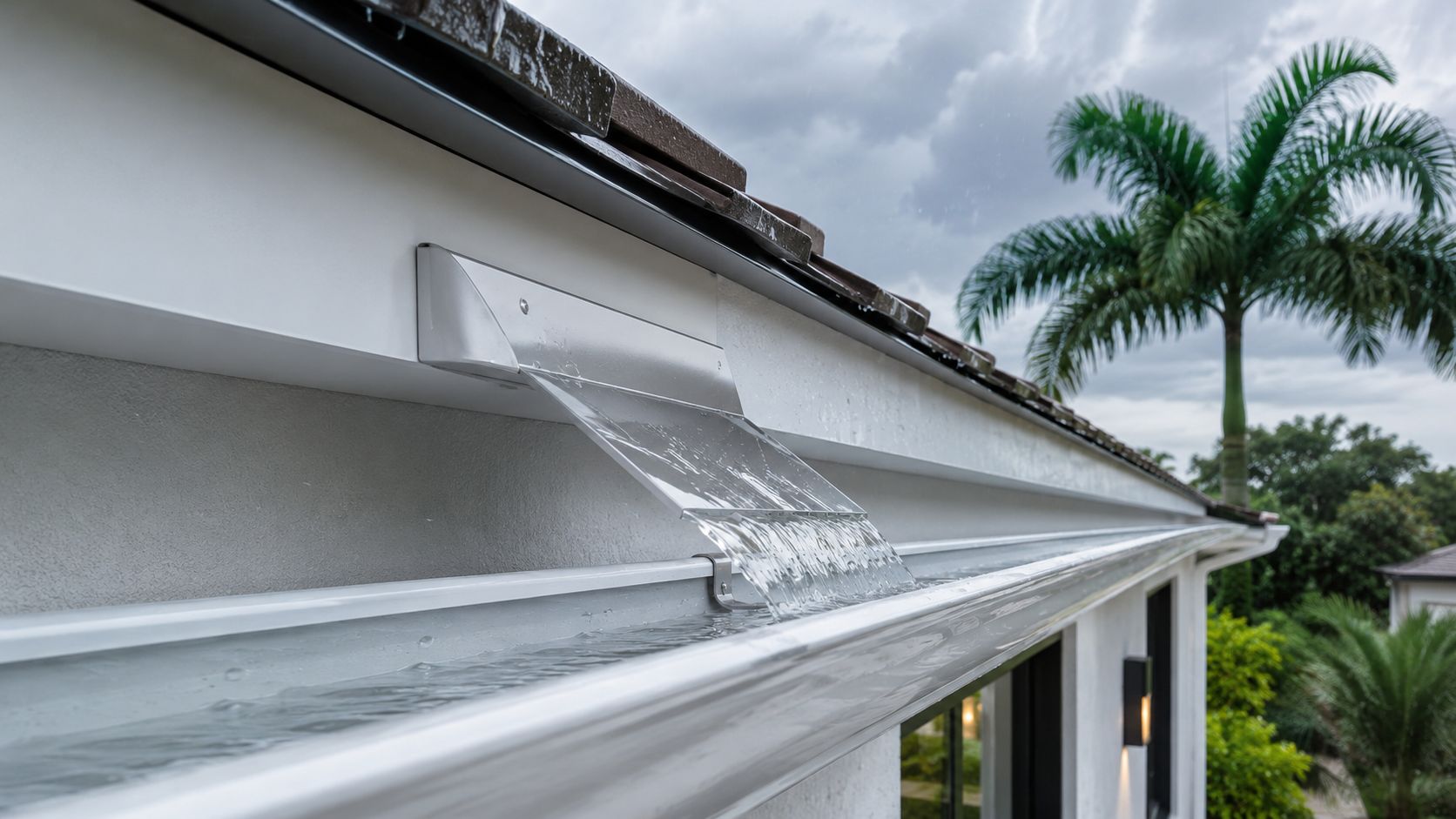
A South Florida downpour can turn a calm afternoon into a drainage problem in minutes. Water spills over the roof edge at the front door, splashes onto stucco, or rushes down one section of wall while the rest of the gutter looks perfectly dry. By the time the rain stops, you may be left with a stained entryway, damp siding, or a puddle collecting close to the foundation.
A rain diverter gutter can help when runoff is concentrated in one troublesome location, but only if you choose the right type and connect it to a gutter system that can handle the flow. Many homeowners confuse a roof-mounted diverter with a downspout diverter for a rain barrel, even though they solve different problems.
This guide makes that distinction practical. You'll learn how rain diverters redirect water, which warning signs to look for from the ground, how roof-to-wall flashing affects moisture control, and when a diverter may need to be paired with gutter or downspout work. In a region known for intense rainfall, a small drainage detail can help prevent a much larger repair.
Table of Contents
- Introduction to Rain Diverter Gutters for South Florida Homes
- What a Rain Diverter Gutter Is and How It Works
- Common Types and Materials Explained
- Signs You Need a Rain Diverter Gutter at Your Home
- Installation Options and What to Expect From Professionals
- Maintenance Costs and South Florida Durability Tips
- Protect Your Home With a Professional Inspection Today
Introduction to Rain Diverter Gutters for South Florida Homes
The rain starts hard, as it often does in South Florida. At first, the gutter above your entryway seems to be doing its job. Then water begins pouring over one corner, splashing across the threshold and leaving a dark wet mark on the stucco below. You check the downspout and find no obvious blockage, yet the same area overflows every time a heavy storm arrives.
That pattern usually points to a localized water-flow problem, not necessarily a failure of the entire roof drainage system. A roof valley may be concentrating runoff above the doorway. A roof-to-wall intersection may be sending water behind the edge flashing. The gutter may have enough room in one section but not enough capacity where several roof planes meet.
A rain diverter can redirect that concentrated stream before it reaches the vulnerable spot. Some diverters sit along the roof edge and guide water toward a gutter or away from a doorway. Others attach to a downspout and send water into a rain barrel. Those products look related, but they aren't interchangeable.
The quick answer: Use a roof-mounted diverter to redirect runoff at a roof edge, valley, wall, or entryway. Use a downspout diverter when your goal is to fill a rain barrel while allowing excess water to return to the drainage path.
The reason this detail deserves attention in South Florida is simple. Heavy rain exposes weak transitions between roof planes, walls, gutters, and downspouts. Water that repeatedly wets stucco, siding, trim, or framing can create problems that a small bead of exterior caulk won't solve.
A good evaluation starts with the water's path. Watch where runoff leaves the roof, where it enters the gutter, where it spills, and where the downspout discharges. That observation leads to the central question: is the problem at the roof edge, inside the gutter system, or at the discharge point?
What a Rain Diverter Gutter Is and How It Works
Think of roof runoff as traffic moving along a busy road. A roof valley acts like an interchange, collecting water from more than one direction. If that flow heads straight toward a doorway or wall corner, a rain diverter gutter works like a temporary detour. It changes the route before water reaches the problem area.
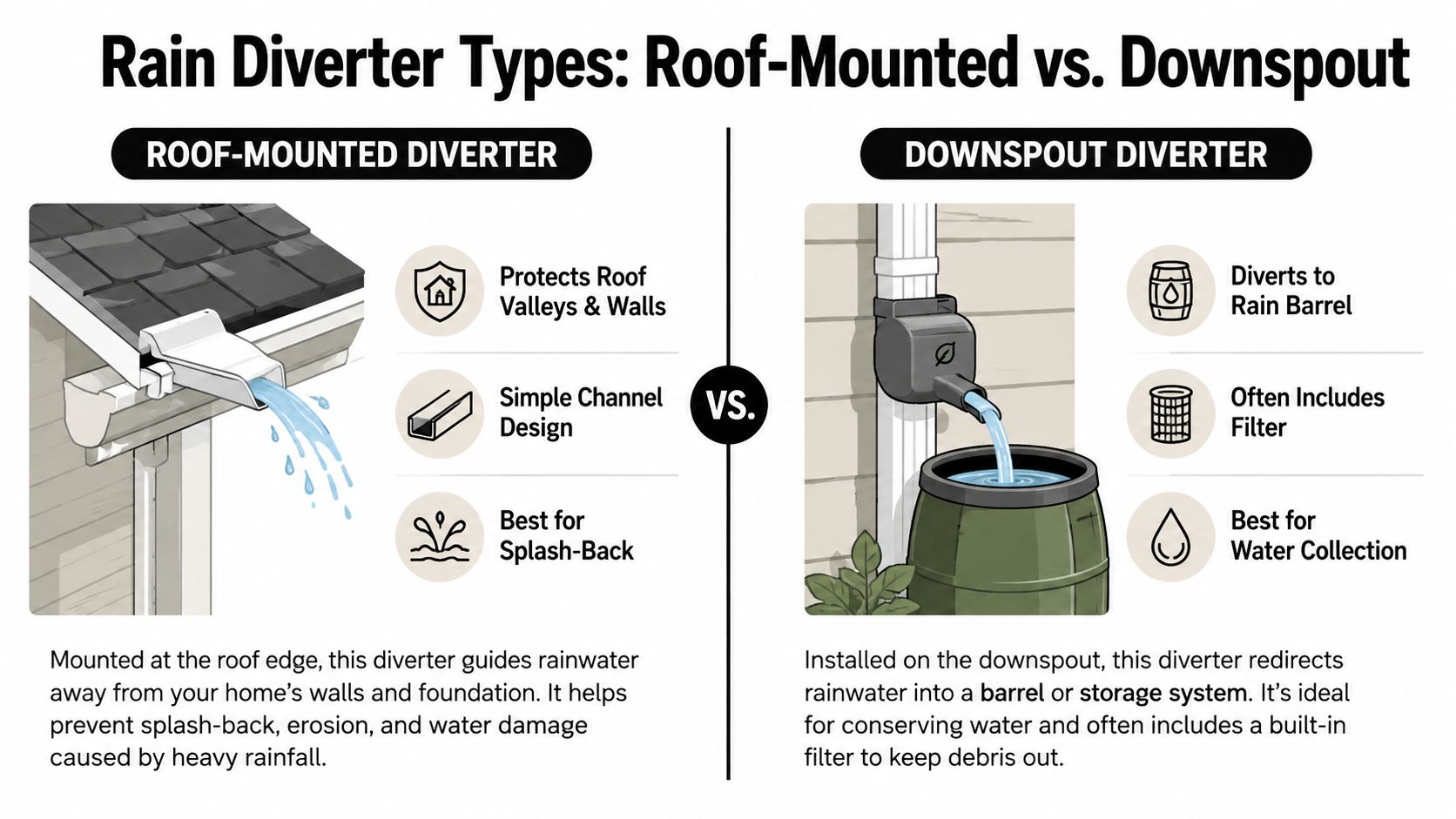
A roof-mounted diverter is generally a small, flashing-like channel. It intercepts runoff and guides it toward a gutter section or away from a specific vulnerable area. The goal isn't to stop rain. The goal is to control where the rain goes.
The roof-edge route
A properly placed roof diverter catches water upstream from the splash or stain. It can direct runoff into the gutter where the gutter's slope carries it toward a downspout. In another situation, it can move water away from an entryway or narrow roof section where direct discharge would soak the wall.
The installation must work with the roof covering and flashing. A diverter that merely sits on top of shingles or metal without a sound water-shedding connection may move water briefly but create a new leak path beneath it.
Why kick-out flashing matters
At a roof-to-wall intersection, water can travel sideways behind the wall flashing instead of entering the gutter. Kick-out diverter flashing is a code-relevant detail designed to direct roof runoff away from the wall cavity and into the gutter. Building-science guidance identifies roof-to-wall intersections as common water-entry points, and explains that proper diversion reduces wall wetting, moisture intrusion, and decay risk in structural framing. The PNNL guidance on kick-out diverters shows why this small transition deserves careful inspection.
The gutter remains part of the solution
A diverter can't compensate for a gutter that lacks fall, support, or capacity. If the redirected stream arrives at a gutter that is sagging, blocked, or undersized, water may spill at a different point.
That system perspective matters in South Florida homes. The diverter is the steering component, but the gutter and downpipe are the road that must carry the redirected flow away safely.
Common Types and Materials Explained
The first decision is purpose. A roof-mounted rain diverter addresses runoff at the roof edge or roof-to-wall transition. A downspout diverter for a rain barrel changes the route after water has already entered the downspout, sending it into storage and allowing overflow to return to the drainage system. Independent guidance makes this distinction clear because the two products are often mixed together in online searches. This explanation of roof rain diverters and downspout diverters can help prevent an easy but costly mismatch.
Choosing the diverter type
| Diverter Type | Best Use Case | How It Handles Water | Limitation to Watch |
|---|---|---|---|
| Roof-mounted diverter | Entryway splash, wall staining, concentrated valley runoff | Redirects water along the roof edge or into a gutter | It won't fix an overloaded or poorly sloped gutter |
| Kick-out diverter flashing | Roof-to-wall intersections | Sends runoff outward into the gutter instead of behind the wall | It must connect correctly with sidewall flashing |
| Downspout rain-barrel diverter | Water collection for a barrel | Routes downspout flow into storage, with overflow returning to drainage | It doesn't correct roof-edge splash or wall-entry problems |
| Gutter modification | Repeated overflow at a specific gutter section | Changes the collection or discharge path | More extensive work may be needed when capacity is inadequate |
Material choice also affects durability. Aluminum is light and widely used, while galvanized steel offers a sturdier metal option. Copper can provide a distinctive appearance, and vinyl resists certain corrosion concerns but may not suit every roof edge or exposure. In coastal South Florida, salt air, strong wind, roof movement, and compatibility with existing fasteners all matter.
A diverter should also match the downspout geometry when it connects to that system. Standard rain diverter and downspout diverter designs commonly fit either 2" x 3" or 3" x 4" downspouts. One manufacturer's instructions specify that the narrow end faces up for a 2" x 3" downspout, while the wide end faces up for a 3" x 4" downspout. The manufacturer's installation instructions provide the compatibility detail.
For a visual example of a metal roofing context where edge drainage details matter, see this standing seam metal roof image. The roof covering, edge profile, and existing flashing should guide the diverter choice rather than appearance alone.

Signs You Need a Rain Diverter Gutter at Your Home
You don't need to climb onto the roof to notice a drainage pattern. Start at ground level during or immediately after a storm. Look for the places where water lands with unusual force, where stains repeat, and where puddles form along the same foundation section.
Five clues homeowners can observe
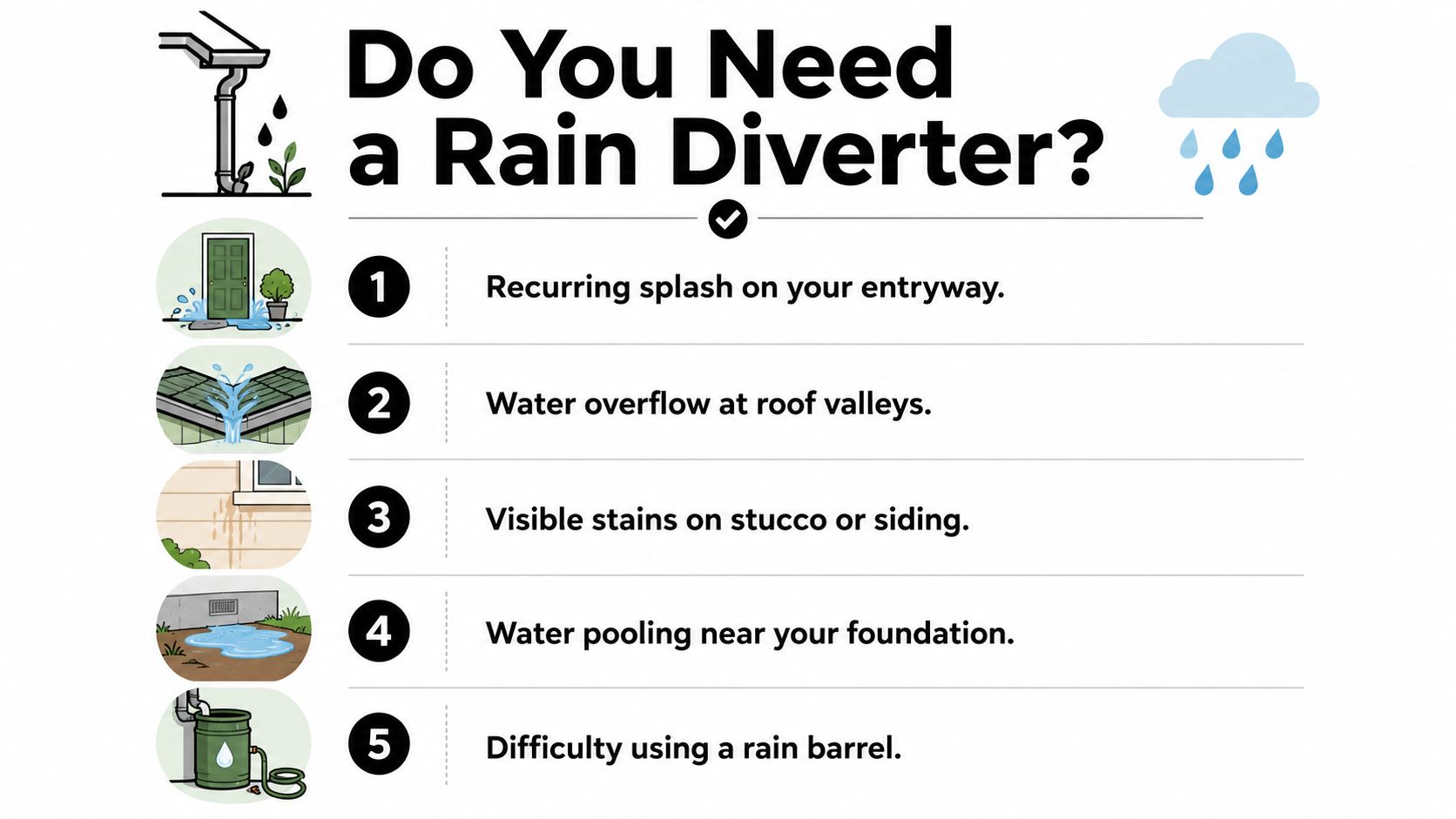
Recurring entryway splash: Water striking a doorway or walkway may be leaving the roof edge too close to the entrance. A roof-mounted diverter can redirect that stream toward a gutter or away from the threshold.
Overflow at a roof valley: Valleys concentrate runoff from adjoining roof planes. If water spills at the valley during strong rain while other gutter sections remain quiet, the collection point may need a diverter or a broader gutter adjustment.
Stucco or siding stains: Repeated vertical marks below a roof-to-wall joint can indicate that water is escaping behind flashing or overflowing before it reaches the downspout. Surface cleaning won't correct the route that keeps wetting the wall.
Pooling near the foundation: A diverter may help control the upper flow, but the discharge point still matters. International Residential Code language cited in a drainage compilation calls for controlled roof drainage to reach the ground at least 5 feet from foundation walls, or to enter an approved drainage system. The cited roof-drainage code compilation explains that controlled disposal protects the foundation area.
A damp roof-to-wall joint: Moisture near a wall intersection deserves more than a surface patch. It may indicate a flashing transition that isn't sending runoff outward.
The key distinction is localized diversion versus system overload. If one corner consistently spills, a diverter may solve the upstream concentration. If several gutter sections overflow, the roof drainage system may need cleaning, re-sloping, added capacity, or improved downpipe flow.
For a visual reference related to roof repair materials and leak symptoms, review this roof leak repair products image. Treat recurring stains as a reason to investigate the water path, not just cover the visible mark.

Installation Options and What to Expect From Professionals
A roof diverter installation starts with placement, not hardware. The installer identifies where runoff is concentrating, traces the path to the gutter, and checks whether the receiving gutter can carry the added water. A diverter placed below the actual entry point may leave the original wall or doorway problem untouched.
The surrounding gutter geometry matters just as much. Independent construction standards state that gutter performance depends on slope, support spacing, and overflow capacity, not the diverter alone. The National Construction Code specifies a minimum gutter fall of 1:500, brackets at stop ends and corners, and support no more than 1.2 m centers, while sizing the system for the applicable 5-minute rainfall intensity. The National Construction Code gutter provisions provide the technical framework.
When careful homeowners may consider minor work
A ground-level inspection, gutter cleaning, and observation during rain are reasonable first steps. Homeowners can document the overflow with photographs, note which roof section feeds the problem, and check whether the downspout outlet is blocked or discharging directly beside the foundation.
Roof access is different. Wet tile, metal, and shingle surfaces become hazardous, and South Florida wind conditions can change quickly. If the diverter must be integrated with step flashing, sidewall flashing, roof underlayment, or a steep roof edge, professional installation is the safer choice.
What a professional evaluation should include
A qualified roofer should inspect the roof-to-wall flashing, the diverter's intended discharge route, gutter pitch, bracket condition, and downpipe capacity. The evaluation should answer one practical question: will the proposed change move water into a functioning drainage path, or will it shift the overflow to another location?
For service companies that need to respond efficiently to homeowner questions about leaks and drainage, this resource on PipeLine On for HVAC leads offers broader guidance on handling home-service inquiries. For homeowners, the takeaway is simpler: clear communication helps the contractor understand exactly when and where the water appears.
A diverter is often enough when the problem is one concentrated stream. A gutter modification becomes more appropriate when the receiving section is undersupported, poorly sloped, or repeatedly overloaded. A flashing repair may be necessary when water is entering behind the wall rather than merely spilling over the gutter.
Maintenance Costs and South Florida Durability Tips
Maintenance costs depend on whether the diverter is part of a simple correction or connected to a larger gutter and flashing repair. A clean, firmly attached diverter usually requires less attention than a system with corrosion, loose brackets, failed sealant, sagging gutters, or damaged roof-edge materials. The most useful budget decision is to identify the cause before buying replacement parts.
South Florida adds several stressors. Salt air can accelerate corrosion on exposed metal and fasteners. Wind can loosen edge components, while storm debris can block the channel that carries water into the gutter. A diverter that loses its intended fall may still look intact but send runoff back toward the wall.
A practical maintenance routine
Inspect after major storms: Look for displaced metal, lifted flashing, loose fasteners, and debris at the diverter entrance.
Check the gutter line: Sagging changes the intended flow direction and can create standing water or overflow at the wrong point.
Watch sealant condition: Cracked or separated sealant around a transition can expose the roof edge and wall joint to repeated wetting.
Keep outlets clear: A blocked downspout can force redirected water back into the gutter and over the eaves.
Treat corrosion early: Clean, repair, repaint, or recoat compatible metal components before corrosion compromises the connection.
South Florida rule: A diverter should be checked as part of the roof drainage system, especially after wind, debris, and salt exposure.
Material history shows why support and installation quality matter. Early urban drainage systems used baked-clay or brick-lined channels in the Indus Valley civilization between about 3000 BC and 1500 BC, while later Roman engineering shaped streets so runoff moved toward gutters. Modern systems changed significantly with aluminum gutter machines in the 1960s, which allowed installers to roll-form gutters on site to building dimensions and reduce seams and leak opportunities. The innovation became an affordable homeowner standard by the 1980s, according to industry history of rain gutters.
For broader preparation around water intrusion and flood-proofing your home, homeowners can review this Florida flood-protection resource. It complements, but doesn't replace, correcting the roof drainage path itself.
Protect Your Home With a Professional Inspection Today
A rain diverter gutter works best when it solves a clearly identified problem. If water repeatedly splashes at the entryway, stains a wall, or escapes at a roof-to-wall transition, the right diverter can redirect runoff before it reaches the vulnerable surface. If the gutter is overloaded or the flashing is damaged, the inspection should identify those conditions instead of treating the diverter as a stand-alone fix.
South Florida homes face intense rain, wind, hurricanes, and coastal exposure. Those conditions make it useful to inspect drainage details before the next round of storms, especially when you've already noticed recurring overflow or dampness. A professional can compare the roof layout with gutter pitch, support, flashing, and downpipe discharge to determine whether you need a roof-mounted diverter, a downspout modification, or broader repair.
Paletz Roofing and Inspections serves homeowners and property owners across Broward, Miami-Dade, and Palm Beach counties with roof inspections, drainage-related evaluations, repairs, replacements, and free quotes. The company works with shingle, tile, metal, and flat roofing systems, so the diverter recommendation can account for the existing roof assembly and edge details. You can also use the Paletz Roofing and Inspections logo and service reference when identifying the company's inspection materials.

The sensible next step isn't to guess at a product size. Document the trouble spot, note whether the water comes from a valley or wall joint, and have the full drainage route checked. That approach helps prevent a small diverter from becoming an expensive new overflow point.
Paletz Roofing and Inspections can inspect your roof-to-wall flashing, gutter flow, downspout capacity, and recurring splash or staining before recommending a rain diverter gutter solution. Visit Paletz Roofing and Inspections to request an inspection or free quote for your South Florida home.