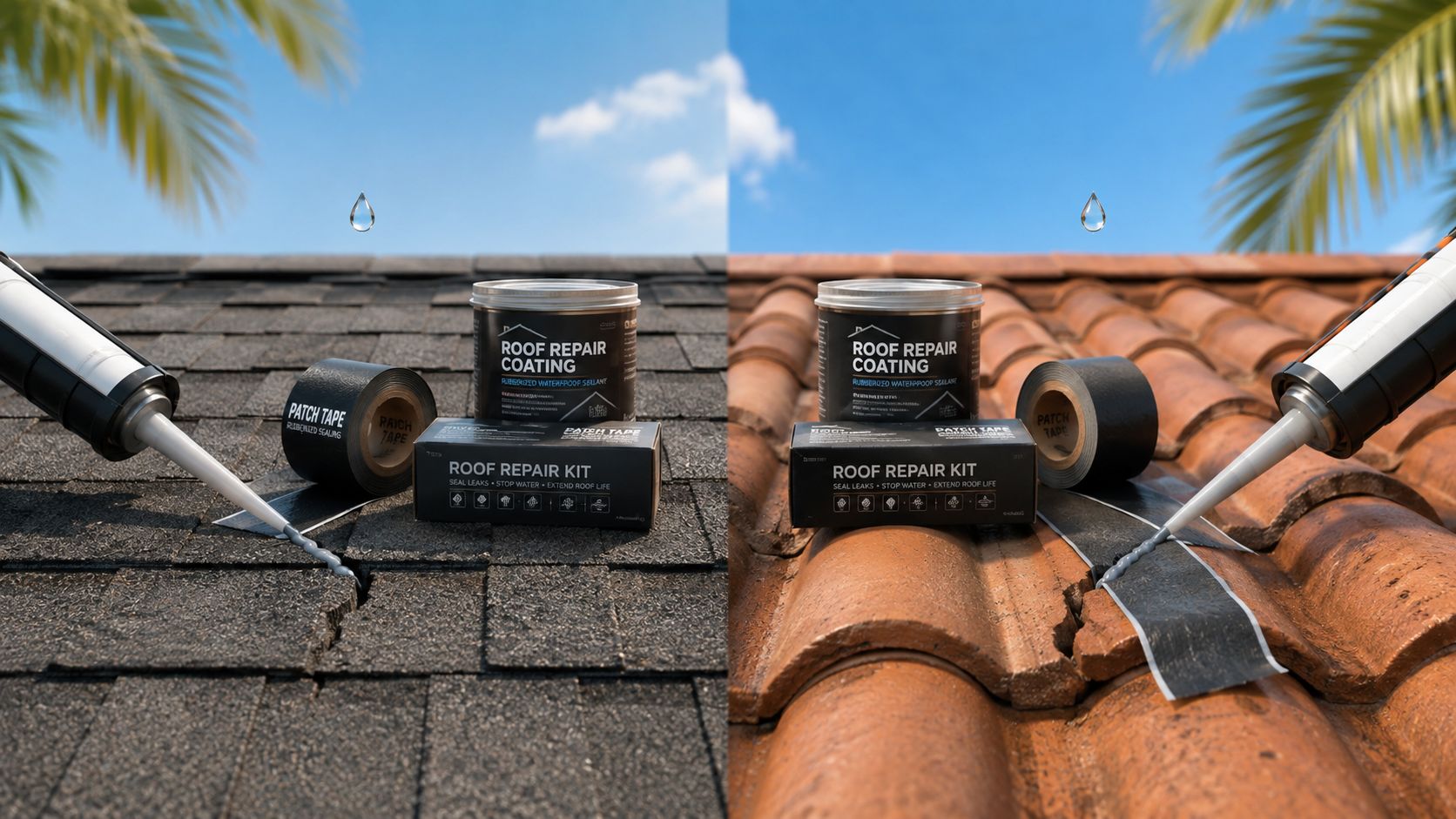
You can hear it before you see it, a steady drip in the middle of a summer storm, maybe from a ceiling light, maybe from the hallway by the garage. In South Florida, that moment usually means the roof has already been stressed by heat, UV, wind, and rain, and the wrong patch product can decide whether you're buying time or buying a much bigger repair.
Roof leak repair products aren't all doing the same job. Some are built to stop active water intrusion on a wet surface, some are made for durable sealing on a dry roof, and some are only appropriate for a narrow substrate like concrete, metal, or asphalt shingles. The difference matters because a small, targeted repair can stay in the lower-cost range, while a leak that spreads into decking or structure can move into much more expensive territory, as roofing cost guides show for repairs ranging from a few hundred dollars to several thousand depending on roof type, access, and damage severity.Roof leak repair cost and product breakdown
Table of Contents
- Why Product Selection Matters More Than You Think
- Understanding the Main Types of Roof Leak Repair Products
- Matching Products to Your Roof Type and Leak Cause
- Emergency Repairs Versus Durable Long-Term Solutions
- DIY Application Techniques and Safety Considerations
- When a Leak Requires Professional Repair
- Choosing Qualified Roofing Contractors in South Florida
- Making the Right Decision for Your Specific Situation
Why Product Selection Matters More Than You Think
The most common mistake after a storm is grabbing the first black tub or tube on the shelf and treating every leak the same way. That's how a homeowner ends up sealing over a flashing failure, trapping moisture under a quick patch, or using a product that can't tolerate the heat and UV load on a South Florida roof.
A roof leak doesn't care whether the roof is asphalt shingle, tile, metal, flat membrane, or cedar. The leak path, the substrate, and the surface condition all change what will bond, what will flex, and what will fail first. In practice, that means a product that works on a damp flashing seam may not be the right choice for a dry shingle repair or a ponding flat roof detail.
South Florida makes those choices harder. Intense sun breaks down weak materials faster, afternoon rain can hit before a repair cures, and salt air adds another layer of stress near the coast. A repair product has to do more than stick for the moment, it has to survive movement, heat cycling, and repeated moisture.
Practical rule: if you don't know whether the leak is active, whether the roof surface is dry, or what material you're bonding to, don't assume a generic sealant is the right answer.
The divide is between emergency leak arrest and durable repair. Consumer packaging often blurs that line, but the roof doesn't. A temporary patch that stops water tonight is useful, yet it's not the same thing as a long-term fix that protects the deck, underlayment, and interior finishes from ongoing damage.
What this means on a storm night
If you're standing in a hallway with a bucket under a drip, your first goal is containment, not perfection. If you're planning a scheduled repair in clear weather, the better product is usually the one that demands more prep but gives you a more stable bond.
That's why product selection matters more than the label language suggests. The roof type, the leak cause, and the weather window all change the right move.
Understanding the Main Types of Roof Leak Repair Products
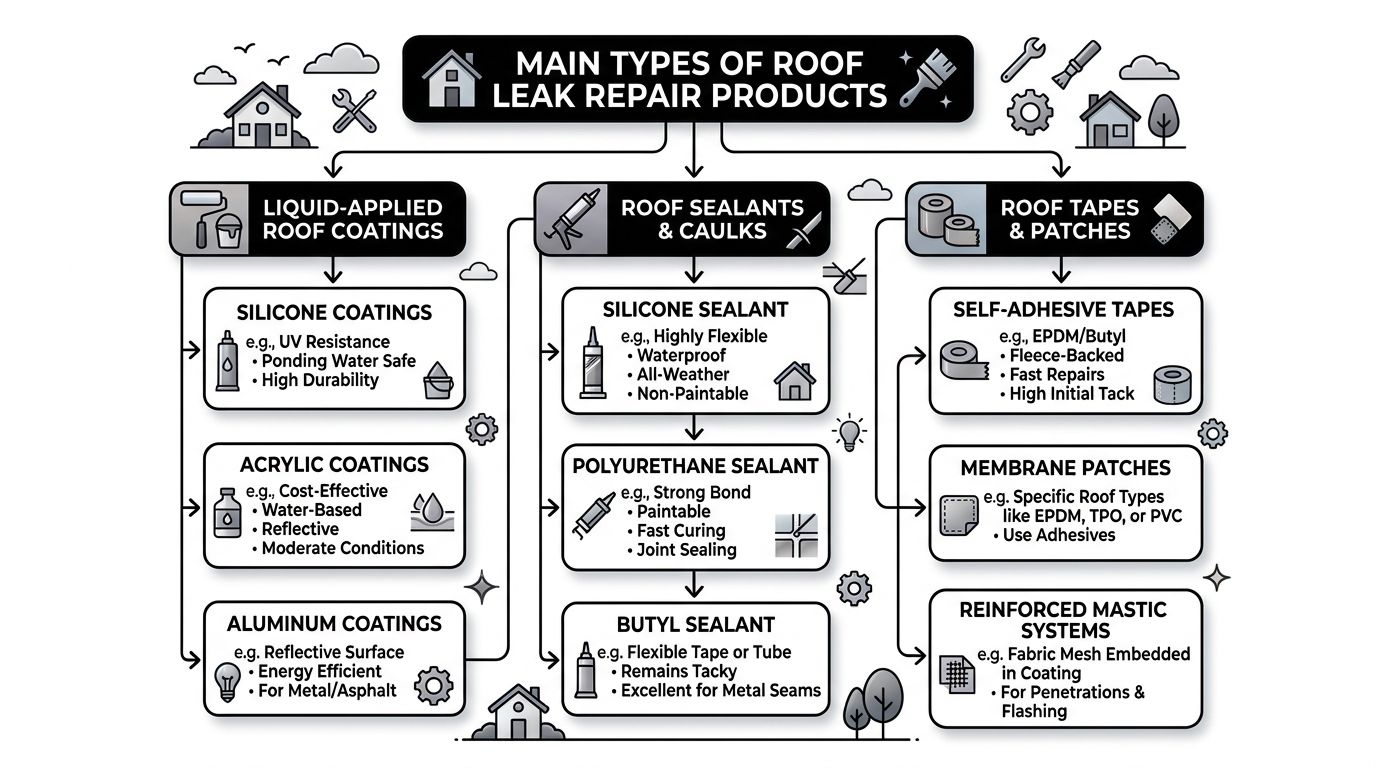
The main product families are easier to sort when you stop thinking in broad “sealant” terms and start thinking in repair mechanics. Some products are designed to bridge movement, some to build a waterproof film, and some to reinforce a seam or flashing edge.
Sealants and cements
Silicone, rubberized asphalt, and polyurethane sealants are the core wet- and dry-surface repair tools. Henry's Wet Patch is a useful example of a wet-surface product, because its technical data shows 100% wet-surface adhesion per ASTM D-3409, 80% solids by weight, and a 105°F minimum pliability rating with no cracking or separation at 32°F, which helps explain why it's used on moving details instead of rigid mastics.Henry Wet Patch technical data
Silicone wet patch compounds are different. Henry's 885 Tropi-Cool Wet Patch lists 95% +/-3 solids by volume, 275% minimum elongation at break, 130 minimum tensile strength, and 1 to 3 hour tack-free time with 12 to 18 hour cure time.Henry 885 Tropi-Cool Wet Patch data Those numbers point to a more elastic, long-weathering repair product, especially where ponding water and UV exposure are hard on asphaltic cements.
Tapes and patches
Repair tapes and adhesive patches are for localized damage, seam reinforcement, and emergency sealing. They're best when you need immediate coverage over a narrow defect and you can prep the surface carefully. They're not a substitute for fixing the reason the leak started.
Coatings
Elastomeric, acrylic, and silicone coatings are more about field-level waterproofing than pinpoint patching. They're useful when the roof surface is large enough to justify a continuous membrane, but they're not the right answer for every leak origin. A patching product that works on a single penetration can't always replace a coating system designed for broader coverage.
Specialized concrete-roof products
Concrete roof leaks often need a different sequence, because the defect may be in a crack, joint, drainage area, or transition point. A technical guide recommends inspecting beyond the visible drip point, then using hydraulic cement, epoxy filler, or mortar depending on crack size, followed by primer and two coats of elastomeric or polyurethane waterproofing sealant.Concrete roof leak repair guide
The key takeaway is simple. Material chemistry, substrate, and cure behavior matter more than the marketing word “all-weather.”
Matching Products to Your Roof Type and Leak Cause
A product that performs well on one roof can fail fast on another. That's why leak diagnosis comes first, because the cause of the leak usually tells you more than the color of the shingle or the label on the tube.
Roof type and product fit
On asphalt shingle roofs, the most common emergency fix is a localized sealant or patch around a lifted tab, cracked flashing edge, or exposed fastener area. On clay or concrete tile systems, the issue is often underlayment, flashing, or a broken tile edge, so surface patching alone may only buy time. On standing seam metal roofs, seam separation and fastener movement are the usual suspects, which means a flexible sealant or seam repair product matters more than a thick, rigid cement. On flat or low-slope roofs, ponding areas and membrane transitions demand products that can tolerate standing water and movement.
A product that looks great on a sloped roof may fail on a flat roof simply because the water stays in contact longer.
Common leak causes and what they usually need
Flashing penetrations need a product that can bond to metal, masonry, or membrane edges. Valleys and ridges usually call for a repair that respects water flow, not a blob of sealant that blocks drainage. Roof-to-wall transitions need careful detailing because movement concentrates there. Drainage points and clogged gutters are different again, because the issue may be overload rather than membrane failure.
The mistake I see most is treating every leak as a hole to be filled. That misses the actual failure mode, especially after wind-driven rain. If the leak is coming from a transition or a seam, the repair has to address movement and runoff, not just cover the stain.
| Roof Type | Best Emergency Product | Best Long-Term Product | Common Failure Points |
|---|---|---|---|
| Asphalt shingle | Rubberized wet-patch sealant | Targeted flashing or shingle replacement | Lifted tabs, cracked flashing, nail heads |
| Clay or concrete tile | Flexible localized patching | Underlayment and flashing repair | Broken tiles, degraded underlayment, edge transitions |
| Standing seam metal | Flexible seam sealant | Seam detailing and fastener repair | Seam separation, fastener movement, roof-to-wall transitions |
| Flat or low-slope | Silicone wet patch or compatible coating detail | Full detail repair or coating system | Ponding areas, membrane laps, penetrations |
| Concrete roof | Crack filler or hydraulic cement | Primer plus elastomeric or polyurethane waterproofing | Cracks, corners, drainage areas |
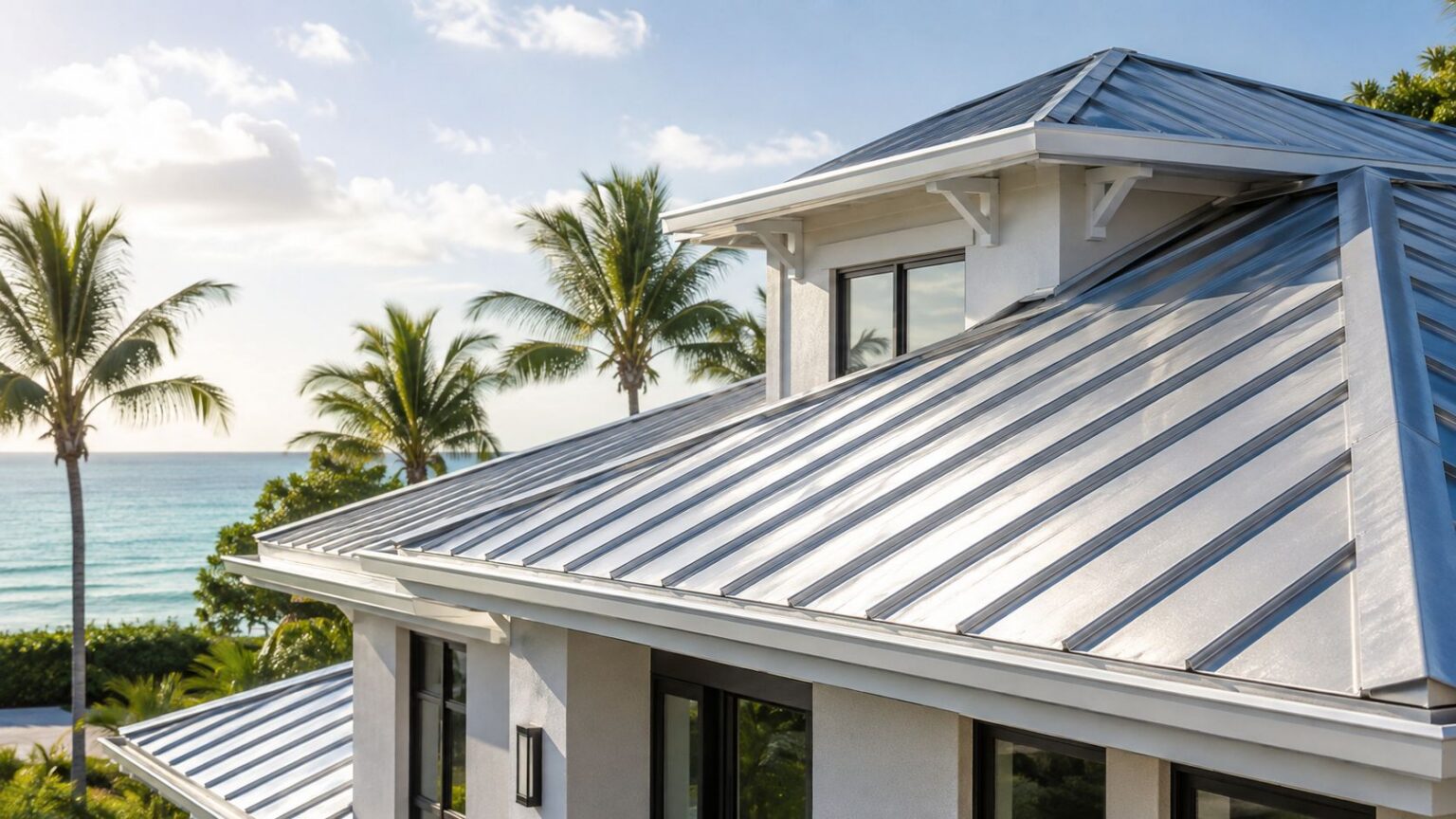
A visual reference for metal roofing details is available here, and it's a good reminder that seam repairs on metal are about precision, not just coverage.
Emergency Repairs Versus Durable Long-Term Solutions
After a storm, the first question is not whether a product is permanent. It is whether it will bond to the roof surface you have in front of you. In South Florida, that usually means hot shingles, damp tile edges, oxidized metal, or a flat roof that still holds a little water in the problem area.
Wet-surface products exist for that short window. They are made to stop water intrusion when the roof is not ready for a dry, detailed repair, and that makes them useful when the leak is active and the weather will not cooperate. The trade-off is plain. Products that can stick in wet conditions usually give you speed first, long service life second.
Why wet-surface products behave differently
A repair that bonds to moisture is working against the weather, not with perfect prep. That is why it can hold long enough to protect the interior, yet still need to be replaced once the roof dries out and the actual defect is opened up. Heat, UV, and repeated rain cycles in South Florida make that limitation more obvious, because a patch that looks sound one day can start lifting or cracking once the surface moves again.
Roofing cement is often described as the “duct tape” of roofing, and that fits emergency use.Roof cement use and limits It can stop active leakage fast, but it should not be treated like a complete repair on a roof that still needs proper drying, fastening, or flashing work.
What a durable repair needs instead
A longer-lasting repair depends less on quick adhesion and more on how the product fits the roof assembly. A standard roof-cement patch is more specific than a smear of material. One guide recommends a 3-course or 5-course method, with the base layer of roofing cement about 1/8-inch to 1/4-inch thick and extending at least 3 inches, preferably 6 inches, beyond the hole or crack in all directions.Roof cement patch guide That kind of build matters because it spreads stress instead of concentrating it at the weak point.
On roofs with penetrations, seams, or edge transitions, the lasting fix usually means correcting the source, not just coating the stain. If the leak is coming through a flashing gap, seam opening, or damaged underlayment, the repair has to address that movement and the path of water, or the same problem keeps returning.
For a practical interior-side response before exterior work can happen, practical roof repair from Bulls Eye Repair is a useful reference for the short-term phase.
The main limitation to watch for
Quick-fix coatings can trap moisture if they are applied over a wet assembly and the failure source is still active. That can slow the drip while leaving hidden damage in place. In storm season, the main decision is whether the product is being used to buy time or to complete the repair, because those are two different jobs with different limits.
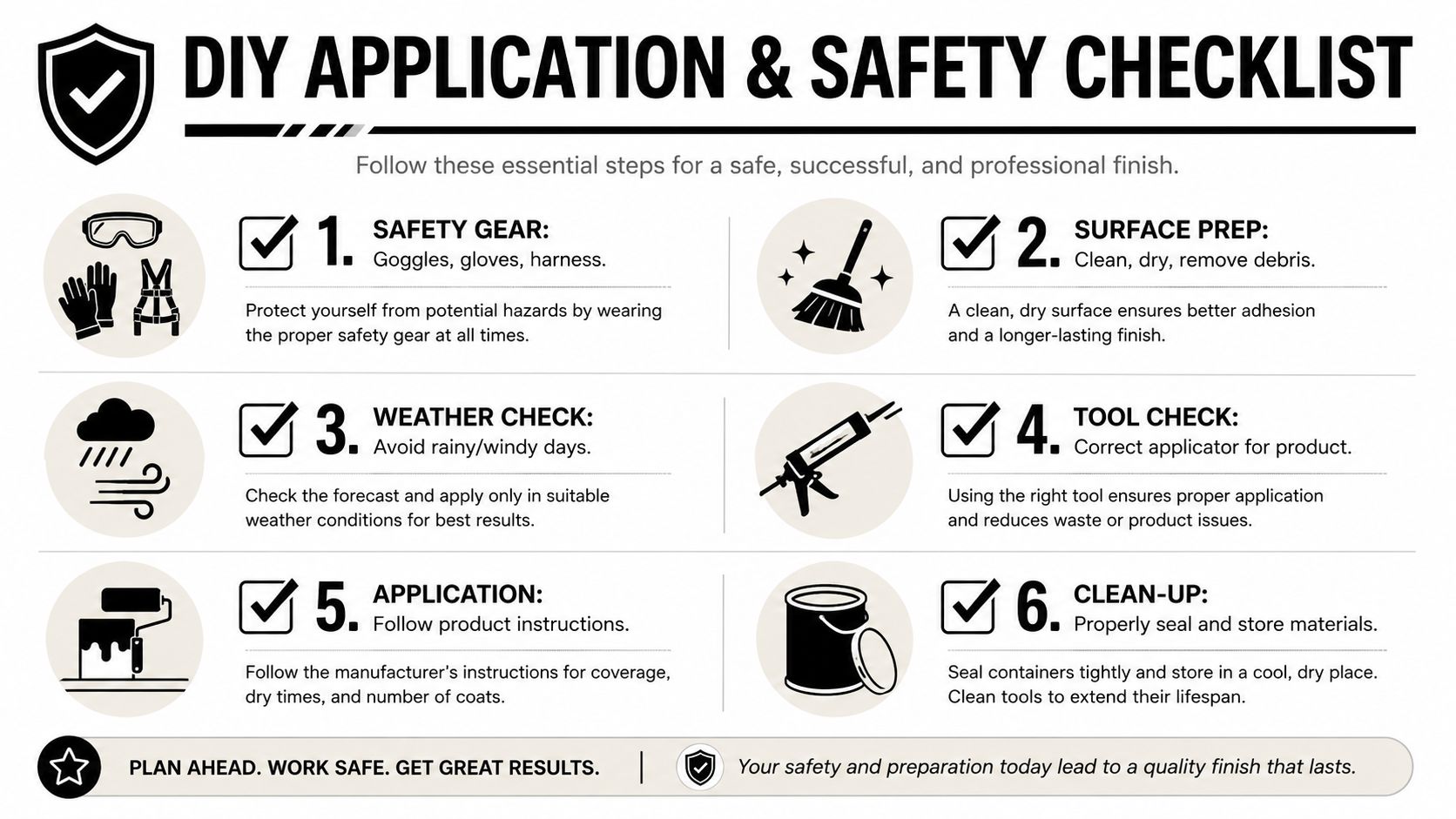
DIY Application Techniques and Safety Considerations
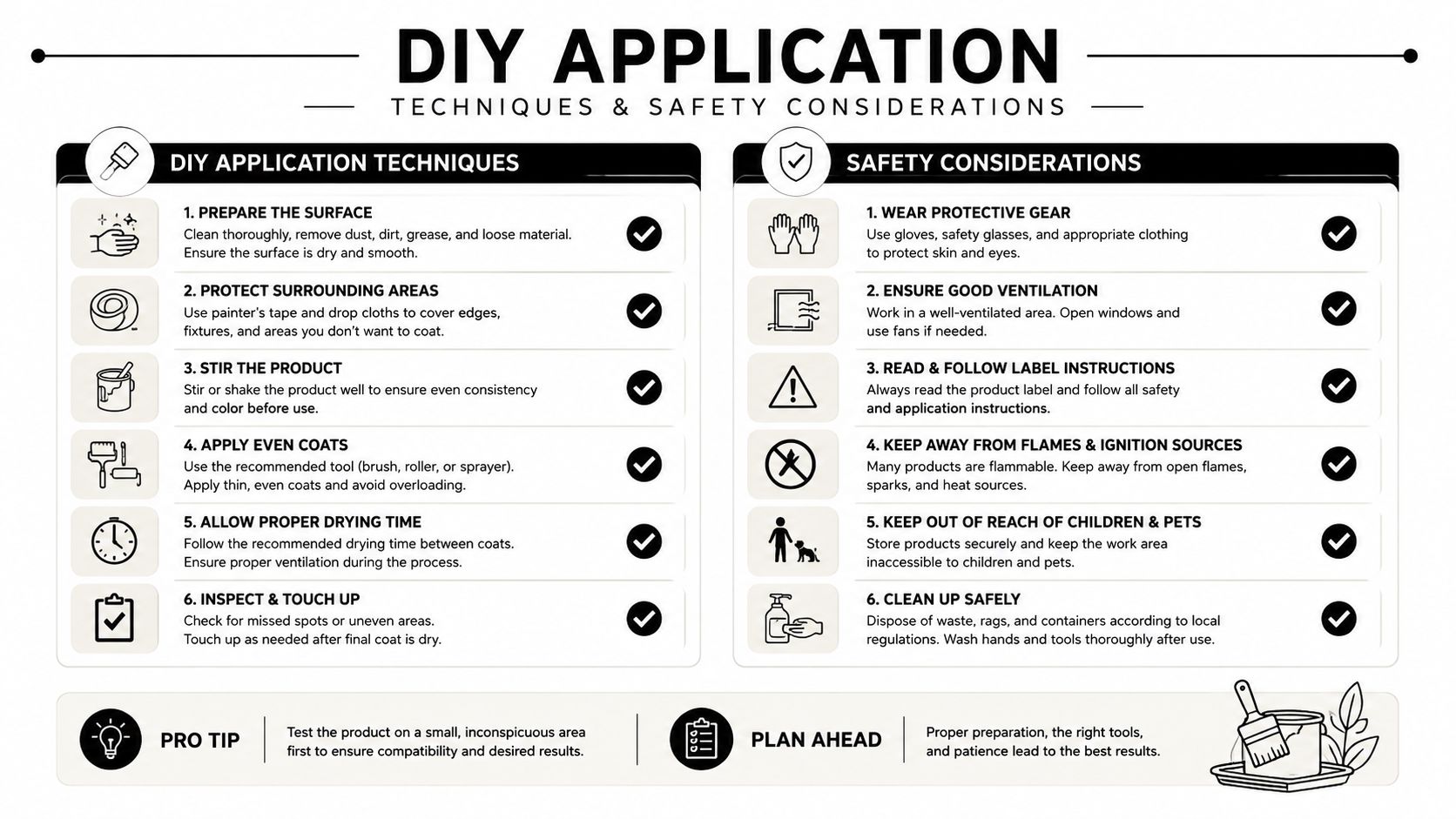
DIY repair can work, but only when the leak is small, the roof is accessible, and the surface can be prepared correctly. The repair fails fast if the roof is dirty, wet in the wrong place, or too hot for proper handling.
Surface prep decides the outcome
Clean the area first, remove loose debris, and dry it as much as the product requires. Some sealants are designed for damp surfaces, but even those work better when mud, algae, loose granules, and old failing material are removed. A repair over contamination is usually a short-lived repair.
A standard roofing cement patch should be applied in courses rather than dumped on all at once. That's especially true around small flashing gaps or localized shingle damage, where controlled thickness and overlap matter more than bulk.
South Florida conditions change the job
Summer roof work is physically punishing. Heat exhaustion, slip risk on a slick surface, and sudden weather changes all make timing important. On metal roofs, electrical caution matters too, because wet conditions and metal surfaces add risk that homeowners sometimes underestimate.
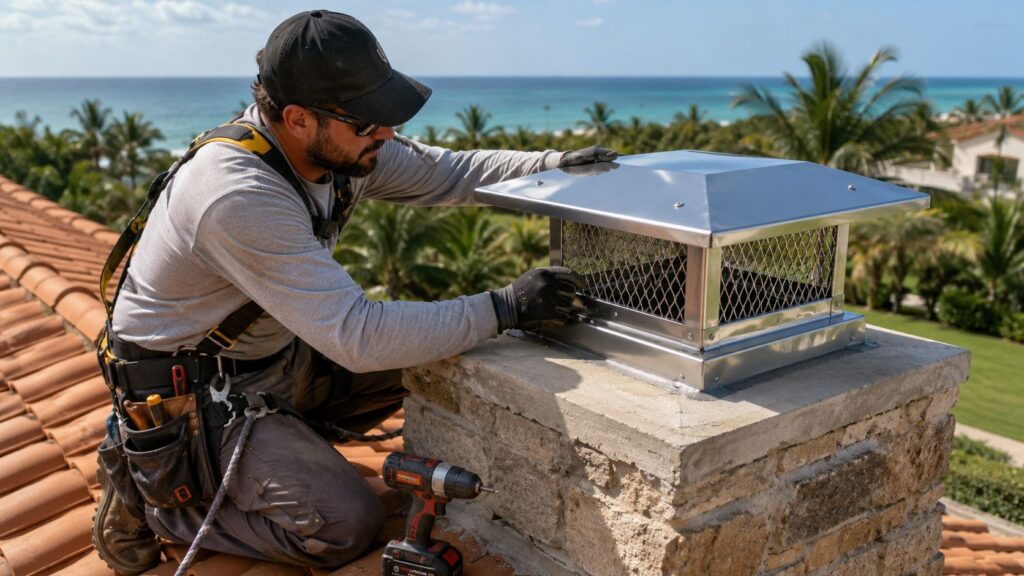
A chimney or roof penetration repair is also a place where a simple surface patch may only solve part of the problem. A detailed view of penetration work appears in this chimney-related repair image here, and that kind of detail is why transitions deserve careful inspection.
DIY-friendly versus not DIY-friendly
Small flashing gaps, a single exposed fastener, or a minor shingle defect can be reasonable DIY candidates if the roof is safe to access. Large membrane failures, widespread tile issues, visible structural movement, or recurring leaks are different. Those need better diagnostics than a homeowner can usually do from a ladder.
If the leak returns after a careful patch, the problem probably wasn't the spot you covered.
One more point on products. Use the right applicator, because trowelable pastes, caulk tubes, tape systems, and coatings all behave differently. If the product wants a smooth, uniform bead and you spread it like paint, you're already off track.
When a Leak Requires Professional Repair
Not every leak belongs in the DIY pile. If water is showing up in multiple places, the roof deck is sagging, or flashing has failed across several details, the roof is telling you the problem is bigger than a single hole.
The warning signs that matter
A leak that comes back after patching is one of the clearest signals. So is a leak at a valley, chimney, skylight, or roof-to-wall transition, because those areas often involve hidden flashing or underlayment issues. If water has been staining ceilings for a while, the visible damage may be far from the actual entry point.
Professional roofers use moisture meters, infrared imaging, and water testing to trace leak sources that don't line up with the stain on the ceiling. That matters because a homeowner often patches where the water appears, not where it enters.
Why delayed repair gets expensive
Roof leak repair products are good at buying time. They're not good at reversing saturated insulation, damaged drywall, or rotted decking once the leak has had time to travel. The longer water sits in the assembly, the more likely the repair stops being a product question and turns into a structural one.
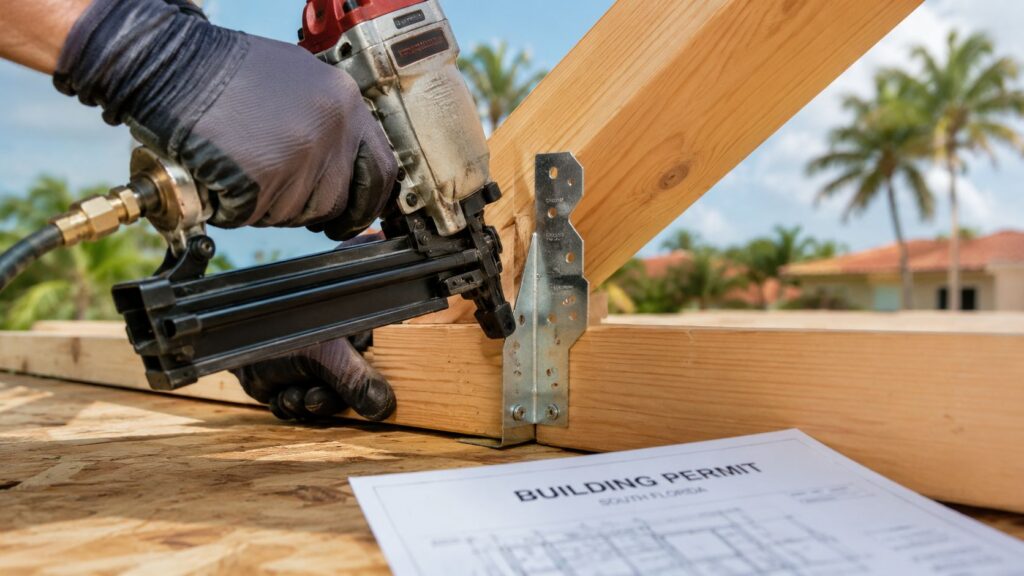
For South Florida homes, emergency stabilization should be followed by a real inspection. Paletz Roofing and Inspections is one option in the region for that kind of assessment and repair work, and the key is the inspection itself, not the patch tube. A second useful reference on professional repair response is hurricane clip installation and construction work, because storm impact often affects more than the visible leak point.
If insurance is involved, documentation matters. A properly documented professional repair can help support the claim file, while improvised repairs can complicate the story if damage spreads later. That's another reason to treat emergency products as temporary, not final.
Choosing Qualified Roofing Contractors in South Florida
A good contractor doesn't just apply a product. They decide whether the product is even the right answer, then build the repair around the roof's condition, slope, and material.
What to verify before you hire
Licensing and insurance are the starting point, not the finishing touch. Local experience matters too, because South Florida roofs are built and stressed differently than roofs in drier markets. A contractor who understands Broward, Miami-Dade, and Palm Beach counties is more likely to know how heat, humidity, and wind-driven rain affect repair durability.
Ask how the leak will be diagnosed, what materials will be used, and whether the work is an emergency patch or a permanent fix. Ask what conditions need to be dry before the final repair. Ask what warranty applies to the work itself and whether the repair is compatible with your existing roof system.
Red flags that should slow you down
A contractor who pushes full replacement without inspecting the leak source deserves scrutiny. So does anyone who can't explain why a certain product matches your roof type, or who won't discuss the difference between temporary and permanent repair. Lack of local references is another warning sign.
You can also use a credibility check like HomeProBadge roofing credibility check as part of your vetting process, especially when you're comparing firms and trying to separate real field experience from polished sales language.
What good service looks like
The best inspection finds the leak and the surrounding weakness, not just the drip point. It also tells you whether a product repair is enough or whether the roof needs more detailed work to avoid repeat failures. In South Florida, that's the difference between a patch that lasts through the season and a repair that keeps the home dry under the next hard rain.
Making the Right Decision for Your Specific Situation

A roof leak after a South Florida storm usually comes down to the surface you are repairing, the cause of the leak, and how wet the roof is when you find it. A flat roof with ponding water calls for a different product than a shingle roof with a lifted tab, and a cracked tile needs a different approach again. If the leak is small, the area is easy to reach, and the repair product matches both the roof material and the moisture condition, a DIY emergency fix can be the right move. If the leak keeps returning, spreads beyond one spot, or traces back to flashing, valleys, penetrations, or movement in the roof assembly, it is safer to bring in a professional.
Cost should be part of the decision, but it should not be the only part. Roof leak repair is usually about a targeted fix, not a full replacement, and the final price depends on how severe the damage is, how steep the roof is, and how hard it is to reach the problem area.Roof leak repair cost and product breakdown A small product repair can save money today, but the main question is whether it stops the next stain on the ceiling, the next bit of hidden rot, and the next round of disruption inside the home.
Emergency products belong on active leaks when water is already getting in. Durable repairs belong on a roof that is dry enough for proper prep and bonding, because product performance in heat and humidity depends on how well the surface is cleaned and sealed. A professional repair makes more sense when the issue is beyond a single patch point, especially on roofs that have already been stressed by wind and driving rain.
If your roof took a hit in the last storm and you need a clear next step, contact a licensed South Florida roofing inspection service for an inspection and practical repair guidance. A qualified team can identify the leak source, match the repair to the roof type, and tell you whether a quick seal is enough or whether the roof needs more work to stay dry.