
It can be a little unnerving to find a bunch of small, sand-like particles while cleaning out your gutters. Those are roof granules, and just about every homeowner finds them at some point. While a little bit of granule loss is perfectly normal, seeing a large pile-up can mean your roof's protective layer is starting to wear thin—a serious issue for any home in the Davie area.
What Are Roof Granules and Why Do They Matter?
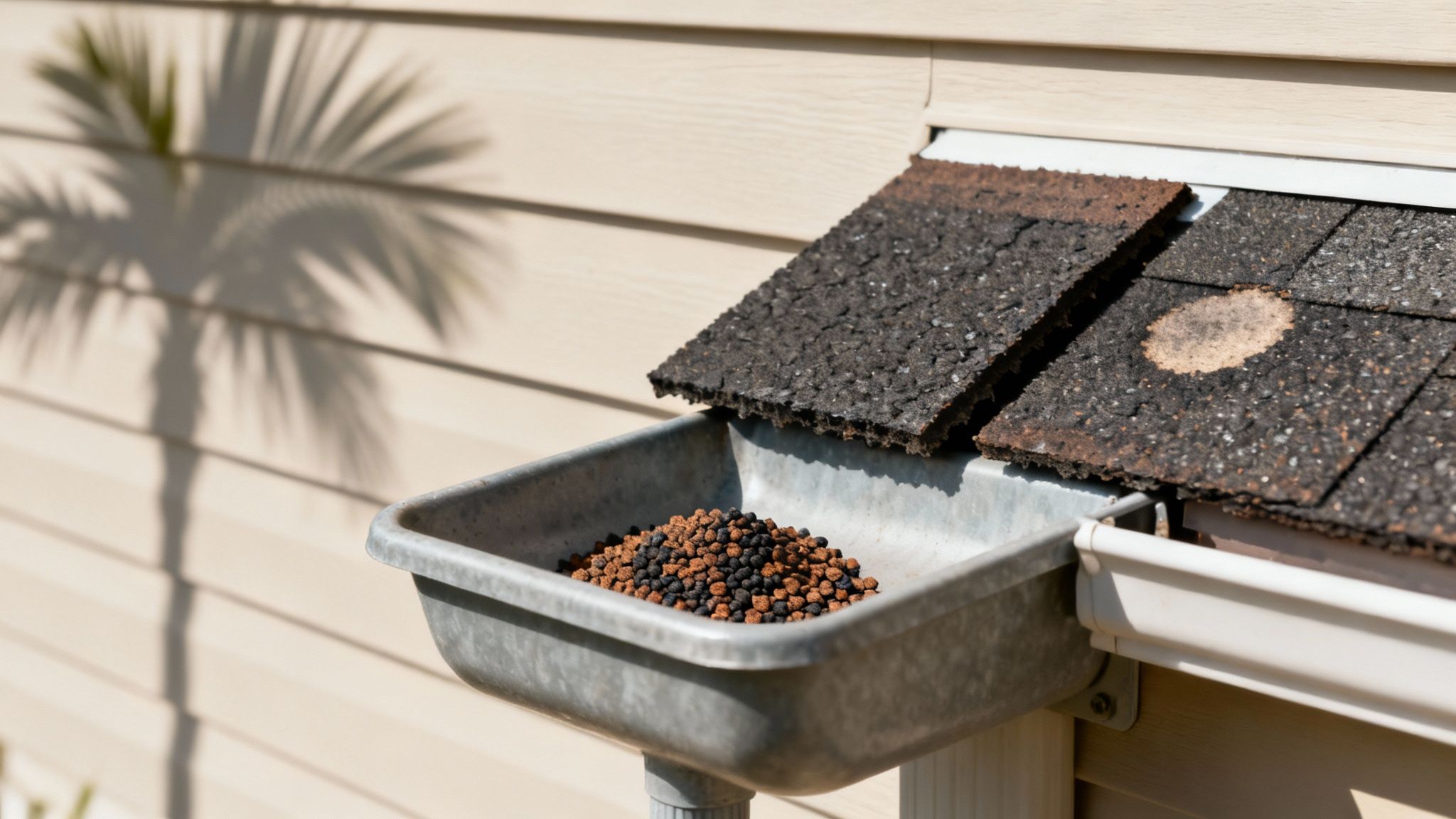
Think of roof granules as the armor for your asphalt shingles. They're tiny, crushed rock particles that get pressed right into the surface of each shingle when it's made. In a demanding climate like South Florida's, they serve a vital purpose.
Their main job is to act like a powerful, built-in sunscreen for your roof. They shield the asphalt underneath from the sun's relentless ultraviolet (UV) rays.
This protection is absolutely essential for the longevity of your roof. The granules deflect sunlight, which not only helps keep your home a bit cooler but also prevents the asphalt from drying out, cracking, and becoming brittle. Without this gritty layer, your shingles would break down much, much faster under the intense Florida sun.
The Role of Granules in Weather Protection
Beyond just UV protection, these granules have a few other key jobs. They add weight and stiffness to the shingles, which makes them more resistant to wind damage during one of our tropical storms. Their rough texture also adds a bit of fire resistance and helps slow down heavy rainwater, guiding it properly into your gutters instead of letting it rush off in sheets.
Essentially, these granules are your roof’s first and most important line of defense against the elements. Seeing them on your shingles is a sign of a healthy roof; seeing them in your gutters can be a red flag.
Understanding Normal Shedding
Now, it's important to know that seeing some roof granules in gutters Davie homeowners have is not always a reason to panic. If you just got a new roof, you're going to see a fair amount of what we call "hitchhiker" granules. These are just the excess particles that didn't fully embed during the manufacturing process.
This initial shedding is totally normal and usually stops after the first few big rainstorms.
"A small, consistent amount of granules in the gutter is part of a roof's natural aging process. The concern arises when you see a sudden increase or large accumulations, which often points to accelerated wear or specific damage."
However, if your roof is more than a few years old and you're suddenly scooping out handfuls of granules, it’s time to pay closer attention. These particles are a finite resource for each shingle. Once they’re gone, the shingle's core is exposed and vulnerable.
Industry data shows that these granules provide up to 80% of a roof's UV protection—a critical factor here in sunny Davie. You can learn more about how granule loss impacts roof lifespan and explore detailed insights about roof protection.
Decoding Granule Loss: Normal Aging vs. A Warning Sign
Finding a handful of tiny, sand-like particles in your gutters can be puzzling. Is it a five-alarm fire for your roof's health, or just a normal part of its life cycle? Honestly, it could be either. The answer really depends on your roof's age, what our wild Davie weather has been up to lately, and just how many of these granules you're actually seeing.
Think of it like the tread on a car tire. Over thousands of miles, the rubber naturally wears down little by little. An older roof does the same thing. Years of relentless sun, wind, and rain slowly but surely loosen a few granules here and there. This gradual, minor shedding is just part of the aging process.
But what if you suddenly noticed a huge chunk of tread missing from your tire? That’s not normal wear—that’s a sign of a serious problem. A sudden, heavy downpour of granules into your gutters is the exact same kind of red flag for your roof.
Identifying Rapid Granule Loss
Certain events can hit the fast-forward button on granule loss, turning that slow aging process into an urgent issue. For us here in Davie, there are a few usual suspects:
- Severe Weather: This is the big one. Tropical storms and hurricanes, with their high winds and driving rain, can act like a pressure washer on your shingles, blasting granules loose. Hail is especially nasty; each impact can create a "bruise" on the shingle that knocks a whole cluster of granules free.
- Physical Damage: It doesn’t always take a storm. Something as simple as a fallen tree branch, a careless roofer walking on the surface, or even airborne debris can scrape away that protective layer in an instant.
- Installation Issues: If the shingles weren't installed correctly in the first place, or if they were a subpar product, they might start shedding granules way too early. This is a frustrating one, as it happens long before the roof should be showing its age.
The most critical warning sign you can spot from the ground is the appearance of "bald spots" on your shingles. These are dark, smooth patches where the underlying black asphalt is showing through because all the granules have been stripped away. This is your roof sending up an S.O.S.
The infographic below gives you a quick visual guide to help figure out what you're dealing with.
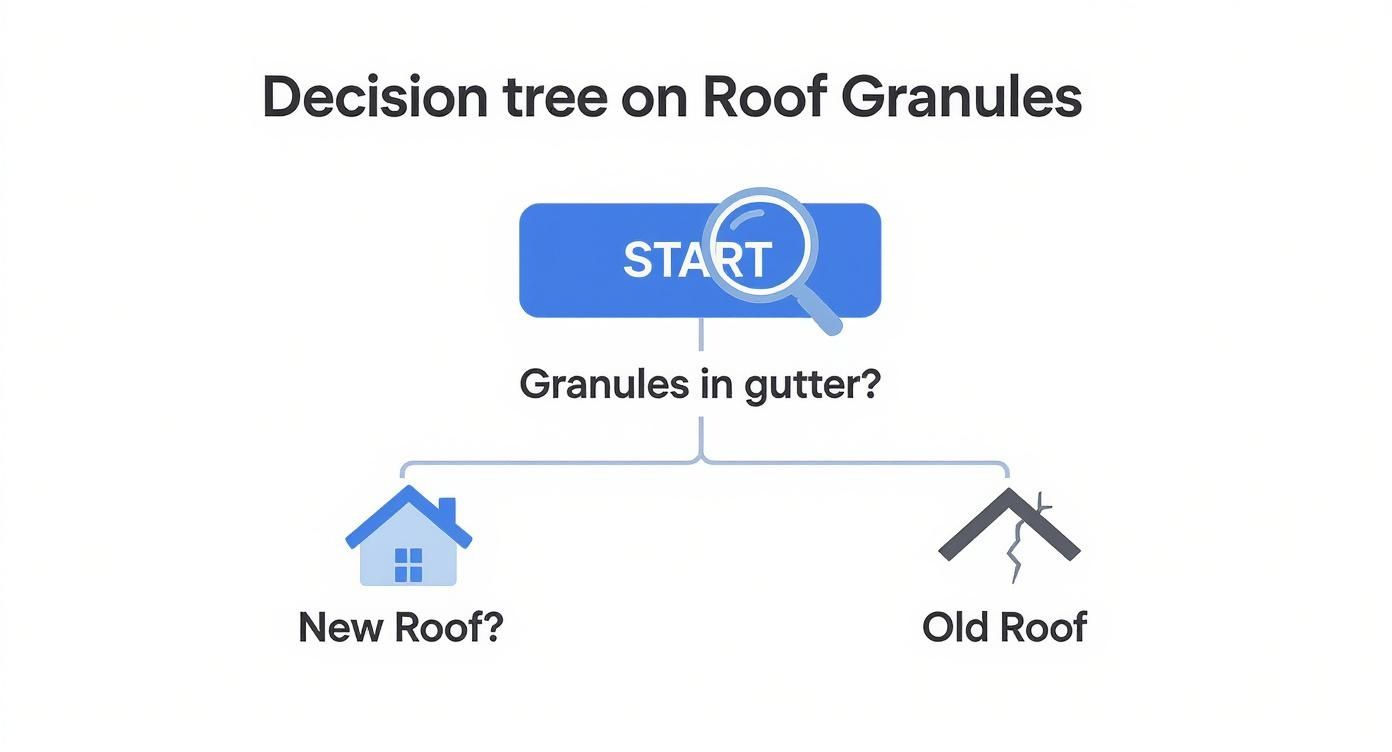
This tool is a great starting point for putting granule loss in context. It helps you see the difference between a few loose bits on a brand-new roof and a concerning pile of them on a 15-year-old one.
Granule Loss Severity Indicator
For a quick reference, here’s a table to help you gauge the situation with your own gutters. Think of it as a triage chart for your roof.
| Observation | Potential Cause | Urgency Level | Recommended Action |
|---|---|---|---|
| A few specks, like dust | Normal shedding, especially on a new roof | Low | Monitor, but no immediate action is needed. |
| A thin, even layer of granules | Normal aging on a roof over 10 years old | Medium | Schedule a routine professional inspection. |
| Piles or clumps of granules | Recent storm damage or physical impact | High | Call a professional for an immediate inspection. |
| Visible bald spots on shingles | Severe, advanced granule loss | Critical | Your roof is exposed. Call a professional ASAP. |
This table isn't a substitute for a professional opinion, but it can definitely help you understand what you're seeing and decide on your next step.
When Loss Becomes a Serious Concern
Granule loss isn't just a cosmetic issue; it's a direct indicator of your roof's remaining lifespan. A typical asphalt shingle roof is built to last 20 to 30 years, but that number can be slashed by the intense weather we get right here in Davie. A single bad storm can inflict years of wear and tear in just a few hours.
Let's say you cleaned your gutters in June and they were spotless. After a big thunderstorm in August, you check them again and find them clogged with granules. That's not aging—that's damage. This sudden accumulation is a clear signal that your roof's protective shield has been seriously weakened and needs a professional eye on it, and fast.
Sudden granule loss is a clear sign that it's time to take action. You can discover more insights about what these warning signs mean by checking out the resources on goshanco.com.
The Cost of Ignoring Granules in Your Gutters
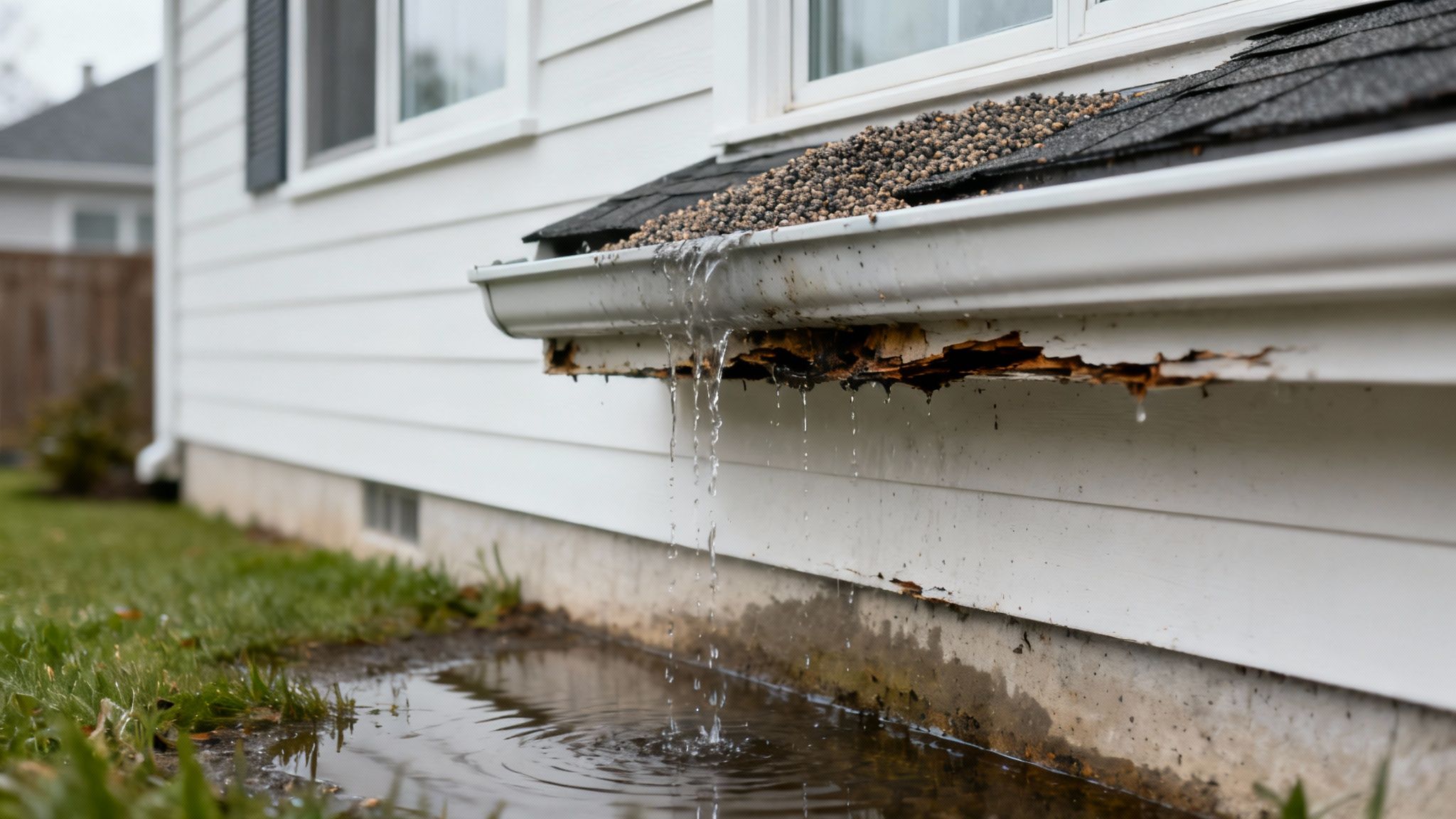
Finding a pile of roof granules in gutters Davie homes have might not seem like a big deal. It's one of those "out of sight, out of mind" problems that's easy to put on the back burner. But don't be fooled. Those tiny specks can kick off a surprisingly destructive and expensive chain reaction, turning a small chore into a massive home repair project.
Think of your gutter system as your home's main drainage artery. When it’s clear, rainwater flows away harmlessly. But when granules, leaves, and other gunk pile up, they form a dense, heavy sludge that acts like a dam. This blocks water from escaping—a major problem during Davie’s intense rainy seasons.
With nowhere else to go, all that water backs up. It starts pooling along the edge of your roof, completely defeating the purpose of the very system designed to protect it.
The Domino Effect of Clogged Gutters
Once that water starts to pool, the damage spreads fast. The constant moisture seeps under the edges of your shingles, soaking the wooden roof decking underneath. This is a direct path to wood rot, which can seriously weaken the structure of your roof.
But the water doesn't just stop there. It spills over the sides of the gutter, constantly running down your fascia boards—that's the trim that runs right along the roofline. Over time, this endless dampness causes the fascia to rot, warp, and pull away from the house.
The real danger kicks in when this overflow saturates the ground right next to your house. This concentrated flow of water can weaken the soil and put immense pressure on your foundation, potentially leading to expensive cracks and serious structural problems.
This whole sequence shows how a simple gutter clog can escalate into a full-blown threat to your home's core structure. What starts as a minor oversight can easily lead to thousands of dollars in repairs for your roof, fascia, and even the foundation.
Proactive Care vs. Reactive Repairs
The difference in cost between prevention and repair is just staggering. Routine gutter cleaning is a minor expense, but fixing a cracked foundation or replacing a rotted roof deck is a huge financial hit.
This is exactly why dealing with granule buildup is so critical. Well-maintained gutters are non-negotiable for proper water management. In fact, roofing pros consistently find that clean gutters can slash water-related roof damage by more than 50%, protecting the very bones of your home. You can find out more about why roof maintenance is critical to your home's safety.
At the end of the day, that pile of granules isn't just a bit of debris; it's a warning sign. Heeding it promptly protects your home from a whole cascade of preventable damage and saves you from much bigger headaches down the road.
A Safe DIY Roof Inspection Checklist for Davie Homeowners
Believe it or not, you don’t need to get up on a ladder to get a solid idea of your roof's health. A good, thorough inspection from the ground can tell you a whole lot, especially after one of those big Davie storms rolls through. Staying safely on the ground lets you spot early warning signs and make a smart call about when it's time for the pros.
This simple checklist is all about being safe and effective. All you really need is a decent pair of binoculars and a few minutes to look closely.
Step 1: Look From a Distance
Start by taking a walk around your property. You want to see your roof from a few different angles, standing a good distance away from the house. Binoculars are your best friend for this part—they give you a close-up view without any of the risk.
- Look for unevenness: Scan the main ridgeline of your roof. Does it look perfectly straight and level, or can you see any sags or dips? A sagging roof is a serious red flag that could point to structural problems.
- Check for damage: Keep an eye out for anything that just looks wrong. This could be missing shingles, obviously cracked tiles, or big, dark patches where the granules have been stripped away.
Step 2: Focus on the Details
Alright, now move a bit closer to your house and use those binoculars to zoom in on the shingle surfaces. This is where you can spot the kind of wear and tear that leads to finding those roof granules in gutters Davie homeowners are always asking about.
A DIY check is a fantastic first step, but for a truly comprehensive assessment, it's always wise to consider professional roof inspections. These experts can identify subtle issues that an untrained eye might miss.
Pay really close attention to individual shingles. Are the edges starting to curl up? Do you see any cracks running through them? These are classic signs that your shingles are getting old and brittle, leaving them wide open to damage from wind and rain. For a visual reference on what certified inspectors look for, this

represents the standard of professional assessment.
Step 3: Examine Your Gutters and Downspouts
Last but not least, check the places where water and debris end up. Your gutters and downspouts can tell you a detailed story about what’s really happening up on your roof.
Take a look at the ground around your downspouts, especially after a good rain. See a little pile of black, sandy-looking stuff? Those are the granules that have washed right off your roof. While a tiny amount is normal over time, a big pile is a clear warning that your shingles are losing their protective skin, leaving your roof exposed to the elements.
Knowing When to Call a Davie Roofing Professional
A DIY inspection from the ground is a fantastic first step, but let's be honest—some situations with your roof just demand a professional’s trained eye. Knowing the difference between a small issue you can keep an eye on and a serious problem that needs immediate attention is key to protecting your home. When it comes to finding roof granules in gutters Davie homeowners need to know when it’s time to escalate the issue.
Certain signs are clear indicators that it's time to put down the binoculars and pick up the phone. Widespread granule loss, where you see large, dark bald spots across multiple sections of your roof, is a major red flag. This isn't just cosmetic; it means the shingle's protective layer is gone, leaving its asphalt core completely exposed to the elements.
Another critical sign is any evidence of an active leak. You might notice brownish water stains appearing on your ceilings or walls, a musty smell in your attic, or even see visible daylight peeking through the roof boards. These symptoms mean water is already getting inside your home, and the problem is way past the point of simple monitoring.
The Value of a Professional Assessment
Calling a certified roofing contractor in Davie brings an invaluable level of expertise to your doorstep. They do more than just confirm the problems you can already see; they pinpoint the hidden issues causing them. For instance, a professional might discover that poor attic ventilation is trapping heat and moisture, essentially "baking" your shingles from below and causing them to age prematurely.
An expert can also assess the structural integrity of your roof deck, something impossible to do from the ground. They understand local building codes and the specific challenges that South Florida's climate throws at a roof. You might find that many Davie roofing professionals use advanced tools like specialized professional drone roofing inspection software to get a comprehensive look at your roof's condition.
A professional inspection provides a complete picture of your roof's health. It connects the symptom—granules in the gutter—to the underlying cause, ensuring a long-term solution rather than a temporary fix.
Questions to Ask Your Davie Contractor
When you have a professional on-site, it's your opportunity to get clear answers and make sure you're working with a reputable company. Here are a few essential questions to ask during their assessment:
- Are you licensed and insured in Florida? This is non-negotiable and protects you from any liability.
- Can you explain what's causing the granule loss? A good contractor will walk you through their findings in plain English.
- What are my options for repair versus replacement? They should provide a clear, honest breakdown of the costs and benefits of each route.
- Do you offer a warranty on your work? Understanding the guarantee is crucial for your peace of mind.
For a clearer idea of what an expert looks for, you can see examples from a professional's perspective on common roofing issues. Making that call ensures your roof—and your investment in it—is properly protected.
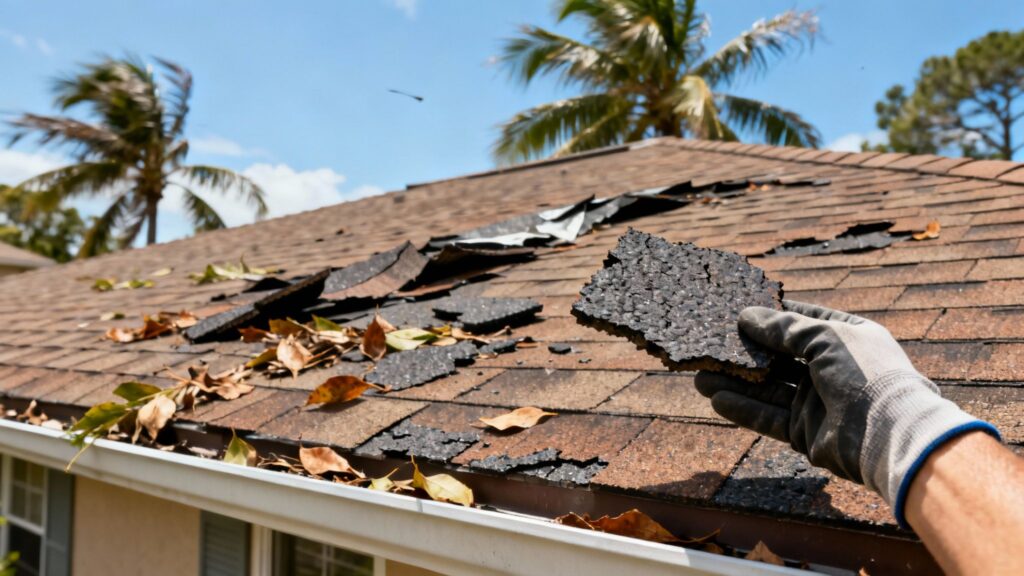
Proactive Maintenance to Protect Your Roof Investment
The best defense against expensive roof repairs is a good offense. Being proactive isn’t just about fixing problems as they pop up; it’s about stopping them before they even start. For homeowners in Davie, where the sun, rain, and humidity are absolutely relentless, a smart maintenance strategy can add years to your roof's lifespan and protect your biggest investment.
Simple, consistent habits make a huge difference in preventing the kind of damage that leads to finding roof granules in gutters Davie residents often worry about. It all begins with your gutter system, which acts as your roof’s primary drainage network.
Smart Gutter Cleaning and Landscape Management
When you're cleaning gutters choked with granules and leaves, reach for a trowel or a scoop instead of a high-pressure hose. A powerful blast of water can actually strip even more granules from your shingles, speeding up the aging process. The goal here is to clear the path for water without causing more harm to the very surface you're trying to save.
Overhanging tree branches are another frequent offender. As they dance in the wind, their limbs can scrape against your shingles, dislodging that critical protective layer of granules. Trimming them back regularly not only stops this direct damage but also cuts down on the leaves and sticks that clog your gutters in the first place.
"A proactive maintenance schedule is the single most effective way to maximize your roof's service life. It turns potential emergencies into predictable, manageable tasks, saving homeowners thousands in the long run."
Critical Mistakes to Avoid
Some well-meaning maintenance attempts can actually do more harm than good. One of the biggest mistakes a homeowner can make is taking a pressure washer to their asphalt shingles. While it seems like a fast way to get rid of algae or dirt, that intense pressure is like sandblasting years off your roof’s life. It strips away granules and can even void your manufacturer’s warranty.
Similarly, walking on your roof when you don’t need to, especially during the hottest part of the day when shingles are soft and pliable, can cause granule loss and create hidden cracks. For a detailed look at what professional proactive care looks like, check out this guide on professional roofing maintenance. By pairing these smart habits with an annual professional inspection, you can move from reactive repairs to truly proactive protection.

Got Questions About Roof Granules? We've Got Answers.
Finding a pile of sandy grit in your gutters can be confusing. For Davie homeowners, figuring out what those little particles mean is the first step to making smart decisions about your roof. Let's clear up some of the most common questions we hear.
Are Colorful Granules a Worse Sign Than Black Ones?
Not at all. The color of the granules you find is purely cosmetic and doesn’t signal how bad the problem is. Shingles are made with a mix of different colored mineral granules to create their final look.
The real thing to watch is the quantity, not the color. A large amount of lost granules—whether they're brown, gray, or black—means your roof's protective layer is getting thin. This is what exposes the asphalt underneath to UV rays and moisture, and that's the actual problem.
Why Are So Many Granules Coming Off My Brand New Roof?
This is a great question, and we get it all the time. The good news is, it's usually not a cause for alarm. This initial shedding is completely normal and even expected right after a new roof is installed.
During manufacturing, an excess of granules is pressed onto the shingles. Not all of them will stick perfectly in the hot asphalt, so the loose ones wash off during the first few heavy Davie rainstorms. This process should slow down and stop within a few months.
It only becomes a real concern if you're still seeing heavy granule loss six months or more after the installation. If that's happening, it’s a good idea to call the original installer to make sure everything is okay.
Can I Just Glue New Granules onto Bald Spots?
While that might seem like a clever and easy fix, it’s definitely not a solution we recommend. The bond created at the factory—where granules are pressed into hot asphalt under immense pressure—simply can't be replicated with a tube of adhesive.
Any DIY patch of glued-on granules will wash away in the next storm, leaving the shingle exposed all over again. A bald spot is a clear sign that the shingle has failed and needs to be professionally replaced to stop leaks and prevent further damage. It’s a risk that’s just not worth taking.
Don't let questions about your roof's health turn into expensive problems. For a clear, professional assessment, trust the experts at Paletz Roofing and Inspections. Contact us today for a free, no-obligation quote!