A tropical storm rolls through Sunrise overnight. By morning, you notice a brown ring spreading across the ceiling near the hallway, and one bedroom smells damp. You're not just looking for a patch. You're trying to figure out what kind of roof you have, whether the damage is old or storm-related, what an inspection should include, and whether insurance will treat a tile roof differently from an asphalt one.
That's where most homeowners get stuck. Roofing feels simple until you need to make decisions fast, with weather, paperwork, and cost all pressing at once.
This guide walks through what a homeowner or property manager should know when searching for a roofing company in Sunrise, from common service types to material choices, emergency response, insurance claim details, and commercial rebate opportunities. If you want to get familiar with the local brand behind this topic, you can view the Paletz Roofing logo.

Table of Contents
- Introduction to Paletz Roofing in Sunrise
- Core Roofing Services Offered in Sunrise
- Understanding Roof Types and Materials
- Inspections Emergency Repairs and Insurance Support
- How Paletz Works and Pricing Guidance
- Trust Credentials and Satisfaction Guarantee
- Sunrise Service Coverage and Rebate Opportunities
- FAQ and Next Steps Contact
Introduction to Paletz Roofing in Sunrise
A lot of Sunrise roof problems start small. A lifted shingle after wind. A cracked tile near a valley. A flat roof seam that slowly lets water into insulation before anyone notices from inside the building. By the time water reaches drywall, the underlying roof issue has usually been there longer than the stain suggests.
That's why local context matters. South Florida roofs don't just deal with heat and rain. They deal with humidity, wind exposure, and storm seasons that make timing important. A homeowner in Sunrise often needs more than a roofer. They need someone who understands how roofs fail here, how repairs are documented, and how material choice affects the next storm.
There's also a practical side. A useful roofing partner should be able to explain the difference between a repairable issue and a replacement issue in plain language. If a leak comes from flashing, that's one conversation. If wind has compromised attachment across a wider area, that's another.
Practical rule: Don't judge roof damage only from what you can see indoors. Ceiling stains show where water ended up, not where it entered.
For homeowners, the biggest source of confusion is usually the chain of decisions. Should you call for an inspection first, document damage first, tarp first, or call insurance first? The right answer depends on safety, active leaking, and the roof system involved. That's why the rest of this guide stays focused on decisions that help Sunrise property owners avoid expensive misunderstandings.
Core Roofing Services Offered in Sunrise
A strong roofing company in Sunrise should handle more than full replacements. Most properties need a mix of services over time. Some years it's maintenance. Some years it's storm response. Other times it's a planned upgrade for curb appeal, durability, or insurance reasons.
Residential and commercial scope
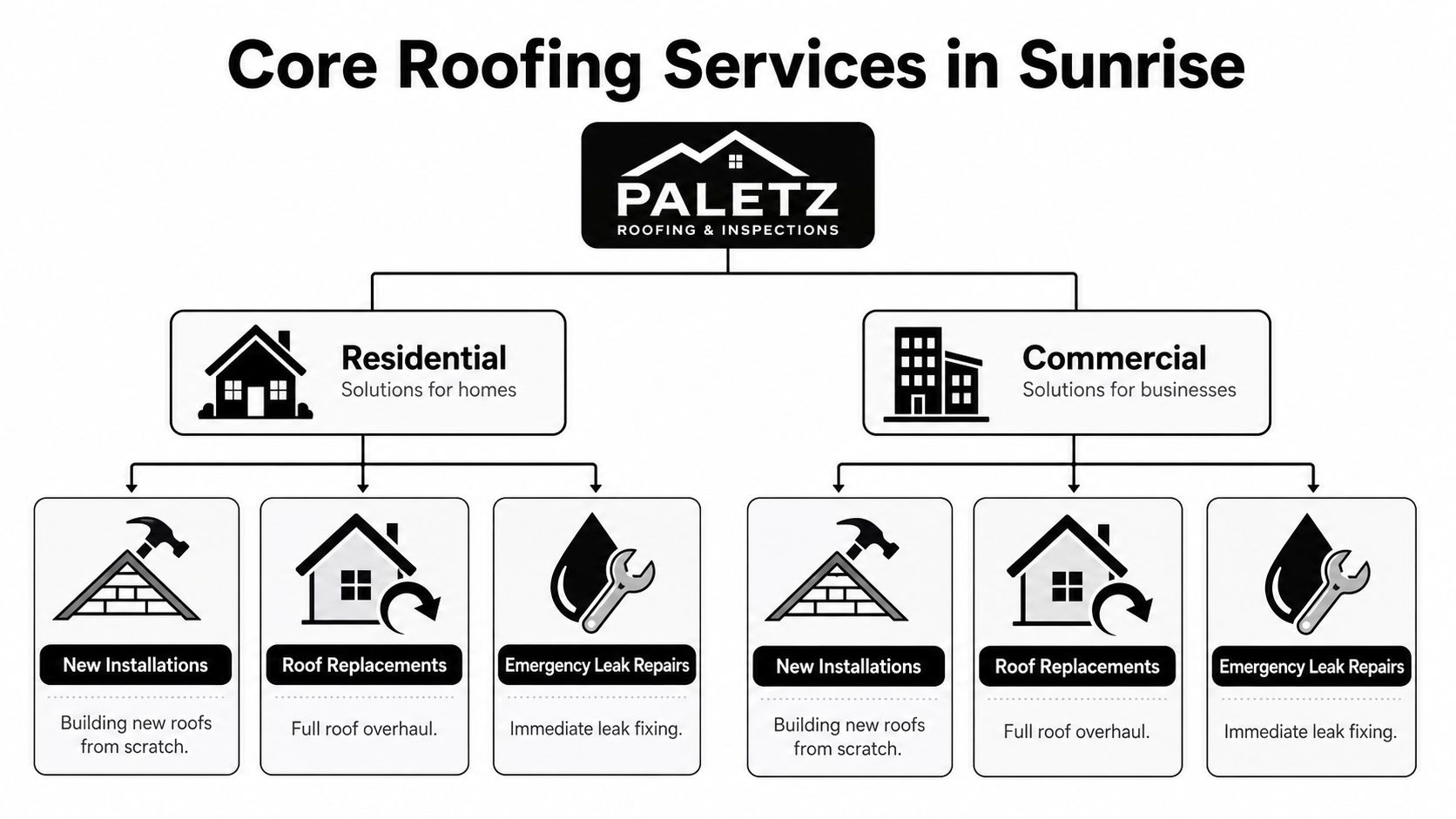
The service range tied to this topic is broad. According to the business profile for Paletz Roofing and Inspections, the company specializes in a diverse range of roofing solutions for residential and commercial clients across Broward, Miami-Dade, and Palm Beach counties, covering shingle, tile, metal, and flat systems, using premium materials from GAF and Owens Corning backed by a satisfaction guarantee.
That matters because Sunrise has a mixed property base. Single-family homes often lean toward shingle or tile. Commercial buildings and multifamily structures frequently rely on flat systems. The contractor's service model needs to match both.
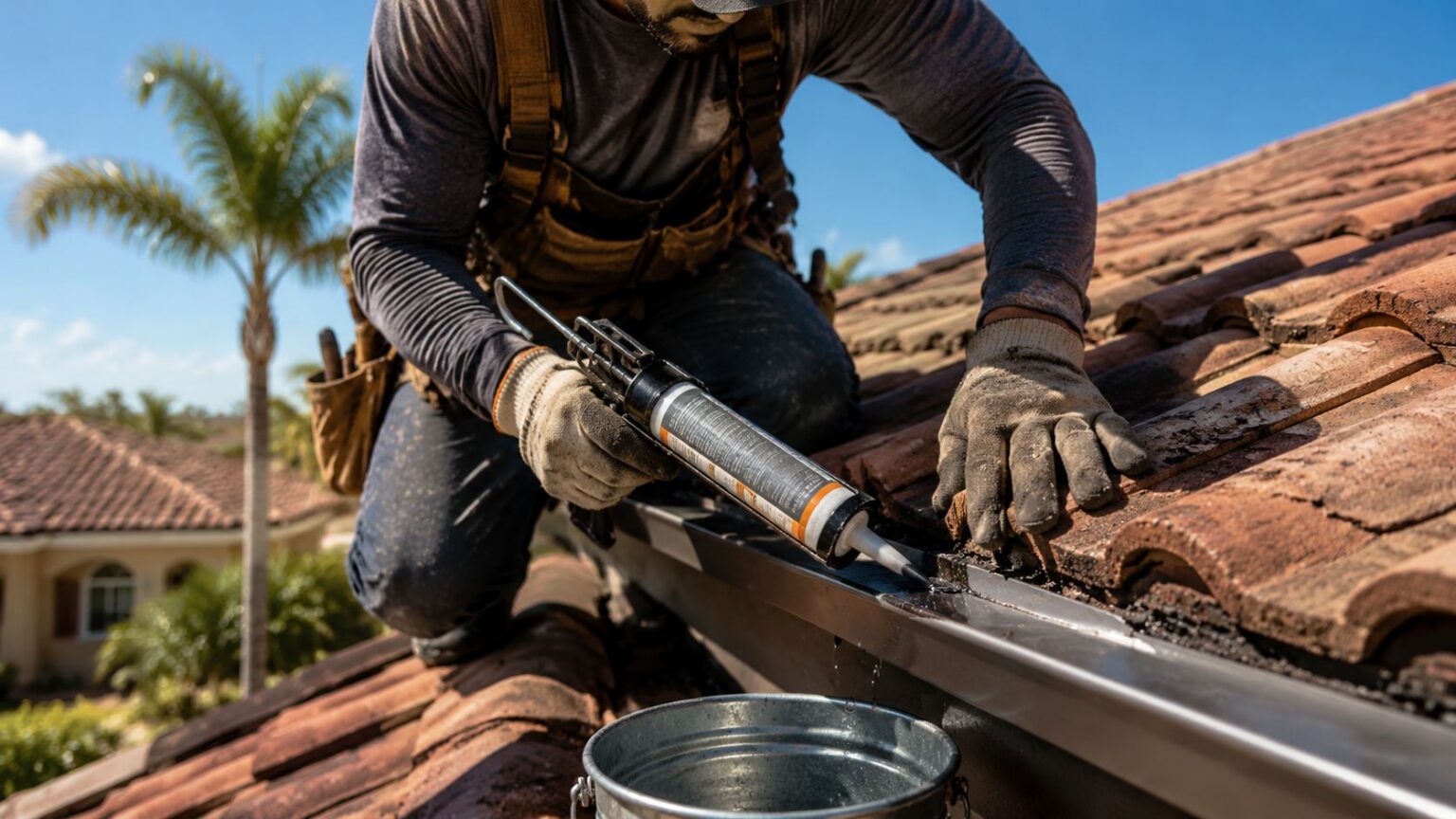
For a visual example of the kind of issue that often triggers a call, see this roof leak repair photo.
What each service solves
Some roofing services are reactive. Others save money because they happen before damage spreads.
- New installations fit new construction, additions, and major redesigns where the roof system is being built from scratch.
- Roof replacements make sense when repeated repairs no longer solve the underlying problem, or when aging materials create ongoing risk.
- Emergency leak repairs focus on stopping active water entry and protecting interior spaces.
- Inspections help identify visible wear, storm-related issues, drainage trouble, and areas that need monitoring.
- Maintenance is the quiet category homeowners often skip, even though small roof issues are usually easier to manage before a storm exposes them.
A good service list isn't just about how many options a contractor names. It's about whether those options match the way roofs actually fail in Sunrise.
If you're comparing providers, don't just ask whether they “do roof repair.” Ask what kind of systems they work on, whether they inspect both residential and commercial roofs, and how they separate urgent repairs from work that can be scheduled.
Understanding Roof Types and Materials
Choosing a roof material in Sunrise isn't only about appearance. The right choice depends on slope, wind exposure, maintenance tolerance, and how long you plan to keep the property.
How to think about shingles tile metal and flat roofs
Asphalt shingles are common because they're widely used and familiar to homeowners. They can work well in South Florida when they're installed correctly, but they depend heavily on fastening quality and layout discipline.
Tile roofs often appeal to homeowners who want a classic South Florida look. They can perform well, but claims and repairs can be more complicated because age, brittleness, and matching issues may affect the scope of work after a storm.
Metal roofs are often chosen by owners who want a clean profile and strong weather performance. The details matter here too. Panel type, fastening method, and edge conditions all affect how the system behaves in rough weather.
Flat roofs are common on commercial properties and some residential designs. These systems demand attention to seams, drainage, penetrations, and ponding behavior. Small failures can stay hidden until moisture spreads farther than expected.
A quick comparison helps:
| Roof type | Best known for | Watch-out issue |
|---|---|---|
| Asphalt shingle | Familiar appearance and broad use | Attachment quality matters a lot |
| Tile | Distinctive curb appeal | Repair and claim documentation can be complex |
| Metal | Clean look and weather-focused performance | Detail work around edges and fasteners is critical |
| Flat | Common on commercial buildings | Drainage and seam integrity need close review |
Why installation details matter in South Florida
In hurricane-prone conditions, installation details can matter as much as the product itself. According to this South Florida roofing inspection reference, asphalt shingles require a minimum of 6 nails per shingle with precise placement to meet ASTM D7158 Class H wind resistance up to 150 mph, and improper nailing can reduce wind uplift capacity by 40%.
That one detail explains a lot. Two roofs can use similar shingles and still perform very differently because one was fastened correctly and the other wasn't. Homeowners often assume “the material failed” when the actual problem was installation.
- If you have shingles, ask how fastening is verified.
- If you have tile, ask how cracked or shifted pieces are documented after storms.
- If you have metal, ask about fastening and edge detail review.
- If you have a flat roof, ask where seams and penetrations are most vulnerable.
The lesson is simple. Materials matter, but workmanship decides how well those materials stand up when Sunrise weather stops being gentle.
Inspections Emergency Repairs and Insurance Support
Storm damage isn't always dramatic. Sometimes there's no tree impact, no obvious hole, and no shingles scattered across the lawn. Yet the roof still took damage that can grow worse with the next rain.
Why fast inspection changes the outcome
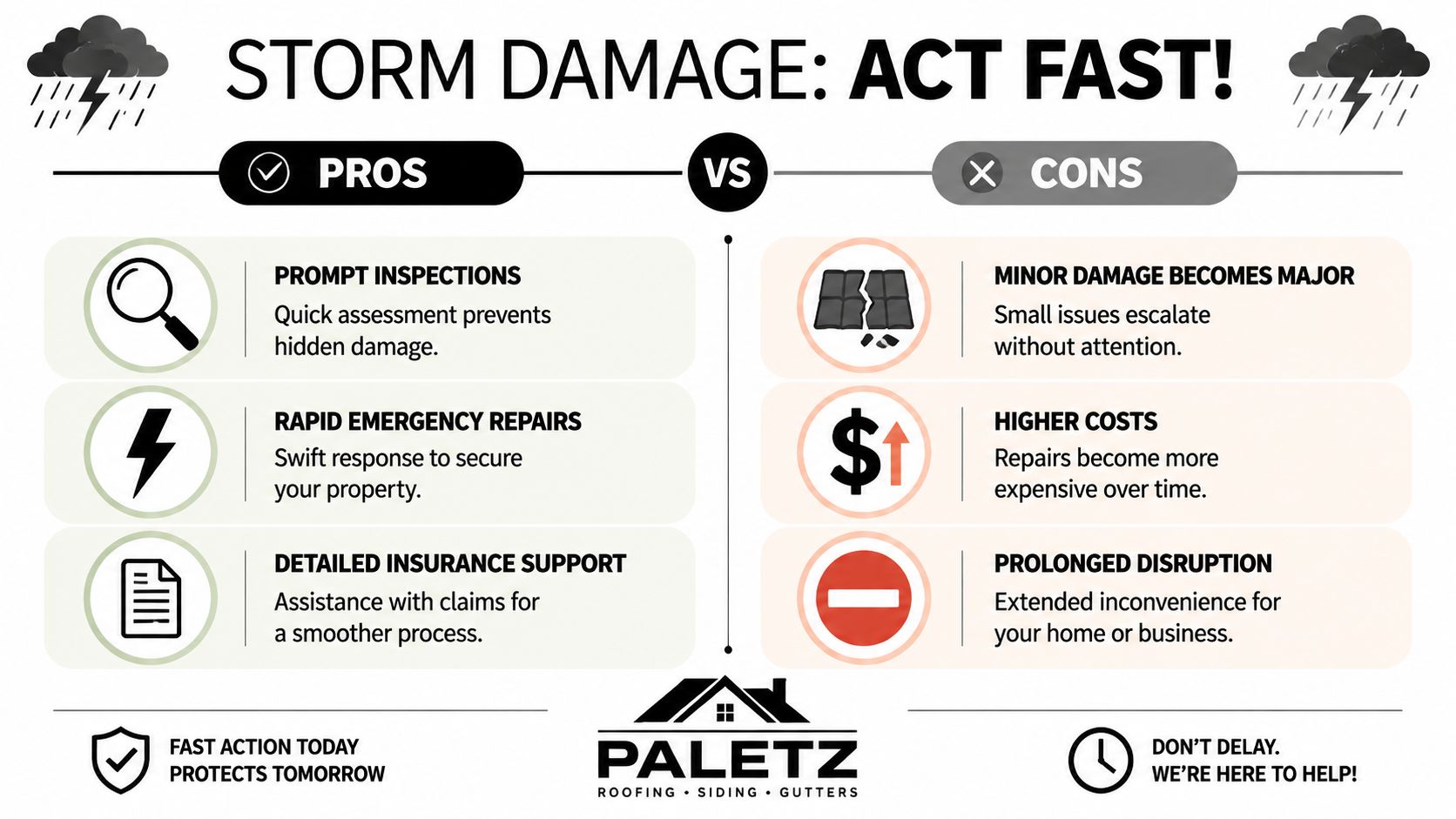
A prompt inspection helps establish condition close to the event. That matters for two reasons. First, it limits ongoing water entry. Second, it creates a clearer record of what appears storm-related versus what looks like older wear.
When homeowners wait, the story gets messier. Moisture spreads. Secondary interior damage appears. Insurance conversations become less focused because the timeline looks less clean.
After a storm, the first goal isn't paperwork. It's stabilizing the roof and documenting what changed.
Emergency repairs serve a narrow but important purpose. They help secure the structure, reduce further damage, and buy time for a fuller scope decision. That's very different from assuming an emergency patch is a final solution.
Tile claims versus asphalt claims
Sunrise homeowners frequently encounter confusion. Tile and asphalt roofs aren't always adjusted the same way during hurricane claims. According to this Sunrise roofing market analysis, Florida Insurance Code §627.701 requires insurers to apply age depreciation of 15% to 30% for older tile roofs during hurricane claims.
That creates a real documentation issue. A homeowner with an older tile roof may need clear records showing pre-storm condition, current storm damage, and which issues are age-related versus event-related. Asphalt claims can involve different adjustment logic because the material and wear patterns differ.
If you own a tile-roof home in Sunrise, ask these questions early:
- What signs point to storm damage rather than long-term aging?
- Which photos should be taken before temporary repairs begin?
- How is pre-existing wear described in the inspection record?
- Which roof slopes or sections show the clearest storm pattern?
A careful inspection doesn't guarantee claim approval. It does give the homeowner a more organized, defensible file.
How Paletz Works and Pricing Guidance
Most roof projects feel stressful because homeowners don't know the order of operations. A clear process lowers that stress even before work begins.
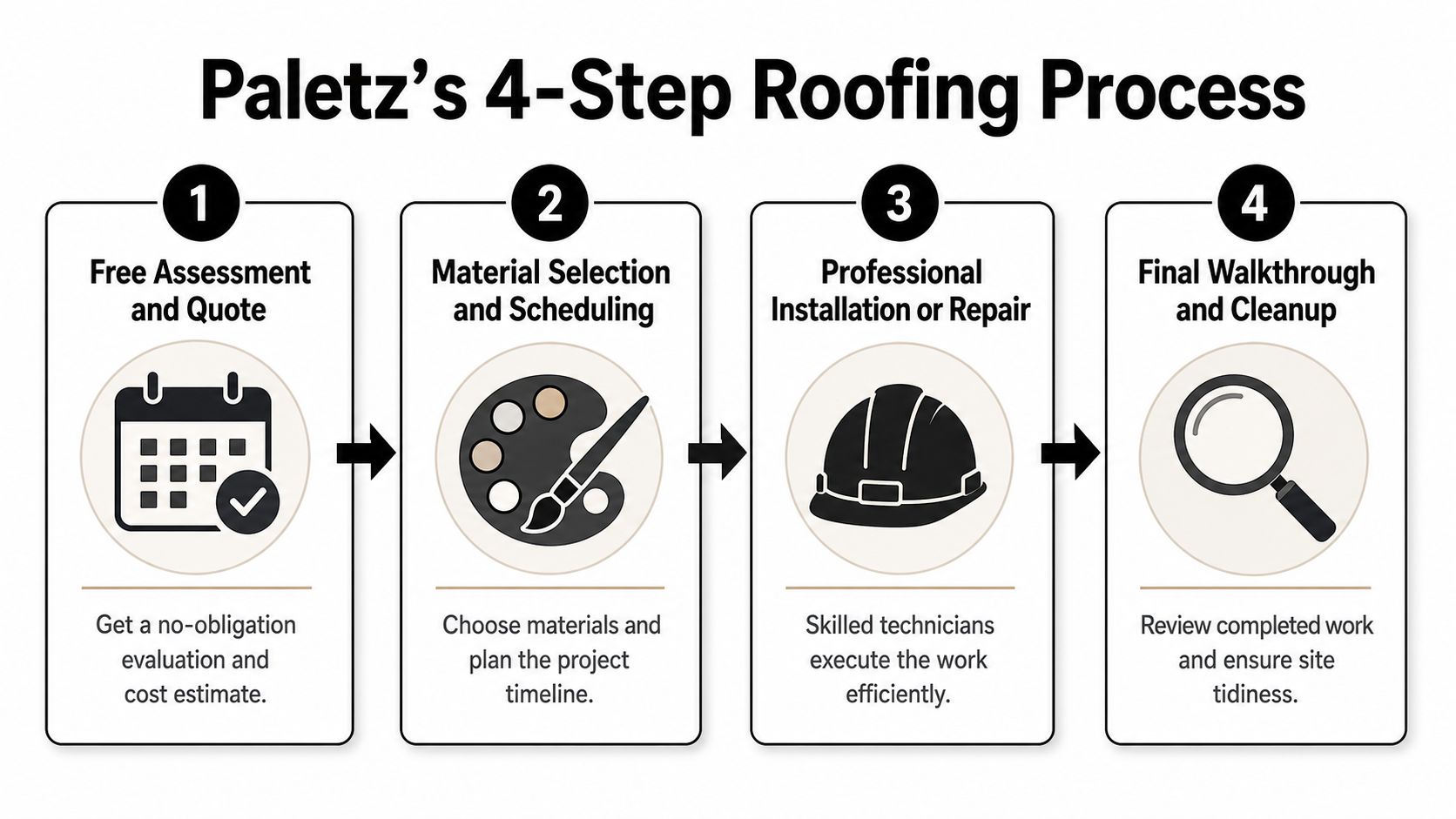
A simple four step workflow
A practical Sunrise roofing process usually follows four stages.
Assessment and quote
The roof is inspected, visible issues are noted, and the owner gets a written understanding of the work being proposed.Material selection and scheduling
At this stage, product type, color, compatibility, and timing are sorted out. For homeowners, this is often the moment when choices start to feel real.Installation or repair
Crews complete the approved scope. The quality of execution matters here more than any brochure language.Final walkthrough and cleanup
The owner reviews the result, asks questions, and confirms the site is left in good order.
That structure works because it separates diagnosis from commitment. Homeowners get a chance to understand the issue before the job starts.
How to think about pricing without guesswork
No responsible educator should invent price ranges where verified figures aren't available. For Sunrise homeowners, the better approach is to understand what drives price.
Here are the main variables:
- Roof type affects labor, materials, and repair complexity.
- Damage extent changes whether a job is a targeted repair or something broader.
- Access and layout matter. A simple roof shape is different from a roof with many penetrations, transitions, or elevation changes.
- Urgency can affect scheduling and temporary protection needs.
- Code-related details may influence the final scope.
A homeowner can ask for pricing clarity without asking for a made-up estimate over the phone. Try questions like these:
| Ask this question | Why it helps |
|---|---|
| What part of the roof is driving the cost most? | It shows whether the issue is materials, labor, or complexity |
| Is this repair-focused or replacement-focused? | It clarifies scope before you compare quotes |
| What temporary measures are needed now? | It separates urgent protection from long-term work |
Key takeaway: Good pricing guidance explains the cost drivers first. It doesn't rush you into treating every leak like a full replacement.
Trust Credentials and Satisfaction Guarantee
Trust in roofing shouldn't come from a slogan. It should come from verifiable credentials, operating history, and the way a company handles accountability.
What credentials tell you
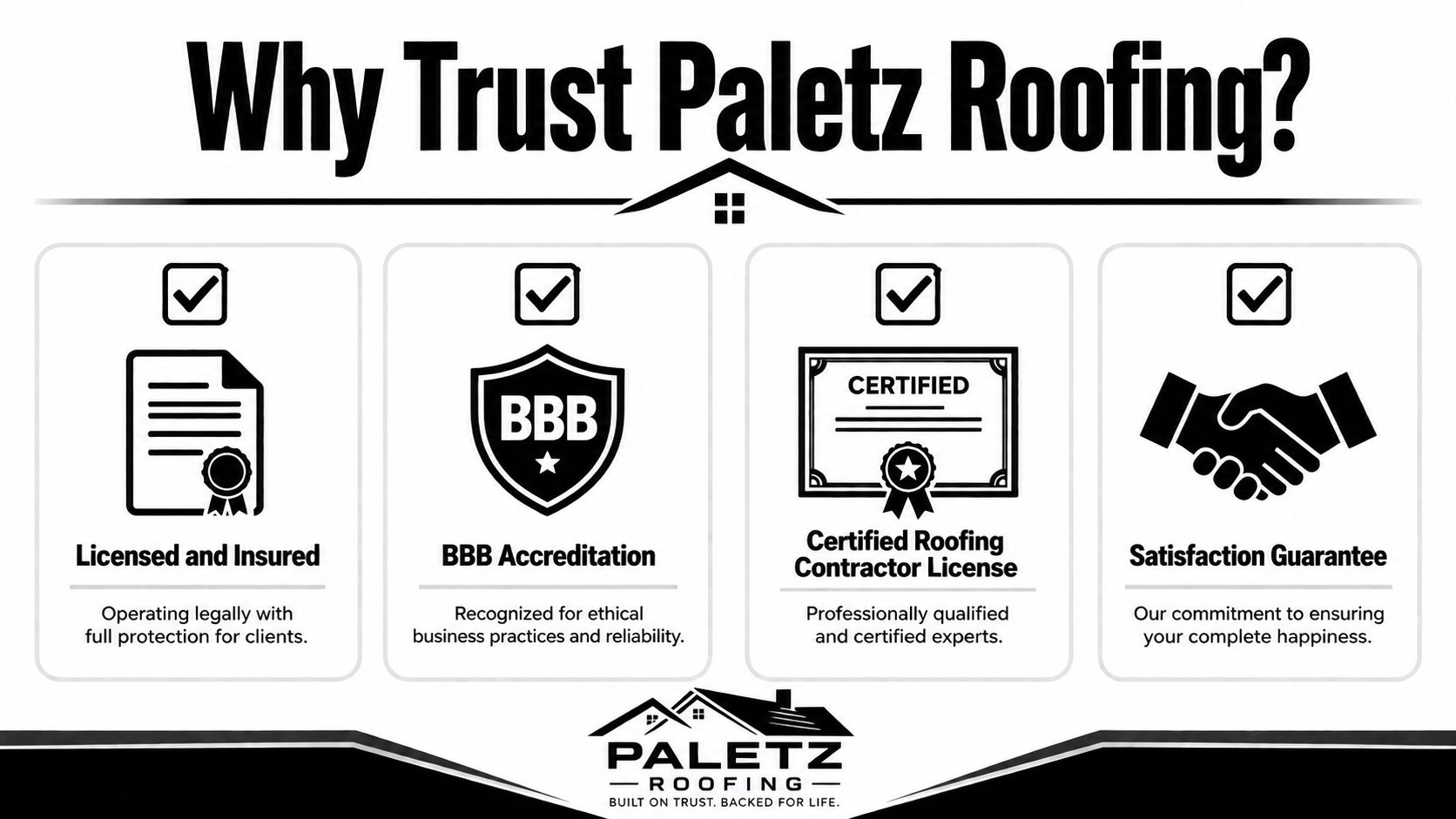
According to the company about page, Paletz was formally incorporated in 2003 but traces its operational lineage to 1990, with over 30 years of industry experience, a Certified Roofing Contractor license (CCC1325656), and six other active Florida licenses. The same source notes that the company is BBB accredited, based in Davie, and operates with approximately 24 staff members.
Each of those facts tells you something different.
- Operating lineage and incorporation date suggest continuity and established trade experience.
- Licensing tells you the company meets formal state requirements.
- BBB accreditation gives homeowners another checkpoint when evaluating professionalism.
- Team size can indicate the capacity to handle both residential and commercial workloads.
A satisfaction guarantee also matters, but not as a vague promise. It matters when paired with a process that includes inspection, documented scope, and a final walkthrough.
Why service culture matters too
The best roofing relationships don't end when the invoice is paid. Property owners often need ongoing maintenance, future inspections, or documentation for resale and insurance. In that sense, roofing has something in common with property account management. Teams that communicate well and follow through tend to convert clients into lifelong assets, because trust builds through consistency rather than marketing language.
That idea is especially relevant in Sunrise. Roof care is not one event for most properties. It's a sequence of decisions over years.
When you evaluate a roofing company in Sunrise, ask yourself whether their credentials show legal compliance, whether their history shows staying power, and whether their communication style suggests they'll still be helpful after the urgent problem is solved.
Sunrise Service Coverage and Rebate Opportunities
A Sunrise property owner doesn't just need a contractor who knows roofs. They need one who can reach the area consistently and understands the difference between residential and commercial decision-making.
Service reach around Sunrise
Paletz Roofing and Inspections serves the tri-county area of Broward, Miami-Dade, and Palm Beach counties, with headquarters in Davie and an additional presence in Pembroke Pines, according to the earlier cited business information. For Sunrise customers, that regional footprint matters because it supports access to inspections, repairs, replacements, and ongoing service across nearby neighborhoods and commercial corridors.
If you're trying to understand whether your building type fits this service profile, reviewing a roof replacement inspection example can help you think about what gets evaluated before work begins.
Commercial flat roof incentives
Commercial owners in Sunrise have a separate angle to consider. According to this Sunrise commercial roofing reference, properties using TPO or EPDM flat roofs may qualify for up to $1,500 per project in 2025 ENERGY STAR rebates and federal tax credits under the Inflation Reduction Act, offsetting installation costs by over 20%.
That's useful for owners planning ahead, especially if a flat roof replacement is already under discussion. The timing of a project can affect whether an incentive is available and whether the paperwork lines up smoothly with the installation schedule.
For commercial decision-makers, the smart move is to treat roof replacement and rebate planning as one conversation rather than two separate tasks.
FAQ and Next Steps Contact
Common homeowner questions
Can I ask about financing even if I'm only scheduling an inspection?
Yes. It's reasonable to ask what payment pathways or scheduling options may exist before committing to larger work.
Should warranty questions wait until the job is approved?
No. Ask early how workmanship coverage is explained and whether any manufacturer-related terms apply to the material you're considering.
Is there a best season to schedule roof work in Sunrise?
Storm timing, crew availability, and the urgency of current damage all matter. If your roof is already leaking, waiting for a “better” season usually isn't the right move.
What should I do before the inspection?
Clear access where possible, note where leaks appeared inside, and gather any past repair records or storm photos you have.
If you need help with a leaking roof, storm inspection, replacement planning, or a commercial flat-roof project in Sunrise, contact Paletz Roofing and Inspections. You can request a free on-site inspection and quote, ask about emergency service, and get guidance specific to your roof type, property use, and next steps.