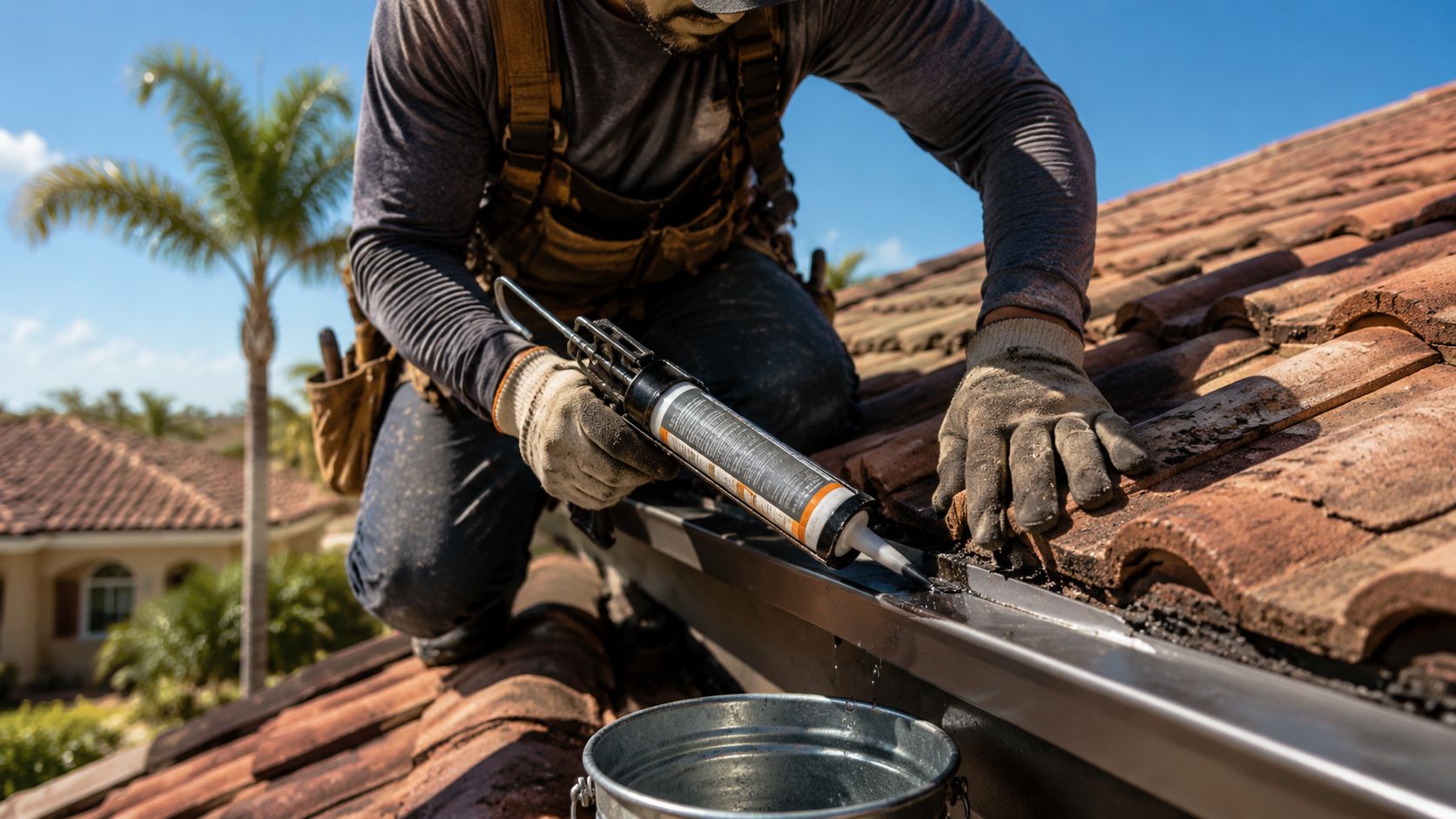
You hear the drip before you see it. Then you notice the stain spreading across the ceiling, or water running down a wall after one of those hard Miramar rain bands moves through. That's usually when panic sets in.
A roof leak in South Florida doesn't stay small for long. Humidity hangs in the house, wet drywall softens, insulation holds moisture, and what looked like a single drip can turn into ceiling damage, mold growth, and a bigger repair bill if you wait. Good roof leak repair in Miramar starts with staying calm, controlling the water inside, and then finding the actual entry point instead of guessing.
Generic roofing advice misses what makes Miramar different. Storm cycles, heat, wind-driven rain, and constant moisture punish flashing, sealants, penetrations, and older roof details much harder than drier markets. The repair that works here is the one that solves the leak path and holds up in South Florida conditions.
Table of Contents
- First Steps for an Active Roof Leak in Your Home
- Diagnosing Common Leak Causes in Miramar Roofs
- A Practical Guide to Minor Roof Leak Repairs
- Navigating Repair Costs and Insurance Claims
- When to Call a Miramar Roofing Professional
- Your Trusted Partner for Miramar Roof Repairs
First Steps for an Active Roof Leak in Your Home
When water is actively coming in, your first job isn't fixing the roof. It's limiting interior damage and keeping everyone safe. Most homeowners lose time trying to spot the exact cause while water keeps spreading through insulation, drywall, flooring, and furniture.
Start with the room below the leak. Put down buckets, pans, towels, or anything that can catch the drip and keep it from soaking the floor. If water is splashing, place a towel in the container to cut down the spread.
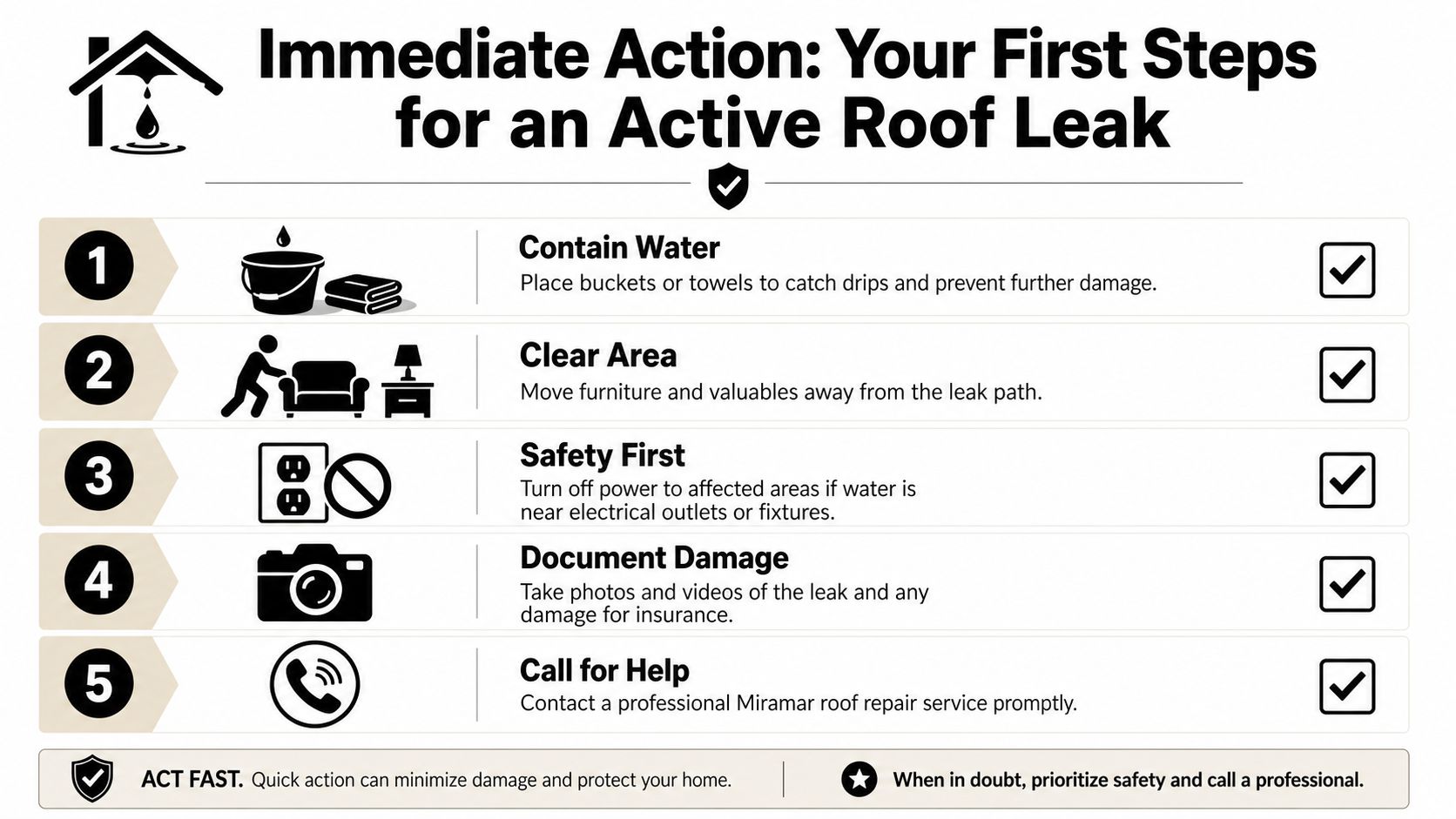
What to do in the first half hour
Catch the water first
Don't let the leak travel across tile, wood, or carpet if you can stop it at the source of the drip.Move what can be ruined
Shift furniture, electronics, rugs, framed photos, and anything porous away from the leak path. Water often widens its path after a few more minutes of rain.Cut power if water is near fixtures
If the leak is close to recessed lights, ceiling fans, outlets, or wall switches, turn off power to the affected area if you can do it safely.Relieve a bulging ceiling carefully
If drywall is bubbling and sagging, trapped water may be pooling overhead. In many cases, carefully draining that pocket into a bucket can prevent a wider collapse. Use caution, protect your eyes, and don't stand directly under the lowest point.Stay off the roof during the storm
Wet tile, wet shingles, and gusting wind make falls much more likely. A leak is bad. A roof accident is worse.
Practical rule: If rain is still coming down, work from inside the house. Don't climb a ladder to “take a quick look.”
What helps after the water is contained
Take clear photos and short videos of the ceiling stain, active drips, damaged contents, and any exterior signs you can safely record from the ground. That documentation matters later if the leak came from a covered event.
Then reduce indoor moisture. Run fans if the area is electrically safe. If the room stays damp, use dehumidification as soon as possible. That's one reason practical housekeeping guidance like these Palm Beach mold prevention strategies can be useful after the emergency is under control. The leak repair matters, but drying the house matters too.
A lot of homeowners make one costly mistake here. They assume the drip is directly below the roof opening. Often it isn't. Water can travel along framing, under underlayment, or down a penetration before it finally appears indoors. That's why the next step has to be diagnosis, not guesswork.
Diagnosing Common Leak Causes in Miramar Roofs
A leak that shows up over the hallway may have entered several feet away. That's standard in South Florida roofing, especially after hard wind-driven rain. Water follows the easiest path, not the most obvious one.
The most reliable way to diagnose a leak is to work from inside out. In South Florida's high-humidity, high-wind coastal markets like Miramar, leak detection should start with an attic inspection during active rainfall so you can trace water trails upward along rafters. Then move outside to inspect shingles for cracks or curling and check flashing at chimneys, vents, and roof intersections. Flashing corrosion accounts for 40% of residential leak claims in Broward County, according to Full Cover Roofing's Miramar leak detection guidance.
Start in the attic, not on the roof
Bring a flashlight and go up while the leak is active if it's safe to do so. You're looking for:
- Wet insulation that feels heavier or darker than the surrounding area
- Water staining on the underside of the deck or on rafters
- Active drips at nails, seams, penetrations, or framing joints
- Daylight through the roof deck where it shouldn't be visible
Water commonly runs down a rafter before it drops. If you only inspect the ceiling spot below, you can miss the actual entry point by a wide margin.
Water rarely announces where it got in. It shows you where gravity finally won.
The Miramar trouble spots I watch first
Miramar roofs get punished by heat, moisture, and storm movement. Some leak points come up again and again.
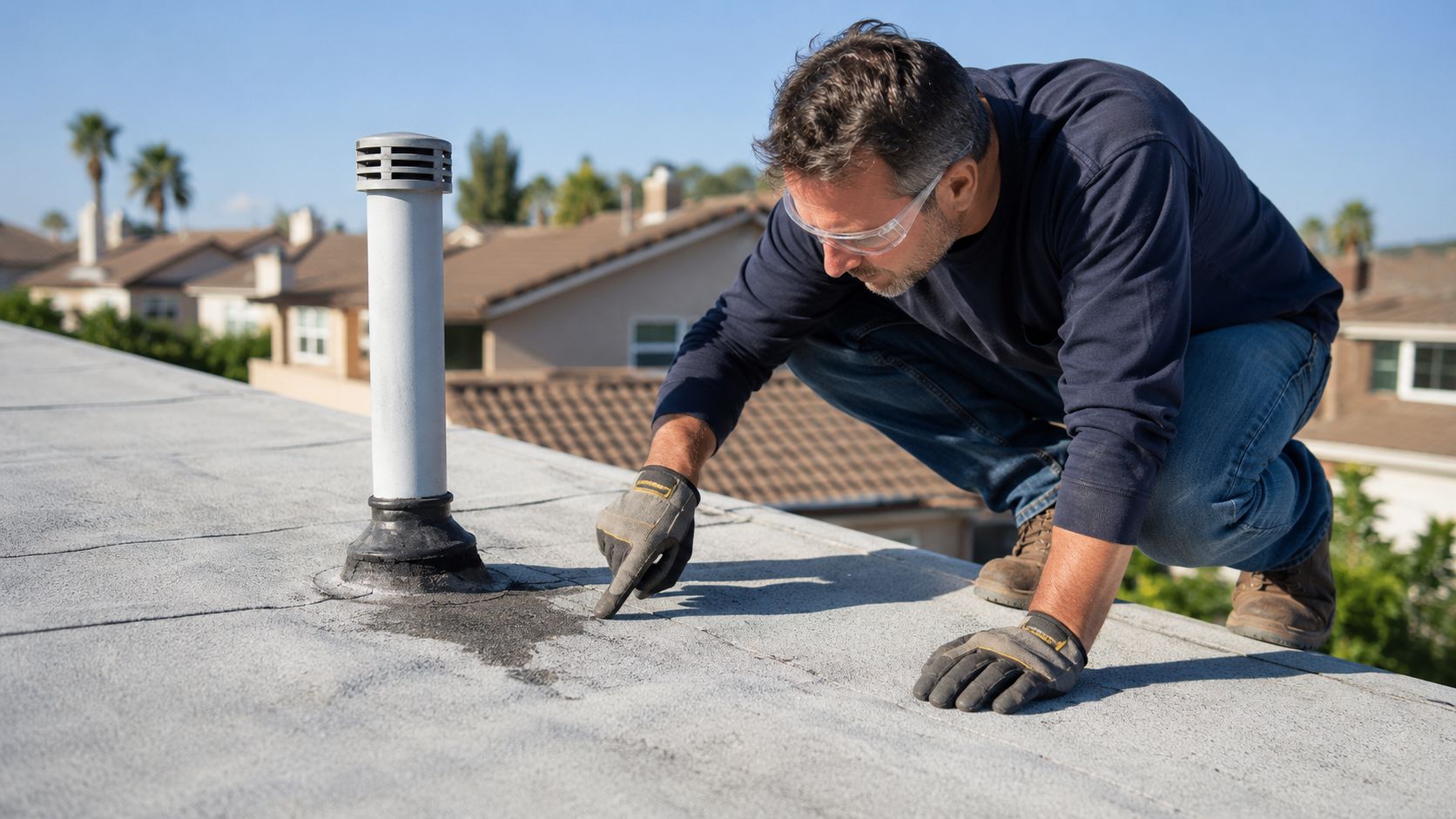
Flashing around penetrations
Vent pipes, chimneys, skylights, and wall transitions are classic leak zones. Metal flashing expands and contracts. Sealant ages. Fasteners loosen. Once wind-driven rain gets under a weak flashing edge, the leak can travel a long way.
Shingles or tiles that shifted after wind
A roof can look mostly intact from the yard and still have one lifted shingle edge or one cracked tile letting water in. On sunny roofs, repeated thermal movement also dries out sealants and exposes weak points.
Roof penetrations added later
Satellite mounts, solar attachments, and other added hardware are frequent suspects. Any time someone punctures the roofing system, that detail has to be flashed properly. If it wasn't, the problem may not show up until the next heavy storm.
What not to assume
A stain doesn't always mean the newest storm caused the problem. Sometimes the roof has been leaking slowly and a stronger rain finally pushed enough water inside to make it visible. That matters because the right fix depends on whether you're dealing with a simple entry point, trapped moisture under materials, or rotted decking below the surface.
If you can identify a very small issue from inside and confirm it from the ground or a safe ladder position, you may be dealing with a minor repair. If you see multiple wet areas, soft decking, or widespread staining, it's usually beyond a homeowner fix.
A Practical Guide to Minor Roof Leak Repairs
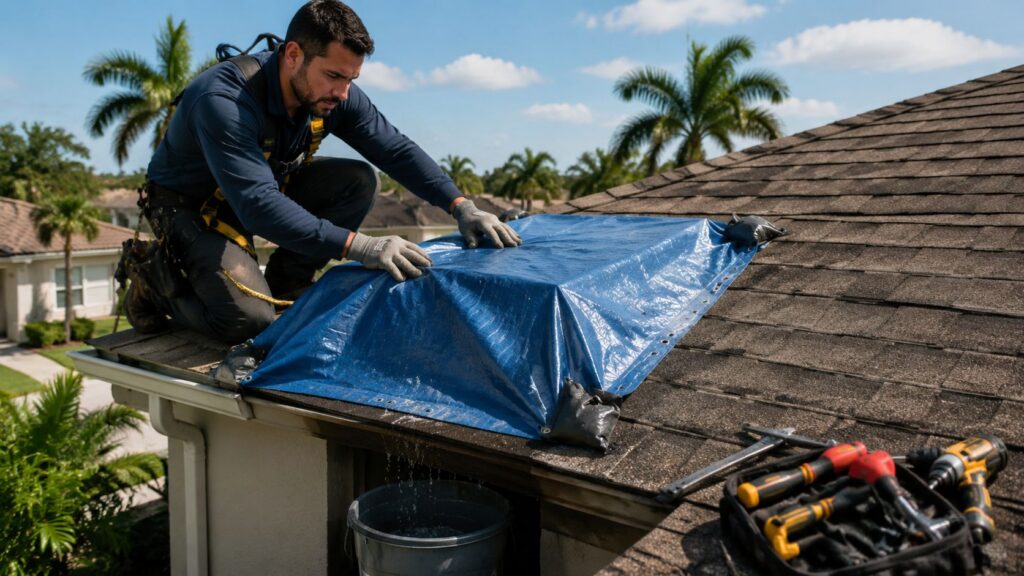
Some leaks are small enough to handle without turning the job into a full roofing project. A tiny crack in exposed flashing. One displaced shingle after a storm. A small sealant failure at a vent boot. Those are minor repairs. A wet roof deck, recurring leak, multiple failure points, or anything structural is not.
The first rule is simple. Only attempt work in dry conditions, with stable footing, proper shoes, and safe ladder setup. If the roof is steep, high, fragile, or slippery, stop there.
Minor repairs that are reasonable
A homeowner can sometimes manage these:
- Small flashing crack or gap where the metal is still sound
- One loose shingle that hasn't led to visible deck damage
- A localized sealant failure around a vent detail
- A fastener issue on an exposed metal accessory, if the surrounding material is intact
If you want to see the kind of roof condition that often calls for hands-on repair rather than full replacement, this roof repair inspection example gives a useful visual reference.
Two repairs that often work
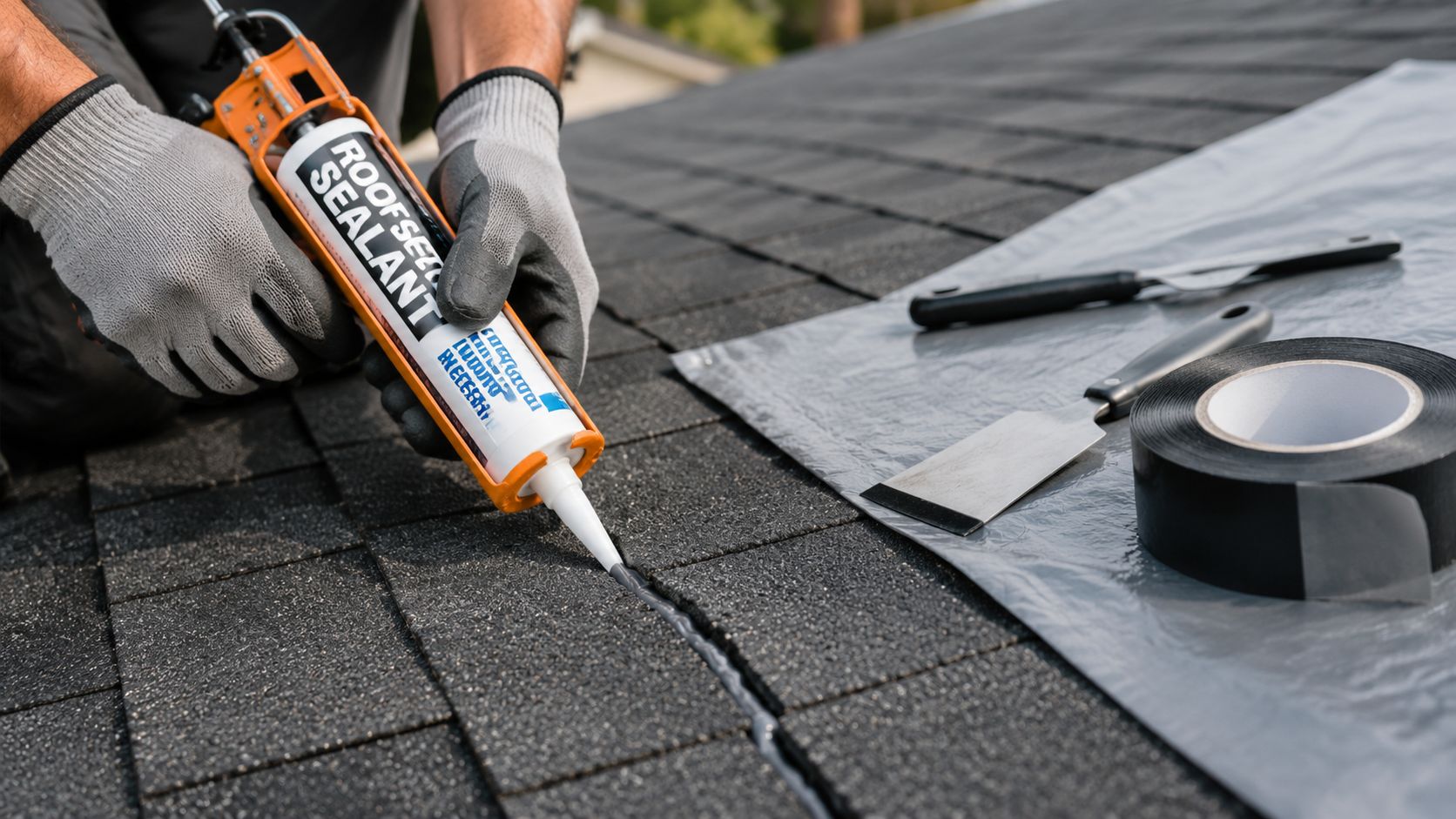
Re-sealing a small flashing defect
Clean the area first. Old debris, chalky residue, and loose material keep new sealant from bonding. If the flashing is still firmly attached and not badly corroded, apply a roofing-grade sealant to the specific crack or seam, not all over the surrounding roof.
Use restraint. Smearing sealant across a broad area doesn't make the repair stronger. It usually makes future diagnosis harder.
Re-securing a single lifted shingle
If one shingle edge lifted but the shingle isn't torn through, you may be able to reset it with roofing cement underneath and proper fastening where appropriate. Press it flat, seal the edge, and make sure the neighboring course still sheds water over it correctly.
Temporary patching has its place. Blindly coating everything with mastic doesn't.
What fails in South Florida
Quick patches fail when they ignore water flow. The leak stops for one storm, then returns from the same entry point or a nearby seam because the original flashing detail was never corrected.
Materials matter too. The roof has to handle sun, moisture, and repeated expansion and contraction. A generic hardware-store patch may buy a little time, but it won't always hold up through Miramar weather. That's why good roof leak repair in Miramar depends less on “what product” and more on whether the repair respects drainage, overlap, and flashing.
If the leak comes back after one attempt, that's your answer. It wasn't minor.
Navigating Repair Costs and Insurance Claims
Money is usually the next question, and it should be. Roof leaks can be inexpensive when you catch them early, or expensive when moisture gets into decking, framing, and finishes.
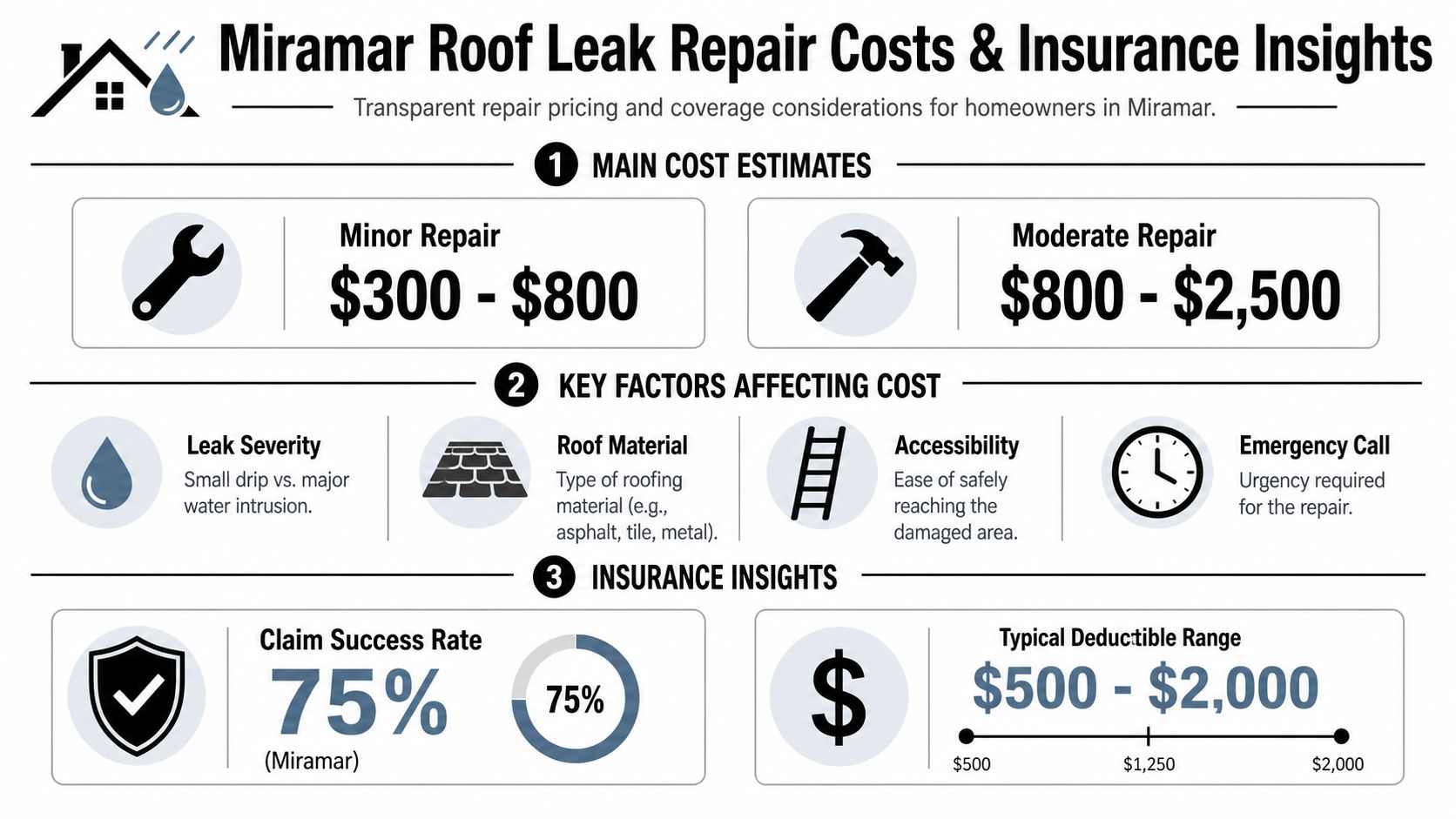
In Miramar, the typical cost to repair a roof leak ranges from $300 to $2,500, with most minor to moderate repairs falling between $350 and $1,500, according to Louis Law Group's Miramar roof repair cost guide. That same source notes that basic leak patching or sealant application falls between $150 and $400, shingle or tile replacement runs $300 to $700, flashing or chimney repairs average $350 to $600, more extensive damage involving decking or wood rot can reach $900 to $1,500, major structural repairs can exceed $4,500, and emergency or storm-related repairs typically start at $1,200.
What changes the price
Here's the practical breakdown.
| Repair factor | Why it changes cost |
|---|---|
| Extent of damage | A simple surface fix costs less than replacing wet decking or damaged underlayment |
| Roofing material | Shingle, tile, metal, and flat systems each require different methods and materials |
| Access to the leak | A low-slope easy-access area is simpler than a steep or fragile section |
| Timing | Emergency work during or right after a storm costs more than scheduled repair |
| Hidden moisture | Interior stains may be minor while the roof assembly damage is not |
If you're comparing line items before approving work, resources like PropLab rehab roof estimates can help you think through how contractors structure repair scopes and why two estimates may not match.
What insurance usually covers
Florida homeowners insurance typically covers roof leaks when the damage comes from a covered peril, such as windstorm damage or a fallen tree, not from wear, aging, or maintenance problems. Homeowners in Florida also typically have one year from the date of loss to file a property damage claim for roof leaks caused by covered perils, according to Louis Law Group's Miramar roof leak claim guidance.
That filing window matters. Waiting too long can turn a valid claim into a denied one.
How to protect your claim
Use a clean paper trail and move fast.
- Report the damage promptly to your insurer after discovering it.
- Photograph both interior and exterior evidence if you can do so safely.
- Get a professional inspection and written report from a licensed roofer.
- Keep communication records including dates, names, emails, and claim notes.
- Avoid permanent repairs before the insurer's site visit unless emergency stabilization is necessary to prevent further damage.
A lot of claim problems start with poor documentation. Another common mistake is making a permanent repair too quickly and leaving no clear record of the original damage. Stop the active leak if needed, but document everything first.
When to Call a Miramar Roofing Professional
Some leaks advertise that they're beyond DIY. Others pretend to be simple and then keep coming back because the problem sits below the surface. Knowing the difference saves money.
If you've got multiple leak points, stained ceilings in more than one room, sagging drywall, soft decking, recurring moisture around a vent or wall line, or signs that water has moved through insulation and framing, it's time to bring in a roofer. The same goes for tile roofs, steep pitches, and any leak that appears after a major storm but doesn't reveal a clean single entry point.
The 25 percent rule
A practical rule in roofing is this. If repair costs reach 25% of the total replacement cost, replacement usually makes more sense. For a typical 1,500-square-foot asphalt shingle roof in Miramar, replacement starts around $6,375 to $9,375, so repairs above roughly $1,600 to $2,350 may justify replacement, according to this Miramar roofing cost benchmark.
That rule isn't about pushing bigger work. It's about avoiding the trap where a homeowner spends serious money on a repair that doesn't deliver long-term value.
Red flags that change the decision
The roof deck feels soft
Surface repairs won't solve weakened wood below.The leak has returned after patching
Repeated spot repair usually means the actual failure point wasn't addressed.Water is entering around several details
That often points to broader aging or storm damage across the system.The repair estimate is climbing toward replacement territory
At that stage, compare service life, not just today's invoice.
Before you hire anyone, make sure they're properly insured and understand what their policy covers on your property. Homeowners who want a plain-English overview can review understanding general liability coverage before signing a contract.
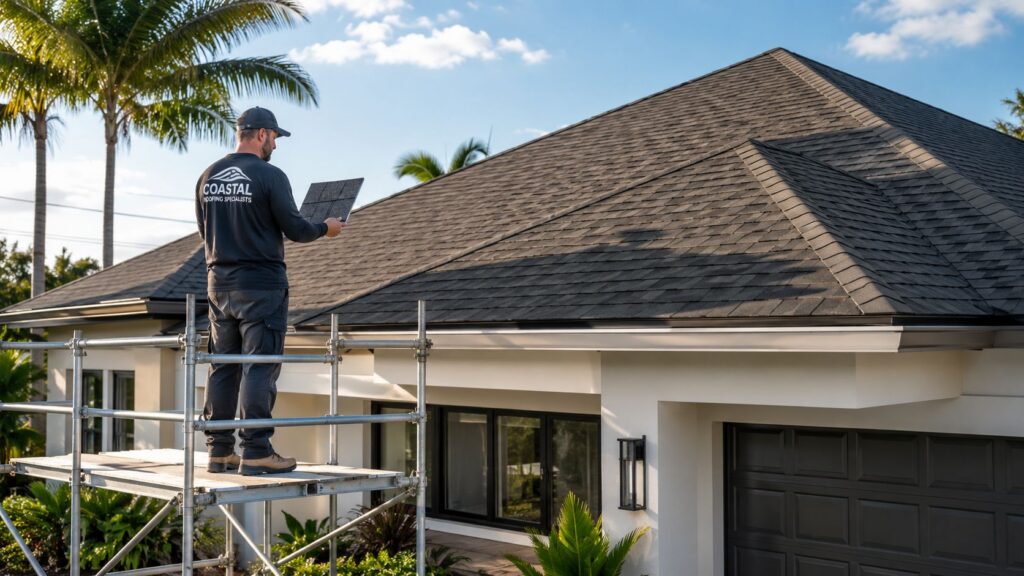
If you're weighing repair against replacement, this roof replacement inspection image shows the kind of broader roof condition assessment that often guides that call. In those cases, a contractor such as Paletz Roofing and Inspections can inspect the leak path, roof field, penetrations, and decking condition to determine whether repair is still sensible or whether replacement is the cleaner solution.
Your Trusted Partner for Miramar Roof Repairs
Miramar leaks aren't just “water getting in.” They're usually a combination of weather exposure, roof detail failure, and trapped moisture moving in ways the homeowner can't easily see from the living room ceiling. That's why the right repair starts with control, diagnosis, and only then the fix itself.
After three decades in South Florida roofing, one thing stays consistent. The houses that come through leak problems best are the ones where the owner acts quickly, documents the damage, and doesn't rely on a cosmetic patch when the roof is telling a bigger story. In this climate, small delays become bigger repairs fast.
Paletz Roofing and Inspections serves Broward, Miami-Dade, and Palm Beach counties with residential and commercial roof repairs, replacements, and inspections. The company has 30+ years of experience, uses high-quality materials, and handles shingle, tile, metal, and flat roofing systems with licensed and insured crews. If you want to confirm you're dealing with the right local company, you can view the Paletz Roofing and Inspections logo and company branding.

The main goal is simple. Find the leak source, fix the roof detail that failed, and leave you with a repair that makes sense for the age and condition of the roof. That's what dependable roof leak repair in Miramar should look like.
If water is coming into your home, don't wait for the next storm to make the decision for you. Paletz Roofing and Inspections provides roof leak diagnosis, repair, replacement, and inspection services across South Florida. Reach out for a free quote and get a clear assessment of what's leaking, what needs to be fixed now, and what will protect your home long term.