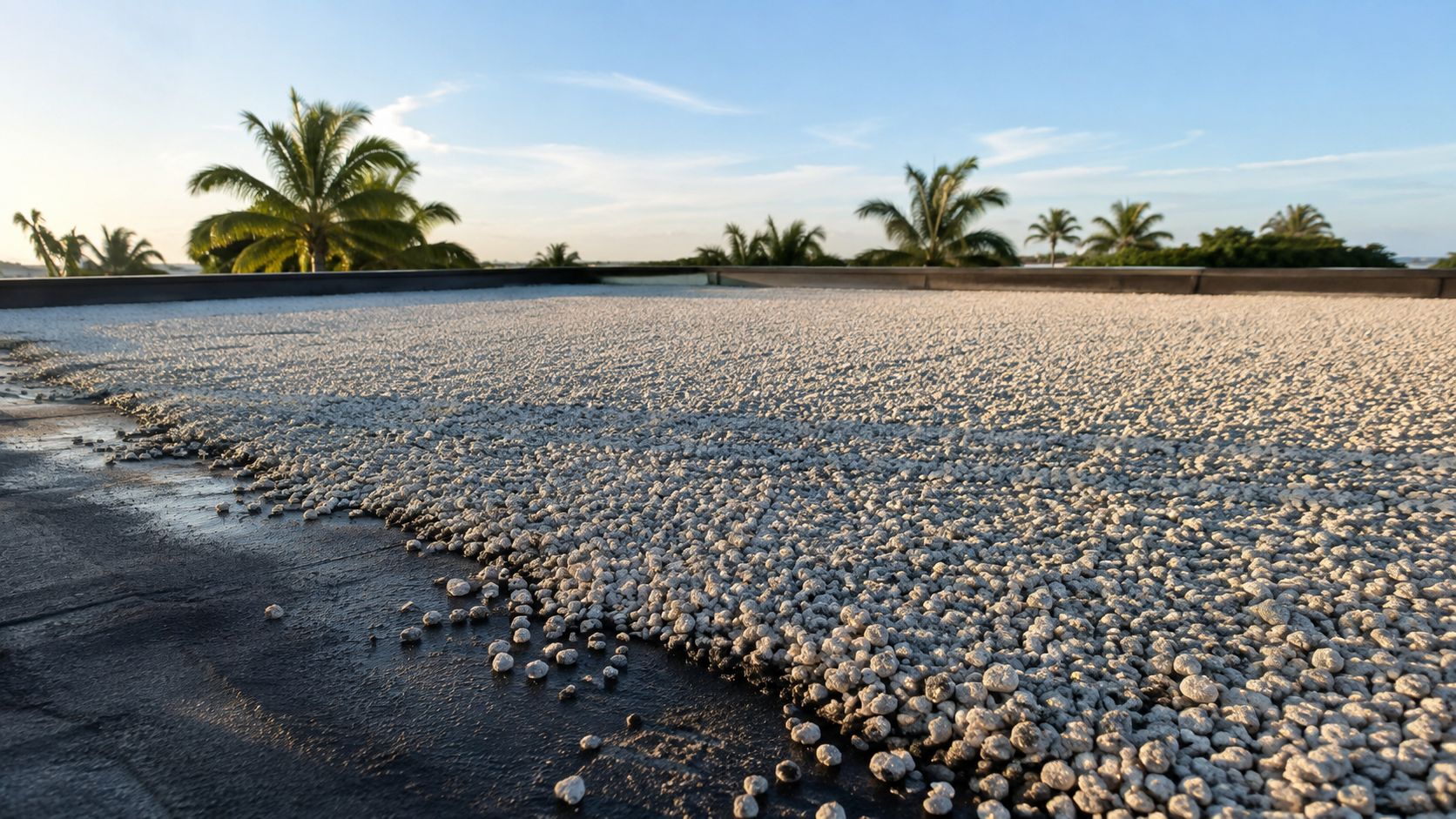
Your flat roof starts leaking after a hard afternoon storm. You climb up expecting one obvious hole, but instead find loose gravel near a parapet, dark patches around a drain, and a ceiling stain below an air-conditioning curb. The roof may be decades old, yet age alone doesn't tell you whether it needs a patch, a restoration coating, or a complete replacement.
In South Florida, that distinction matters. Heat, ultraviolet exposure, ponding water, tropical storms, falling branches, and rushed repairs can shorten the useful life of any low-slope system. A tar and gravel roof, properly called built-up roofing or BUR, can still be serviceable long after newer-looking materials have failed, but only when its membrane, drainage, flashings, and roof deck remain sound.
Table of Contents
- What a Tar and Gravel Roof Actually Is
- How Built-Up Roofing Is Constructed
- Comparing Tar and Gravel to Other Flat Roof Systems
- South Florida Performance and Common Failure Points
- Inspection and Maintenance Schedule That Extends Service Life
- Repair, Restore, or Replace How to Decide
- Permits, Insurance, and Hiring the Right Roofer
What a Tar and Gravel Roof Actually Is
A homeowner in a 1980s ranch may call the roof over the garage “tar paper with rocks.” That description isn't entirely wrong, but it misses the engineering. A tar and gravel roof is a built-up roofing assembly, made by laminating multiple layers of bitumen-saturated felt with hot asphalt or coal tar pitch, then embedding mineral aggregate into the final asphalt surface. Historical coverage from IIBEC traces built-up roofing back to the 1870s and describes its evolution from earlier assemblies using alternating layers of jute and tar or lake asphalt.
The gravel isn't decorative. It shields the bitumen from sunlight, adds fire-resistant surfacing, helps resist impact, and contributes weight and stiffness that improve wind-uplift resistance. Roof-surface guidance from the Roofing Practices Manual identifies washed crushed or river-bottom gravel in the conventional BUR surfacing range of 6 mm to 19 mm, or 1/4 inch to 3/4 inch.
Inspector's rule: Don't judge the roof by the stones alone. The gravel protects the membrane, but the waterproofing performance depends on the layers beneath it and the details around every penetration.
A typical residential installation uses a three-to-five-ply assembly, meaning three to five laminated layers of asphalt-based sheets, roofing felt, or reinforcing fabric before the aggregate finish is applied, as described by EcoWatch's overview of tar and gravel roofing. In South Florida, older BUR sections commonly appear over garages, porches, additions, and other flat or nearly flat areas. A roofing overview from Home Advancement describes the system as alternating waterproof material and hot tar or asphalt, finished with gravel that protects the roof and weighs it down.
That construction makes BUR different from modified bitumen, which uses polymer-modified sheets, and from TPO, PVC, and EPDM, which are generally single-ply membranes. Spray foam is different again because it creates an insulation and waterproofing layer in place. Your grandfather's roof may have lasted through decades of hot summers because its redundant plies tolerated small surface injuries. Modern systems can also perform well, but none eliminates the need for sound drainage, careful flashing, and regular inspections.
How Built-Up Roofing Is Constructed
Think of BUR as a roofing sandwich. The roof deck is the bread at the bottom, the waterproofing plies are the filling, and the gravel finish is the protective outer crust. If the deck flexes, the filling gets wet, or the crust disappears around an edge, the assembly becomes vulnerable even when the center of the roof looks intact.
The layers beneath the gravel
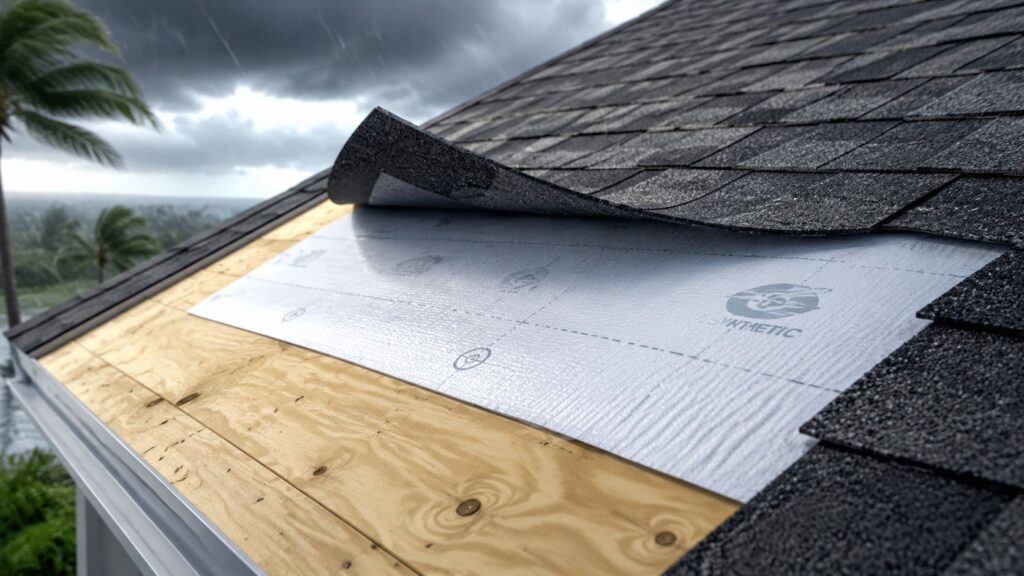
Construction usually begins with the structural deck. The contractor may install insulation or a cover board above it, depending on the design, then add a base sheet that is mechanically fastened or adhered. The base sheet provides a stable surface for the laminated plies and helps separate the membrane from irregularities below.
The roofer then alternates bitumen-saturated felt with hot asphalt. Organic felt and fiberglass-reinforced felt are both used in built-up assemblies, while the asphalt binds each layer to the next. Traditional hot-mop work uses heated asphalt, often near 400 degrees Fahrenheit during application, so the crew must control kettle placement, temperature, fumes, fire safety, and material flow.
A three-ply assembly may suit a straightforward residential roof when the deck, drainage, and exposure are favorable. A four- or five-ply assembly provides additional redundancy for demanding commercial or hurricane-exposed conditions, but extra layers also add weight and require adequate deck and structural support.
Cold-applied adhesives can fit projects where open-flame or hot-kettle work creates a safety or access problem. They can reduce some installation hazards, but the contractor must follow the product's application requirements, substrate limits, weather conditions, and coverage instructions. A cold-applied system isn't automatically better or worse. It's a different installation method that needs disciplined preparation.
For homeowners unfamiliar with the relationship between deck, insulation, and membrane, this roof construction underlayment illustration can make the assembly easier to visualize.
The gravel finish and the vulnerable details
The final asphalt pour is applied while hot, and clean aggregate is spread into it so the stones embed firmly. Conventional specifications may call for approximately 400 to 600 pounds of gravel per square, depending on the system and project requirements. The field surface often looks durable, but penetrations need separate attention.
Drains, vents, HVAC curbs, parapets, wall transitions, and roof edges are where many failures begin. Contractors may use metal, modified bitumen, or surface-mounted flashing strips to handle these transitions. The right material matters less than continuity, secure attachment, compatible seals, and enough height above areas where water can collect.
Comparing Tar and Gravel to Other Flat Roof Systems
On a coastal flat roof, the right system depends less on age or appearance than on how the assembly is performing now. BUR earns its reputation from multiple plies, puncture resistance, and a long service record. Single-ply membranes can simplify installation or improve reflectivity. The decision should account for the deck, drainage, rooftop access, wind exposure, energy goals, and the owner's willingness to maintain and repair the roof.
Long-term evidence supports gravel-surfaced BUR when the assembly and details remain in serviceable condition. A dataset covering roughly 200 low-slope reroofing projects and about 3.6 million square feet found that about 80% of the total projects performed satisfactorily beyond 20 years, and 97% of those long-performing roofs were gravel-surfaced built-up systems. The Facilities Engineering performance paper also reported that about 15% of the roofs that lasted beyond 20 years were still performing satisfactorily after 29 years.
A separate NRCA technical dataset places gravel-surfaced BUR among the stronger-performing low-slope groups, with an average service life of about 25 years for that group and some roofs performing up to 29 years. That history does not promise the same result for every property. Gravel loss, membrane fatigue, drainage defects, and storm exposure can change repair economics long before the calendar does.
| System | Lifespan (yrs) | Cost/Sq Installed | Repairability | Heat & UV | Hurricane |
|---|---|---|---|---|---|
| Tar and gravel BUR | About 25 average for the gravel-surfaced group, with some up to 29 years | Project-specific | Strong when compatible materials are used | Strong surface protection, but aging asphalt can become brittle | Resistant to wind uplift when edges, flashings, and aggregate remain secure |
| Modified bitumen | Varies by assembly and maintenance | Project-specific | Generally straightforward for localized repairs | Polymer formulation affects weathering | Good when properly adhered or fastened |
| TPO | Varies by product, detailing, and maintenance | Project-specific | Seams and patches require compatible welding | Reflective surfaces can reduce heat absorption | Depends heavily on attachment and perimeter detailing |
| PVC | Varies by product, detailing, and maintenance | Project-specific | Welded seams can be serviceable | Reflective and chemically resistant options exist | Attachment and edge design control performance |
| EPDM | Varies by product, detailing, and maintenance | Project-specific | Patches are familiar, but compatibility matters | Performs in heat, while drainage remains critical | Securement and seam detailing are decisive |
Modified bitumen can make localized repairs easier and may install faster than a traditional hot-mop assembly. In many configurations, however, it has fewer redundant plies. TPO and PVC provide reflective surfaces and potential heat-management benefits, but punctures, welded seams, rooftop traffic, and perimeter attachment require careful inspection. EPDM can handle hot conditions, provided drainage works and seams remain secure.
For a coastal property, evaluate the condition before choosing a replacement system. Secure gravel and sound flashings can support another repair cycle. Widespread aggregate loss, brittle asphalt, repeated membrane splits, or storm-damaged edges may make replacement more economical than continuing isolated patches. Give storm resilience and detailing priority on roofs exposed to wind, trees, or rooftop equipment. Give repairability priority where access is difficult and future patching will be expensive. Reflective single-ply construction can help with energy goals, but drainage and attachment quality still determine whether the roof holds up.
South Florida Performance and Common Failure Points
A BUR roof in coastal South Florida deals with a harsher combination than its gravel surface suggests. Sustained heat raises roof temperatures, intense ultraviolet exposure oxidizes the upper asphalt, and repeated expansion and contraction stress the plies, flashings, and metal edges. Over time, the surface can become brittle and develop an alligator-like pattern of cracking.
The gravel finish slows that process, but it isn't the waterproofing layer. Water protection comes from the asphalt and felt assembly below. Once gravel thins or disappears, sunlight reaches the bitumen directly and accelerates surface wear.
What heat, water, and storms do
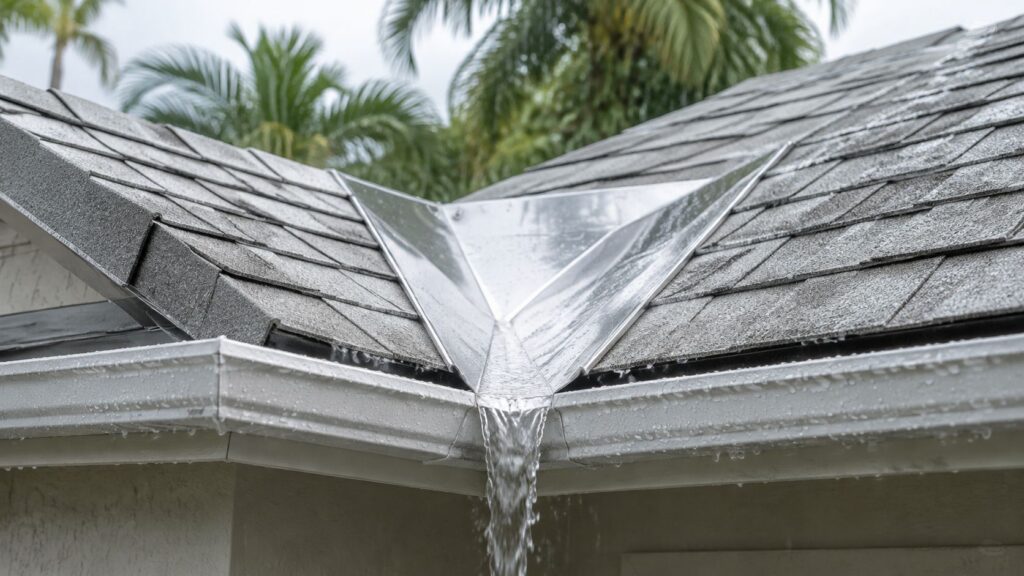
Ponding water is one of the most serious triggers on a low-slope roof. If the deck doesn't drain properly, standing water keeps the membrane wet, adds weight, and exposes weak seams and flashings for longer periods. A patch over the visible stain won't solve a drainage defect, and new gravel won't correct a low area in the deck or insulation.
Blisters can form when vapor or moisture becomes trapped between layers or at the deck. Splits may develop along ply lines as the assembly expands and contracts. Gravel can migrate away from parapets and field edges, leaving those zones more exposed. Metal termination fasteners can back out, creating openings that tropical rain drives beneath the flashing.
A roof drainage and rainwater diverter illustration helps show why water movement deserves the same attention as surface condition.
| Failure Point | Warning Sign | Typical Outcome |
|---|---|---|
| Gravel loss | Bare asphalt, scattered aggregate, exposed felt | Faster UV aging and impact vulnerability |
| Blistering | Raised bubbles or hollow-sounding areas | Splits, water entry, or delamination |
| Ply-line splits | Linear cracks or open seams | Leaks that spread beyond the visible opening |
| Parapet and edge zones | Thin surfacing, loose metal, open joints | Wind-driven rain entry or edge uplift |
| HVAC curbs and vents | Cracked flashing, failed sealant, staining | Localized leaks during heavy rain |
| Scuppers and drains | Debris, slow discharge, standing water | Ponding and recurring membrane stress |
| Deck or insulation | Soft spots, sagging, damp materials | Structural deterioration and replacement need |
Hurricane exposure changes the economics. Once edge coverage thins, wind can exploit a loose termination or lifted flashing and peel back exposed material. Storm debris can puncture the membrane, while wind-driven rain can enter through small openings that ordinary rainfall never reaches.
Inspection and Maintenance Schedule That Extends Service Life
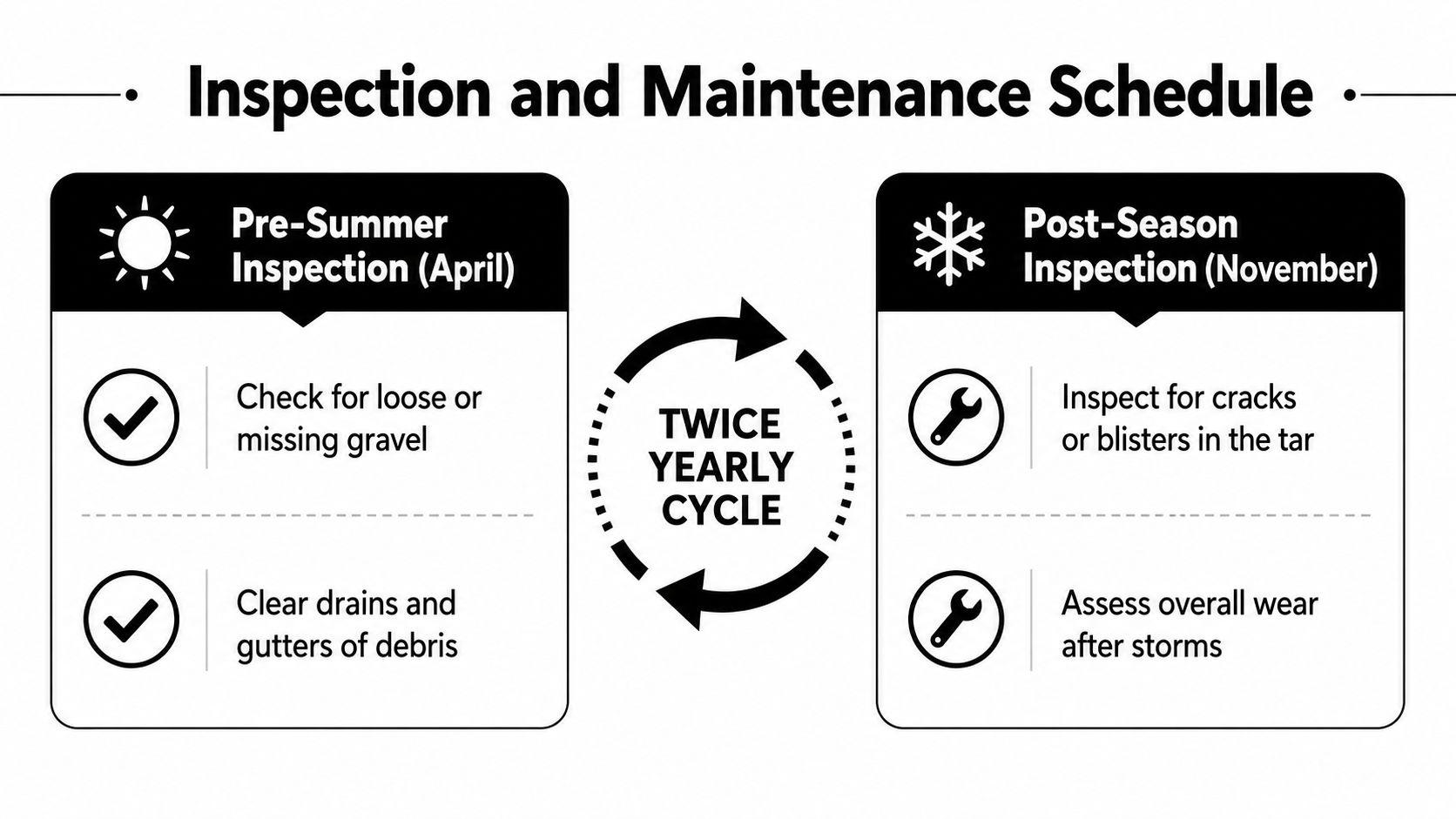
A BUR roof needs a repeatable inspection rhythm, not a visit only after water appears indoors. A practical South Florida schedule uses a pre-summer inspection in April and a post-season inspection in November, with an additional visual check after a named storm, hail event, or unusual wind event.
The April inspection
Before the most demanding weather arrives, walk the roof with a qualified professional and document:
- Gravel coverage: Look for bare asphalt, exposed felt, and stone gathered in corners or around drains.
- Drainage: Clear debris from scuppers, internal drains, gutters, and strainers. Confirm that water has a clear path off the roof.
- Flashings: Check parapets, HVAC curbs, vents, wall transitions, and metal edge conditions.
- Membrane texture: Record blisters, alligatoring, splits, soft areas, and unusual depressions.
- Penetrations: Examine sealants and surface-mounted flashing strips for openings or movement.
The purpose isn't to make the roof look tidy. It's to identify a small defect while the surrounding membrane remains sound. Redistribute displaced gravel where appropriate, remove debris, and reseal suspect flashing before a tropical storm turns a minor opening into an interior loss.
The November inspection
After the active storm period, compare current conditions with the April photographs. Look for new gravel displacement, impact marks, fresh splits, membrane fatigue, ponding traces, and damaged edge metal. A contractor may recommend reflective aluminum or elastomeric coating on suitable sun-exposed areas, but coatings won't restore saturated insulation or repair a deteriorated deck.
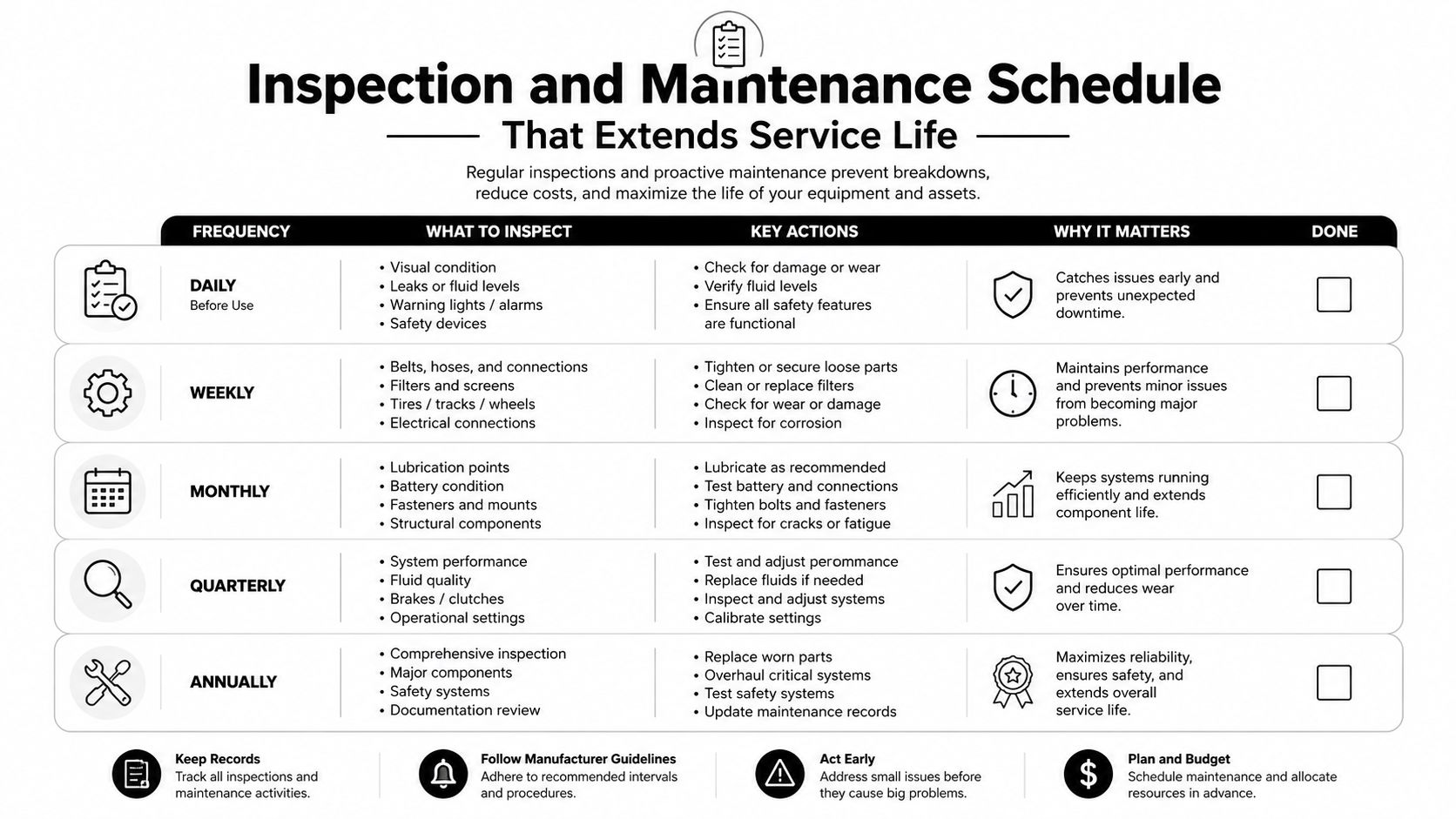
Keep dated photographs, inspection notes, invoices, repair descriptions, and storm records together. NRCA maintenance guidance emphasizes regular inspections, post-storm checks, debris removal, and prompt flashing repairs. Those records help a facility manager track serviceability, support warranty conversations, and give an insurer clearer evidence of pre-loss condition.
Repair, Restore, or Replace How to Decide
Age is a clue, not a verdict. A tar and gravel roof can be old and dry, or relatively young with saturated insulation and failing flashings. The useful question is whether the roof still has enough sound membrane and substrate to justify additional work.
Repair when the defect is isolated
Spot repair makes sense when the leak is localized, the surrounding membrane is firm and bonded, drainage works, and the affected area is limited. A practical threshold is an isolated leak involving under 10 square feet, provided inspection confirms that the nearby plies and substrate remain sound. The repair should use compatible bitumen, reinforce the affected area where needed, and replace or embed gravel so the patch isn't left exposed.
A patch won't work well when water is entering from a distant flashing, traveling through saturated insulation, or collecting in a persistent low spot. Ask the roofer to identify the entry path, not cover the ceiling stain.
Restore when the assembly is tired but dry
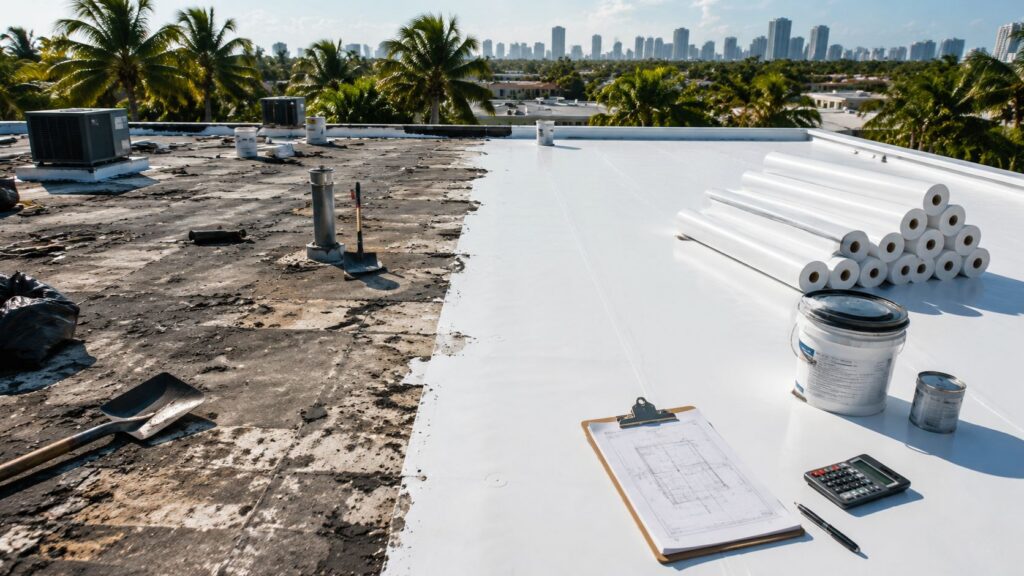
Restoration may fit a roof with widespread surface wear but a dry, stable substrate. If more than 25% of the surface shows alligatoring, granular loss is widespread, or seams are failing across multiple zones, a fluid-applied restoration system may be appropriate after proper preparation. The supplied project criteria describe these systems as potentially adding 8 to 12 years at a fraction of replacement cost, but that outcome depends on adhesion, substrate condition, drainage, detailing, and product specifications.
A coating can't bridge every split, cure wet insulation, or stabilize corroded decking. The contractor should test adhesion, address blisters and open seams, reinforce transitions, and verify that water can drain before applying the coating.
Replace when the structure or substrate has failed
Replacement becomes the responsible path when infrared inspection or cut tests find saturated insulation, when foot traffic reveals soft spots, when multiple leaks originate across the field, or when the deck shows corrosion. At that point, repeated repairs can consume money without restoring dependable performance.
For a 2,000-square-foot South Florida BUR roof, the supplied decision framework lists repair ranges of $600 to $2,500, restoration systems at $5 to $9 per square foot installed, and full replacement at $9 to $14 per square foot for comparable systems. This roof repair and replacement cost illustration can help homeowners understand why surface area and system scope matter.
| Condition Indicators | Recommended Action | Typical Cost per 100 Sq Ft |
|---|---|---|
| Isolated leak, sound membrane, working drainage | Compatible spot repair | Project-specific |
| Widespread surface fatigue, dry substrate, repairable seams | Restoration coating after preparation | $500 to $900 based on the supplied restoration range |
| Saturated insulation, soft spots, multiple field leaks, deck corrosion | Tear-off and replacement evaluation | $900 to $1,400 based on the supplied replacement range |
Practical rule: Spend first on diagnosis. A cheap patch over a wet assembly is often only a delay, while a full replacement over a dry, repairable roof can waste serviceable material.
Permits, Insurance, and Hiring the Right Roofer
Roofing work in Broward, Miami-Dade, and Palm Beach counties involves more than choosing a membrane. Full tear-offs and many structural repairs generally require permits, and local requirements can vary with the scope, building type, and jurisdiction. A homeowner should ask the contractor to identify the permit path before work begins, rather than treating paperwork as an afterthought.
For work in high-velocity hurricane zones, request documentation that shows the proposed assembly meets applicable wind-load requirements. A complete project file may include:
- Permit application: Confirm that the contractor is submitting the correct local roofing permit documents.
- Notice of commencement: Ask whether the required notice of commencement is needed and who will record it.
- Product approvals: Request Miami-Dade Notice of Acceptance information or Florida Product Approval numbers for the specified roofing components.
- Wind-load documentation: Make sure attachment patterns, perimeter enhancements, and edge details correspond to the applicable HVHZ requirements.
- Scope and quantities: Require a written description of plies, asphalt or adhesive, insulation, flashing, aggregate, drains, and disposal.
Insurance treatment can differ between a traditional BUR replacement and a single-ply retrofit. Underwriters may examine roof age, maintenance records, attachment, storm damage, and permitting. Properly fastened assemblies may support available wind-mitigation considerations, while unpermitted work can create underwriting problems or complicate a claim. NCCI scope material illustrates why insurers and standards materials may distinguish flat tar-and-gravel systems from other roof classifications.
Verify the company before signing
Use the Florida Department of Business and Professional Regulation portal to verify the roofing license. Confirm Workers' Compensation coverage, request a certificate of insurance sent directly from the carrier, and check the contractor's local business tax receipts.
Ask every prospective roofer:
- Flat-roof experience: Can you provide references for BUR or low-slope projects in the same county?
- Leak diagnosis: Will the report identify drainage, flashing, membrane, insulation, and deck conditions separately?
- Warranty handling: Who registers the manufacturer warranty, and what maintenance does it require?
- Lien protection: Will you provide a clear lien waiver at completion?
- Storm documentation: Will dated photos and material records be included in the closeout file?
Paletz Roofing and Inspections provides inspections, repairs, replacement planning, and built-up and modified-bitumen roofing services across South Florida, with condition-based reporting for owners who need documented findings rather than an age-only recommendation.
Contact Paletz Roofing and Inspections for a condition-based inspection of your tar and gravel roof in Broward, Miami-Dade, or Palm Beach County. Ask for clear documentation of gravel loss, drainage, flashing, membrane, insulation, and deck conditions so you can make a defensible repair, restoration, or replacement decision.