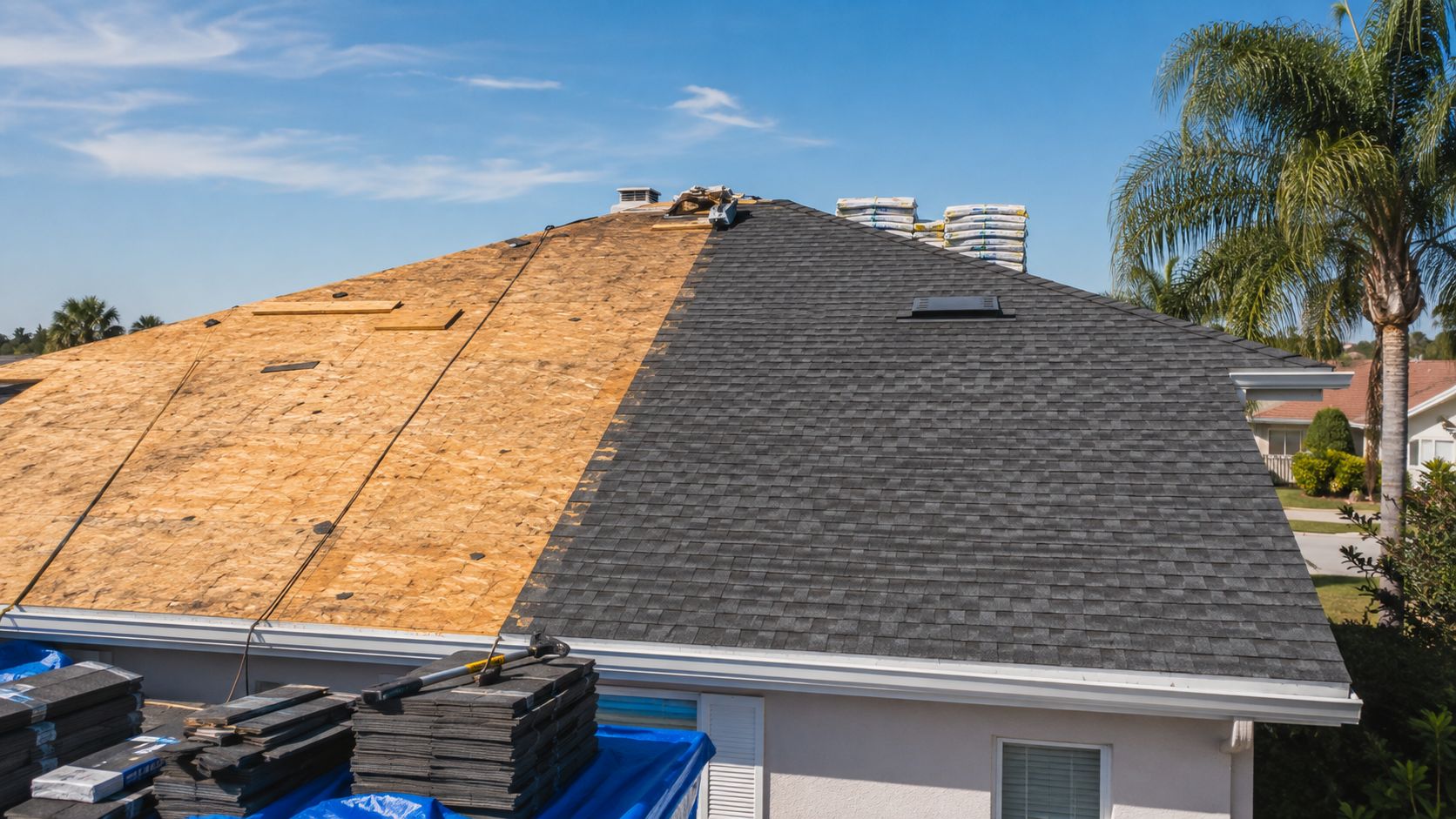
If you're looking at a Plantation roof that's getting older, you've probably already had the same frustrating conversation twice. One person says a few shingles can be patched, another says the whole roof needs to come off, and the answer depends on age, hidden defects, and how South Florida weather has treated the assembly over time. In this market, shingle roof replacement in Plantation is often a lifecycle decision, not just a storm response.
Table of Contents
- What a Shingle Roof Replacement Actually Means in Plantation
- How to Tell Your Shingle Roof Is Ready for Replacement
- Repair Versus Full Replacement Decision Framework
- What Shingle Roof Replacement Actually Costs in Plantation
- Choosing Shingle Materials and Colors That Last in Plantation
- The Step-by-Step Timeline of a Plantation Shingle Reroof
- Working With Insurance on a Plantation Shingle Replacement
- Your Before, During, and After Replacement Checklist
What a Shingle Roof Replacement Actually Means in Plantation
A Plantation homeowner usually reaches this point after a roof inspection, a post-storm concern, or a leak that keeps coming back in the same room. The roof may still look mostly intact from the driveway, but once a roofer opens it up, the issues can show themselves in the underlayment, flashing, fasteners, or decking. That's why replacement is about more than swapping out visible shingles, it's a full system decision.
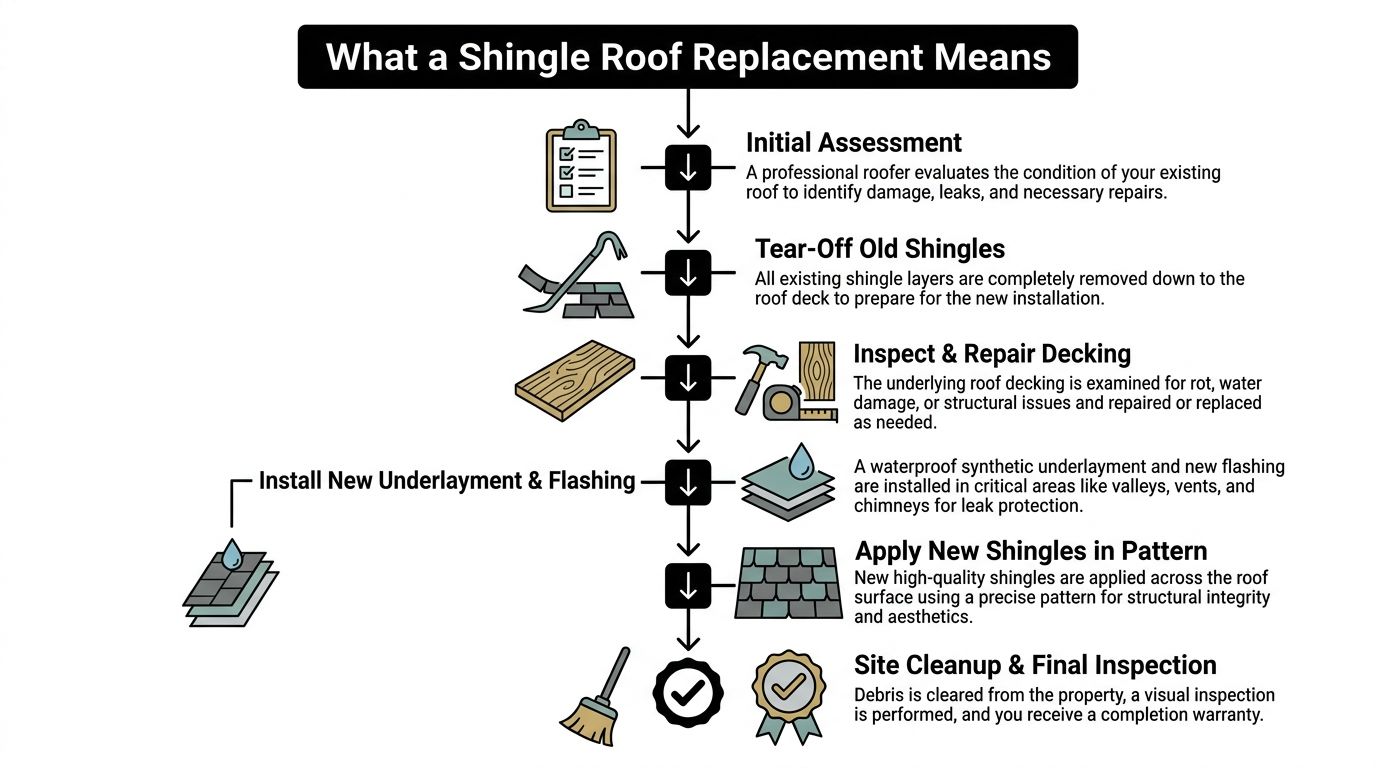
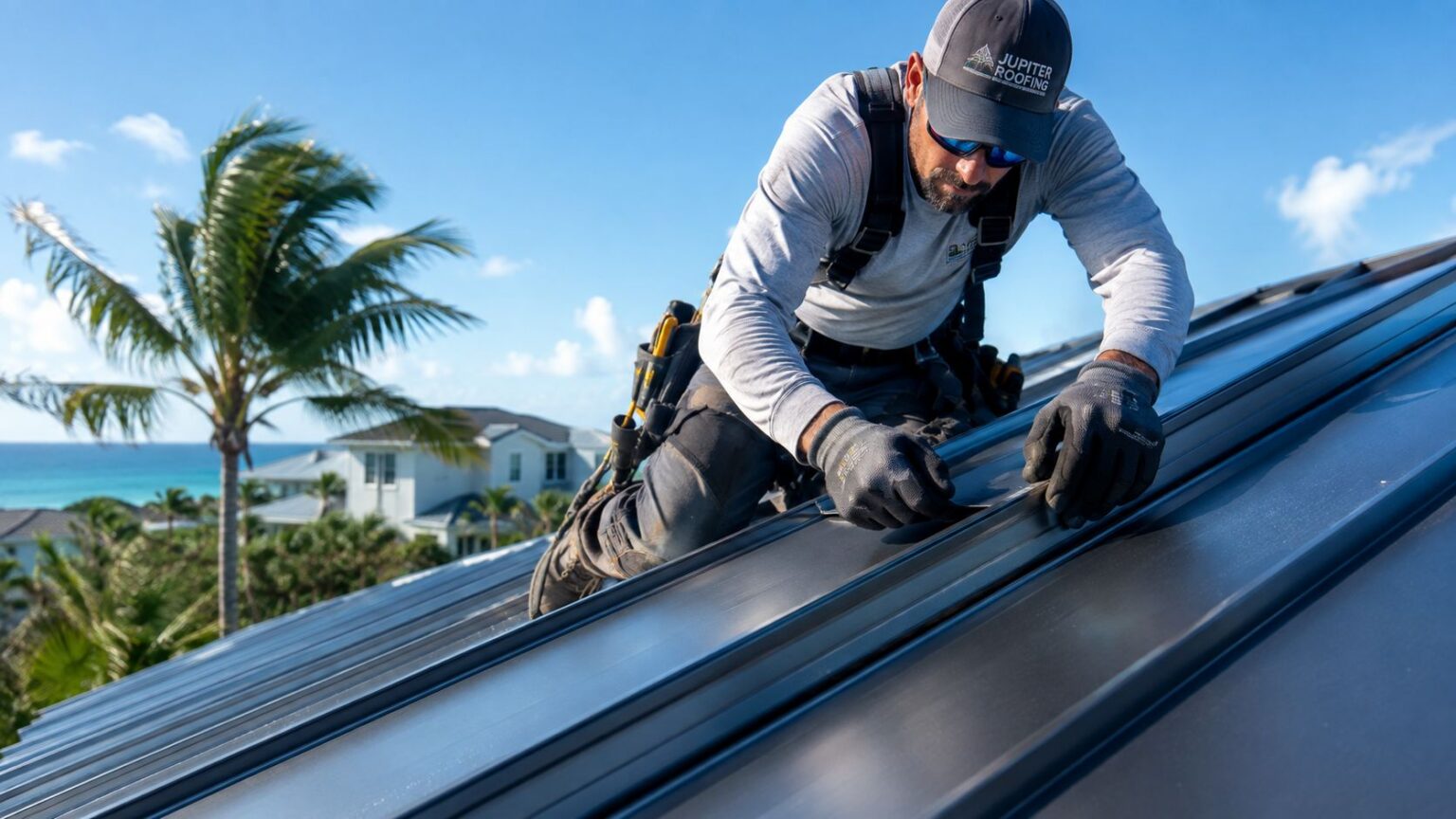
In practice, a proper reroof means a tear-off of the old shingles, inspection of the roof deck, replacement of damaged wood where needed, installation of new underlayment and flashing, then a new shingle layout with the correct fastening pattern and edge details. Disposal matters too, because the old material has to leave the property cleanly and safely. In Broward County's wind environment, those details aren't cosmetic, they're part of whether the roof keeps water out when the weather gets rough.
Florida's market leans heavily on this kind of work because asphalt shingles account for 78% of all roof installations in Florida and the state has 4.2 million owner-occupied homes with asphalt shingle roofs out of 6.5 million owner-occupied homes statewide, according to a 2026 industry summary at WorldMetrics. That helps explain why shingle roof replacement Plantation is such a common conversation, especially where replacement demand is already high in Broward County. Another Florida-focused report estimates 35,000+ roofing jobs per year in Broward County alone, which tells you this is a recurring lifecycle market, not a rare emergency.
Practical rule: if the roof's age, leak history, and fastening details don't line up, don't guess from the surface. Open it up, document what's there, and decide from evidence.
A drone roof survey can help with the first pass, and if you want a non-roofing example of how emergency documentation is handled in the air, the emergency handbook for drone pilots shows how disciplined inspection planning reduces missed details.
How to Tell Your Shingle Roof Is Ready for Replacement
The easiest mistake is judging a roof by what you can see from the yard. Shingles can look tired long before the system fails, and they can also look acceptable while the fastening, flashing, or underlayment is already compromised. In Plantation, the age of the roof matters just as much as the surface condition because Florida shortens the useful life of asphalt shingles.
Start with age, then look for visible wear
Florida-focused industry data says 3-tab shingles last about 12–18 years in Florida versus 20–25 years nationally, while architectural shingles last about 18–25 years in Florida versus 25–30 years nationally because of UV exposure and hurricane-related stress, according to Goliath Roofing of Florida's statistics page. If your roof is already in that Florida range, the burden shifts from “does it look bad?” to “is it still worth repairing?”
The visible signs are familiar, but they matter when they cluster together.
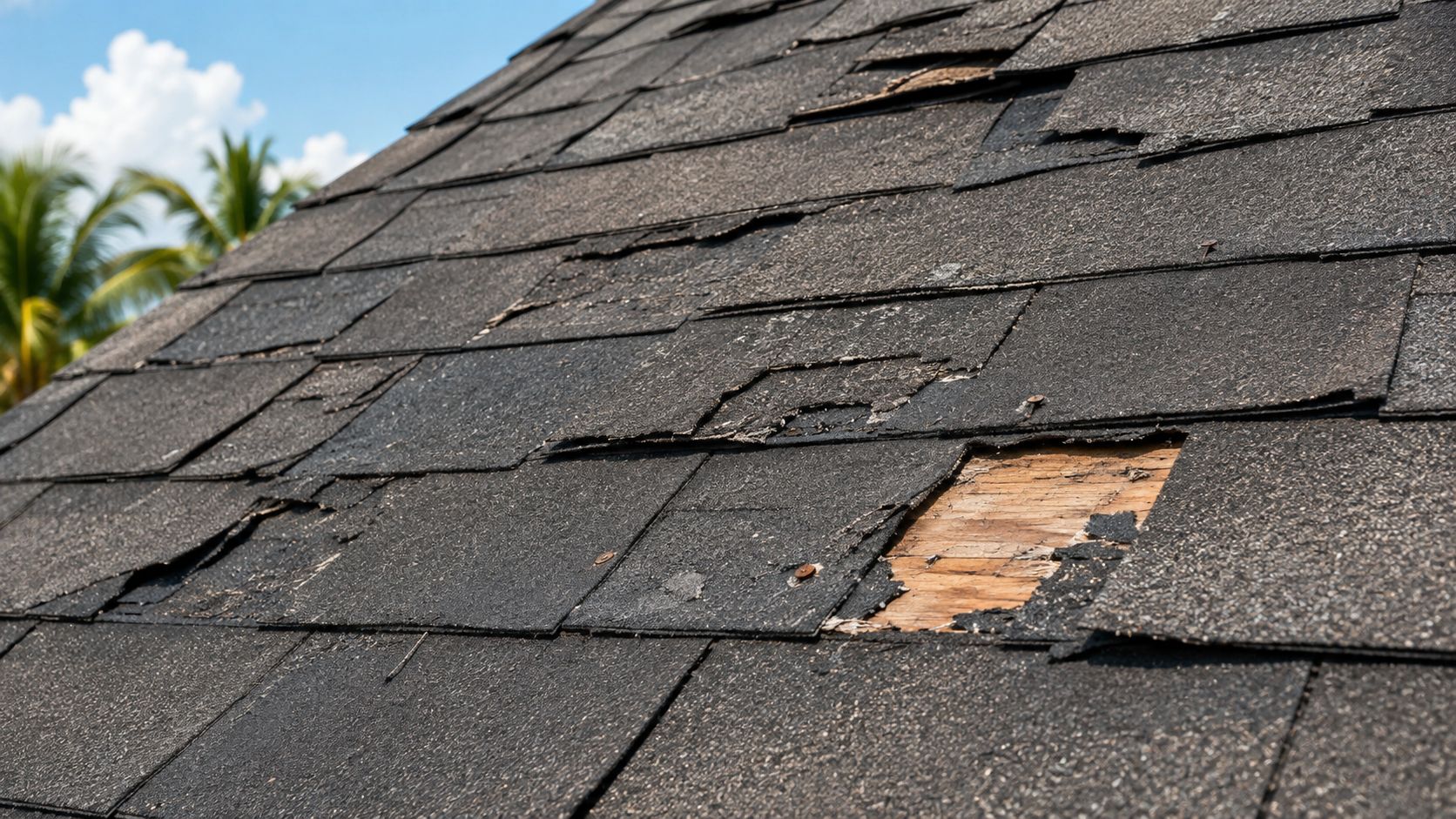
- Curling or buckling shingles, especially across multiple slopes.
- Granule loss collecting in gutters or downspouts.
- Missing tabs or missing shingles after wind events.
- Exposed fasteners or lifted shingle edges.
- Cracked flashing around chimneys, walls, or penetrations.
- Soft spots underfoot that suggest a weak deck.
- Ceiling stains or attic moisture marks.
- Recurring leak calls in the same area after patch work.
Separate surface wear from hidden failure
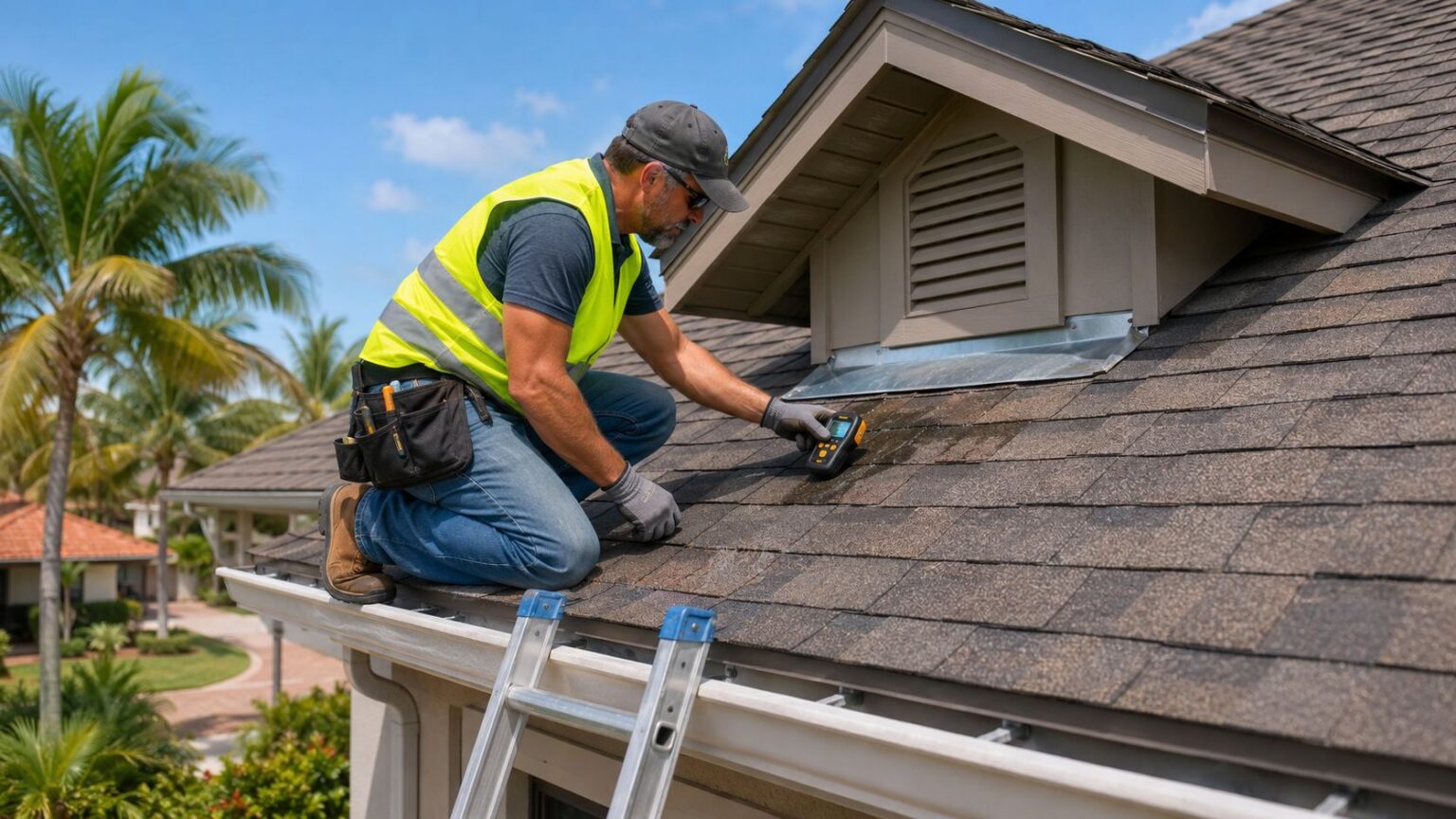
A roof can show age without being finished, and it can also be “worn out” because the installation was flawed from day one. The key hidden checks are the ones that homeowners usually can't confirm from a ladder, like deck sag, underlayment condition, and flashing integrity. The earlier one can be corrected with targeted work, but the second often points to a broader reroof decision.
For a visual example of the kind of moisture tracing that helps an inspector separate old damage from active leakage, the internal reference image at this roof leak inspection view is the sort of evidence a qualified roofer will want before recommending a full tear-off.
Repair Versus Full Replacement Decision Framework
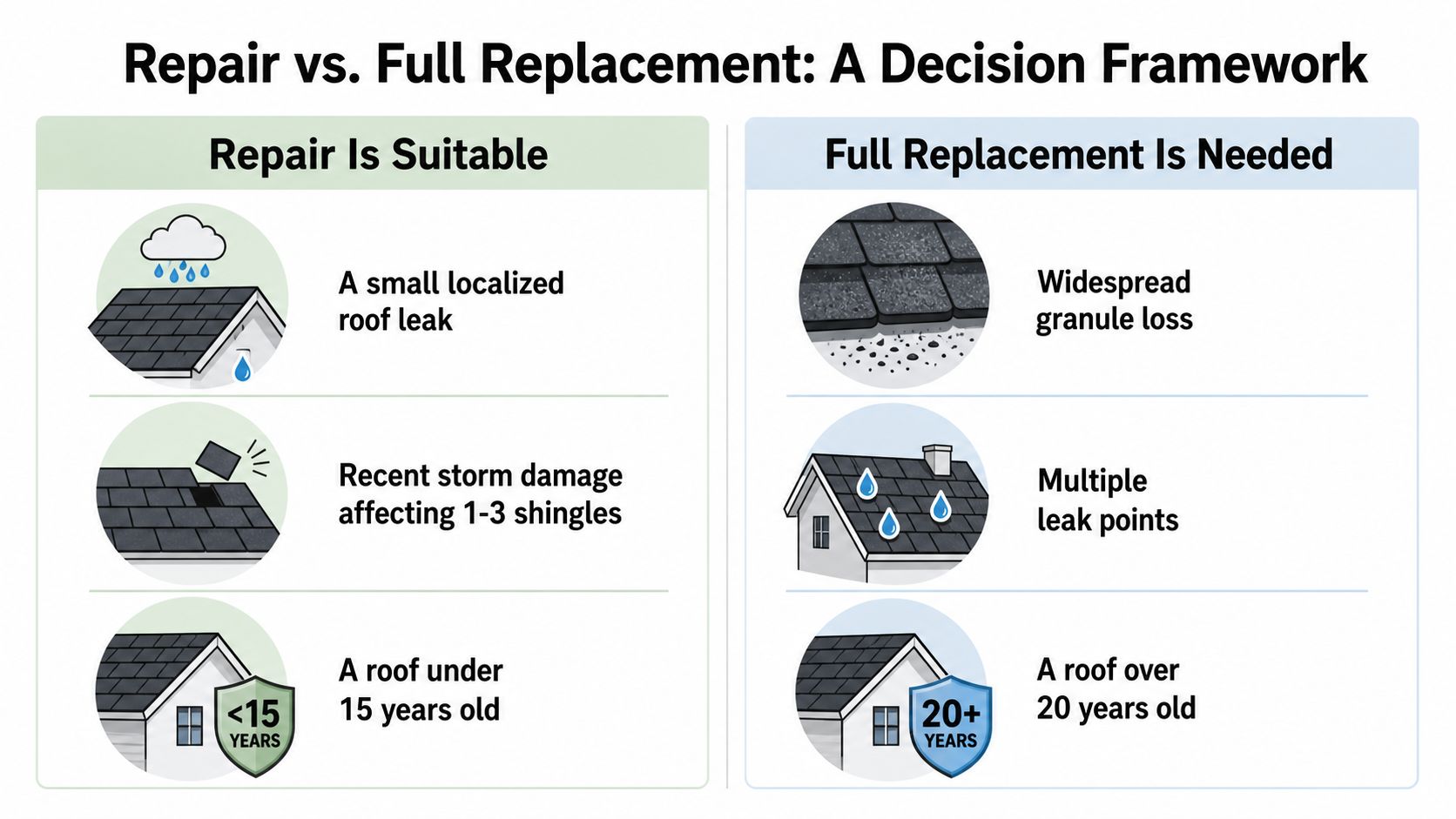
A roof that looks rough doesn't automatically need a full tear-off. That's the part most Plantation marketing skips, and it's why homeowners often get pushed too quickly toward replacement when the issue is localized damage or a bad flashing detail. The smarter move is to sort the roof by age, leak pattern, and whether the defect is isolated or systemic.
When repair still makes sense
Repair is usually the better call when the roof is relatively young, the damage is limited to a small area, and the leak source is easy to isolate. That includes a few missing shingles after a storm, a small puncture near a penetration, or a flashing problem at one wall or vent. The roof can keep doing its job if the failure is local and the rest of the system is sound.
When full replacement is the safer call
Replacement becomes the cleaner answer when wear is spread across the roof, leaks keep showing up in different places, or the roof is already in the Florida age range where shingles age out faster. It also makes more sense if previous repairs haven't solved the problem, because repeated patching can hide a broader fastening or underlayment issue. Once the defects are systemic, repair just buys time.
A roof with one bad area is a repair candidate. A roof with many weak spots is a replacement candidate.
Installation defects can blur the line, too. Incorrect shingle exposure, poor fastening patterns, and flashing mistakes can make a newer roof look older than it is, which is why the visual condition alone is not enough. For a practical comparison point, this roofing installation reference is a reminder that detail work matters more than the material label.
What Shingle Roof Replacement Actually Costs in Plantation
Plantation quotes make a lot more sense when you compare them against three numbers: per-square-foot pricing, local total project ranges, and the itemized split between shingles, labor, and extras. A single quote with one lump sum hides the parts that drive price. Once you can see the structure, it's easier to tell whether a bid is reasonable or padded in the wrong place.
The local cost ranges
A Plantation cost model puts composition shingle replacement at $1.75 to $5.50 per square foot installed, with a worked example for a 1,282-square-foot roof showing a total of $7,279.53 and an average cost of $6.06 per square foot, according to HomeYou's Plantation roofing cost page. That same breakdown itemizes $5,580.83 for the shingle roof itself, $1,334.89 for labor, $291.03 for materials and supplies, and $72.77 for equipment allowance.
A separate Plantation cost guide tied to Broward County market rates says homeowners typically invest $8,000 to $15,000 for a standard asphalt or shingle replacement on a typical single-family home, according to Assured Contracting's Plantation guide. Statewide, Florida pricing data puts roof replacement at $7,000 to $21,000 for a typical homeowner, with around $15,000 for a 2,000-square-foot roof, and $3.50 to $10.50 per square foot or $350 to $1,050 per square, from HomeAdvisor's Florida pricing guide.
How to read the numbers side by side
| Cost Model | Per Square Foot | Total for Typical Plantation Home | Key Detail |
|---|---|---|---|
| Plantation itemized model | $1.75 to $5.50 | $7,279.53 on a 1,282-square-foot roof | Shows labor, materials, and equipment separately |
| Plantation market guide | Not listed | $8,000 to $15,000 | Typical single-family asphalt or shingle replacement |
| Florida statewide benchmark | $3.50 to $10.50 | Around $15,000 on a 2,000-square-foot roof | Useful comparison for higher-complexity quotes |
When you compare those bands, Plantation sits in a realistic Broward pricing zone where code compliance and storm hardening can push a shingle reroof toward the higher end. That's also why it helps to understand how another market frames pricing and process, and this roofing comparison resource is a useful reminder that cost language needs context, not just a number.
Choosing Shingle Materials and Colors That Last in Plantation
The right shingle choice in Plantation isn't just about style. It's about how long the roof has to live in heat, UV, and wind before it gets replaced again. The material decision should answer three questions, how long it lasts here, how it performs in wind, and whether it fits code and insurance expectations.
Three-tab, architectural, or impact-rated
Florida pricing guidance says three-tab shingles run $3.50 to $5.00 per square foot with a 15-20 year lifespan, while architectural asphalt shingles typically cost $5 to $9 per square foot and are often priced around $8,500 to $15,300 for an average 1,700-square-foot roof, according to Pitch Roofing's Florida asphalt shingle cost guide. The same source says impact-rated shingles run $7.00 to $10.00 per square foot and are associated with Miami-Dade code compliance and possible insurance discounts.
That matters in Broward County because the choice isn't just cosmetic. Impact-rated shingles are often the cleaner path when a homeowner wants a stronger storm profile and a more code-forward spec. For Plantation roofs, that usually means asking for the product approval paperwork up front, not after the contract is signed.
Ask for the spec sheet, not just the color chart
Color still matters, but not in a decorative-only way. Lighter tones can help with heat management, while darker tones may fit the home's exterior better if curb appeal is the priority. Either way, the primary question is whether the shingle package carries the right labels and approvals.
Ask for these specifics before you approve the job:
- Wind rating that matches local exposure.
- Fire labeling of UL Class A.
- Product approval documentation, either Florida Product Approval or Miami-Dade County Product Approval.
- Fastener standard tied to the roof assembly, not just the shingle brand.
That's the level of detail that keeps a replacement from becoming a guess. It also helps when a homeowner is comparing options from a contractor like Paletz Roofing and Inspections, because the right recommendation should be based on the roof's actual exposure and not on the shingle color on a brochure.
The Step-by-Step Timeline of a Plantation Shingle Reroof
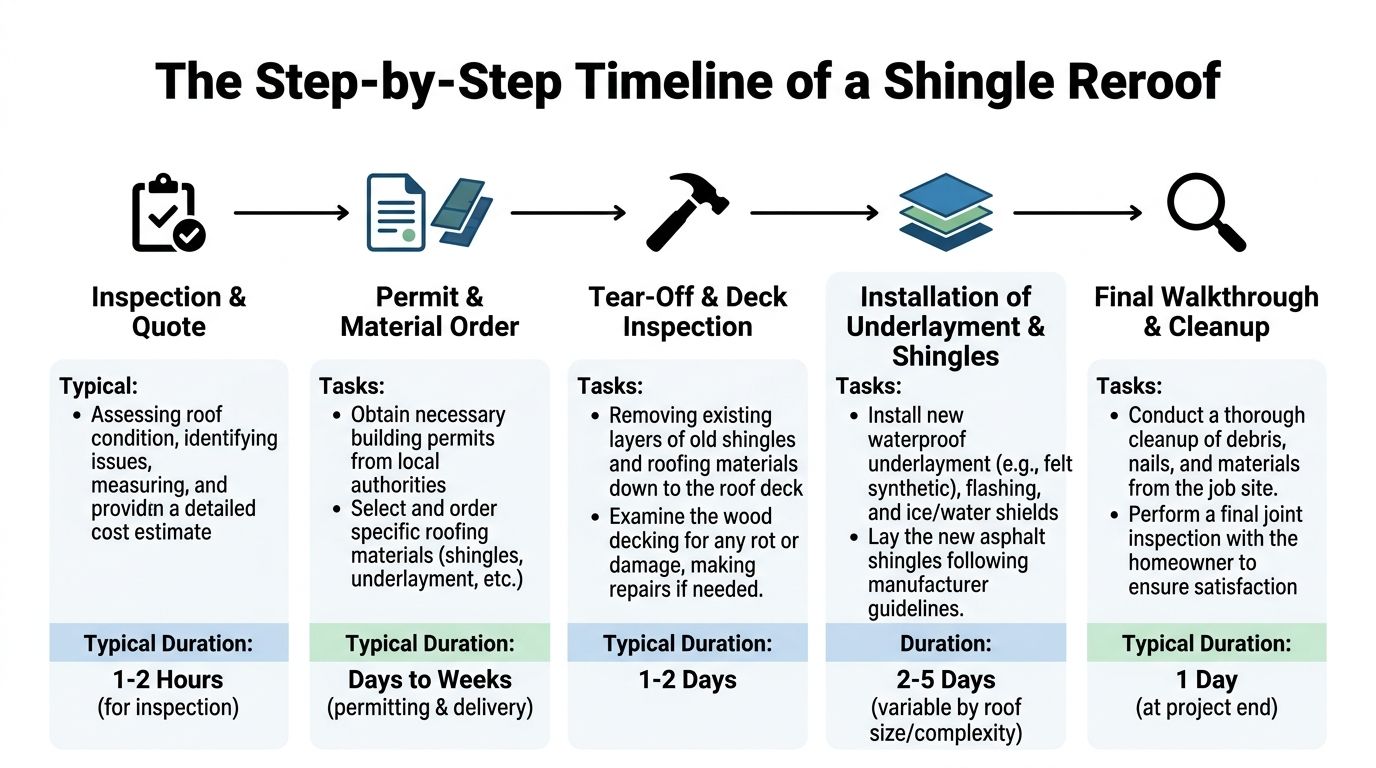
A shingle reroof in Plantation usually moves faster than homeowners expect, but only if the roof deck is sound and the weather cooperates. Most single-family projects wrap in a few working days, yet the schedule can stretch when hidden wood damage turns up or an inspection needs a correction. The best way to stay calm is to know which day does what.
From inspection to permit and delivery
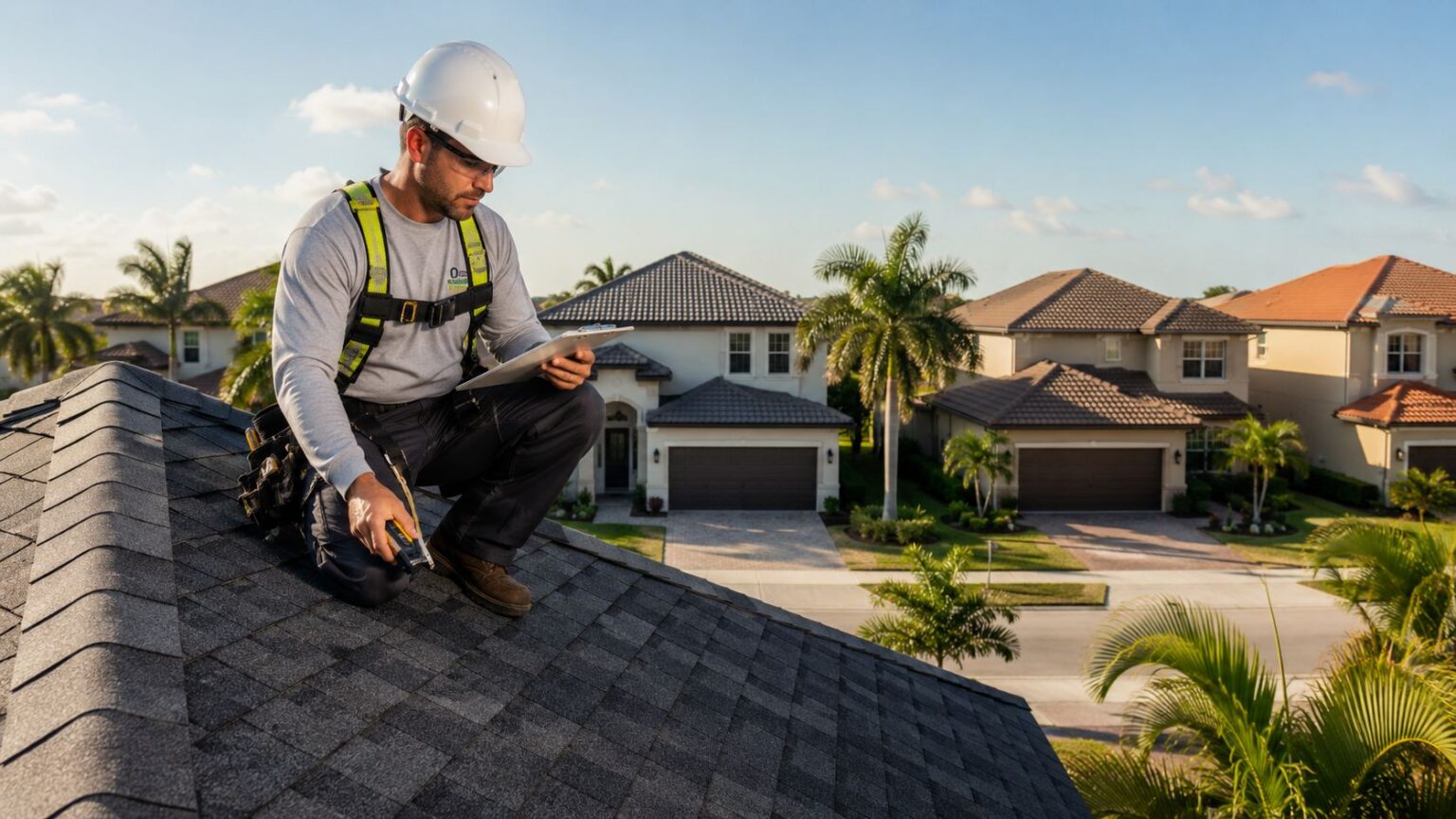
The first visit should identify the roof's age, leak history, visible wear, and any signs of hidden failure. After that comes the quote, the permit pull, and material ordering. In Broward County, that permit step isn't optional, because the county's wind environment requires a roof job to be inspected and closed properly.
Florida jobs also rely on documentation. For this kind of roof, contractors commonly need Florida Product Approval or Miami-Dade County Product Approval, and the fastening spec matters too, with UL Class A fire labeling, ASTM D3161 Class F wind resistance, and ASTM F1667 fasteners showing up in public reroofing specifications. Those details matter because uplift and wind-driven rain usually exploit fastening, underlayment laps, or edge details, not just the shingle surface.
Tear-off, dry-in, and final inspection
On tear-off day, the crew removes the old shingles, checks the decking, and repairs any weak areas before new underlayment goes down. Once the roof is dry-in ready, the crew installs the shingles, flashings, and ventilation details, then cleans up the site and calls for final inspection. If weather interrupts, or if the inspector flags a detail, the schedule can extend.
Owner checklist: keep driveway space open for the dumpster and material delivery, move fragile attic items, and expect a noisy day when the tear-off starts.
The local permitting process should be handled in the contractor's name, with the inspector checking dry-in conditions and then final compliance after installation. That's the part homeowners don't see, but it's what turns a roof replacement from a pile of materials into a documented building-system upgrade.
Working With Insurance on a Plantation Shingle Replacement
Insurance gets involved when the roof problem starts with wind, hail, or a storm event instead of age. That changes the conversation fast, because the adjuster wants evidence, not a guess about what happened. If the roof has visible storm damage, the strongest claim starts before anyone lifts a shingle.
What to photograph before the tear-off
Take clear photos of missing tabs, lifted flashing, wind-creased shingles, ceiling stains, and any interior spots that appeared after the storm. Keep close-ups and wide shots. If the roof is still intact enough to walk safely, document gutters, downspouts, and any granule piles too, because those details can help establish the pattern of damage.
What carriers and contractors both need to see
The best claim file usually includes the date of the storm, the first interior symptom, and the exact roof areas affected. Adjusters look for damage that matches a covered event, and they'll compare roof surfaces, ridges, penetrations, and flashing points. If the shingles are already old, that doesn't end the conversation, but it does mean the documentation has to be tighter.
Impact-rated shingles can affect the policy discussion as well, since they're associated with Miami-Dade code compliance and possible insurance discounts in Pitch Roofing's Florida pricing guide. Before you change materials for an insurance reason, confirm what your carrier recognizes.
How to compare contractors without getting lost in sales talk
Look at process, not pitch. Licensing, insurance, written scope, manufacturer certifications, safety practices, warranty terms, and clear change-order language matter more than a smooth presentation. A contractor should be able to explain permit responsibility, inspection timing, and exactly what happens if the deck is compromised.
Green flags are simple. The company pulls permits in its own name, explains the spec sheet clearly, and gives you a written scope that matches the roof, not a generic template. Red flags are just as simple, a large deposit, vague timing, and a proposal that never mentions inspection steps.
Your Before, During, and After Replacement Checklist
A Plantation reroof goes smoother when the homeowner treats it like a managed project instead of a one-day event. The same discipline you'd use for any major home maintenance task applies here, and a general home maintenance advice from pros checklist is a good reminder that small preparations prevent bigger messes later.
Before the crew arrives
Clear the driveway, move vehicles, and let neighbors know there'll be noise and disposal traffic. Protect attic contents if you store anything valuable up there, and take quick photos of the ceilings and walls before work begins. If insurance is involved, keep every document and image in one folder.
During the job
Watch for the basics, not the theatrics. The dumpster should be placed safely, the crew should sweep for nails with a magnetic tool, and the contractor should keep you informed if weather changes the schedule. If an inspector visits for dry-in or final approval, that's normal, not a problem.
After completion
Check that the final inspection closes cleanly, the warranty paperwork is registered, and you have photo documentation of the finished roof. Then set a reminder to visually inspect the roof again around the six-month mark, because small issues are easiest to correct while they're still under warranty. That's the habit that keeps a replacement from becoming a repeat expense.
For a practical filter, use this rule. Replace when the roof is old for Florida, when leak history keeps repeating, or when code-required upgrades make a repair short-lived. Repair when the damage is local, the roof is still within a workable age band, and the underlying system is still sound. If you're not sure which side your roof falls on, get a professional inspection that separates surface wear from hidden defects before you commit to a contract.
If you're weighing shingle roof replacement in Plantation and want a straight answer on repair versus reroof, Paletz Roofing and Inspections can inspect the roof, document what's failing, and give you a scope that fits Broward County conditions. Visit Paletz Roofing and Inspections to schedule an inspection and get a quote built around your roof's age, condition, and code requirements.